
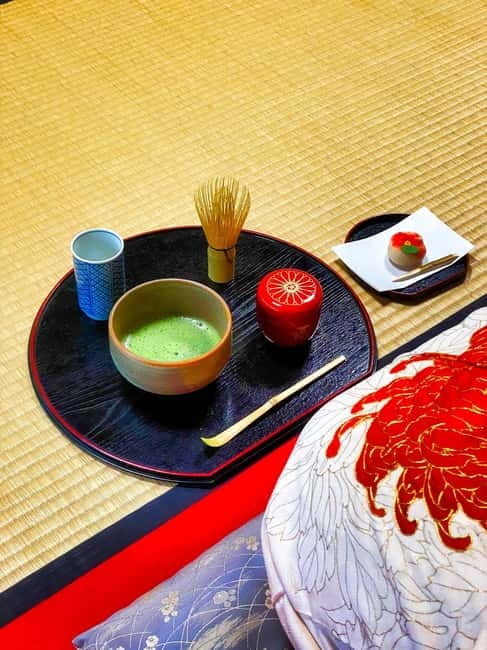
Reviewed · TEA CEREMONIES
Kyoto: Tea Ceremony in a Traditional Tea House in Kiyomizu
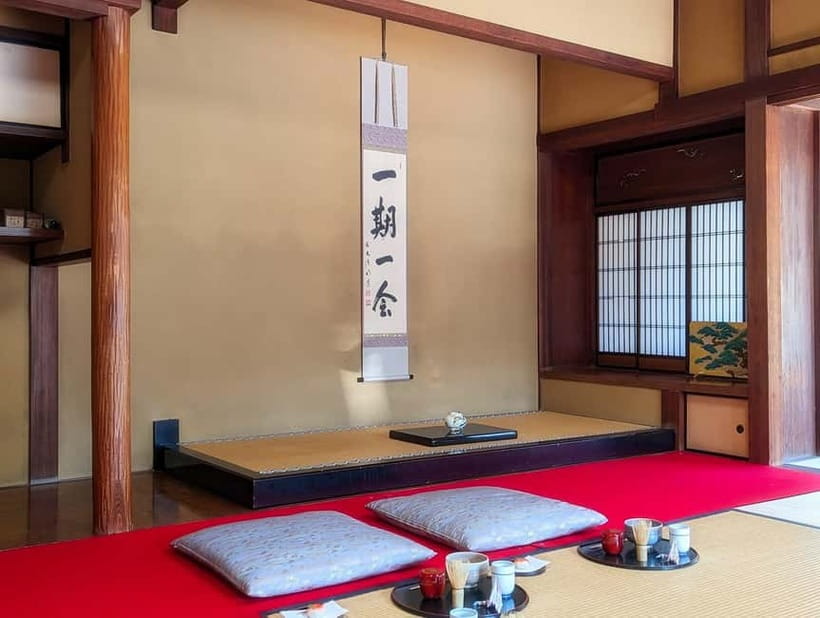
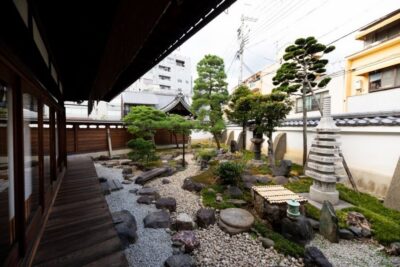
What makes this Kyoto experience interesting is the setting: a traditional tea house in Sannenzaka with a garden created by Ogawa Jihei VII. In a neighborhood that can feel loud and hectic, the moment you step inside, the pace changes.
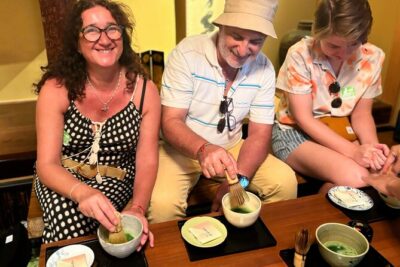
I love that you do more than watch. You’ll brew your own matcha after the tea master demonstrates the ritual, and that hands-on part makes everything stick.
One possible drawback: the tea house is close to the Kiyomizu-Dera area, so even if the ceremony space is calm, you’ll likely walk in crowds to get there.
Key things to know before you go
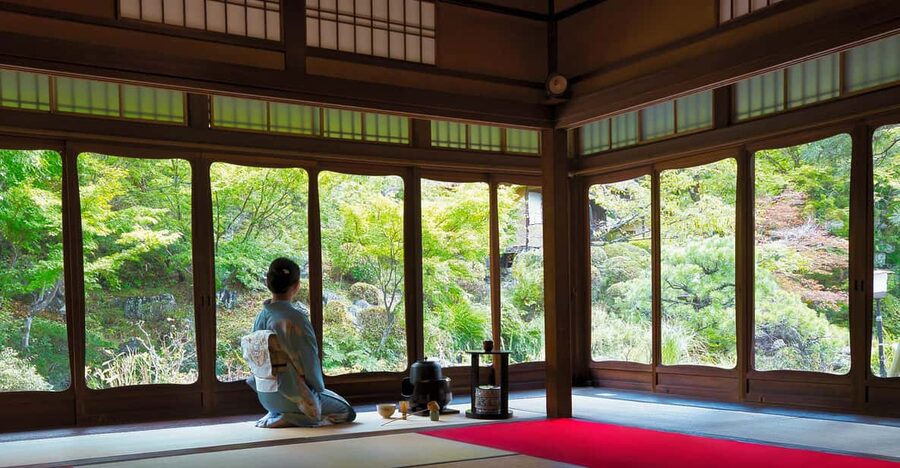
- Ogawa Jihei VII garden views from the tea house setting
- Tea master demonstration, then your turn to practice matcha preparation
- Two cups of matcha plus traditional Japanese sweets included
- Small-group feel, which helps the ceremony stay respectful and unrushed
- English instruction so you can actually follow what is happening
- A group photo with the garden as your backdrop
Finding Sakaguchian in Sannenzaka, steps from Kiyomizu-Dera
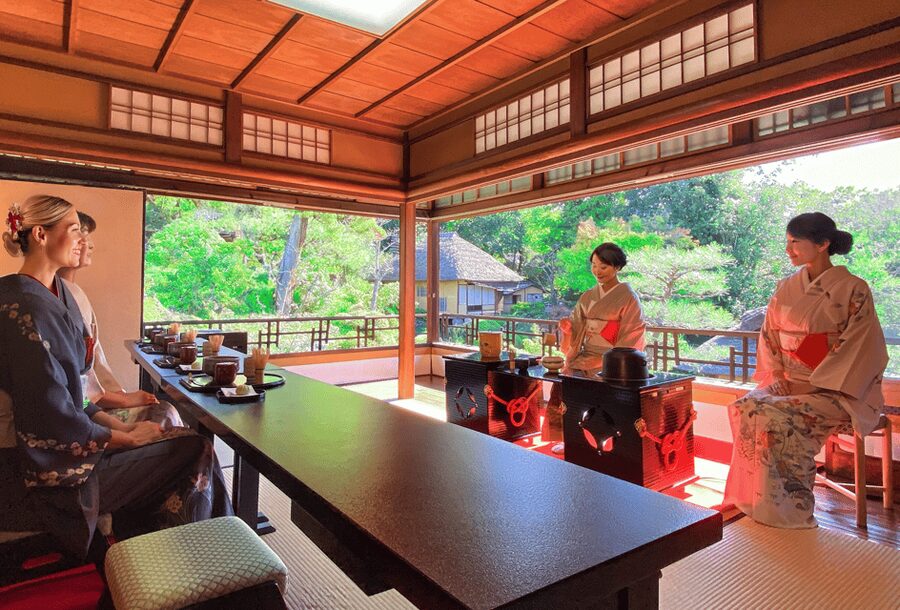
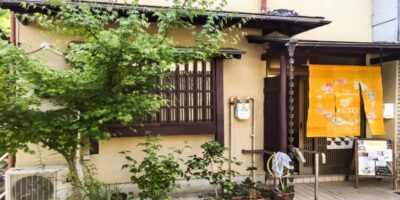
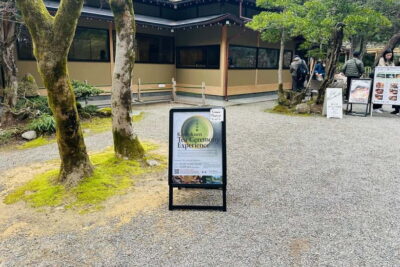
This is one of those Kyoto activities where getting the first few minutes right makes the whole thing smoother. Your meeting point is in Sannenzaka near Kiyomizu-Dera Temple. You go down Sanneizaka, walk about 50 meters, then enter a large gate on the right.
From that gate, you should be able to see the Japanese garden. Pass through the gate, walk straight about 10 meters, then use the white gate on the left to find Sakaguchian.
If you’re arriving by taxi, tell the driver to head toward Kodaiji Temple, then get off at the intersection of Sanneizaka and Ishin-no-michi. From there, you’ll still do a short walk on foot.
Quick practical tip: since you can be nearby to crowds, plan to arrive a few minutes early so you can focus on finding the gates instead of weaving through people. Also, this is a tea house, so keep your walk calm. You’re heading into quiet mode.
More Tea Ceremonies in Kyoto
- Kyoto: Tea Ceremony Ju-An at Jotokuji Temple
★ 4.9 · 3,207 reviews - Kyoto: 45-Minute Tea Ceremony Lesson Experience
★ 4.3 · 2,378 reviews - Kyoto: Table-Style Tea Ceremony at a Kyo-Machiya
★ 4.9 · 1,211 reviews
A tranquil tea house setting with Ogawa Jihei VII garden influence
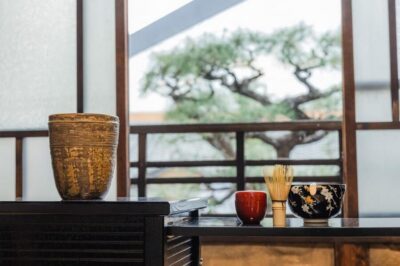
Even though you start near a popular sightseeing area, the ceremony happens in a space designed to feel removed from the street. A big part of the appeal here is the garden. You’re not just drinking tea, you’re sitting where you can look out at the greenery and quiet the garden provides.
The garden is credited to landscape artist Ogawa Jihei VII, which is a detail worth paying attention to. It helps explain why the whole experience feels intentional, from the approach to the tea house to the view you get during the session.
The tea house itself tends to feel serene, and that matters for matcha. When you’re relaxed, you taste more. You notice aromas. You pay attention to how the matcha texture and temperature change from the preparation to the sip.
And yes, the setting can feel extra special because it’s tucked away. One traveler’s advice was to look for the long lane with lanterns that helps guide you in from the busier streets. That line of travel is part of the transition, from city energy to ceremony calm.
The tea ceremony intro: the 500-year context before the ritual
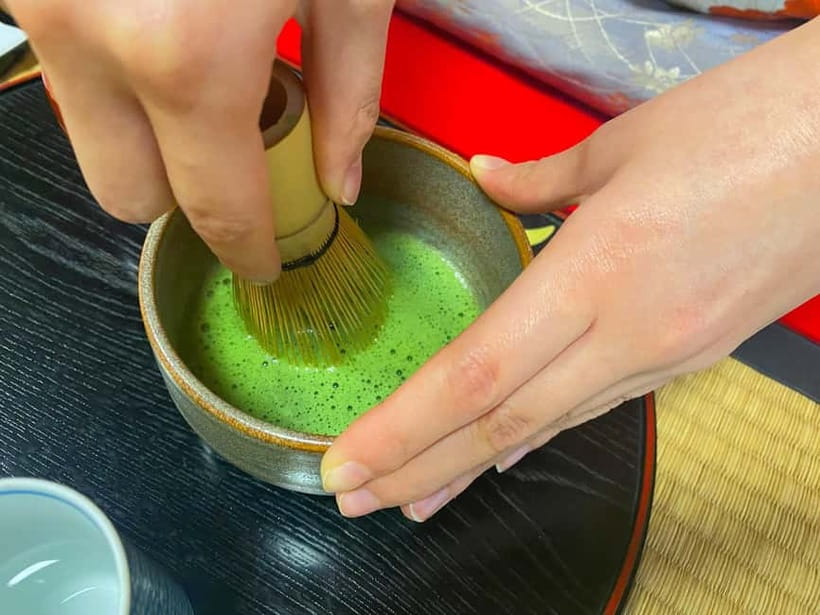
Before you start whisking matcha, you get a brief introduction. You’ll be greeted by your instructor and hear about the 500-year history behind the ceremony. The point is not trivia dumping. The best part of this kind of intro is that it gives your brain a framework so the movements and pacing make sense.
Then you watch a tea master demonstrate tea preparation. This is where the ritual shows its discipline. The tea master’s role is to show how each step fits into the overall flow, not just how to make tea.
An important detail: the instructor is listed as English, and that can be a big deal in Japan. You want to understand what you’re doing and why, especially when the goal is making your own matcha. One group noted an instructor named May who was praised for warm and clear English explanations, which is exactly the kind of guidance you want so you’re not just copying motions.
If you pay attention during the watching segment, the hands-on part later is easier. You’ll understand what to focus on, like how careful movements create the right matcha outcome.
Learning to brew matcha, with two cups included
The main event is practical. After watching the demonstration, you’ll learn how to brew your own matcha. You’ll follow the guidance and then enjoy a bowl of freshly prepared matcha.
This matters because matcha isn’t just tea you drink. It’s a texture and a process. The ceremony teaches you how the preparation changes the result, and once you’ve made it yourself, you start tasting like you know what you’re looking for.
A key value point: the experience includes 2 cups of matcha. Many tea tastings give you a sip and move on. Here, you get enough to treat matcha as part of the ritual, not as a quick sample.
You’ll typically taste one cup as part of the ceremonial flow, and another while you practice and enjoy the result. Either way, you leave with a better sense of what ceremonial matcha is meant to be like.
One more practical angle: you’re in a formal setting, so keep your participation respectful. The ceremony is timed, and the tea master’s work deserves the quiet focus it’s built for.
A change of pace from Kyoto:
- PERFECT KYOTO 1-Day Bus Tour
★ 5.0 · 13,518 reviews - Kyoto: Fushimi Inari, Kinkakuji, Bamboo Grove 1 Day Bus Tour
★ 4.8 · 4,316 reviews - Kyoto Geisha Walking Tour: Gion District & Hidden Gems
★ 4.7 · 3,273 reviews - Kyoto: Gion Magical Night Walking Tour with Geisha Trivia
★ 4.9 · 2,393 reviews
The customary sweet and why it belongs with matcha
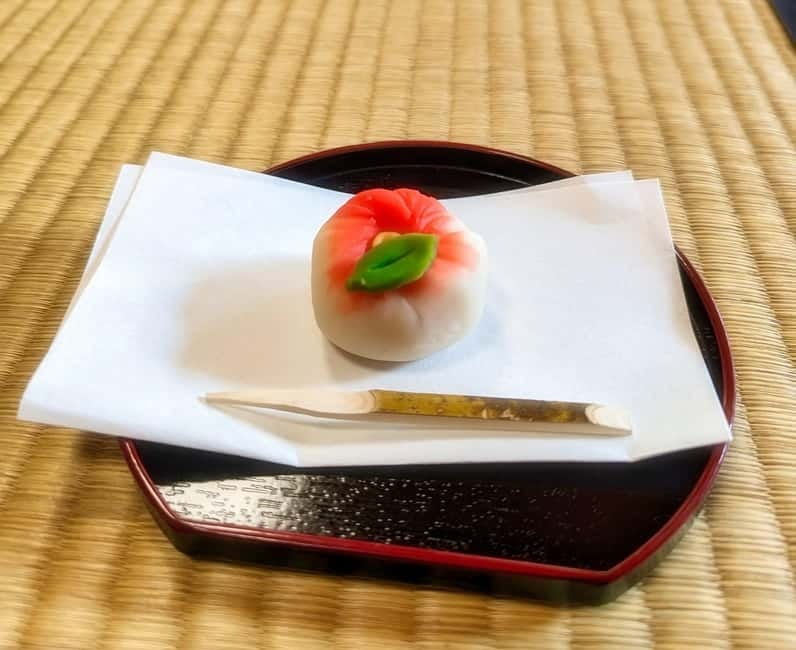
After the matcha preparation and tasting portion, you’ll also get traditional Japanese sweets. This is more than dessert. In a tea ceremony context, the sweet helps balance the flavor experience and adds a small, satisfying moment of taste alongside the matcha.
It also gives you a chance to slow down. You’re not rushing from one photo to the next. You’re tasting something that’s typically served with tea as part of the overall pacing.
If you’re someone who worries that matcha will be too bitter, the sweet and proper matcha preparation can shift the impression. Several people noted that the matcha they had here felt smoother than the matcha they were used to, which is often what happens when matcha is prepared carefully in the right style.
Photo time in the garden, plus what you get at the end
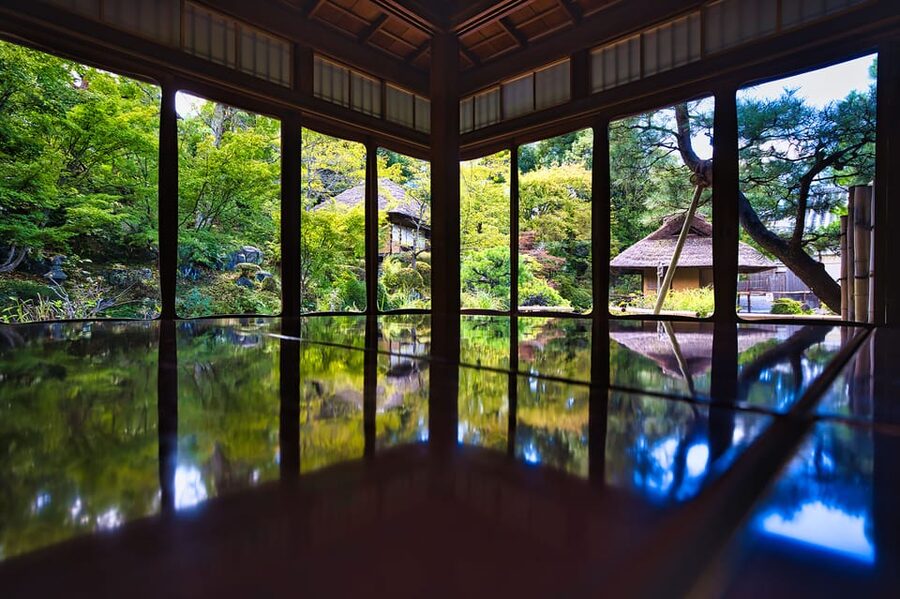
At the end, you’ll pose for a photo with your group, and the garden becomes your backdrop. A photo isn’t just a souvenir here. It’s the last step in the ceremony flow, after the tasting and practice.
The experience includes a photo, so you’re not left scrambling to take your own shots right at the finish line. Since you’re taking the picture in a garden setting, it tends to look far more Kyoto than another street photo.
Bring a calm mindset for this part. The ceremony is not the time for loud wandering or disruptive movement. You’ll enjoy it more if you treat it like a performance you’re participating in, not a check-the-box activity.
Price and value in Kyoto for matcha plus real instruction
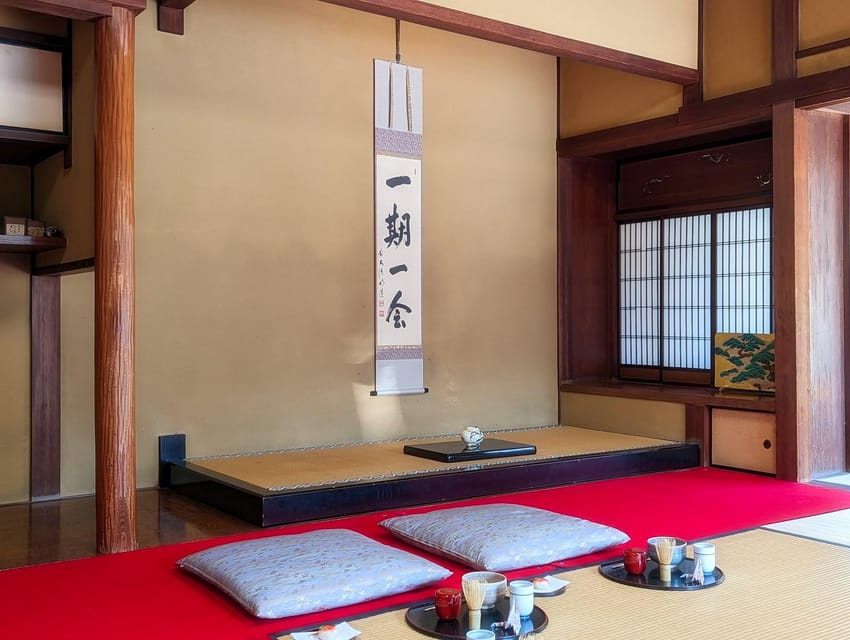
The price is $49 per person, for about 45 minutes. On paper, it’s not a long time. In practice, it packs a lot into that window: a tea master demonstration, your own matcha preparation, 2 cups of matcha, traditional sweets, and the included photo.
The value is in the mix. You’re not just buying tea. You’re paying for:
- guided instruction in English
- a formal tea master presentation
- hands-on brewing so you can repeat the idea later
- a structured, peaceful setting that actually supports tasting
If you’re the type who likes doing something with your hands, this is a better use of time than many passive activities. If you only want a quick souvenir and don’t care about procedure, it may feel expensive. But if you like learning a craft for 45 minutes, it’s a fair deal for what’s included.
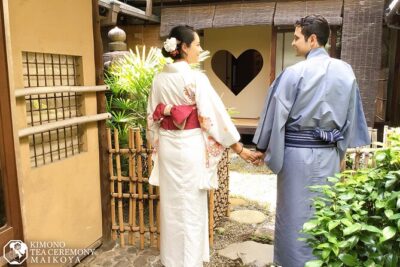
Also, kimono rental is not included. If you had your heart set on dressing up, plan for that separately or simply lean into modern clothes. Many people prefer staying comfortable and focusing on the tea ritual itself.
What to wear, and the rules that keep the ceremony respectful
This is a tea house experience, so dress like you’re stepping into a calm indoor space. Wear comfortable shoes. Kyoto sidewalks can be uneven near temple areas, and you do walk in to the meeting point.
Two practical rules from the experience details:
- No luggage or large bags are allowed
- The ceremony runs rain or shine
So, travel light. A small day bag is usually what you want, and keep your hands free for the walk and any guided movement inside.
Also, the experience is not suitable for children under 7. If you’re traveling with kids, this is a “check the age” situation, not a “bring them and see” kind of thing.
Finally, think of the ceremony as a respectful room. Keep phone use quiet, avoid walking around during the active preparation, and give the tea master room to work. That kind of behavior keeps the vibe peaceful for everyone.
Who this Kyoto tea ceremony suits best
I think this works best if you:
- want a hands-on experience with matcha, not just tasting
- like small-group cultural activities where you can ask questions
- enjoy Kyoto’s calmer side, especially when the surrounding streets can be busy
It’s also a smart choice if you like learning how traditions are practiced, down to the pacing and attention to detail. Even people who arrived thinking matcha wasn’t their thing often left with a new opinion after seeing and making it the ceremonial way.
If you’re traveling as a couple or on your own, it still feels personal because the session is short and structured. If you’re with a small group, it can feel especially smooth since you’re all guided together and get a single shared photo at the end.
Should you book this Kyoto tea ceremony at Sakaguchian?
Book it if you want a focused, respectful Kyoto cultural moment with matcha practice, not just a photo. At $49 for 45 minutes, the included two cups of matcha, sweets, tea master demonstration, and photo make it a strong value when you treat it as an activity, not a stop.
Skip it only if you’re the type who dislikes structured rituals, or if you strongly prefer experiences where you can wander freely at your own pace. This ceremony is guided, timed, and intentionally calm.
If you’re debating, here’s my practical rule: if you’ll actually pay attention while learning, you’ll leave with a story you can use, plus the taste memory of properly prepared ceremonial matcha.
FAQ
Where exactly is the meeting point?
Meet at Sannenzaka near Kiyomizu-Dera Temple. Walk about 50 meters down Sanneizaka, enter the large gate on the right, then after passing through it, go straight about 10 meters and enter the white gate on the left to find Sakaguchian.
How long does the tea ceremony last?
The duration is 45 minutes.
How many cups of matcha are included?
You’ll receive 2 cups of matcha as part of the experience.
What else is included besides matcha?
The experience includes the tea ceremony, traditional Japanese sweets, and a photo. (The listed matcha and sweets are included as part of that.)
Is a kimono rental included?
No. Kimono rental is not included.
Is the instruction offered in English?
Yes, the instructor is listed as English.
Does the experience run in bad weather?
It takes place rain or shine.
Are luggage or large bags allowed?
No. Luggage or large bags are not allowed.
Is it suitable for young children?
It is not suitable for children under 7.
If I take a cab, where should I go?
Tell the driver to head toward Kodaiji Temple. Get off at the intersection of Sanneizaka and Ishin-no-michi, then walk to the meeting point.
Can I cancel and get a full refund?
Yes. You can cancel up to 24 hours in advance for a full refund.
Latest write-ups near Kyoto
- Kyoto Tea Ceremony and Samurai Photo Session★ 5.0 · 70 reviews
- Kyoto: Replica food making experience★ 4.8 · 70 reviews
- Kyoto: Kinkakuji, Golden Pavilion Guided Tour★ 4.7 · 71 reviews
- Private departure transfer from Kyoto city to Kansai International airport★ 5.0 · 72 reviews
- Uji: Green Tea Tour with Byodoin and Koshoji Temple Visits★ 4.8 · 72 reviews
- Kyoto: Geisha Dinner & Gion Cultural Walk★ 5.0 · 73 reviews
- Kimono and Yukata Experience in Kyoto★ 4.5 · 73 reviews
- Kyoto: Toei Kyoto Studio Park Admission Ticket★ 4.1 · 73 reviews
Tea Ceremonies, compared.
World Heritage Kyoto & Nara Uji Authentic Matcha Experience
Read our review →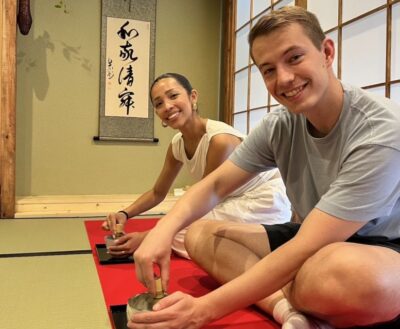
Arashiyama Bamboo Forest, Monkeys, Matcha & Temple Tour
Read our review →Browse the lists this tour appears in