
Reviewed · PRIVATE DRIVERS
Private Kamakura plus Yokohama Tour – English Speaking Driver
Kamakura and Yokohama in one private day sounds like a lot, but this tour keeps it sane with a private, English-speaking driver and a comfortable vehicle. I like that the plan focuses on standout religious sites in Kamakura, including the Great Buddha, and then shifts gears to Yokohama’s waterfront mood and Chinatown food street energy. The one thing to watch is that you are paying for driving comfort, so if you crave a deep, museum-style guide, this is not that by default.
The big consideration is timing and road conditions. The drive south from Tokyo into Kamakura can be slow at certain hours, and you’ll want a driver who knows how to handle traffic smoothly and safely.
Key Takeaways Before You Go
Private vehicle for up to 5 means less transit stress and more time where you actually want to be.
English-speaking driver support helps you navigate what you are seeing without switching to trains.
Kamakura focus hits the essentials from bamboo temple grounds to the Great Buddha.
Yokohama Chinatown and Sankeien Garden add variety beyond temples, with food and classic garden scenery.
Minatomirai is optional depending on time, so don’t count on it as guaranteed.
Admission isn’t included for several stops so budget for tickets where applicable.
Private Driver for Kamakura and Yokohama, not a DIY marathon
This is a smart choice if you want a one-day hit of two Japanese destinations that are close enough to day-trip from Tokyo, but annoying enough to plan if you are relying on trains and transfers. You get a dedicated driver, pickup from your Tokyo hotel or another spot, and a route that strings together Kamakura temples and Yokohama highlights with minimal hassle.
What makes the experience feel worth it is the mix. Kamakura gives you temple atmospheres, shrine details, and big iconic sights like the Great Buddha. Then Yokohama changes the pace, with a waterfront area and Chinatown that is a very different kind of sightseeing experience.
The biggest reason I’d pick a private format here is simple: you save energy. You spend less time figuring out platforms, more time walking, and you can keep your day from turning into a sprint.
Also on the shortlist for Tokyo:
- Mt Fuji and Hakone 1-Day Bus Tour Return by Bullet Train
★ 5.0 · 26,383 reviews - 1-Day Tokyo Bus Tour
★ 5.0 · 14,250 reviews - Tokyo: TOKYO SKYTREE® Admission ticket
★ 4.5 · 11,192 reviews
Price and Value: $650 per group, up to 5 people
At $650 per group (up to 5) for about 10 hours including commuting, this is not “cheap,” but it can be good value if you compare it to the cost of taxis plus the time you would lose moving around by public transport.
Here’s the practical math: if you fill all 5 seats, you are effectively around $130 per person for a full day of driving and private routing. If you travel as 2 or 3, your per-person cost climbs, but you still gain something you cannot buy with train tickets: you avoid the stress of coordinating transfers and you keep control over pacing.
Another value point is flexibility. The tour is described as customizable, and several drivers are praised for keeping things smooth and organized. If your group has specific interests like early access to popular spots or a stop added around time, a private driver format usually makes that easier.
Meeting at 8:00 am and how the day actually works
The tour starts at 8:00 am, and it runs about 10 hours including commuting time. That “including commuting” phrase matters. It means you should plan your day so you are not rushing off for dinner at 4:00 pm. You are signing up for a full-day outing.
A private vehicle also changes how you experience each stop. You are not stuck with rigid train connections, and you can take short breaks without breaking the schedule. You’ll still spend time walking around each site and area, but you avoid the constant rhythm of finding stations, buying tickets, and checking routes.
Also, keep in mind that Minatomirai is only visited if time permits. This is common on day trips where one stop runs longer than expected. If Minatomirai matters a lot to your group, treat it as a bonus, not a guarantee.
Kamakura Stops: bamboo temple, Hase-dera Kannon, and the Great Buddha
Kamakura is where this tour earns its keep. Your itinerary includes three major temple moments, each with a very different visual and spiritual feel.
A change of pace from Tokyo:
- Tokyo: teamLab Planets TOKYO Digital Art Museum Entry Ticket
★ 4.6 · 9,779 reviews - Mt Fuji & Hakone Cruise, Drum Show Bullet Train 1 Day from Tokyo
★ 4.0 · 7,413 reviews - Tokyo: Sumo Show Experience with Chicken Hot Pot and a Photo
★ 4.8 · 6,678 reviews - Tokyo: Shinjuku Food Tour (13 Dishes at 4 Local Eateries)
★ 5.0 · 6,603 reviews
Hōkoku-ji, the Bamboo Temple
You’ll spend about 1 hour at Hōkoku-ji, known for its bamboo garden and Zen Buddhist setting in the Kenchō-ji school of the Rinzai sect. Even if you have seen gardens before, bamboo has a way of feeling more rhythmic than decorative. Expect calm walking and photo-friendly views where the greenery frames the path.
One practical note: the garden is the star, so give yourself time to slow down. If your group wants quick photos only, you may feel rushed here.
Hase-dera, Hase-Kannon, and a massive wooden statue
Next is Hase-dera, around 45 minutes. This is famous for the massive wooden statue of Kannon. This stop is more about scale and atmosphere than it is about walking a long loop. If you are the kind of traveler who likes to pause and look up, this one is built for that.
The downside is that 45 minutes can feel short if you enjoy reading details or want unhurried time at every viewing angle. The private format helps, but you still have a full day.
Kotoku-in, home of the Great Buddha
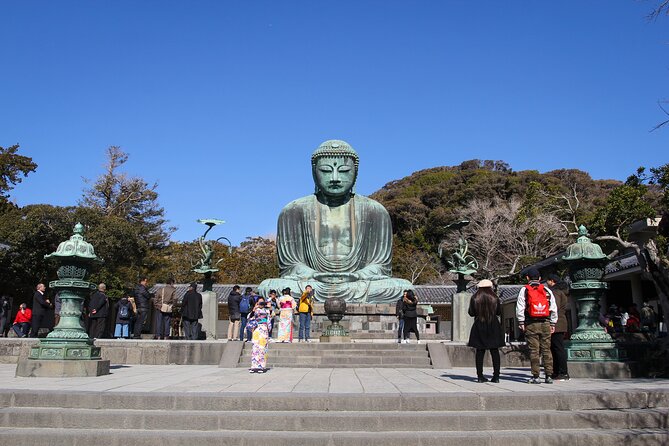
You’ll get about 30 minutes at Kōtoku-in, the temple for the Great Buddha of Kamakura. This is one of Japan’s most famous Buddhist icons, and the experience is compact by design. Think of it as your big, unmistakable anchor stop.
If you are sensitive to crowds, aim to be ready to move quickly once you arrive. The time block is short, but it is enough to see the Buddha and take a few calm minutes if the flow of visitors is manageable.
Tsurugaoka Hachimangu and Komachidori, shrine ceremony meets people-watching
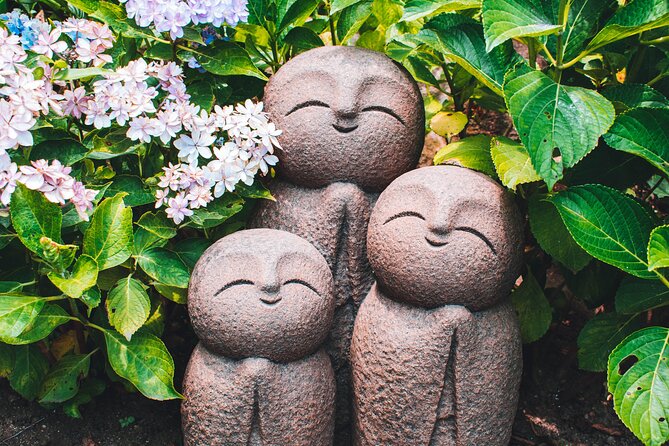
After the temple trio, the tour shifts into shrine and street energy.
Tsurugaoka Hachimangu Shrine and its clan ponds
You’ll spend about 1 hour at Tsurugaoka Hachimangu Shrine. This shrine serves as a cultural center for the city and hosts major festivals, plus it has two museums. Two ponds represent the Taira and Minamoto clans, which gives you a concrete historical tie-in beyond general shrine sightseeing.
This stop is often the one where you notice the setting. The shrine is not just a building, it is a place shaped by tradition and layout, with water and open space that affect how the grounds feel.
Kamakura Komachidori, shopping and snacks
Then you head to Kamakura Komachidori, about 1 hour 30 minutes. This is a pedestrian walkway lined with apparel, gifts, and snack stops. It is the best place on this tour to break the cultural day into something more personal, like grabbing a small souvenir or trying a local sweet.
The main consideration is that this is prime strolling time, so wear shoes you can handle on pavement. Also, set expectations: Komachidori is not a quiet temple lane. It is active, and your time will be more about browsing than photographing architectural details.
Yokohama Chinatown, Sankeien Garden, and Minatomirai time bonus
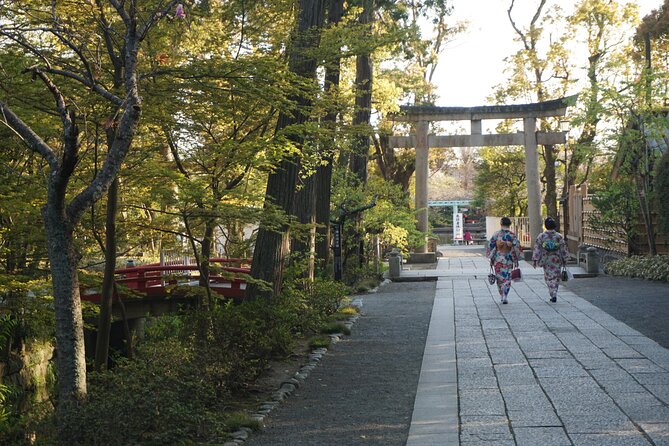
Kamakura is temples. Yokohama is variety.
Yokohama Chinatown, 160 years of food and style
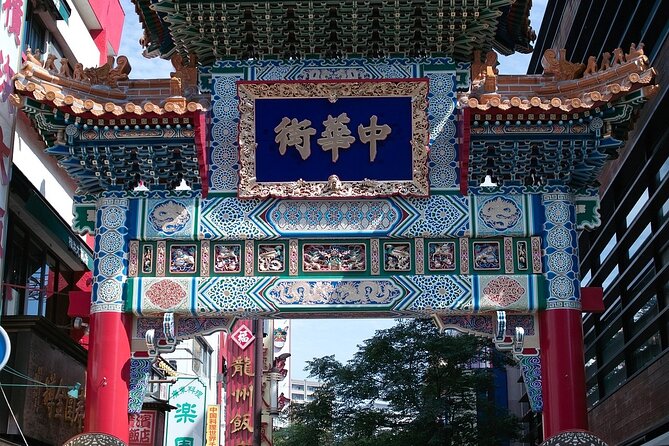
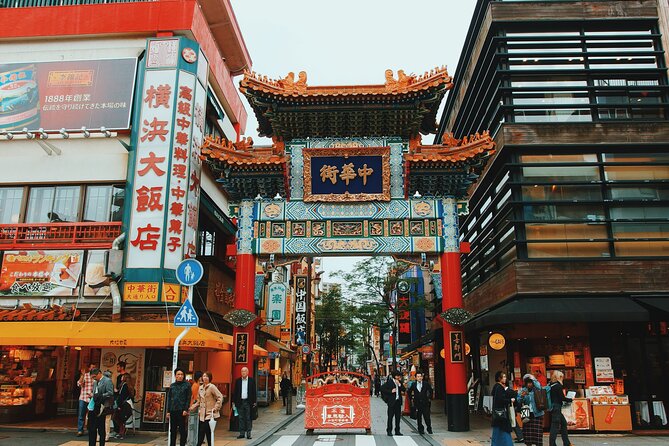
You’ll visit Yokohama Chinatown for about 1 hour. It’s described as about 160 years old, with a population around 3,000 to 4,000 today, and many residents originally linked to Guangzhou. Even if you are not chasing history facts, this matters because it explains why the area has a distinct community feel.
For what to do with your time: treat it as a sensory break from temple quiet. Wander for food, look for snack-size dishes, and watch how the streets change as you get deeper into the neighborhood. The tour notes it as free admission, so you are not paying to just walk and browse.
Sankeien Gardens for traditional garden design
Next is Sankeien Gardens in Yokohama, about 1 hour. Admission is not included, and that is normal for garden sites. What you do get from this stop is traditional Japanese garden design, opened in 1906 and designed and built by Tomitaro Hara, whose pseudonym was Sankei Hara. The garden story gives you a lens for what you are seeing, not just pretty scenery.
This stop works well if your group wants a calmer pace. The possible drawback is that garden time can feel slower if your group prefers streets and shops. If that is you, plan to mix it with more active walking elsewhere, like Komachidori or Chinatown.
Minatomirai, only if there’s time
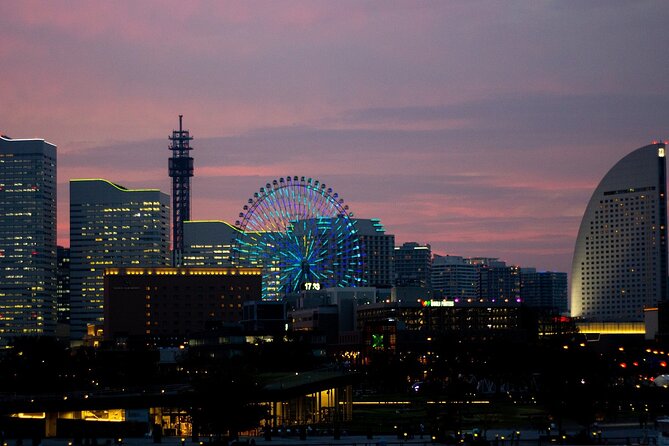
Finally, you may visit Minatomirai if time permits, about 30 minutes. It’s Yokohama’s futuristic waterfront area, known for high-rise views at the Landmark Tower and Plaza area. This is the modern contrast you want after Kamakura’s temples.
If your schedule is tight, Minatomirai becomes the “nice-to-have.” That’s why it is labeled as optional.
What you actually get from the English-speaking driver (and what you don’t)
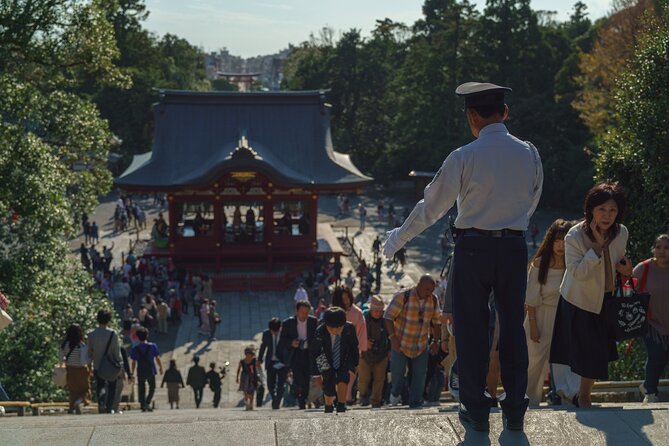
This is a private tour with an English-speaking driver, but it is not described as a guided tour. A guide can be arranged on request for an additional cost.
So what does the driver do well, in real terms? The positive notes emphasize communication and organization. For example, some drivers are praised for being easy to reach and for clarifying what you are heading to next by sending helpful links before each stop. That can be surprisingly useful on temple days, because it helps you know what details to look for while you are standing there.
Also, several reviews mention drivers being courteous, arriving smoothly, and adjusting pacing when needed. In your case, the practical benefit is that the day stays relaxed even if the road into Kamakura gets slow.
The one thing to watch is the line between driver support and extra paid add-ons. One negative experience described a driver offering extra services that required cash. I’d handle that like a grown-up traveler: if you hear about any optional add-on, ask what it includes and confirm it clearly before paying.
Transportation comfort on the drive south from Tokyo
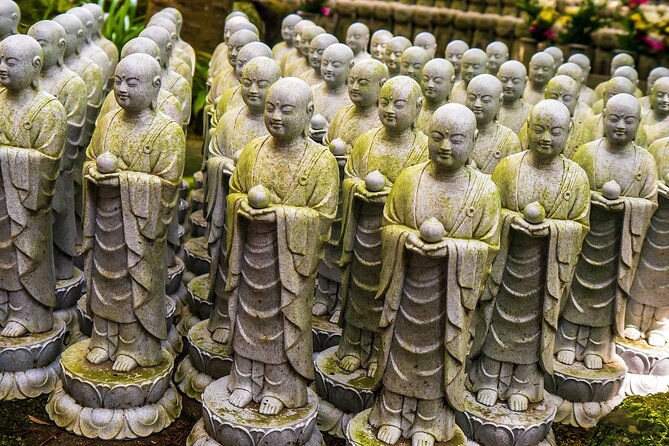
The drive from Tokyo to Kamakura is not a simple straight shot, and road conditions can make it stressful if you are trying to self-navigate. One of the strongest themes from customer feedback is that safe, confident driving matters on this route.
With a private vehicle, you get two advantages:
- Less fatigue, because you are not handling maps and stations.
- Better control over timing, because a good driver can manage pickups, stop timing, and traffic pacing.
If your group has people who get carsick easily, private driving can help because you can choose seating placement and you are not stuck with unpredictable transit schedules.
Still, plan for real life. This is a 10-hour day. Even with a vehicle waiting, the clock is moving, and you will be happier if your group treats this like a full excursion rather than a quick outing.
Tickets, admissions, and what to budget for
Admission is not included for multiple stops, while some parts are free.
Here’s the practical breakdown from the itinerary details:
- Hōkoku-ji: admission not included
- Hase-dera: admission not included
- Kotoku-in: admission not included
- Tsurugaoka Hachimangu Shrine: admission not included
- Kamakura Komachidori: admission free
- Yokohama Chinatown: admission free
- Sankeien Gardens: admission not included
- Minatomirai: admission free (if visited)
So budget for entry fees at the temple and garden stops. If you are traveling with kids or want to keep the pace easy, having tickets handled smoothly matters, and the mobile ticket format can make things quicker.
Who this tour fits best
This works best for groups who want a day-trip plan with a clear route and minimal logistics. It’s a strong match if you:
- Want temples and iconic landmarks without juggling train transfers.
- Prefer asking questions to a driver rather than reading every sign.
- Are traveling as a family group or with friends, up to 5 people.
It may be less ideal if you want a specialist guide explaining deep context at every stop, because this is described as a driver-led experience unless you add a guide.
Should you book this Kamakura and Yokohama private day trip?
Book it if you want an easy, efficient day that hits top sights without exhausting transit. The price can make sense when you fill the group size, and the itinerary gives you a balanced blend of Kamakura spirituality and Yokohama urban variety.
I would hesitate only if your group hates the idea of admission fees at temples and gardens, or if you want a true guide experience built into the price. Also be sure you communicate clearly about any optional add-ons, so your day stays smooth.
If your dream day is: bamboo temple calm, a real look at the Great Buddha, a stroll on Komachidori, Chinatown snacks, then a classic garden, this private format is a very practical way to pull it off.
Latest write-ups near Tokyo
- Tokyo Nights: Shibuya Photo Adventure★ 5.0 · 20 reviews
- Wagyu & Sake 8 Course Tasting Dinner in Shinjuku★ 4.9 · 20 reviews
- Making Japanese desserts Nerikiri & drinking matcha in Tokyo★ 5.0 · 20 reviews
- Mt. Fuji 5th Station, Owakudani Ropeway, Pirate Ship plus Outlet shopping!★ 4.5 · 20 reviews
- Japanese Whisky Hunting《HIGH-QUALITY-ONLY》Rare Tasting Class★ 5.0 · 20 reviews
- Kintsugi Experience with Arita Ware in Tokyo (English Guide)★ 4.8 · 20 reviews
- This is Asakusa! A Tour Includes the All Must-Sees!★ 5.0 · 20 reviews
- Tokyo: Karate Experience with Former All-Japan Champion★ 5.0 · 20 reviews
Private Drivers, compared.
Mt Fuji Private Tour with English Speaking Driver
Read our review →
Mt. Fuji & Hakone Private Day Tour with English-Speaking Driver
Read our review →
Haneda Airport (HND) Private Transfer to Central Tokyo
Read our review →
Mt. Fuji, Hakone Full-Day Private Tour with English Driver Guide
Read our review →
Mt. Fuji Day Trip from Tokyo with English Speaking Driver Guide
Read our review →
Mt. Fuji & Hakone Private Custom Tour English Driver
Read our review →
Narita Airport (NRT) Private Transfer to Central Tokyo
Read our review →
Private Haneda Airport (HND) to Central Tokyo City Transfer
Read our review →Browse the lists this tour appears in