
Reviewed · SUMO EXPERIENCES
Sumo Morning Training Watch in Tokyo,Hotel-pickup w/English guide
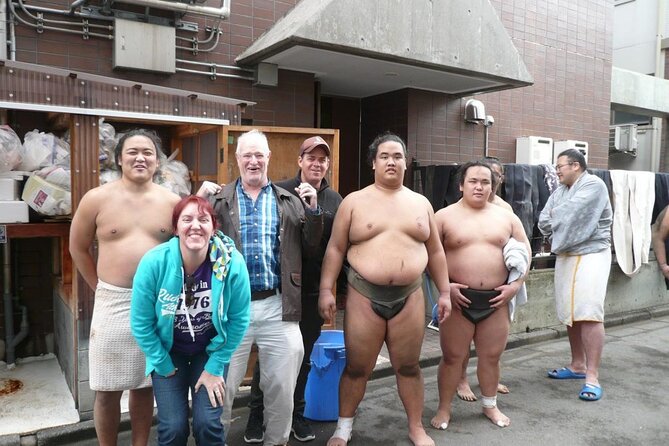
Tokyo sumo training is interesting because it is real work, not a polished performance. You are watching professional wrestlers practice in their home stable early in the morning, with an English-speaking guide steering the whole experience from your hotel.
What I like most is how well the guide sets you up to understand what you are seeing. Guides such as Hiromi, Koichiro, and Midi explain the sport as you go, and you can ask questions during the session with the tools they provide (notes, handouts, or simple Q and A time).
One thing to consider is the logistics, especially the walk and subway segment to the stable. You also have to follow the quiet rules inside, so if you want constant commentary, plan to save your questions for after the training, when your guide has time.
Key things you will enjoy most
- Hotel pickup plus an English guide makes the early start feel effortless.
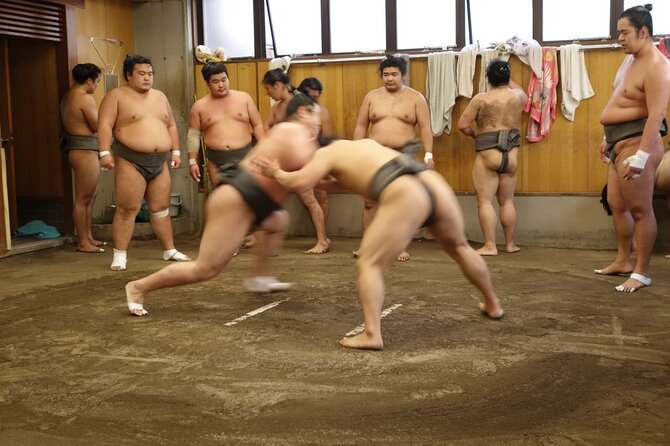
- Up close training in a real stable, often near the ring with cushions or low chairs.
- Clear explanations that match the action, including who is who and what techniques matter.
- Hands-on ways to ask questions during the visit, without disturbing training.
- Photo time after practice is commonly part of the experience, schedule dependent.
- Some guides add a small cultural stop on the way, like a shrine or temple, if time allows.
The 7:30 am hotel pickup that sets the day up right
This is a morning tour, starting at 7:30 am, and that timing is the whole point. Sumo practice in a stable is a disciplined routine. The earlier you arrive, the more you see the rhythm, the warmups, and the serious mindset that comes before the big moments of tournament season.
The tour includes hotel pickup, and you are paired with a nationally licensed English-speaking guide. In the real world, that matters. Tokyo mornings can be confusing if you are hopping between stations with no plan. Here, you get a human map plus a lesson in how to look at sumo properly.
Group size stays small, with a maximum of 15 people. That keeps the pace friendly. You are not just being herded to a viewing spot. Your guide can answer questions and help you notice what is going on.
More Sumo Experiences in Tokyo:
- Tokyo: Sumo Show Experience with Chicken Hot Pot and a Photo
★ 4.8 · 6,678 reviews - Tokyo: Sumo Show and Dining Experience
★ 4.8 · 2,742 reviews - the SUMO show
★ 5.0 · 1,960 reviews
A quick value check on the price
At $159.88 per person for about 3 hours, you are paying for three things that are hard to DIY:
- Access to a stable training session in a structured, guided way
- English interpretation that helps you understand rules, rituals, and technique
- Pickup that reduces the stress of getting there early
If you are the type who gets more out of experiences with context, this price starts to feel fair.
Getting from your hotel to the stable, and what to wear
After pickup, you head toward the sumo stable using public transit. Depending on the day and the stable, that can mean a mix of train and bus, or a simpler route that still includes walking.
A practical tip from real experience: the route to the stable can involve foot and subway time, so pack smart.
- Bring a Suica card or equivalent transit card so you do not scramble for tickets.
- Wear good walking shoes. The stable area is not always a straight shot from the last subway stop.
- Dress for morning temperature. You will feel it once you are outside before training starts.
Your guide handles the navigation, and that is especially helpful if you are arriving in Tokyo and not fully settled yet. More than one guide experience included extra orientation in transit, plus quick background on sumo and Japanese everyday life as you travel.
The stable visit: what training actually looks like
Once you arrive, you are not watching a movie scene. You are seeing the working side of sumo. The stable is where the sport happens day after day, with training that includes both body work and practice sessions.
The program is expected to follow a structure like this, though the exact order can vary by stable and session:
- Basic sumo exercises
These focus on strengthening legs, hips, and upper body, plus muscle-building work.
- Practice matches
You will watch serious bouts between two wrestlers at a time. This is often the most exciting part because you get the intensity up close.
- After the session photo opportunity
You may get a chance to take photos with wrestlers, but it depends on the schedule for that day.
A change of pace from Tokyo:
- Mt Fuji and Hakone 1-Day Bus Tour Return by Bullet Train
★ 5.0 · 26,383 reviews - 1-Day Tokyo Bus Tour
★ 5.0 · 14,250 reviews - Tokyo: TOKYO SKYTREE® Admission ticket
★ 4.5 · 11,192 reviews - Tokyo: teamLab Planets TOKYO Digital Art Museum Entry Ticket
★ 4.6 · 9,779 reviews
The quiet rule inside matters
Inside the facility, there is typically a rule about keeping quiet during training. One reason this is so important: wrestlers are locked into concentration, and any noise can break the flow.
So instead of expecting your guide to narrate constantly in real time, think of it as two parts:
- A quiet viewing window where you watch and learn
- A discussion time after, where your guide answers questions and explains what you saw
If you enjoy observing first, then asking smart questions, you will love this format.
How your English guide turns confusion into understanding
The guides are a big reason this tour earns such high marks. People consistently talk about guide warmth and clarity, with names like Hiromi, Koichiro, Atsushi, Yuka, and Koichiro Shimotamari showing up in the experience.
Here is what you can realistically expect from that guide role:
- A pre-training overview so you know what to look for
- A handout or written notes that help you follow along
- Help figuring out who is in the ring and what their roles might suggest
- Time to ask questions using a low-disruption method
In some experiences, guides wrote or sketched explanations, or used simple tools like paper and pen to support Q and A. In at least one case, a guide used a dry erase board so the group could communicate without talking over training.
That might sound like a small detail, but it is huge. If you know what a move is trying to accomplish, the match stops being random wrestling and starts looking like strategy plus leverage plus discipline.
Practice matches up close, plus the real physicality
Practice matches are not staged for casual entertainment. They are training bouts with real effort. You are close enough to feel the seriousness, and you often hear the impact of contact and movement.
This is one of the tour’s most praised moments: sitting near the action. Many experiences describe being seated with cushions close to the ring, with some mention that low chairs are also used. If you have knee issues, low seating can be tricky. It is worth considering if you need more comfortable support.
In the ring, you might also notice the rest of the stable working at the same time. That can include stretching, drills, or other wrestling practice around the main area. It makes the whole stable feel like a living training environment, not a single two-person show.
The small moments that make it feel authentic
A couple of details show up again and again:
- Your guide points out who is important and who has momentum, so you are not watching blindly.
- The stable master or senior figures may communicate with wrestlers during training, and you can see the discipline in motion.
You are witnessing the sport as it is built, not as it is packaged.
Photo time and small cultural stops after training
A common highlight is meeting the wrestlers at the end. In many schedules, you can take photos after training ends. It is schedule dependent, but it is a meaningful part of why people book.
Two notes to keep expectations realistic:
- Photo chances may vary by stable and day.
- There may be a flow to photos, so do not assume you will linger indefinitely.
Some guides also add small cultural stops around the edges of the morning. Examples from real experiences include:
- A brief shrine or temple visit on the way back
- Extra local stops like passing by a supermarket as part of the route
These additions are not guaranteed every single time, so treat them as a bonus rather than a promise. Still, they make the morning feel more like a Tokyo morning with a local guide, instead of only sumo in a vacuum.
Price and value: what you are really buying
At $159.88 for a roughly 3-hour experience, you are not paying for a long itinerary. You are paying for access and context.
Hotel pickup is one of the biggest “value levers.” Morning tours can cost you time and energy if you need to coordinate trains yourself while still being tired from jet lag or adjusting to Tokyo transit.
The English guide is the second lever. Sumo can feel mysterious at first. Rules, ranks, rituals, and even etiquette are not obvious if you only know the basics. A good guide makes a short morning visit stretch into a much richer understanding.
The third lever is the stable access itself. This is not just watching from afar in a stadium. It is being inside a working environment. That changes the experience, and it is why people get emotional about how close they are to real training.
If you like sports and you want authentic culture, this is one of the more efficient ways to get both in a single morning.
Who should book this sumo morning training?
This fits best if you:
- Want a close-up, real training experience rather than a generic introduction
- Appreciate a guide who explains what you are seeing, not just where to stand
- Can handle an early start and a morning walk or subway ride
- Prefer learning through quiet observation, then discussion afterward
It might be less ideal if you:
- Need constant narration during the training itself (the quiet rules can limit that)
- Have trouble with low seating
- Want a long, slow tour with many stops
Good news: the tour says most people can participate, so it is not extremely technical or physically demanding beyond normal walking.
Dates when the program is not running, so plan ahead
This experience is not available on certain dates in 2025:
- May 10 to June 5
- June 26 to August 6
- September 13 to October 8
- October 23 to December 3
So if you are traveling during those windows, you will need a backup plan for sumo viewing. If you are aiming for specific dates outside those ranges, it helps to book early. This tour is commonly reserved about 57 days in advance on average.
Should you book this sumo morning training tour?
If you want a genuine sumo stable experience in Tokyo, this is an easy yes. The strongest reasons to book are the combination of hotel pickup, English guidance, and the chance to watch real practice close up, with explanations that keep the action meaningful.
My rule of thumb: if you can handle an early wake-up and you like learning as you watch, you will come away thinking this was a smart use of time. The photo opportunity after training, plus the quiet, disciplined viewing experience, is exactly the kind of Tokyo morning that sticks with you.
If you are unsure, ask yourself one question. Do you want sumo as a sport with context, or sumo as a quick sight? This tour is built for the first one.
FAQ
FAQ
What time does the tour start?
The start time is 7:30 am, and you are picked up from your hotel.
Does the tour include hotel pickup?
Yes. Hotel pickup is included, but hotel drop-off is not included.
Is there an English-speaking guide?
Yes. The tour includes a nationally licensed English speaking guide.
What is the tour duration?
The duration is about 3 hours.
Are meals included?
No. Food and drink are not included.
Is the program available on all dates?
No. It is listed as not available on several date ranges in 2025, including May 10 to June 5, June 26 to August 6, September 13 to October 8, and October 23 to December 3.
Latest write-ups near Tokyo
- Tokyo Customized Private Tour: See Top Attractions in 1 Day★ 4.8 · 67 reviews
- From Tokyo: Top 5 Scenic Spots of Mount Fuji Full-Day Tour★ 4.5 · 67 reviews
- Traditional Japanese Music ZAKURO SHOW in Tokyo★ 5.0 · 67 reviews
- Tokyo: Shinjuku Izakaya and Golden Gai Bar Hopping Tour (2h)★ 4.9 · 67 reviews
- Tsukiji: Unlimited Sake Tasting Experience★ 4.9 · 67 reviews
- Private Harajuku Omotesando Architecture Walking Tour★ 5.0 · 67 reviews
- Tokyo: Not a show- a professional sumo practice with experts★ 4.9 · 67 reviews
- Samurai Ninja Museum Asakusa: Kid-Friendly Ninja Training★ 4.7 · 67 reviews
Sumo Experiences, compared.

Sumo Show Experience with Chicken Hot Pot and a Photo
Read our review →
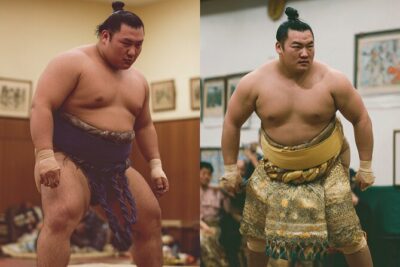
Tokyo Shinjuku Sumo Show & Experience with Photo
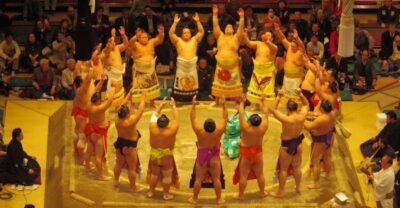
Read our review →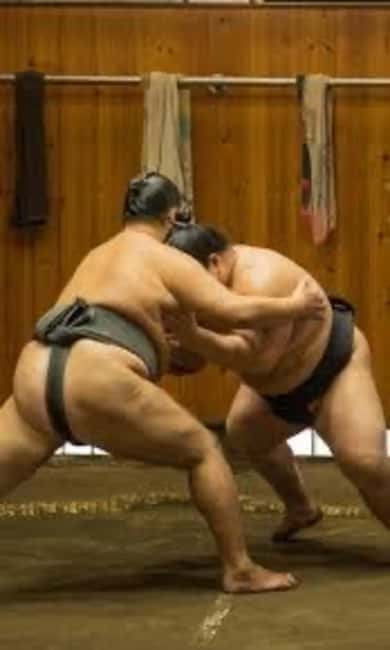
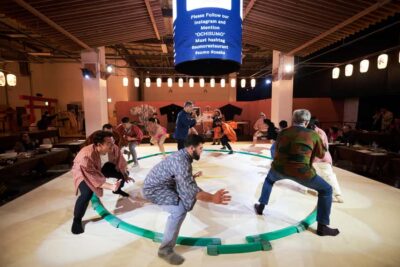
Sumo Show & Experience w/ Optional Kimono & Hot Pot
Read our review →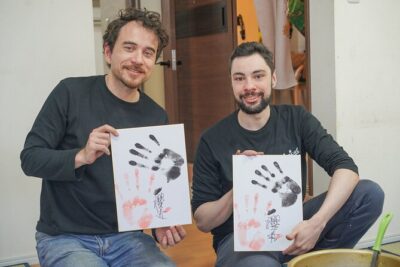
Authentic Sumo Experience in Tokyo: Enter the Sanctuary
Read our review →Browse the lists this tour appears in