
Reviewed · SUMO EXPERIENCES
Tokyo: Sumo Morning Practice Tour at Sumida City
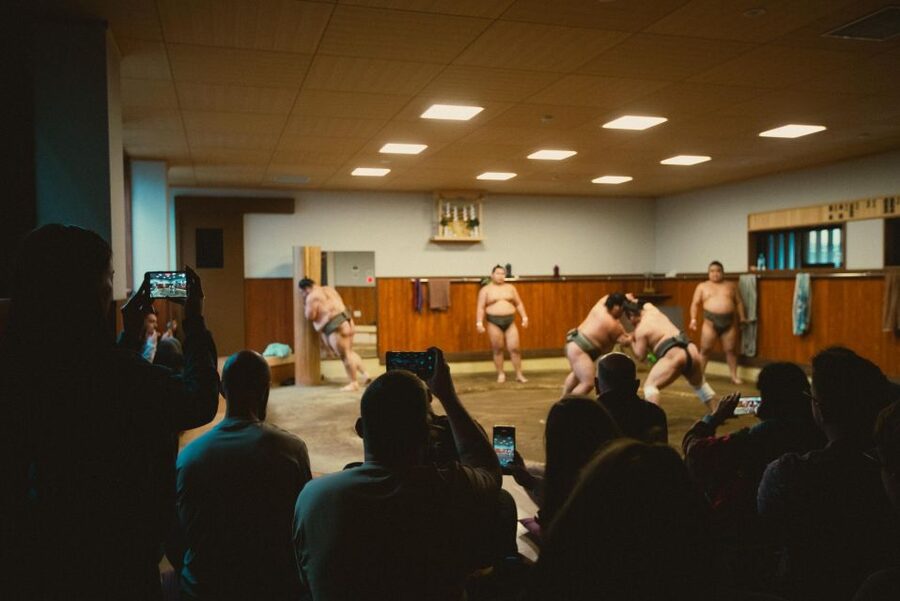
Tokyo sumo morning practice in Sumida City is interesting because it pulls you into the real rhythm of the sport, not a staged performance. You watch athletes train from very close by, while a guide explains what you are seeing and why it matters. The whole thing feels grounded and human, especially with guides like Tadashi and Kiyomi setting the tone.
I love two parts in particular. First, you get clear English guidance on the rules and rituals, which helps the practice make sense fast. Second, the experience usually includes a Q&A with the stable master or senior staff, and that is where you often learn the everyday life side of sumo. When guides like Yuriko or Juki handle the session, they also do a lot to manage expectations, including what to do, where to look, and how to behave respectfully.
The main drawback is physical and mental timing. The stable viewing area has no chairs, and you are expected to sit on the floor for about 1.5 hours. Also, you cannot use the toilet during practice, so you need to plan ahead, especially with an early start (7:30 am beginning).
Key things you will notice quickly
- Close-up training at a sumo stable: you are near the ring and the wrestlers’ routines, not across a big venue.
- English guidance on rules and rituals: you will get context so it does not just look like random chaos.
- Q&A with the stable master: questions feel welcomed, and the answers add real depth.
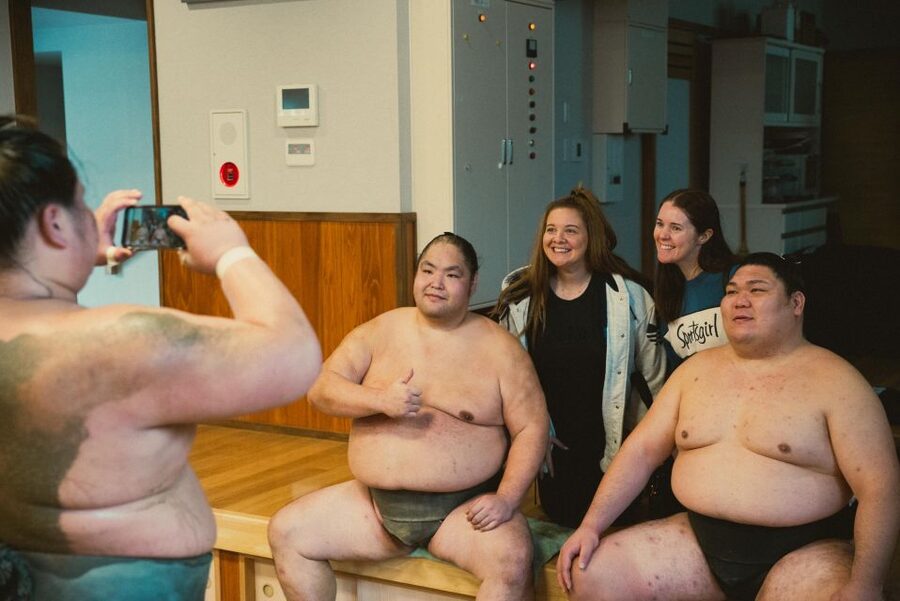
- Potential photo moment: there can be time for pictures and friendly interaction after training.
- Quiet, respectful behavior is required: no flash, no noise, and you follow the guide’s instructions closely.
Tokyo Sumo Morning Practice in Sumida City: What You Are Really Watching
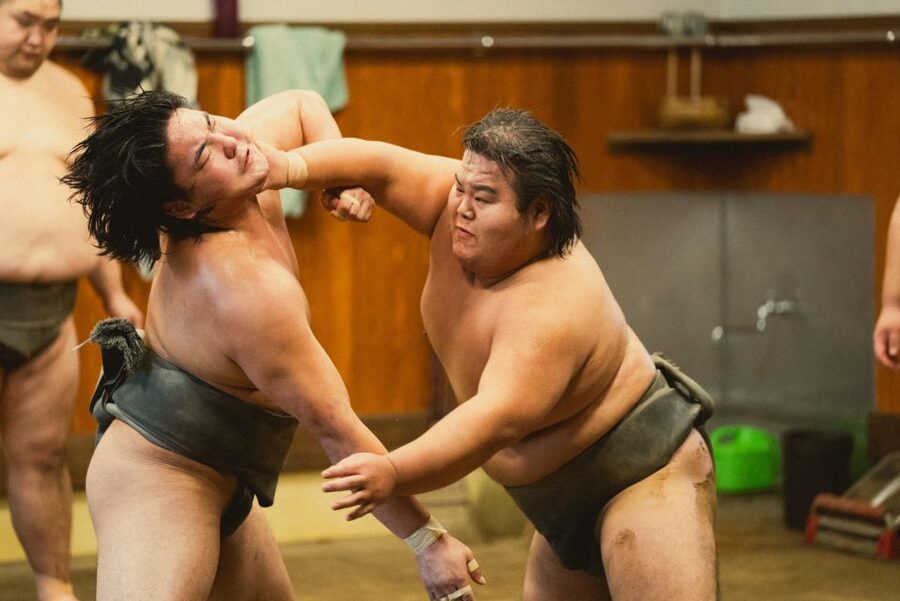
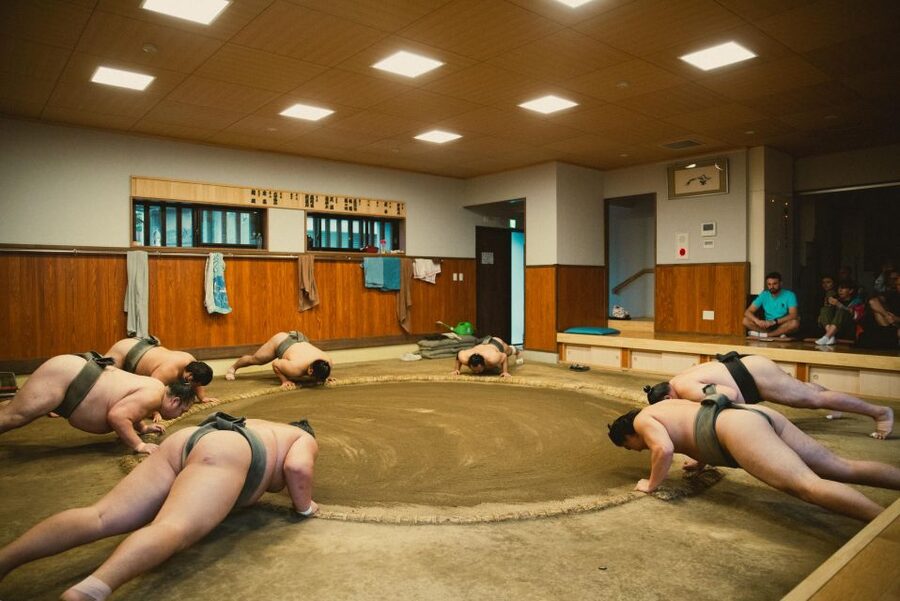
This is sumo as training, not sumo as entertainment. In the stable setting, you see how much the sport is about routine, repetition, and discipline. The mornings are intense in a way that surprises people. It is not just about who looks strongest, it is about footwork, timing, posture, and the seriousness behind every movement.
One of the best parts is that you learn what you are watching while it is happening. A good English guide will help connect the rituals, the behaviors, and the training drills to the larger sumo world. In past groups, guides like Tadashi and Kiyomi have been praised for turning a traditional practice into something you can actually follow, not just observe.
Also, you should understand the experience vibe: this is not a loud tourist show. You are asked to watch silently and respectfully, and you will feel the wrestlers’ concentration up close. That is the point. If you want a background-history lecture with zero etiquette, this is probably not for you.
More Sumo Experiences in Tokyo:
- Tokyo: Sumo Show Experience with Chicken Hot Pot and a Photo
★ 4.8 · 6,678 reviews - Tokyo: Sumo Show and Dining Experience
★ 4.8 · 2,742 reviews - the SUMO show
★ 5.0 · 1,960 reviews
Meet in Oshiage, Then Start With a Short Skytree-Area Walk
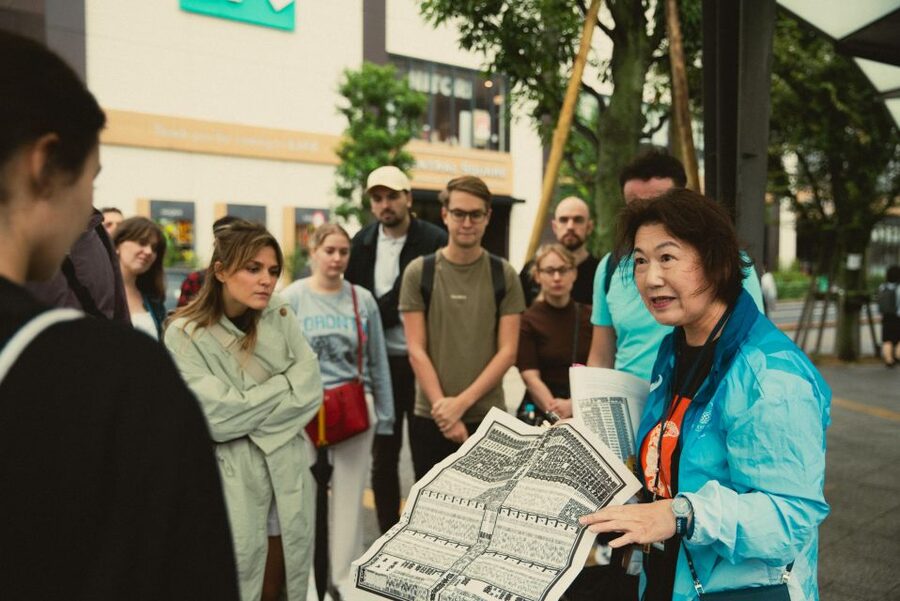
The day begins early, so plan your night like a pro. You meet at 7:15 am at Tokyo Metro Oshiage (Skytree Mae) Station, on the Toei-Asakusa Line side, Exit A1 on the ground floor. The tour starts at 7:30 am.
From there, you have a short walk into the Sumida area, with a stop near Tokyo Skytree Town (only a few minutes). After that, you get what the tour calls a guided stop before you reach the stable. In real terms, this is where your guide can set expectations and explain what matters for the practice and the stable culture.
Then it is time to go to the sumo stable. The walk from the meeting point is about 15 to 20 minutes. This is long enough that you should dress for the weather. If rain is possible, bring a small towel, because you may want to wipe your feet before entering or settling in.
Practical tip: the meeting point is a station exit area, so give yourself buffer time. If you are late, send a message. The provider will send the stable address, but you should know you still must coordinate with the guide. You should not enter the stable on your own.
The Stable Rules: Shoes Off, No Chairs, and Silence for 1.5 Hours
Inside the sumo stable, the expectations are very clear. First, plan to use the restroom before joining the tour. You cannot go during the practice. That is one of those details that sounds minor until you are sitting on the floor and time has already started.
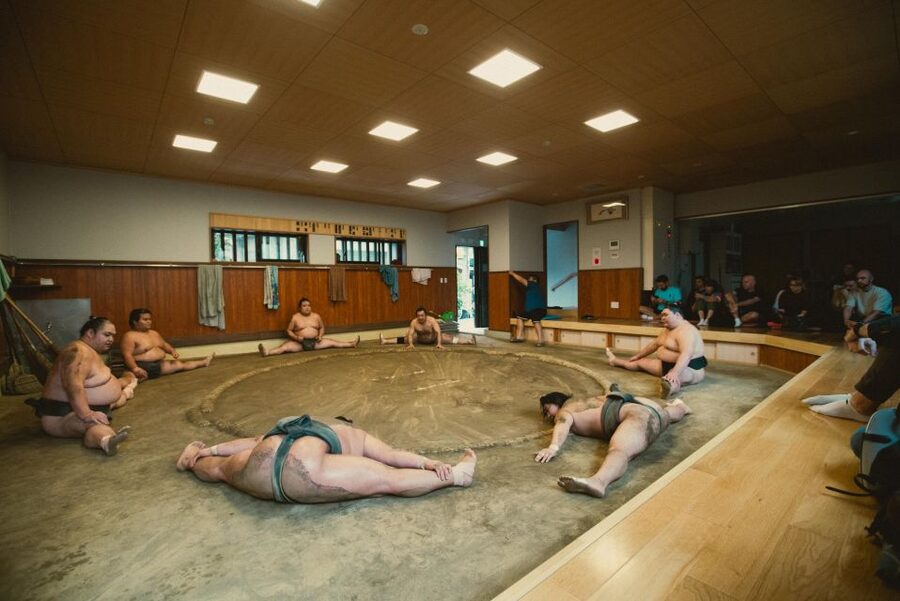
Next, chairs are a no-go. The stable viewing area has no chairs, and you are expected to sit cross-legged on the ground for about 1.5 hours. If that is not comfortable for you, or if you cannot stay still quietly that long, the provider recommends skipping the tour.
You should also know the photo and dress rules before you show up. Sunglasses are not allowed. Hats are not allowed. Food is not allowed. Flash photography is not allowed. And you should keep luggage or large bags out of the way.
There is also a key entry rule that protects the wrestlers’ focus. If you arrive late and the guide is not there yet, wait outside until your guide comes. Do not ring a doorbell. It is simply a respectful way to avoid breaking concentration.
One more thing that matters for comfort: you may need to take your shoes off when you arrive at the stable, so wear shoes that are easy to remove and put back on. People who have done this successfully tend to think like, small friction avoided equals a better morning.
Training Time Up Close: Rules, Rituals, and Real Athlete Strength
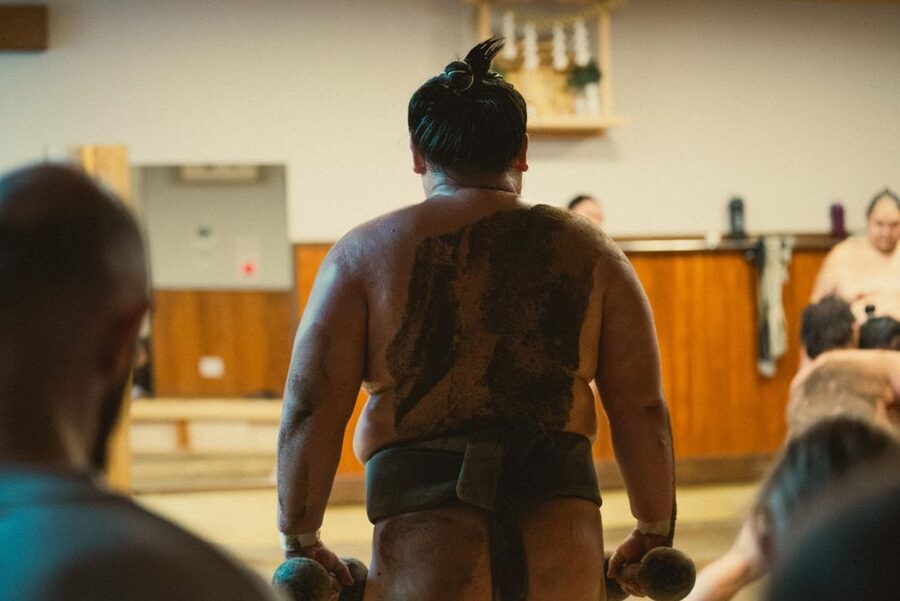
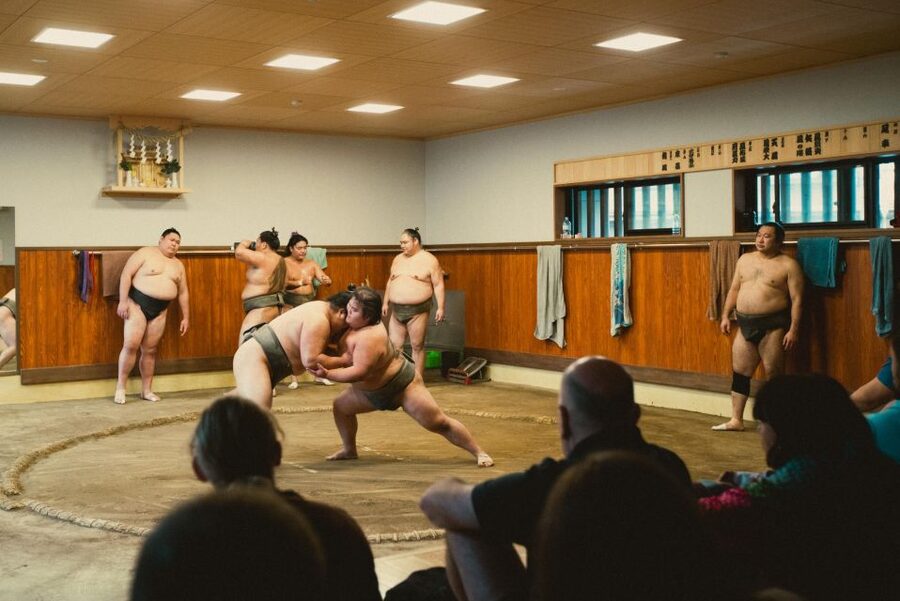
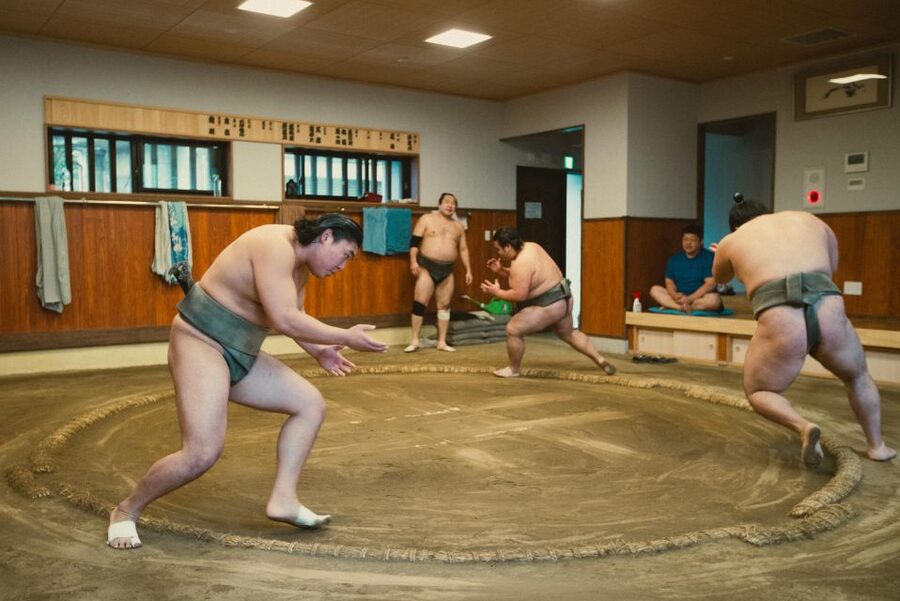
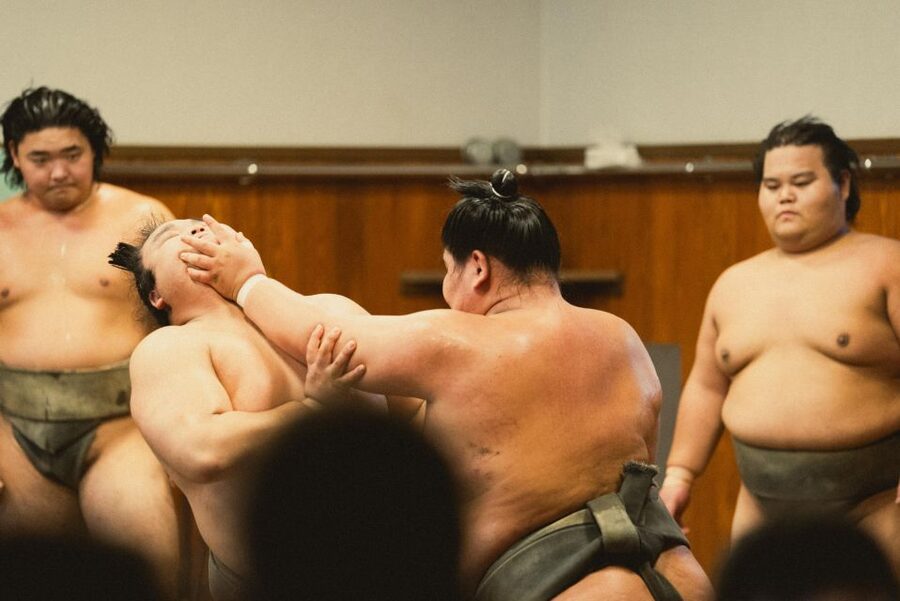
Once you are seated, the core event is the morning practice. This is where you see trainees working through drills and bouts in a compact, controlled environment. You also learn the basic structure around sumo, including the rules and rituals that show up again and again.
From the way the session is described, you are not watching a highlight reel. You are watching training. That means sometimes the action looks different than what people expect from TV. In some dates, the practice can feel lighter than a full bout day, which can happen around tournament schedules and training rotations. The key takeaway is that you are still seeing technique, intensity, and the real daily workload.
You will also notice how close you are. People consistently comment on feeling the size and strength of the wrestlers, even when the session is not a full arena spectacle. When you sit near the ring, you see details like balance and movement that you miss from far away.
And yes, it is intense. These athletes move with purpose, and their training is physically demanding. Even if you know little about sumo going in, the guidance you receive helps you recognize what is happening during the drills and why certain routines matter.
The behavior expectation is part of the experience. You watch silently. You let the wrestlers train without being part of the noise. It is one of those moments where cultural etiquette makes the viewing better, not worse.
Other Tokyo plans readers weigh up
- Tokyo: Private City Highlights Tour with Local Guide
★ 4.8 · 1,433 reviews - Tokyo: Asakusa, Skytree & Akhihabara Go-Kart City Experience
★ 4.7 · 761 reviews - Tokyo: 3-Hour Bike or E-Bike City Highlights Tour
★ 4.8 · 435 reviews - Private Haneda Airport (HND) to Central Tokyo City Transfer
★ 4.5 · 260 reviews
After Practice: Q&A With the Stable Master and Possible Photos
The session typically ends with time set aside for questions and interaction. The stable master, or the senior staff in charge, is happy to answer questions after the practice. This is a big deal because it turns your morning from watching into understanding.
In past tours, participants have highlighted the Q&A as a standout, especially because it covers what you do not see in a one-hour TV segment. People ask practical questions about training life, rules, and how the stable system shapes wrestlers. When the guide manages the flow well, you feel included without interrupting.
There is also often a chance for a souvenir photo. The exact timing can vary by day, but the tour is set up so you do not miss the moment. Some groups also describe friendly farewells at the end, which is a nice emotional finish to an early start.
Photo rules still matter. You can take photos and videos without flash and without shutter-sound style disturbance. But you cannot upload them on social media platforms. If you want to post instantly, plan for the constraint. Take what you can, then decide later how to use it.
Price and Value: Is $116 for Two Hours Worth It?
At $116 per person for a two-hour experience, you are paying for three things: English guidance, entrance to the stable, and access to a structured training session that respects the wrestlers’ workflow.
Is it expensive? It is not cheap. But it is also not just a “see sumo” ticket. The value is strongest if you want real cultural context and you appreciate quiet access. If you show up thinking this is an arena show, you may feel disappointed. If you show up ready to learn and sit respectfully on the floor, it becomes a high-value morning.
Also consider what is not included. There is no hotel pickup or drop-off, and food or drinks are not included. That means you should handle breakfast on your own, ideally before you meet. Since it is early, having a simple plan saves stress.
One more value point: the guide experience can make or break a tour. Guides such as Tadashi, Kiyomi, Yoko, Yuriko, and Juki have been described as especially attentive and helpful. When the guide is good, you spend less time guessing and more time understanding.
When You Can Go: Tokyo Schedule and Tournament Months
This tour has a seasonal reality. Morning practice tours are not held in March, July, and November because Grand Sumo tournaments take place outside Tokyo. If you are planning around those months, you will need an alternative sumo plan.
Also, the schedule for morning practice and tours is usually known one to two months in advance. That means you should check the official site around that timeframe rather than assuming the dates are fixed far ahead.
If you are traveling in a month where training is available, booking earlier is smart because these mornings are limited and tightly scheduled around stable access.
Who This Sumo Morning Tour Fits Best (and Who Should Skip)
This is best for adults and kids who can handle quiet rules and floor seating. The minimum age is 6 years old. If kids are noisy, move around, or cannot watch quietly, they may be asked to leave the stable during the tour. That is not punishment, it is protection for the training environment.
It is not suitable for people with mobility impairments. That is because there are no chairs and you are expected to sit cross-legged on the ground for about 1.5 hours. If you struggle with that kind of seating, skip it and choose a different sumo experience that matches your physical needs.
You will likely love this tour if you:
- care about culture and want to understand rituals, not just watch action
- enjoy Q&A style learning with the stable master
- want up-close contact with the training atmosphere in Tokyo
You might want to think twice if you:
- cannot sit on the floor comfortably for about 1.5 hours
- need frequent restroom access during the practice
- expect flash-heavy, high-energy photos and constant standing access
Should You Book This Tokyo Sumo Morning Practice Tour?
Book it if you want the real feel of sumo training, with a guide who helps you understand rituals, rules, and daily discipline. The combination of close-up practice, English explanation, and Q&A with the stable master is what makes it a memorable Tokyo morning rather than a quick photo stop.
Skip it if floor seating and silent etiquette are dealbreakers for you, or if you need accessibility features like chairs or easier restroom access during the session. Also skip it if you are traveling during March, July, or November, since morning practice tours are not held in those months due to tournament schedules.
If you do book, you will be rewarded most when you come prepared: use the restroom before you start, wear shoes that come off easily, bring a towel if rain is possible, and treat the stable like a working training space, not a show.
FAQ
What time should I arrive for the Tokyo sumo morning practice tour?
Meet at 7:15 am at Tokyo Metro Oshiage (Skytree Mae) Station, Toei-Asakusa Line Oshiage Station A1 Exit (ground floor). The tour starts at 7:30 am.
How long is the tour?
The duration is 2 hours.
How far do we walk from the meeting point to the sumo stable?
It is about a 15 to 20 minute walk from the meeting point to the sumo stable.
Can I use the restroom during the practice?
No. Please use the restroom before joining the tour, because you cannot go to the toilet during the practice.
Is flash photography allowed?
No. Flash photography is not allowed during the practice.
Can I upload photos or videos to social media?
The tour information says you cannot upload photos or videos on any social media platform.
Are there months when the tour will not run?
Yes. Morning practice and tours will not be held in March, July, and November because Grand Sumo tournaments are outside of Tokyo.
Is this tour suitable for young children or people with mobility issues?
The minimum age is 6 years old. If children are noisy or cannot watch quietly, you may be asked to leave the stable during the tour. It is not suitable for people with mobility impairments.
Latest write-ups near Tokyo
- Tokyo Customized Private Tour: See Top Attractions in 1 Day★ 4.8 · 67 reviews
- From Tokyo: Top 5 Scenic Spots of Mount Fuji Full-Day Tour★ 4.5 · 67 reviews
- Traditional Japanese Music ZAKURO SHOW in Tokyo★ 5.0 · 67 reviews
- Tokyo: Shinjuku Izakaya and Golden Gai Bar Hopping Tour (2h)★ 4.9 · 67 reviews
- Tsukiji: Unlimited Sake Tasting Experience★ 4.9 · 67 reviews
- Private Harajuku Omotesando Architecture Walking Tour★ 5.0 · 67 reviews
- Tokyo: Not a show- a professional sumo practice with experts★ 4.9 · 67 reviews
- Samurai Ninja Museum Asakusa: Kid-Friendly Ninja Training★ 4.7 · 67 reviews
Sumo Experiences, compared.

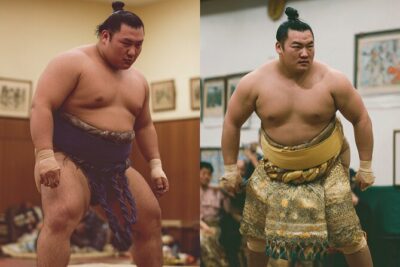
Sumo Show Experience with Chicken Hot Pot and a Photo
Read our review →
Tokyo Shinjuku Sumo Show & Experience with Photo
Read our review →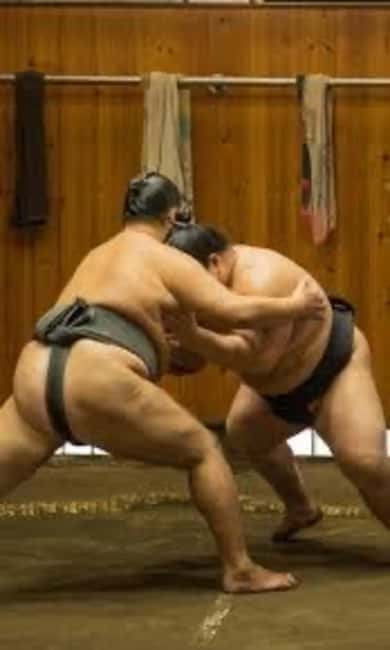
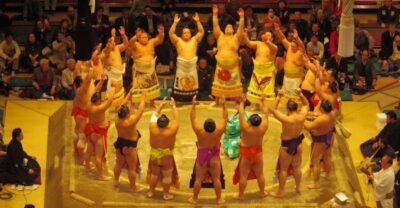
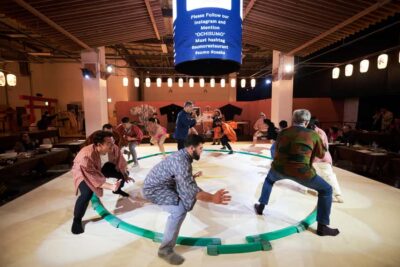
Sumo Show & Experience w/ Optional Kimono & Hot Pot
Read our review →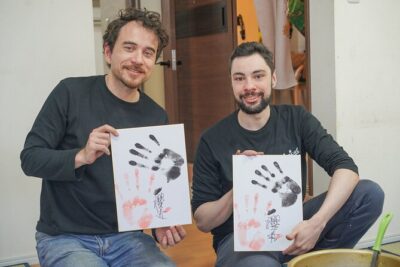
Authentic Sumo Experience in Tokyo: Enter the Sanctuary
Read our review →Browse the lists this tour appears in