Reviewed · TOKYO TOURS
This is Asakusa! A Tour Includes the All Must-Sees!
This Asakusa to Skytree private tour is interesting because it stitches together Tokyo’s old-temple streets and modern skyline views in one practical, 6.5-hour plan. I love the private guide who helps you move through crowds without guessing. I also love that the route builds from free viewpoints and temples into shopping streets like Kappabashi. The only real drawback to watch is meeting-point confusion, so double-check the exact station details before you head out.
The upside is how much you can pack in without it feeling like a checklist. You’ll see the big names, but you’ll also get context on how the area works day to day, and you’ll have time for a real meal stop near the river.
Key highlights that make this tour worth your time
- Private guide, your party only, so you can ask questions and keep a steady pace
- Free terrace views from the Asakusa Culture Tourist Information Center
- Senso-ji and Asakusa Shrine in one tight spiritual block, with the red lanterns front and center
- Kappabashi Dogugai for specialty kitchen tools, knives, and tableware shopping
- Gonpachi soba stop near Azumabashi Bridge, with big windows looking toward the Sumida River and Tokyo Skytree
- Skytree and Tokyo Solamachi to finish at the modern side of the Sumida River area
Why Asakusa feels like a crowd test, and how this tour fixes it
Asakusa is one of Tokyo’s most recognizable neighborhoods, and that also means you will meet crowds where you least want them, at the temple approaches and in the shopping lanes. If you try to do this area on your own, you can end up walking the same knot of streets twice, or spending time reading signboards instead of enjoying the sights.
This private format helps because your guide can set the flow. Instead of you constantly recalculating where to turn, you follow a route that hits the most important sights in a logical order. It also gives you a human buffer when the neighborhood gets noisy and confusing, especially around the busiest temple approaches.
One more thing I appreciate is that the tour is explicitly designed for a “know what you’re looking at” experience. You’re not just walking from landmark to landmark. You get history and culture context as you go, plus chances to ask your guide what daily life in Japan is like.
Also on the shortlist for Tokyo:
- Mt Fuji and Hakone 1-Day Bus Tour Return by Bullet Train
★ 5.0 · 26,383 reviews - 1-Day Tokyo Bus Tour
★ 5.0 · 14,250 reviews - Tokyo: TOKYO SKYTREE® Admission ticket
★ 4.5 · 11,192 reviews
Meeting near Asakusa Station, then finishing at Oshiage Station
This tour starts at Asakusa Station, and it ends at Oshiage Station near Skytree. That matters more than it sounds, because you do not want to plan your day assuming the end point is the same as the start point.
The meeting point given is Asakusa Sta. 1-chōme-1-3, Taito City. The finish is Oshiage Sta. (SKYTREE) 1-chōme-1-65, Sumida City.
Also, plan for the practical reality that meeting-point directions can be misread if you only share a street address. One group reported frustration when a taxi was sent to the wrong station after the meeting point details were interpreted loosely. So do this: confirm you are using the station name and the right station stop, not a generic landmark near it.
Finally, the tour notes that if weather is bad, the route and destinations may change. That’s normal in Tokyo, but it’s good to keep a flexible mindset.
Stop 1: Asakusa Culture Tourist Information Center and its free terrace
Most tours rush right past “information centers.” This one starts there on purpose. The Asakusa Culture Tourist Information Center is more than a desk. The big practical win is the observation terrace on the top floor, with views over Asakusa.
That matters because Asakusa can feel maze-like once you’re in it. Getting a view early helps you mentally map where you are going next. It also gives you a calmer entry point, especially if you’re arriving right when the crowds are thickening.
The admission here is listed as free, and the stop is short, about 15 minutes. Think of it as a quick reset, camera-ready and useful for orientation.
Stop 2: Senso-ji Temple, Tokyo’s oldest temple core
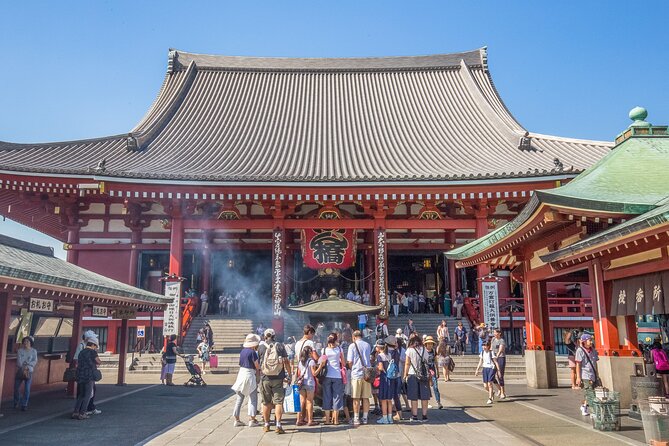
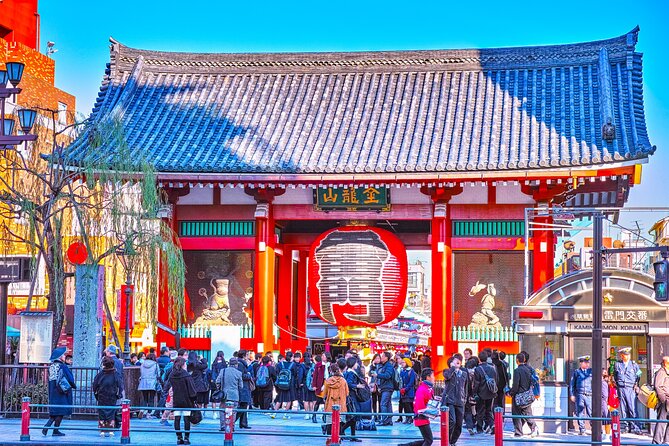
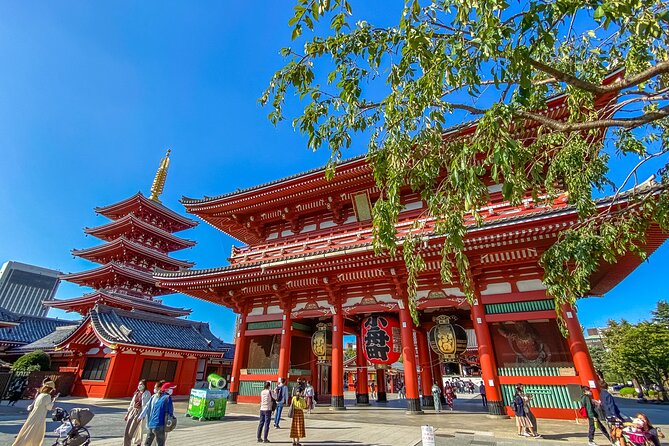
Then you move into the heart of Asakusa: Senso-ji Temple. This is Tokyo’s oldest temple, and the famous large red lanterns are basically the neighborhood’s mascot. The red buildings, the temple approach, and the iconic lantern all make this the one stop that instantly feels like Asakusa.
You’ll typically spend about 1 hour here, and admission is free. That hour is where a guide earns their fee, because the crowd flow can be intense. With someone guiding you, you can spend your time looking at the temple details and not just dodging people while trying to find the right angles.
If you care about meaning, this is also where the context matters. A good guide will help you connect what you see, like the lantern symbolism and the temple’s role in local tradition, without turning it into a lecture.
A change of pace from Tokyo:
- Tokyo: teamLab Planets TOKYO Digital Art Museum Entry Ticket
★ 4.6 · 9,779 reviews - Mt Fuji & Hakone Cruise, Drum Show Bullet Train 1 Day from Tokyo
★ 4.0 · 7,413 reviews - Tokyo: Sumo Show Experience with Chicken Hot Pot and a Photo
★ 4.8 · 6,678 reviews - Tokyo: Shinjuku Food Tour (13 Dishes at 4 Local Eateries)
★ 5.0 · 6,603 reviews
Stop 3: Asakusa Shrine, tied to Sanja Matsuri
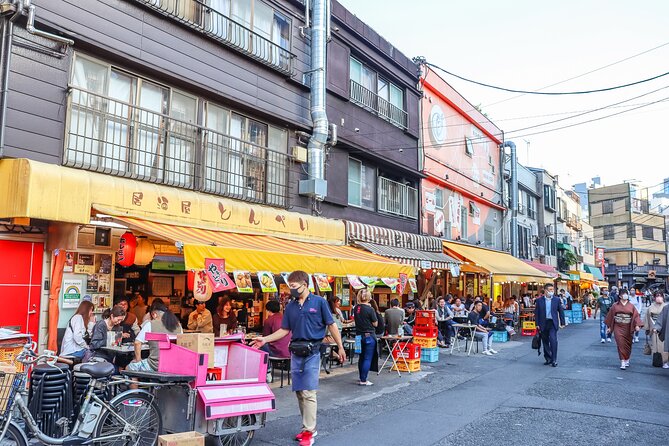
Next comes Asakusa Shrine, a different kind of religious site than the temple area, but closely connected to Asakusa’s festival identity. This shrine is famous for the Sanja Matsuri, one of Tokyo’s major festivals.
Your time here is short, about 15 minutes, and admission is free. The value is not in sitting around forever. It’s in understanding the festival link. If you catch the right decorations or energy outside, the shrine makes the whole Asakusa experience feel more seasonal and alive, not just photogenic.
Stop 4: Asakusa Nishi-sandō Shopping Street, festival-themed lanes
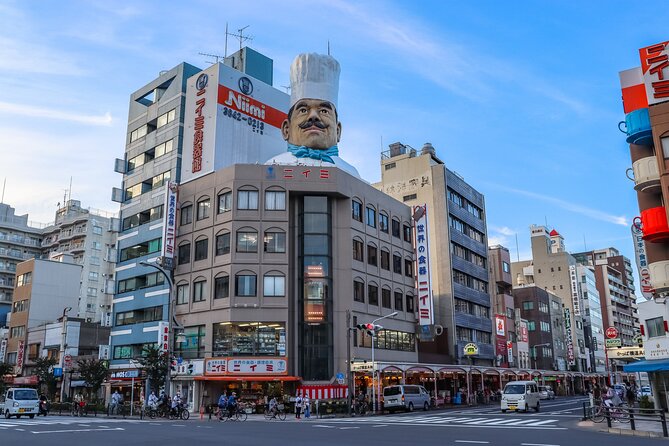
From spiritual stops, you shift into atmosphere at Asakusa Nishi-sandō Shopping Street. This lane is known for festival-themed decorations and shops, so it bridges the gap between tradition and the tourist experience.
You only have about 15 minutes here, so you’ll want to keep your shopping decisions simple. Think: one small snack, one souvenir, and maybe a quick look at what’s being sold. This is not the time for a long browsing marathon unless your guide suggests it fits.
The guide helps here by pointing out what is typical and what’s worth your yen. If you’re the type who likes to know what you’re buying, this stop is useful.
Stop 5: Hoppy Street, reasonably priced drinks and outdoor tables
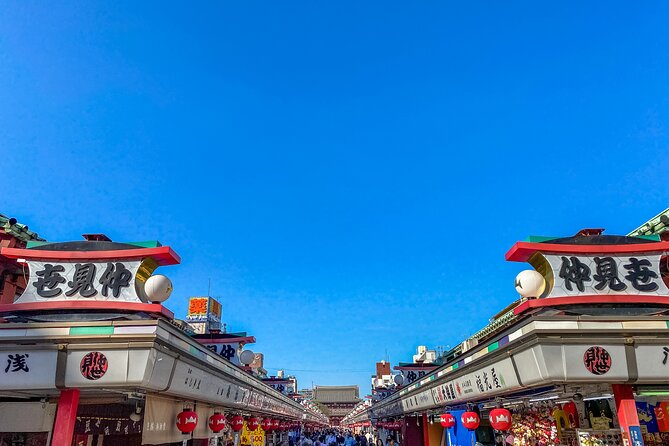
Next is Hoppy Street, famous for restaurants with outdoor tables and reasonably priced drinks. The vibe is a mix of visitors enjoying the atmosphere and locals coming here after a long day.
This stop is brief, around 5 minutes, and admission is free. It’s more of a quick taste of the neighborhood’s night-life culture than a full meal.
If you are the type who wants your itinerary to include a drink, you can use this stop to grab something light before your longer food moment later. If you’re not a drink person, you can still enjoy the street character and move on.
Stop 6: Kappabashi Dogugai, knives and kitchen tools for real cooks
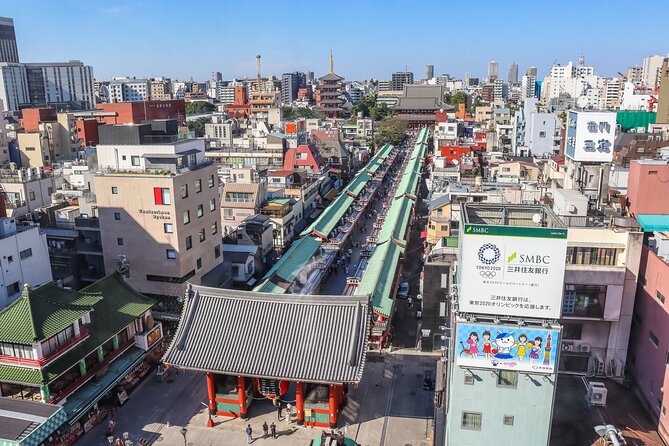
Now we get to one of the best practical shopping areas in Tokyo: Kappabashi Dogugai, also known for kitchenware specialties. This is where you’ll find shops selling knives, tableware, and other kitchen tools.
Your time here is about 30 minutes, and admission is free. That sounds short, but Kappabashi is the kind of place where you can learn a lot in a short window if you know what you’re looking for. If you want a professional-quality knife, or you want to understand the difference between steel types and use styles, a guide can help you shop with confidence.
This is also a great stop if you’re buying gifts. Kitchen tools are practical, and they feel more meaningful than random magnet-and-keychain souvenirs.
As a small bonus, guides in past groups, including Macky, have been praised for steering people toward good food during the day. The same kind of judgment helps at shopping stops, too, so you don’t waste time in low-value shops.
Stop 7: Gonpachi soba at Azumabashi Bridge (meal stop with a view)
For food, this tour includes a stop at Gonpachi, a handmade soba restaurant at the foot of Azumabashi Bridge. The big reason to care is the setting: the store has large windows where you can see the Sumida River and Tokyo Skytree.
Your time here is about 50 minutes, and meal costs are not included. The tour notes estimated meal costs around 1,200 JPY per person in the overall budget, but you should expect your actual bill to depend on what you order.
This is a smart placement in the route. After temples and shopping lanes, you get a sit-down pause with scenery, not just a vending-machine break.
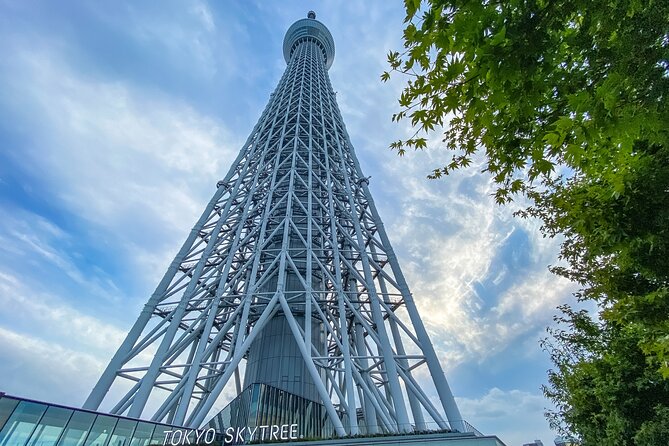
Stop 8: Tokyo Skytree, the 634-meter skyline anchor
Then you transition into the modern finish: Tokyo Skytree. The tower is 634 meters tall and opened in 2012, and it’s known as the tallest tower in Japan.
This stop is about 1 hour 10 minutes. Admission is not included, and the area around the tower includes more than just views. There’s a mall and other facilities nearby, plus the Tokyo Skytree complex zone makes it easy to keep exploring even if you don’t go super high up.
If your group wants a classic Tokyo photo, Skytree is the obvious target. If you’re not into tower rides, the surrounding complex still gives you plenty of things to do, because it’s built as a destination.
Stop 9: Tokyo Solamachi, adjacent shopping and entertainment
Right after Skytree, the tour finishes at Tokyo Solamachi, a commercial complex next to the tower. It’s described as a new downtown style concept, with shopping and entertainment.
You get about 30 minutes here, and admission is free for the stop. This is a good last leg because you can treat it like a flexible buffer. If you want souvenirs, do them here. If you want to snack, do it here. If your legs are tired, you can simply take a slower walk and enjoy the atmosphere.
Your tour ends at Oshiage Station, so Solamachi also makes it easy to transition into your next plan.
Price and value: what you pay for, and what you still budget
The tour price is listed as $137.29 per person with an approximate duration of 6 hours 30 minutes. That fee covers the tour guide and the fact that it’s private for your party, plus necessary expenses for the guide.
What it does not cover is the usual stuff like transport between stops, site admissions, and meals. The tour data estimates 4,880 JPY per person for transportation (180 JPY), admission fees (3,400 JPY), and meal costs (1,200 JPY). There is also an optional experience cost around 100 JPY per person.
So is it worth it? For me, the value comes down to this: you’re paying to avoid the “crowd tax” that slows down independent sightseeing. You’re also paying for a guide who can explain what you’re seeing and help you choose efficiently, especially at the temple area and the Kappabashi shopping district.
If you enjoy self-guided wandering and already know exactly what you want, you might spend less by going solo. But if you want a plan that feels smooth, and you want fewer mistakes around timing, meeting points, and priorities, this private structure often makes the price feel fair.
The guide factor: Haruo, Macky, Walt, and Sayaka lessons
One of the most praised aspects in the feedback is the guide quality. Names that show up in top-rated experiences include Haruo, Macky, Walt, and Sayaka.
Here’s what you can take from that, even if your guide ends up being someone else:
- Expect strong English for some guides, and expect guides who are happy to answer questions, not just recite facts.
- People praised guides for shaping the day around the group, not just following a rigid script.
- Food guidance came up, with one group specifically enjoying lunch planning with Macky.
If you care about getting real value from a guide, ask them questions during transitions, not only during the main sights. That’s when you get the best answers about local life and the meaning behind what you’re seeing.
Who should book this Asakusa and Skytree private tour
This is a good fit if:
- You want Asakusa’s major sights plus Skytree without spending your entire day routing yourself
- You prefer a calmer experience in a crowded area
- You like cultural context, not just photos
- You are shopping for kitchen tools or knives and want help choosing
- Your group values flexibility, like asking questions and adjusting pacing
It may be less ideal if:
- You want zero structure and enjoy spontaneous wandering with no set order
- Your group doesn’t want to pay for guide time, and you plan to handle transit and admission planning yourself
Should you book? My quick decision guide
Book this tour if you want a smooth day that hits the important Asakusa sights in a sensible order, then moves into Skytree and Solamachi while the light and energy are still good. The private setup is especially valuable for crowd management, and the Kappabashi and Gonpachi stops add variety beyond temples and shopping streets.
Skip it if your plan is mostly “we’ll see what looks interesting” and your group is comfortable navigating busy areas without guidance. In that case, you might prefer a self-guided approach to save on the guide cost.
FAQ
Is this tour private or shared?
This is a private tour/activity. Only your group participates.
How long is the tour?
The duration is about 6 hours 30 minutes.
Where does the tour start and where does it end?
It starts at Asakusa Sta. 1-chōme-1-3, Taito City, Tokyo, and it ends at Oshiage Sta. (SKYTREE) 1-chōme-1-65, Sumida City, Tokyo.
What are the main stops on the route?
The tour includes the Asakusa Culture Tourist Information Center, Senso-ji Temple, Asakusa Shrine, Asakusa Nishi-sandō Shopping Street, Hoppy Street, Kappabashi Street (Kappabashi Dogugai), Gonpachi, Tokyo Skytree, and Tokyo Solamachi.
Are entrance fees included?
No. The tour states that entrance fees are borne by the customer, and it lists admission as not included for several major sites.
Are meals included?
Meal costs are not included. The estimate lists meal costs per person as part of the 4,880 JPY budget estimate.
Is transportation included in the tour price?
No. Transportation costs are listed as borne by the customer, with an estimate included in the overall budget.
Do I need a mobile ticket?
Yes. The tour features include a mobile ticket.
What happens if the weather is bad?
The tour notes that if weather is bad, there is a possibility of changes to transportation, destinations, and routes.
What if I want to change where the tour ends?
The tour says the finishing spot is different from the start. You should let your tour guide know if you would like to change the finishing spot.
Can I cancel for a full refund?
Free cancellation is available up to 24 hours in advance of the experience start time. After that, the amount paid will not be refunded.
Latest write-ups near Tokyo
- Tokyo Nights: Shibuya Photo Adventure★ 5.0 · 20 reviews
- Wagyu & Sake 8 Course Tasting Dinner in Shinjuku★ 4.9 · 20 reviews
- Making Japanese desserts Nerikiri & drinking matcha in Tokyo★ 5.0 · 20 reviews
- Japanese Whisky Hunting《HIGH-QUALITY-ONLY》Rare Tasting Class★ 5.0 · 20 reviews
- Mt. Fuji 5th Station, Owakudani Ropeway, Pirate Ship plus Outlet shopping!★ 4.5 · 20 reviews
- Kintsugi Experience with Arita Ware in Tokyo (English Guide)★ 4.8 · 20 reviews
- Tokyo: Karate Experience with Former All-Japan Champion★ 5.0 · 20 reviews
- Ebisu Local Food Tour: Shibuya’s Most Popular Neighborhood★ 5.0 · 20 reviews
Tokyo Tours, compared.
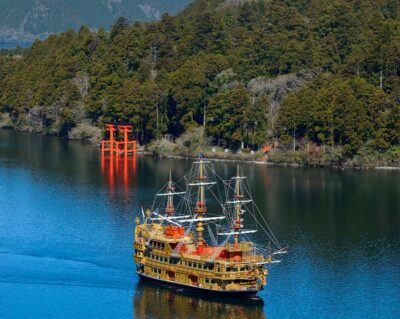
Mt Fuji and Hakone 1-Day Bus Tour Return by Bullet Train
Read our review →
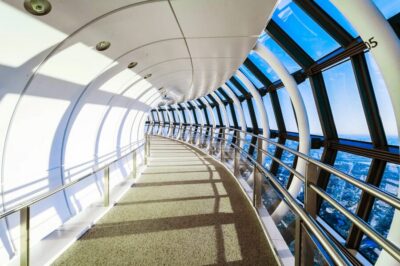
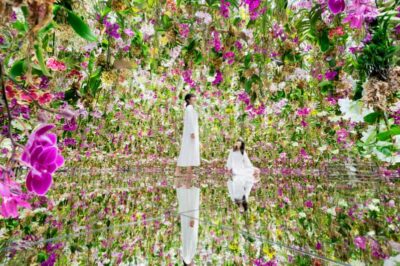
teamLab Planets TOKYO Digital Art Museum Entry Ticket
Read our review →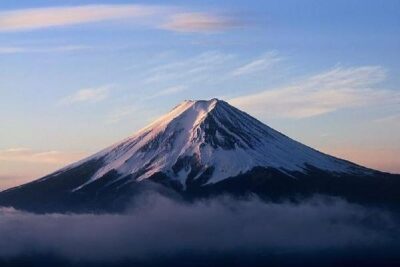
Mt Fuji & Hakone Cruise, Drum Show Bullet Train 1 Day from Tokyo
Read our review →
Sumo Show Experience with Chicken Hot Pot and a Photo
Read our review →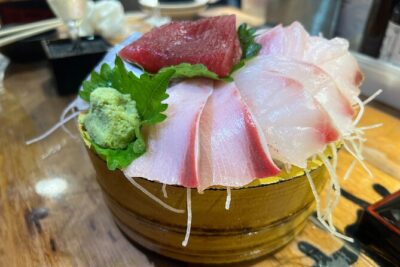
Shinjuku Food Tour (13 Dishes at 4 Local Eateries)
Read our review →