
Reviewed · FUSHIMI INARI TOURS
Crowd-Free Kyoto: Fushimi Inari, Nijo Castle & Kinkaku-ji
Kyoto can feel like a blur of lines and temples, so this experience stands out because it is built for crowd-friendly timing. Hitting Fushimi Inari first, it is easier to enjoy the famous Senbon Torii before the busiest wave rolls in.
I like that it is a true private tour, so the pace stays relaxed and you can ask questions without losing the group. I also love that you do not just check boxes, you get on-the-ground stories you would not get on your own, with guides like Tom, Ryu, Kazuya, and Maki leading the way.
One thing to consider: ticket pricing is mixed. Fushimi Inari is free, but Nijo Castle and Kinkaku-ji admissions are not included, and there is no food stop built in.
Key things you will like about this Kyoto plan
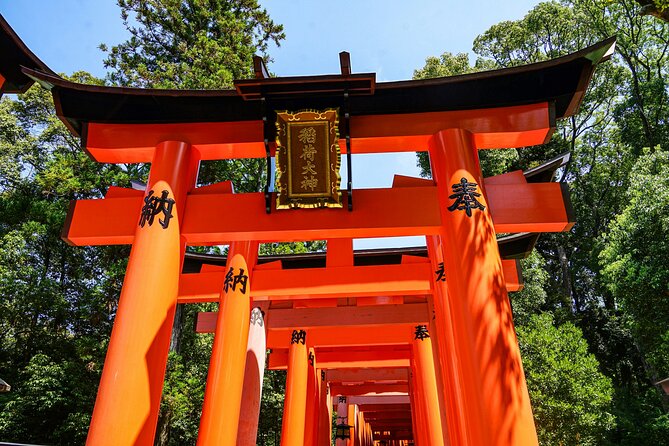
- Early start logic for a calmer look at Fushimi Inari’s Senbon Torii lanes
- Private guide time so you can linger where your interests pull you
- UNESCO stop included, Nijo Castle, with access to key areas like Ninomaru Palace
- Golden Pavilion payoff, Kinkaku-ji in around an hour without rushing your photos
- Mobile ticket use, making it easier to manage what you need on the day
- One-direction day flow, starting near Kyoto Station and finishing at Kinkaku-ji
Crowd-Free Kyoto With a Private Guide
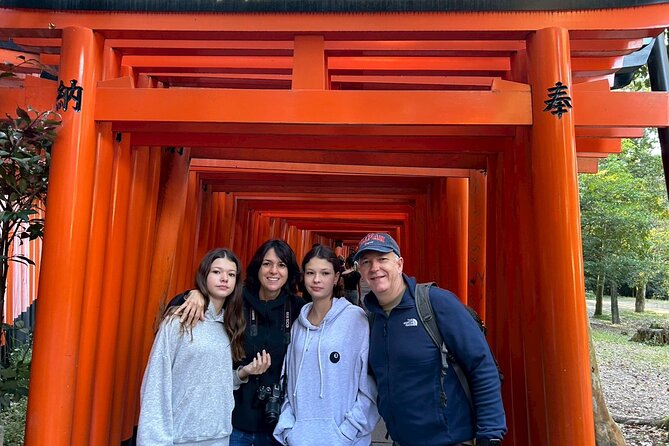
This tour is designed around one simple idea: Kyoto is famous, which means it can also be crowded. The itinerary is set up so you arrive at the most in-demand sight, Fushimi Inari-taisha, before it gets packed. That changes the whole vibe. You still get the iconic gates and the climb, you just spend less time stuck in slow-moving crowds.
You also get something that is hard to replicate solo. A local guide turns famous landmarks into understandable places. You are not only looking at structures, you are learning why they matter and what to notice while you are there. Guides in the group have included Tom, Ryu, Kazuya, and Maki, and the theme in their feedback is consistent: they explain the details in a way that makes each stop click.
The other big win is that it is private. With a private setup, you are not forced into the tight timing of shared tours, and you can ask follow-up questions. If you care about history, symbolism, architecture, or just how to move efficiently, the guide can adjust to you.
More Castle Tours in Kyoto
- Kyoto: Nijo-jo Castle and Ninomaru Palace Guided Tour
★ 4.7 · 1,020 reviews - Kyoto: Nijo Castle, Kiyomizu & Fushimi Inari Guided Tour
★ 4.7 · 700 reviews - Kyoto: Imperial Palace & Nijo Castle Guided Walking Tour
★ 4.7 · 453 reviews
Where the Day Starts and How the Flow Makes Sense
You begin at the South Square of Kyoto Station. That is a smart choice because it is easy to orient yourself in a huge city hub. You will then move through three major areas of Kyoto and finish near the Golden Pavilion area, specifically at Kinkaku-ji.
The full tour runs about 5 hours, and each main stop is about 1 hour. That might sound short on paper, but in practice it is enough time to see the key features without turning the day into a marathon. It also helps with the crowd problem. Short, focused visits at the right times beat long wandering later in the day.
Another practical plus: the experience is noted as near public transportation, so getting to and from the meeting area is manageable. You are not stuck in a remote location with only one option.
Stop 1: Fushimi Inari-taisha and the Senbon Torii Before the Rush
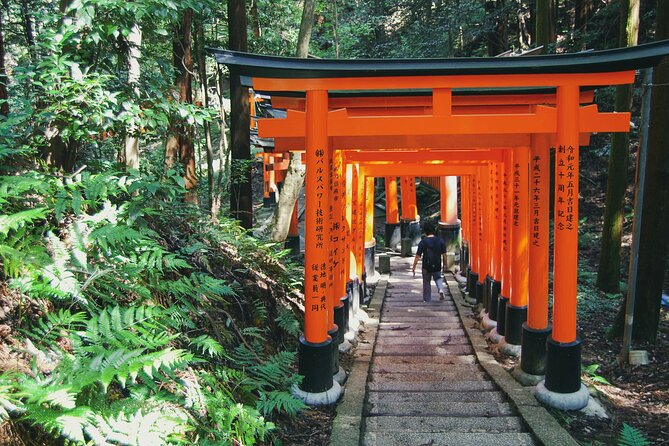
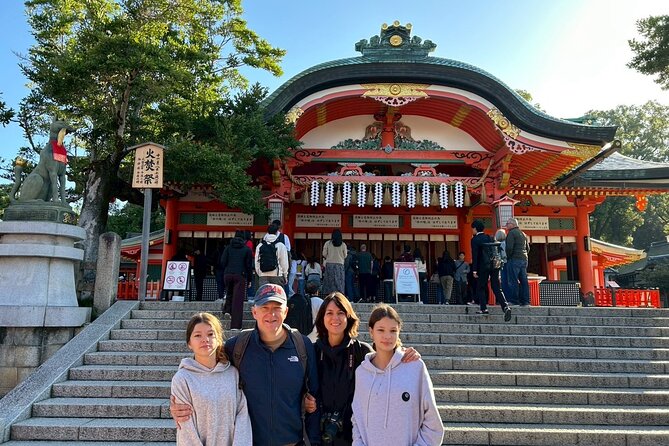
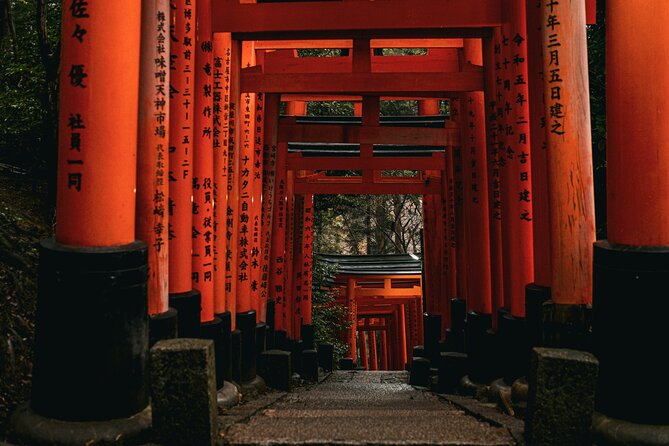
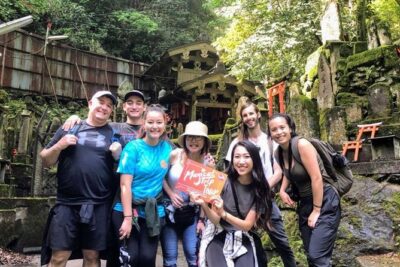
Fushimi Inari-taisha is the big draw, and it is easy to see why. The “Senbon Torii” is the famous line of thousands of red gates winding up the hillside. When you are there early enough, the path feels more like a pilgrimage route than a theme-park queue.
This stop is scheduled for about 1 hour, and admission is free. That matters because it keeps your day efficient. You can spend your time on the walk and the views rather than spending money just to get in.
What I love about this timing is how it changes what you notice. Early on, the gates feel layered, like they disappear and reappear as the trail rises. Later, you tend to focus on moving forward and taking the shot. Early Fushimi Inari gives you room to actually feel the rhythm of the climb.
A private guide also helps you read the site. Even with a short visit, you can learn what the shrine connection means, why the red gates are everywhere, and what small details are worth slowing down for. If your main goal is the iconic photo plus a genuine sense of place, this is the best entry point in Kyoto.
Possible drawback: the route involves walking. If you want a completely flat and minimal-walking day, you might need to manage expectations at Fushimi Inari. Still, with one guide and a group setting, you can usually plan how far up you want to go.
Stop 2: Nijo Castle and the Tokugawa-Era Power You Can See
Next up is Nijo Castle, a UNESCO World Heritage site, and it is a totally different mood from Fushimi Inari. Instead of red gates and hillside calm, you get a political statement in stone, wood, and refined design.
This stop runs about 1 hour. Admission is not included, so you should plan for that extra cost. Once you are inside, the highlight is the Ninomaru Palace, the former residence of the Tokugawa Shogun. That means you are not just strolling courtyards, you are stepping into the architecture of authority.
The best way to experience Nijo Castle is to pay attention to layout and what it communicates. A good guide makes that easier. In feedback from guides on similar group departures, there is a clear pattern: people remember Nijo Castle as the standout segment, especially when the guide explains what you are looking at and how the spaces were used.
Why it is worth your time: Nijo Castle shows a different side of Japan than the garden-and-temple postcard. It is about rule, ceremony, and design built to control movement and impression. Even if you are not a history buff, the palace areas can feel like a living set of stories.
Possible drawback: because admission is not included, check your budget before you go. Also, castles and palace interiors can involve a bit of standing and walking, so comfortable shoes help.
More Fushimi Inari visits:
- Kyoto: Fushimi Inari, Kinkakuji, Bamboo Grove 1 Day Bus Tour
★ 4.8 · 4,316 reviews - Fushimi Inari Hidden Hiking Tour (Private Option Available)
★ 5.0 · 1,750 reviews - Kyoto/Osaka: Nara, Fushimi Inari Taisha, Arashiyama Bus Tour
★ 4.7 · 1,275 reviews - Osaka/Kyoto: Arashiyama, Nara & Fushimi Inari Shrine w/Lunch
★ 4.4 · 754 reviews
Stop 3: Kinkaku-ji and the Golden Pavilion Impact
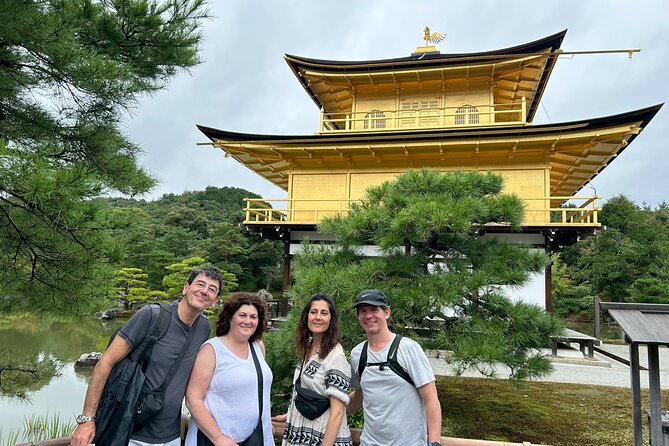
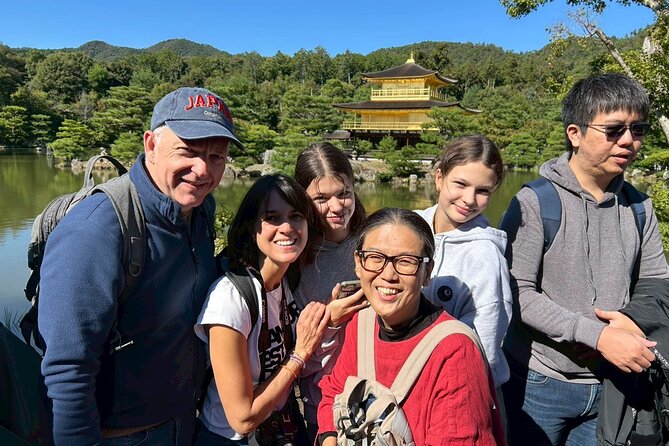
Then you finish at Kinkaku-ji, the Golden Pavilion. This is one of Kyoto’s easiest “wow” stops, and it is scheduled for about 1 hour. Admission is also not included here, so plan for that cost too.
Kinkaku-ji is covered in gold leaf, creating the famous reflective look that people come from around the world to see. Even with a shorter visit, you can usually get the key views and photograph angles if you arrive at a reasonable pace.
What makes Kinkaku-ji work in a half-day structure is placement. After Fushimi Inari and Nijo Castle, your brain has already shifted across shrine, politics, and design. Kinkaku-ji lands as the visual finale, a temple scene that feels complete and iconic.
A private guide can also help you avoid the common frustration of “I see it, now what?” You can learn what details are worth checking as you move around, and how the site design relates to the surrounding water and garden layout. With only about an hour, that guidance can make the difference between quick sightseeing and a satisfying stop.
Possible drawback: this temple is popular, so expect some crowds no matter what. The benefit of this tour is that your day ends at Kinkaku-ji, so you are not forced to fight the busiest times at every stop.
Price and Value: What $91.96 Buys You in Real Terms
At $91.96 per person for a roughly 5-hour private outing, you are paying for time, access, and interpretation. You are not paying just for entry tickets, and you are not paying to be herded around. The tour includes a local guide, which is where much of the value sits.
Fushimi Inari is free, so your day does not start with extra ticket cost. But Nijo Castle and Kinkaku-ji admissions are not included. So the true cost will depend on those entry fees on your travel dates.
Here is how I think about it. If you plan to hit all three sites anyway, the guide helps you avoid wasting time on transit confusion, sorting ticket rules, and figuring out what to look for. The “crowd-free” part also has real value. Spending less time stuck in queues means you get more sight and fewer frustrations.
The tour also notes mobile ticket use and group discounts. Mobile ticketing can sound minor, but on a busy Kyoto day it helps you keep the plan moving without hunting paper.
Why This Tour Feels More Relaxed Than Shared Groups
A lot of Kyoto tours are basically a schedule with walking. This one is built around a calmer rhythm. The private setup matters here. If you want to pause, ask, or take extra time at a moment that grabs your attention, the guide can adapt.
You also get a built-in “story layer.” The experience is described as hearing stories about the city that you would miss on solo explorations. In plain terms, that means you will likely leave each stop understanding why it looks the way it looks and what it is connected to, not just collecting photos.
That is especially helpful at places like Nijo Castle. You can walk through it without context, but it becomes far more meaningful when someone points out what to focus on.
Practical Tips for Making the Most of the Day
For a tour like this, your job is simple: show up ready to walk and ready to look closely. Here are the practical moves I would make:
- Wear comfortable shoes. You will walk through multiple sites, and Fushimi Inari has a slope.
- Bring water, especially if you are visiting in warmer months. Food is not included, so you might want to snack on your own before or after.
- Start your day early. The whole reason Fushimi Inari feels calmer is timing. If you run late, you lose that advantage.
- Keep your camera charged. Kinkaku-ji is a high-impact photo target, and the early part of the day gives you cleaner sightlines too.
- Ask your guide questions as you go. If a guide like Tom or Ryu answers your questions with specifics, that kind of conversation can turn an hour into something memorable.
Who This Kyoto Tour Is Best For
This experience fits best if you want a focused Kyoto highlight day without feeling like you are doing damage control.
You will probably love it if:
- You want three headline sights in one morning-to-afternoon window.
- You care about understanding what you see, not only taking photos.
- You prefer a private pace over shared groups.
- You are visiting in a season where lines can be intense and you want a plan that avoids the busiest times.
You might choose a different option if:
- You want an ultra-flexible self-guided day with no set stops.
- You dislike paying separate admission fees at two of the three locations.
- You need a fully low-walking itinerary.
Should You Book This Kyoto Tour?
If your goal is to see Fushimi Inari, Nijo Castle, and Kinkaku-ji in one smooth outing, and you want the day to feel calmer through early timing, I think this is a strong booking choice. The biggest value is not just the destinations, it is the combination of a private guide, crowd-aware scheduling, and short, focused visits that keep you moving without rushing.
Book it if you like your travel days with clear structure but still room for questions. Skip it if your top priority is complete flexibility, because the itinerary is built around a set route and set stops.
FAQ
How long is the tour?
The tour is about 5 hours.
Is this a private tour or shared group?
It is a private tour. Only your group will participate.
What are the main stops on this Kyoto experience?
You visit Fushimi Inari-taisha, Nijo Castle, and Kinkaku-ji.
Are admission tickets included for all stops?
Fushimi Inari-taisha admission is free. Admission for Nijo Castle and Kinkaku-ji is not included.
Does the tour include food or drinks?
No, food and drinks are not included.
Where do we meet, and where does the tour end?
You start at the South Square, Kyoto Station Building. The tour ends at Kinkaku-ji.
What if the weather is poor?
This experience requires good weather. If it is canceled due to poor weather, you will be offered a different date or a full refund.
Is there free cancellation?
Yes, you can cancel up to 24 hours in advance for a full refund. If you cancel less than 24 hours before the start time, the amount paid is not refunded.
Latest write-ups near Kyoto
- Kyoto: Nishiki Market Tour with a Local Foodie & Tastings★ 4.5 · 67 reviews
- Kyoto Kimono Rental mimosa |Kimono/Yukata Rental Couple Plan★ 4.8 · 67 reviews
- Kyoto: Traditional Kimono Fabric Handicrafts Workshop★ 5.0 · 67 reviews
- Kyoto Tea Ceremony and Samurai Photo Session★ 5.0 · 70 reviews
- Kyoto: Replica food making experience★ 4.8 · 70 reviews
- Kyoto: Kinkakuji, Golden Pavilion Guided Tour★ 4.7 · 71 reviews
- Private departure transfer from Kyoto city to Kansai International airport★ 5.0 · 72 reviews
- Uji: Green Tea Tour with Byodoin and Koshoji Temple Visits★ 4.8 · 72 reviews
Fushimi Inari Tours, compared.
Fushimi Inari, Kinkakuji, Bamboo Grove 1 Day Bus Tour
Read our review →Fushimi Inari Hidden Hiking Tour (Private Option Available)
Read our review →
Kyoto/Osaka: Nara, Fushimi Inari Taisha, Arashiyama Bus Tour
Read our review →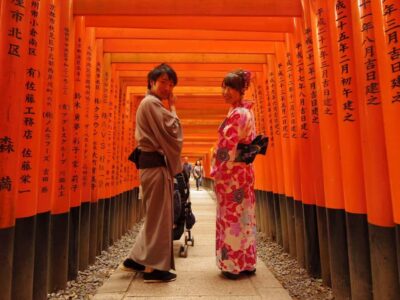
Osaka/Kyoto: Arashiyama, Nara & Fushimi Inari Shrine w/Lunch
Read our review →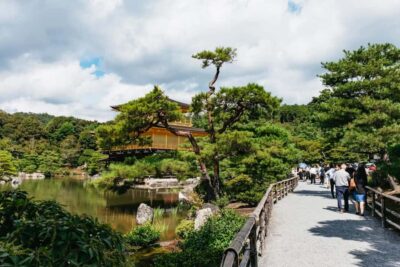
Nijo Castle, Kiyomizu & Fushimi Inari Guided Tour
Read our review →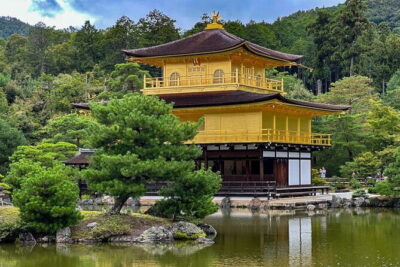
Nijo, Kinkaku-ji, Arashiyama, Kiyomizu & Fushimi Inari
Read our review →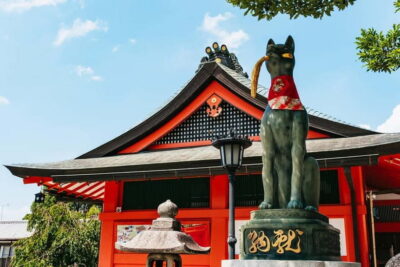
Sagano Romantic Train & Arashiyama, Kiyomizudera, Fushimi Inari Taisha Day Tour
Read our review →Browse the lists this tour appears in