
Reviewed · SUMO EXPERIENCES
Exclusive Sumo Morning Practice in Tokyo with Photo Opportunity
Tokyo’s morning sumo practice is interesting because it shows the sport as discipline, not theater. I like that you get small-group attention and a real look at the pre-tournament routine. I also love the photo opportunity, because it lets you bring home more than memories. One consideration, though, is that it is an early start and seating can be a bit first-come, first-served since the stable hosts multiple tour groups.
Here’s why it works so well for a busy trip: the timing is short, it’s easy to reach from public transit, and your guide keeps the experience moving with clear context. The only drawback I’d watch for is that the practice can feel a little repetitive if you want constant variety, and summer heat in Tokyo can be intense.
Key things to know before you go
- Oshiage Station meeting point: meet at the taxi stand inside the station rotary area at 8:00 am
- Max 10 people: a small group helps you stay close to the action and your guide can answer questions
- Watch real morning training: warmups and sparring are the focus, not a formal tournament
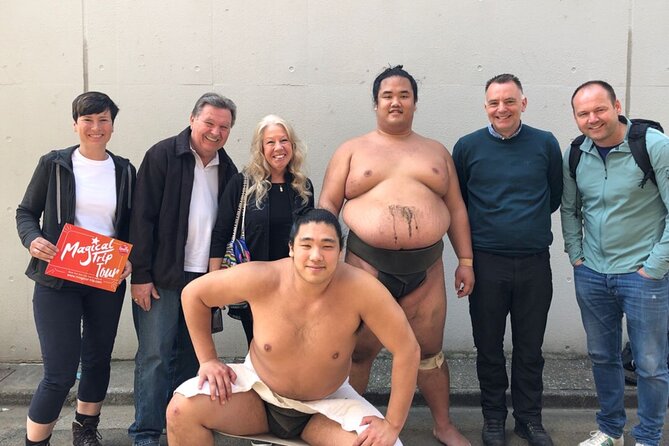
- Photos and posing: you get a chance to photograph the wrestlers and pose for pictures
- Rules inside the stable: most areas are off-limits, except the tatami (straw flooring) areas
- Seating is first come, first served: late arrivals may sit 2 to 3 rows back
A Tokyo Sumo Morning That Feels More Like Training Than a Show
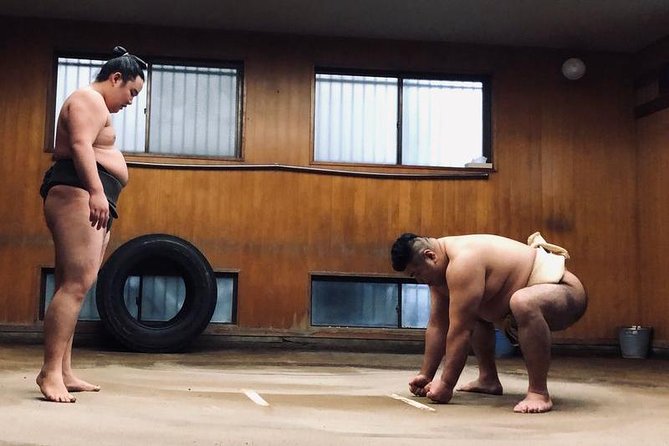
If you only know sumo from tournament days, this tour is a smart reality check. A stable’s morning routine is all about focus, timing, and tradition. You’re not watching a finished performance. You’re watching how wrestlers prepare, warm up, and work through sparring, while your guide gives you the cultural lens to understand what you’re seeing.
This is also a great fit for travelers who want something authentic without eating up a whole day. The tour is about 2 hours in the morning, it runs with a maximum of 10 travelers, and it ends back at the meeting point. That means you can book it early and still do normal sightseeing later, instead of losing an entire morning to a long tour.
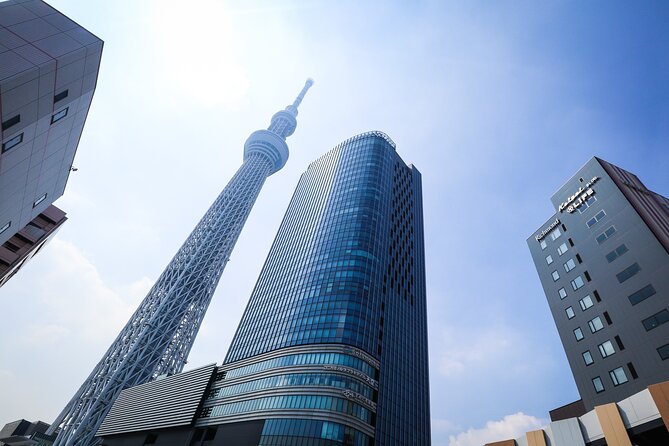
One more reason I like the format: you’re not wandering around Tokyo trying to find the right scene. You meet at Oshiage Station with a plan, then you’re guided to one of the stables around the Tokyo Skytree area.
More Sumo Experiences in Tokyo:
- Tokyo: Sumo Show Experience with Chicken Hot Pot and a Photo
★ 4.8 · 6,678 reviews - Tokyo: Sumo Show and Dining Experience
★ 4.8 · 2,742 reviews - the SUMO show
★ 5.0 · 1,960 reviews
Getting Oriented at Oshiage Station, Taxi Stand to Tatami
The experience starts at 8:00 am at the taxi stand inside the Oshiage Station rotary in Sumida City. The location is listed with a specific address, and it’s also described as near public transportation, so you’re not stuck with a complicated commute.
In practice, the meeting point is the one spot that can cause a little confusion at first, especially if you’re arriving a few minutes early and looking for the exact entrance. My advice: arrive early enough to slow down. Once you find the group, your guide takes over quickly.
From there, you’ll visit a sumo stable around Tokyo Skytree. You get the feeling that you’re stepping into a working environment with rules and rhythm. That matters, because your best viewing and photo moments depend on staying in the allowed areas.
Entering the Stable: The Off-Limits Rule Is Part of the Respect
Here’s the biggest “how to enjoy it” point: all areas in the sumo stable are off-limits, except the tatami (straw flooring) areas. That means you should plan to stay where you’re directed. Don’t try to wander, even if you can see open space.
This is not just a safety rule. It’s a sign of respect for the training environment. When you follow the boundaries, your group stays out of the way of the wrestlers and staff, and that helps the stable feel comfortable hosting visitors.
Also, this affects your photos. Even if you’re eager to shoot wide angles, you’ll have to frame from within the permitted space. Think of your camera strategy as “capturing the action where you’re allowed,” not trying to get over-the-fence shots.
What You Actually See During Morning Practice
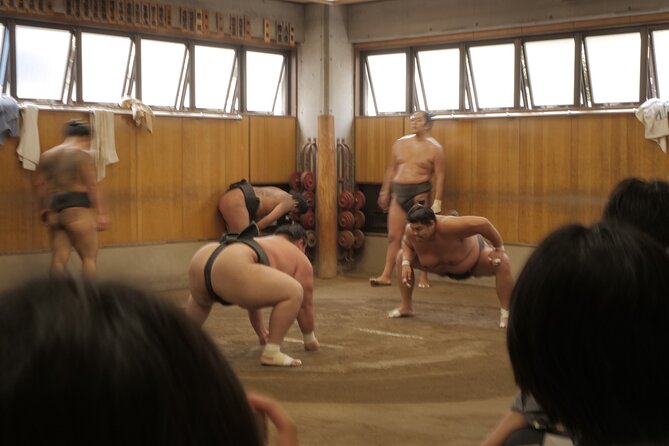
The core of the tour is watching wrestlers warm up and spar with each other during their morning session. This is the part you came for, and it tends to land well for both sports fans and culture lovers.
The routine is intense and focused. You can feel that this is real training, not a staged routine for visitors. One theme that shows up in the way people talk about the experience is concentration. The wrestlers look serious, and the movements look deliberate rather than random.
You’ll also learn enough context to make the warmups and sparring meaningful. The guide explains what you’re seeing and why it matters in sumo’s cultural and spiritual framework.
A fair heads-up: one drawback is that practice can feel a bit repetitive in the way physical training often is. If you’re expecting constant spectacle like a match with a clear winner every minute, this is different. It’s a workout and a routine. For many people, that’s the charm. For others, it can feel like “the same kinds of efforts” for an hour or so.
A change of pace from Tokyo:
- Mt Fuji and Hakone 1-Day Bus Tour Return by Bullet Train
★ 5.0 · 26,383 reviews - 1-Day Tokyo Bus Tour
★ 5.0 · 14,250 reviews - Tokyo: TOKYO SKYTREE® Admission ticket
★ 4.5 · 11,192 reviews - Tokyo: teamLab Planets TOKYO Digital Art Museum Entry Ticket
★ 4.6 · 9,779 reviews
Photo Time and Posing: How to Get Good Shots Without Breaking Rules
The tour includes an exclusive photo opportunity. You’ll have a chance to photograph the wrestlers and also pose for pictures with them. That’s a huge value add, because sumo is the kind of experience that turns into a great story only if you capture the moment.
The biggest tip is to be ready for the boundaries. Since you can’t roam outside the tatami areas, your photos should be planned around staying still and shooting from your assigned spot. If seating is first come, first served and you end up a little farther back, your photos may be more about timing and zoom than about getting close.
Another practical tip: bring patience. Photo moments take time, and the guide controls the flow to keep the stable process calm.
If you’re a photographer, you’ll likely enjoy the contrast: large, powerful wrestlers in a training setting, with the background details of the stable’s atmosphere. If you’re using a phone, aim for bursts during sparring moments, because expressions and movement happen fast.
The Guide Makes the Difference, From Hana to Kentake to Yuki
Your guide is a big part of why this tour feels like more than just watching bodies move. The experience is short, so the explanations need to be sharp, and the guides highlighted in people’s accounts are praised for being clear and energetic.
Names that come up include Hana, Kentake, and Yuki. One guide, Kentake, is specifically praised for speaking in fluent English, which matters if you want to understand the cultural context rather than just catch a few translated phrases. Another guide, Yuki, is described as explaining background thoroughly so you understand the purpose and philosophy behind the routine.
This is where your value comes from. Without context, sumo practice can look like impressive strength training. With context, you see it as disciplined tradition: a system with meaning, rhythm, and cultural rules.
Guides also help smooth out small hiccups, like figuring out the meeting point quickly. So if you’re the type who gets flustered in crowded station rotaries, you’ll probably appreciate that the group has a defined start.
Price, Duration, and When $99.10 Feels Like a Smart Trade
At $99.10 per person for about 2 hours, this is not a bargain-basement Tokyo activity. But it often feels like good value for a specific reason: you are getting access that most tourists never see, inside a working stable, at a time when the wrestlers are actually training.
You’re also not paying just for entertainment. You’re paying for:
- a small group format (up to 10)
- a guide who provides context during the session
- photo time that goes beyond simple sightseeing
Is it expensive compared to a free museum or a DIY neighborhood stroll? Sure. But it’s cheaper than many private or heavily structured “exclusive access” experiences, and the time cost is small. In a city where mornings can vanish fast, this one gives you a meaningful cultural hit without eating an entire day.
One caution for value: because this is training, not a tournament, you might feel slightly different if your dream was match day. If you want the pageantry of tournament format, this tour can still scratch the itch, but it will not replace the tournament atmosphere.
Seating, Timing, and Summer Comfort Tips That Actually Matter
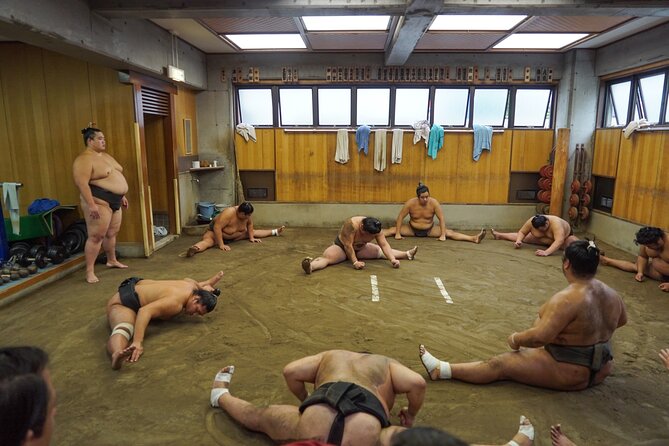
This tour has a practical reality: the stable is visited by various tour companies, so seating is first come, first served. If you’re late, you might be seated 2 to 3 rows from the front. That can affect how close you feel and how easy it is to frame photos.
So treat arrival time seriously. You’re going at 8:00 am, which means you should plan your train buffer like you would for any early museum entry. The meeting point is specific, and once your group is seated, there’s no magic way to “just move closer.”
Now the comfort part. Tokyo summers can be very hot and humid, so bring water and wear a hat to help prevent heat stroke. This is especially relevant because it’s a morning activity outdoors before you settle into the stable routine.
Who Should Book This Sumo Practice (and Who Might Want a Different Plan)
This is perfect for you if:
- you love sports but also want the cultural side of sport
- you want a short, focused activity that fits into a packed Tokyo itinerary
- you want the photo element that turns the experience into something you can show later
- you like guided context more than wandering alone
It may be less ideal if:
- you want tournament-style action only
- you need lots of variety minute to minute
- you’re extremely sensitive to early mornings, heat, or “rules and boundaries” situations
If you’re traveling with kids, it can be a memorable cultural moment, but you’ll want to be ready for quiet instruction and rule-following inside the stable. The tour says most travelers can participate, so it’s generally approachable, but your comfort with standing and listening matters.
Should You Book This Exclusive Sumo Morning Practice in Tokyo?
My vote: book it if you want a real slice of Tokyo culture with a clear time commitment. The combination of small group size, structured access to a stable, and a guided explanation is exactly what makes this kind of tour worth paying for. Add in the photo opportunity and the chance to pose with wrestlers, and it becomes one of those experiences that gives you both understanding and proof.
I’d only hold off if you’re chasing the specific look and drama of tournament match day, or if you know you hate early starts. Also, if you’re counting on the closest possible seating, show up with extra time so you’re not pushed back a couple of rows.
If you book, show up early, bring water, and stay within the tatami areas. Do that, and you’ll get what most people love here: an up-close morning view of sumo as training, not a tourist performance.
FAQ
Where is the meeting point for the sumo morning practice?
You meet at the taxi stand inside the Oshiage Station rotary area in Tokyo, Sumida City.
What time does the tour start?
The tour starts at 8:00 am.
How long is the experience?
The experience is about 2 hours.
How many people are in the group?
The tour has a maximum of 10 travelers.
Is there a photo opportunity with the wrestlers?
Yes. The experience includes a chance to photograph the wrestlers and to pose for pictures with them.
Are there rules about where we can go inside the sumo stable?
Yes. All areas are off-limits except for the tatami (straw flooring) areas.
Is the tour near public transportation?
Yes. The meeting location is near public transportation.
What should I bring for the morning in summer?
Tokyo summers can be very hot and humid. Bring water and wear a hat to help prevent heat stroke.
How does cancellation work?
Free cancellation is available if you cancel at least 24 hours before the experience’s start time for a full refund. If you cancel less than 24 hours before, you will not get a refund.
Latest write-ups near Tokyo
- Tokyo Customized Private Tour: See Top Attractions in 1 Day★ 4.8 · 67 reviews
- From Tokyo: Top 5 Scenic Spots of Mount Fuji Full-Day Tour★ 4.5 · 67 reviews
- Traditional Japanese Music ZAKURO SHOW in Tokyo★ 5.0 · 67 reviews
- Tokyo: Shinjuku Izakaya and Golden Gai Bar Hopping Tour (2h)★ 4.9 · 67 reviews
- Tsukiji: Unlimited Sake Tasting Experience★ 4.9 · 67 reviews
- Private Harajuku Omotesando Architecture Walking Tour★ 5.0 · 67 reviews
- Samurai Ninja Museum Asakusa: Kid-Friendly Ninja Training★ 4.7 · 67 reviews
- Tokyo: Not a show- a professional sumo practice with experts★ 4.9 · 67 reviews
Sumo Experiences, compared.

Sumo Show Experience with Chicken Hot Pot and a Photo
Read our review →
Tokyo Shinjuku Sumo Show & Experience with Photo
Read our review →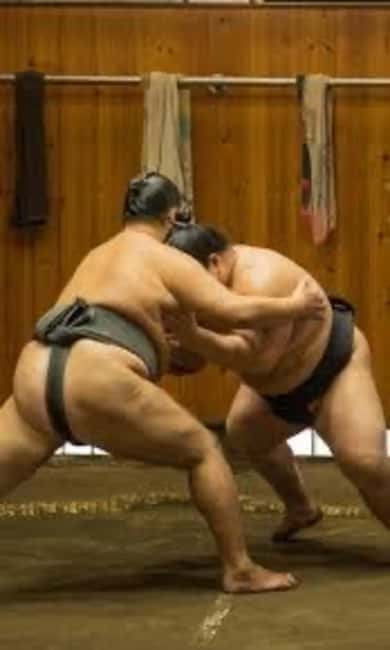
Sumo Show & Experience w/ Optional Kimono & Hot Pot
Read our review →
Authentic Sumo Experience in Tokyo: Enter the Sanctuary
Read our review →Browse the lists this tour appears in