
Reviewed · NARA TOURS
Nara 6hr Private Tour with Government-Licensed Guide
Nara is interesting because it is where Japan’s big religious story took shape, and you experience it on foot through temples, shrines, and park views. I love the private, customizable pace, and I also love how the guide ties the places together, from Shinto at Kasuga Taisha to Buddhism at Todaiji. One heads-up, this is a walking tour and you will cover a lot of ground, including some hills and stairs.
What makes this feel especially practical is the meet-up point and the way you choose your 3 to 4 stops from a prepared list. You can focus on “greatest hits” like Todai-ji and Nara Park, or shift toward quieter gardens like Isuien and Yoshikien. The one possible drawback is that entrance fees and meals are not included, so you should budget a bit on top of the tour price.
Key things that make this tour worth your time
- Licensed local English guide who can explain what you are seeing and why it matters
- Choose 3 to 4 sites so you do not waste time on stops that do not fit your interests
- Meet at Nara Station and start walking right away, so you do not burn time on transfers
- Todai-ji plus deer park is a classic combo, but you can also build in gardens and palace history
- Tour flow is guided, which helps when Nara is crowded and you want the right order
Nara on foot with a guide who connects the dots
This is a 6-hour private tour in Nara where you meet your licensed local English guide near Nara Station and explore on foot. The format is simple: you pick 3 to 4 sites from a menu of highlights, then the guide builds a smooth route around them.
For me, the biggest win is what happens between the buildings. Nara is famous for deer and iconic temples, but the real value is the explanation that links it all. You will get context for the 8th-century capital setting, why so many temples feel tied to imperial and aristocratic power, and how Shinto traditions coexist alongside Buddhist practice.
Also on the shortlist for Nara:
- World Heritage Kyoto & Nara Uji Authentic Matcha Experience
★ 5.0 · 1,573 reviews - Nara Half Day Trip Walking Tour (Private Option Available)
★ 5.0 · 937 reviews - Nara Early Morning Tour (Kyoto or Osaka Departure Available)
★ 5.0 · 676 reviews
A note on pace and walking
You should expect real walking. Even with a private tour, Nara Park and the surrounding temple areas can add up quickly, and hill viewpoints like Wakakusayama require effort. In the positive feedback, I keep seeing the same practical theme: it is very worth it, but wear shoes you trust.
Price and value: what you are paying for at $155.86 per person
At $155.86 per person for about 6 hours, this tour sits in the “pay for convenience and expertise” category. The price covers the licensed guide and the guided selection of 3 to 4 sites from the prepared list.
What is not included is where many travelers need to plan ahead. You pay:
- transportation fees
- entrance fees
- lunch and other personal expenses
Also, guide entry fees are only covered for the sights that are part of what you selected. That means if you add stops at your discretion, you should expect to handle those site costs yourself.
So is it worth it? If you value having someone organize the day, explain the story behind each stop, and help you avoid time sinks, it usually pays off. If you are the kind of traveler who wants to wander randomly and read signs at your own pace, you might feel less satisfied because you are paying for that guidance.
How to choose your 3 to 4 sites without getting overwhelmed
Nara can feel like a lot, even in half a day. The trick is to pick a theme and protect your energy. Here is a practical way to think about the options you can select from:
A change of pace from Nara:
- Osaka: Nara and Uji Day Trip with Deer Park and Hot Spring
★ 4.4 · 302 reviews - Kyoto/Osaka: Kinkakuji, Bamboo Forest, and Nara Deer Park
★ 4.4 · 265 reviews - E-Bike Nara Highlights – Todaiji, Knives, Deer, Shrine
★ 4.8 · 186 reviews - Nara Early Bird Tour (Kyoto Departure Option Available)
★ 4.9 · 142 reviews
Option A: The classic Nara big-hitters
Choose Todai-ji and spend time around Nara Park, then add one or two more “anchor” stops. Todai-ji gives you the wow-factor early. Nara Park then gives you the setting and the deer experience. After that, you can add either Kasugataisha for Shinto atmosphere or Kofuku-ji for the Fujiwara connection.
A common high-impact combo is:
- Todai-ji (Great Eastern Temple)
- Nara Park
- Kasugataisha Shrine
- One temple add-on like Kofuku-ji
Option B: More temples, more timeline
If you like Buddhist history and temple architecture, choose a set that covers different periods. This is where you might mix:
- Horyu-ji (one of Japan’s oldest temple complexes)
- Yakushiji (strict symmetry and late 7th-century origins)
- Toshodai-ji (connected to Ganjin and Buddhist training)
This kind of route rewards you if you enjoy comparing how temples reflect the power and politics of their eras.
Option C: Gardens and calm views
If you want a softer day, build around viewpoints and gardens:
- Wakakusayama Hill for views over Nara Park
- Isuien Garden, using borrowed scenery like the view of Mount Wakakusayama
- Yoshikien, a pleasant garden near the Yoshikigawa River
This theme is great when the weather is good and you want to slow down, not sprint temple to temple.
Option D: Old streets and local atmosphere
Add Naramachi for the former merchant district feel. It can be a nice contrast to the big religious sites, especially if you like traditional residential buildings and old warehouses now used as shops, boutiques, and cafes.
Stop by stop: what each selected site really gives you
Because your itinerary is customizable, you will not visit everything. But knowing what each option offers helps you choose wisely.
Todai-ji: the Giant Buddha moment that anchors the whole day
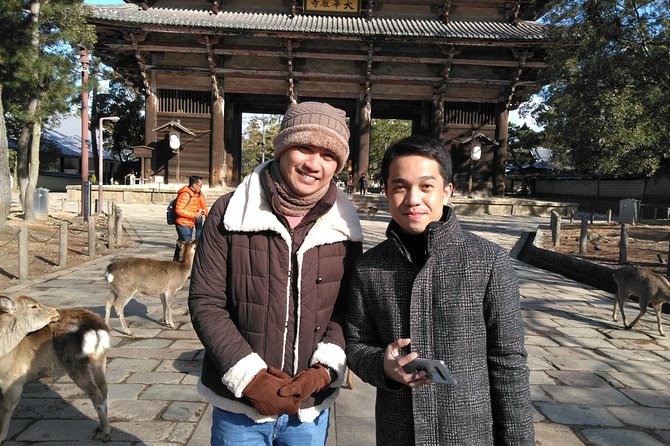
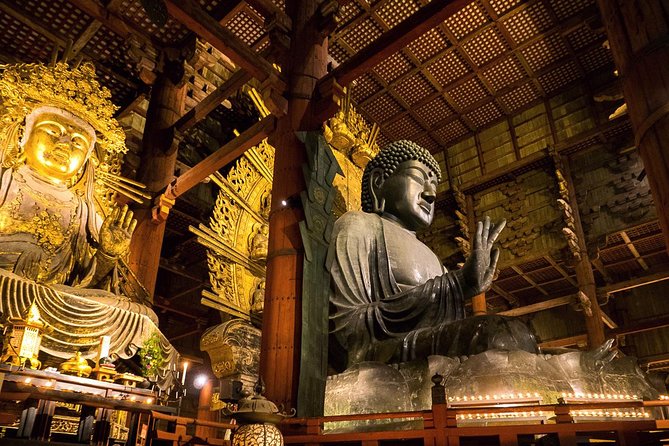
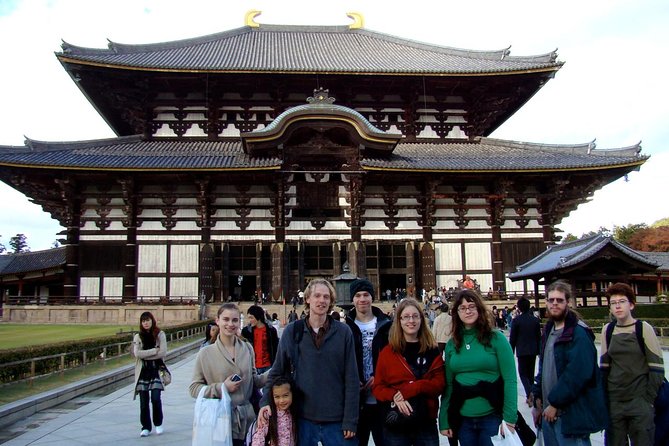
Todai-ji is one of Nara’s most famous temples and a landmark tied to the city’s early Buddhist identity. Built in 752, it became the head temple of provincial Buddhism.
Why it matters: this is not just a pretty temple. It is an anchor for understanding how Buddhism was organized and promoted during Nara’s imperial era. If you care about scale and historical weight, this is the stop to prioritize.
What to watch for: Todai-ji is popular. If you want better comfort, aim to see it earlier in your route so you spend less time threading through crowds.
Nara Park: deer, setting, and a natural way to connect nearby landmarks
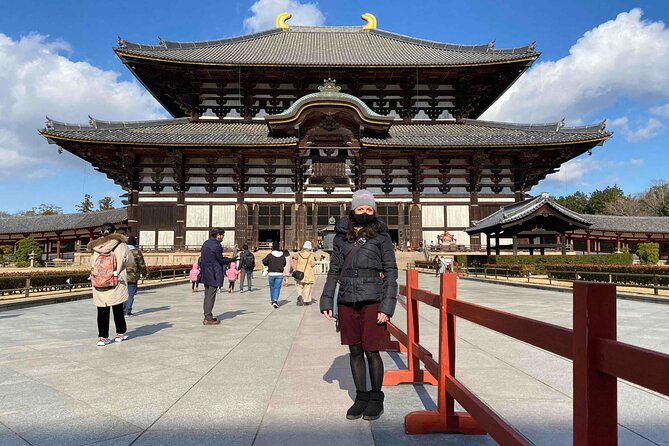
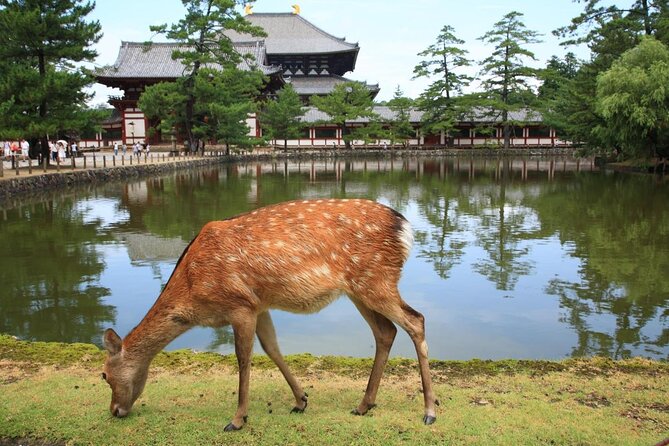
Nara Park is the large central park where many of the city’s big attractions cluster. It is also where you get the famous deer experience, including the playful and sometimes bold deer behavior.
This part works well in a private format because you can get practical guidance while you are there, so you enjoy the deer without feeling stressed. In the feedback, that deer moment comes up again and again, with guides helping people feel confident around the animals.
What to watch for: the deer can be aggressive if you behave carelessly. Keep it simple, follow your guide’s instructions, and treat this like an interaction with wildlife, not a petting zoo.
Kasugataisha Shrine: Shinto protection culture, up close
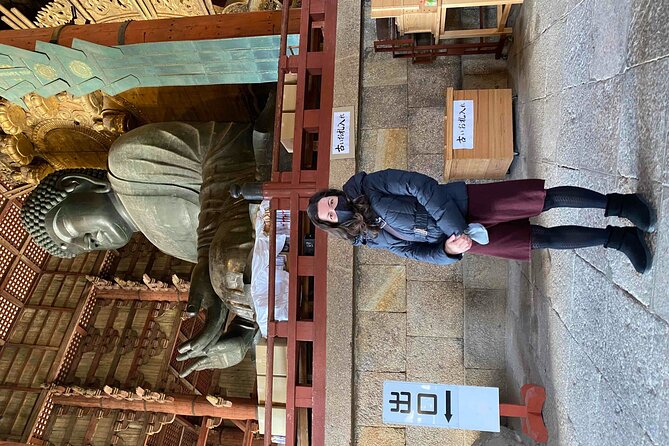
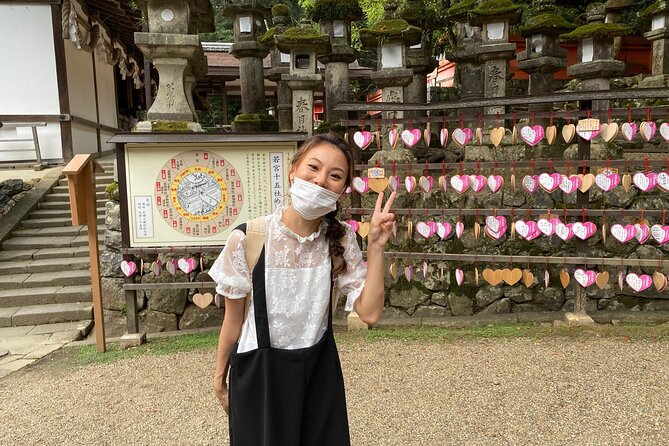
Kasugataisha is dedicated to a deity associated with protecting the city. It is among Nara’s celebrated shrines and fits naturally into the story of how Nara balanced Shinto and Buddhism.
Why it is a great choice: it gives you the Shinto side of Nara, so you do not leave thinking only in Buddhist terms. And it pairs perfectly with Todaiji because you can compare the atmosphere and symbolism between the two traditions.
If you like spiritual architecture and old-world ritual vibes, Kasugataisha is a strong “yes.”
Wakakusayama Hill: views that make your walking feel worth it
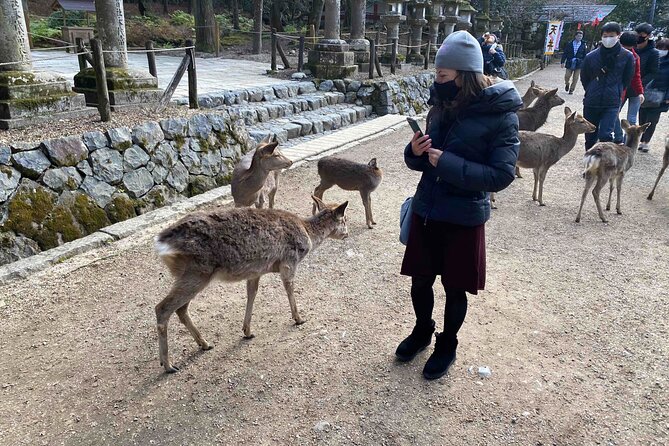
Mount Wakakusayama rises behind Nara Park and is about 350 meters tall. If you want an open-sky perspective over Nara, this is a smart add.
Why it is worth choosing: temple visits can feel enclosed. Wakakusayama gives you space, lines of sight, and that “oh wow, this is why the city feels arranged around nature” feeling.
Practical consideration: expect some effort. If your group has limited mobility, it may be the stop you swap out for a flatter option.
Horyu-ji: early Buddhist Japan in one of the oldest temple settings
Horyu-ji traces back to Prince Shotoku and is known for being among the earliest and oldest Buddhist temple complexes in Japan. It is also connected to one of the world’s oldest temple treasures, tied to Japan’s early Buddhist spread.
Why history lovers tend to pick this: it shifts you from Nara’s central capital focus into the deeper early-Buddhist roots that helped shape what Nara became.
If you want one “timeline” stop that feels foundational, Horyu-ji is a strong candidate.
Naramachi: traditional merchant district texture
Naramachi is the old merchant district where traditional homes and warehouses remain. It is a good break from the heavy religious sites, and it helps you see that Nara was not only temples and courts.
What you get: shops, boutiques, and cafes in preserved traditional buildings.
When I choose this: I like adding it when I want my day to feel more human scale, not just monumental.
Kofuku-ji: the Fujiwara family temple connection
Kofuku-ji was linked to the Fujiwara, an influential aristocratic clan during the Nara and Heian periods. It is one of the big named temples tied to how the elite shaped Buddhism in Japan.
Why it fits: if Todai-ji is the early imperial Buddhist centerpiece, Kofuku-ji helps you understand the aristocratic layer that kept Buddhist institutions powerful and supported over time.
Yakushiji: symmetric temple layout and medicine-linked Buddhist ideas
Yakushiji dates to the late 7th century and is connected to Emperor Tenmu’s request involving recovery from illness. Its layout is known for being strictly symmetric.
Why symmetry matters: Japanese temple design often follows philosophy, not just aesthetics. If you like architecture and order, this is a satisfying stop.
Shin-Yakushiji (Shin Yakushiji): another Nara Period chapter
Shin-Yakushiji was founded in the Nara Period by an empress for the sake of the ailing emperor. It is devoted to Yakushi Buddha, tied to healing and medicine.
Why it is worth considering: it gives you a related but distinct story thread. If you are building a “Buddhism and daily life” theme, adding Shin-Yakushiji adds emotional context.
Nara National Museum: Buddhist art, not just monuments
The Nara National Museum is located in the Nara Park area and focuses on Japanese Buddhist art. It was established in 1889 and preserves long-standing collections.
Why include it: monuments outside are powerful, but museum time can deepen what you saw. If you are choosing only one museum option, this is the one offered here.
Practical note: museum visits depend on your energy level. If your legs are tired, pick shorter garden or park time instead.
Heijō Palace Site Historical Park: imagining the capital
During most of the Nara Period, the capital was Heijo-kyo, and the palace grounds covered about a kilometer wide and a kilometer long. This stop helps you picture what the city’s power base looked like, even if only parts remain.
Why it fits: it changes your mental map. After seeing temples, you start to understand where the government and ritual structures belonged in the wider city plan.
Toshodai-ji: Ganjin and the training angle
Toshodai-ji was founded in 759 by Ganjin, a Chinese priest invited to Japan to train priests and improve Buddhist practice.
Why I like this stop: it adds the training and cross-cultural side. You are not only looking at buildings, you are learning about how people learned and transmitted religious knowledge.
Isuien Garden: borrowed scenery with Todaiji and Wakakusayama in mind
Isuien is a Japanese garden that uses “borrowed scenery,” including Todaiji’s Nandaimon Gate and Mount Wakakusayama as background elements.
Why this is special: it is a reminder that Nara is not just temples. It is also intentional views and landscape design that turns a city landmark into part of the garden composition.
Practical consideration: if you want quieter time, gardens are a good reset inside a busy day.
Yoshikien: a calmer garden stop near the river
Yoshikien is a pleasant garden in central Nara, named after the Yoshikigawa River that runs beside it. It also connects to Kofuku-ji’s former grounds.
If you want a gentle closer to your route, this is a good candidate. It is also a nice way to end before the day’s walking fatigue catches up.
Guides matter here: why the best part is often the person leading
The most consistent theme in the feedback is that the guide can make the day feel organized and personal. Names come up often, like Yoshii, Junichi, Ken, Toshi, and Rie, and you can see how different personalities still land on the same core skill: translating temple and shrine meaning into words that make sense while you are standing in the exact spot.
You will also notice that guides often adjust to interests. Some people wanted deeper history links across Shinto and Buddhism. Others cared about architecture. Others wanted practical travel tips before the day even began, including how to get around in Japan, plus payment and transit basics.
That matters because Nara can be confusing if you rely only on signage. A guide helps you keep the story straight.
Practical tips so your day feels smooth, not frantic
Here are the things I would do based on how this tour operates and what you are likely to experience on foot.
Wear shoes for temples, parks, and possible stairs
This is not a casual stroll. Even if your selected stops are “only” 3 to 4, the distances between them add up. If you are prone to sore feet, consider blisters prevention.
Plan for entrance fees you control
Since admission tickets are not included, check what you chose and expect to pay on site for those selected stops. Your guide can only have entry fees covered for the sites included in your selected itinerary list.
Build your day around your energy
If you pick a hill viewpoint plus multiple major temples, you will likely do more stairs. If you are tired easily, swap one heavy stop for a museum or garden.
Deer park rules are worth following closely
Deer are a huge part of Nara’s identity. To enjoy the experience safely, treat deer interactions as guided moments, not free-for-all selfies. Keep your hands and food situation simple.
Use the private format to ask questions
This style of private tour is best when you use it. Ask what is different between Shinto and Buddhist practice here. Ask why certain families supported specific temples. If you do, the guide can tailor the explanation to your curiosity and your pace.
Who this tour is best for, and who should skip it
This tour is ideal if you want:
- a private day with a licensed guide
- a choice-driven plan for 3 to 4 Nara highlights
- strong context for temples, shrines, and gardens
- less time guessing where to start and how to connect the sites
It may not be the best fit if you:
- want zero structure and prefer wandering without paying for guidance
- cannot handle lots of walking
- do not want to pay extra for entrance fees and meals
Should you book this Nara 6-hour private tour?
If you are heading to Nara for the first time and you want to understand what you are seeing, I think this is a smart booking. The price is fair when you factor in a licensed guide, the time saved by having a route built around your interests, and the fact that Nara’s main story is easier to grasp with real explanations in real time.
Book it if your ideal day includes Todai-ji and Nara Park, plus either a Shinto counterpoint at Kasugataisha or a calmer angle through gardens like Isuien or Yoshikien. Skip it only if you want a completely do-it-yourself day, or if your group is not comfortable with a lot of walking and possible stairs.
Latest write-ups near Nara
- Nara Highlight Walking Tour with Furoshiki Experience with Lunch★ 5.0 · 73 reviews
- Nara – Highlights Bike Tour★ 4.5 · 89 reviews
- All must-sees in 3 hours – Nara Park Classic Tour! From JR Nara!★ 5.0 · 108 reviews
- Nara:Authentic Tea Ceremony(Max 5 ppl) -Master Matcha Making★ 5.0 · 119 reviews
- Nara Early Bird Tour (Kyoto Departure Option Available)★ 4.9 · 142 reviews
- Nara Early Morning Tour (Kyoto or Osaka Departure Available)★ 5.0 · 676 reviews
- Nara Half Day Trip Walking Tour (Private Option Available)★ 5.0 · 937 reviews
- World Heritage Kyoto & Nara Uji Authentic Matcha Experience★ 5.0 · 1,573 reviews
Nara Tours, compared.
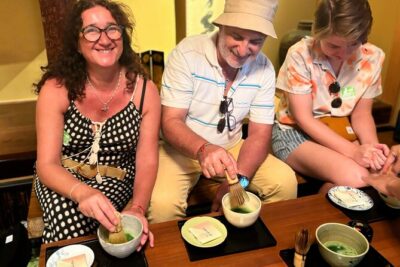
World Heritage Kyoto & Nara Uji Authentic Matcha Experience
Read our review →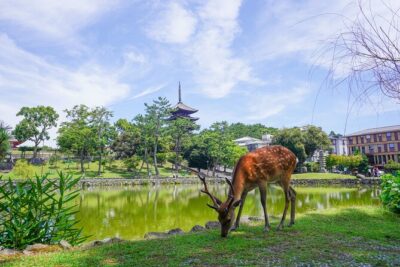
Nara Half Day Trip Walking Tour (Private Option Available)
Read our review →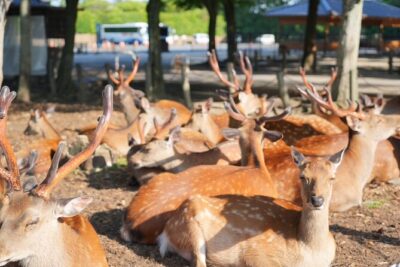
Nara Early Morning Tour (Kyoto or Osaka Departure Available)
Read our review →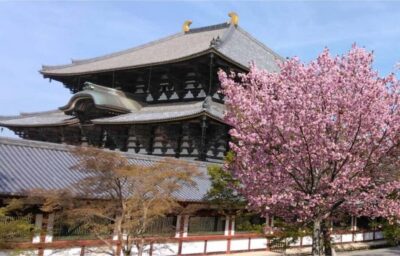
Nara and Uji Day Trip with Deer Park and Hot Spring
Read our review →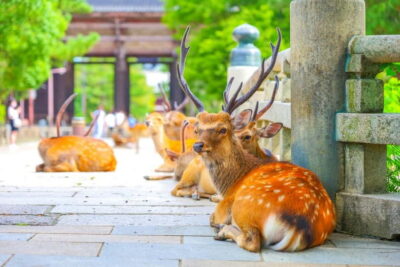
Kyoto/Osaka: Kinkakuji, Bamboo Forest, and Nara Deer Park
Read our review →
E-Bike Nara Highlights – Todaiji, Knives, Deer, Shrine
Read our review →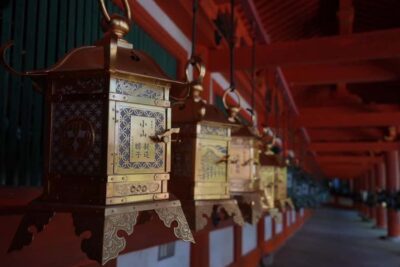
Nara Early Bird Tour (Kyoto Departure Option Available)
Read our review →
Nara:Authentic Tea Ceremony(Max 5 ppl) -Master Matcha Making
Read our review →Browse the lists this tour appears in