
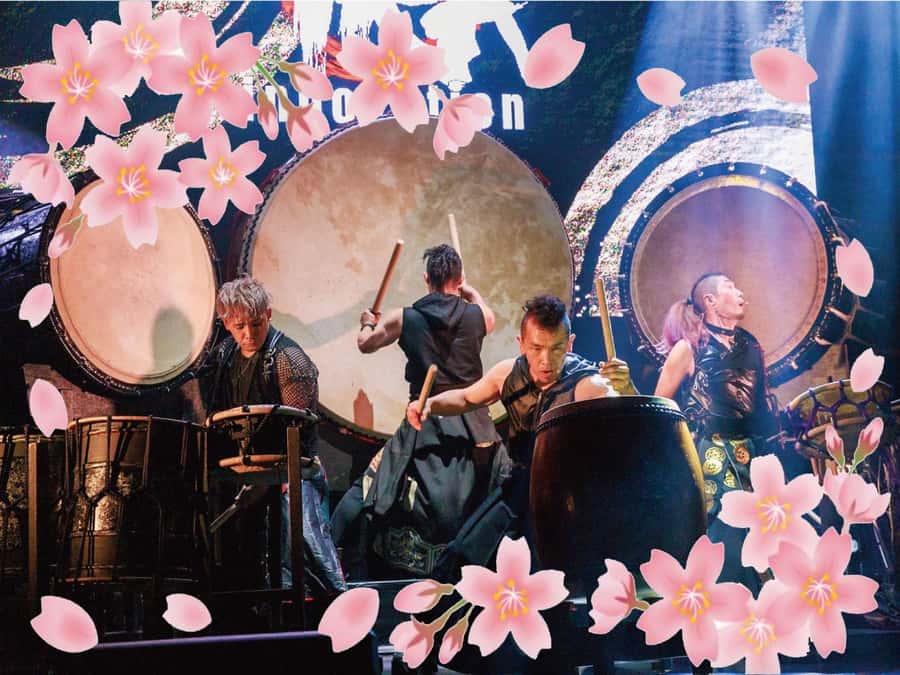
Reviewed · SHOW
Osaka: UTAGE Japanese Taiko Live Show
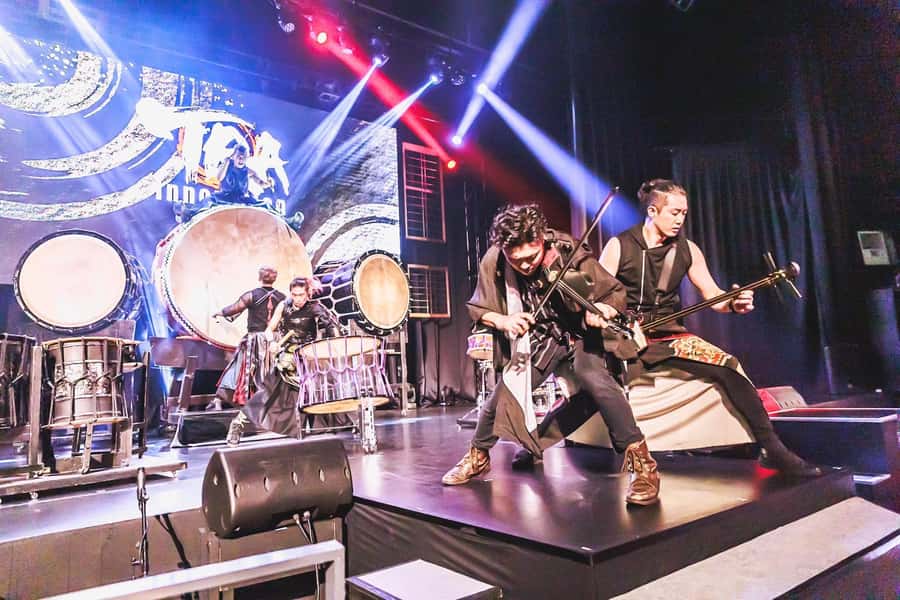
This is the kind of Osaka evening that feels both old-school Japan and brand new at the same time. You get a live lineup of Japanese instruments like taiko, shamisen, shakuhachi, and shinobue, then the sound gets mixed with computer music. The result is a show that’s high-energy, very watchable, and easy to follow even if you do not speak Japanese.
Two things I really like about UTAGE are the scale of that featured drum, a massive taiko with a diameter of 180 cm, and the close-up, hands-on audience vibe. You are not just sitting and watching, you may get invited to the stage, and there is even a limited chance to participate for one song.
One practical drawback to plan for: once the show starts, you will not be allowed to enter. So if you are late, you lose your seat. Show up early, or you will feel that sting.
Key points worth knowing before you go

- 180 cm taiko drama: you will see Kansai’s largest drum, built for big sound and bigger presence
- Traditional instruments, modern sound: taiko, shamisen, shakuhachi, and shinobue meet computer music
- Small-theatre energy: one review described about thirty people in three rows, with performers just a few meters away
- You might play too: audience participation includes a limited one-song performance slot
- Photos before and after: pictures are welcomed during the show, plus photo moments with the band afterward
- A fun add-on downstairs: there’s a shop area for complimentary photo-style props like samurai swords and traditional umbrellas
A small Osaka theatre where 180 cm taiko leads the show
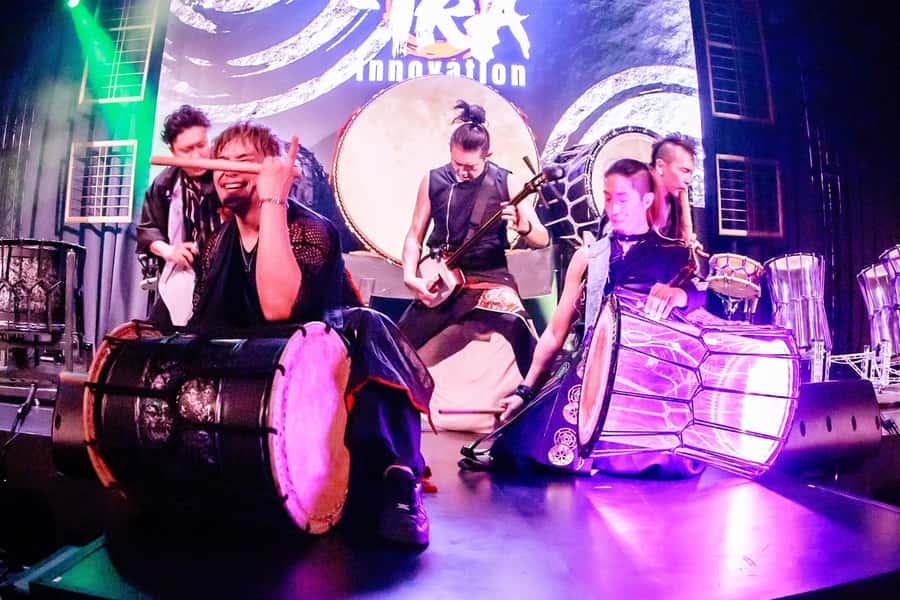
UTAGE takes place at the Osaka Cultural Center, and the whole format is designed around one idea: make Japanese musical instruments feel immediate. Not distant. Not museum quiet. More like, you are in the room while it happens.
The centerpiece is a giant drum, a taiko with a 180 cm diameter. That size matters because it changes what you feel. The bass hits your body more than your ears. Even if you usually prefer quieter shows, this one is built for impact.
And the show does not stop at “just taiko.” The lineup moves through instruments with very different voices, like the plucked strings of shamisen, the breathy tones of shakuhachi, and the finger-hole melody of shinobue. Then computer music comes in to stitch it all together. That mix is where UTAGE earns its modern reputation.
Also on the shortlist for Osaka:
- Osaka Go Karting Tour with Funny Costume
★ 5.0 · 2,658 reviews - Osaka Castle: Museum and Tower Entry Ticket
★ 4.5 · 2,380 reviews - Osaka: Shinsekai Food Tour with 13-15 Dishes at 5 Eateries
★ 4.8 · 2,204 reviews
Arriving at Osaka Cultural Center, and avoiding the one big mistake
Start at the Osaka Cultural Center. The experience begins at the scheduled start time, and the ticket is tied to that production timing.
Here is the key rule that you should treat like gospel: arrive at least 5 minutes early. Once the show begins, you will not be allowed entry. That is not a “maybe.” It is a hard production limit.
Why this matters for you:
- You likely will be coming from Osaka sightseeing, and you do not want to gamble with train timing.
- If you miss the start, you also miss the audience interaction moments, which are part of why the show is special.
The show ends back at the meeting point, so you do not need to plan a separate transfer after. It is a self-contained evening, which is a nice change from long multi-stop tours.
What the UTAGE show actually sounds like, shamisen to computer beats
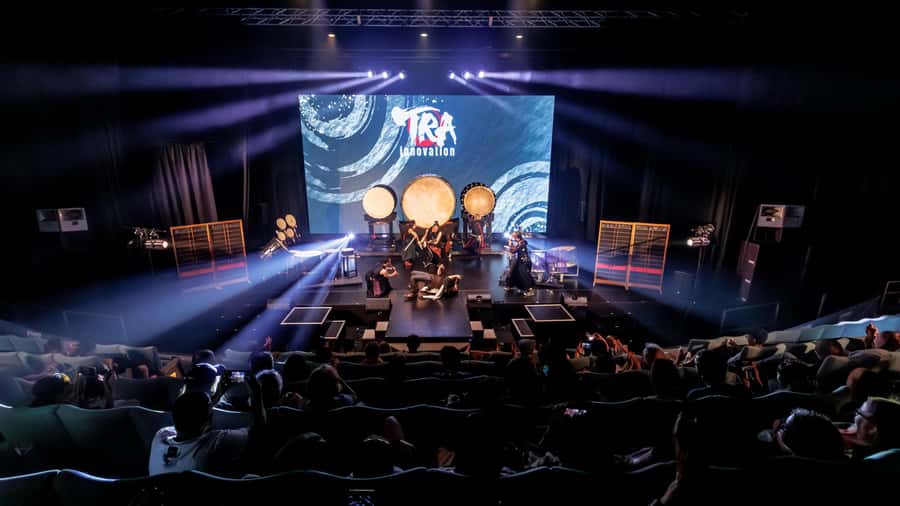
Your evening is built like a musical conversation. Traditional instruments speak first, then modern rhythm and sound design step in.
You can expect a lineup that includes:
- Japanese drums (including the featured massive taiko)
- shamisen
- shakuhachi
- shinobue
- plus computer music elements
The “why it works” part is the way UTAGE balances textures. Taiko gives you the physical punch and momentum. Shamisen adds bite and a rhythmic pulse. Shakuhachi brings breath and space, so the sound is not just constant volume. Then the computer music ties it together with timing that feels contemporary.
This is also why the show works across nationalities. It is not dependent on understanding lyrics. Even when you are catching cultural references, you still get the rhythm, the staging, and the mood shifts.
One review described the show as intense and intimate at the same time. That makes sense for a small theatre where the band is close.
The band you will see on stage, and the energy they bring
UTAGE is performed by TRAinnovation. The program describes them as having won a world number one indie band title, and they clearly play like a group used to live energy.
In practice, what you experience is a blend of:
- tight musicianship across multiple instruments
- visual staging that helps the pacing
- frequent crowd engagement
A repeated theme in the feedback is that the performers push for interaction. In one review, the audience was only about thirty people and the band was a few meters away. That distance turns a concert into something closer to a shared event.
If you want Japanese culture that feels lively instead of solemn, this is the direction UTAGE takes.
A change of pace from Osaka:
- Osaka Food Tour: 13 Dishes at 5 Local Eateries
★ 5.0 · 2,149 reviews - Hungry Osaka Street Food Tour:15 Tastings & 3 Drinks with a Local
★ 5.0 · 1,727 reviews - Osaka: teamLab Botanical Garden Entry Ticket
★ 4.5 · 1,710 reviews - Osaka: Tea Ceremony Experience
★ 4.9 · 1,426 reviews
Audience participation: watching is fun, but playing is the real hook

A big reason to choose UTAGE over a standard sightseeing stop is the participation factor.
The show includes:
- invitations to the stage for some audience members
- and a chance for you to participate for one song on a limited basis
That limited slot is what makes UTAGE feel like an experience, not just a performance. It is also why you should arrive early and stay alert once you are seated.
A practical tip: if you want the one-song participation chance, be ready. Do not plan to spend the final minutes fiddling with your camera bag or jacket pockets. The moment could come quickly.
Even if you do not get selected for the one-song segment, the show is still designed to keep you involved. Expect moments where performers react to the crowd and timing that uses audience presence as part of the performance.
Photography, meeting the band, and the downstairs shop photo moment
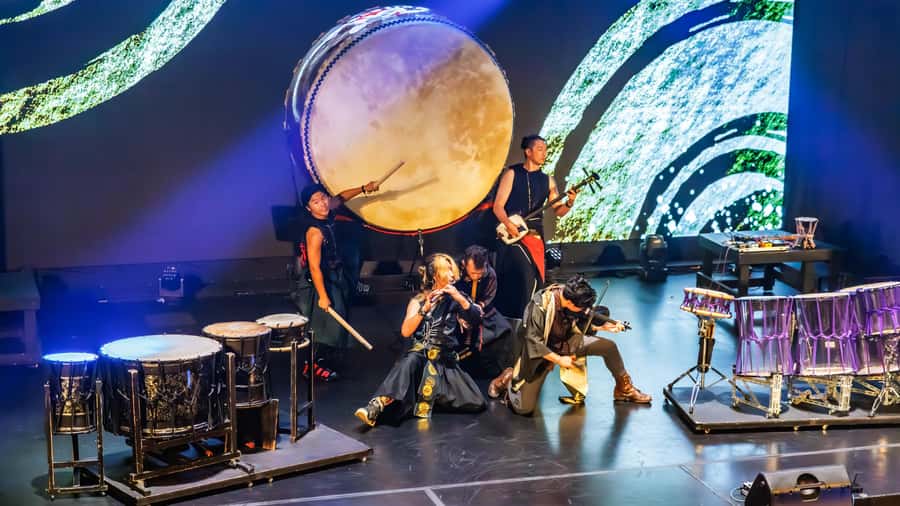
You are not stuck with only “eyes forward” viewing. The show includes photo opportunities.
One review noted that guests are welcome to take photos during the performance and that you can meet and photograph with the performers after.
Then there is a further bonus after the show: the experience continues at a shop located downstairs. In one description, visitors can pose for complimentary photos with samurai swords and traditional Japanese umbrellas.
This part is valuable because it gives you an easy souvenir that feels connected to what you just watched, not a generic gift shop stop. Also, it gives you something to do right after the show, so the evening does not abruptly end the second the last drum hits.
Price and value: is $40 worth it for Osaka?
UTAGE costs $40 per person. That is not the cheapest thing you can do in Osaka, but it is not in “big ticket tourist show” territory either.
Here is why the price can make sense:
- You get a multi-instrument live performance featuring a rare visual and sonic centerpiece, the 180 cm taiko.
- The production includes modern sound design through computer music, so it is not a static demonstration.
- You are paying for crowd interaction, including the limited chance to participate for one song.
- It is a relatively small theatre setup, which typically improves your connection to the performers.
- Post-show extras include the chance to meet and take photos with the band, plus the downstairs complimentary photo prop area described in reviews.
If you already planned a day packed with temples and street food, this can act like a “reset” evening, especially for families or groups where people might want something fun and energetic. If you only want passive watching, you could choose a different style of concert. But if you want involvement, UTAGE hits that sweet spot.
Who UTAGE is best for (and who might not love it)
This is a strong pick for:
- People who love live music and want something more interactive than a standard concert
- Families, since reviews specifically mention it being suitable for all ages
- Groups who want a shared story from the trip, not just another photo in a famous spot
- Anyone curious about Japanese instruments, but who does not want a lecture style experience
It may not be ideal for you if:
- You hate crowds or sudden audience involvement (some people feel a little “on stage” energy)
- You are likely to arrive late, because you can lose entry once the show starts
- You expect a purely traditional performance with no modern electronics, since the program mixes in computer music
For language, the program says Japanese. The good news is that the show is music-first. You do not need to understand every cue to enjoy what’s happening, but you should be ready for staff instructions in Japanese.
Practical tips to make the most of your seat

I suggest you treat UTAGE like a show, not a casual pass-by.
- Arrive early. The 5-minute buffer is there for a reason.
- Keep your phone and camera accessible if you want to use the photo moments.
- Watch the pacing. The one-song participation chance is limited, so you will want to pay attention when performers engage the audience.
- Plan to stick around after. The meet-and-photo moments and the downstairs shop are part of the experience arc.
Also, dress for a normal theatre setting. There is no information about special requirements, so just choose comfortable clothes and shoes.
Should you book the UTAGE Japanese Taiko Live Show?
Book it if you want a compact Osaka experience that mixes traditional Japanese instruments with modern sound design, and you like shows where the performers actually interact with you. The featured 180 cm taiko, the close-up theatre feel, and the chance to participate for one song are strong reasons to spend $40.
Skip it or think twice if you are tight on time, know you might arrive late, or you prefer a more formal, non-interactive cultural program. In that case, the production rules and audience involvement could feel stressful rather than fun.
If you fit the first group, UTAGE is exactly the kind of evening you will remember, because you do not just watch Japanese music. You feel how it hits, and you may get to take part.
Latest write-ups near Osaka
- PRIVATE 6hr, Food tour from Osaka Castle, Kuromon, Dotonbori.★ 5.0 · 68 reviews
- 90 min Shared Handmade Udon Experience★ 5.0 · 70 reviews
- Ramen and Gyoza Cooking Class in Osaka Dotonbori★ 5.0 · 73 reviews
- Osaka: Sushi Making in Spacious Studio (SAME-DAY OK!)★ 5.0 · 75 reviews
- Osaka E-Bike Tour With A Local Guide★ 4.7 · 75 reviews
- 1.5〜2 Hours Traditional Kintsugi Work Shop in Namba Osaka★ 5.0 · 75 reviews
- Retro Osaka Street Food Tour: Shinsekai★ 4.5 · 77 reviews
- Osaka: Osaka Castle Guided Tour with Local Guide★ 4.7 · 78 reviews
Show, compared.

Mt Fuji & Hakone Cruise, Drum Show Bullet Train 1 Day from Tokyo
Read our review →
Sumo Show Experience with Chicken Hot Pot and a Photo
Read our review →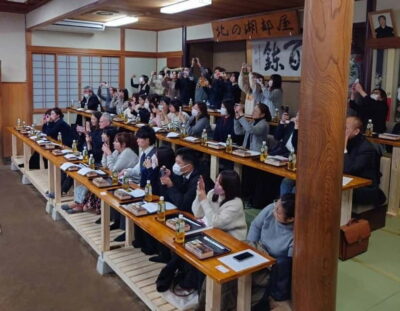
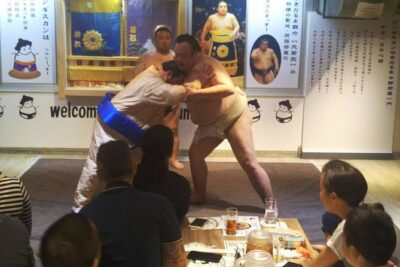
Tokyo Shinjuku Sumo Show & Experience with Photo
Read our review →

Mt Fuji & Hakone Cruise, Drum Show Bus 1 Day from Tokyo
Read our review →
Browse the lists this tour appears in