
Reviewed · TEMPLE & SHRINE TOURS
Tokyo History: Sensoji Temple & Asakusa District Private Tour
Asakusa has layers, and this private walk to Senso-ji is a hands-on way to see how Tokyo became Tokyo. I especially like that you get an included offering at Senso-ji, not just a drive-by photo stop, and that the pace is guided by a real person, not a fixed script.
One thing to consider: you’ll be on your feet for about 3 hours, including narrow streets around temple and shopping areas. Also, there’s no hotel pickup, so you’ll want to start at the given meeting point and use public transit.
Key highlights you’ll feel fast
- A true private tour with just you and your local guide, so you can ask questions and adjust the walk
- Temple time at Senso-ji plus an offering included for your visit
- Street-food friendly stops along the way, including an Age Manju stop at Hozomon and time near melon pan treats
- Crafts at the Edo Taito Traditional Crafts Center, with a chance to spot artisans working on some days
- Kappabashi Street focus on food models and tools, a fun angle for food lovers and design nerds
Why Asakusa and Senso-ji still work, even on your busiest Tokyo days
If you’ve only got a day or two in Tokyo, you might feel pressure to do the “big” neighborhoods first. I like putting Asakusa near the top of the list because it feels like Tokyo showing you its older face. It’s not just temples and shops, it’s the way the streets guide you, turn by turn, from religious space to everyday commerce.
This tour makes that easy. Instead of wandering in “Where do I even start?” mode, you follow a local host who can explain what you’re seeing as you’re seeing it. That matters here, because Asakusa is full of symbols, gate names, and customs that are easy to miss if you’re going solo with only a guidebook.
You also get the temple visit in a way that feels practical, not rushed. Incense, lanterns, and the flow of people are the main show at Senso-ji, and the timing here is long enough for it to land.
More Historical Tours in Tokyo
- Tokyo: Imperial Palace and Shogun Historical Walking Tour
★ 5.0 · 2,251 reviews - Tokyo: Imperial Palace Japanese History Walking Tour
★ 4.9 · 987 reviews - Tokyo: Shinjuku Historical Walking Tour & Secret Backstreets
★ 5.0 · 530 reviews
The real value of a private guide, from names like Abu, Shelina, Gulay, and RamKy
The biggest perk is the human one. This is not a group herded along by a laminated schedule. It’s just you and your local guide, and that changes everything about how you experience Tokyo.
In the reviews, guides like Abu and RamKy come through as flexible and quick to tailor the walk, even when guests had special requests. Shelina is praised for making the route feel personal and for caring about what you need in the moment. Gulay gets lots of credit for explaining not only history but also culture and customs, plus for pointing out useful places to shop. And Carlos shows up in feedback as someone who shares extra recommendations that help you beyond the tour end.
How does that help you, day-to-day? You’ll spend less time guessing what’s worth your attention. If you’re curious, you’ll get answers as you go. If you want to slow down for photos or snacks, you can usually do that. And if something is temporarily crowded or confusing, your guide can reroute you within the same area without turning the whole morning into a scramble.
Start point, timing, and what to wear for a 3-hour temple-and-streets walk
The tour starts and ends at the same meeting point in Asakusa, at 2-chōme-16-11 Kaminarimon, Taito City, Tokyo 111-0034. No hotel pickup is included, so plan your transit like you’re going to meet a friend, not like someone is coming to you.
It runs about 3 hours and includes several short walks between places. Physical fitness needs are listed as moderate, which sounds vague until you’re on uneven sidewalks, in tighter lanes near the gates, and walking through busy pedestrian areas. If you’re bringing kids or you hate long standing periods, you’ll want to wear comfortable shoes and keep expectations realistic.
What I recommend to make your life easier:
- Comfortable walking shoes with grip. The area can be crowded and you’ll be moving often.
- A small bag you can manage in tight spots near temple and market lanes.
- A charged phone, since you’ll have a mobile ticket and you’ll likely use maps and photos.
Nakamise Shopping Street at Kaminarimon: your first hit of Asakusa energy
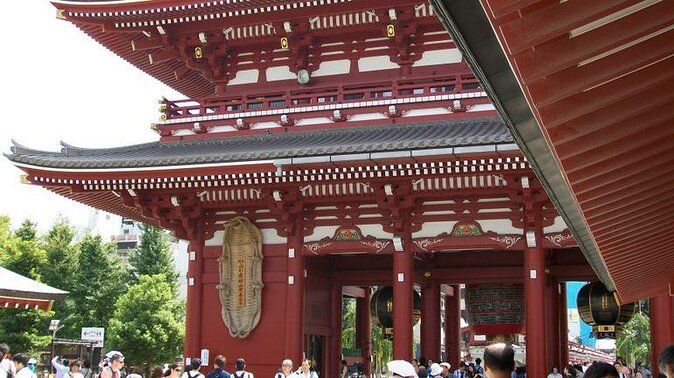
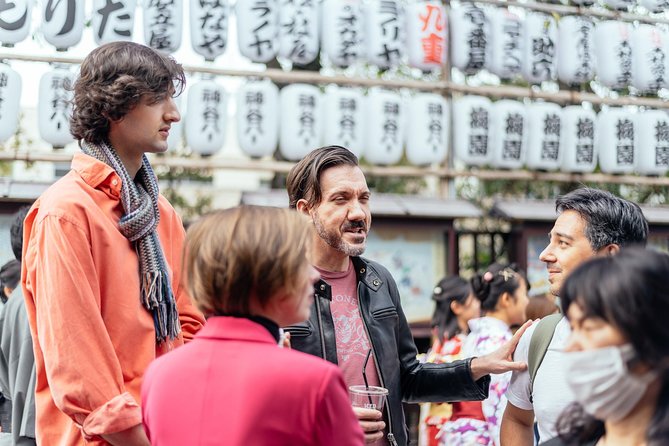
Your walk begins at Nakamise Shopping Street at Kaminarimon, the gate area where the lanterns and statues set the tone. This is the classic entry point into Asakusa, and it works well at the beginning because it gives you a visual map of what’s ahead.
You’ll have about 20 minutes here. That’s enough time to:
- Look up at the gate details and lanterns without feeling rushed
- Glance at souvenir rows and decide what you actually want, not what looks good from 10 feet away
- Sample street food and sweets if you’re the type to snack your way through a neighborhood
The admission is free for the area you’ll cover, which keeps this stop from feeling like it’s charging you for the privilege of walking. The real cost is your willpower, because the snacks at Nakamise are designed to pull you off course.
More Temple & Shrine Tours in Tokyo
- Tokyo: Meiji Shrine, Asakusa, Skytree Bus Tour and Cruise
★ 4.7 · 1,986 reviews - Tokyo: Asakusa Walking Tour with Sensoji Temple Visit
★ 4.8 · 1,583 reviews - Nikko: Kegon Falls, Lake Chuzenji & Toshogu Temple
★ 4.6 · 1,577 reviews - Tokyo: Nikko Toshogu Shrine and Kegon Waterfall Tour
★ 4.5 · 1,266 reviews
Hozomon and the Age Manju stop: where your guide turns a snack into context
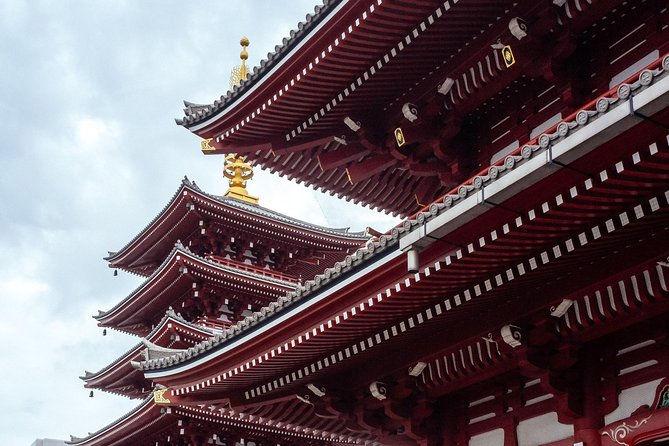
From Nakamise you move toward Hozomon, the area right at a key gate that leads into temple grounds. Here, you’ll pause to try Age Manju in a flavor you choose. This is one of those small food moments that makes the tour feel lived-in, not museum-like.
You’ll spend about 20 minutes in this zone. This is also where a good guide earns their keep. Age Manju is tasty, sure, but the value is in the cultural explanation and the way your host ties the food to how people experience the temple area day-to-day. Even if you’re not a big “food tour” person, this is a sweet spot, because it breaks up the walking and gives you a warm, easy-to-share experience.
After the snack stop, your guide brings you through the second gate into the temple flow. This is the moment where you stop browsing and start paying attention to customs.
Senso-ji Temple: incense, gate rhythms, and an offering that makes it feel real
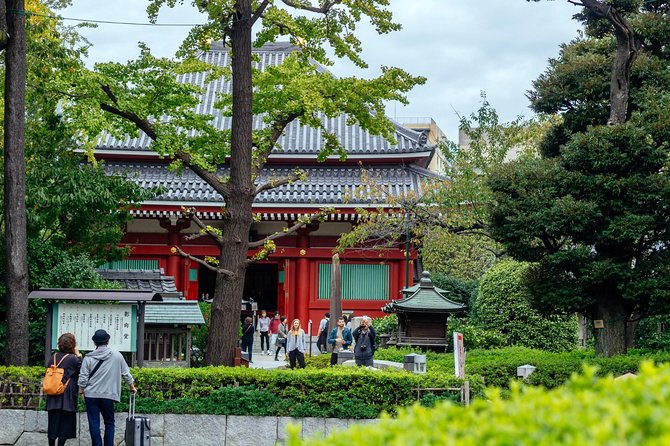
Senso-ji is described as Tokyo’s oldest temple, dating back to 628. Even if you don’t obsess over dates, it helps to know you’re in a place that has been pulling people in for a very long time.
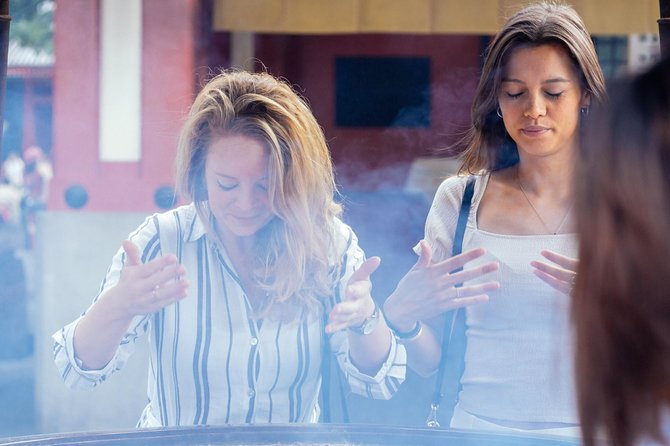
Your time at Senso-ji is about 20 minutes. You’ll pass into the main experience zone, where incense smoke and the movement of worshippers give you the atmosphere immediately. The goal is not to “do everything.” The goal is to understand what you’re seeing and participate in the customs in a respectful, beginner-friendly way.
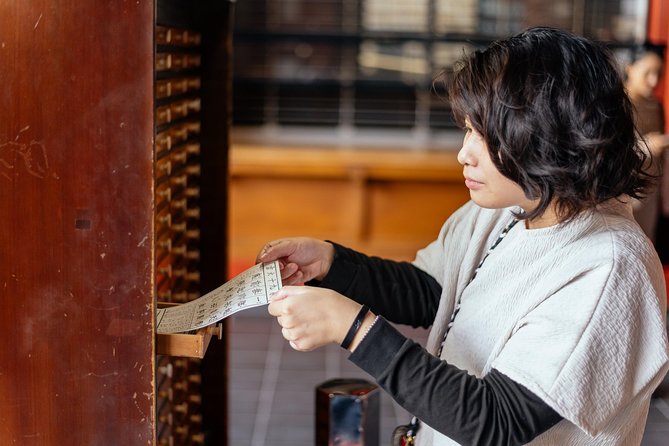
The tour includes a small offering at Senso-ji. That one detail changes the visit. As a solo visitor, it’s easy to feel like you’re just watching. With the offering included, you get a clear, guided way to take part.
If you time your visit well, you might also notice ceremonies occurring in this area. One review mentioned a Shinto wedding blessing during their visit, and another described seeing a samurai ceremony as well. Those moments are not guaranteed, but your guide can often help you recognize when something special is happening and where to stand without blocking others.
Hanayashiki area and melon pan time: a quick detour that keeps Asakusa from feeling one-note
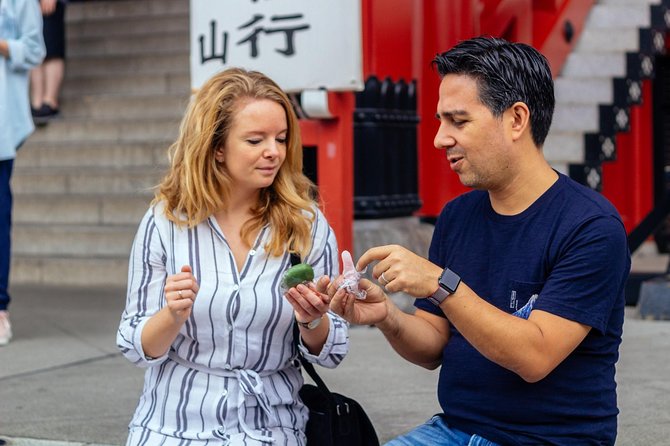
After Senso-ji, you head through narrow streets toward Asakusa Hanayashiki, with about 15 minutes allocated for this segment. Hanayashiki is known in part for being an older amusement spot in the area, but what you’ll likely remember most is the practical, street-level feel of moving through nearby lanes.
This stop also ties into a food detail: you’ll pass through a spot famous for freshly made melon pan bread. You’re not locked into buying it, but you get the chance to. I like this kind of stop because it gives your brain a rest. You’ve spent your morning reading gates and customs; now you’re back in everyday Tokyo.
A small downside: because this is a pass-through style stop, if you’re hoping for a long snack session, you might want to add extra time on your own afterward. Think of it as a taste and a waypoint, not a full food break.
Edo Taito Traditional Crafts Center: watching makers and buying with a story
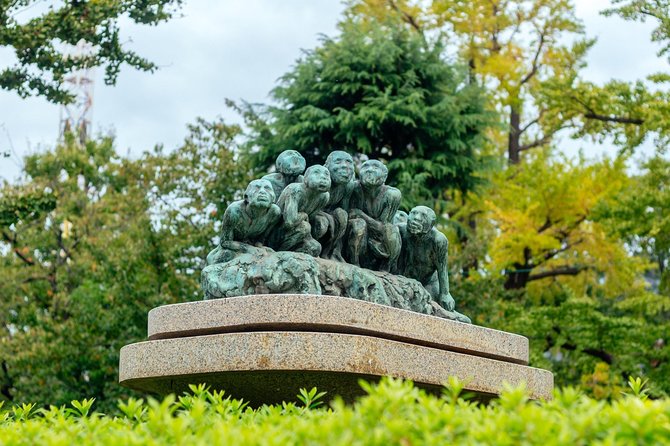
Next you go to the Edo Taito Traditional Crafts Center, also referred to as the Edo Shitamachi Traditional Crafts Museum. Your guided time here is about 15 minutes, with a focus on what Tokyo’s craft world looks like.
What I like about this stop is that it adds a different kind of history. Temples represent one chapter. Crafts represent another chapter, the everyday skill side of the city.
The tour is designed so you can browse items made by creative artists, and if you visit on a weekend, you may even see someone performing the craft in front of you. That kind of live making is worth its own stop. You don’t just see a souvenir, you see effort in progress.
If crafts aren’t your thing, you can still appreciate it as a “how Tokyo works” checkpoint. It helps you understand why the shopping streets feel the way they do, and why people come back for handmade goods instead of mass-produced copies.
Kappabashi Street (Dogugai): food models, kitchen tools, and a fun kind of obsession
Then it’s over to Kappabashi Street, specifically the Kappabashi Dogugai area. You’ll spend about 15 minutes here, and the schedule includes a second Kappabashi segment as well, which means you get enough time to move along and compare what’s on display.
Why does Kappabashi matter on a history-focused day? Because it’s still Tokyo. It’s the part of the city where food culture meets manufacturing and design. The street is known for shops that create restaurant food models, basically realistic-looking replicas of dishes used for displays.
If you’re the kind of person who takes photos of menus, Kappabashi will make you pause. These models are weirdly satisfying to look at, because they’re art disguised as marketing. It’s also a great place to buy small, practical souvenirs if you like kitchen-related items or want something that feels different from typical temple-branded goods.
One practical note: this area is a shopping street, so if you’re trying to keep your hands free for the day, set limits now. It’s easy to lose track of time once you’re browsing.
How to pace your photos, snacks, and shopping without slowing the whole tour down
The tour is structured into several short stops, and that’s a big part of why it works. You get to see a lot without getting stuck in one place long enough to feel exhausted.
Here’s how I’d handle it if you want the best value:
- Start taking photos at gates and transition points, not just inside crowded areas.
- If you want Age Manju or melon pan, decide early so you’re not making choices while people are moving around you.
- For shopping streets, set a budget for yourself. Nakamise and Kappabashi can trigger impulse buys fast.
Also, because it’s private and you can ask questions, you can use your guide strategically. Ask what to try, what to skip, and which corners to linger at for the best views. That kind of tailored guidance is exactly what people praised when they wrote about guides like Abu sorting requests, and Gulay showing them spots on Kappabashi.
Price and value: what $139.63 buys you in a city that charges for everything
At $139.63 per person, this isn’t the cheapest way to see Asakusa. But you’re paying for three things that add real value.
First, you get a private guide. In Tokyo, a small difference in guide quality changes your whole day. Here, the feedback emphasizes flexibility, clear explanations, and people who care about pacing and needs.
Second, you’re paying for a smart itinerary mix. You get temple time, a gate-and-street experience, a craft museum stop, and Kappabashi. You’re not just checking boxes. You’re getting a thread through the day, how religious traditions, street commerce, and maker culture fit together.
Third, you’re not paying extra for entrance. The stops listed here are free, and the tour includes a temple offering. That offering is small, but it’s a meaningful inclusion that helps you participate rather than only observe.
If you’re traveling solo and you don’t mind spending on a guide, this can be a good buy. If you’re a couple or family group, it may also feel easier to justify, especially with any group discounts that can apply when you book multiple people.
Who should book this tour, and who might want to DIY it
This private tour is ideal if:
- You want history and culture explained in plain language
- You like the idea of a guide adjusting the walk to your pace
- You want both temples and practical Tokyo shopping stops, without turning it into an all-day project
- You’d enjoy trying snacks like Age Manju as part of the experience
You might skip a guided tour and do it on your own if:
- You’re happy to wander without help and you already know what you want at Senso-ji and Nakamise
- You’re budget-tight and can handle the logistics of deciding where to go, and what to look for
Should you book the Tokyo History: Sensoji Temple & Asakusa District Private Tour?
I think you should book this if your goal is to understand Asakusa, not just photograph it. The mix of Senso-ji with an included offering, the smart early stops around Nakamise and Hozomon, and the late-day shift to crafts and Kappabashi makes it feel well balanced for a half-morning.
Also, the guide quality seems to be the standout. People highlighted guides like Abu, Shelina, Gulay, Carlos, William, and RamKy for being flexible, friendly, and good at connecting history to everyday customs. That’s exactly what you want when you’re spending only a few hours in one neighborhood.
If you’re okay with walking and starting at the meeting point, this is a strong way to get more meaning out of Asakusa than you’d likely manage alone.
FAQ
How long is the Tokyo History: Sensoji Temple & Asakusa District Private Tour?
It lasts about 3 hours.
Is this tour private?
Yes. It’s a private tour for only you and your local guide.
Where does the tour start and end?
It starts at 2-chōme-16-11 Kaminarimon, Taito City, Tokyo 111-0034, Japan and ends back at the same meeting point.
What’s included in the tour price?
The tour includes a private guide and an offering at Sensoji temple. Tours are also described as CO2 neutral, with carbon emissions offset.
Are there any admission fees for the stops?
The stops listed are marked as free for admission, including Nakamise Shopping Street, Hozomon, and Senso-ji Temple, plus the other included sights.
Is hotel pickup or drop-off included?
No. Hotel pick-up and drop-off are not included. You’ll need to get yourself to the meeting point.
Latest write-ups near Tokyo
- Tokyo Nights: Shibuya Photo Adventure★ 5.0 · 20 reviews
- Wagyu & Sake 8 Course Tasting Dinner in Shinjuku★ 4.9 · 20 reviews
- Making Japanese desserts Nerikiri & drinking matcha in Tokyo★ 5.0 · 20 reviews
- Japanese Whisky Hunting《HIGH-QUALITY-ONLY》Rare Tasting Class★ 5.0 · 20 reviews
- Mt. Fuji 5th Station, Owakudani Ropeway, Pirate Ship plus Outlet shopping!★ 4.5 · 20 reviews
- Kintsugi Experience with Arita Ware in Tokyo (English Guide)★ 4.8 · 20 reviews
- This is Asakusa! A Tour Includes the All Must-Sees!★ 5.0 · 20 reviews
- Tokyo: Karate Experience with Former All-Japan Champion★ 5.0 · 20 reviews
Temple & Shrine Tours, compared.
Fushimi Inari, Kinkakuji, Bamboo Grove 1 Day Bus Tour
Read our review →
Meiji Shrine, Asakusa, Skytree Bus Tour and Cruise
Read our review →
Osaka/Kyoto:Kinkakuji,Arashiyama,FushimiInariShrine,NaraPark
Read our review →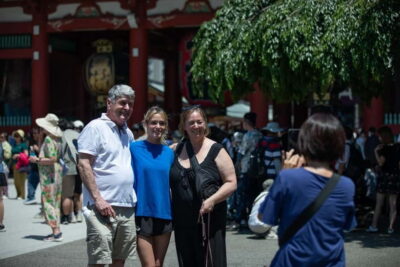
Asakusa Walking Tour with Sensoji Temple Visit
Read our review →
Nikko: Kegon Falls, Lake Chuzenji & Toshogu Temple
Read our review →
Kamakura & Enoshima Day Trip including Temple Tickets
Read our review →
Nikko Toshogu Shrine and Kegon Waterfall Tour
Read our review →Browse the lists this tour appears in