Reviewed · TOKYO TOURS
Tokyo Imperial Palace with Kagurazaka Alley Tour
Tokyo’s Imperial Palace area plus Kagurazaka is a smart combo because you get sweeping city landmarks, then you slow down for old-street Tokyo. I love how the guide style brings the Edo period and Tokugawa-era details to life, with guides like Sho showing history in a way you can actually picture as you walk. I also like the bonus street-level culture in Kagurazaka, including lanes connected to geisha-era memories, plus food-and-drink alleys where the atmosphere feels quietly lived-in.
One thing to consider: the Imperial Palace itself is not open to the public, so you are mostly seeing the palace grounds and surrounding features from the outside. If you want “inside the palace” access, this tour won’t be that kind of day.
Key Things You’ll Notice On This Route
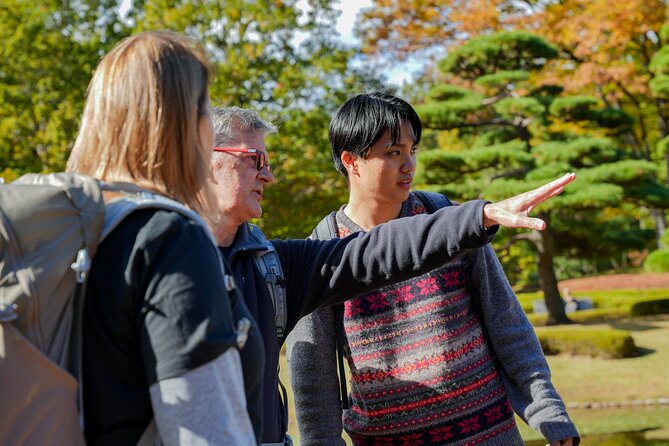
- A small group of up to 8 keeps the pace laid-back and makes questions easy to ask
- Sho and Aya-style guiding means you get clear culture explanations, not just dates and names
- Tokyo Station first, so you start with orientation in a major hub before slowing down
- Imperial Palace grounds for 55 minutes, with gardens, moat, and park space as your main sights
- Kagurazaka street sequence, including Geisha Alley, Hyogo Yokocho, and Kakurenbo Yokocho
- Edo Castle connection with Ushigome Mitsuke, a gate-related spot tied to castle defenses
Entering Tokyo Station, Then Switching Into Slow Tokyo
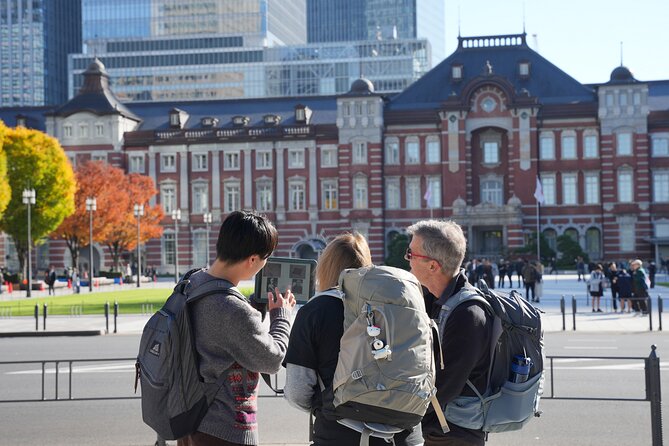
You start at the Shin-Marunouchi Building area in Marunouchi, close enough to public transit that it works even if you are juggling multiple plans that day. Tokyo Station is a big, busy hub. But in this tour, it is not treated like a generic transit stop. You use it as a mental anchor, so the rest of the walk feels like it has direction instead of just random landmarks.
The time is short at first, about 5 minutes, which is perfect for setting context without draining your morning. You get moving quickly, then you shift gears toward the Imperial Palace zone where the pace changes from “commuter flow” to “quiet city edges.” That change is the whole trick of this tour. You are not only moving around Tokyo, you are changing how Tokyo feels.
Also on the shortlist for Tokyo:
- Mt Fuji and Hakone 1-Day Bus Tour Return by Bullet Train
★ 5.0 · 26,383 reviews - 1-Day Tokyo Bus Tour
★ 5.0 · 14,250 reviews - Tokyo: TOKYO SKYTREE® Admission ticket
★ 4.5 · 11,192 reviews
Imperial Palace Grounds: What You Can See (And Why It Still Matters)
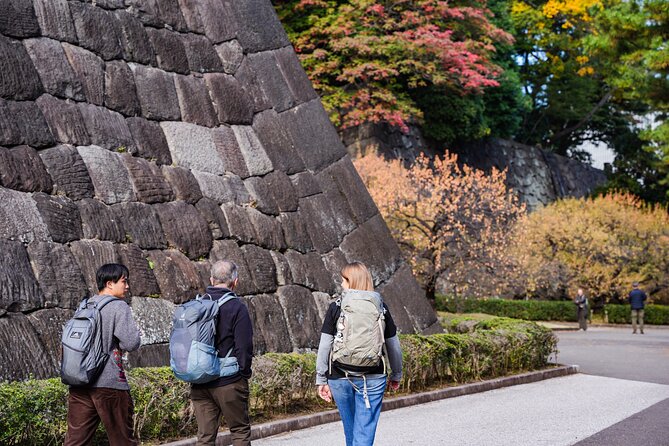
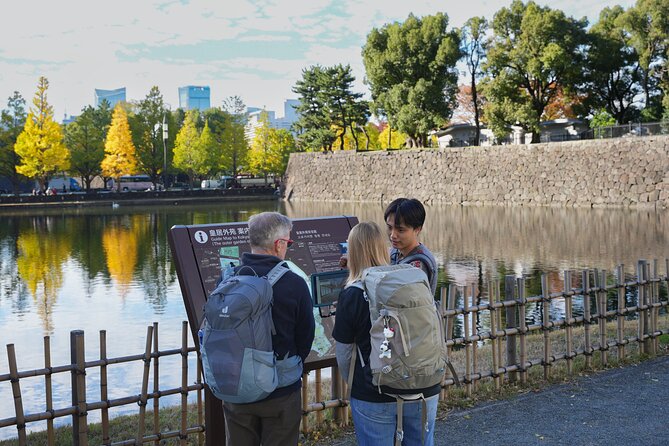
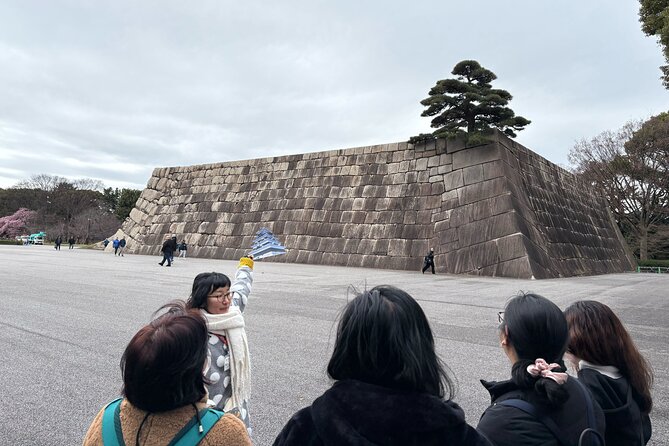
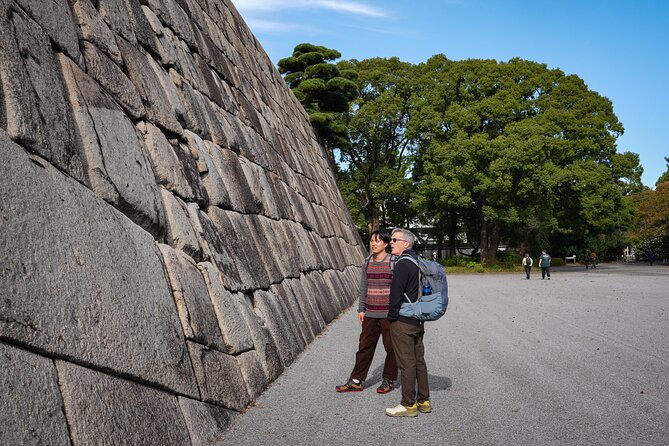
Next comes the Imperial Palace area, where the official residence of Japan’s Emperor sits within gardens, a moat, and large park spaces. The palace itself is not open to the public, so don’t expect an inside visit. Instead, you get something many independent travelers miss: the meaning of the space and layout around the palace, not just a quick photo.
This stop runs about 55 minutes. That length is helpful because you can actually slow down and look, rather than sprinting through. If you have seen other palace-adjacent spots in Tokyo and felt like you were missing the “why,” this is where a good guide earns their fee. In past group experiences, guides have explained how architecture details and cultural symbolism connect to Japanese stories, including small visual clues people often overlook.
It is also a good time for seasonal Tokyo moments. One guide-style example from the experience: on a sunny day with blossoms, the guide connected plant life to tradition and architecture in a way that made the grounds feel more personal, not just scenic.
A Quick Olympics-Era Pause At Nippon Budokan
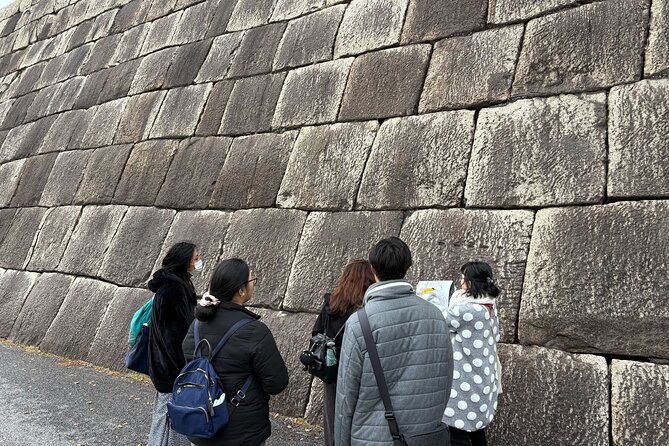
After the palace area, you have a stop at Nippon Budokan in Kitanomaru Park. It is famous for a reason: it was originally built in 1964 for martial arts events during the Tokyo Olympics. Today, it hosts a wide range of events.
Why put this here? Because it reminds you Tokyo has multiple layers happening at once. You are moving from Imperial symbolism, to city rhythm, to a venue that became part of modern pop and sports culture. Even if you do not plan to attend an event, it is a useful context stop. It keeps your day from becoming only “old Japan,” and it helps you understand how the city repurposes landmark spaces.
Tokyo Daijingu Shrine In Kanda: Shinto Context Without The Rush
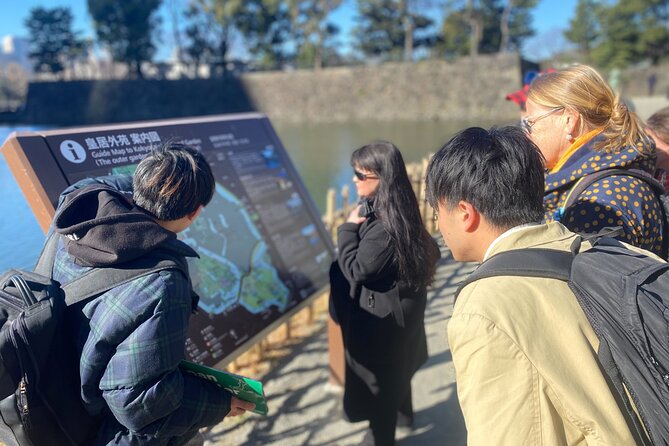
Then you head to Tokyo Daijingu Shrine, a Shinto shrine in the Kanda district. It was established in 1880 and is dedicated to Amaterasu, the sun goddess, plus the spirits of Japan’s imperial family.
This is a shorter stop, around 15 minutes. That might sound brief, but it fits the tour style. You are not forced to sit through a long ceremony, and you still get the basic orientation: what the shrine is, who it honors, and why that matters when you are walking through Tokyo’s history-heavy neighborhoods. A good guide can also help you notice how Shinto presence shows up in daily surroundings, not only in big tourist temples.
The best part is how it bridges “imperial” themes with religious ones. It turns what could be separate silos into one connected understanding of Japanese culture.
A change of pace from Tokyo:
- Tokyo: teamLab Planets TOKYO Digital Art Museum Entry Ticket
★ 4.6 · 9,779 reviews - Mt Fuji & Hakone Cruise, Drum Show Bullet Train 1 Day from Tokyo
★ 4.0 · 7,413 reviews - Tokyo: Sumo Show Experience with Chicken Hot Pot and a Photo
★ 4.8 · 6,678 reviews - Tokyo: Shinjuku Food Tour (13 Dishes at 4 Local Eateries)
★ 5.0 · 6,603 reviews
Kagurazaka: Cobblestone Streets, Geisha-Era Memories, And Tiny Alleys
Now the tour really earns its name. Kagurazaka is known for a mix of old and new Japan. It was once a geisha district, and the narrow cobblestone alleys still feel like you stepped a few decades back. The area is also lined with traditional restaurants, stylish cafes, and boutique shops, so it does not feel like a museum. It feels like a neighborhood.
You spend about 30 minutes in Kagurazaka, but the time is used well because you walk through specific lanes, not just a general neighborhood stroll.
Geisha Alley: Nostalgia With Real Streetscape
First you pass through the Geisha Alley in Kagurazaka. This is a historic street that was known for geisha culture. Today, it keeps a nostalgic charm with narrow lanes and traditional teahouses, plus those small glimpses of old Tokyo you simply cannot recreate from maps.
What I like here is the atmosphere control. Instead of throwing you into a loud shopping street, this lane slows your footsteps. It is the right kind of photo stop too, because the lanes naturally frame views.
Hyogo Yokocho: Cozy Eateries In A Tight Old Layout
Next is Hyogo Yokocho, a narrow alley with old-fashioned charm. You will see small, cozy eateries and traditional shops lined along the lane. It feels like a place designed for casual connection: short walks between doors, quick meals, and a neighborhood vibe that does not need big signage.
If you are planning dinner after the tour, this is where you start forming ideas. Even without going inside, you learn what kind of atmosphere Kagurazaka offers.
Kakurenbo Yokocho: Hidden Alley Energy
Then comes Kakurenbo Yokocho, described as a hidden alley with small bars and eateries. Think intimate, quiet, and easy to miss unless you are on the right street. This is the kind of spot where the tour pays off because the direction matters. If you wander on your own, you might find it, but you will not likely find it in time, and you may miss the lane turns that make it feel special.
Ushigome Mitsuke: Edo Castle Defense, Even When The Gate Is Gone
Finally, you get a nod to the Edo Castle with Ushigome Mitsuke, one of the gates of Edo Castle in Tokyo’s Ushigome area. The gate was originally part of the castle’s defensive structure during the Edo period. The gate itself no longer exists, but the site connection is still worth knowing.
This stop matters because it ties Kagurazaka’s streets to the broader historical map. You are not only enjoying scenery. You are learning how Tokyo’s neighborhoods trace older power structures and city planning.
Why The Small-Group Format Changes Everything
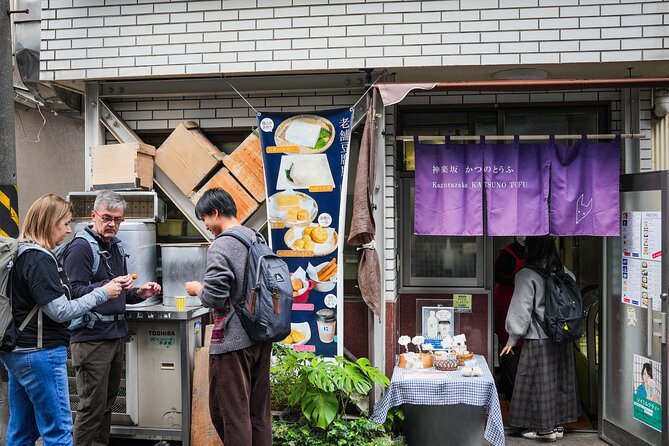
This tour caps at 8 travelers, which makes a big difference. With fewer people, the guide can pace the group and adjust explanations on the fly. You get more chance to ask questions, and you also get better group photos, which someone like Aya is known for doing thoughtfully.
I also like the guide interaction style here. In one experience, having time to ask lots of questions turned the walk into a real learning session, not a lecture. That is especially helpful when you notice details in the environment, like roofline symbolism. If you see fish shapes on buildings and wonder what they mean, this kind of guiding is the difference between staring and understanding.
The result is that even a 3.5 hour walk feels complete. You are not rushing for the next landmark. You are absorbing the city as you go.
Tokyo For Real: Local Tips, Not Just Famous Sights
The tour promises local tips and unique experiences that you likely will not find in a standard guidebook list. Even without naming every secret, the value shows up in the areas you visit. Kagurazaka’s alleys are the proof. These streets are exactly the kind of Tokyo you want when you are tired of the postcard route.
You still get the heavy hitters, like the Imperial Palace area and Tokyo Station, but the day does not stop at the obvious. It becomes a Tokyo day where the “in between” spaces matter, the lanes, the shrine context, and the historical connections to Edo-era city life.
It is also a nice fit for first-timers who want depth without committing to a full-day tour. You can do this and still have energy left for the rest of your itinerary afterward.
Price And Timing: Is $52.84 Good Value?
At $52.84 per person for about 3 hours 30 minutes, you are paying for three things: guidance, time efficiency, and the small-group feel. Tokyo Station plus Imperial Palace plus Kagurazaka is a lot of ground in a short window, and doing it with a guide saves you the effort of figuring out what is worth your time at each stop.
Is it worth it if you love DIY walking? Maybe, but Kagurazaka is the test. Without guidance, you can wander, but you may miss the specific lanes and the historical context that makes those lanes feel purposeful. With a guide, you get both the “where” and the “why,” which is what makes the price feel fair.
Also, the tour is often booked around 42 days in advance on average. That is a good sign that it is a popular window for this half-day style, especially for visitors planning around limited time.
Who Should Book This Tour, And Who Might Skip It
This is a great match if you want:
- A first or second trip to Tokyo and you are hungry for neighborhoods beyond the main checklist
- A guide-led day focused on history plus street atmosphere
- A small-group pace where you can ask questions and stop for context
You might skip it if:
- You only care about places with full public access inside the main buildings. The Imperial Palace itself is not open, so your sightseeing is more about grounds and surrounding features.
- You want a long, free-form explore session with no scheduled structure. This is a focused walking loop, not an open-ended neighborhood drift.
Should You Book This Tokyo Imperial Palace And Kagurazaka Alley Tour?
If you are aiming for a Tokyo day that blends major landmarks with the kind of backstreet feeling that makes you remember a city, I’d book it. The small group size, the way guides like Sho and Aya connect culture and details, and the specific Kagurazaka alley sequence are exactly what turn this from a simple walk into a story you can carry around.
Just go in with the right expectation: it is not about entering the palace building. It is about understanding the space around it, then stepping into Kagurazaka’s old streets where history shows up in the angles of lanes and the rhythm of neighborhood life.
FAQ
How long is the tour?
The tour runs for about 3 hours 30 minutes.
What time does the tour start, and where is the meeting point?
It starts at 9:00 am. You meet at the Shin-Marunouchi Building, 1-chōme-5-1 Marunouchi, Chiyoda City, Tokyo 100-6590, Japan.
How many people are in the group?
The tour has a maximum of 8 travelers.
Are admissions included for the stops?
The listed stops include admission ticket free time for Tokyo Station, the Imperial Palace, Tokyo Daijingu Shrine, and Kagurazaka areas.
Is this tour suitable for most visitors?
Most travelers can participate.
Do they provide a mobile ticket?
Yes, the tour uses a mobile ticket.
Can I cancel for a full refund?
You can cancel for a full refund if you cancel at least 24 hours before the experience’s start time. If you cancel less than 24 hours before, the amount paid is not refunded.
Latest write-ups near Tokyo
- Tokyo Nights: Shibuya Photo Adventure★ 5.0 · 20 reviews
- Wagyu & Sake 8 Course Tasting Dinner in Shinjuku★ 4.9 · 20 reviews
- Making Japanese desserts Nerikiri & drinking matcha in Tokyo★ 5.0 · 20 reviews
- Mt. Fuji 5th Station, Owakudani Ropeway, Pirate Ship plus Outlet shopping!★ 4.5 · 20 reviews
- Japanese Whisky Hunting《HIGH-QUALITY-ONLY》Rare Tasting Class★ 5.0 · 20 reviews
- Kintsugi Experience with Arita Ware in Tokyo (English Guide)★ 4.8 · 20 reviews
- This is Asakusa! A Tour Includes the All Must-Sees!★ 5.0 · 20 reviews
- Tokyo: Karate Experience with Former All-Japan Champion★ 5.0 · 20 reviews
Tokyo Tours, compared.
Mt Fuji and Hakone 1-Day Bus Tour Return by Bullet Train
Read our review →
teamLab Planets TOKYO Digital Art Museum Entry Ticket
Read our review →
Mt Fuji & Hakone Cruise, Drum Show Bullet Train 1 Day from Tokyo
Read our review →
Sumo Show Experience with Chicken Hot Pot and a Photo
Read our review →
Shinjuku Food Tour (13 Dishes at 4 Local Eateries)
Read our review →