Reviewed · TOKYO TOURS
Tokyo: KABUKI, BUNRAKU, etc. presented by National Theatre
Japanese classical performing arts are interesting because they run on craft, not technology. This show brings you Kabuki, Bunraku, and Hogaku in a live setting where the focus stays on voices, music, and movement. I like that the program is presented under Japan’s major classical-arts umbrella, and I also like the built-in English support for non Japanese speakers. One thing to consider: the performance is not at the National Theatre (Hanzomon), and the venue is in Yokohama, so you need to plan the trip.
What really makes this experience work for you is that it keeps the sound clean and the storytelling understandable. I love that Kabuki and Bunraku include an English audio guide, and I like that Hogaku comes with a free English explanation sheet, so you are not guessing what you are hearing. The possible drawback is that the English audio is an overview, not a literal line by line translation, so some fine details and jokes might pass you by.
Key things to know before you go
- Authentic lineup: Kabuki, Bunraku, and traditional music in one program, with major historical roots
- English help built in: audio guide for Kabuki and Bunraku, plus an English explanation sheet for Hogaku
- Quiet theater by design: no loud sound system style delivery, plus strict rules on noise and recording
- Real international-friendly format: English guidance that supports the big story points without drowning out the performers
- Venue is in Yokohama: KAAT Kanagawa Arts Theatre for this ticket, not Hanzomon
Kabuki, Bunraku, and Hogaku: what you are actually watching
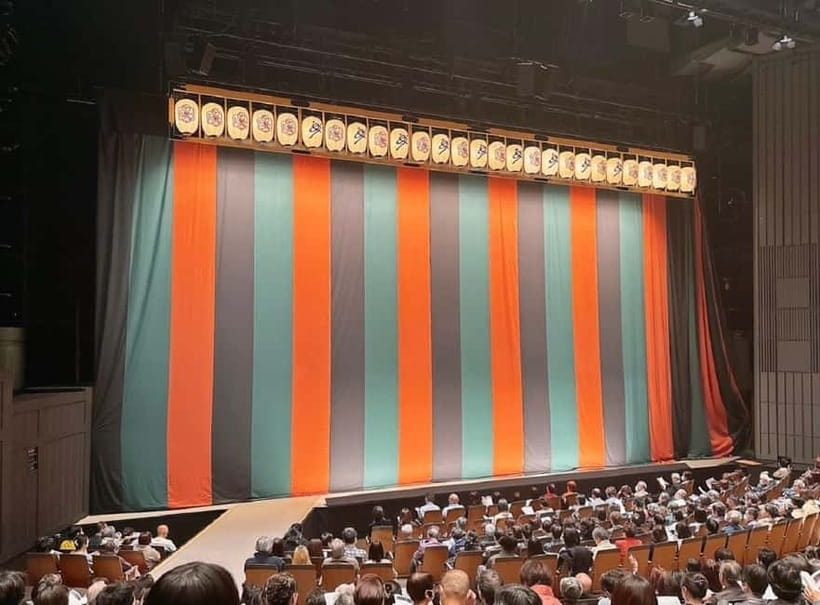
This show is not one single act. Depending on the date, you may see a mix of Kabuki, Bunraku, and Hogaku (traditional music). That variety is part of the value, because it shows how different Japanese performance traditions can tell emotion and narrative in totally different ways.
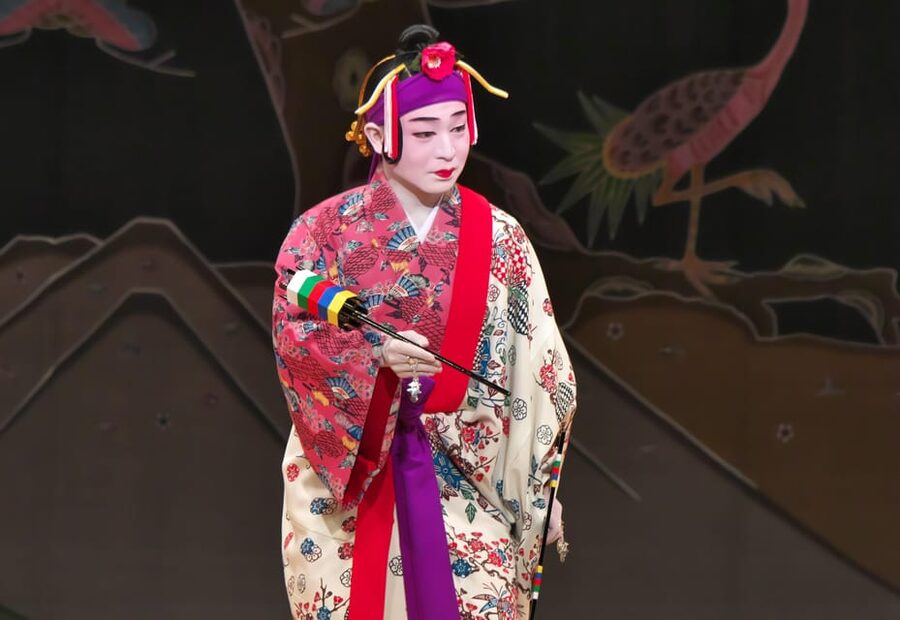
Kabuki is dramatic theatre that blends music and dance. You get stories with clear emotional beats, plus big visual moments that carry meaning even before you fully grasp the plot. Kabuki also has a habit of absorbing trends from each era, so it does not feel frozen in time. You will notice the performers use controlled movement, stylized gestures, and costume details that are meant to be read quickly from the audience.
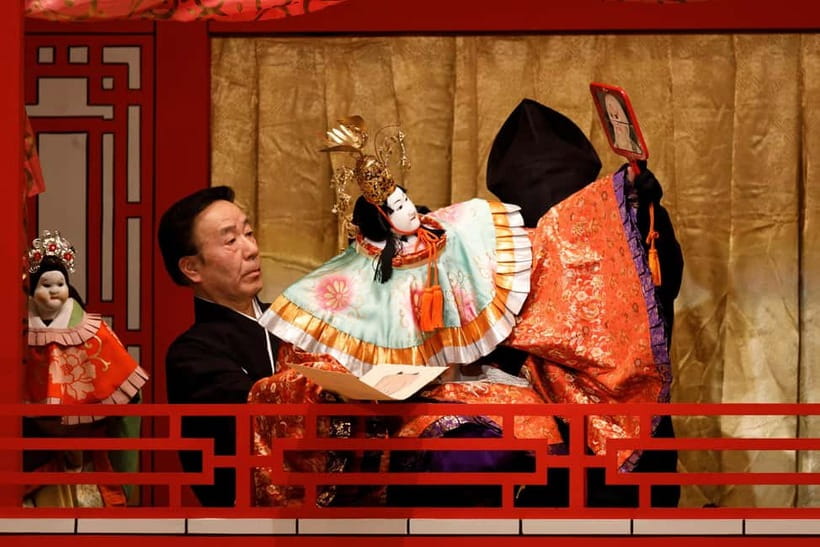
Bunraku is puppet theatre aimed at adult audiences. It is also UNESCO listed, and the reason you feel its sophistication is the teamwork. You get the synchronized mix of narrative recitation, shamisen music, and puppet performance, all working as one system. The narrator’s delivery is intense, the shamisen is lively and expressive, and the puppet movements look both delicate and powerful at the same time. This is the rare chance to see how mature, adult storytelling can be built through puppets, not through acting alone.
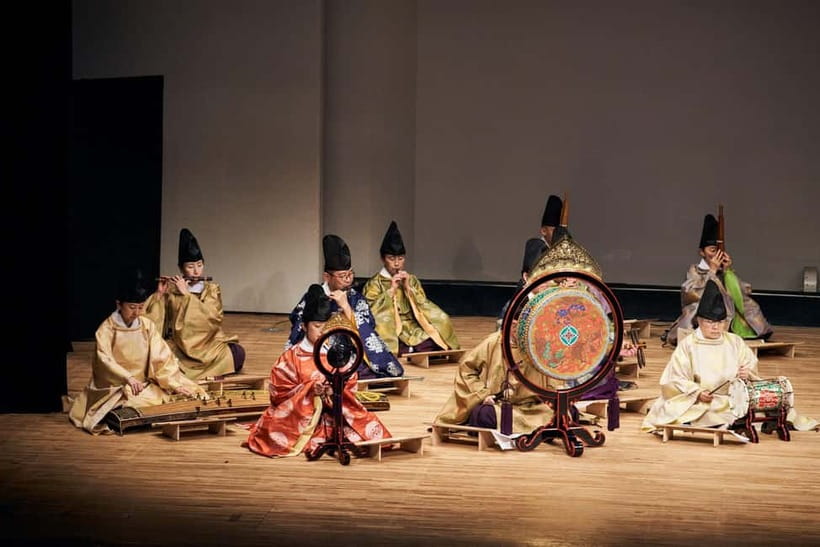
Hogaku shifts the focus to music. This program highlights melodies that symbolize snow, including Yuki no Aikata, described as a long shamisen interlude within Jiuta “Yuki” (Snow). In practice, you are listening for how falling snow gets translated into sound, and how that melody threads through songs connected to winter scenes. If you like music that paints a mood without needing big plot twists, this part can feel surprisingly moving.
Also on the shortlist for Tokyo:
- Mt Fuji and Hakone 1-Day Bus Tour Return by Bullet Train
★ 5.0 · 26,383 reviews - 1-Day Tokyo Bus Tour
★ 5.0 · 14,250 reviews - Tokyo: TOKYO SKYTREE® Admission ticket
★ 4.5 · 11,192 reviews
Where the show happens: KAAT Kanagawa Arts Theatre in Yokohama
Here is the most important logistics point: for this ticket, the venue is KAAT Kanagawa Arts Theatre in Yokohama. It is not the National Theatre (Hanzomon). Even if you booked a show branded around the National Theatre, the hall itself can change by date, so always use the meeting location instructions for your specific booking.
Getting there is straightforward once you lock onto the right subway line. The nearest stations are:
- Nihon-odōri Station (MM05), about 5 minutes walk from Exit 3 or 4
- Motomachi-Chukagai Station (MM06), about 8 minutes walk from Exit 1
From central Tokyo, you can take the Minatomirai Line. If you are coming from Shibuya, plan about 45 minutes to reach Motomachi-Chukagai Station, then walk to the theatre.
Also note the ticket swap. You will need to exchange your GetYourGuide ticket for the theatre’s ticket on the day of the performance. At the entrance, staff will ask for the name used for the reservation. It is a fast process when you are prepared, but it is still an extra step, so I suggest arriving early rather than sprinting at curtain time.
Timing reality check: 75 minutes to 3 hours
Duration here can range from 75 minutes to 3 hours, depending on what is scheduled for your date. That range matters because the experience is not background culture. You sit, you watch, you listen, and you let the story unfold at theatre pace.
Intervals can be part of your plan. One practical tip from an attendee: drinks are not allowed in the theatre, so if you plan to grab something during breaks, do it with the rules in mind. If you are hoping to cool down with hot coffee or something similar, think about timing so you are not rushing back to your seat before the next segment starts.
Seating is also handled by the theatre, not by you choosing a view. Positions are assigned on the left side in the seating plan described for this program. If you are sensitive to sightlines, arrive early enough to get settled comfortably, and remember this style of theatre often reads best from a stable, forward position.
The English audio guide: helpful, but not word-for-word subtitles
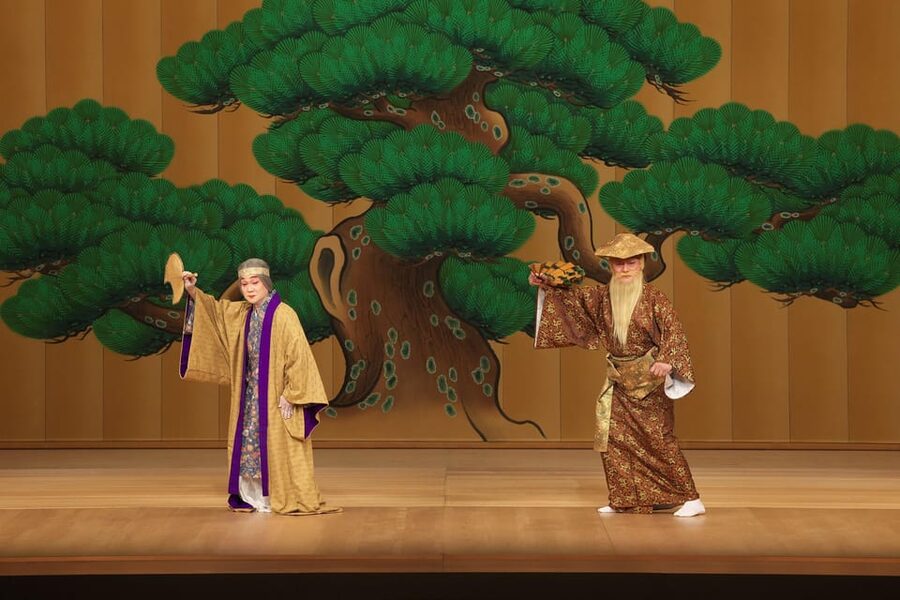
If you do not read Japanese, the English support is a big deal. Kabuki and Bunraku include an English audio guide, and Hogaku includes a free English explanation sheet. That design is smart, because it supports you without forcing you to stare at text while performers are working.
But the audio guide has limits you should understand up front. It is English only, and it provides an overview of main points rather than a literal translation of dialogue. The goal is to keep you hearing the performers’ voices, acting, and musical phrasing without distraction.
This means you should expect that you may not catch every line or every joke. You will still get the story shape, character purpose, and key context points so the main actions make sense. One more thing I recommend: give yourself a minute to adjust to listening to translation in one ear while following the stage with the other sensory channel. It can feel slightly strange at first, then it clicks.
For Hogaku, the explanation sheet plays a similar role. It helps you follow what the music is doing, especially around themes like snow melodies, so you can listen with intention instead of treating the music like background.
A change of pace from Tokyo:
- Tokyo: teamLab Planets TOKYO Digital Art Museum Entry Ticket
★ 4.6 · 9,779 reviews - Mt Fuji & Hakone Cruise, Drum Show Bullet Train 1 Day from Tokyo
★ 4.0 · 7,413 reviews - Tokyo: Sumo Show Experience with Chicken Hot Pot and a Photo
★ 4.8 · 6,678 reviews - Tokyo: Shinjuku Food Tour (13 Dishes at 4 Local Eateries)
★ 5.0 · 6,603 reviews
Theater rules that keep the performance pure
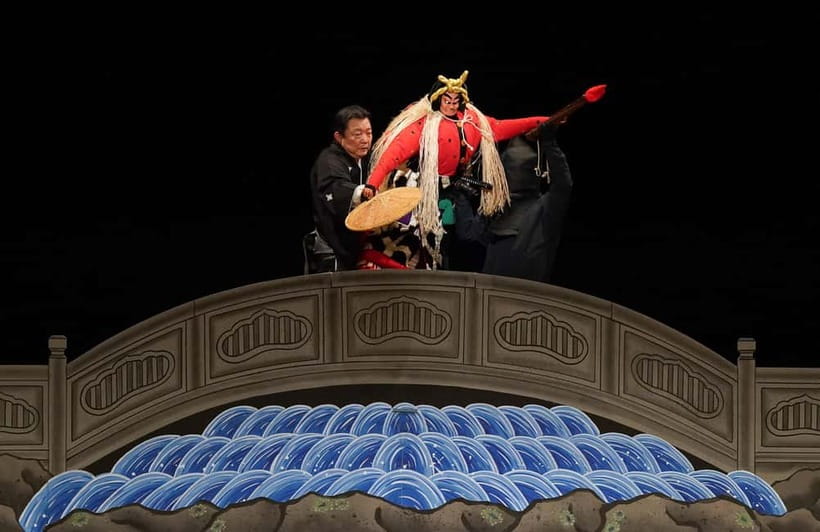
This is traditional performing arts, so the etiquette is part of the experience. The show is strict about keeping the room quiet and distraction-free. You cannot smoke, bring pets (assistance dogs allowed), or use alcohol and drugs. You also cannot record video or audio, and photography inside is not allowed. Making noise is also prohibited.
Why does this matter for you? Because these forms rely on timing and sound. The narrator in Bunraku, the shamisen’s rhythm, and the overall staging depend on audience silence. If someone is constantly shifting, filming, or talking, the performance gets harder to follow and less enjoyable for everyone around you.
One more practical note: seating is wheelchair accessible, and the venue is described as wheelchair accessible. If you need wheelchair seating, contact the provider as soon as possible so they can help with the right placement.
What the show feels like once it starts
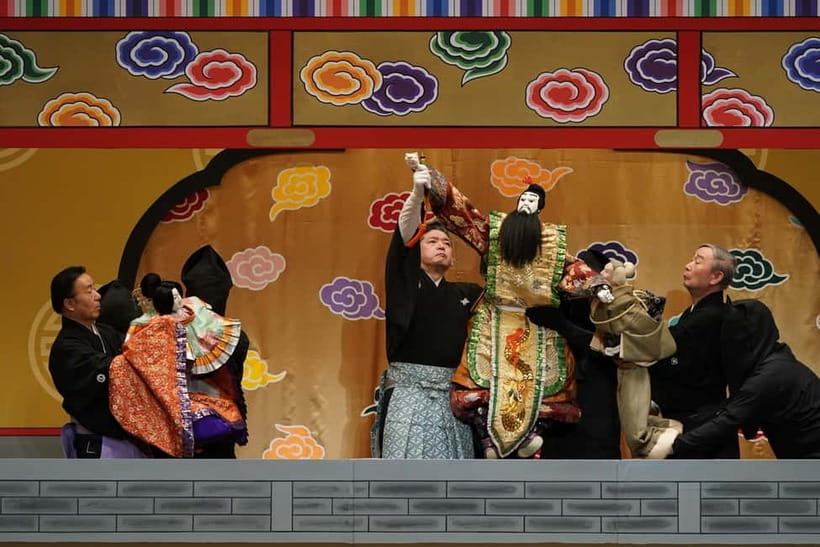
When you watch Kabuki or Bunraku with the English audio guide on, the biggest improvement is not that everything becomes easy. It is that you stop being lost. You start recognizing story beats and emotional turns, which makes the stylized movement and staged visuals feel purposeful instead of confusing.
With Kabuki, you may feel your understanding grow as costumes and gesture patterns connect to plot. With Bunraku, you often feel the emotional impact earlier because the narration and shamisen are so expressive even when you are not catching every line. Hogaku can feel different again, because it rewards listening. If you like music that conveys a seasonal image, the snow motif focus can make the whole program feel cohesive.
A useful expectation to set: the program content can vary. So even if you booked for Kabuki or Bunraku, the schedule may include additional segments or different parts on your date. Expect the overall structure to stay theatre-paced, not fast-paced sightseeing.
Price and value: what $37 gets you
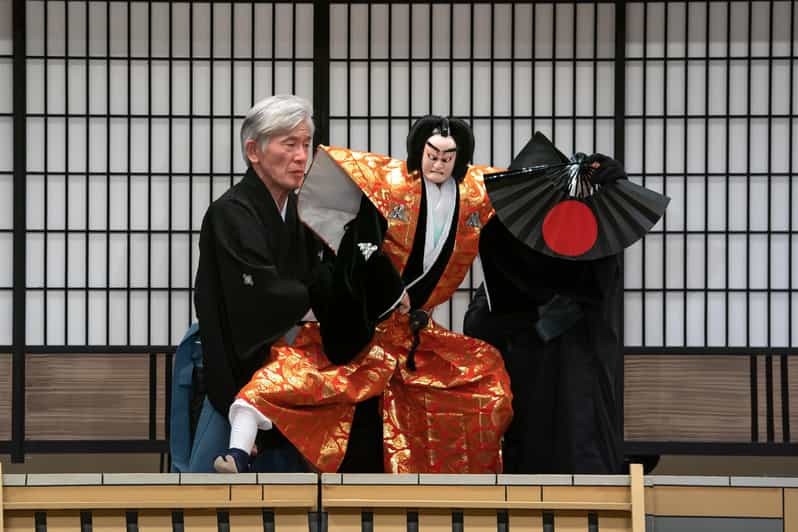
This experience costs $37 per person, and it is not just a ticket to sit in a hall. Included in the price are the theatre tickets plus the English tools that make the performance meaningful for most visitors who do not speak Japanese.
For Kabuki and Bunraku, you get the English audio guide. For Hogaku, you get the free English explanation sheet. Those extras matter because they help you connect to what you are watching without turning your evening into homework.
The only part you should budget separately is transportation to the theatre. The show itself is the main event, so if you are staying in Tokyo proper, your travel time is part of the real cost in energy and scheduling.
If you are the kind of person who enjoys theatre and performance, $37 starts to feel like a fair trade for an adult-oriented art form you cannot easily recreate in everyday sightseeing.
Who should book this, and who might find it a long sit
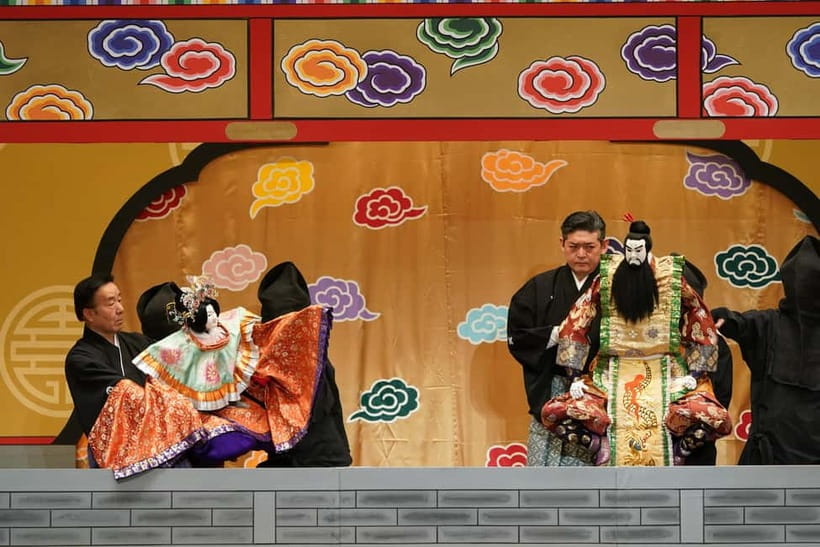
This works best for you if you want authentic Japanese performing arts and you are open to a theatre pace. You will probably love it most if you:
- like watching actors and musicians perform with discipline and control
- want to try classical forms with built-in English support
- enjoy learning how these arts evolved and how they tell story through movement, music, or puppetry
If you are traveling for a very packed itinerary, the length can be a factor. With 75 minutes to 3 hours, it can take time away from other sightseeing. One attendee even felt the experience became less interesting after a while, especially if you are not already drawn to theatre as an art form.
Age is another factor. Based on feedback, it may not be ideal for very young children, because the program can be lengthy and slower paced. If you bring kids, I would treat it like a real cultural outing, not a short show.
Also, do a tiny bit of prep if you can. Learning what Kabuki is known for, and how costume and movement carry meaning, can help you notice details you might otherwise miss. The audio guide gives context, but it cannot replace the emotional punch of understanding a few basics before you sit down.
Should you book this Kabuki, Bunraku, etc. experience?
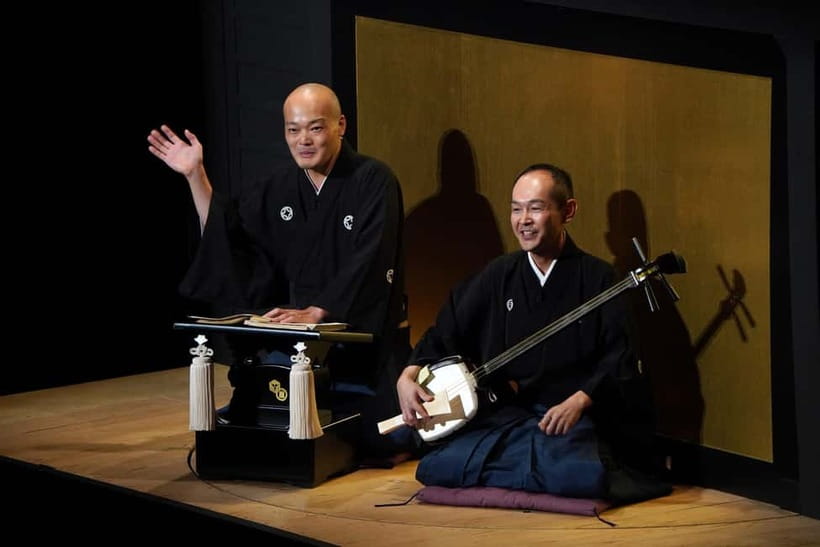
Book it if you want a concentrated, authentic night of Japanese classical performing arts, and you appreciate English support that does not drown out the performers. The biggest strengths are the live quality, the English audio guide for Kabuki and Bunraku, and the Hogaku explanation sheet that keeps you listening with purpose.
Skip it, or keep it only as a flexible option, if you are short on time in Yokohama access, you cannot handle slow theatre pacing, or you need a strict word-for-word story translation. This is designed to be felt through performance first, not decoded like subtitles.
FAQ
Is the venue the National Theatre (Hanzomon) in Tokyo?
No. The venue is NOT the National Theatre (Hanzomon). For this ticket, the performance takes place at KAAT Kanagawa Arts Theatre in Yokohama.
Where exactly is the meeting point?
You should go to KAAT Kanagawa Arts Theatre in Yokohama. The nearest stations are Nihon-odōri Station (MM05) about 5 minutes walk, or Motomachi-Chukagai Station (MM06) about 8 minutes walk.
How do I get into the theatre?
You must exchange your GetYourGuide ticket for the theatre ticket on the day of the performance. Staff at the entrance will ask for the reservation name.
What languages are provided?
English is provided. Kabuki and Bunraku include an English audio guide, and Hogaku includes a free English explanation sheet.
Is the English audio guide a word-for-word translation?
No. The English audio guide gives an overview of main points. It is not a literal translation of the dialogue.
Is photography or video recording allowed?
No. Video recording and photography inside are not allowed, and audio recording is also not allowed.
How long is the performance?
Duration can be 75 minutes to 3 hours, depending on the scheduled content for your date.
What is included in the ticket price?
The ticket includes theatre tickets, the English audio guide for Kabuki and Bunraku, and the free English explanation sheet for Hogaku.
How do I get there from Tokyo?
You can take the Minatomirai Line. From Shibuya to Motomachi-Chukagai Station takes about 45 minutes, then it is a short walk to the theatre.
Is this suitable for young children?
This may not be ideal for very young children because the program can be lengthy and slower paced. It is best for audiences who are comfortable with a theatre-style performance length.
Latest write-ups near Tokyo
- Tokyo Customized Private Tour: See Top Attractions in 1 Day★ 4.8 · 67 reviews
- From Tokyo: Top 5 Scenic Spots of Mount Fuji Full-Day Tour★ 4.5 · 67 reviews
- Tokyo: Shinjuku Izakaya and Golden Gai Bar Hopping Tour (2h)★ 4.9 · 67 reviews
- Traditional Japanese Music ZAKURO SHOW in Tokyo★ 5.0 · 67 reviews
- Tsukiji: Unlimited Sake Tasting Experience★ 4.9 · 67 reviews
- Samurai Ninja Museum Asakusa: Kid-Friendly Ninja Training★ 4.7 · 67 reviews
- Tokyo: Not a show- a professional sumo practice with experts★ 4.9 · 67 reviews
- Private Harajuku Omotesando Architecture Walking Tour★ 5.0 · 67 reviews
Tokyo Tours, compared.

Mt Fuji and Hakone 1-Day Bus Tour Return by Bullet Train
Read our review →
teamLab Planets TOKYO Digital Art Museum Entry Ticket
Read our review →
Mt Fuji & Hakone Cruise, Drum Show Bullet Train 1 Day from Tokyo
Read our review →
Sumo Show Experience with Chicken Hot Pot and a Photo
Read our review →
Shinjuku Food Tour (13 Dishes at 4 Local Eateries)
Read our review →