
Reviewed · SUMO EXPERIENCES
Tokyo: Sumo Morning Practice Viewing Tour at a Real Stable
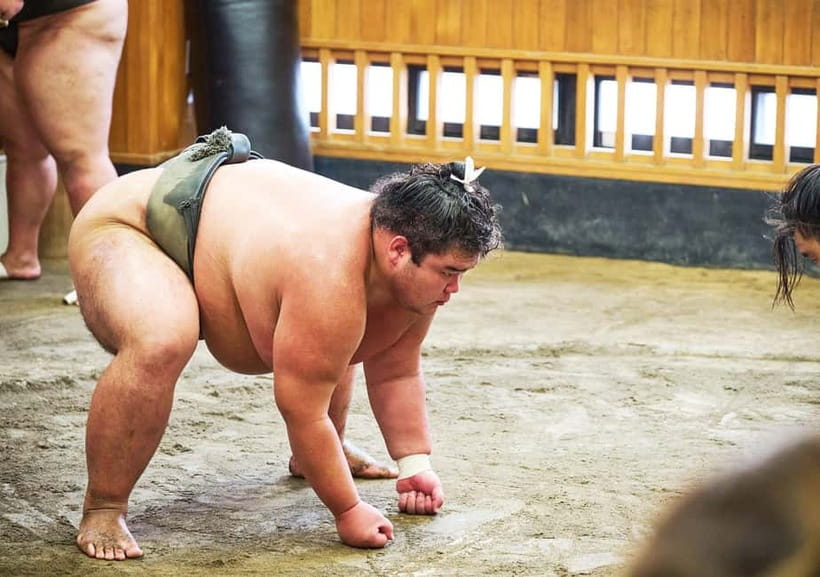
What makes this tour special is simple: you are not watching sumo as entertainment. You are watching training, in the place where wrestlers live, eat, and work. Morning practice has a seriousness you can feel, even if you come in knowing only a few things about the sport.
I especially like the mix of on-the-spot explanations and real seating near the ring. Guides (you may meet people like Mao, Kawa, Yuki, or Tomo) tend to explain the rules and rituals clearly before you enter, so you actually understand what you are seeing. I also like that the wrestlers keep training without treating the visit like a show.
One thing to consider up front: this is structured and strict. You must stay until the end of practice, follow stable rules about noise and movement, and being late can mean you might not get in.
Key things that make this tour worth it
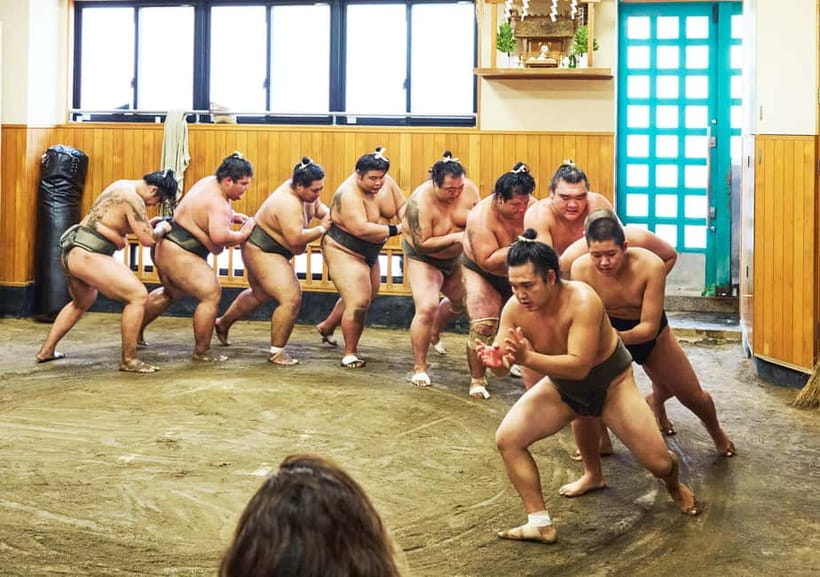
- Real stable access where the wrestlers work, not a staged performance
- English guidance before practice so the rituals and movements make sense
- Up-close viewing from the side of the ring, letting you see speed and strength
- Meet the rikishi in context, typically outside active training hours
- Careful stable etiquette (silent watching, modest clothing, phone on silent) that keeps the experience respectful
Why a real sumo stable morning feels different
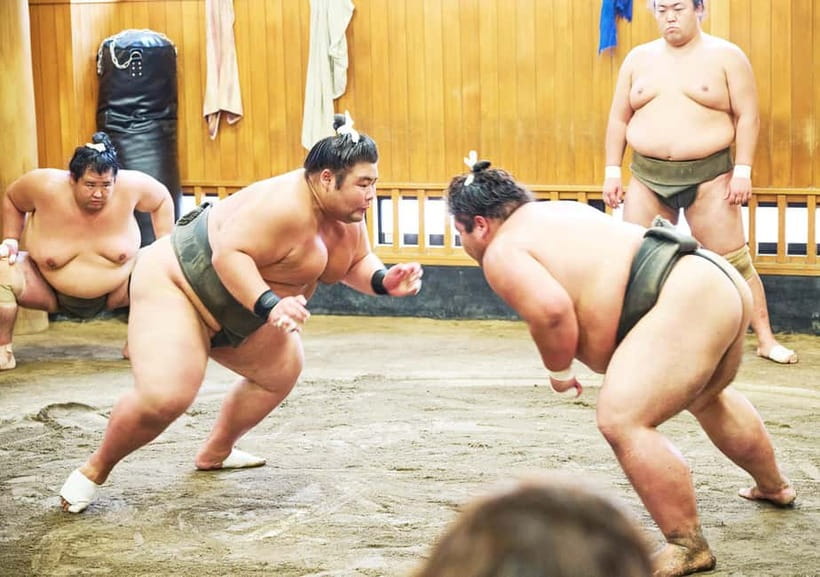
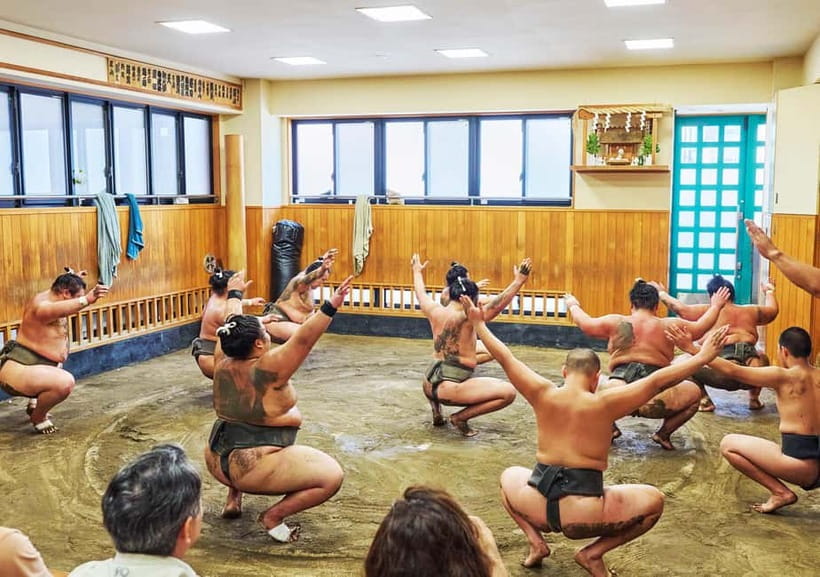
Sumo in Japan is part sport, part religion, and part daily discipline. In a competition arena, it can feel like a single dramatic moment. In a stable, you see the other truth: the sport is built from repetition, balance, footwork, and endurance, starting early.
The biggest value for you is perspective. After you learn the basic structure and meaning behind what rikishi do, you start noticing small things: how they reset their stance, how they use timing, and how rituals connect to respect in the ring. A lot of Tokyo experiences are about ticking boxes. This one is about watching the work behind the spectacle.
Also, it is not treated like a tourist circus. The wrestlers generally keep training with businesslike focus, which is exactly how it should be. If you want sumo without the sugarcoating, this kind of access delivers.
More Sumo Experiences in Tokyo:
- Tokyo: Sumo Show Experience with Chicken Hot Pot and a Photo
★ 4.8 · 6,678 reviews - Tokyo: Sumo Show and Dining Experience
★ 4.8 · 2,742 reviews - the SUMO show
★ 5.0 · 1,960 reviews
Meeting at Kiyosumi-Shirakawa, then heading to the stable
Your meeting point is Kiyosumi-Shirakawa Station, Exit A1. You can get there via the Toei Oedo Line or the Hanzomon Line. Look for the guide holding a sign that says Local Guide Stars.
Then, you may take a train together to reach the sumo stable. That matters for your planning because the schedule is tight around practice time. Even if the tour is listed as about 2 hours, the real “window” is the practice session you must stay for.
Practical tip: plan to arrive early, not just on time. One visitor specifically called out that late arrivals can shorten the time you spend at the stable. In other words, treat this like an appointment, not a casual stroll.
Your guide’s pre-practice lesson: rules, rituals, and what to watch
Before you enter the stable, your English-speaking guide explains the basics of sumo in a way that helps you connect the dots. You are not just told what a bout looks like. You are guided through what those movements mean in training terms.
Here is what this kind of briefing does for you:
- It turns general curiosity into focused watching.
- It helps you understand why certain actions happen in a certain order.
- It gives you a vocabulary to ask questions once you are close to the ring.
Guides like Mao, Kawa, Yuki, and Tomo have earned praise for being clear, patient, and genuinely helpful. One highlight from the experience is that guides tend to answer questions without dumping everything at once. That balance is important. You want enough context to enjoy the practice, but you still want to see it with your own eyes.
Inside the stable: morning practice up close (and how you should behave)
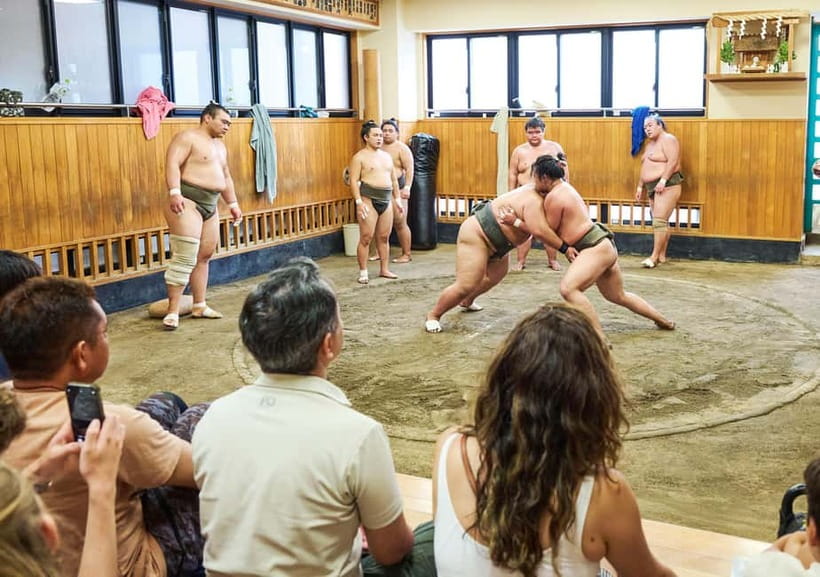
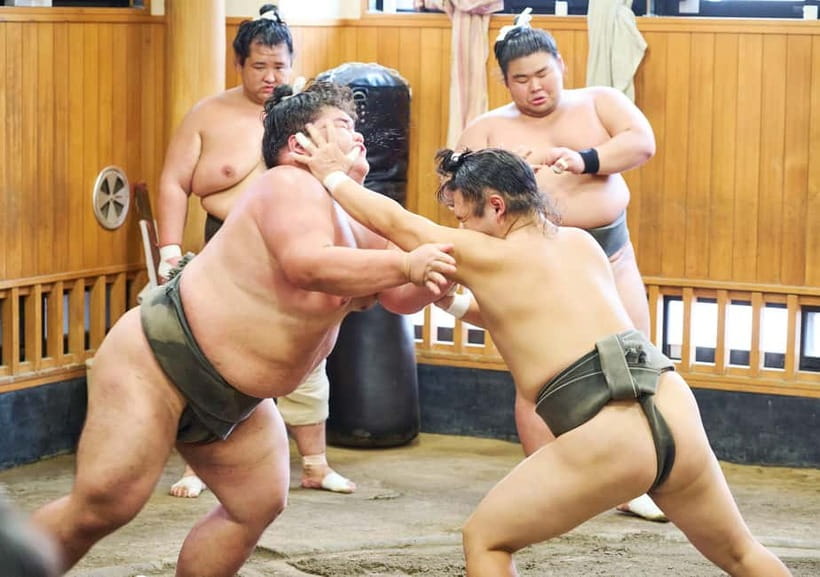
Once you enter, the atmosphere changes fast. Morning practice is intense, athletic, and loud in a physical way, even if you are quiet as required. You sit on the side of the ring, which is one of the best setups for understanding speed and leverage. When you are that close, you can pick up details like how quickly wrestlers shift their weight and how directly they engage.
This is also where etiquette becomes part of the experience. You must respect that the stable is a workplace. The rules are straightforward:
- Modest clothing only
- Do not make noise
- Phone on silent
- Do not stand up or move around during practice
- Stay until the practice ends, around 09:00 to 10:00 AM
- Once you leave the stable, there is no re-entry
A few practical notes that you will thank yourself for:
- Use the restroom before you go in. One visitor warned against needing to get up mid-session, because you cannot.
- Avoid eating or drinking while watching. Water is typically fine, but treat food and drinks as a no-go unless your guide says otherwise.
- Keep your camera ready, not your body moving. You can watch better when you are still.
From what people say, the wrestlers usually do not acknowledge the audience much. That is good. You get the real training rhythm rather than a staged performance.
A change of pace from Tokyo:
- Mt Fuji and Hakone 1-Day Bus Tour Return by Bullet Train
★ 5.0 · 26,383 reviews - 1-Day Tokyo Bus Tour
★ 5.0 · 14,250 reviews - Tokyo: TOKYO SKYTREE® Admission ticket
★ 4.5 · 11,192 reviews - Tokyo: teamLab Planets TOKYO Digital Art Museum Entry Ticket
★ 4.6 · 9,779 reviews
What you are actually seeing: the structure behind every movement
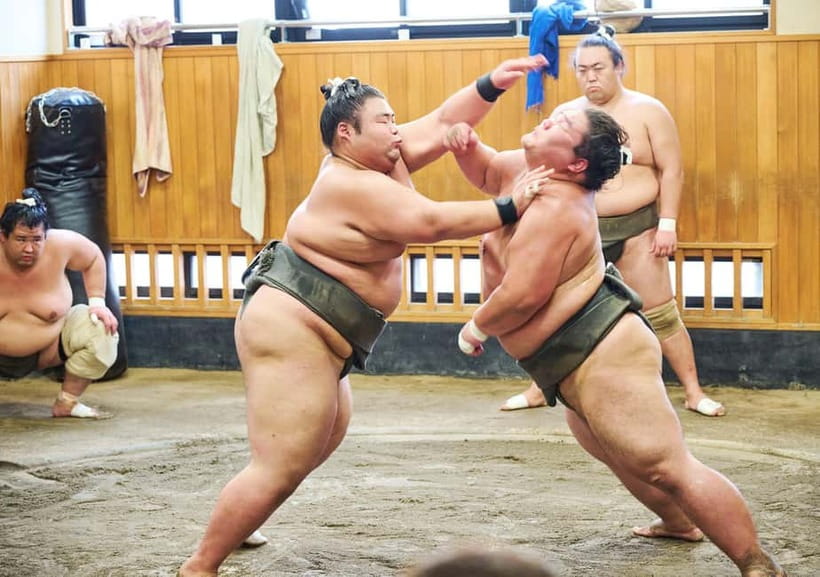
In a bout, sumo can look like a single clash. In training, you see the process that builds those clashes. Even without getting technical, you can learn a lot just by following the flow your guide explains before practice begins.
Two big ideas to keep in mind as you watch:
- Matches are decided by forcing your opponent out of the ring or making any body part touch the ground.
- The sport is rooted in Shinto beliefs, so there is a spiritual and cultural layer to the rituals, not just a sport tradition label.
So when you see a ritual before action, do not treat it as decoration. It is a statement of respect and seriousness. That is why the stable rules around silence and stillness matter. You are not just observing physical drills. You are participating in the culture of the training environment by staying calm and respectful.
You may also catch the difference between warm-up intensity and sparring intensity. Early in training, you might see technique focus. Later, the physical force ramps up, and that is when watching close to the ring becomes jaw-dropping. People often describe it as sweaty, fast, and real, with flesh slapping and direct contact that feels much closer than anything you will see on TV.
Speaking with wrestlers: where it fits and what to expect
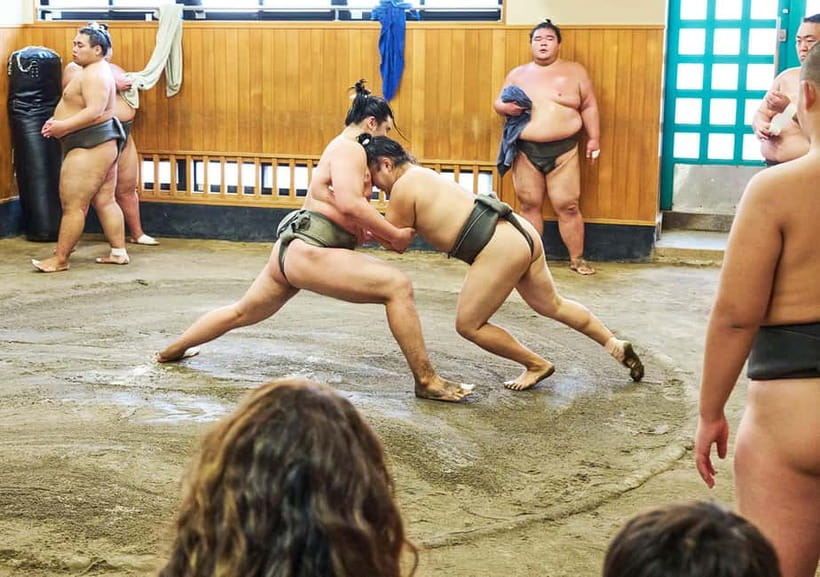
You generally get the chance to speak with the wrestlers, but the key word is timing. The chance is described as available outside training hours. That means you get access, but not at the cost of interrupting the job.
This is the part you should approach with simple questions. You will get more from respectful curiosity than from rehearsed trivia. Ask things like:
- How they prepare for practice
- What their routines look like
- What they think about training discipline
Some visitors also noted the possibility of photos with the wrestlers, depending on what timing allows and what the stable permits. If photography is important to you, keep your phone and camera ready, but stay flexible. In a workplace, the schedule rules the day.
The best takeaway is mindset. You are meeting athletes who live and breathe this sport. If you act like you are visiting their home workshop, you will get a smoother, more meaningful moment.
Price and timing: is $98 worth your morning?
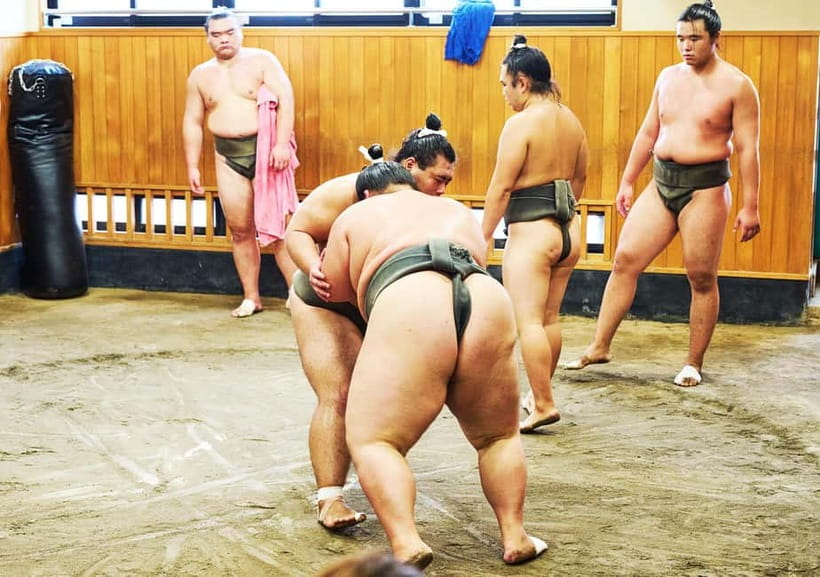
$98 for about 2 hours sounds steep until you understand what is included and what is special about the access. This is typically not open to the general public, and that is the whole point. You are getting something many people cannot arrange on their own: entrance into a real sumo training stable in Tokyo’s historic sumo district area, with an English guide who explains what you are seeing.
Value for you comes from three places:
- Guided understanding: explanations of rules and rituals before practice so you are not lost.
- Close proximity: you are not across a stadium. You are near the action.
- Cultural access: a stable visit is a look into daily life and work, not a performance.
Timing is also part of the value. Early practice means you see the discipline at the moment when it is most serious. But it also means you should protect the morning. You must stay until the end of practice, and if you have any follow-up plans, communicate that in advance.
Group size can also affect comfort. One visitor described a group of 14, and another said they had only 11 guests. In general, smaller groups make it easier to keep quiet and respectful.
What to wear and bring, so you do not lose entry time
The stable rules are clear because this is a workplace. To avoid problems, plan your outfit and behavior like you mean it.
Wear:
- Modest clothing only
- Comfortable shoes are a safe bet for station time and walking between stops
Bring:
- A phone set to silent (not just vibration, actually silent)
- Water if you are allowed to have it outside the ring area
- A charged camera if you want photos during permitted windows
Do not:
- Make noise
- Stand up during practice
- Move around in your seat
- Try to leave and re-enter after you have been admitted
A final, practical tip: arrive early enough that you are not stressed. One visitor specifically urged giving yourself at least 30 minutes before the official meeting time. That is not overkill. Tokyo transit can be deceptively fast until it is not.
Who should book this sumo morning practice tour
This tour fits best if you want something real, not a quick photo stop. It is ideal for:
- First-time sumo fans who want context and rules explained in English
- People who like cultural depth without heavy academic lectures
- Travelers who respect rules and can watch quietly for about an hour in a workplace setting
It is not a fit if:
- You want casual, walk-around sightseeing during the main event
- You get uncomfortable sitting still for a training session
- You are traveling with children under 11 years of age (not suitable)
If you are the kind of traveler who enjoys watching how things are made, trained, or practiced, you will get more out of this than you might expect.
Should you book the Sumo Morning Practice Viewing Tour?
I would book it if your priority is authentic access and you are willing to follow stable etiquette. The combination of real stable training, English interpretation, and close viewing from the ring side is the heart of the experience, and it is hard to recreate on your own.
Skip it if you dislike strict rules, hate early mornings, or want a flexible itinerary where you can come and go. This is a “stay with it until the end” kind of tour, and that structure is part of what makes it work.
If you can handle quiet watching and modest dress, this is one of those Tokyo activities that feels like you stepped into the culture behind the sport, not just watched the final show.
FAQ
Where is the meeting point for the tour?
Meet at Kiyosumi-Shirakawa Station, Exit A1. Your guide will be holding a sign that says Local Guide Stars.
Which train lines can I use to reach Kiyosumi-Shirakawa Station?
You can reach the station via the Toei Oedo Line or the Hanzomon Line.
How long is the tour?
The tour duration is about 2 hours. You must stay until the end of the practice, around 09:00 to 10:00 AM.
Is the tour conducted in English?
Yes. The tour includes an English-speaking live guide.
Can I leave the stable during the practice and re-enter later?
No. Once you leave the stable, there is no re-entry.
What rules should I follow while watching practice?
You must not make noise. Wear modest clothing, keep your phone on silent, and do not stand up or move around during the practice.
Is this tour suitable for children?
No. It is not suitable for children under 11 years of age.
Where will the tour end?
Depending on the schedule, the ending location may differ from the meeting place.
What is the cancellation and payment flexibility?
You can cancel up to 24 hours in advance for a full refund. You can also reserve now and pay later (pay nothing today).
Latest write-ups near Tokyo
- Tokyo Nights: Shibuya Photo Adventure★ 5.0 · 20 reviews
- Wagyu & Sake 8 Course Tasting Dinner in Shinjuku★ 4.9 · 20 reviews
- Making Japanese desserts Nerikiri & drinking matcha in Tokyo★ 5.0 · 20 reviews
- Mt. Fuji 5th Station, Owakudani Ropeway, Pirate Ship plus Outlet shopping!★ 4.5 · 20 reviews
- Japanese Whisky Hunting《HIGH-QUALITY-ONLY》Rare Tasting Class★ 5.0 · 20 reviews
- Kintsugi Experience with Arita Ware in Tokyo (English Guide)★ 4.8 · 20 reviews
- This is Asakusa! A Tour Includes the All Must-Sees!★ 5.0 · 20 reviews
- Tokyo: Karate Experience with Former All-Japan Champion★ 5.0 · 20 reviews
Sumo Experiences, compared.

Sumo Show Experience with Chicken Hot Pot and a Photo
Read our review →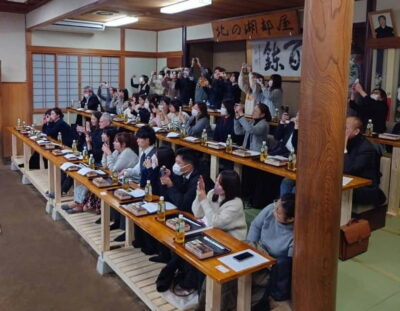
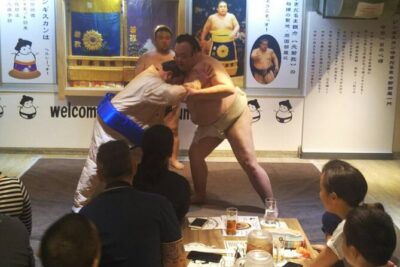
Tokyo Shinjuku Sumo Show & Experience with Photo
Read our review →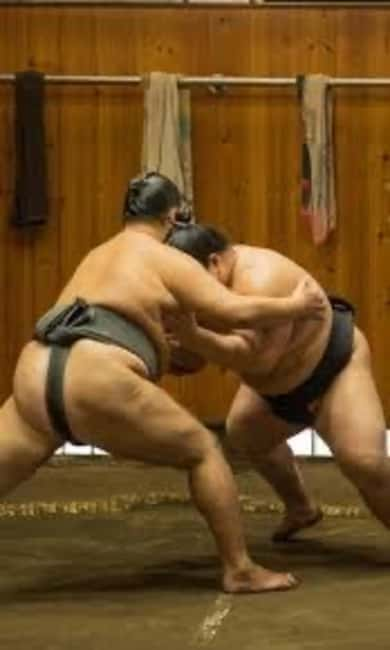
Sumo Show & Experience w/ Optional Kimono & Hot Pot
Read our review →
Authentic Sumo Experience in Tokyo: Enter the Sanctuary
Read our review →Browse the lists this tour appears in