
Reviewed · SUMO EXPERIENCES
Tokyo: Sumo Morning Practice Viewing Tour at a Real Stable
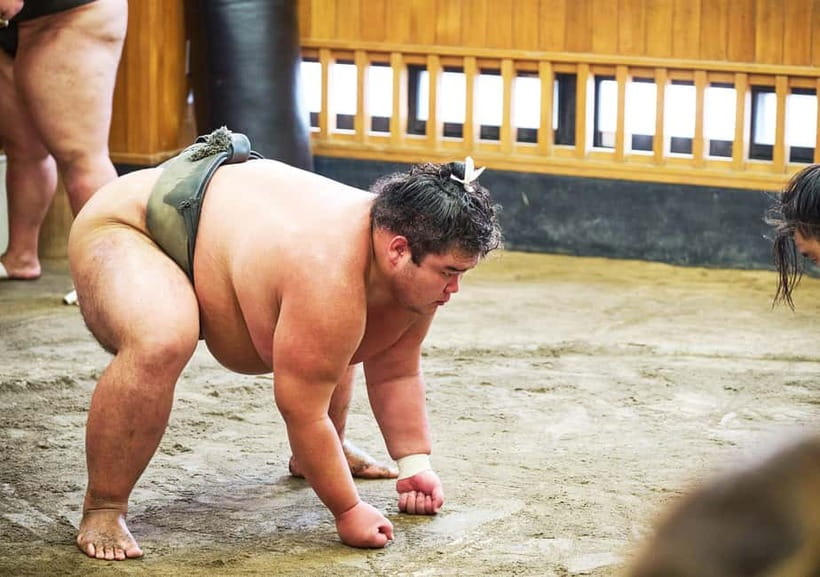
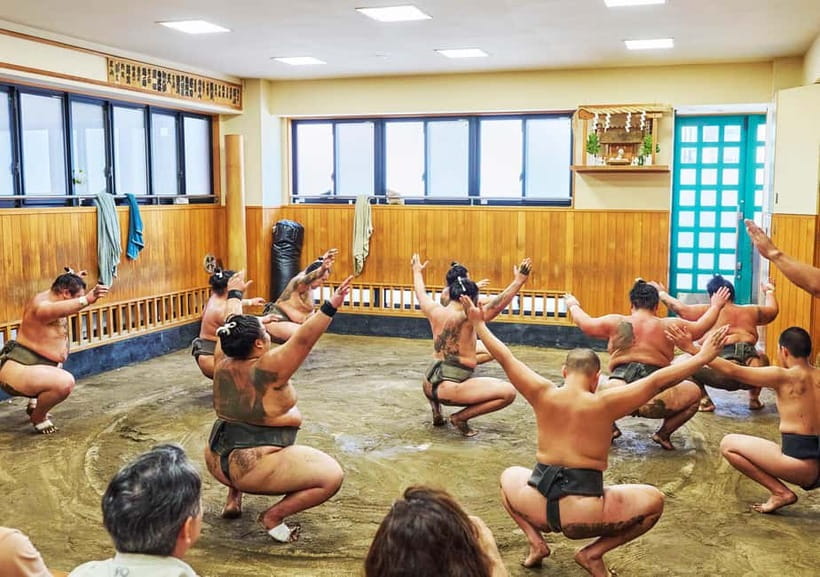
Morning sumo practice in Tokyo is fascinating because it is training, not a staged performance. You get special access to a working stable, and you’re close enough to see the athletes as athletes.
I love that the guide helps you understand what you’re watching. With guidance from people like Tomo and Mao in past groups, you get a clear run through rules, rituals, and traditions, so the whole morning makes more sense.
One drawback to consider is the early start and the quiet factor. Once training gets going, the group has to stay very quiet, so if you want nonstop conversation or a lively “tour show” vibe, this may feel more structured than you expect.
Key Things You’ll Notice During the Sumo Morning Practice Tour
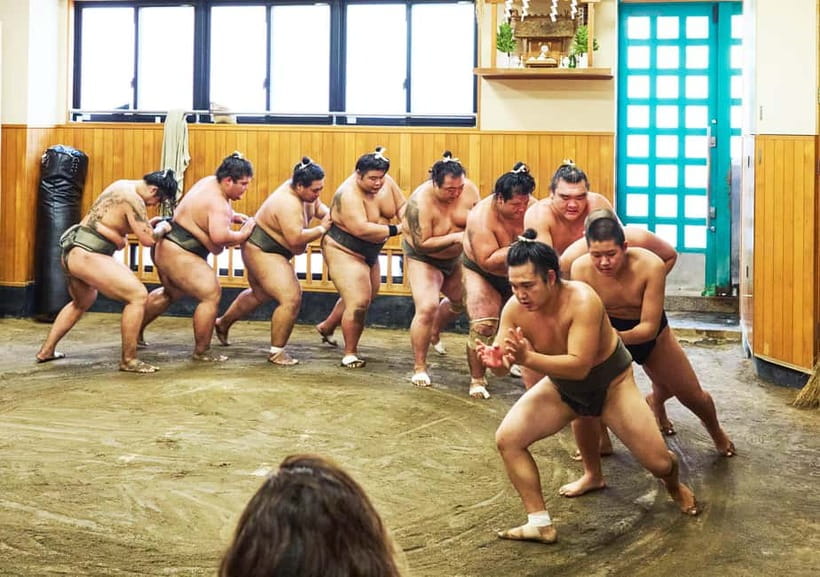
- Working stable access to an authentic training environment in Tokyo
- Photo opportunities with sumo wrestlers during the visit
- On-the-spot explanations of sumo rules, rituals, and traditions from your guide
- About 1.5 hours of real training viewing inside the stable setting
- Small-group format with a maximum of 50 travelers
Why a Tokyo Morning Practice at a Real Stable Feels Different
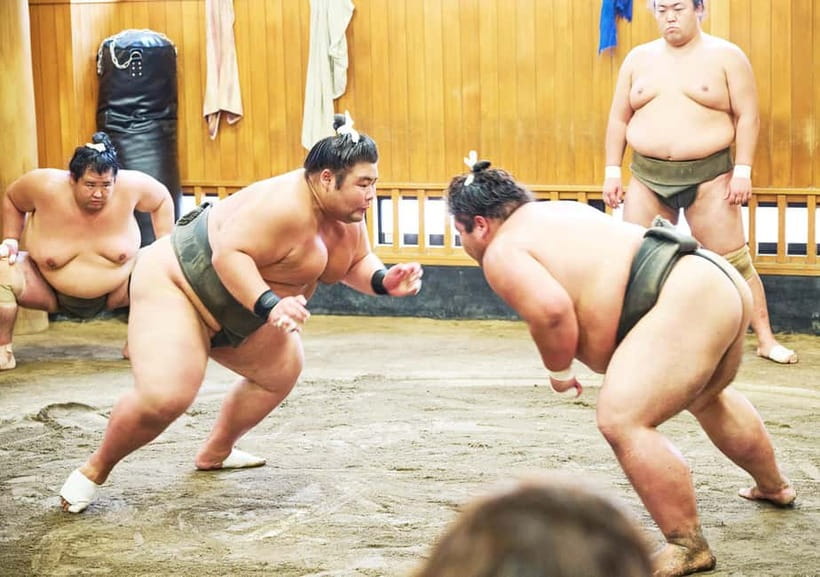
This kind of experience works because you’re not watching sumo as a product. You’re watching it as a routine, which changes the whole mood. The morning session shows you how focused and disciplined the training is, with the added context your guide gives as you go.
You also get that rare “quiet, close, and real” feeling. Instead of being far back in a viewing arena, you’re positioned as an observer inside a working space. That authenticity is the core value here.
If you like learning cultural details while you stand there and watch, this tour fits well. The guide explains what is going on and why, so you’re not stuck guessing at the meaning of movements and customs.
More Sumo Experiences in Tokyo:
- Tokyo: Sumo Show Experience with Chicken Hot Pot and a Photo
★ 4.8 · 6,678 reviews - Tokyo: Sumo Show and Dining Experience
★ 4.8 · 2,742 reviews - the SUMO show
★ 5.0 · 1,960 reviews
Meeting in Koto City Near Kiyosumi-Shirakawa, Then In and Out in About 2 Hours
The tour starts at 8:30am at Kiyosumi-shirakawa Station, specifically at Shirakawa in Koto City. The meeting point listed is 1-chōme-6-13 Shirakawa, Koto City, Tokyo 135-0021, Japan. It’s also described as near public transportation, which matters for an early morning plan.
The total time is listed as about 2 hours, with the training viewing portion taking about 1 hour 30 minutes. That makes it realistic even if you have other plans later that morning, like breakfast, sightseeing, or a neighborhood explore.
The tour ends back at the meeting point. That can be a plus if you hate the stress of figuring out where you’ll land at the end of a half-day activity. You keep your logistics simple.
Group size is capped at 50 travelers, so you should expect a manageable crowd size. It’s not a tiny private visit, but it also shouldn’t feel like a mass event.
Inside the Stable: What Close-Up Training Is Like
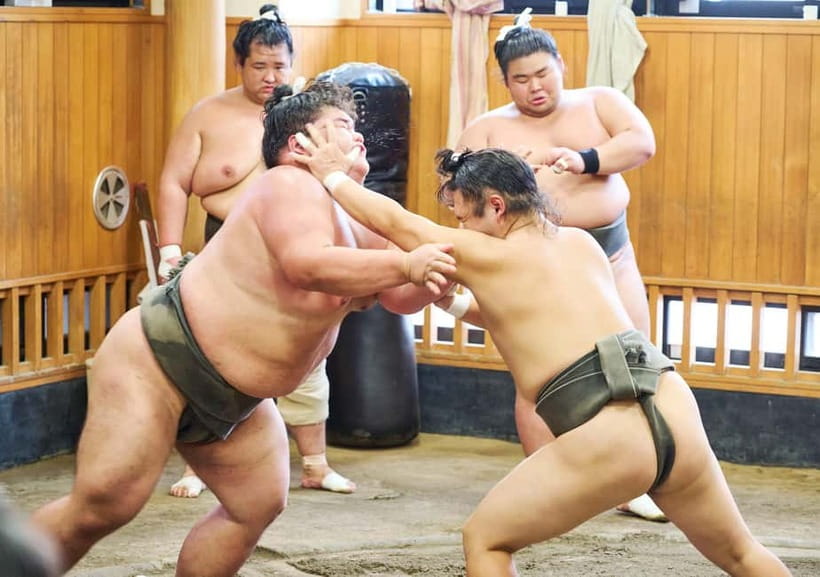
The biggest promise here is the access. You observe authentic training at a real sumo training stable, and it is close-up viewing rather than a distant watch-through. That is exactly what makes sumo feel different when it is happening in front of you, in a place built for the athletes’ day.
Your guide is part of the experience, not just a “walk and point.” The tour is designed so you receive commentary throughout, which includes explanations of sumo rules, rituals, and traditions. If you’re a beginner, you’ll appreciate that structure. If you already know a bit, you’ll still benefit because you’re learning how the morning session works in practice, not just in theory.
Photos are also a key highlight. The experience notes that you can take photos with sumo wrestlers, and that detail can turn a cool cultural visit into a memory you can actually keep. Your best move is to follow the guide’s timing and instructions so you don’t miss the moments when photos are allowed.
The Quiet Moment: Etiquette, Questions, and How the Guide Helps You
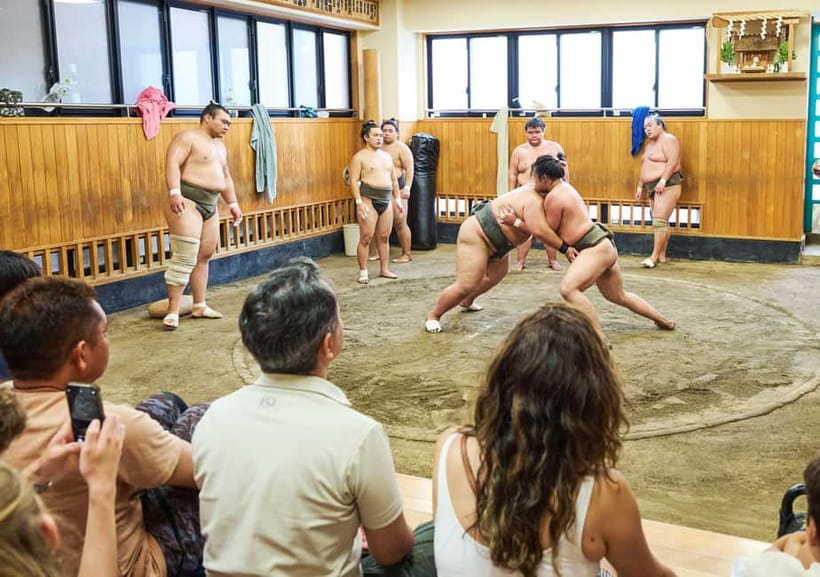
One practical detail that comes through strongly from guide experiences is the quiet requirement. During the training, the group must stay silent, so you won’t be able to ask questions on the spot with chatter.
That’s why the guide’s role becomes even more important. In past groups led by guides like Mao, a workaround was used so participants could ask questions without breaking the quiet rule, including setting up a messaging channel so questions could be answered when possible. You should expect some version of “ask when you can” rather than nonstop discussion.
This is also where the guide’s calm, organized approach earns its keep. You’re there to observe training, so the experience works best if you treat it like a respectful visit with a short learning segment layered in. When you do that, the silence feels less like a limitation and more like part of how sumo training is protected and focused.
A change of pace from Tokyo:
- Mt Fuji and Hakone 1-Day Bus Tour Return by Bullet Train
★ 5.0 · 26,383 reviews - 1-Day Tokyo Bus Tour
★ 5.0 · 14,250 reviews - Tokyo: TOKYO SKYTREE® Admission ticket
★ 4.5 · 11,192 reviews - Tokyo: teamLab Planets TOKYO Digital Art Museum Entry Ticket
★ 4.6 · 9,779 reviews
Guides Who Translate Sumo: Tomo and Mao’s Type of Support
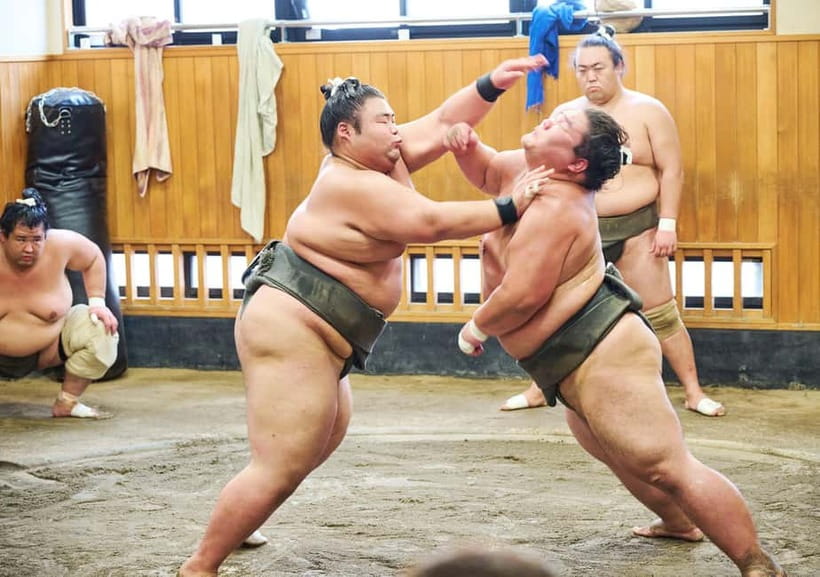
The reviews you can count on for this tour highlight one theme: the guides actively help you make sense of what you’re seeing. Tomo is praised for going out of the way to answer questions and share meal suggestions afterward, which is a nice bonus if you want your morning activity to connect to a good next step.
Mao is also singled out for providing solid information and keeping the experience smooth. The training viewing segment is described as about the right length, which usually means the pace is controlled. You get enough time to see the flow of practice without feeling like you’re locked into a long stretch.
Even if your sumo knowledge is limited, the guide explanation is part of the package. The tour specifically emphasizes that you don’t need research ahead of time, because the guide covers what matters while you’re there.
That matters because sumo has enough customs and structure that showing up without context can leave you feeling like you’re watching without understanding. Here, you get the meaning framework while you’re still onsite, which turns observation into understanding.
Making the Most of the Photo Chances Without Rushing
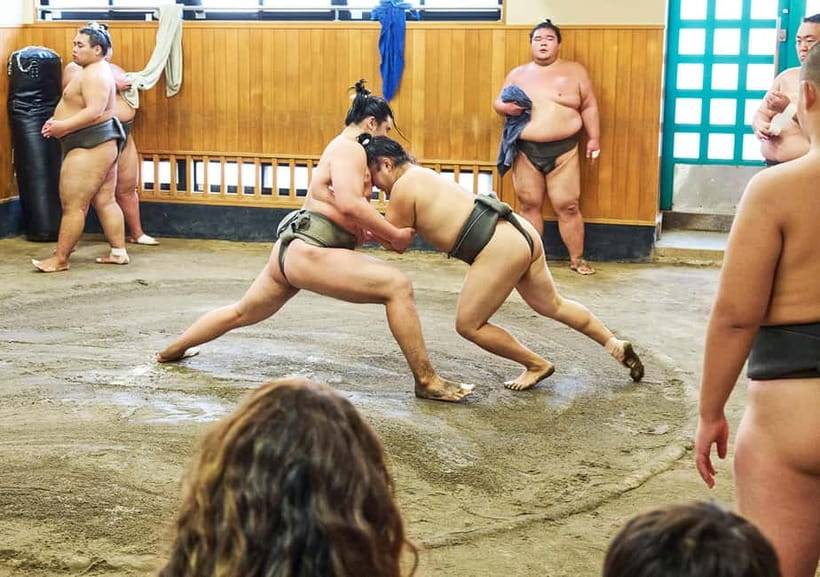
When a tour includes photos with athletes, the value depends on timing. You want to be ready and relaxed, not fumbling for your camera while the moment is happening. The best advice is to listen closely at the start, note when the guide says photos are possible, and be prepared to follow any rules about where you can stand.
Because this is training, not a performance, your photos can feel more “real” and less posed. You’re capturing athletes doing their work in an authentic environment, which is typically a better memory than staged shots at a separate location.
Also, keep expectations grounded. This experience focuses on viewing and learning, not on a full entertainment package. The photo chance is a highlight, but it fits inside a structured training observation rather than replacing the main event.
Value Check: Is $118.92 Worth It for This Kind of Access?
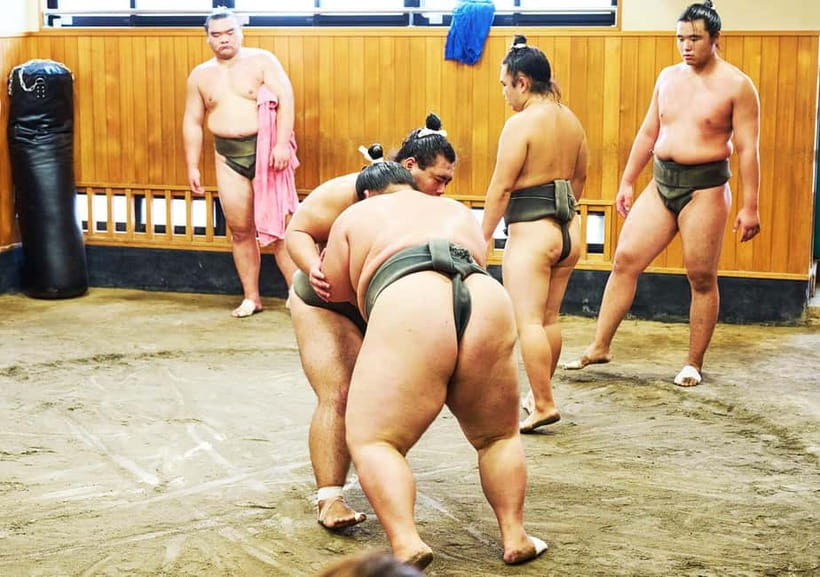
At $118.92 per person, you are paying for three things at once: access to a working stable, guided interpretation, and a close-up training viewing window. In most places, getting inside an active training environment with a guide costs more than watching something at a public venue. That’s the logic behind this price.
The experience also includes practical support that reduces your own effort. You get the meeting point handled, the guide runs the explanation, and there’s commentary through the session. That convenience can be a real part of the value, especially for an early morning activity in Tokyo where timing matters.
You also get a photo component, which is not always included in cultural access tours. That turns the session into both a learning moment and a memorable one.
Is it worth it for everyone? If you want a long show, late hours, or a casual “walk around and snack” experience, the pricing may feel steep for the time window. But if you want authentic access, guided context, and close-up training for about 1.5 hours, the price feels easier to justify.
Who This Tokyo Sumo Morning Tour Fits Best
This tour is a strong match if you:
- Enjoy cultural experiences where you learn while you watch
- Like sports, but you prefer behind-the-scenes context over a performance setting
- Want photos tied to a real setting, not just a sightseeing stop
- Are comfortable with an early start and a quiet observation style
It can also work well for families, as long as everyone can follow instructions during the training. One review scenario involved taking nephews, and the kids were guided to stay quiet once the group expectations were clear. That’s a reminder that the experience is most successful when you treat it like a respectful visit.
If you’re traveling solo or as a couple, the small-group format makes it easier to interact with the guide when questions are allowed. And if you’re a beginner, the guided explanations are the key reason this tour can feel smooth rather than confusing.
Should You Book This Sumo Training Viewing Tour?
I’d book it if you want an authentic, early-morning look at how sumo training actually happens, with a guide translating the rules and traditions as you go. The mix of working stable access, guided commentary, and a real chance to take photos is the backbone of the value.
I’d think twice if silence during training will frustrate you, or if you need a more social, speak-at-will tour format. Also, if you dislike mornings, remember the start time is 8:30am, and the experience is built around that rhythm.
If you do book, go with a simple plan: arrive ready to listen, follow the guide’s cues for quiet moments and photos, and treat the experience like observation plus learning. You’ll walk away with a clearer sense of sumo beyond what you’d get from a typical sightseeing stop.
FAQ
What time does the sumo practice tour start?
The tour starts at 8:30am.
How long is the tour?
The duration is about 2 hours, with about 1 hour 30 minutes spent observing training.
Where do I meet the guide?
The meeting point is at Kiyosumi-shirakawa Sta. 1-chōme-6-13 Shirakawa, Koto City, Tokyo 135-0021, Japan.
Is the meeting point near public transportation?
Yes, the meeting point is described as near public transportation.
Do I need to know sumo rules before I go?
No. The tour includes guidance, with the guide explaining sumo rules, rituals, and traditions, so you do not need research beforehand.
Can I take photos during the tour?
Yes. The experience states you can take photos with sumo wrestlers.
How large are the groups?
The tour has a maximum size of 50 travelers.
Will I receive a mobile ticket?
Yes, the tour includes a mobile ticket.
What is the cancellation policy for a full refund?
You can cancel for a full refund if you do so at least 24 hours before the experience’s start time.
Latest write-ups near Tokyo
- Harajuku Private Tour: Kawaii Fashion & Animal Cafe Included★ 5.0 · 69 reviews
- Mt Fuji Customizable Private Tour English Speaking Driver Pick-up★ 5.0 · 69 reviews
- Tokyo Night Cooking Class: 5 Home-Cooked Japanese Dishes★ 5.0 · 70 reviews
- Tokyo: Sumida Aquarium Entry Ticket★ 4.6 · 70 reviews
- Private Customizable Walking Tour of Tokyo★ 5.0 · 70 reviews
- Official Japan Go-Kart Through Tokyo Bay / Ginza (IDP Required)★ 4.5 · 71 reviews
- Wagyu Beef and Sake Pairing Foodie Tour in Tokyo★ 5.0 · 71 reviews
- Experience Big soba knife Soba Making Class in Tokyo Kappabashi★ 5.0 · 71 reviews
Sumo Experiences, compared.

Sumo Show Experience with Chicken Hot Pot and a Photo
Read our review →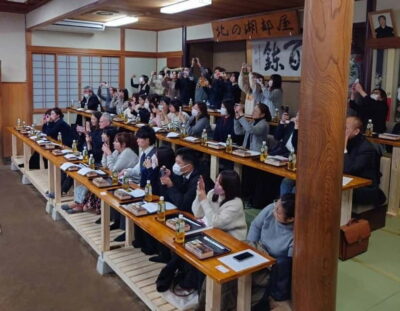
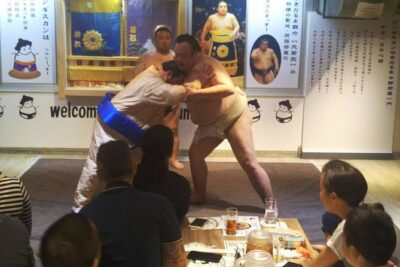
Tokyo Shinjuku Sumo Show & Experience with Photo
Read our review →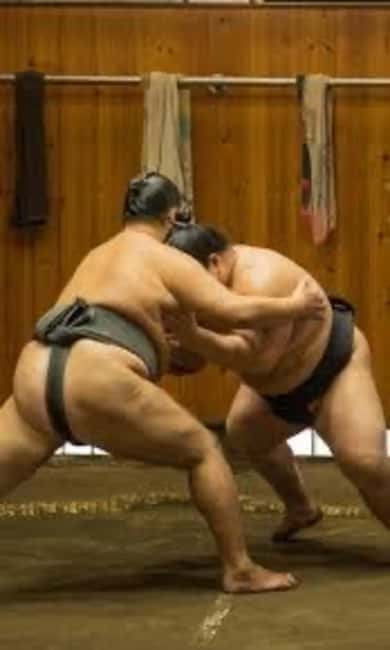
Sumo Show & Experience w/ Optional Kimono & Hot Pot
Read our review →
Authentic Sumo Experience in Tokyo: Enter the Sanctuary
Read our review →Browse the lists this tour appears in