
Reviewed · SUMO EXPERIENCES
Tokyo Sumo Morning Training/ Sumo Practice with Wrestlers
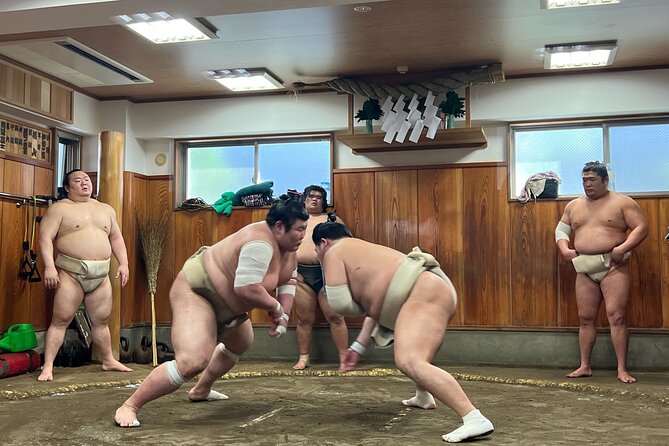
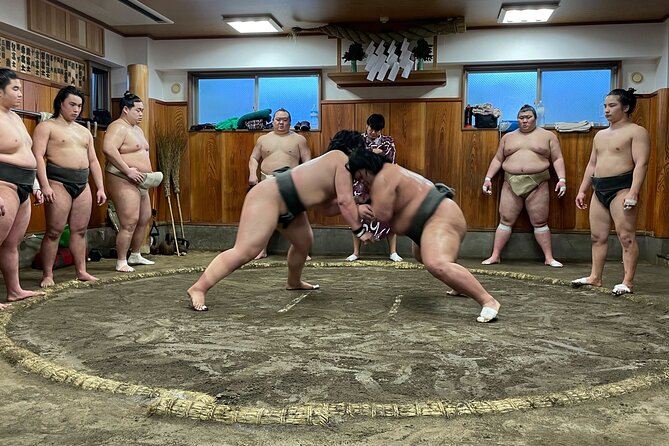
Tokyo sumo morning training is interesting because it shows the sport at work, not at showtime. You get access to a real stable area where wrestlers go through their routine, with guidance along the way so you actually know what you’re watching. It’s one of the closest looks you can get in Tokyo.
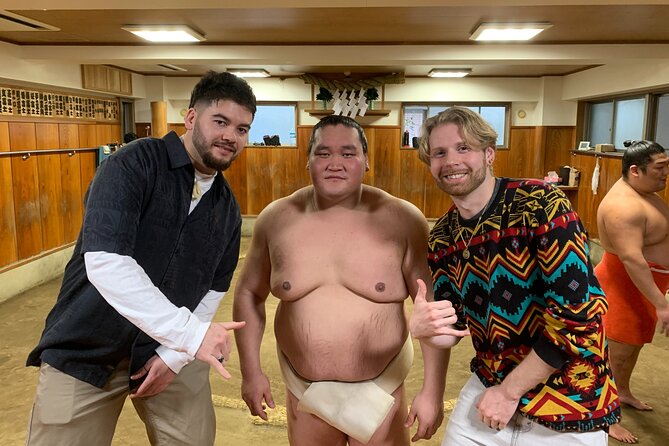
I love two things most about this experience. First, I like that you’re allowed inside to watch the practice up close and stay for the whole session. Second, I like that the outing remembers you with a photo with a sumo wrestler, not just a wave from behind a barrier.
One drawback to keep in mind is comfort and etiquette. Some stables may not have chairs, so you may sit on the floor, and you cannot leave and re-enter once you’re in. If you’re sensitive to cold mornings or you hate strict rules (phones on silent, no flash, no stretching your legs), go in prepared.
Key things you’ll care about before you go
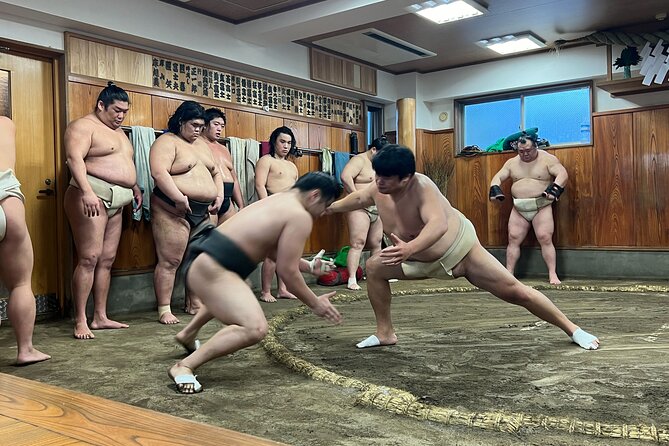
- Access to a Tokyo sumo stable: You enter the training area and observe quietly during practice.
- Guide-led explanations and Q&A: You get context so the movements make sense.
- Photo with a sumo wrestler included: It’s part of the experience, not an optional add-on.
- Strict ring etiquette: Shoes off on the dohyo, silent phones, and no flash or video.
- Time can shift by date: The stable schedule and grand tournament timing can change the session length.
Entering a Tokyo sumo stable, and what that really means
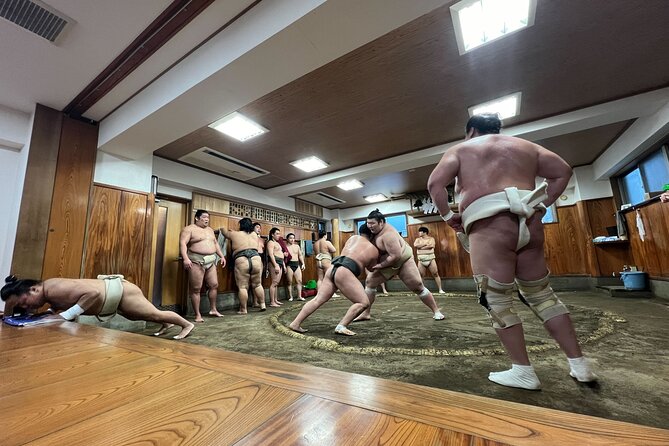
This isn’t a dance show about sumo. It’s an observation window into how wrestlers train as part of daily life at a stable. After meeting your guide, you listen to an explanation about sumo, then you head over to the stable and watch the training routine inside.
The tone matters. You’re expected to watch quietly and respectfully while the wrestlers do their work. That means no loud commentary, no wandering, and no distraction during the practice itself. If you’ve only seen sumo from TV angles, this up-close setting will feel more intense because you can see details like footwork, posture, and how athletes reset between drills.
Also, this matters for expectations: you’re not guaranteed one famous wrestler every day. The stable where top wrestlers train is used, but you won’t know until the morning whether a specific yokozuna will actually be there. Think of this as a chance to see real practice culture, not a guaranteed celebrity spotting mission.
More Sumo Experiences in Tokyo:
- Tokyo: Sumo Show Experience with Chicken Hot Pot and a Photo
★ 4.8 · 6,678 reviews - Tokyo: Sumo Show and Dining Experience
★ 4.8 · 2,742 reviews - the SUMO show
★ 5.0 · 1,960 reviews
Stop 1 briefing, then the stable: how the timing usually feels
Your tour starts in the Tokyo area, and the first stop includes a briefing before you move to the stable. The catch is that the location and exact timing of the morning practice can vary by tour date. After you book, you receive the meeting point and time details for that specific day.
Once you’re at the stable, the main viewing block is around 55 minutes. In total, the experience is listed at about 1 hour (approx.), but don’t anchor your day to a single exact minute. The practice may run slightly shorter or longer depending on what’s on the schedule, especially when a Grand Tournament is approaching.
One more practical point: you do need to plan around “stay put” rules. You cannot leave the stable in the middle of the practice, and once you step out, you cannot re-enter. That’s a big reason to use the restroom before you arrive at the meeting point.
If you want a smooth morning, treat it like a careful train connection. You show up, you follow the flow, and you commit to staying until the end.
Finding the meeting point near public transit in Sumida City
You’ll meet at 1-chōme-2-8 Chitose, Sumida City, Tokyo 130-0025, Japan, and the activity ends back at the same meeting point.
Because the practice time can shift by date, the most important thing you can do is check your messages from Japan Wonder Travel after booking. If you don’t receive any update and you’re unsure, contact them. It’s not the kind of experience where “I’ll just show up and wing it” usually works, especially if you’re arriving from another part of Tokyo.
Plan your arrival like this:
- Give yourself time to get to the meeting point without stress.
- Use the restroom before you go.
- Keep your phone silent because you’ll be in a quiet setting.
The meeting area is described as near public transportation, which helps. Still, winter mornings and rain happen in Tokyo, and you may need to wait before going inside, so build in some buffer.
The dohyō rules: shoes off, no flash, and ring etiquette
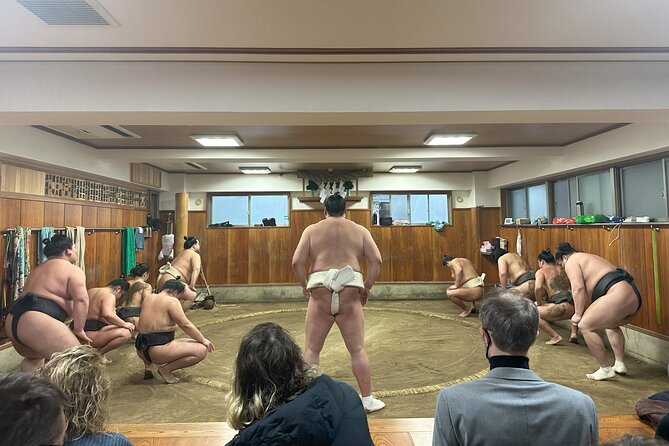
Sumo culture inside the stable comes with clear boundaries. These rules aren’t there to be fussy. They protect the wrestlers’ concentration and keep the space respectful.
Here are the big ones you should plan for:
- Cellphones must be on silent.
- No eating inside the stable, but water and sports drinks are allowed.
- Photos are OK, but no flash or shutter sounds.
- Videos are not allowed.
- Don’t stretch your legs toward the ring. Showing soles of feet is considered impolite.
- Be careful not to interfere with concentration, which means no stepping around or leaning forward at the wrong time.
Clothing also matters. Comfortable clothes are recommended. If you’re male, you must remove your shoes before stepping onto the dohyo (sumo ring). Even if you’re not heading onto the ring area yourself, follow instructions from your guide because each stable layout can be a little different.
Finally, respect the “no re-entry” rule. Once you leave the stable, you can’t go back in, so don’t plan it like a casual stroll.
A change of pace from Tokyo:
- Mt Fuji and Hakone 1-Day Bus Tour Return by Bullet Train
★ 5.0 · 26,383 reviews - 1-Day Tokyo Bus Tour
★ 5.0 · 14,250 reviews - Tokyo: TOKYO SKYTREE® Admission ticket
★ 4.5 · 11,192 reviews - Tokyo: teamLab Planets TOKYO Digital Art Museum Entry Ticket
★ 4.6 · 9,779 reviews
Watching training quietly: what you’ll actually see up close
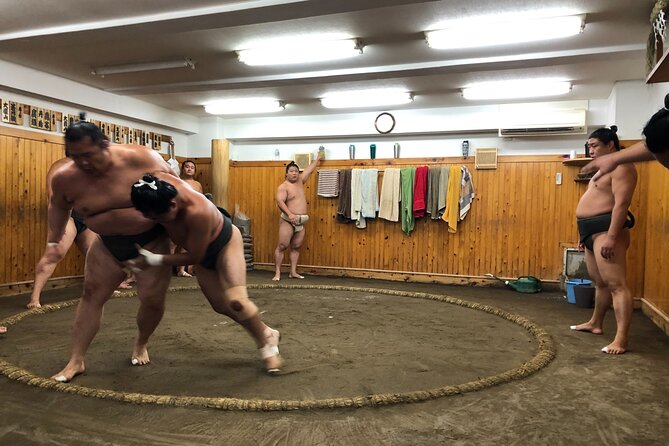
Once you’re inside, you’re there to observe respectfully while wrestlers go through their daily routine. This is where the experience tends to click for sumo fans, because you can see the training as training.
In many visits, the guide helps connect the dots by explaining what you’re seeing and what it means in sumo. Some visitors also mention English commentary delivered through a headset, which makes it easier to focus on the action without constantly translating in your head.
The practice itself includes multiple segments, from warmups to drills and practice bouts. You may notice lots of repetition, but that’s the point. Technique is built through steady work, not one dramatic moment.
A practical note: some stables may not have chairs. That can turn “watching for an hour” into a slightly longer comfort test, especially on cold days. Bring patience, not just enthusiasm.
If you’re the type who wants constant fireworks, you might feel frustrated. But if you like disciplined sports and you enjoy watching skill being built, this is the part that tends to be the big payoff.
Asking questions and the photo moment that makes it feel real
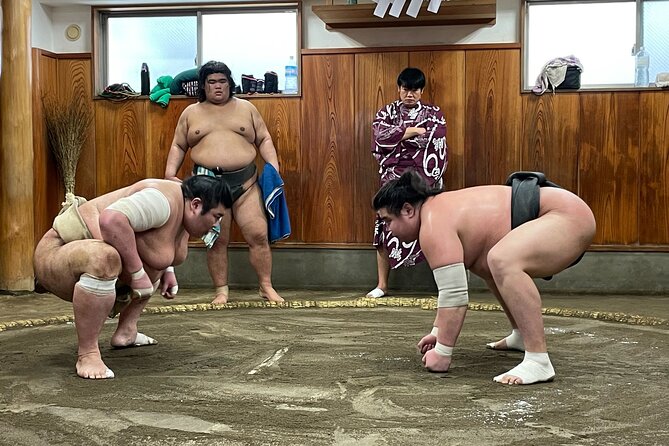
One of the most praised parts of this experience is the chance to connect, not just watch. Your guide joins you and helps you ask questions along the way. That changes the whole vibe from silent spectator to informed observer.
And then there’s the memory-maker: the outing includes a photo with a sumo wrestler. Some visits also include a short end-of-session interaction time where wrestlers are friendly and pose for pictures, which is exactly why this experience lands well for many first-timers. It’s not a distant, robotic photo. It’s part of the stable culture.
Still, keep the framing right. This isn’t a fan convention. The photo and interaction happen within strict rules and timing, so go in ready to be calm and respectful.
Women in the stable: what you can and cannot do at the ring
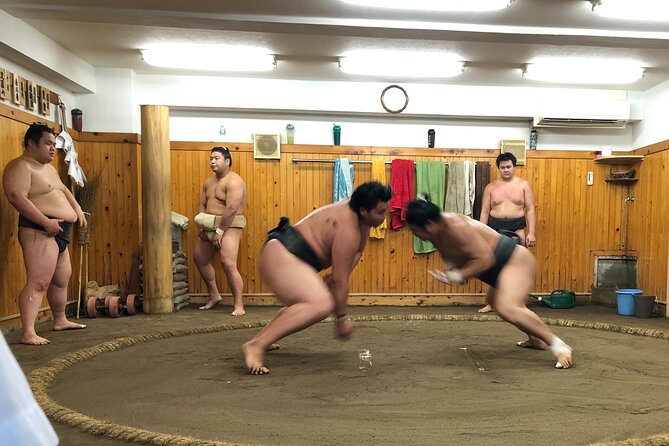
Women are welcome to join this tour. The cultural note is that, at this facility, female participants are not permitted to enter the dohyō (sumo ring) due to religious and cultural traditions.
What you can do is still meaningful. Women can fully participate in the training experience from designated seating areas. So you’re not blocked from watching the practice entirely. You just aren’t stepping onto the ring itself.
If you’re traveling as a group and you have mixed genders, this rule is worth coordinating on in advance so nobody shows up expecting to stand on the dohyo.
Price and logistics: is $99.10 good value for this kind of access?
At $99.10 per person, you’re paying for three things that are hard to replicate on your own:
- Access to a morning stable observation area that’s not built for casual drop-ins.
- A guide who helps interpret what you’re seeing and supports respectful behavior.
- The photo included with a sumo wrestler.
The admission ticket itself is listed as free, so the cost is really about the guided experience and the “right people, right time, right etiquette” setup.
Now, value is personal. Some people decide it’s worth it because the practice feels intense and structured and the guide makes it easier to understand. Others judge it harshly if the session feels short or if they expected more continuous in-ring action.
Your best move is to match your expectations to what this is. This is sumo practice observation, not a staged wrestling performance. If you want long training segments, be ready for the schedule to vary. If you want full-day activities, this will feel too short.
Also, there are occasional reports of cancellations or schedule conflicts with minimal notice. That’s rare, but it’s real enough that you should keep an eye on your messages close to departure. If you live by printed plans only, you may find it stressful.
Comfort checklist: the stuff that affects your morning the most
This experience can be great, but details can make or break it. Based on what people describe, here are the comfort issues you should plan for:
- Bring something warm. One visitor described being cold and waiting outside in rain before going inside.
- Expect floor seating in some stables. Some may not have chairs.
- Dress for quiet rules. Don’t show up in anything that makes it hard to sit for a while.
- Plan your hydration, since eating is not allowed but water and sports drinks are.
And yes, come ready for shoe-off moments and a careful, low-noise environment. This is one of those activities where good manners are part of the fun.
Who should book this, and who might want another option
This tour is a strong fit if you:
- Like sumo and want to see how training actually happens.
- Prefer learning by watching, not by reading about it later.
- Are okay with quiet rules, sitting patiently, and following directions.
It’s also a good choice for families and first-timers, especially because the guide helps explain what you’re seeing and the photo makes it memorable.
You might want to reconsider if you:
- Hate strict etiquette (no videos, silent phones, no leaving and re-entering).
- Need frequent comfort breaks or hate floor seating.
- Are very sensitive to cold and rain and you’re not prepared.
- Expect a guaranteed appearance by a specific top wrestler.
Book it or pass: my decision guide
If you want the most authentic part of sumo, training morning practice is the right lane. I’d book this when you’re ready to be respectful, patient, and curious, because that combination turns a short visit into a real Tokyo memory.
I’d pass or choose something else if your main goal is nonstop wrestling action like a performance. This is structured training viewing, with guide commentary and a photo, and the length depends on what happens that day.
If you do book, set yourself up for success: check your confirmation message for the correct practice time and meeting details, arrive early enough to handle the cold, and commit to staying through the end once you’re inside.
FAQ
How long is the Tokyo sumo morning training experience?
It’s listed at about 1 hour (approx.), and the actual practice may run a bit shorter or longer depending on the day’s schedule.
Where do we meet for the tour?
The meeting point is 1-chōme-2-8 Chitose, Sumida City, Tokyo 130-0025, Japan, and the tour ends back at the same location.
Does the tour include admission to the stable?
Admission is included, and the stable entry ticket is listed as free.
Is the morning practice time and location always the same?
No. The location and time of the morning sumo practice may vary by tour date. After booking, you’ll receive the specific meeting point and time information.
Can I leave the stable during the practice?
No. You cannot leave the sumo stable in the middle of the practice. Once you leave, you cannot re-enter.
Is eating allowed during the experience?
Eating is not allowed inside the stable. Water and sports drinks are allowed.
Are photos and videos allowed?
Photos are allowed, but without flash or shutter sounds. Videos are not allowed.
Do I need to remove shoes?
Men must remove their shoes before stepping onto the dohyo (sumo ring).
Can women enter the dohyō?
Women are welcome, but they are not permitted to enter the dohyō. They can participate from designated seating areas.
Is free cancellation available?
Yes. You can cancel up to 24 hours in advance for a full refund.
Latest write-ups near Tokyo
- Tokyo Customized Private Tour: See Top Attractions in 1 Day★ 4.8 · 67 reviews
- From Tokyo: Top 5 Scenic Spots of Mount Fuji Full-Day Tour★ 4.5 · 67 reviews
- Tokyo: Shinjuku Izakaya and Golden Gai Bar Hopping Tour (2h)★ 4.9 · 67 reviews
- Traditional Japanese Music ZAKURO SHOW in Tokyo★ 5.0 · 67 reviews
- Tsukiji: Unlimited Sake Tasting Experience★ 4.9 · 67 reviews
- Tokyo: Not a show- a professional sumo practice with experts★ 4.9 · 67 reviews
- Samurai Ninja Museum Asakusa: Kid-Friendly Ninja Training★ 4.7 · 67 reviews
- Private Harajuku Omotesando Architecture Walking Tour★ 5.0 · 67 reviews
Sumo Experiences, compared.
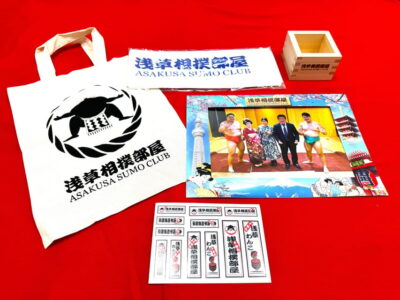
Sumo Show Experience with Chicken Hot Pot and a Photo
Read our review →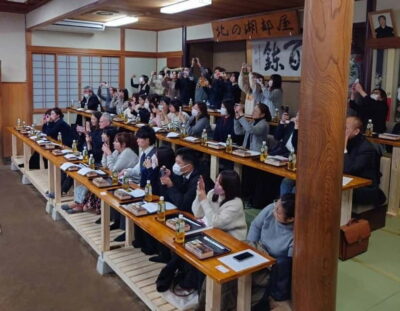
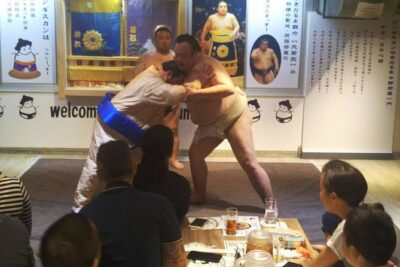
Tokyo Shinjuku Sumo Show & Experience with Photo
Read our review →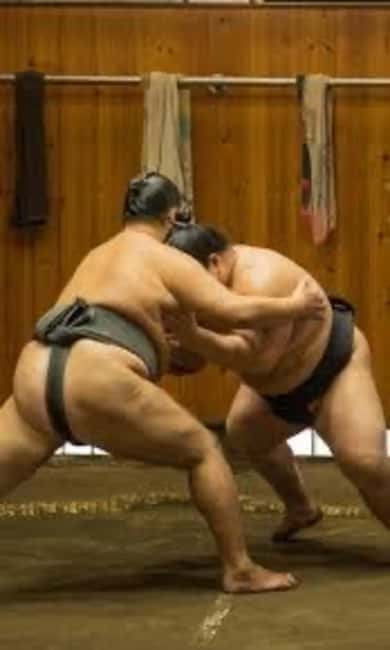
Sumo Show & Experience w/ Optional Kimono & Hot Pot
Read our review →
Authentic Sumo Experience in Tokyo: Enter the Sanctuary
Read our review →Browse the lists this tour appears in