
Reviewed · SUMO EXPERIENCES
Tokyo: Visit Sumo Morning Practice with English Guide
Watching sumo practice up close is the kind of Tokyo experience you usually cannot get. You sit close enough to feel how intense the work is, then you finish with a commemorative photo that makes it stick.
I especially like the up-close training access and the fact that the guide helps you understand what you’re seeing so it is more than just watching bodies collide. One thing to consider is that seating can be simple and tight, and the room is small, so comfort is not the tour’s main promise.
You start early, you walk a bit, and you keep your expectations realistic: this is training, not a big stadium show.
Key Things To Know Before You Go
- Rare viewing access at a Tokyo stable that is normally closed off to spectators
- English guide help so you can ask questions and make sense of the rituals
- A commemorative photo with the wrestlers at the end
- Small-group feel, up to 20 people for a more personal experience
- Small space, traditional seating that may feel uncomfortable for some western bodies
- Easy add-on to Asakusa after the practice if you want more morning sightseeing
A Rare Morning Inside Takasago Stable at Sunrise
This is a training-session morning, not a formal match day. That matters. On match days, you often arrive late, sit farther back, and focus on results. Here, you get the build-up, the hard work, and the “before the fight” discipline that makes sumo make sense.
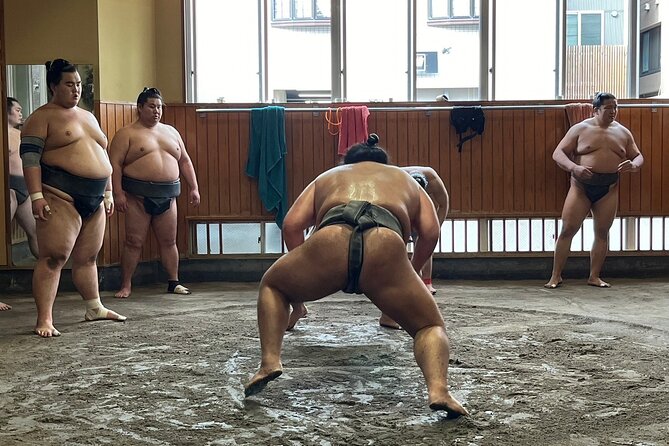
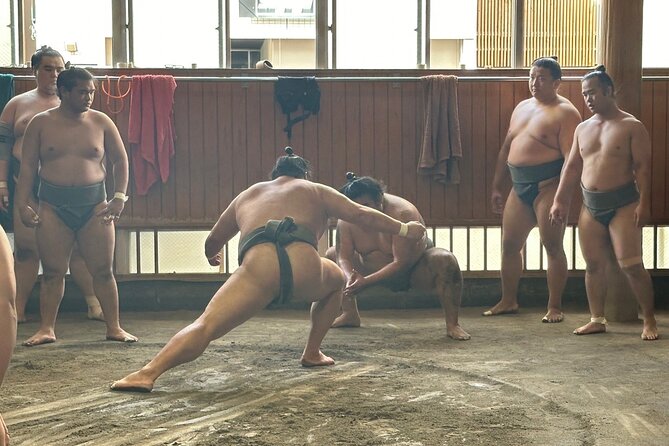
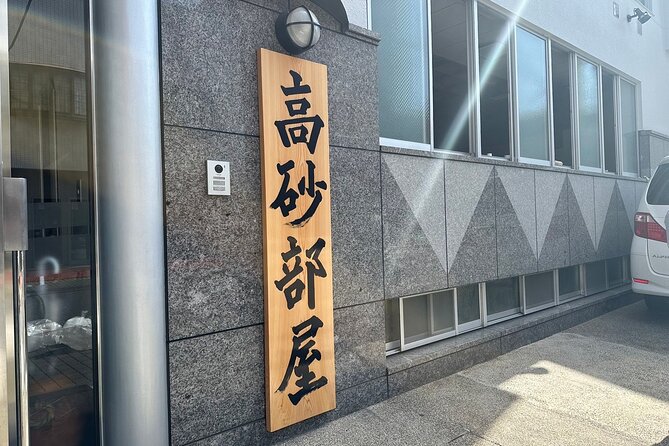
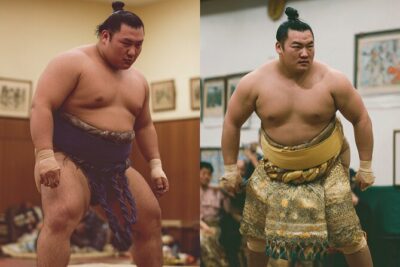
The stable is Takasagobeya, also referred to as Takasago Stable. Even if you are not a sumo expert, you will recognize that the wrestlers take this part seriously. Expect focused warmups and practice bouts, with athletes working on technique and strength rather than putting on a show for the crowd.
What I love about this format for first-timers is simple: you learn faster when you can see the muscles, the repetition, and the pacing. And because this is a training session, the energy feels more grounded than fireworks.
More Sumo Experiences in Tokyo:
- Tokyo: Sumo Show Experience with Chicken Hot Pot and a Photo
★ 4.8 · 6,678 reviews - Tokyo: Sumo Show and Dining Experience
★ 4.8 · 2,742 reviews - the SUMO show
★ 5.0 · 1,960 reviews
Getting There: Ryogoku Station and the 7:45 Reality Check
Your meeting point is near Ryogoku Station, with the address listed at Ryogoku Sta. 1-chōme-4-29 Yokoami, Sumida City. The tour starts at 8:00 am, but one important detail shows up in the feedback: the group can be required to move promptly, with people noting that the tour leaves the A3 exit at exactly 7:45.
So here is the practical advice: plan to be at Ryogoku Station early, and specifically aim to be at the A3 exit by 7:45. Give yourself at least 10 minutes just to get your bearings. Ryogoku can be easy once you know it, but that first walk from the station entrance to the right spot is where time slips away.
When you arrive, the guide is easy to spot. People mention a big sign and a guide who is efficient once you find them. If you still feel uncertain, check any confirmation message you receive before the day, because the organizers note they may send a WhatsApp contact as part of the day-before info.
This matters because the stable visit is timed. You want to be relaxed when you start walking to the practice space, not rushing.
The Walk to the Practice Room (And Why It Feels Smooth)
Right after you meet, the guide takes your group from the meeting area to the sumo room. That short transfer is not just “getting there.” It helps you transition into the right mindset. The guide can also point out what to watch for once you sit down.
The experience is set up for an English-speaking group. The tour is listed as an English guide, and feedback even notes some guides speak multiple languages, including English, French, and Japanese. That means if you ask a question and the wording is messy, you still have a good chance of getting an answer that clicks.
And because the group is capped at 20 travelers, the movement to the stable tends to feel manageable. You are not fighting a crowd at every step.
What You Actually See: Training That Feels Physical
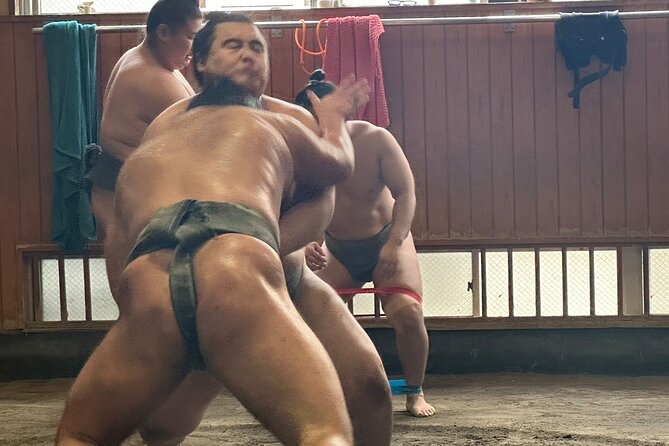
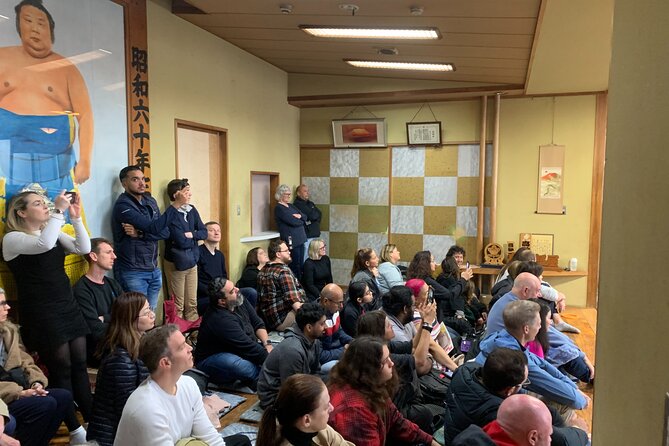
The heart of this experience is the training itself at Takasago Stable. The big promise is that you get a viewing spot that is usually closed off to spectators. The result is that the practice feels more real than what you get from TV angles.
During the session, you might see:
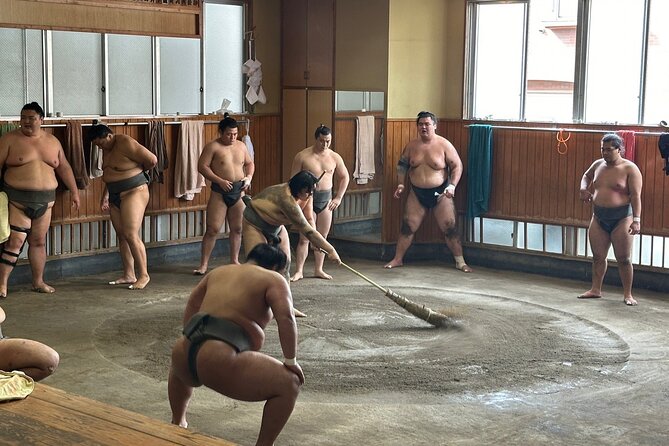
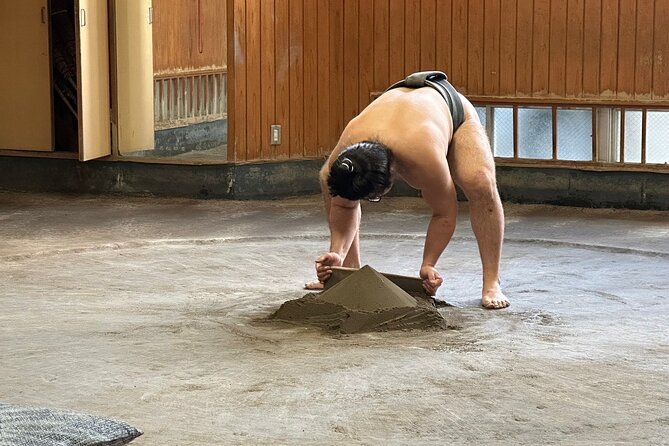
- Stretching and body preparation (so you understand why the warmup is not optional)
- Practice bouts where younger wrestlers spar and challenge each other
- Later, more powerful wrestlers taking part, with more intense contact and speed
Schedules can vary, so do not treat this like a guaranteed checklist. But the overall structure tends to follow that rhythm. One reviewer described it as starting with stretching and preparation, then moving into bouts as the session progresses.
The room itself is small. People mention you can hear the sounds and feel the intensity. That is part of why this works so well. It is not just visual. You sense the force when the wrestlers shift, brace, and collide.
Also, remember your role as a visitor: training time is not a performance. The guide will help you observe respectfully, and the stable staff will run the session as if you were not there. That is exactly what makes it authentic.
A change of pace from Tokyo:
- Mt Fuji and Hakone 1-Day Bus Tour Return by Bullet Train
★ 5.0 · 26,383 reviews - 1-Day Tokyo Bus Tour
★ 5.0 · 14,250 reviews - Tokyo: TOKYO SKYTREE® Admission ticket
★ 4.5 · 11,192 reviews - Tokyo: teamLab Planets TOKYO Digital Art Museum Entry Ticket
★ 4.6 · 9,779 reviews
The Guide Factor: Explaining Traditions, Answering Real Questions
This tour’s strongest element is the guide. The guide is not there to translate everything word-for-word. They are there to help you understand what the wrestlers are doing and why it matters.
You can ask questions, and you should. A big chunk of the positive feedback talks about guides who answer tons of questions, sometimes 20 or more. In one group, Naomi is specifically mentioned as warm and friendly, with the kind of energy that makes it easy to keep asking.
Another recurring theme: guides hand you context, so you know what you are watching. People mention receiving a fact sheet with sumo terms and training details, enough to follow along during the session.
If you have ever watched sumo and felt like you were missing the plot, this is where you fix that. You do not need background knowledge. You just need someone to connect what you see to the sport’s traditions and training logic.
Seating and Comfort: Small Room, Traditional Setup
Here is the honest consideration. You sit in a traditional setup, and it can feel uncomfortable, especially for western visitors. People mention sitting on the floor or on small tools and seats, and that it can be awkward for the duration of the session.
This does not mean you will have a miserable time. It means you should prep smarter. If you have knee or back sensitivity, consider bringing a small travel cushion or wearing supportive shoes with thin, flexible soles. Also, commit to being still and patient for about 1 hour 30 minutes to 2 hours.
Another practical note: the space can get crowded. One review describes feeling squeezed because seating was shared with people from another tour. On the flip side, the guide typically helps organize your seating so everyone can see.
So your comfort level depends on your body and your patience with tight spaces. The good news is that the intensity of the practice makes most comfort trade-offs feel worth it.
The Photo Souvenir: A Moment After the Practice
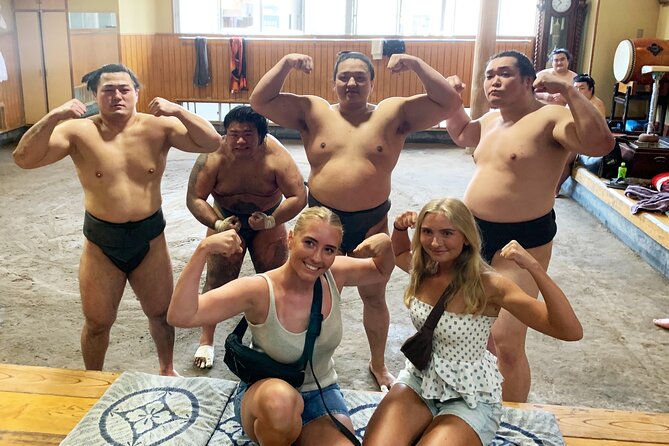
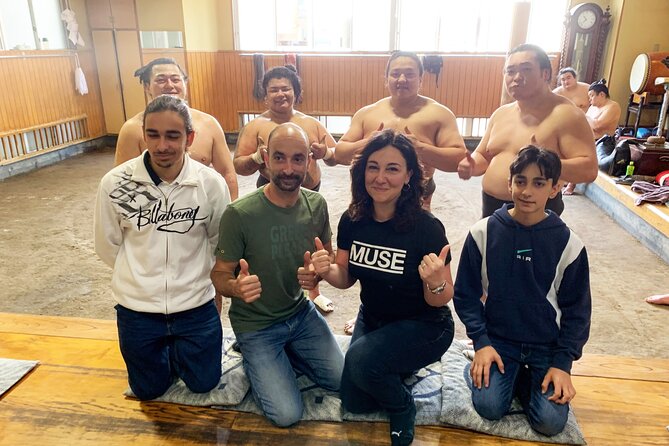
The experience ends with a commemorative photo with the sumo wrestlers. That is a big part of the “remember it later” value.
This photo souvenir is included, so you are not scrambling afterward to figure out how to get one, or negotiating where to stand. The timing is built around the training session, so it feels connected to what you just witnessed.
One nice detail from the feedback: people call the photo session fun, which makes sense. After watching serious athletes for almost two hours, you get a human moment at the end.
If you are traveling with teenagers or older kids, this is also one of the easiest parts to explain. You can point to a picture and say, that is what sumo practice looked like from inside the stable.
Building a Two-Part Morning: Add Asakusa Afterward
If you want, you can roll directly into nearby Asakusa after the viewing. That works really well because you finish early in the day.
Think of the morning as culture in two chapters:
- Inside the stable, you get the discipline and tradition of sumo.
- In Asakusa, you get the classic Tokyo street experience right afterward.
Because the sumo practice ends and you are dismissed with guidance on how to get to your next destination, you can decide on the spot how much energy you have for sightseeing.
This pacing is a real advantage. You are not spending your entire morning in a single location with zero flexibility.
Price and Value: Why Around $98 Can Still Make Sense
The price listed is $98.53 per person, and the duration is about 1 hour 30 minutes to 2 hours. Admission is included, and the guide work is the other major part of what you are paying for.
So what is the value here?
You are not buying a ticket to a stadium event. You are paying for:
- Access to a training session that is normally closed off
- A guide who explains sumo and helps with language barriers
- A souvenir photo at the end
- A small-group experience (maximum 20)
In other words, you are paying for entry plus interpretation plus access. That combination is usually where the money lands, and it is also why the experience gets called a highlight of the Tokyo trip.
Could you watch sumo in other ways that cost less? Maybe. But getting this close to real training, with guided context, is the difference between “I saw sumo” and “I understood sumo.”
Who This Fits Best (And Who Should Rethink It)
This tour is a strong match if:
- You like sports and you enjoy watching process, not just results
- You want a real cultural experience with a local guide who can answer questions
- You can handle basic seating for about 1 hour 30 minutes to 2 hours
It might be less ideal if:
- You have very sensitive knees or hips and cannot sit comfortably on traditional seating
- You hate feeling rushed at the start, since you need to be at the right station exit early
- You expect a big dramatic show rather than a training session
Also, if you want a super flexible day, the early morning timing may be a factor. The start is 8:00 am, and the group is effectively moving early.
Should You Book This Takasago Sumo Morning Practice?
I think you should book it if you want an authentic, close-up look at sumo training in Tokyo, with an English guide to help you understand the rituals and techniques. The best part is not just proximity. It is the explanation, the photo souvenir, and the fact that the stable normally does not offer this spectator access.
If comfort is your top priority, pack for sitting on a floor-style setup and plan your arrival time carefully. The experience is short enough that you can still do it even with minimal planning, but long enough that comfort is not an afterthought.
If you want a Tokyo memory that feels different from museums and big shopping streets, this is one of the more satisfying “morning culture” choices you can make.
FAQ
What time does the sumo morning practice start?
The tour start time is listed as 8:00 am. One practical note from the experience is that the group may move from the A3 exit at 7:45, so arrive early.
Where do I meet for the tour?
The meeting point is near Ryogoku Station, at Ryogoku Sta. 1-chōme-4-29 Yokoami, Sumida City, Tokyo.
How long does the tour last?
The duration is about 1 hour 30 minutes to 2 hours.
Is a photo included with the wrestlers?
Yes. You receive a commemorative photo with the sumo wrestlers as a souvenir.
Does the tour include admission?
Yes. Admission ticket is included.
How big is the group?
The tour has a maximum of 20 travelers.
Is there free cancellation?
Yes. You can cancel for a full refund if you cancel at least 24 hours in advance of the experience’s start time.
Latest write-ups near Tokyo
- From Tokyo: Top 5 Scenic Spots of Mount Fuji Full-Day Tour★ 4.5 · 67 reviews
- Tokyo Customized Private Tour: See Top Attractions in 1 Day★ 4.8 · 67 reviews
- Traditional Japanese Music ZAKURO SHOW in Tokyo★ 5.0 · 67 reviews
- Tokyo: Shinjuku Izakaya and Golden Gai Bar Hopping Tour (2h)★ 4.9 · 67 reviews
- Tsukiji: Unlimited Sake Tasting Experience★ 4.9 · 67 reviews
- Samurai Ninja Museum Asakusa: Kid-Friendly Ninja Training★ 4.7 · 67 reviews
- Tokyo: Not a show- a professional sumo practice with experts★ 4.9 · 67 reviews
- Private Harajuku Omotesando Architecture Walking Tour★ 5.0 · 67 reviews
Sumo Experiences, compared.
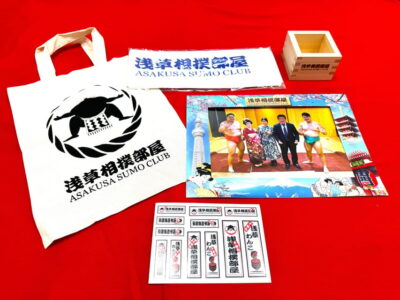
Sumo Show Experience with Chicken Hot Pot and a Photo
Read our review →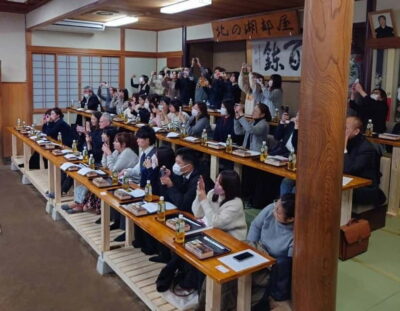
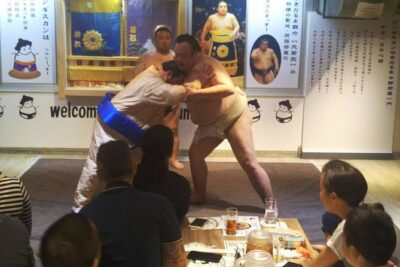
Tokyo Shinjuku Sumo Show & Experience with Photo
Read our review →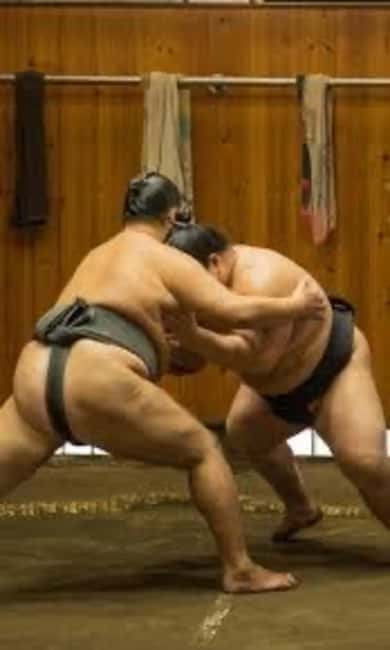
Sumo Show & Experience w/ Optional Kimono & Hot Pot
Read our review →
Authentic Sumo Experience in Tokyo: Enter the Sanctuary
Read our review →Browse the lists this tour appears in