
Reviewed · GEISHA & GION TOURS
Kyoto: Meet the Geisha Maiko with Gion Walking Tour
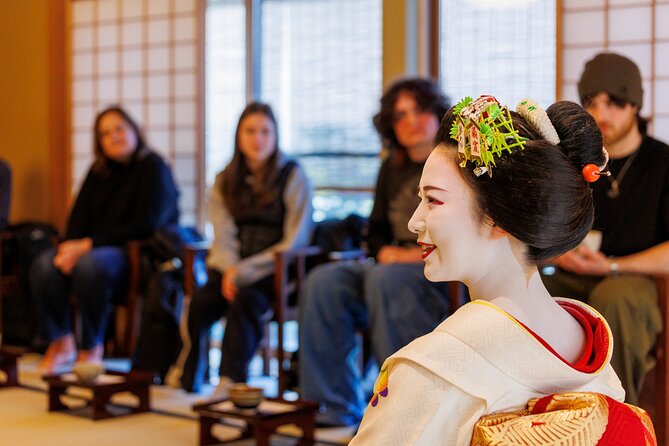
Kyoto’s Gion is famous for geiko and maiko, but this tour is interesting because you get rare access to an Ochaya tea house, not just a street-photo moment. The best part is the live maiko performance followed by conversation with the performers and the venue owner, so you learn how the tradition works from inside the room.
I love the way the tour pairs storytelling with real location context, since the Gion walk helps you understand what you are seeing before the performance starts. I also like the focus on Q and A, with past guidance shared by former geiko, plus a photo session that lets you capture the moment properly. The main drawback to keep in mind is that the tea house performance happens up a flight of stairs on the second floor, so the experience is not a fit if stairs or mobility are a concern.
Key Highlights You Should Really Care About
- Private Ochaya tea house access, including a live maiko performance and time with a former geiko
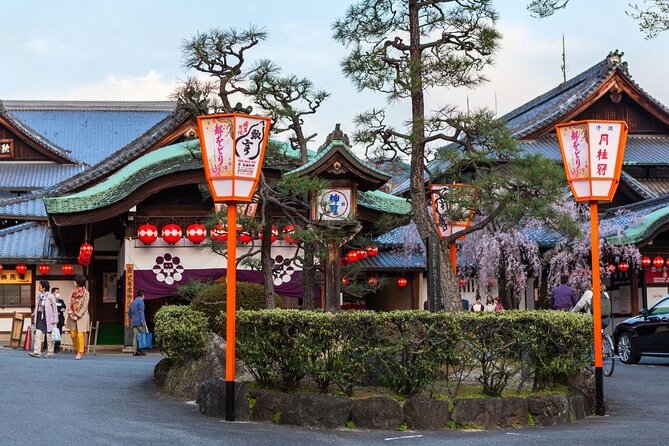
- Gion walking tour (about 70 to 80 minutes) that sets context on the streets where maiko and geiko train
- Conversation plus Q and A with both the maiko and a venue owner, with an English guide translating
- Photo session with the maiko, with clear rules on when photos and video are allowed
- Small group feel, and you may end up in a group size that stays personal (some departures have been as small as 7)
Why This Gion Maiko Meeting Feels Different Than a Typical Show
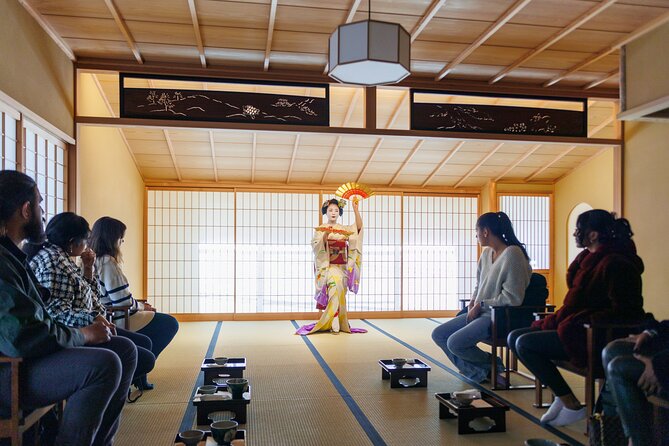
This is not a standard dance performance where you watch, clap, and leave. The heart of the experience is that you step into a private tea house setting and then slow down for conversation. You’ll get stories about training, daily routine, and the Kyoto traditions that shape geiko and maiko life.
What makes it land is the contrast between “the idea of geisha culture” and “the actual world.” During the Gion walk, your guide points out the streets and landmarks that give the whole district its rhythm. Then at the Ochaya, you meet the people the culture belongs to, including a maiko and a former geiko who can answer questions with direct perspective.
The tour is also designed for respectful access. Photography and video recording are not treated like a free-for-all. Instead, you get defined windows for photos and a later permission step if you want to post images online. That restraint is part of why the encounter feels meaningful rather than staged.
More Walking Tours in Kyoto
- Kyoto Geisha Walking Tour: Gion District & Hidden Gems
★ 4.7 · 3,273 reviews - Kyoto: Gion Magical Night Walking Tour with Geisha Trivia
★ 4.9 · 2,393 reviews - Kyoto: Gion Geisha District Walking Tour – Stories of Geisha
★ 4.7 · 2,187 reviews
Your Guided Gion Walk: Canal Views, Shrines, and Real Street Context
Before you reach the tea house, you start with a guided walk in Gion. This part matters because it changes how you read the neighborhood once you understand how the district functions. You’ll be looking at the same streets you’d see on your own, but with a guide explaining what is going on behind the scenes.
You begin with one of two starting points. If you pick the Kimono rental option (Wargo Kyoto Kimono Rental, Gionshijo store), you’ll change first and then walk about 3 minutes on your own to the Izumo-no-Okuni statue, where the guide waits. If you skip kimono, you’ll still meet at a designated start point that may vary by booking.
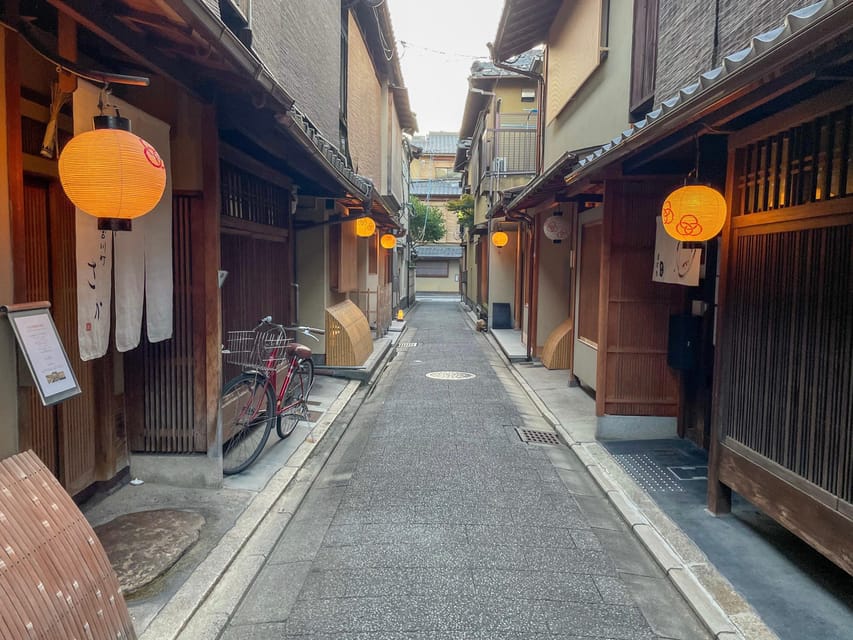
From there, the walk includes classic stops such as Shirakawa Canal (about 30 minutes). The canal area is one of those places where Kyoto feels quietly intentional: narrow lanes, calm views, and buildings packed close enough that small details matter. Next comes Tatsumi-jinja Shrine (about 5 minutes). You won’t get a long temple lecture, but you’ll learn why shrines and local spaces are woven into everyday life in Kyoto.
Then you move to Hanamikoji Street (about 10 minutes). This is where you start to see the district as more than scenery. Your guide connects street layout, tradition, and the etiquette that shapes how geiko and maiko move through public spaces.
Gion Corner, Kenninji Temple, and Where the Tour Adds Depth
After Hanamikoji, you’ll stop at Gion Corner. The timing is short, but it’s one of those points that helps you understand how the district is interpreted and protected. Think of it like orientation, with your guide steering your attention so you notice what you would otherwise miss.
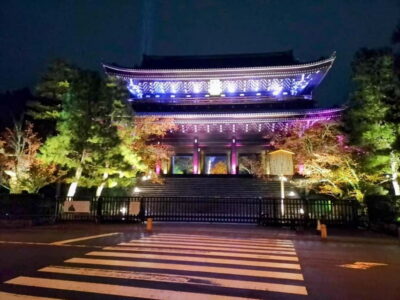
Next up is Kenninji Temple for a quick photo stop and guided sightseeing (about 15 minutes). Even though the time there is brief, it gives you a useful contrast. Gion is about performance and refinement, but Kyoto’s spiritual spaces remind you that these arts grow out of a larger city culture, not just nightlife.
Here’s the small practical tip I’d give you for this portion: keep your questions ready. If you come in with curiosity about training, roles, or symbolism in kimono and hairstyles, you’ll be better prepared for the moment when you finally meet the maiko. The walking segment gives you the context that makes your later questions land smoothly.
Miyagawasuji Finish: Photos, Pace, and How You End the Day
The walk keeps rolling toward Miyagawasuji, with photo opportunities and a longer stretch of time there (about 1.5 hours in the itinerary, and it’s also where the tour finishes). This is a good place to slow down. The street is photogenic, but it also gives you room to absorb the district’s layout after the tea house conversation.
One thing to expect: the day can run a bit longer than you plan for. That is stated as a possibility, and it matches what many people experience with tours that depend on timing at a private residence. If you have a tight train connection, build in a buffer.
I also recommend you keep an eye on your feet here. You’re on foot for a while, and you may be in kimono depending on your option. Even with comfortable shoes, you’ll want to manage pace so you arrive at the performance space ready, not rushed.
More Geisha Experiences in Kyoto:
- Best of Kyoto: Gion, Geisha, Pagodas & Cobblestones
★ 4.9 · 2,058 reviews - Night Walk in Gion: Kyoto’s Geisha District
★ 4.5 · 2,003 reviews - Kyoto Night Foodie Tour in Gion (9+ dishes + 6 Sake tastings)
★ 5.0 · 1,762 reviews - Kyoto Gion Geisha District Walking Tour – The Stories of Geisha
★ 5.0 · 1,441 reviews
Inside the Private Ochaya: Maiko Dances, Former Geiko Stories, and Q and A
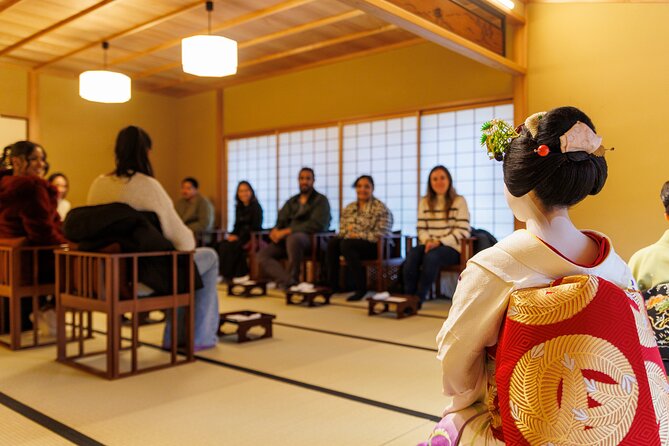
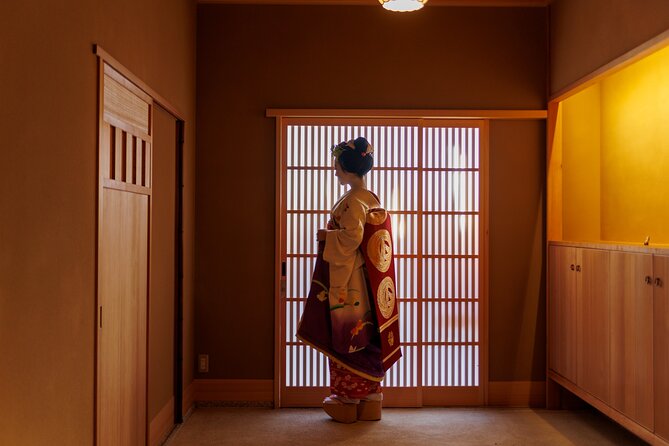
Now for the part you actually came for. The tea house meeting happens in an exclusive private house, and you access the performance space up stairs to the second floor. Once you’re there, the atmosphere shifts from “tour mode” to a more intimate cultural moment.
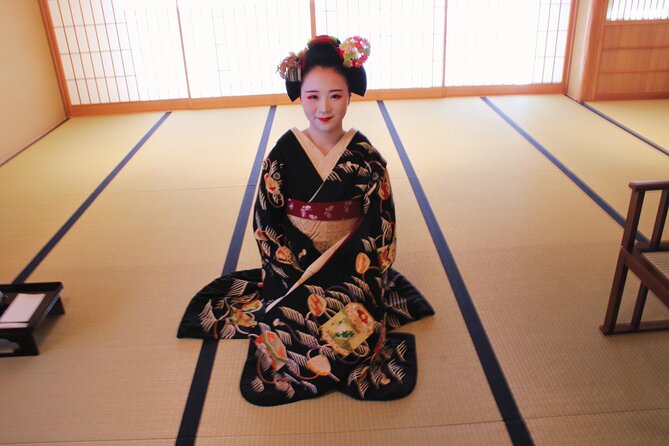
You’ll meet a maiko (apprentice geisha) and a former geiko. The format typically includes a live performance by the maiko, usually 1 to 2 dances, followed by conversation. The performance time is focused and short, and then the real value shows up in the Q and A.
What I love about this setup for you is the balance of art and person. You’re not only watching movement. You’re hearing stories about training, etiquette, and what it means to carry tradition day after day. The former geiko also adds perspective because she’s lived the role and then moved on, which can make her answers feel grounded and practical.
A venue owner is also part of the conversation. That matters because it explains how tea house life functions as a space, not just a stage. The Q and A is where you can ask about anything you care about, and the English guide helps translate so you don’t have to worry about nuance getting lost.
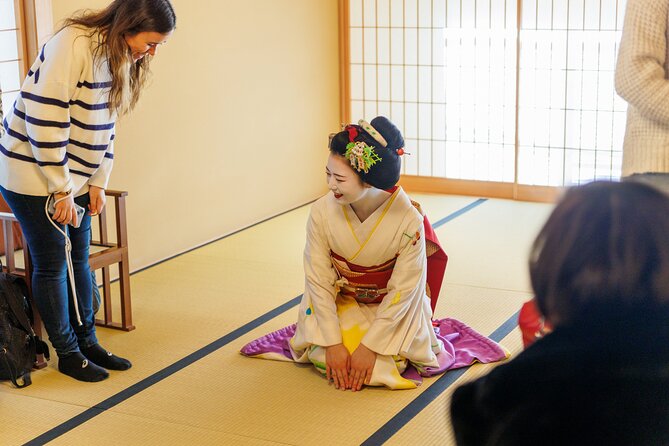
Your photo session with the maiko comes during the permitted windows. That means you get your memorable images without turning the moment into a free-for-all.
Photo Rules That Keep the Encounter Respectful
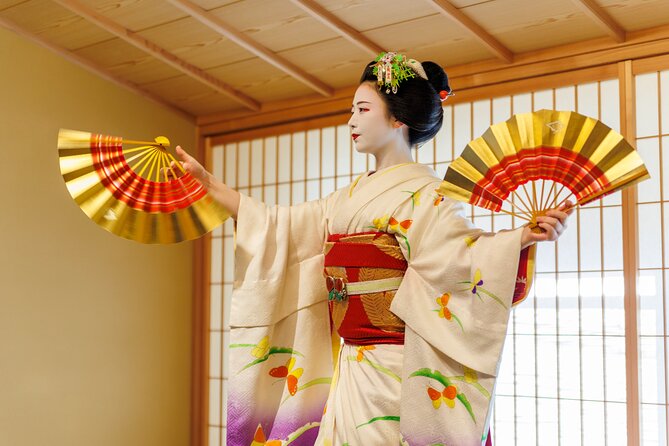
If you like photography, read this part carefully before you go. Photos and video recording are allowed only during two parts: the performance and the photo session. You cannot record video for later uploading online, and if you want to upload photos of the maiko on the internet, you must obtain direct permission from the maiko beforehand.
In practice, that means you should think ahead. Decide what you want to capture during the allowed moments so you don’t waste time framing and refocusing in the middle of the dance. During the rest of the tea house time, keep your attention on the conversation.
Also remember that this is a performance space. Quick, respectful behavior helps everyone. The small social rules are part of the authenticity here.
Kimono Option and the Sock Rule: Small Details That Matter
Some departures include a kimono rental option tied to the starting point. If you choose it, you change into kimono and then walk about 3 minutes by yourself to the Izumo-no-Okuni statue, where your guide waits. It’s an easy handoff, but you should follow the directions exactly so you don’t get separated.
Then comes the practical rule that people forget until the last second: you MUST wear socks at the performance venue. Not optional. Not “maybe.” The tea house venue also has a weather-related rule: on rainy days, no wet clothes and socks are allowed inside the venue. You’ll walk outside with an umbrella, but you should still plan to keep your socks dry.
So what should you do? Bring spare socks if you have any doubts about rain. Keep your umbrella handy during the walk. And if you’re wearing kimono, be ready to move carefully on stairs.
Price and Value: Is $106 Worth It for the Real Experience?
At $106 per person for a 3 to 5 hour experience, the price is not “cheap,” but it also isn’t just paying for a dance. You’re paying for access to a private Ochaya residence and a meeting format that includes performance plus conversation.
Here’s the value math I see:
- You get a guided walk (about 70 to 80 minutes) that adds context in Gion, so you understand more than you would wandering alone.
- You get face-to-face time with a maiko plus a former geiko, not a distant viewing.
- You get Q and A with both the performers and a venue owner, which turns the experience into learning, not watching.
- You get a photo session, with structured timing and rules that keep it respectful.
Also, the tour is offered as a small group, which matters. In a large group, questions and translation can get cramped. In a smaller setting, you’re more likely to actually get your answers and participate.
Guides across departures have been praised for English communication and patience. Names you might see include Takuma, Mika, Yuko, Eric, Tom, Naomi, Ayako, Ellie, and Chiko. The consistent theme is clear translating and a respectful tone, which is exactly what you want when you’re asking personal questions about tradition.
Who This Tour Suits, and Who Should Skip It
This experience fits best if you’re curious about the real mechanics of geiko and maiko life. If you love culture that comes with etiquette, symbolism, and rules you can actually learn, you’ll get a lot from the Q and A.
It’s also a good fit if you want photos, but with boundaries. You’ll have permitted times to take pictures and video inside the defined moments, plus a photo session planned for it.
It is not suitable for:
- children under 10
- people with mobility impairments
- wheelchair users
And one more important practical point: the performance is held on the second floor of a private house and access requires stairs. If stairs are a problem for you, this is the wrong tour.
Should You Book This Gion Maiko Meeting?
I’d book this if you want more than a tourist performance. The rare access to a private Ochaya, the conversation with a maiko and former geiko, and the structured photo time create an experience that feels like a cultural exchange rather than a scripted show.
I would skip it if you hate rules around photography, if you need step-free access, or if you’re planning a super tight schedule with no buffer. The tour can run a little longer than expected, and the venue access includes stairs.
If your goal is to understand Gion from the inside, this is one of the few ways to do it in a short time. It’s also one of the best uses of time if you’re already staying in Kyoto and want a high-impact cultural moment that goes beyond the usual street circuit.
FAQ
How long is the Kyoto Gion Maiko with Ochaya Walking Tour?
The total tour duration is listed as 3 to 5 hours.
Where does the tour start?
There are 2 starting location options, and the meeting point may vary depending on which option you book.
Is the tour guide available in English?
Yes. The tour guide language is English, and the guide supports the experience through translation during the conversation.
Can I take photos and video during the tour?
Photography and video recording are allowed only during the performance and during the photo session. Video cannot be uploaded to the internet.
Do I need to bring anything?
Yes, you should bring socks.
Is photography allowed to be posted online?
If you want to upload photos of the maiko on the internet, you must obtain direct permission from the maiko beforehand.
What happens on rainy days?
The tour takes place rain or shine. If it rains, no wet clothes and socks are allowed at the venue, so you should use an umbrella during the walk.
If I choose the kimono rental option, where do I go after changing?
After changing into kimono, you go by yourself to the Izumo-no-Okuni statue, about a 3 minute walk from the kimono rental store. Your guide will be waiting there.
Is this tour suitable for children or wheelchair users?
No. It is not suitable for children under 10, people with mobility impairments, or wheelchair users.
Latest write-ups near Kyoto
- Kyoto: Nishiki Market Tour with a Local Foodie & Tastings★ 4.5 · 67 reviews
- Kyoto Kimono Rental mimosa |Kimono/Yukata Rental Couple Plan★ 4.8 · 67 reviews
- Kyoto: Traditional Kimono Fabric Handicrafts Workshop★ 5.0 · 67 reviews
- Kyoto Tea Ceremony and Samurai Photo Session★ 5.0 · 70 reviews
- Kyoto: Replica food making experience★ 4.8 · 70 reviews
- Kyoto: Kinkakuji, Golden Pavilion Guided Tour★ 4.7 · 71 reviews
- Private departure transfer from Kyoto city to Kansai International airport★ 5.0 · 72 reviews
- Uji: Green Tea Tour with Byodoin and Koshoji Temple Visits★ 4.8 · 72 reviews
Geisha & Gion Tours, compared.
Kyoto Geisha Walking Tour: Gion District & Hidden Gems
Read our review →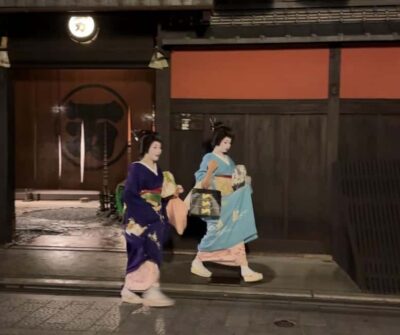
Gion Magical Night Walking Tour with Geisha Trivia
Read our review →
Gion Geisha District Walking Tour – Stories of Geisha
Read our review →
Best of Kyoto: Gion, Geisha, Pagodas & Cobblestones
Read our review →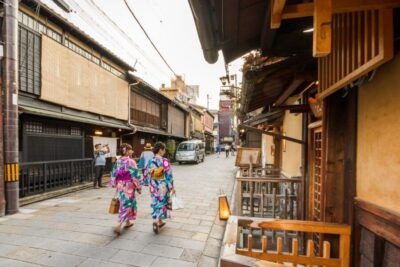

Kyoto Night Foodie Tour in Gion (9+ dishes + 6 Sake tastings)
Read our review →
Kyoto Gion Geisha District Walking Tour – The Stories of Geisha
Read our review →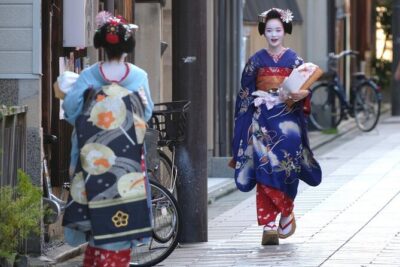
Kyoto Gion: 2-Hour Geisha Culture & History Walking Tour
Read our review →Browse the lists this tour appears in