
Reviewed · TEMPLE & SHRINE TOURS
Tokyo: Meiji Shrine and Shinto Culture Walking Tour
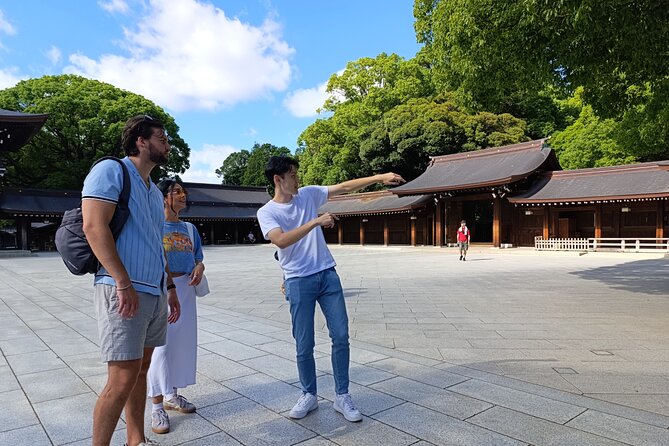
Meiji Jingu is one of those Tokyo stops that feels like a time-out from city life, even though you are just minutes from Harajuku. With a guide, you do not just see the shrine, you understand what you are looking at, from torii gates to the logic behind Shinto rituals.
What I like most is the way the guide explains the small actions that most people rush past. You learn why people bow at the gates and how the purification steps work, not just the history on a sign. I also love the pace and format, a small group of up to 15, which makes it easy to ask questions and get answers that fit your curiosity.
One thing to consider is that this is still a walking tour. If you hate walking for about 2 hours, or you want a completely self-paced visit where you can linger for long stretches, you may find the guided flow a little structured.
Key highlights to look for
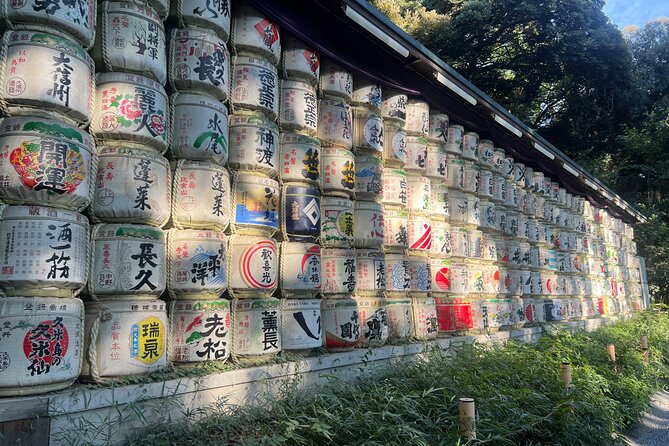
- Huge myojin-style torii: See the 12-meter-tall, 17.1-meter-wide wooden gateway up close.
- Forest path energy: Walk the calm approach inside a massive artificial forest.
- Practical Shinto context: Learn what the rituals mean and what you are supposed to do.
- Small group questions: Up to 15 people, so your guide can actually engage you.
- Easy start location: Meet at Starbucks With Harajuku, near public transportation.
- Ticket included: Admission is part of the tour price.
Meiji Jingu’s torii and forest approach: why this shrine hits different
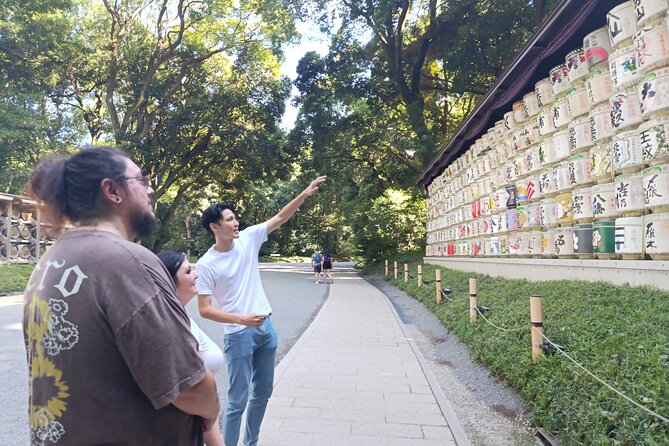
Meiji Jingu is dedicated to the deified spirits of Emperor Meiji and Empress Shoken. The shrine is tied to their role as modernizers of Japan, so it is not just a temple you pass by. It is a place where history, faith, and public life overlap in a way that feels surprisingly human.
The approach is a big part of that. You enter through towering torii gates and walk along a forested path that makes Tokyo’s noise feel far away. Even if you have seen other shrines in Japan, this setting changes how you experience everything. Instead of grabbing photos and moving on, you notice details like posture, pace, and the rhythm of what people do before and during prayers.
And then there is the main gate moment. This is the largest wooden myojin-style torii of its kind in Japan, standing 12 meters tall and 17.1 meters wide. When you finally reach it, the scale is the point. This is not a small gate for quick pictures. It is big enough that you naturally slow down and look more closely.
If you are the type who likes learning as you walk, this tour sets you up well. The guide helps you interpret what you are seeing instead of treating it like a checklist.
More Temple & Shrine Tours in Tokyo
- Tokyo: Meiji Shrine, Asakusa, Skytree Bus Tour and Cruise
★ 4.7 · 1,986 reviews - Tokyo: Asakusa Walking Tour with Sensoji Temple Visit
★ 4.8 · 1,583 reviews - Nikko: Kegon Falls, Lake Chuzenji & Toshogu Temple
★ 4.6 · 1,577 reviews
The price makes sense when you factor in the ticket and guidance
This tour costs $18.00 per person, and admission is included. That matters, because Meiji Jingu-style stops can quickly add up when you are mixing paid entry with guided time.
At this price, you are paying for three things that are hard to replicate on your own:
1) A guide who can explain the symbolism behind Shinto rituals.
2) Help with the basic customs people often miss.
3) A small-group format that makes it easier to ask questions without feeling like you are delaying the line.
So yes, you could do it alone. But you would likely miss some of the meaning behind the movements and the why. On a shrine, the difference between seeing and understanding is often just one explanation at the right moment.
Meeting at Starbucks With Harajuku: smooth start, easy logistics
You meet at Starbucks Coffee With HarajukuJapan, Shibuya, Jingūmae, 1-chōme 14-30. The tour ends back at the meeting point, so you do not have to worry about navigating across town afterward.
The area is near public transportation, which helps a lot because Harajuku can get complicated fast. Also, the tour uses a mobile ticket, which is convenient if you do not want to keep track of paper passes.
Timing-wise, plan to arrive a few minutes early. In small-group experiences, being late can throw off the group flow. The guides you will see for this tour, like Sara, Yumi, and others, seem to keep things organized and interactive, so starting on time makes the tour better for everyone.
One more practical note: tips are not included. If you like strong guide service, set aside a bit for that. It is also a good way to show appreciation for the extra effort that goes into explaining customs.
Walking tour format: how the guide keeps it lively and respectful
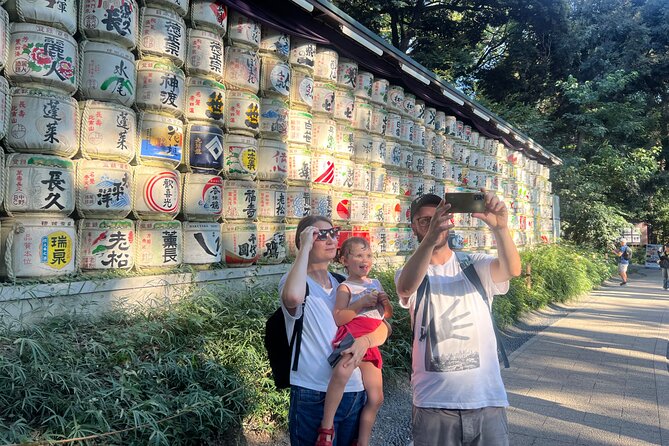
This is a two-hour guided walk with a small group, maximum 15 travelers. That size is ideal. Big tours feel like you are moving through a crowd. Too-small groups can feel awkward if you are shy. Fifteen is usually the sweet spot for questions, and you still get a clear path through the shrine grounds.
The guide leads you through the core moments, but the goal is not just to point. The guide builds meaning. Based on the kinds of explanations you can expect, your guide will likely focus on:
- what to do when you approach
- why certain steps exist
- how the shrine’s purpose connects to what you see
Guides for this tour have included people such as Sara, Yumi, Haydn, Matt-san, and Benjamin. The consistent theme is clear communication and a calm, respectful tone. Even when it includes some cultural context, it stays practical.
You will probably come away with more confidence than you expect, especially if you were worried about whether you were doing things correctly.
More Walking Tours in Tokyo
- Tokyo Tsukiji Fish Market Food and Culture Walking Tour
★ 5.0 · 3,184 reviews - Tokyo: Imperial Palace and Shogun Historical Walking Tour
★ 5.0 · 2,251 reviews - Tokyo: Shinjuku Local Bar and Izakaya Guided Walking Tour
★ 4.9 · 1,794 reviews - Tokyo: Tsukiji Fish Market Food and Walking tour
★ 5.0 · 1,724 reviews
Entering Meiji Jingu: the torii gates you should not rush
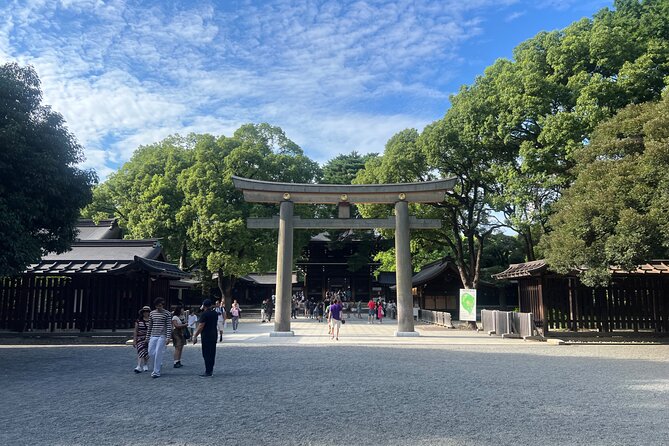
The first big experience is the entry into Meiji Jingu through the torii gates. Torii are not just decoration. They are a boundary marker that signals a change in space and mindset. You will learn that the right behavior is part of the respect.
When you reach the massive wooden myojin-style torii, stop and actually look. The 12-meter height and 17.1-meter width are extreme for a wooden gate, and it changes how you perceive the shrine. It is easy to photograph without fully absorbing it, so I recommend a quick pause before you take your shots. Give yourself 30 seconds to frame it, then a few more seconds to watch how people pass through.
The guide’s explanations help you understand that people are not just walking through architecture. They are moving into a sacred area with expectations for conduct.
If you are a detail person, this is where you will feel it most. You will notice your own posture. You will notice other people’s timing. And you will start to understand why the shrine feels orderly even when it is crowded.
Shinto customs made clear: bowing and purification steps
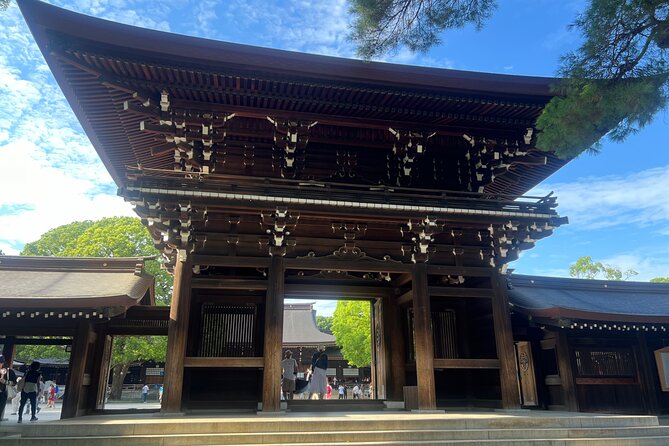
One of the most helpful parts of a shrine tour is when someone explains what you might otherwise guess. Here, the guide focuses on Shinto customs people often miss, like bowing at the gates and the purification steps.
For example, you will learn that there is a ritual cleaning moment before approaching further. In practice, it is not about needing to memorize a sequence. It is about understanding the intent. Purification is a way to prepare yourself respectfully.
The bowing part matters too. Many visitors assume it is optional or purely symbolic. With a guide, you see that bowing is part of acknowledging the space and the worship setting.
This kind of guidance is especially valuable at Meiji Jingu because it is one of Tokyo’s most visible and iconic shrines. Lots of people visit, lots of people take photos, and it is easy to feel like you are in the wrong headspace. The guide helps you get the headspace right, fast.
Stop focus: Emperor Meiji, Empress Shoken, and the meaning behind the grounds
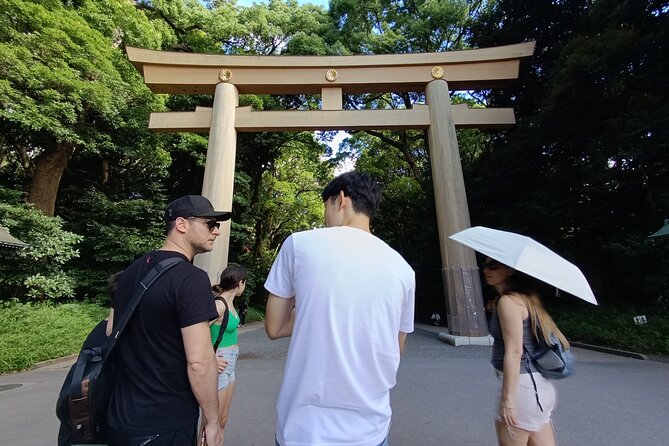
Meiji Jingu is dedicated to Emperor Meiji and Empress Shoken. You will also learn that they are honored as deified spirits, and that the shrine connects to their impact on Japan’s modernization.
The site itself reinforces the sense of reverence. The shrine sits within a massive artificial forest, which is part of why it feels so different from central Tokyo. It is not an accidental vibe. The setting supports the idea that worship here is meant to slow you down.
You will also hear how the shrine was established in 1920. That historical anchor helps you place the shrine in modern Japanese culture rather than treating it as only ancient scenery.
This is one of the best ways a guided tour pays off. When you know who you are honoring and why, the place becomes more than a beautiful walk.
What a 2-hour experience really gives you (and what it cannot)
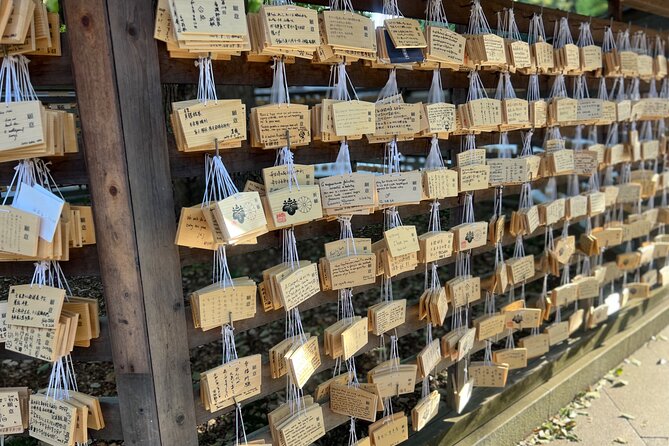
A two-hour tour is short enough to stay energetic, but long enough to cover the core shrine moments with context. You should feel like you got the main highlights without feeling dragged across town.
Still, this format has limits. You will not spend hours and hours reading everything in silence. You are there for guided meaning and shared learning, not solo wandering.
So here is the practical way to decide:
- If you want a confident, respectful visit where you know what you are doing, this is a great fit.
- If you want an extended, quiet meditation-style visit, you might want to do a follow-up self-guided stop after the tour ends at the meeting point.
Either approach can work. The key is matching the format to what you want from your day in Tokyo.
Who this tour suits best
I think this tour is especially good for:
- First-time visitors to Japan who want to understand shrine etiquette without feeling lost.
- People who enjoy history but want it tied to real behavior, not just facts.
- Anyone who likes a calm break from the crowds near Harajuku, but still wants a guided plan.
It also works well for families and mixed groups because the guide’s explanations help everyone feel included, not left behind.
If you are traveling alone and you worry you will be unsure about what to do, the guide gives you quick confidence. If you are traveling with friends, the small group size makes it easy to stay together without feeling cramped.
Practical tips so you enjoy it more
A guided shrine walk is simple, but small choices help:
- Wear comfortable shoes, because it is still a walk through shrine grounds for about 2 hours.
- Plan to arrive early at Starbucks With Harajuku so you can start without stress.
- Bring your curiosity. If the guide explains why bowing matters, ask follow-up questions. This tour format is built for them.
- Keep your pace relaxed at the torii moments. The main gate is your visual payoff, so take a moment and let it land.
Also, since ticketing is handled with a mobile ticket, make sure your phone battery is fine. That is a small detail, but it saves headaches.
Should you book the Tokyo Meiji Shrine and Shinto Culture walking tour?
Book this tour if you want to go beyond sightseeing and actually understand Shinto shrine behavior in a respectful, low-stress way. The combination of a highly recognizable site, a powerful torii gate moment, and clear guidance on customs like bowing and purification makes it excellent value for $18, especially because admission is included.
Skip it, or at least consider a self-guided visit instead, if you strongly prefer long unstructured time at one place, or if walking for two hours feels like work for you. A guided tour is helpful, but it is still a guided flow.
If you are choosing between clicking photos and learning how to participate, this tour is the easier decision.
FAQ
How long is the Meiji Shrine and Shinto Culture walking tour?
It lasts about 2 hours.
What is the price per person?
The price is $18.00 per person.
Is the admission ticket included?
Yes, admission is included.
Where do I meet for the tour?
You meet at Starbucks Coffee With HarajukuJapan, 150-0001 Tokyo, Shibuya, Jingūmae, 1-chōme14-30 (With Harajuku).
Where does the tour end?
The tour ends back at the meeting point.
Is this a small group tour?
Yes, the tour has a maximum of 15 travelers.
Do I need to print a ticket?
No. This activity uses a mobile ticket.
Is tips included in the price?
No. Tips are not included.
What is the cancellation policy?
You can cancel for free up to 24 hours in advance for a full refund. If you cancel less than 24 hours before the start time, the amount paid is not refunded.
Latest write-ups near Tokyo
- Tokyo Customized Private Tour: See Top Attractions in 1 Day★ 4.8 · 67 reviews
- From Tokyo: Top 5 Scenic Spots of Mount Fuji Full-Day Tour★ 4.5 · 67 reviews
- Tokyo: Shinjuku Izakaya and Golden Gai Bar Hopping Tour (2h)★ 4.9 · 67 reviews
- Traditional Japanese Music ZAKURO SHOW in Tokyo★ 5.0 · 67 reviews
- Tsukiji: Unlimited Sake Tasting Experience★ 4.9 · 67 reviews
- Tokyo: Not a show- a professional sumo practice with experts★ 4.9 · 67 reviews
- Samurai Ninja Museum Asakusa: Kid-Friendly Ninja Training★ 4.7 · 67 reviews
- Private Harajuku Omotesando Architecture Walking Tour★ 5.0 · 67 reviews
Temple & Shrine Tours, compared.
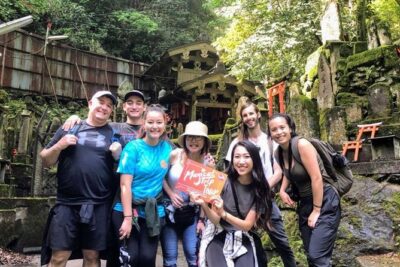
Fushimi Inari, Kinkakuji, Bamboo Grove 1 Day Bus Tour
Read our review →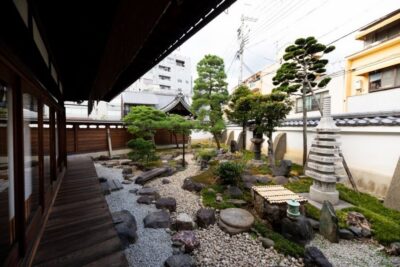

Meiji Shrine, Asakusa, Skytree Bus Tour and Cruise
Read our review →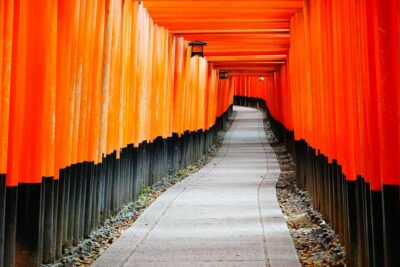
Osaka/Kyoto:Kinkakuji,Arashiyama,FushimiInariShrine,NaraPark
Read our review →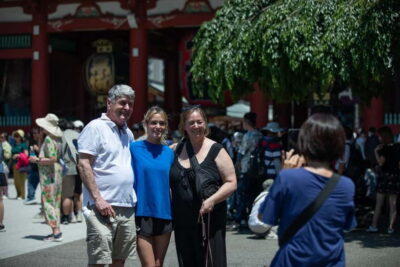
Asakusa Walking Tour with Sensoji Temple Visit
Read our review →
Nikko: Kegon Falls, Lake Chuzenji & Toshogu Temple
Read our review →
Kamakura & Enoshima Day Trip including Temple Tickets
Read our review →
Nikko Toshogu Shrine and Kegon Waterfall Tour
Read our review →Browse the lists this tour appears in