Reviewed · KYOTO TOURS
Treasures of Kyoto: Geishas & Traditions Private Tour
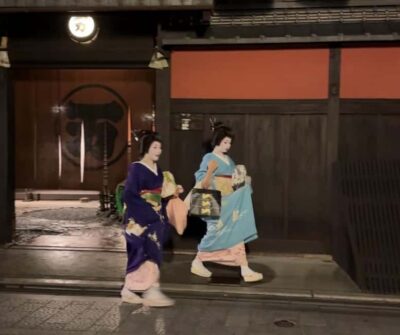
Kyoto can overwhelm you fast, especially around Gion, where the street names sound simple but the context is everything. This private Geisha and traditions tour is interesting because it’s built like a guided stroll through the neighborhoods and rituals that sit behind the postcard views.
Two things I really like: you get a local guide who can explain what you are seeing as you walk, and you hit a smart sequence of stops that fit into about 2 hours 30 minutes without feeling like a sprint. The pace also matters here, since the whole tour is basically one continuous neighborhood circuit.
One possible drawback to consider is that this is a walking-focused experience with a moderate fitness level, and it does not include hotel pickup. So you’ll want to start with an easy meeting point plan and comfortable shoes.
Key tour takeaways before you go
- Private, just your party means you can ask questions and move at your pace
- Geisha culture, but with context around the streets where traditions still shape daily life
- Stop-by-stop flow keeps you from wasting time figuring out what matters
- Lots of free admission stops helps value and keeps you budget-friendly
- Religion in real locations with Shinto and Buddhist sites side by side
A 2.5-hour Kyoto circuit that feels personal, not rushed
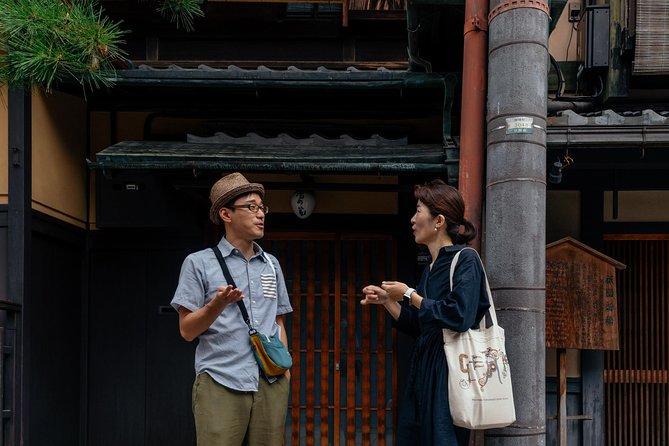
This tour is designed for travelers who want meaning, not just photos. You’re in Kyoto’s eastern side, where the best-known sights are close together, but the real win is how a local host connects the dots between geisha culture, theater origins, and the religious layers of the area.
The time frame is short enough to be realistic. About 2 hours 30 minutes is great when you have only one afternoon in Kyoto, or when you want something that doesn’t turn into a full-day production. And because it’s private, the conversation can shape what you do next, instead of being locked into a group script.
You’ll also like that this tour is listed as carbon neutral, which is a small detail, but it signals a provider that thinks about the full footprint of your day.
Also on the shortlist for Kyoto:
- PERFECT KYOTO 1-Day Bus Tour
★ 5.0 · 13,518 reviews - Kyoto: Fushimi Inari, Kinkakuji, Bamboo Grove 1 Day Bus Tour
★ 4.8 · 4,316 reviews - Kyoto: Tea Ceremony in a Traditional Tea House in Kiyomizu
★ 4.9 · 3,519 reviews
Where you start in Kawabatacho and finish near Yasaka Kamimachi
The tour starts at Kawabatacho, Higashiyama Ward and ends at Yasaka Kamimachi, Higashiyama Ward. That difference matters. You’ll finish near the Yasaka area, so it’s easy to keep exploring, but you should plan your next step accordingly.
Also, hotel pickup and drop-off are not included. So you should treat this like a “meet your guide and walk” experience. Since it’s near public transportation, you can usually build a smooth day by arriving with time to spare at the meeting point.
One practical tip: because you are moving through several sights and streets, bring shoes that handle uneven stone and temple steps. The itinerary includes walking between points and some stair climbs, and the tour is marked as moderate physical fitness.
Stop 1 to Stop 2: Kabuki beginnings at Izumo no Okuni and Minamiza Theatre
The tour kicks off at the Statue of Izumo no Okuni, noted as the originator of kabuki theater. It’s a quick introduction, but it sets up a key theme of Kyoto culture: performance arts are not separate from the rest of life. You’re not just seeing “old stuff,” you are seeing roots.
Next is Minamiza Theatre, with roots going back to the early Edo period (1596 to 1615). The payoff here is perspective. When you learn how long theatrical culture has existed in this city, you start noticing how tradition is protected and repeated, not just remembered.
Both stops are marked free. That’s helpful in two ways. First, it keeps your budget steadier. Second, it makes the early minutes feel like more than a checkbox, because you aren’t paying entry to get the initial context.
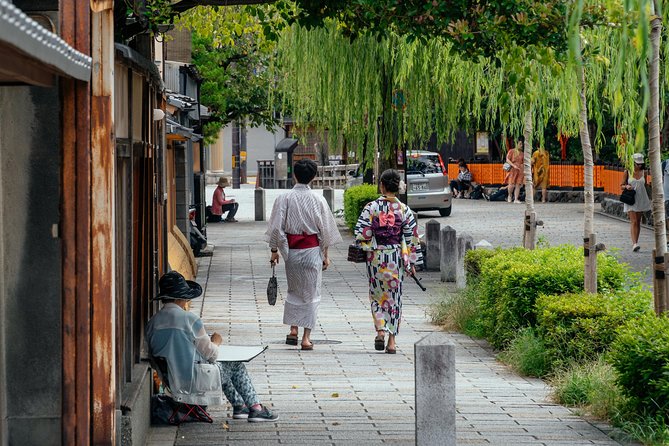
Gion basics: how Shinbashi and Gion’s lanes explain geisha life
From there you move into Gion, including the Shinbashi area described as a traditional business preservation district, and the historical scenery preservation area south of Shijo Street. This is where the tour becomes more than sightseeing.
Here’s what I’d focus on as you walk: the geometry of the streets and why certain places are preserved. Kyoto’s old districts aren’t “museum streets.” They are working neighborhoods, and the design and boundaries help protect the character of the area.
A key stop is Shinbashi Dori, where you can stand outside traditional banquet buildings and learn about the geisha and the culture in more depth. This is an especially good moment for questions. You’ll be in the area where entertaining customers historically happened, and that makes the explanations feel grounded rather than abstract.
Then the tour moves through Shijo Dori, which literally means Fourth Avenue of Heian-kyō, Kyoto’s ancient capital. That street name is a clue. It reminds you that you aren’t only walking through medieval Kyoto, you are moving along lines tied to older city planning.
A change of pace from Kyoto:
- Kyoto Geisha Walking Tour: Gion District & Hidden Gems
★ 4.7 · 3,273 reviews - Kyoto: Tea Ceremony Ju-An at Jotokuji Temple
★ 4.9 · 3,207 reviews - Kyoto: Gion Magical Night Walking Tour with Geisha Trivia
★ 4.9 · 2,393 reviews - Kyoto: 45-Minute Tea Ceremony Lesson Experience
★ 4.3 · 2,378 reviews
Tatsumi Daimyojin Shrine, Chion-in, and Maruyama Park: religion and viewpoint energy
Next you visit Tatsumi Daimyojin Shrine. The tour frames it as a mix of Shinto and Buddhism. That matters because Kyoto is famous for having both traditions in the same atmosphere. You’ll get a clearer sense that religious life here often overlaps in day-to-day practice, rather than being locked into one strict box.
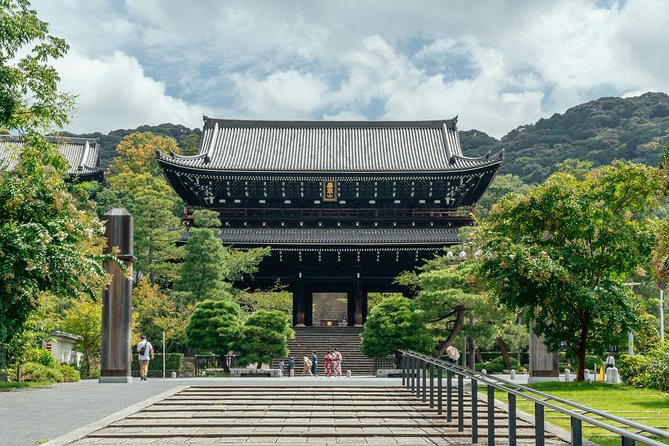
Then comes Chion-in Temple, including a walk up the steps for a better view and a look at the garden area. Steps are not just effort here. They help you understand how temples are designed for sightlines and mood changes as you move upward.
After that you head toward Maruyama Park, walking from the temple area. Parks like this provide a reset. You go from shrine and garden stillness to the feeling of an open public space nearby, which helps the second half of the tour feel easier.
If you like to take photos, this middle portion is often where you can slow down. But because it’s a private stroll, the guide can adjust if it’s crowded or if you want more conversation than pictures.
Yasaka Shrine and the Nene-no-Michi area: layered meaning in short walks
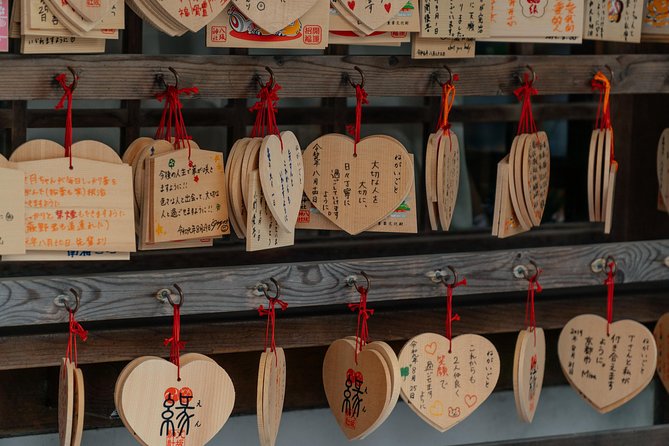
The tour then reaches Yasaka Shrine, explained with legend that its history may go back as far as about 150 years before the Heian era. Even when you can’t verify legends on the spot, that kind of detail gives you a sense of how long people have marked this space.
After Yasaka, you go along Shijo Dori again as part of the walking route, then to Nene-no-Michi. This street is linked to Kodaiji Temple, built in 1605 at the behest of Nene, for whom the street was later named. This is one of the values of this tour style. You aren’t only seeing a temple sign. You are learning the reason the street has a name.
The tour finishes back in the Yasaka Shrine area again, this time with a look at a picturesque five-story Buddhist pagoda temple that offers sweeping views from the top. The practical point: if you have the energy, choose to go for views because the time you spend climbing is rewarded with a bigger sense of where everything sits.
The itinerary also ends in a local cafe nearby, which is a smart way to close. It gives you a chance to digest what you just learned, ask one more follow-up question, and plan your evening walk without rushing off into transit chaos.
What you really learn on this tour: respect, context, and culture you can explain
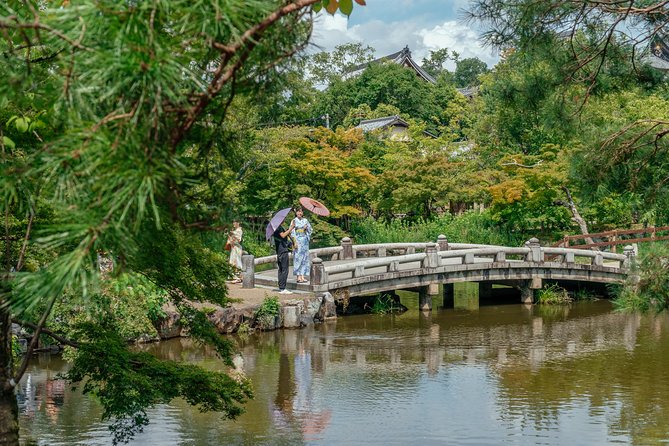
Kyoto’s geisha culture is often treated like a performance for tourists. This tour is different because it focuses on context: why places look the way they do, how religion and tradition overlap, and how theater history ties into everyday cultural identity.
The biggest theme in the feedback about this experience is a guide who teaches with respect. The tone is not just trivia. It’s cultural explanation with an emphasis on boundaries and courtesy in the area.
You can also expect strong conversational moments. In particular, guides are described as friendly and able to handle questions, including questions from kids. That tells me this tour is built to adjust, not just recite. If you like learning through dialogue, you’ll likely enjoy the flow.
Another theme: people come away with clearer understanding of Shinto and Buddhism differences. Even if you’ve read a bit before arriving, hearing it connected to the exact shrine and temple spaces helps your brain stick the concepts. You stop thinking in terms of categories, and start thinking in terms of how lived tradition shows up in street corners.
Finally, pace and navigation matter. Several accounts highlight that guides help you avoid unnecessary crowd time and keep the route enjoyable. For Gion, that’s not a luxury. It’s the difference between standing in the same photo line for 20 minutes and actually understanding what you are walking past.
Price and value: $135.45 for a private Kyoto mini-education
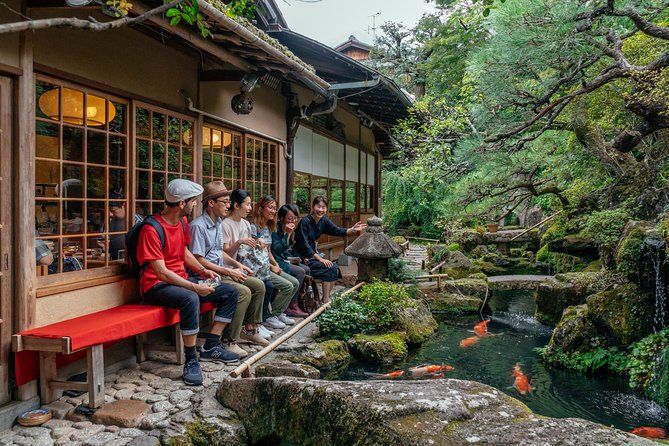
At $135.45 per person for about 2 hours 30 minutes, this isn’t a budget bargain. But you’re paying for two things that are hard to replicate alone.
First, it’s a private tour, exclusively for your party. That means the guide can shape the route and the pacing based on your questions and interests. In a place like Kyoto, where timing and walking comfort can make or break the afternoon, private attention has real value.
Second, the tour includes a local guide and lists free admission for all the stops. That helps offset cost compared with tours where you pay for entrances and then still feel rushed. You’re basically funding guidance and time, not ticket fees.
There’s also a practical booking pattern to consider. It’s typically booked about 47 days in advance on average. If you’re traveling in peak season or on a holiday, booking earlier is smart just to protect your preferred time.
Best fit: who this tour suits (and who might want a different plan)
This tour is a strong fit if:
- you want a private, guided neighborhood walk rather than a bus tour
- you care about geisha culture with respectful context, not just street scenery
- you have limited time and want a focused route through Gion and nearby temples
- you like asking questions as you go, and you want the guide to adjust for your group
It may not be the best fit if:
- you hate walking or stairs, since the route includes step climbs and neighborhood distances
- you want hotel pickup, since none is included
- you want long stays at a single big temple, since the format is multiple shorter stops
Should you book Treasures of Kyoto: Geishas and Traditions Private Tour?
I’d book it if you want a smart, respectful, time-friendly introduction to Kyoto’s east side. The tour structure works, because it ties together kabuki origins, Gion street culture, and the Shinto and Buddhist mix you feel in Kyoto’s atmosphere.
I’d especially lean yes if you like learning from people who have a warm, question-friendly teaching style and who know how to keep the walk pleasant. The repeated praise for guides steering away from trouble spots, handling families well, and making the culture feel understandable is a big indicator that this isn’t just a route, it’s a conversation with a local.
If you go, come with comfy shoes and a realistic expectation: it’s an afternoon circuit, not a deep temple marathon. With that mindset, you’ll leave with a clearer story of Kyoto, not just a stack of photos.
FAQ
How long is the Treasures of Kyoto private tour?
It lasts about 2 hours 30 minutes.
Is this tour private or part of a group?
It’s private. Only your group participates.
Where does the tour start and end?
The tour starts in Kawabatacho, Higashiyama Ward, Kyoto, and ends in Yasaka Kamimachi, Higashiyama Ward.
Are temple or attraction tickets included?
All the listed stops are marked as free admission in the tour information.
Does the tour include hotel pickup and drop-off?
No. Hotel pickup and drop-off are not included.
Are food and drinks included?
Food and beverages are not listed as included.
Is the tour accessible for people with limited mobility?
It’s marked for travelers with a moderate physical fitness level, and it includes walking and stairs.
Is the meeting point easy to reach by transit?
Yes, it is marked as near public transportation.
Can I bring a service animal?
Service animals are allowed.
What is the cancellation window for a refund?
Free cancellation is available, with a full refund if you cancel at least 24 hours before the experience starts.
Latest write-ups near Kyoto
- Kyoto Private Tour Full Day with Local Guide&Nara Option(PerGroup★ 5.0 · 20 reviews
- Sacred Pathways: Discover the Philosopher’s Path of Kyoto★ 4.9 · 20 reviews
- Hammer Pattering Experience of Ring★ 5.0 · 20 reviews
- Kyoto UNESCO World Heritage Site Private Tour with a Premium Van★ 5.0 · 20 reviews
- KYOTO: Private Tea Ceremony in Hidden Townhouse (Kid-Friendly)★ 5.0 · 20 reviews
- Sushi or Traditional Japanese Cuisine in a Kyoto Home with Emika★ 5.0 · 20 reviews
- The Kyoto VIP Experience!★ 5.0 · 20 reviews
- Kyoto Customized Private Tour: See Top Attractions in 1 Day★ 4.7 · 20 reviews
Kyoto Tours, compared.
Fushimi Inari, Kinkakuji, Bamboo Grove 1 Day Bus Tour
Read our review →
Tea Ceremony in a Traditional Tea House in Kiyomizu
Read our review →
Kyoto Geisha Walking Tour: Gion District & Hidden Gems
Read our review →
Gion Magical Night Walking Tour with Geisha Trivia
Read our review →