
Reviewed · GEISHA & GION TOURS
Kyoto: Gion Magical Night Walking Tour
Gion at night is where Kyoto feels like a real neighborhood, not a postcard. This walk focuses on the quiet hours in Higashiyama and helps you read what you see, from shrine rituals to the tiny etiquette details around geisha culture. I love the timing, and I love that the guide’s stories tie the streets to how people live and behave here.
The one catch is that the route includes slopes and stairs, so you will want sturdy shoes and a pace that feels comfortable for you.
Key things you will notice on this Gion night walk
- Small-group pacing so you can ask questions without getting steamrolled by the schedule
- Lantern-lit shrines and calmer streets after the day crowds move on
- Geisha etiquette lessons tied to what you are actually standing beside
- Photo stops built into the route so you can pause without falling behind
- Free shrine time at several key stops, meaning your money goes to the guide, not entry fees
Why Gion at night changes the way you see Kyoto
Most first-timers hit Gion during daylight, when the streets are full and every turn feels like a photo line. This tour is designed for the opposite mood, when the light softens and the area starts to feel more local. You will still see famous Gion streets, but you will experience them in a slower rhythm.
The best part for me is that the walk helps you stop treating Gion like a set and start treating it like a place with rules, meanings, and history. Even if you do not go deep on culture ahead of time, the guide turns the sights into something you can actually understand while you are looking at them.
And yes, it can be a lot of footsteps. This is a walking tour, and the route includes hills and steps, so plan on moving, not sightseeing from the curb.
More Evening Experiences in Kyoto
- Kyoto: Gion Magical Night Walking Tour with Geisha Trivia
★ 4.9 · 2,393 reviews - Night Walk in Gion: Kyoto’s Geisha District
★ 4.5 · 2,003 reviews - Kyoto Night Foodie Tour in Gion (9+ dishes + 6 Sake tastings)
★ 5.0 · 1,762 reviews
Timing, duration, and group size, what it means for you
You are out for about 1 hour 40 minutes, give or take. That length is long enough to hit multiple landmarks and still feel unhurried, especially because the tour runs after peak tourist hours.
Group size is the quiet superpower here. The description emphasizes a small group of up to eight, and the activity details list a maximum of 10 travelers. Either way, it is not a giant parade. You will have an easier time staying close to your guide, hearing the explanations, and getting questions answered.
The tour uses a mobile ticket, and you receive confirmation when you book. You will also want to come prepared for a normal Kyoto night walk. You are outdoors for most of the experience.
Meeting point and where the walk ends in Gion
You start at Minamiza Theater on the Higashiyama side of the city. The end point is at Gionmachi Kitagawa. That matters because you do not just wander in one direction and end up far from where you want to continue. When the walk finishes, you are still in the Gion area, set up to explore on your own at a reasonable pace.
Since the meeting area is near public transportation, you can reach it without a complicated transfer plan. If you want the night vibe, I recommend going a few minutes early so you are not stressed about finding the group once the lights come on.
Stop 1: Gionmachi Minamigawa, and what to do if you spot a Maiko or Geiko
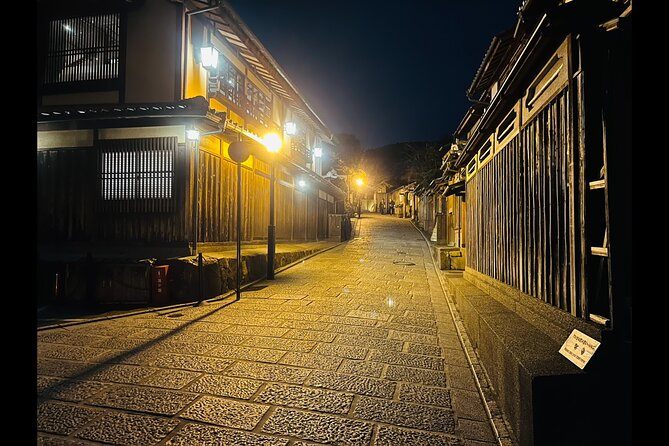
The tour opens on Gionmachi Minamigawa, one of Gion’s best-known streets. This is where you might catch sight of a Maiko or a Geiko, depending on what is happening that evening.
The practical tip here is simple: if you do see one, greet with a smile and say Konnichiwa. That is respectful and easy. It also keeps your behavior in line with what your guide will be teaching you about etiquette and visibility.
What I like about starting here is that you immediately anchor your evening in the place Gion is famous for. Then, as you move on, the guide can explain the meaning behind the buildings and ceremonies you see, not just the headlines.
A consideration: if you are the kind of person who wants every photo to be perfectly staged, this street can surprise you. People and schedules vary, and the whole point of the tour is to keep the feel natural, not disruptive.
More Walking Tours in Kyoto
- Kyoto Geisha Walking Tour: Gion District & Hidden Gems
★ 4.7 · 3,273 reviews - Kyoto: Gion Geisha District Walking Tour – Stories of Geisha
★ 4.7 · 2,187 reviews - Kyoto Gion Geisha District Walking Tour – The Stories of Geisha
★ 5.0 · 1,441 reviews - Nishiki Market Brunch Walking Tour (7 Tastings + Brunch)
★ 5.0 · 1,355 reviews
Stop 2: Yasui-Konpiragu, relationship blessings and shrine logic
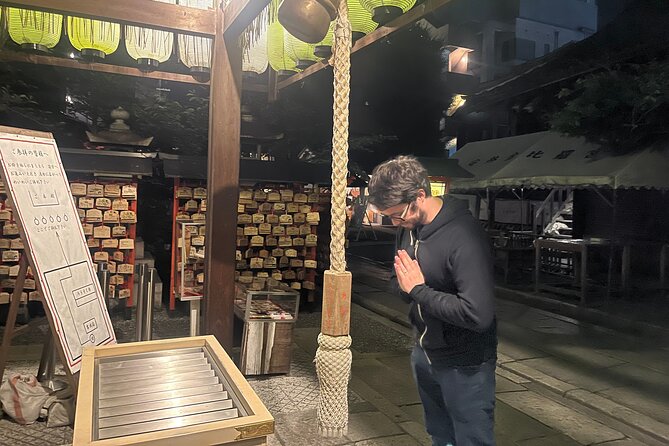
Next up is Yasui-Konpiragu, a shrine tied to the idea of improving relationships. The tour explains that it supports men and women meeting, and it is also connected with cutting off bad relationships. For couples, the message is that the bond can be stronger.
Even if you are not a frequent shrine visitor, this stop gives you a useful lens. In Japan, shrines are not just sightseeing. They are part of how people ask for help in everyday life, from good fortune to emotional well-being. The guide’s context makes the shrine elements feel less random when you are standing there.
This stop is short, but it is well placed. You go from Gion’s street atmosphere into a focused religious setting where the purpose is clear and the details matter.
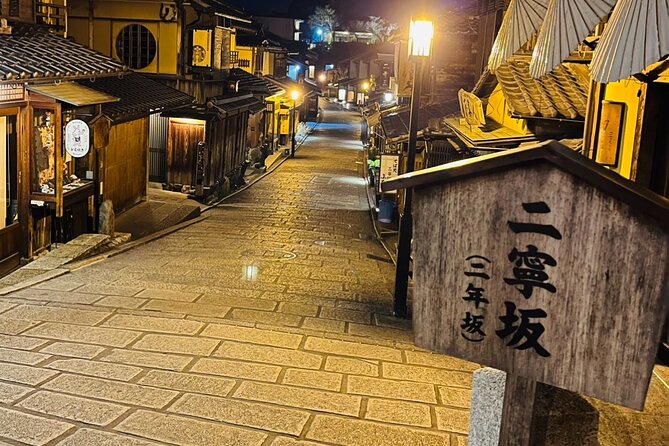
Stop 3: Sannenzaka and Ninenzaka, stepping into Kyoto’s older street style
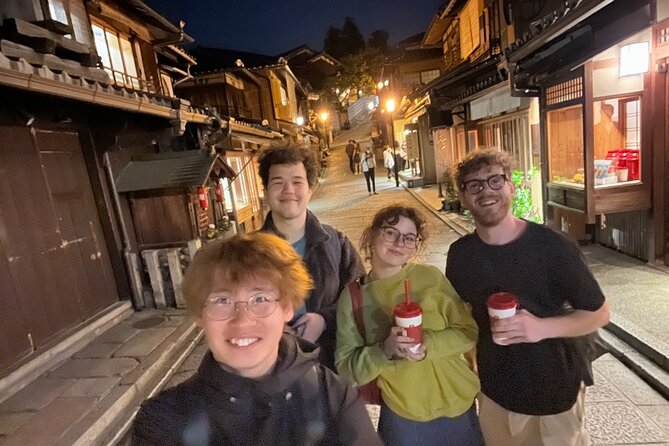
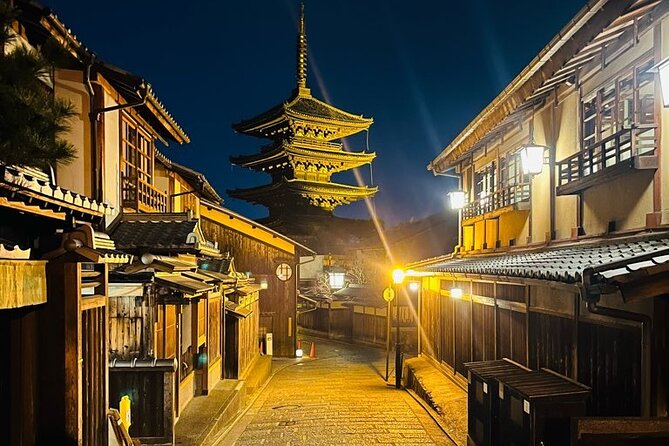
Then you head toward Sannenzaka and Ninenzaka, the traditional lanes that run near Kiyomizu-dera. These streets are known for their classic Kyoto townscape look, and the tour spotlights Yasaka-no-to (Yasaka Pagoda) as a particularly popular sight.
At night, the effect changes. Instead of feeling like a busy corridor, you often get calmer lighting and a slower pace to take in how the streets curve and how the buildings sit close to the road. The guide helps you see why these lanes are so important to Kyoto’s identity.
A drawback to consider here is practical: this area can involve uneven steps and changes in elevation. Even if the group moves smoothly, your legs will feel it if you are not used to walking and climbing in Japan.
The WWII Kannon statue, built in 1955, a reminder that faith is personal
You also visit a memorial place built in 1955 to pray for the repose of the souls of the victims of World War II. There is a very large Kannon statue.
This stop adds weight to the evening. Gion can feel like glamour, but Kyoto is also full of quiet remembrance. Standing near a massive Kannon in a setting dedicated to peace and mourning makes the night walk feel more grounded and human.
If you want a tour that only focuses on aesthetics, you might find this part a little serious. If you like understanding how spirituality and memory show up in everyday spaces, you will probably appreciate the balance.
The 400-year-old memorial garden with tea house and bamboo grove
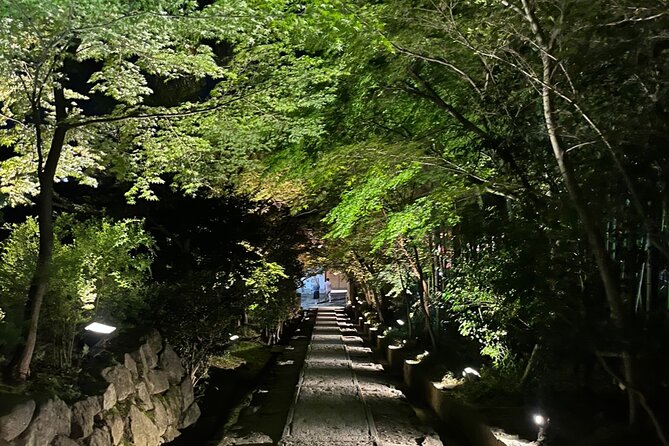
Another highlight is a place built about 400 years ago by the wife of a shogun to mourn her husband’s death. You can enjoy a garden setting plus a 400-year-old tea ceremony house and a bamboo grove.
This is the kind of stop that makes night in Kyoto feel different from daytime. Bamboo and traditional architecture under evening light create a calm mood fast. And the tea house angle matters because it connects the garden to social rituals, not just scenery.
A small practical note: gardens are not always flat. Even if the group is careful, you may want to wear shoes that grip well if the path is slick from evening mist or rain.
Yasaka Shrine, Gion-san blessings and the meaning of good luck
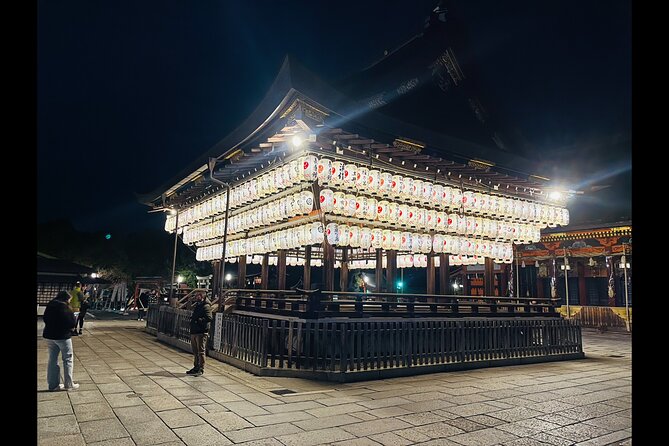
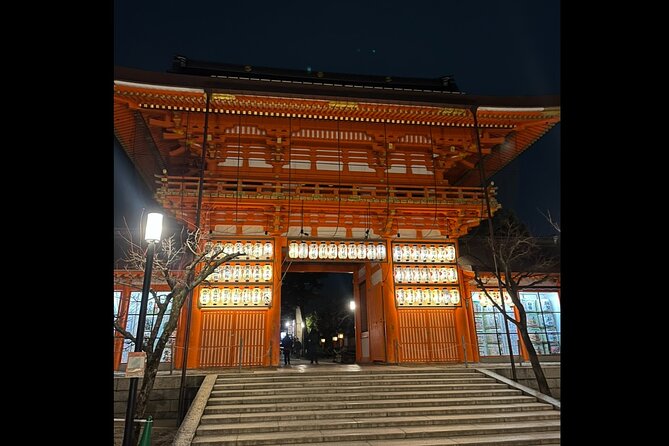
You finish at Yasaka Shrine, the head shrine for roughly 2,300 related shrines across Japan. It is known as Gion-san, and it is associated with blessings to ward off bad luck, bring good luck, and promote beauty.
This ending works because it ties back to everything you have learned about how people interact with sacred places. The shrine is big enough to feel impressive, but the guide’s explanations keep it from turning into generic sightseeing.
If you are hoping for a night atmosphere with lanterns and serene light, Yasaka Shrine is often where that feeling comes through. Even if you have seen photos before, the experience is more meaningful when someone gives you the logic behind the prayers.
Geisha history and etiquette, what your guide actually helps you do
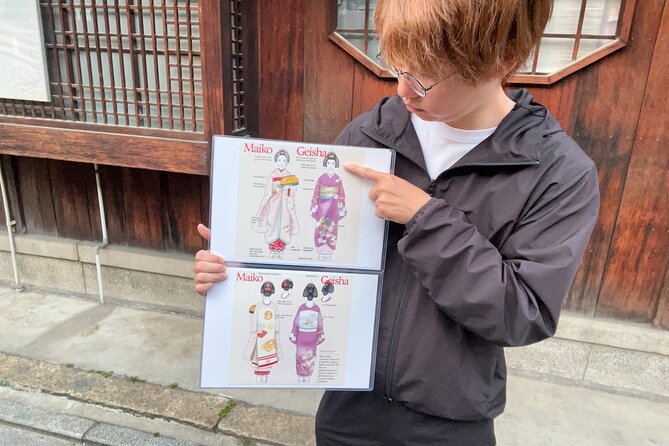
A big promise of this tour is teaching geisha culture and etiquette. This is where the guide matters most.
Names that show up as guides on the departures include Karen, Ricky, Sho, Hina, Pam, and others. Whoever you get, the structure of the teaching stays consistent: you learn about geisha history and Kyoto society, and you also learn how to behave when you are in the same spaces where geisha and maiko may appear.
The etiquette part is not just lecture style. It is timed to when you are standing in relevant spots, so it sticks. For example, you get the do and don’t feeling for street encounters at Gionmachi Minamigawa, then you move into shrines where the guide talks about how respect and intention matter in different contexts.
This is also why a small group helps. You are more likely to hear the details, and you can ask follow-up questions without waiting for a pause in the middle of a busy street.
Price and value: is $29.60 worth it?
At $29.60 per person, this is not a bargain in the “cheap” sense, but it is a good value if you want a guided interpretation of Gion without spending the whole night in a crowd. Here is how I judge it:
- You are paying for guide time and cultural context for about 1 hour 40 minutes.
- Several major stops have admission listed as free, so your money goes toward the experience, not tickets.
- The small-group cap gives you better interaction than the big-group alternatives.
If your day in Kyoto already included temples with audio guides, this tour adds something different: it helps you understand the social world around Gion, not just the architecture. If you only care about snapping photos and you already know the basics of shrine etiquette, you might feel the value is lower. But if you want your night walk to make sense, this price is reasonable.
What to bring and how to set yourself up for an easy night
Good shoes are not optional here. The tour includes slopes and stairs, and you will walk enough that comfort matters more than style.
Other practical ideas:
- Bring a light layer for the evening, since night air can feel cooler.
- If rain shows up, go in with flexibility. The experience requires good weather, and if it is canceled because of poor weather, you should expect a different date or a full refund.
- If you want photos, plan to pause often. The route is paced with stops that give you time to take pictures.
Service animals are allowed, and the meeting point is near public transportation, so logistics are generally straightforward.
Should you book Kyoto: Gion Magical Night Walking Tour?
I think this is a strong pick if you want Gion after dark but hate feeling swallowed by crowds. The combination of small-group pacing, guided explanations tied to real places, and the calm night mood makes it especially satisfying.
Book it if:
- you want a fast but meaningful cultural orientation to Gion and geisha etiquette
- you prefer smaller groups and a guided route you can follow confidently
- you enjoy lantern-lit shrines and traditional streets at night
Skip it (or be cautious) if:
- you dislike walking on hills or stairs, because the route is not flat
- you are looking for a purely entertainment-style stroll with minimal learning
If you are weighing it against self-guided wandering, I would choose this tour when you want shortcuts to understanding. The fee buys you the parts that are hard to learn on your own while you are trying to enjoy the night.
FAQ
How long is the Kyoto Gion Magical Night Walking Tour?
It runs for about 1 hour 40 minutes (approx.).
What is the group size?
It is a small-group experience, with a maximum of 10 travelers noted. The tour is also described as a smaller group limited to eight.
Where does the tour start and end?
You start at Minamiza Theater in Kyoto. The tour ends at Gionmachi Kitagawa in Kyoto.
Is there an admission fee for the stops?
Several key stops list admission as free. The main cost of the experience is the guided walk itself.
What should I wear or bring?
Wear comfortable shoes because the route includes slopes and stairs. Bring a light rain plan if weather looks questionable.
What if the weather is bad?
The experience requires good weather. If it is canceled due to poor weather, you will be offered a different date or a full refund.
Can I cancel for a refund?
Yes. You can cancel up to 24 hours in advance for a full refund. If you cancel less than 24 hours before the experience starts, the amount paid is not refunded.
More Geisha Experiences in Kyoto
- Best of Kyoto: Gion, Geisha, Pagodas & Cobblestones
★ 4.9 · 2,058 reviews - Kyoto Gion: 2-Hour Geisha Culture & History Walking Tour
★ 5.0 · 1,186 reviews - Kyoto : Chopsticks Making Workshop in Gion with Engraving Option
★ 5.0 · 958 reviews - Kyoto Gion Night Walk & Geisha District Guided Tour
★ 5.0 · 786 reviews
Latest write-ups near Kyoto
- Kyoto: Nishiki Market Tour with a Local Foodie & Tastings★ 4.5 · 67 reviews
- Kyoto Kimono Rental mimosa |Kimono/Yukata Rental Couple Plan★ 4.8 · 67 reviews
- Kyoto: Traditional Kimono Fabric Handicrafts Workshop★ 5.0 · 67 reviews
- Kyoto Tea Ceremony and Samurai Photo Session★ 5.0 · 70 reviews
- Kyoto: Replica food making experience★ 4.8 · 70 reviews
- Kyoto: Kinkakuji, Golden Pavilion Guided Tour★ 4.7 · 71 reviews
- Private departure transfer from Kyoto city to Kansai International airport★ 5.0 · 72 reviews
- Uji: Green Tea Tour with Byodoin and Koshoji Temple Visits★ 4.8 · 72 reviews
Geisha & Gion Tours, compared.
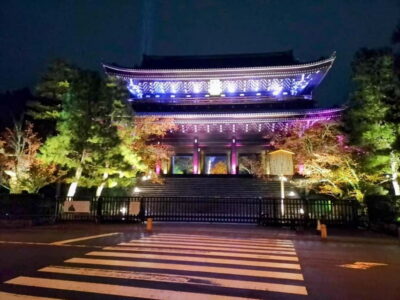
Kyoto Geisha Walking Tour: Gion District & Hidden Gems
Read our review →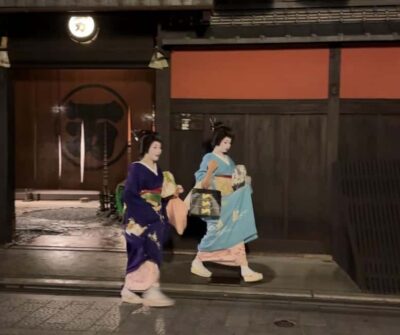
Gion Magical Night Walking Tour with Geisha Trivia
Read our review →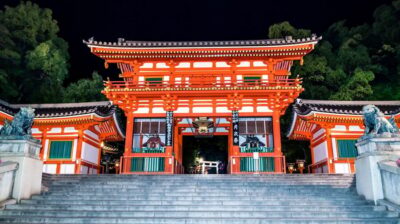
Gion Geisha District Walking Tour – Stories of Geisha
Read our review →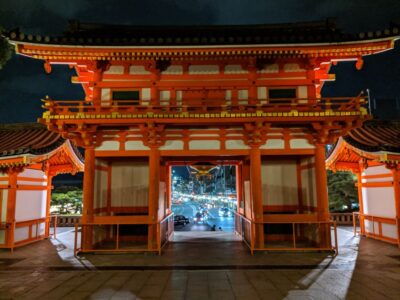
Best of Kyoto: Gion, Geisha, Pagodas & Cobblestones
Read our review →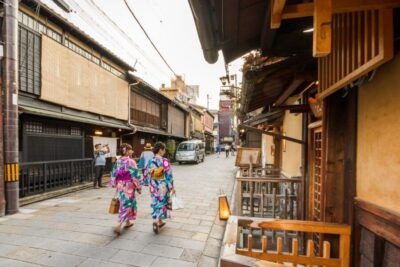

Kyoto Night Foodie Tour in Gion (9+ dishes + 6 Sake tastings)
Read our review →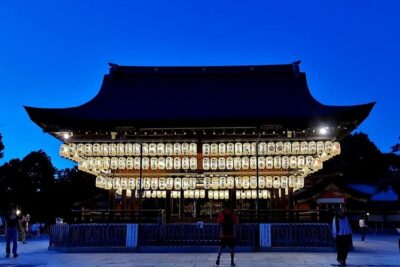
Kyoto Gion Geisha District Walking Tour – The Stories of Geisha
Read our review →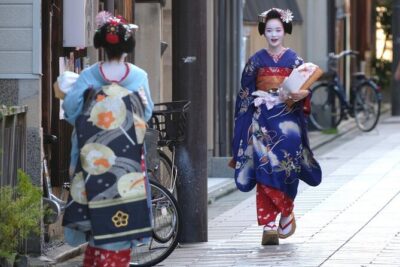
Kyoto Gion: 2-Hour Geisha Culture & History Walking Tour
Read our review →Browse the lists this tour appears in