
Reviewed · ARASHIYAMA & BAMBOO TOURS
Kyoto Arashiyama & Sagano Bamboo Private Tour with Government-Licensed Guide
Arashiyama and Sagano are Kyoto in its most scenic mood, bamboo stalks swaying by the river, then quiet hillside temples with views. I like the way this tour comes with a private licensed guide who explains what you are seeing as you go, and I also love the focus on Arashiyama bamboo and landmark temples instead of rushing past everything.
One thing to plan for: you will be walking, and the most famous spots can get crowded fast. With heat, humidity, or rain, the day can feel like a workout, so build in water breaks and comfortable shoes and lean on your guide for crowd-timing help.
Key Points You’ll Actually Feel During the Day
- Private guide, direct answers: You can stop and ask questions any time, not just listen to a group briefing.
- Pick 3 to 4 sites: The long list of options gives you flexibility, without forcing you to do everything.
- Crowd-smart routing: Guides often aim for calmer paths and less obvious temple visits when crowds spike.
- Imperial villa rules that shape the experience: Shugakuin and Katsura have different viewing styles, and Katsura’s photo and viewing restrictions change your pace.
- Temple variety beyond the bamboo: Moss gardens, statue-filled grounds, and river-shrine legend are part of the mix.
- Context for Kyoto’s culture: Expect commentary on history and Japanese culture while you walk between scenes.
Why Arashiyama and Sagano Still Feel Special
Arashiyama is the “big name” Kyoto district, but it is big for a reason. Togetsukyo Bridge gives you instant photo drama with the river and mountains behind it, and the bamboo groves around Bamboo Forest Street are the kind of place that makes your brain go quiet. Then Sagano adds depth, with temples that feel more like local retreats than stage sets.
The best part of this tour style is that it does not rely on you to plan. You show up, your guide builds a route around your interests, and you get an explanation trail as you move from stop to stop. In practice, that means you understand why Tenryu-ji is famous, what you are looking for at moss and statue temples, and how the area’s history connects across centuries.
More of Arashiyama:
- Kyoto: Fushimi Inari, Kinkakuji, Bamboo Grove 1 Day Bus Tour
★ 4.8 · 4,316 reviews - Osaka/Kyoto:Kinkakuji,Arashiyama,FushimiInariShrine,NaraPark
★ 4.1 · 1,596 reviews - Kyoto/Osaka: Nara, Fushimi Inari Taisha, Arashiyama Bus Tour
★ 4.7 · 1,275 reviews
Price and What $157.82 Buys You (Value Check)
At $157.82 per person for a 6-hour private tour, you are paying for three things: (1) a licensed English-speaking guide, (2) a custom walking plan built from the listed sites, and (3) fewer hassles than doing it on your own in a crowded zone.
This can be good value if you care about context. The guide commentary helps turn “pretty scenery” into “I get what I’m seeing.” It also matters that it is a private group. You can move at your pace, add small detours for views or quiet corners, and ask follow-up questions when something catches your attention.
The price is easier to swallow if you also think about costs you might pay elsewhere. Entrance fees, lunch, and transport are not included for you, so you should still budget for those items. But you are not paying for a private vehicle, and the tour is designed around walking and site-hopping rather than a chauffeured drive.
Your Private Guide Shapes Everything, From Pace to Crowd Avoidance
This is a private tour, so you are not stuck with the speed of a larger group. That matters a lot in Arashiyama. On hot or rainy days, the ability to slow down, rest, and regroup can make the difference between enjoying the scenery and rushing through it.
From guide approaches that show up in the feedback, I would expect a few practical wins:
- Crowd avoidance tactics: a guide may steer you toward calmer paths and less obvious temple stops when Arashiyama bottlenecks.
- Flexible time for snacks or breaks: some routes include time buffers so you are not eating while walking.
- Helpful local tips: food recommendations and where to go to avoid long lines can save your energy for the sights.
If you want a personal example of the kind of extras to look for, the guides referenced in feedback include people like Ken (who provided a 1-page history info sheet) and Kazz (who shared concrete local food guidance, with advice to avoid lunch queues). You might not get the exact same handout or restaurant pick, but it tells you what to expect from a strong guide: useful, practical add-ons, not just reciting dates.
How the Tour’s “3 to 4 Sites” Choice Works
Even though the site list is long, the tour is described as a customizable walking route where you typically select 3 to 4 sites from the options. That is a smart design. It prevents the common problem of “half-day tour, full-day walking.”
So instead of thinking you must hit every famous name, think like this:
- Choose one anchor in Arashiyama (bamboo groves, Tenryu-ji, Okochi Sanso, or the bridge area).
- Choose one villa or cultural structure if that interests you (Shugakuin Rikyū or Katsura Rikyū).
- Choose one quieter temple style (moss garden, hillside views, or statue grounds).
- Optionally add one out-of-the-way nature or shrine stop if time and weather cooperate (Kurama, Kibune, or another mountain-side area).
This approach gives you depth without turning the day into a sprint.
A change of pace from Kyoto:
- PERFECT KYOTO 1-Day Bus Tour
★ 5.0 · 13,518 reviews - Kyoto: Tea Ceremony in a Traditional Tea House in Kiyomizu
★ 4.9 · 3,519 reviews - Kyoto Geisha Walking Tour: Gion District & Hidden Gems
★ 4.7 · 3,273 reviews - Kyoto: Tea Ceremony Ju-An at Jotokuji Temple
★ 4.9 · 3,207 reviews
Arashiyama Core: Togetsukyo Bridge, Bamboo Forest Street, and Tenryu-ji
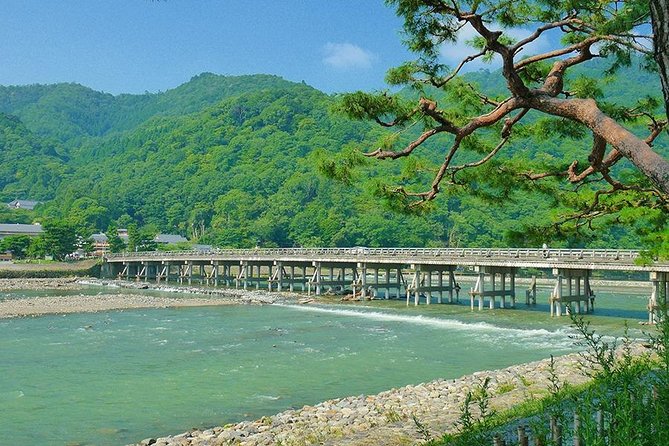
Start with Arashiyama and the central landmark vibe. Togetsukyo Bridge is the big icon, originally tied to the Heian period and last reconstructed in the 1930s. The setting is what gets you: forested mountains in the background and a riverside park with cherry trees nearby. Admission here is free, which makes it a low-risk stop even if the weather forces changes.
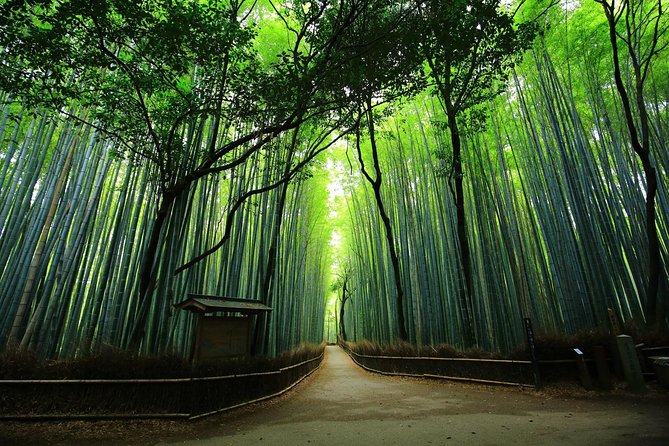
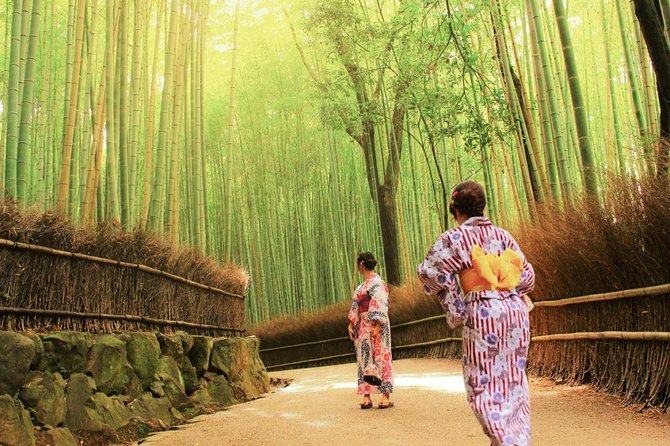
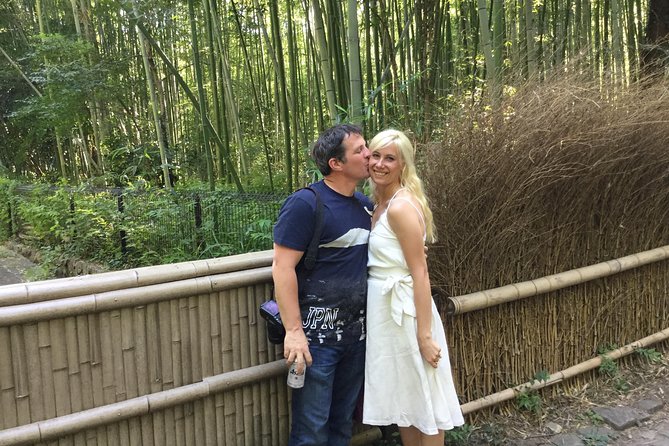
Then comes Bamboo Forest Street. This is where the guide value really shows, because the bamboo grove experience changes with conditions. You are more likely to get the swaying “bamboo effect” when there is a light wind, and paths through the grove are made for walking slowly rather than snapping photos and moving on. The bamboo has also been used for products for centuries, from baskets to cups and mats, so your guide’s historical context can add meaning to the scenery.
Tenryu-ji is the other anchor many people want. It is one of Kyoto’s major Zen temples, founded in 1339, and it is a UNESCO World Heritage Site. Expect temple buildings plus gardens with walking paths. This is also a good “temperature buffer” for your day. Gardens and paths often let you slow down and reset, especially when bamboo crowds feel overwhelming.
Potential drawback: Arashiyama can be crowded, especially during cherry blossom or fall color seasons. Even with crowd-timing, you should be prepared for congestion near the bridge and bamboo. If you hate crowds, you will still enjoy the day more if you use your guide’s routing choices and are willing to trade a few iconic moments for quieter temple paths.
Villa Time in Kyoto: Shugakuin Rikyū vs Katsura Rikyū Rules
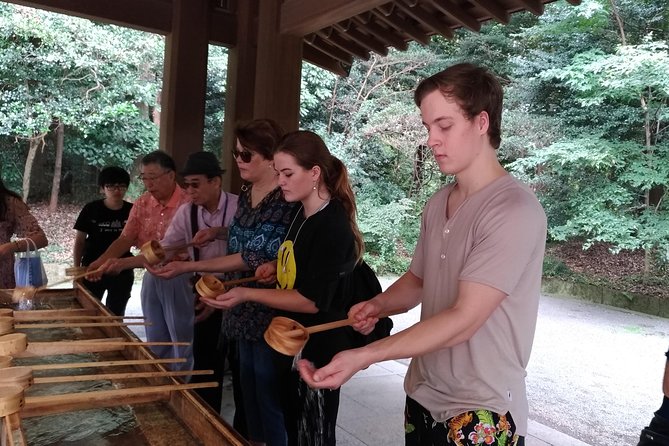
If you want something that feels more refined and garden-focused, Shugakuin Imperial Villa and Katsura Imperial Villa are standout options. They also help your day feel less like just “walk, take photos, walk again.”
Shugakuin Imperial Villa (17th century) was built by Emperor Gomizuno and is managed by the Imperial Household Agency. It has multiple areas, including Upper, Middle, and Lower Villa sections, each with traditional imperial-style buildings and gardens. This stop is often shorter on the clock, but it can feel rewarding because the viewing areas are less chaotic than the bamboo street bottlenecks.
Katsura Imperial Villa is a different beast. It is completed in its current form in 1645 as a residence tied to the Katsura family, who are connected to Japan’s Imperial family. The key practical point: you cannot just walk through freely. You must join a tour that follows a circular walking trail around the pond. Palace buildings can be viewed only from the outside, and photography is allowed only from designated spots. English tours are available.
That restriction changes the experience. You are not “free-roaming,” so you should think of it as a structured garden walk where you learn what to notice, then you watch how the design works from the right viewpoints.
What to watch for: Because entry here depends on tour rules, it can be harder to adjust last-minute if your weather is bad or your group’s energy drops. Still, the upside is that the villa format protects the atmosphere from the chaos of outside crowds.
Sagano Temples That Feel Quieter, Like You Found a Kyoto Secret
Sagano is a great zone for slow travel. Instead of trying to out-muscle the crowds, you shift your day toward temples with moss, statues, and hillside views.
Daikaku-ji: Imperial Calm with Big Historical Stories
Daikaku-ji is a large Shingon Buddhist temple in the northern part of Sagano. It began as an emperor’s detached palace in the early 800s, and later became a temple. Historically, it hosted important events, including peace talks that reunited the Northern and Southern Imperial Courts after decades of civil war. On a practical level, what you will notice is the scale: major buildings plus a large pond and pagoda.
A guide here is useful because it helps you connect the emotional tone of the grounds with the historical weight of what happened there.
Jojakko-ji, Nisonin, and Gioji: Moss, Maples, and Viewpoints
If you like temples that reward slow steps, these are the right picks:
- Jojakko-ji: founded in 1596, with small buildings and gates, plus maple trees and moss beside stairs and paths. There are also spots where you can look out over Kyoto.
- Nisonin: a hillside Tendai temple founded in the mid-9th century, with views from the upper grounds and an approach shaped by overhanging trees.
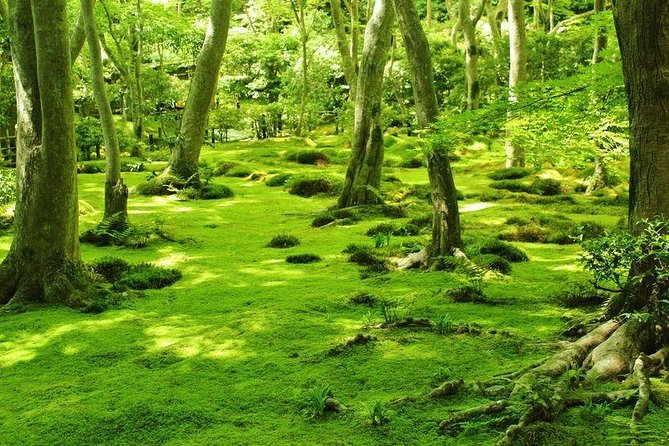
- Gioji: famous for its moss garden with tall maples, plus thatched-roof features and a small main hall with a round window that frames the garden world.
Why you’ll care: these stops turn the day into something other than “famous landmark chase.” You are trading crowds for calm, and the guide commentary helps you understand what each garden and layout is trying to achieve.
Okochi Sanso Garden: Actor’s Villa, Quiet Garden Views
Okochi Sanso Garden is the former villa of popular actor Okochi Denjiro. You have multiple gardens and buildings, including tea houses and gates, but you view the buildings from the outside only. If you are the type who likes design and small details, this stop can feel surprisingly personal, because the garden layout invites pauses.
Nenbutsu-ji Statues and Kibune River: The Kyoto Side You Don’t Get From Photos
This part of the day is for people who enjoy Kyoto as a lived-in place rather than just a postcard.
Adashino Nenbutsu-ji and Otagi Nenbutsu-ji: Stone Statues with Different Faces
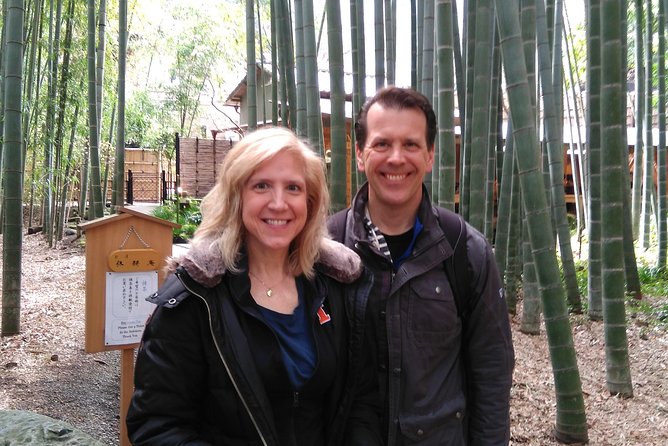
Adashino Nenbutsu-ji is known for hundreds of stone statues. The story is tied to Kobo Daishi placing statues for the souls of the dead. Today the grounds are covered in stone figures, and there is also a short path that goes through a bamboo forest behind the temple.
Otagi Nenbutsu-ji is about a 10-minute walk north of Adashino. It is famous for 1200 stone statues of rakan, each with a different facial expression. One practical detail from the history: these statues were created relatively recently, in the 1980s and early 1990s.
If you have ever wished bamboo photos felt less “same same,” this is your fix. Statues force your eyes to slow down and look closely, and your guide can explain what you are seeing without making it feel like homework.
Kurama-dera and Kibune River: Mountain Atmosphere and Water Shrine Legend
Kurama-dera is in a rural town in the northern mountains of Kyoto City, less than one hour from the city center. It is known for the temple and the nearby hot spring culture around Kurama Onsen. Daytrip bath options are listed, so if you want to turn your day into a reset, you might find that this area is a natural match.
Kibune is another mountain valley stop, built around Kifune Shrine. Legend says a goddess traveled by boat from Osaka to this river area. Kifune Shrine is dedicated to the god of water and rain, and you can get omikuji fortune slips that reveal messages when you dip the paper into water. Okunomiya, the inner sanctum, lies about one kilometer further up the valley and includes a boat stone rock tied to the legend.
Potential drawback: these are more time and transit sensitive. If the weather turns, or if your group wants to spend extra time at Arashiyama, you might need to trim a far-away stop. That is exactly where having a private guide pays off, because your route can flex.
What to Budget For: Entrance Fees, Lunch, and Transportation
Not everything is included. Entrance tickets are not included for you, and lunch is for yourself. Transportation fees are not included for you or your guide, and there is no private vehicle included.
This matters because the tour can include sites like villas or temple gardens where admission is likely. You should plan a realistic “on top” budget for:
- Entrance fees for selected sights
- Lunch or snacks you choose to buy
- Public transit rides between distant points if your site selections are spread out
Also, keep in mind a subtle detail: guide entry fees are only covered for sights listed under what to expect. So if you add a random extra stop not in your selected list, you may end up paying for that separately. The fix is simple: tell your guide what you want early, and choose from the listed options.
Weather and Season Tips That Make the Bamboo Experience Better
Bamboo and outdoor temples are not weather-proof. One lesson that shows up in real experiences is that it can be very hot and humid, and some routes still keep you moving through bamboo and hills. The practical advice is to treat this like an outdoor day first, sightseeing day second.
Here is what I would do to keep it fun:
- Wear comfortable shoes with grip, especially if the path gets slippery.
- Bring water and plan for snack breaks, even if you think you will be fine.
- In summer, choose shaded temple time strategically and let your guide adjust the order if needed.
It can also be a rainy-day win if your guide leans into covered temple spaces and quieter hillside stops. The key is that your route must be flexible, not locked into one photo lane.
Who This Tour Fits Best
This private tour style fits best if you:
- Want a guided walking day with history context, not just photos
- Like choosing fewer sites and spending time actually looking
- Hate feeling dragged through a fixed group schedule
- Prefer temples and gardens, including moss, statue grounds, and imperial-style layouts
It may be less ideal if you:
- Want minimal walking
- Only care about one or two iconic landmarks and nothing else
- Are trying to squeeze in a lot of far-flung stops without flexibility
Good news: the tour is described as suitable for most travelers, and service animals are allowed.
Should You Book This Kyoto Arashiyama and Sagano Tour?
If you want an Arashiyama day that feels guided, flexible, and more interesting than following a crowd, I would book it. The biggest reasons are practical: the guide helps with pace, you can customize your 3 to 4 stops, and you get culture context while you walk through bamboo, bridges, imperial gardens, and temple grounds.
Before you choose, decide what kind of Kyoto you want that day. If it is bamboo and landmark temples, pick your Arashiyama anchors. If you want calm and texture, lean into Jojakko-ji, Nisonin, Gioji, and the Nenbutsu-ji statue sites. And if you want a more structured garden experience, consider including Katsura or Shugakuin.
Just remember the trade-off: you are paying for guidance and smart routing, but entrance fees, lunch, and transit are still on your budget. If that is fine, this is a strong way to see the Arashiyama and Sagano side of Kyoto with less stress and more meaning.
FAQ
How long is the Kyoto Arashiyama and Sagano Bamboo private tour?
The tour is about 6 hours.
What is included in the price?
Included are a licensed local English speaking guide, a customizable walking tour of 3-4 sites from the available list, and a meet-up in Kyoto. Pickup and drop-off are on foot, and you also get a mobile ticket.
Are entrance fees included?
No. Entrance tickets are not included for you.
Is lunch included?
No. Lunch is not included.
Is transportation included?
No. Transportation fees are not included, and there is no private vehicle included.
Can I cancel for a full refund?
Yes. You can cancel up to 24 hours in advance for a full refund. If you cancel less than 24 hours before the experience starts, you do not get a refund.
Latest write-ups near Kyoto
- Kyoto Private Tour Full Day with Local Guide&Nara Option(PerGroup★ 5.0 · 20 reviews
- Sacred Pathways: Discover the Philosopher’s Path of Kyoto★ 4.9 · 20 reviews
- Hammer Pattering Experience of Ring★ 5.0 · 20 reviews
- Kyoto UNESCO World Heritage Site Private Tour with a Premium Van★ 5.0 · 20 reviews
- KYOTO: Private Tea Ceremony in Hidden Townhouse (Kid-Friendly)★ 5.0 · 20 reviews
- Sushi or Traditional Japanese Cuisine in a Kyoto Home with Emika★ 5.0 · 20 reviews
- Kyoto Customized Private Tour: See Top Attractions in 1 Day★ 4.7 · 20 reviews
- The Kyoto VIP Experience!★ 5.0 · 20 reviews
Arashiyama & Bamboo Tours, compared.
Fushimi Inari, Kinkakuji, Bamboo Grove 1 Day Bus Tour
Read our review →
Osaka/Kyoto:Kinkakuji,Arashiyama,FushimiInariShrine,NaraPark
Read our review →
Kyoto/Osaka: Nara, Fushimi Inari Taisha, Arashiyama Bus Tour
Read our review →
Kyoto Arashiyama Walking Tour: Bamboo, Monkeys, Gardens & Secrets
Read our review →
Arashiyama Bamboo, Temple, Monkeys, or Secret Sake Brewery
Read our review →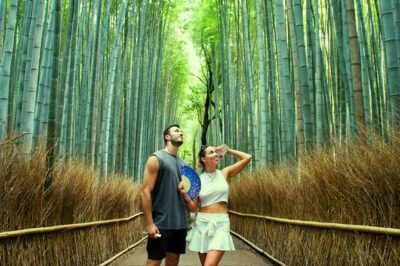
Arashiyama Bamboo Forest, Monkeys, Matcha & Temple Tour
Read our review →
Osaka/Kyoto: Arashiyama, Nara & Fushimi Inari Shrine w/Lunch
Read our review →
Nijo, Kinkaku-ji, Arashiyama, Kiyomizu & Fushimi Inari
Read our review →Browse the lists this tour appears in