
Reviewed · HISTORICAL TOURS
Taste Local Life: Nagasaki’s Historical Street Walking Tour
Nagasaki’s historical streets have a way of feeling personal, not postcard-perfect. This half-day walk threads together temples, old shopping lanes, and a classic Nagasaki bridge, so you get the city’s “daily life” vibe, not just the big sights. I particularly like the small group size and the way the route is built around Teramachi-dori and Marunouchi Naka-dori.
Two things I really like: the tour uses your guide to connect the dots between Chinese-influenced temple architecture and the surrounding town streets, and it ends at Megane-bashi (Spectacles Bridge) plus an arcade so you can keep exploring on your own. One consideration: it is still a walking tour, so if your legs are having an off day, you’ll want comfortable shoes and a slower pace during breaks.
Key highlights at a glance
- Up to 8 people, so you actually hear your guide and can ask questions without shouting across a crowd
- Stops are built around real town spaces, Sofukuji, Kofukuji, Motenashiya, Megane-bashi, and Hamamachi Arcade
- Chinese-style temple details, including Sofukuji’s Nanchuan architectural style of China dating to 1629
- Spectacles Bridge facts that change how you look at it, including its 1634 age and place near the Kofukuji entrance
- A useful “map and orientation” stop at Motenashiya, near the bridge, before you go wander
A Half-Day Walk That Feels Like a Local Route
This tour is timed like a good morning plan: you start at 9:00 am, you get a guided loop of major historical points, and you’re back where you began so you can continue at your own speed. That matters because Nagasaki is best when you give it time to sink in, not when you rush through it on a bus schedule.
The theme is right there in the name: Taste Local Life. You’re not just looking at temples from a distance. You’re walking past the streets people use, then pausing for the kind of details you would miss if you were only following your own reading of a guidebook.
You also get a small-group experience rather than a mass tour. In the reviews, guides like Yuko, Tomomi, and Masaaki were praised for energy, English ability, and keeping things on time. That combination is what turns a “list of sights” into something you can actually enjoy.
Starting at Hotel New Nagasaki, Then Getting Oriented Fast
Your meeting point is Hotel New Nagasaki, 14-5 Daikokumachi, Nagasaki, 850-0057, Japan, and the tour ends back at the meeting point. Starting in one place and returning there is a practical win. You do not have to play transportation chess later, and you can easily pick up food, shopping, or a museum visit after.
The tour is designed to meet you where you can connect easily, and the route uses Nagasaki’s public transit. There is a tram stop built in early, and the tram leg is short but purposeful. It is a nice “warm-up” to understand how the city’s transport fits the old streets.
One more practical note: it’s a moderate walking plan. The tour specifically asks for moderate physical fitness and shoes that are easy to walk in. That’s not a vague suggestion. You’ll be on your feet for hours, so bring footwear you can trust.
More Historical Tours in Nagasaki:
- Nagasaki Private Historical Tour with Licensed Guide
★ 5.0 · 13 reviews - World Heritage Shirakawa-go and Experience Tours from Kanazawa
★ 5.0 · 4,049 reviews - Tokyo: Imperial Palace and Shogun Historical Walking Tour
★ 5.0 · 2,251 reviews
The Electric Tramway Head Office Stop, a Quick Win for Getting Around
The morning begins with a stop at the Nagasaki Electric Tramway Head Office. You’ll spend about 10 minutes there, and the tram segment includes an admission ticket. Even if you already know how to use public transit, this helps you understand the city’s rhythm early.
Nagasaki’s signs are described as clear, and the tram is an easy way to travel in the city. That’s exactly what you want from a first transport lesson, because it reduces stress. Once you understand the simple logic of the lines, you’ll feel freer to wander later without second-guessing directions.
Also, this stop sets the tone: you’re not moving to the next landmark in a hurry. You’re getting to the temple area with local transportation, which makes the rest of the morning feel less like a museum tour and more like a real stroll.
Sofukuji Temple: Chinese-Style Architecture With Real Dates
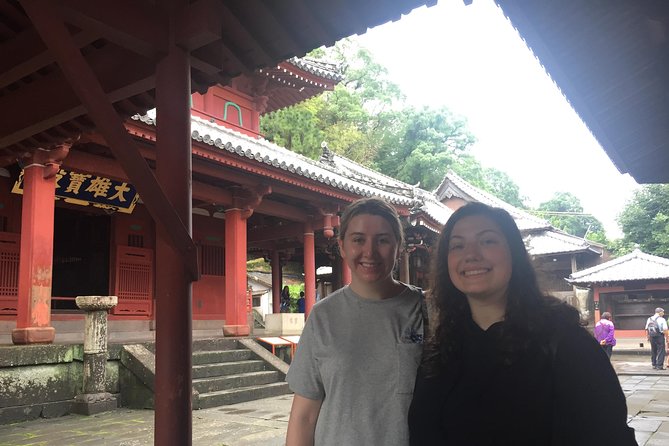
Sofukuji is where the tour turns from “streets and signage” into “history you can see.” You’ll visit for about 35 minutes, and admission is included.
Key details you’ll want to notice here:
- Sofukuji is a Rinzai temple built in the Nanchuan architectural style of China in 1629.
- The Daimon Gate and the Daeleon Hall (Main Hall) are designated as National Important Cultural Properties of National Treasures.
That blend of Japanese temple tradition with Chinese architectural influence is the kind of context a guide is great at explaining clearly. In practice, it changes how you look at what you’re seeing. Instead of thinking, “Nice temple,” you start noticing why certain forms exist and what they signal about cultural connections.
The names of guides came up in the feedback, and Tomomi and Yuki were praised for being friendly and skilled at explaining temple and shrine differences. If you’re the type who likes meaning, not just photos, this stop is a strong reason to book.
Kofukuji Temple and Teramachi-dori: When Temples Meet Old Shopping Streets
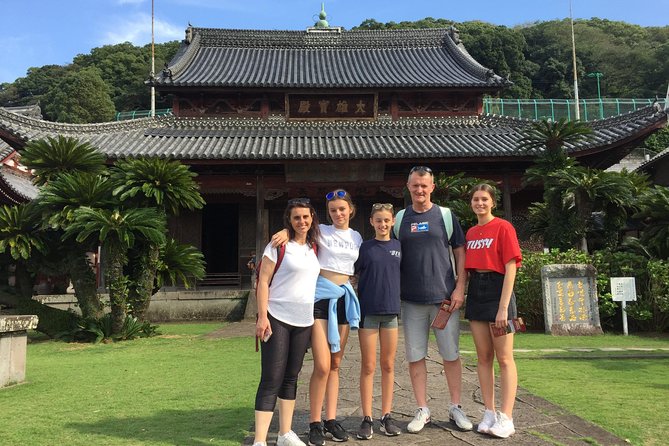
Kofukuji is next, with a longer visit of about 50 minutes. Admission is included here too.
You’ll get standout facts that are easy to remember:
- Kofukuji is described as the birthplace of Japanese kidney beans.
- It’s also tied to Mincho kanji characters and Kofukuji dining tables.
Those kinds of details are unusual in the best way. They give the temple a connection to daily life, not only religion. Even if you’re not into calligraphy or food history, the point lands: Nagasaki’s temple influence shows up in practical things people used.
After Kofukuji, you’ll walk through an older shopping street with long roots in the city’s history. The tour is centered around Teramachi-dori (Temple Street) and Marunouchi Naka-dori shopping areas, so you’re moving between sacred spaces and everyday storefronts, which is where the city’s character lives.
One small drawback to keep in mind: temple yards and shopping lanes can be active, especially near popular photo points. Wear shoes you can handle for unplanned detours, and don’t plan to sprint. The tour is paced to include explanations, not just sightseeing.
More Walking Tours in Nagasaki:
- Nagasaki: Private Walking Tour with a Local
★ 4.7 · 79 reviews - Nagasaki Street Food Adventure: Private Walking Tour with a Local
★ 5.0 · 26 reviews - Kyoto Geisha Walking Tour: Gion District & Hidden Gems
★ 4.7 · 3,273 reviews - Tokyo Tsukiji Fish Market Food and Culture Walking Tour
★ 5.0 · 3,184 reviews
Motenashiya Near Megane-bashi: Use It Like a Local Planner
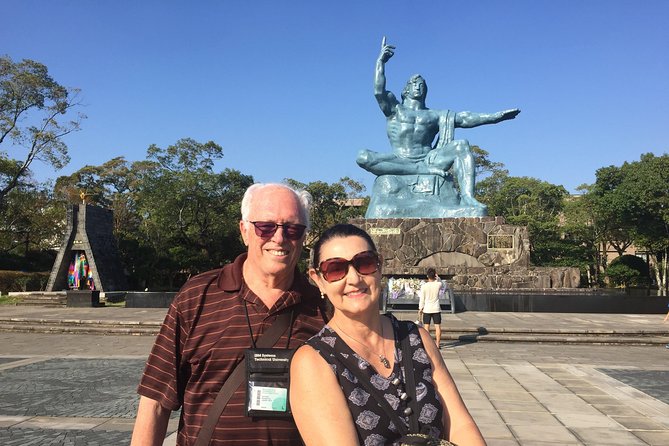
About 15 minutes is set aside for Motenashiya, a tourist information center and souvenir shop operated by the landlady. It’s near Megane Bridge, and it’s a free stop.
This is one of my favorite “small” parts of the tour because it’s practical. Motenashiya offers maps and materials for touring Nagasaki, and you can use that guidance immediately after the tour ends. If you want to keep going instead of going blank after your final temple photo, this is the moment to grab your next plan.
You’ll also be near Megane-bashi soon, so this stop works as a mental setup. Think of it as your Nagasaki cheat sheet in the middle of your walk.
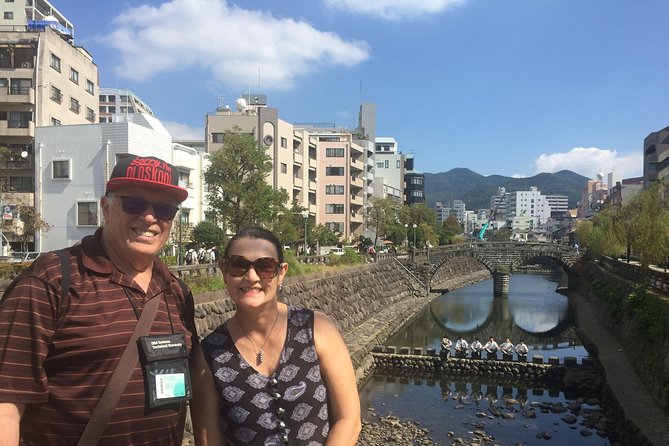
Spectacles Bridge (Meganebashi): The Stone Arch Story You Can See
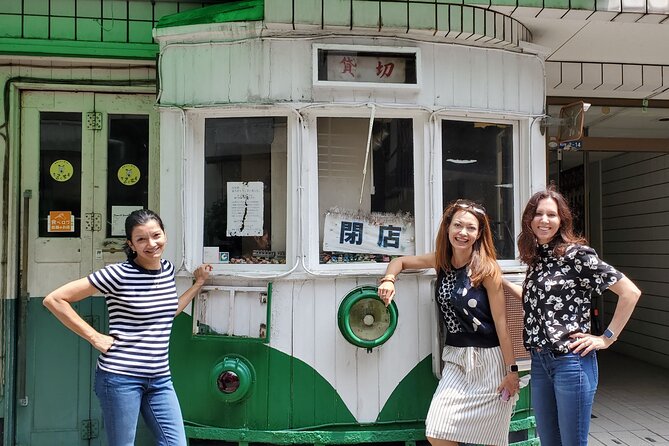
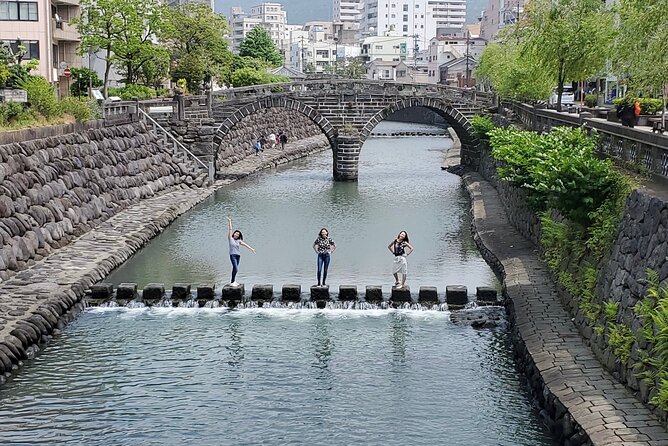
You’ll spend about 30 minutes at Spectacles Bridge, also called Megane-bashi. Admission isn’t required here.
This is the kind of landmark that’s more interesting with facts in your pocket:
- It is described as the oldest arcuate stone bridge in existence.
- It dates back to 1634.
- In that time, it was considered part of the Kofukuji entrance for native Chinese.
- There is a heart-shaped stone wall at the bridge.
With those details, your photos look different. You stop seeing it as a cute bridge and start seeing it as infrastructure tied to cultural movement. The tour ends near this area, so you can also take a moment to watch how people use the space, then decide where you want to go next.
If you’re aiming for photos, go slow at this stop. It’s a natural “pause point” in the route, so it can attract attention. If you want the best angles, just take your time and pick your viewpoint.
Hamamachi Arcade: A Covered Stroll for Snacking and Souvenirs
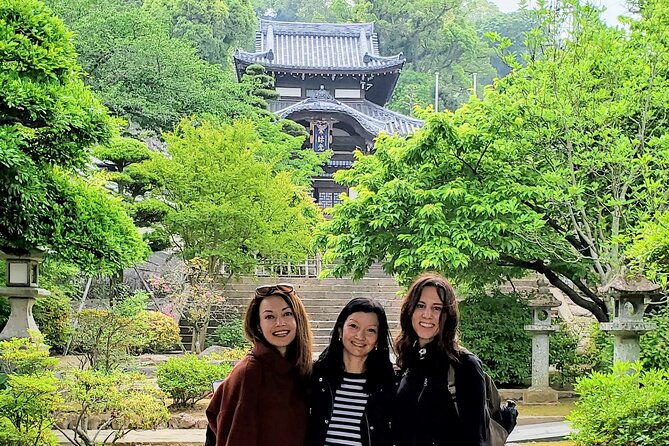
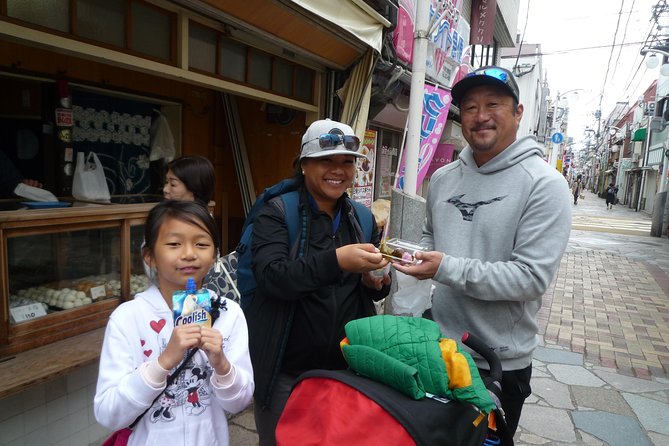
The final major walk-through is Hamamachi Arcade, a covered shopping street. You’ll have about 25 minutes here, and it’s free to enter.
Covered arcades like this are great because they keep the walk comfortable when weather changes. Nagasaki’s Hamamachi Arcade is described as long, stretching for hundreds of meters, with décor like local emblems and colorful banners.
This is also where your “Taste Local Life” side comes in. The tour does not include food or drinks, so this is a good moment to choose snacks or a drink on your own. Since you’ll have a local guide earlier in the morning, you’ll know what kind of things to look for and where the best pedestrian flow is.
A practical tip: because food and drinks aren’t included, carry water if you run thirsty. You don’t want hunger or dehydration to hijack the experience.
Price and Value: What $105.42 Buys You in Real Time
At $105.42 per person for a roughly 3 hours 30 minutes walk, the value depends on how much you like guided context. This is not a cheap “wander and hope” situation. It’s a guided route with paid admissions at multiple stops, plus a professional guide and local taxes included.
Here’s what you are paying for in concrete terms:
- A guide for a half-day, with structured time at key sites
- Included admission tickets at the tram stop, Sofukuji, and Kofukuji
- Efficient routing that gets you from Nagasaki Station area connections to temple culture, then to the bridge and arcade
In other words, you’re paying to avoid the research grind. You’re buying someone’s ability to explain why these places matter and how they link to street life.
The reviews also suggest the guides were a standout factor, with praise for English ability and keeping the group on schedule. That’s not a small thing. A good pace means you see more without feeling rushed.
One more value note: the tour is small-group limited to 8 people, and it offers group discounts. If you’re traveling with friends, it can get even more reasonable than solo prices.
Group Size, Timing, and a Simple Strategy for Hearing Your Guide
This tour is limited to 8 people, and it is set up so only your booked group participates. That combination usually makes for a calmer experience and easier conversations.
Timing is structured but not rigid. You’ll have multiple stops, including 35 minutes at Sofukuji and 50 minutes at Kofukuji, plus shorter blocks elsewhere. That gives you enough time to take photos, read the details, and ask questions without feeling like you’re herded.
One practical suggestion came up in feedback: hearing can be tricky for some groups, depending on where you stand. You can control that. Pick a position closer to the guide, and if sound is an issue, shift slightly during explanations.
Finally, remember the tour asks for moderate physical fitness and easy walking shoes. You can enjoy this most when you plan for walking first, then souvenirs second.
Who Should Book This Tour, and Who Might Skip It
This is a great fit if you like:
- Temples with cultural layers, especially Chinese-influenced architecture
- Streets and arcades where daily life is part of the story
- A guide who can connect facts to what you’re seeing right now
It’s also a smart choice for first-time visitors who want a route that feels off the beaten track, without giving up structure. The tour is set up to show you Nagasaki you might miss if you only focus on the obvious.
Skip it if you:
- Want a fully self-guided day with no fixed stops
- Have very limited mobility, since it’s a walking tour with multiple visits
- Are traveling specifically for food tasting experiences, because food and drinks are not included
Should You Book This Taste Local Life Walk?
I’d book this if you want Nagasaki with context, and you like guided time that still leaves you space to wander afterward. The combination of Sofukuji and Kofukuji plus the Spectacles Bridge, and then finishing at a covered arcade, creates a morning that feels coherent and complete.
You might hesitate if you only want the easiest, shortest highlights, because this is built as a half-day walking route with multiple meaningful stops. Still, if you’re comfortable walking for hours and you enjoy learning, the guide-led structure is exactly what turns these sites into something more than photos.
If you do book, bring a few good walking minutes of patience. Nagasaki rewards slow attention. And at the end, you’ll have a bridge view and an arcade lane to keep your momentum going.
FAQ
What is the meeting point for the tour?
The tour meets at Hotel New Nagasaki, 14-5 Daikokumachi, Nagasaki, 850-0057, Japan. It also ends back at the meeting point.
How long is the Taste Local Life: Nagasaki Historical Street Walking Tour?
The tour runs for about 3 hours 30 minutes.
What is included in the price?
The price includes a professional guide and local taxes. Admission tickets are included for the tram head office stop, Sofukuji Temple, and Kofukuji Temple.
What is not included?
Food and drinks are not included. Hotel pickup and drop-off are not included, and there is no private transportation like a taxi, private car, or bus.
Is the group size large?
The tour is small-group sized and limited to 8 people.
Can I get a refund if I cancel?
Free cancellation is available up to 24 hours before the experience starts. If you cancel less than 24 hours before the start time, the amount you paid is not refunded.
Latest write-ups near Nagasaki
- Nagasaki Private Tour with a Local – Highlights & Hidden Gems★ 5.0 · 24 reviews
- Nagasaki Street Food Adventure: Private Walking Tour with a Local★ 5.0 · 26 reviews
- Nagasaki Full Day Tour with Licensed Guide and Vehicle★ 5.0 · 27 reviews
- Visit Gunkanjima Island (Battleship Island) in Nagasaki★ 4.0 · 32 reviews
- Nagasaki Full-Day Private Tour with Government-Licensed Guide★ 5.0 · 66 reviews
- Nagasaki: Private Walking Tour with a Local★ 4.7 · 79 reviews
- Nagasaki Half-Day Private Tour with Government-Licensed Guide★ 5.0 · 53 reviews
- Nagasaki Private Historical Tour with Licensed Guide★ 5.0 · 13 reviews
Historical Tours, compared.
World Heritage Shirakawa-go and Experience Tours from Kanazawa
Read our review →
Imperial Palace and Shogun Historical Walking Tour
Read our review →
World Heritage Kyoto & Nara Uji Authentic Matcha Experience
Read our review →
Kyoto Gion: 2-Hour Geisha Culture & History Walking Tour
Read our review →
World Heritage Shirakawa-go Morning Guided Tour
Read our review →
Hiroshima Peace (Heiwa) Walking Tour at World Heritage Sites
Read our review →
Yanaka Walking Tour: Historic and Traditional District of Tokyo
Read our review →Browse the lists this tour appears in