
Reviewed · RAMEN EXPERIENCES
Ramen and Gyoza Cooking Class in Osaka Dotonbori
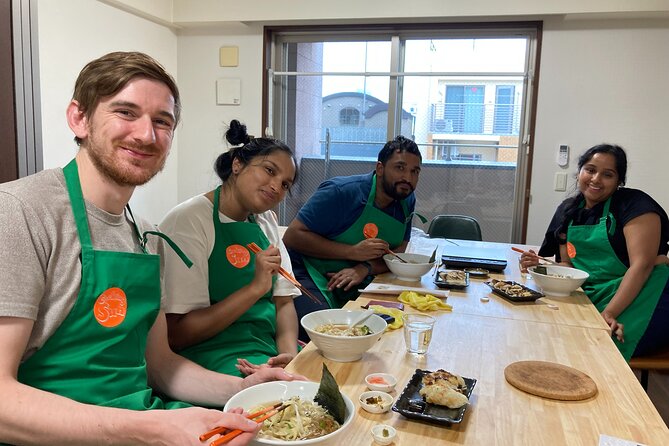
This Osaka food class is interesting because you do real cooking, not just watching. You knead ramen noodles by hand, learn how to build a ramen broth, and then make gyoza you fold and season your way, right in Dotonbori. I especially like the hands-on noodle work and the way instructors like Miki and Jun encourage you to customize toppings and fillings instead of following a single “one correct” version.
Two other reasons I think it’s worth your time: the class stays small, so you get step-by-step attention, and you leave with recipes you can actually recreate at home. One possible drawback to plan around: the ramen base may be fish or chicken, so you need to be clear about your dietary preference when you book.
Before you commit, double-check your diet needs. A gluten-free option is not available, and it is not recommended for travelers with gluten intolerance, so this isn’t the safest choice if wheat is a deal-breaker for you.
Key Highlights You’ll Care About
- Noodles and soup are made from scratch, including hand-kneading the ramen noodles and making the broth
- Gyoza filling customization, plus hands-on folding technique for dumplings that taste like the ones you’d order in Osaka
- Small group size (max 8) for clearer guidance and a more personal pace
- Dietary flexibility with advance notes, including vegetarian, pescatarian, and no-fish options, but no gluten-free option
- English-speaking instruction and printed recipes, so you can cook again after your trip
Why This Osaka Ramen and Gyoza Class Feels Like a Local Meal
Osaka has a reputation for food that’s confident and no-nonsense, and this cooking class fits that vibe. You’re learning the core habits behind two of Japan’s most ordered comfort foods: ramen and gyoza. Instead of relying on shortcuts, you work through the techniques that give the dishes their texture and flavor.
What makes the experience click is that you’re not just making food, you’re making decisions. You choose gyoza filling flavors, and you build your ramen with toppings that suit your taste. The result is ramen that feels personal, not generic.
I also like the educational angle. Instructors explain customs and the logic behind technique, so you understand what you’re doing and why it matters. That’s what turns this from a one-time meal into a kitchen skill you can reuse.
More Cooking Classes in Osaka
- Osaka: Ramen and Gyoza Cooking Class in Dotonbori
★ 5.0 · 378 reviews - Osaka Cooking Class: Okonomiyaki &Japanese cuisines experience
★ 5.0 · 261 reviews - Ramen and Gyoza Cooking Class in Osaka
★ 5.0 · 202 reviews
Before You Go: Timing, Location, and What to Expect at Cooking Sun
The class starts at 1:30 pm and runs about 3 hours, ending back at the meeting point. Based on how the class wraps up, you’ll likely finish around 3:30, which means it can work as an early dinner rather than a late snack.
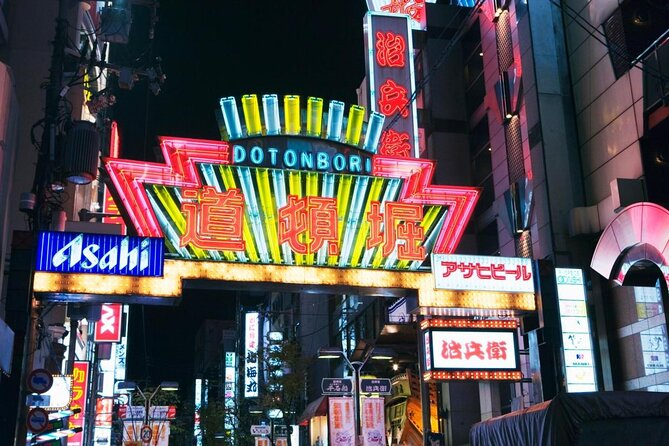
Location is Cooking Sun in central Osaka, in the Dotonbori area. The address is:
Cooking Sun, 542-0082 Osaka, Chuo Ward, Shimanouchi, 2-chōme 9-14 807号室
A few practical notes that matter once you’re there:
- The venue is close to public transportation, so you can combine it with other Dotonbori plans.
- The building can be confusing to spot in maps at first. If Google Maps sends you elsewhere, use the actual address and consider asking someone nearby to point you the right direction.
- Once you find the building, you go up the elevator to the 8th floor to reach the room.
You’ll use a mobile ticket, and you’ll want to arrive a little early so you can settle in before cooking really starts.
Your 3-Hour Game Plan: From Hand-Kneaded Noodles to Finished Bowls
This isn’t a “sit down, snack, and leave” class. Plan on cooking actively the whole time. The best part is that the pace is structured, but not rushed, and you get ongoing help if you get stuck.
Here’s how the flow typically feels, based on what you’re taught and what you end up making:
First comes the setup and ingredient walk-through
You’ll start with an explanation of what’s on the menu and how the work will progress. Instructors break down ingredients and techniques as you go, including small details like how certain fish flakes and seasonings behave in broths. They’ll also discuss things like differences between soy sauces and miso types, which helps you understand why ramen and dipping flavors aren’t all the same.
This is where the class becomes more than cooking. It turns into a practical food lesson.
More Ramen Experiences in Osaka
- Osaka: Five Must-See Highlights Walking Tour & Ramen Lunch
★ 4.7 · 411 reviews - Walking Tour of Osaka’s 5 Must-See Sights, with Ramen for Lunch
★ 5.0 · 158 reviews - Cooking Ramen&Gyoza/KatsuCurry/Bento/Okonomiyaki+Store Tour@Osaka
★ 5.0 · 138 reviews - Three Types of Ramen Cooking Class in Osaka
★ 5.0 · 119 reviews
Then you make ramen noodles from scratch
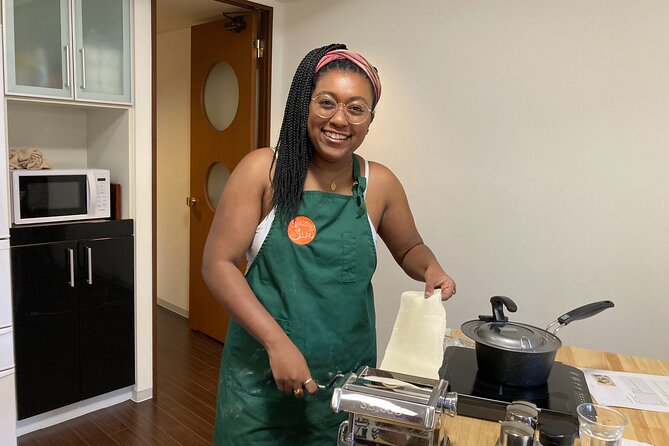
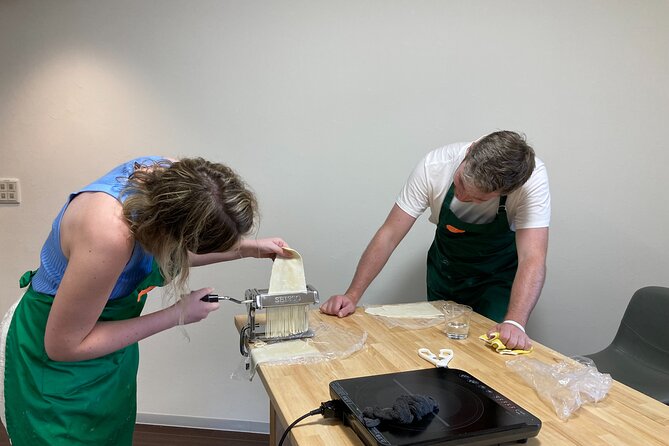
Ramen noodles are the heart of the class. You knead the dough by hand, which is oddly satisfying even if you’re not a confident cook. Kneading gives you control over texture, and it’s also the step that most clearly separates “homemade ramen” from “ramen-flavored soup.”
After the dough work, you handle the noodles in the way the instructor shows so they’re ready for the broth and assembly.
You build a ramen broth while the noodle process keeps moving
At this class, the broth isn’t pulled from a packet. You learn how to make it from scratch and then season it so it tastes balanced.
One detail to note if you have dietary needs: the base can include fish or chicken. If you’re avoiding fish, you’ll need to request a vegetarian, pescatarian, or no-fish option when booking. The instructors can accommodate dietary needs, but the earlier you communicate, the easier it is for them to guide you through the right version.
Next up is gyoza, with hands-on filling and folding
Gyoza is the second big project. You make the filling, chop and mix the ingredients, then fold the dumplings. One nice touch is that you’re not doing everything from scratch in a way that becomes frustrating. You’ll fold dumplings using wrappers, and then cook them as part of the class.
The folding part is where you’ll get that satisfying “I can do this” feeling. And yes, the end result is supposed to taste like the gyoza you order at a restaurant, not just like a bland homemade try.
Finally, you eat what you made and take recipes home
You finish by eating your ramen and gyoza. It’s the pay-off moment, and it also helps you catch mistakes while everything is still fresh in your brain.
You’ll also receive printed recipes to take home, which is crucial. Technique matters, but having a guide makes it far easier to repeat the flavors later.
Ramen Noodles by Hand, Broth from Scratch, Toppings Like a Pro
If you care about ramen, this class is built for you. The focus is on the steps that create real ramen character: noodles, broth, and toppings.
Hand-kneaded noodles: the texture you can feel
When you knead the noodles yourself, you learn the part of ramen that many people skip at home. You see how dough turns into something springy and workable. Even if the process feels a bit tedious, it’s also the step that makes the final bowl taste like you actually made ramen, not just heated broth.
Ramen broth: why taste isn’t one note
The broth is where instructors tend to go beyond basic steps. You’ll learn how the base ingredients contribute to flavor, and you’ll understand what adjustments do to the final result. This includes discussion of fish flakes, like different types (bento is mentioned), and how seasonings such as soy sauce and miso fit into the overall balance.
If you’re the kind of home cook who likes to tweak, this is a good class. You’re given a framework, not just a single fixed bowl.
Toppings and customization: make it yours
A lot of ramen classes stop at “here’s the bowl.” This one encourages you to customize toppings according to your taste. That matters because ramen is personal. You can lean into richer flavors, lighter ones, or a blend that matches what you like to eat.
This is also why the dietary note system is so important. If you request a vegetarian or no-fish version, you’ll be guided through a version that keeps the dish satisfying without adding the ingredients you’re avoiding.
Gyoza Filling, Folding, and the Pan-Fry Moments That Matter
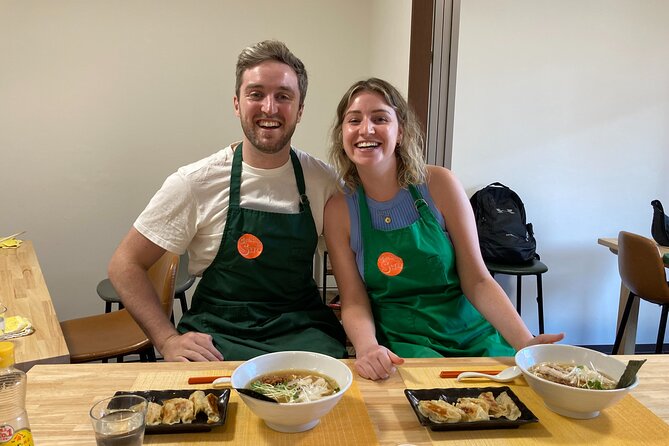
Gyoza in Osaka is a serious comfort food. This class treats it like it deserves real attention, not like a side project.
Filling: you choose the flavor profile
You make the gyoza filling and customize it based on what you’re working on that day. The class helps you understand how ingredients work together, so you can adapt the filling later at home.
If you have allergies, pay attention to what the instructor can accommodate. The class is designed to be hands-on and guided, and it can adjust when you give the right info up front.
Wrappers and folding: the technique you’ll remember
You fold the gyoza dumplings as part of the lesson. One theme that comes through clearly is that the final gyoza should come out tasting like what you’d order in restaurants. That’s not automatic. It happens because you’re shown the folding and handling steps clearly, then you repeat them with guidance.
Even if you’re new to cooking, the step-by-step nature helps a lot.
Cooking and finishing: you learn what “done” looks like
You’ll cook the gyoza as part of the class so you can connect the technique to the end result. That’s where homemade food feels worth it: you can see the difference between a dumpling that’s rushed and one that’s cooked properly.
Dietary Options: Vegetarian, Pescatarian, and the Gluten-Free Reality
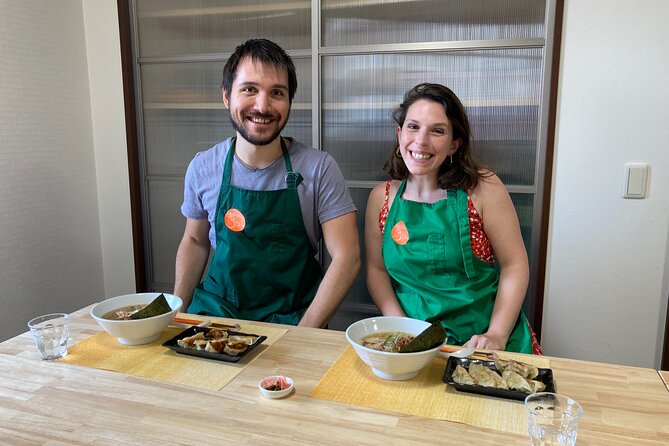
Let’s keep this simple and honest.
- Vegetarian, pescatarian, and no-fish options are available if you leave a note upon booking.
- A gluten-free option is not available.
- This class is not recommended for travelers with gluten intolerance.
So if you’re avoiding fish, you have a path. If you need gluten-free, you’ll want to look at another class option.
One more practical point: diet accommodations depend on advance notice. The class includes all ingredients and utensils, so the kitchen needs time to prepare the right versions for your group. If you book, be specific about what you need to avoid.
Price and Value: Is $71.35 a Fair Deal for 3 Hours?
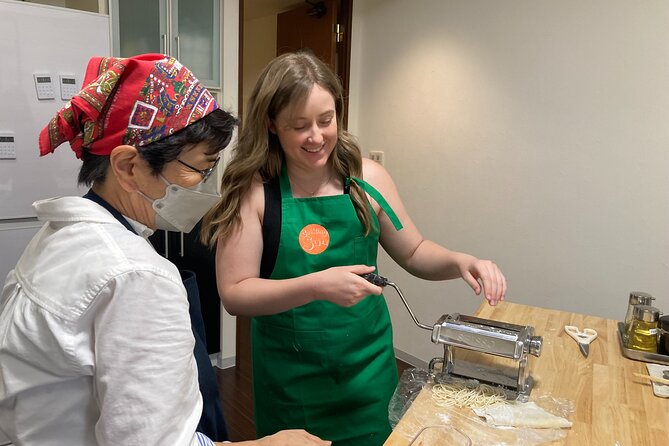
At $71.35 per person, this class isn’t “cheap,” but it also isn’t overpriced when you look at what you get. You’re paying for ingredients, utensils, an English-speaking instructor, and the time and technique required to teach two dishes properly.
Here’s what you’re actually buying:
- Hands-on ramen noodles from scratch
- Ramen broth from scratch
- Gyoza filling and folding
- Recipes you take home
- All fees and taxes included
- Class size that tops out at 8 travelers, which usually means more attention per person
For many people, the real value is the recipes and the skills. You’re not just buying a meal, you’re buying a blueprint for making ramen and gyoza at home. If that matters to you, the price starts to make sense.
If you’re only interested in tasting, you might decide it’s not the best fit. But if you want to cook, learn, and bring home a repeatable method, it’s strong value.
Who This Class Is Best For (and Who Should Skip It)
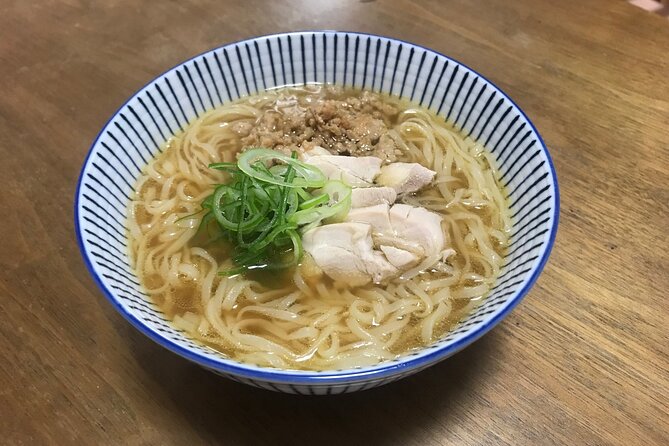
This is a great fit if:
- You want authentic Osaka comfort food you can recreate later
- You’re traveling with kids or teens, especially if they like hands-on tasks
- You want clear guidance, because the class is paced so even non-cooks can keep up
- You care about customization, like toppings and fillings that match your taste
It’s not the best fit if:
- You need gluten-free meals, since no gluten-free option is available
- Fish or fish-based ingredients are a problem for you and you don’t plan to request a no-fish version when booking
One more “fit” detail I appreciate: the small group and patient instruction style. You’re not standing on the sidelines. You’re working with the instructor and tools at a pace that keeps you from feeling lost.
Should You Book This Ramen and Gyoza Class in Dotonbori?
If you want a practical souvenir that lives longer than a photo, I’d book it. The core reason is simple: you make the noodles and broth from scratch and you fold your own gyoza. That’s the kind of skill you can repeat, and the printed recipes help you do it without second-guessing everything.
I’d also book it if you like the idea of learning technique and flavor logic, not just following steps. Instructors explain the why behind the process, including details like different fish flakes and how soy sauce and miso styles change flavor.
Skip it only if gluten-free is required, or if you cannot arrange a fish-free version in advance. Otherwise, this is a fun, hands-on afternoon in one of Osaka’s most food-focused neighborhoods.
FAQ
What time does the class start?
The class starts at 1:30 pm and runs for about 3 hours.
Where is the meeting point for the cooking class?
Meet at Cooking Sun, 542-0082 Osaka, Chuo Ward, Shimanouchi, 2-chōme 9-14 807号室. The activity ends back at the meeting point.
What will I make during the class?
You will make ramen and gyoza from scratch, including hand-kneading the ramen noodles and making a ramen broth.
Can the class accommodate vegetarian or pescatarian diets?
Yes. You should leave a note upon booking for vegetarian, pescatarian, or no-fish options.
Is there a gluten-free option?
No. A gluten-free option is not available, and the class is not recommended for travelers with gluten intolerance.
What is included in the price, and what is not included?
Included are all ingredients and utensils, the hands-on class, an English-speaking instructor, recipes to take home, and all fees and taxes. Extra food or beverages not listed are not included.
Latest write-ups near Osaka
- PRIVATE 6hr, Food tour from Osaka Castle, Kuromon, Dotonbori.★ 5.0 · 68 reviews
- 90 min Shared Handmade Udon Experience★ 5.0 · 70 reviews
- Osaka: Sushi Making in Spacious Studio (SAME-DAY OK!)★ 5.0 · 75 reviews
- Osaka E-Bike Tour With A Local Guide★ 4.7 · 75 reviews
- 1.5〜2 Hours Traditional Kintsugi Work Shop in Namba Osaka★ 5.0 · 75 reviews
- Retro Osaka Street Food Tour: Shinsekai★ 4.5 · 77 reviews
- Osaka: Osaka Castle Guided Tour with Local Guide★ 4.7 · 78 reviews
- Osaka Okonomiyaki Cooking Experience!★ 5.0 · 79 reviews
Ramen Experiences, compared.

Ramen Cooking Class at Ramen Factory in Kyoto
Read our review →
Eat and Drink Like a Local: Tokyo Ueno Food Tour-Taverns&Ramen
Read our review →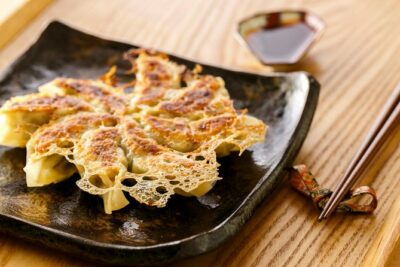
Ramen & Gyoza Cooking Class in Tokyo with Local Supermarket Visit
Read our review →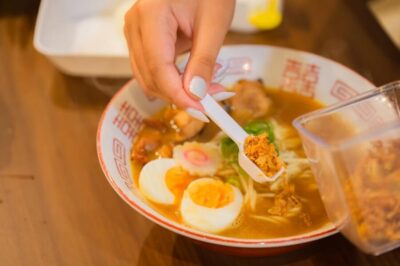
Ramen Cooking Class at a Ramen Factory with Souvenir
Read our review →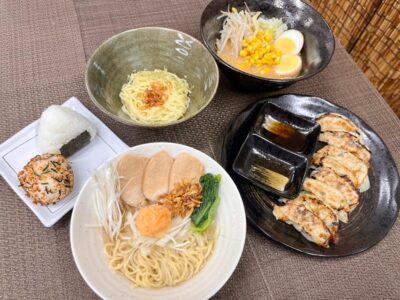
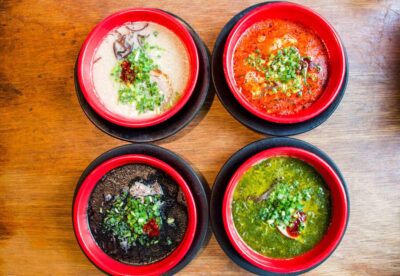

Five Must-See Highlights Walking Tour & Ramen Lunch
Read our review →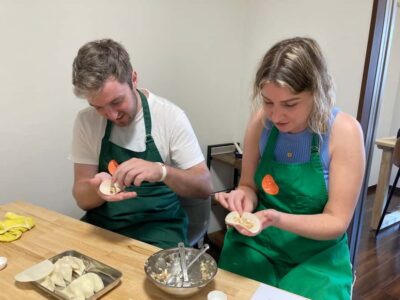
Browse the lists this tour appears in