
Reviewed · RAMEN EXPERIENCES
Kyoto: Ramen Cooking Class at a Ramen Factory with Souvenir
Kyoto’s ramen culture is serious, and this cooking class is interesting because you get hands-on with the stuff that makes ramen taste like ramen, from flour to noodles. The setting is a ramen school connected to Menbaka Fire Ramen, so you’re learning a system, not just copying a recipe. On top of that, hosts like Sakura, Moeka, and Fuku tend to keep the room fun and organized.
I especially like the fact that you make your noodles yourself, including the more-than-you-expect steps like repeatedly folding the dough over 100 times. I also love how your bowl is customized, with three featured ramen sauce styles, miso, salt, and soy, so the final lunch feels personal. One possible drawback: the process is meticulous, so if you want zero effort and just tasting, this may feel a little hands-on.
Key points that make this class worth your time
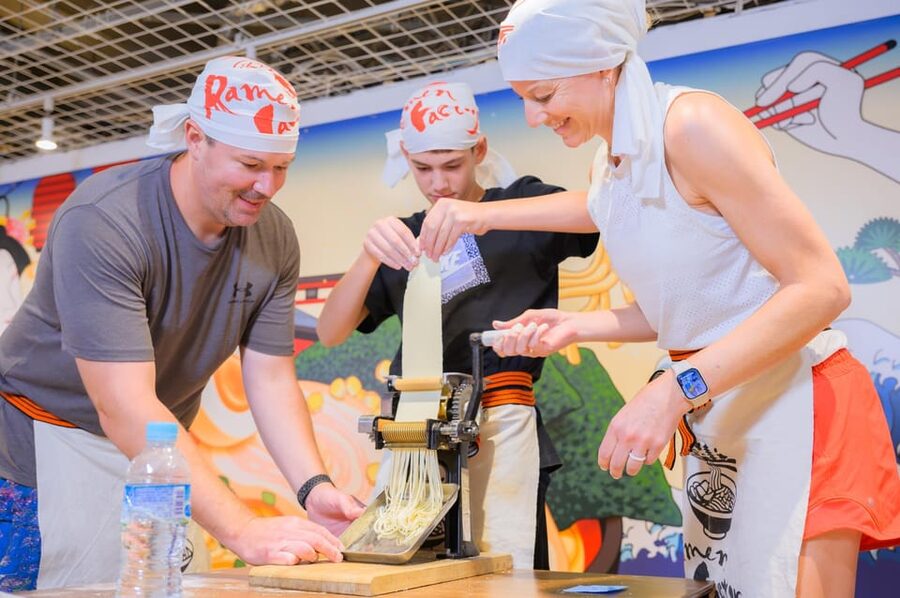
- Real noodles from flour: You start with ingredients and finish with actual ramen noodles.
- You choose the flavor direction: Pick your soup and miso, salt, or soy sauce combination.
- Hands-on work that still feels beginner-friendly: Clear step-by-step guidance keeps it doable.
- You eat what you made: Your bowl happens right after the prep, so results matter.
- Take-home value: You get a souvenir and a full recipe sent by email for cooking later.
Why this Kyoto Ramen Factory lesson feels like more than a show
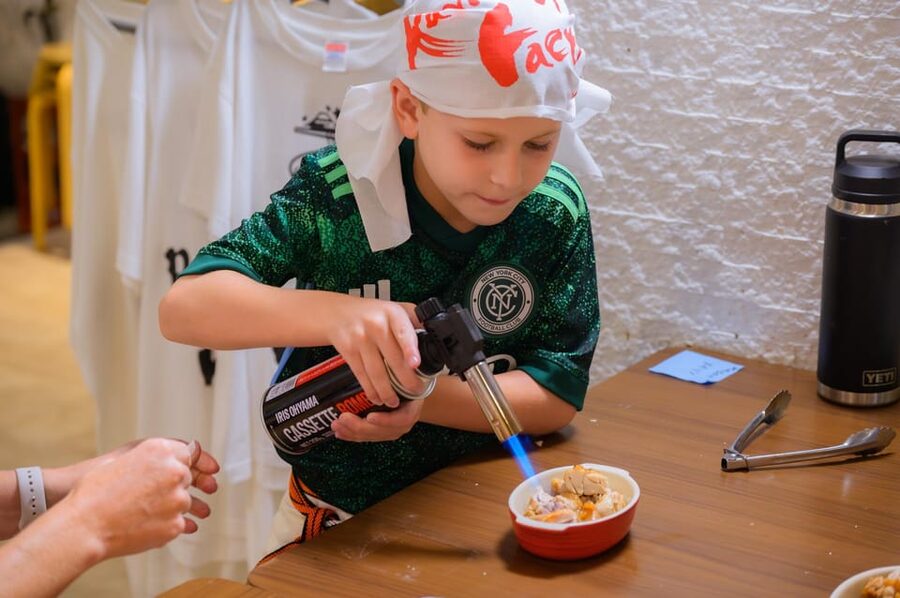
This class works because it treats ramen like a craft with steps you can feel in your hands. You don’t just assemble a bowl and call it cooking. You make dough, shape noodles, and then build soup and toppings into something you can actually taste and remember.
I like that the experience is built for real learning, including an overview video before you start cooking. That gives you a mental picture of what you’re aiming for, especially if you’ve only had ramen in restaurants. And when your teacher is upbeat, like Sakura or Moeka, it makes the timing and instructions easier to follow.
The school’s connection to Menbaka Fire Ramen also helps explain why the process is so specific. Ramen takes time and attention, so the class focuses on the key parts that create texture and flavor. You’ll notice that as you handle the dough and then decide your broth and oils.
One more reason it lands well in Kyoto sightseeing schedules: it’s short enough to fit as a side trip from major neighborhoods. It’s also filling. You end the class with the ramen you made, which saves you from the usual problem of cooking classes that end with snacks and empty promises.
More Cooking Classes in Kyoto
- Ramen Cooking Class at Ramen Factory in Kyoto
★ 5.0 · 1,937 reviews - Kyoto: Ramen, Gyoza, and Onigiri Cooking Class
★ 5.0 · 445 reviews - Kyoto: Japanese Washoku Bento Small Group Cooking Class
★ 5.0 · 380 reviews
Getting there: Demachiyanagi station to the basement kitchen
Logistics are easy once you know what to look for. The meeting point is about a five-minute walk from Demachiyanagi station on the Keihan line, and the entrance is not the main one you might find on Google Maps.
Plan for one small navigation moment. When you arrive, take the staircase to the right of the supermarket and go down to the basement floor. That detail matters, because a few people specifically warned that the street entrance can be different than what maps show.
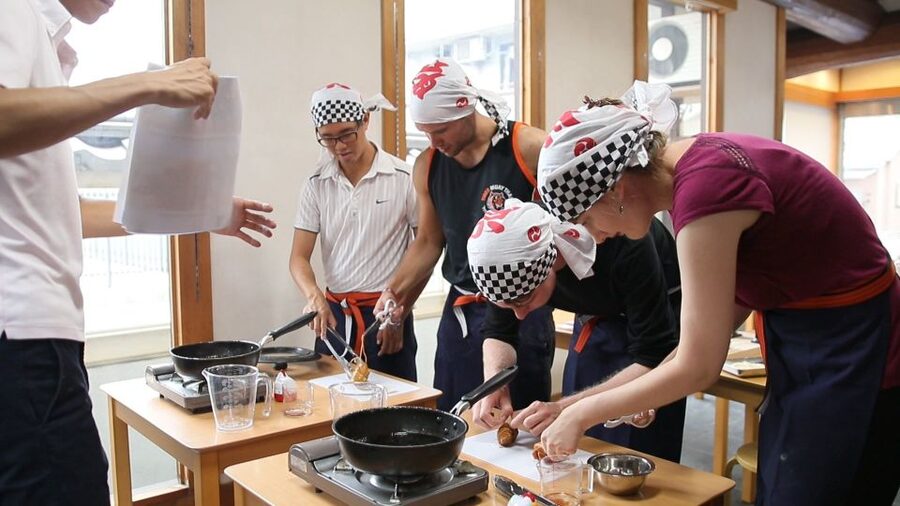
Once you’re inside, the layout is designed for a cooking class. You’ll be guided to wear the ramen apron and headscarf, then get ready for the workflow. Most of the equipment and ingredients are set up so you can focus on the steps rather than hunting for tools.
If you’re coming from the usual Kyoto rail hubs, you’ll probably find yourself using public transit. Transportation to the class is not included, so budget time to get there and keep your day moving. The good part is the duration is just 90 minutes, so you’re not stuck in transit for hours.
The 90-minute rhythm: noodles, chicken seasoning, and your own bowl assembly
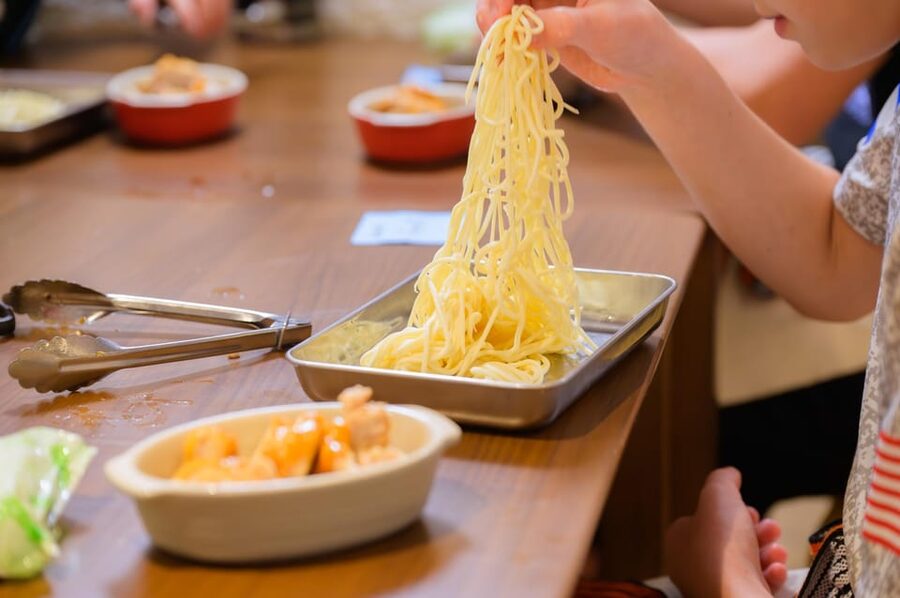
The best way to understand this experience is to picture it as three focused phases: noodle work, flavor work, then bowl building. The timing is tight, but the instruction is organized, and it’s built to keep you from feeling rushed.
First, you’ll start with the prep and intro. You’ll watch a video overview of the process, then move into cooking tasks led by your instructor. You’ll flavor the chicken with seasonings, and that part is practical because it speeds up the “real bowl” feeling while still teaching core ramen flavoring.
Next comes the noodle sequence, which is the star of the show. You’ll mix, punch, knead, drain, and shake to turn flour into dough, then into finished noodles. There’s also a meticulous step where the dough is folded over 100 times, and that’s where you really learn why ramen noodles have their distinctive feel. If you’ve never done dough work, expect it to be a little physical. The payoff is that you understand the texture, not just the technique.
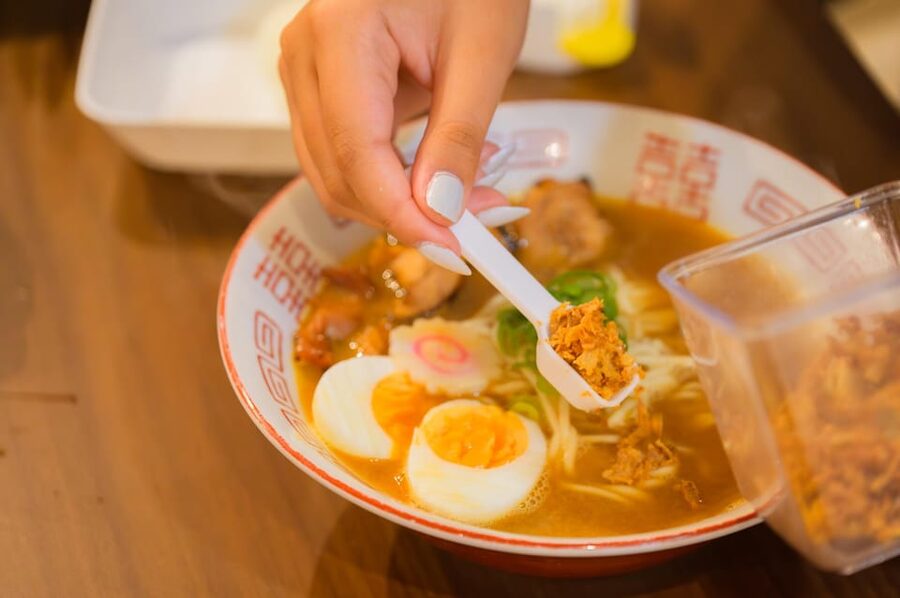
Finally, you assemble your ramen. You choose a soup base and sauce combination, then display your ramen bowl with toppings, egg, and condiments based on your preferences. The class includes a moment to enjoy what you made, so the work you did has a satisfying payoff.
Also, a small but important detail: the class can run as a group lesson, but if you’re the only participant at your time slot, you might get a more private, one-on-one style experience. That’s ideal because the teacher can correct your noodle shaping and keep the rhythm comfortable.
Choosing miso, salt, or soy: how sauce decisions shape your broth

This is where your bowl stops being a template and starts becoming your version of ramen. You taste and mix three types of featured sauces during the class, specifically miso, salt, and soy. Even if you don’t speak Japanese, the flavor concept is easy to grasp because you’re not just memorizing labels. You’re tasting.
Then you choose the soup and sauce combination for your bowl. That choice matters, because miso-based ramen tends to feel deeper and rounder, while salt and soy often feel cleaner in different ways. The class gives you the logic behind those differences without making it complicated.
You also learn how oils and finishing elements affect the final flavor. The steps are described as choices of soup base and oils to complete your ramen, and you’ll feel that difference when you build and taste your bowl.
What I like about this approach is that it makes you a better ramen eater later. Instead of thinking ramen is one flavor category, you start thinking in components: broth base, sauce type, aromatic oils, then toppings. After this class, ordering in Japan becomes more like choosing a personal blend.
If you’re the type who usually sticks to one safe bowl in ramen shops, this class gently nudges you out of that habit. You’ll come away with a clear sense of what you prefer, not just a souvenir photo.
More Ramen Experiences in Kyoto
- Kyoto Ramen and Gyoza Cooking Class with Professional Chefs
★ 5.0 · 282 reviews - Home style Ramen and Homemade Gyoza in Kyoto
★ 5.0 · 152 reviews - Kyoto Michelin Ramen Workshop or Painting Ramen Essentials
★ 4.9 · 100 reviews - Kyoto Ramen & Gyoza Cooking Class with Professional Chefs
★ 4.8 · 100 reviews
Toppings, egg, and condiments: building the ramen you actually like
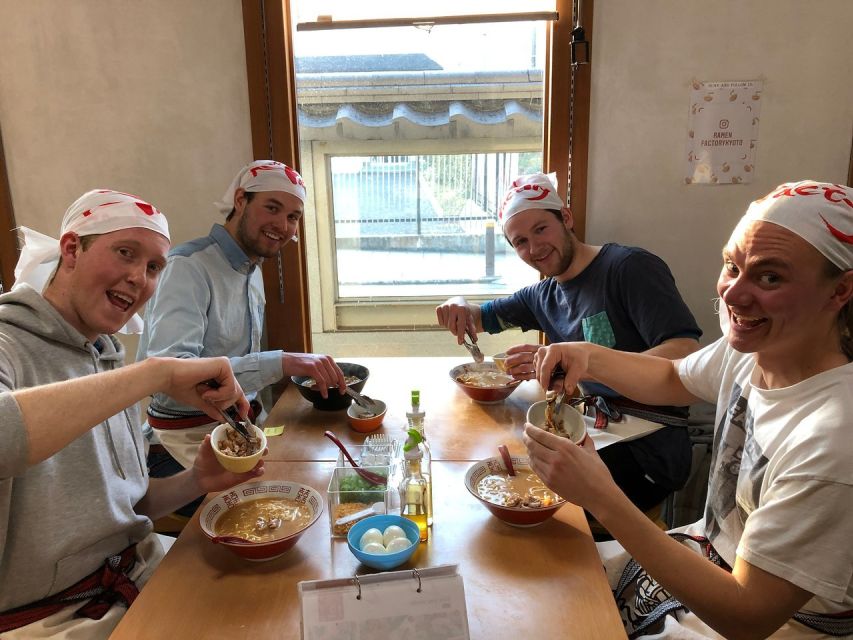
Ramen shops have toppings, but they also have rules about balance. This class teaches that balance by letting you customize your bowl during assembly. You’ll add toppings and egg, then choose condiments according to your taste.
That customization is not just fun, it’s useful. It helps you connect the theory to reality. You can see how a topping changes the bite, how a condiment changes the aroma, and how egg richness affects the overall feeling of the broth.
Many people also praise how organized the process is while still being lighthearted. In practice, it means you get guidance during the trickier steps, then you get ownership during assembly. When your instructor is engaging, like Fuku or Sakura, the bowl-building feels like you’re participating, not waiting.
One more small detail that’s worth knowing: you wear the ramen apron and headscarf during the class. It’s simple, but it makes the experience feel ceremonial. And some people also mention getting to keep items like bandanas. Even if you treat it like a fun prop, it’s a nice memory of the work you did.
This is also a good point for families. A lot of the praise includes how the class works for kids and teens because the steps are hands-on but guided. If you’re traveling with mixed ages, this is one activity where everyone can contribute to the final bowl.
Souvenirs and the recipe email: best take-home value in Kyoto
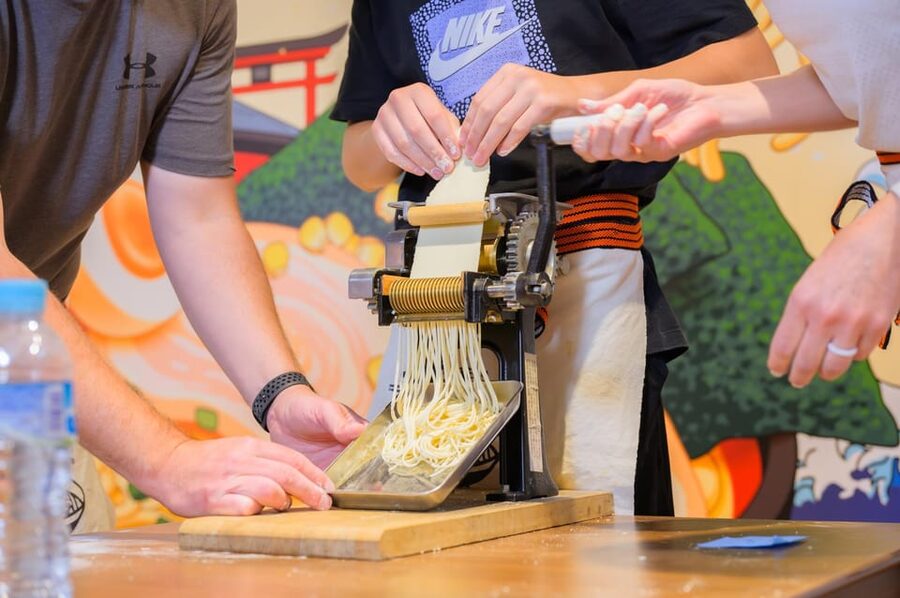
You get a souvenir as part of the experience, and you also get to choose from four different souvenir types. That matters because it avoids the usual problem of take-home items that don’t match your tastes. You can select something you’ll actually want to keep or use later.
The recipe part is even more valuable than the souvenir. You’ll receive the full recipe by email so you can try making ramen at home. That’s a real benefit, because ramen at home is only possible when you have measurements and a clear process. The class helps you build confidence with steps you already performed once.
In several accounts, people also mention photo and video help from staff. So it’s not just cooking. You’ll likely leave with more than one memory file, which is handy when you want to recreate the dish later and can remember what you did at each stage.
One extra perk that shows up in some experiences is a printed photo and a certificate. I can’t promise those will always be included in every time slot, but the vibe is consistent: they care about capturing the process and celebrating the result.
Price, drinks, and who this class is best for
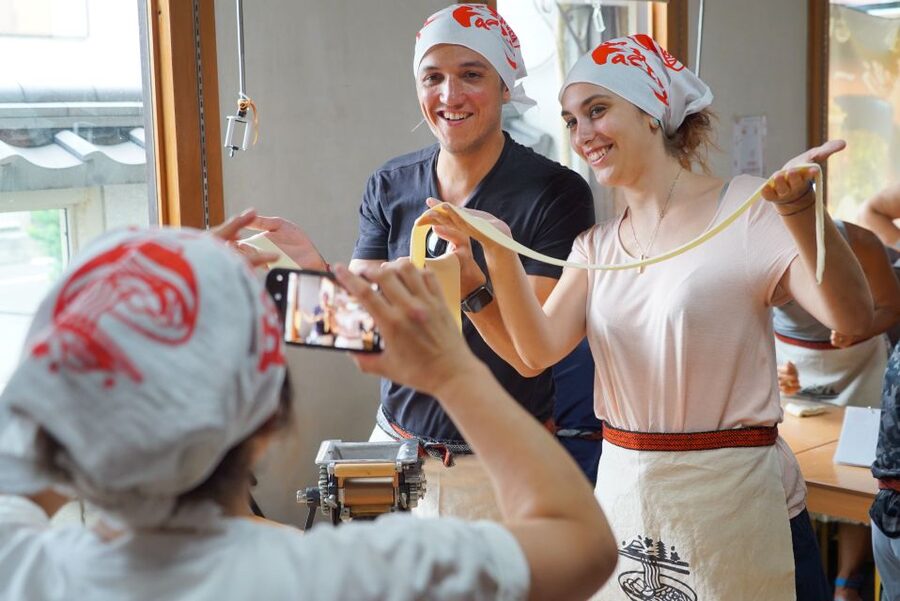
At $127 per person for a 90-minute session, this isn’t a cheap Kyoto add-on. But it can be good value because it covers instruction, hands-on ingredients, the ramen meal you cook, and a souvenir, plus a full recipe emailed to you afterward.
You’re paying for three things at once:
1) time with an instructor who teaches technique,
2) the work setup that makes flour-to-noodles possible in 90 minutes,
3) the meal payoff and take-home recipe that extends the experience beyond the classroom.
Drinks are not included. That’s worth planning for, especially if you’re someone who likes to sip water throughout cooking. There’s also no transportation included, so you’ll want to factor in how you’ll get to Demachiyanagi.
This class fits best if you fall into one of these categories:
- You love ramen and want to understand why one bowl feels different from another.
- You want a hands-on Kyoto activity that feels cultural without being overly time-consuming.
- You’re traveling with family or mixed ages and want everyone fed with a structured experience.
- You’re a beginner who still wants real technique, not just assembling.
It’s also a good choice for dietary needs, with an important caveat. You can get in touch with the local supplier after booking if you want a dietary option. Some people report being offered tofu and fish broth for pescatarian preferences, and vegan options have been accommodated.
Should you book this ramen cooking class in Kyoto?
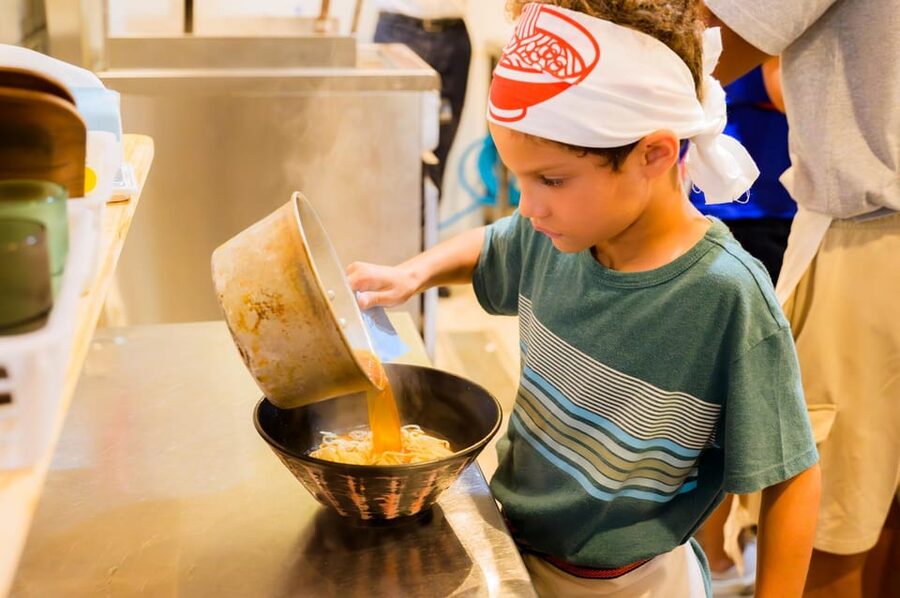
I’d book it if you want an activity that’s both practical and satisfying. The flour-to-noodles part is the main draw, and the fact that you eat your bowl right after makes it feel complete. You also come away with a recipe by email, which is the difference between a fun afternoon and an experience you can repeat.
I’d think twice if you hate hands-on cooking steps or you’re short on time in a way that makes travel stressful. This class is designed to teach a meticulous process, so it’s active work, not a passive show.
If you’re on the fence, choose the time slot that matches your energy. Then use it as your mid-trip reset. Ninety minutes, a warm bowl, and a skill you can bring home is a rare combo in Kyoto.
FAQ
How long is the Kyoto ramen cooking class?
The class lasts 90 minutes.
Where is the meeting point?
It’s a five-minute walk from Demachiyanagi station on the Keihan line. The location is in the basement, reached by taking the staircase to the right of the supermarket and going down.
What’s included in the price?
The experience includes a 90-minute Chef Course ramen making session and a selective souvenir. You also receive the full recipe by email.
Are drinks included?
No. Drinks are not included.
Do they offer dietary options?
If you want a dietary option, contact the local supplier after booking. Some diets have been accommodated, including pescatarian options like tofu and fish broth.
Will I be filmed or photographed?
There is a media shooting notice. During your visit, you may be filmed or photographed as part of professional video, photo, or 360-degree camera recordings, and the media may be used for promotion worldwide.
Latest write-ups near Kyoto
- Kyoto: Nishiki Market Tour with a Local Foodie & Tastings★ 4.5 · 67 reviews
- Kyoto Kimono Rental mimosa |Kimono/Yukata Rental Couple Plan★ 4.8 · 67 reviews
- Kyoto: Traditional Kimono Fabric Handicrafts Workshop★ 5.0 · 67 reviews
- Kyoto Tea Ceremony and Samurai Photo Session★ 5.0 · 70 reviews
- Kyoto: Replica food making experience★ 4.8 · 70 reviews
- Kyoto: Kinkakuji, Golden Pavilion Guided Tour★ 4.7 · 71 reviews
- Private departure transfer from Kyoto city to Kansai International airport★ 5.0 · 72 reviews
- Uji: Green Tea Tour with Byodoin and Koshoji Temple Visits★ 4.8 · 72 reviews
Ramen Experiences, compared.

Ramen Cooking Class at Ramen Factory in Kyoto
Read our review →
Eat and Drink Like a Local: Tokyo Ueno Food Tour-Taverns&Ramen
Read our review →
Ramen & Gyoza Cooking Class in Tokyo with Local Supermarket Visit
Read our review →

Five Must-See Highlights Walking Tour & Ramen Lunch
Read our review →

Easy Ramen Cooking Experience in Kabukicho, Shinjuku
Read our review →Browse the lists this tour appears in