
Reviewed · GEISHA & GION TOURS
Kyoto: Meet the Geisha Maiko with Gion Walking Tour
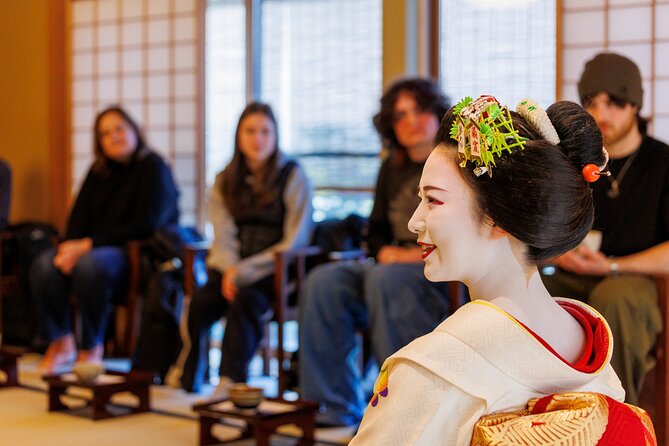
This experience is interesting because it does the hard part for you: you get a guided walk in Gion, then you step into a private ochaya that is usually off-limits. Instead of hovering on corners hoping to spot geiko or maiko, you meet them in a setting designed for conversation and performance.
I especially love two things. First, the chance to sit with both a maiko and a retired geiko, then ask questions in a relaxed way. Second, the way guides like Haruki and Takuma explain the rules, roles, and rhythms of geisha culture as you pass key streets and landmarks, so the neighborhood starts to make sense fast. One possible drawback is that this is not a quick sightseeing loop. If you mainly want street spotting with zero structure, the walk plus the indoor program can feel like more time than you expected.
Key Things That Make This Gion Tour Worth Your Time
- Private ochaya access in a setting closed to most first-time visitors
- Up-close meeting with a maiko and a retired geiko, including Q&A
- A real cultural translator moment, so what you hear is not just sightseeing trivia
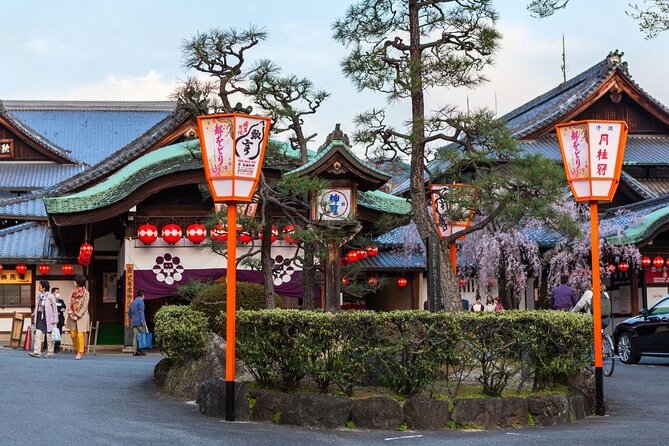
- Gion walking route with context, including Shirakawa, Hanamikoji, and the Tatsumi area
- An indoor performance with etiquette rules, like socks and stairs to the second floor
- Small group size (maximum 30), which helps keep the experience personal
Why Gion, and Why This Tour Instead of Chasing Them
Gion can feel like a movie set, and it also can feel like a zoo if you are just trying to catch a glimpse. This tour changes the goal. You are not stalking faces behind curtains, you are learning how the system works, then you get invited into the part of that world that is meant for guests.
The cultural value here is practical. When you understand what a maiko is training for, what geiko are doing as fully trained professionals, and why certain spaces stay private, you stop missing the point of the neighborhood. And when you actually meet a maiko and a retired geiko, the explanations click in your head, not just your ears.
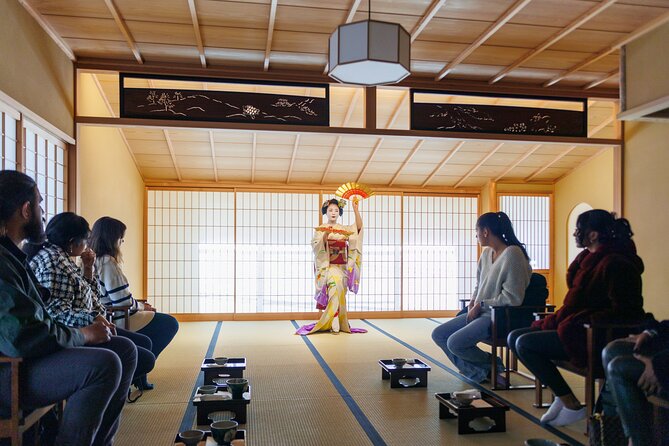
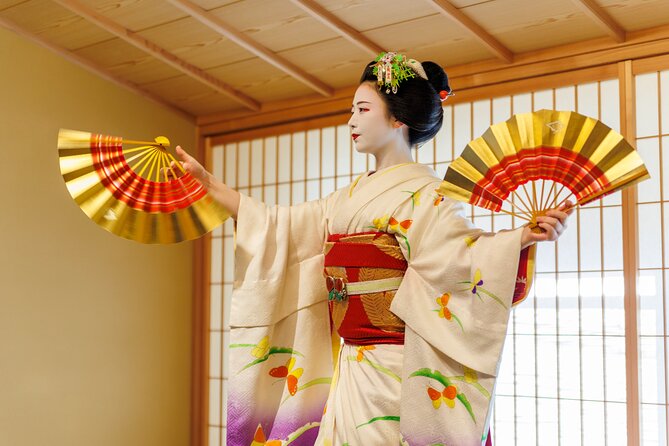
The other big reason I like this format is that the timing is built around a performance. You are not forced to wonder if you will catch something. You know you will sit down, watch a graceful live program, and then talk.
More Walking Tours in Kyoto
- Kyoto Geisha Walking Tour: Gion District & Hidden Gems
★ 4.7 · 3,273 reviews - Kyoto: Gion Magical Night Walking Tour with Geisha Trivia
★ 4.9 · 2,393 reviews - Kyoto: Gion Geisha District Walking Tour – Stories of Geisha
★ 4.7 · 2,187 reviews
The 3-Hour Structure: A Walk, Then the Ochaya Moment
Plan on about 3 hours, and think of it as two halves. The first half is spent outside, walking through Gion with stops that explain the setting. The second half is the “why you paid” part, the performance inside a private house.
The outdoor portion is a mix of quiet architectural sightseeing and a few cultural markers. You will move through Gion Shirakawa, pass a shrine stop, cross by the Tatsumi area, and spend time on Hanamikoji Street. Between those points, your guide ties it together, including customs and what you should notice as you walk.
Then you shift gears to the indoor program at Miyagawasuji. This is where you meet the maiko and a retired geiko, watch a live performance, and get time to chat. Because the performance happens on the second floor, you will also want to be comfortable with stairs.
Stop-by-Stop: What You’ll See and Why Each Place Matters
Gion Shirakawa, where the neighborhood’s rules start to make sense
Gion Shirakawa is your first taste of what makes this district feel distinct. You get a guided introduction to who geishas are in Kyoto and how their lifestyle differs from what most visitors expect. This is where you learn to read the scene, not just look at it.
If you have ever watched people rush through Gion with their phones up, this stop is a good reset. You will get the basics early, so later street details feel purposeful instead of random.
More Geisha Experiences in Kyoto:
- Best of Kyoto: Gion, Geisha, Pagodas & Cobblestones
★ 4.9 · 2,058 reviews - Night Walk in Gion: Kyoto’s Geisha District
★ 4.5 · 2,003 reviews - Kyoto Night Foodie Tour in Gion (9+ dishes + 6 Sake tastings)
★ 5.0 · 1,762 reviews - Kyoto Gion Geisha District Walking Tour – The Stories of Geisha
★ 5.0 · 1,441 reviews
Tatsumi Daimyojin Shrine and the small Tatsumi Bridge vignette
You will also make a short visit to Tatsumi Daimyojin Shrine, a Shinto shrine associated with protection and good fortune for travelers. It’s a quick stop, but it adds a layer that is easy to miss when your focus is only on entertainment districts.
Right after that, the tour points out the Tatsumi Bridge area. This is the kind of corner that feels like stepping into a scene, with traditional machiya houses nearby. It’s brief, but it’s useful because it helps you connect the “quiet neighborhood” side of Gion to the “performing arts” side you’ll see later.
Hanamikoji Street, plus Gion Corner in your line of sight
Hanamikoji Street is one of Gion’s main drags, lined with traditional wooden machiya houses, tea houses, shops, and restaurants. On a walk like this, you are not just passing storefronts. You are seeing how the street supports the culture around it.
You also spend time near Gion Corner, a cultural venue that showcases traditional performances. Even if you are not going inside, it helps to know what kind of art culture Gion channels, and why visitors see performances here in the first place.
A Zen temple precinct stop, without rushing into buildings
You will visit the grounds of an old Zen Buddhist temple located next to the geisha district. You do not enter the temple buildings, but you do walk through the precinct like locals. This stop is subtle, but it gives your head a little space between the entertainment-focused streets and the indoor performance later.
It also helps you understand how Kyoto’s traditions sit side-by-side, not stacked in neat tourist boxes.
The Performance at Miyagawasuji: Socks, Stairs, and the Real Interaction
The indoor segment at Miyagawasuji is the heart of the tour. This is where you watch a professional performance at a traditional tea house setting, and where the guide translates so you can follow the meaning, not just the movement.
Here’s what matters for your comfort and your experience. You must wear socks at the venue of the performance. If it rains, you should also avoid wet cloth and wet socks at the venue, because those are not allowed inside. The practical move is to bring a strong umbrella and keep yourself dry during the walk.
The performance is held on the second floor, and you can only access it by stairs. That’s not a big deal for most people, but if you have mobility limits, take it seriously.
Meeting the maiko and the retired geiko, and why the Q&A is the point
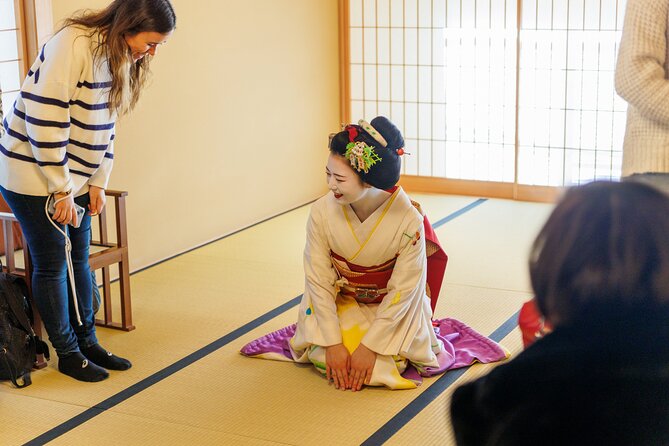
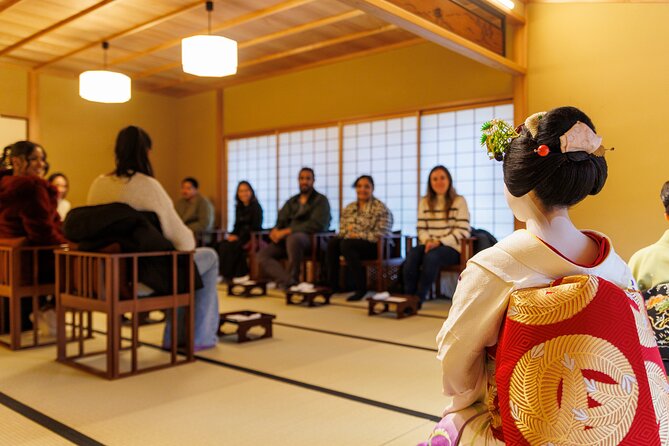
You will meet a maiko and a retired geiko inside. The format is designed for conversation, so you can ask questions and hear personal stories tied to their world and legacy. For many people, this is the difference between a performance you watch and a culture you understand.
I also love that this is a controlled setting. The etiquette is handled for you. You are not trying to read how close to stand or when it is appropriate to speak. The hosts guide the pace, and your guide handles language and context.
Photography rules, and the one detail that affects your memories
Photography and video recording are allowed only during the performance and the photo session. If you plan to post photos online, you need direct permission from the maiko beforehand. This is normal in that kind of intimate setting, but it’s worth planning for so you do not scramble at the end.
Price and Value: Is $109.43 a Fair Trade for This Gion Access?
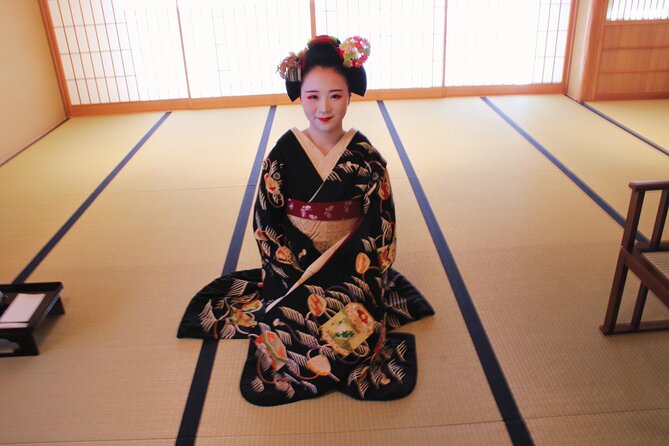
At about $109.43 per person for roughly 3 hours, this is not the cheapest way to see Gion. You should treat it as a cultural access fee. You are paying for the private ochaya setting, for the live performance, and for the guide translation and pacing that makes the conversation possible.
The value makes sense if you actually want the interaction. If your goal is to learn what maiko training looks like, what geiko do as professionals, and how the culture works when you are not outside on the street, this tour gives you that payoff.
The main place where value can feel thin is if you are expecting a shorter experience or a bigger emphasis on random street sightings. This is structured. The walking is part of the story, and the indoor time is the main event.
Group Size and Guide Quality: Why Your Day Depends on Your People
This tour caps at 30 travelers, which helps keep things from turning into a noisy herd. It also means you have a better chance to hear the guide and ask questions when the moment comes.
Guide quality shows up again and again in real experiences. People mention guides like Haruki, Takuma, Tamuka, Miko, Ayako, Mika, and Naomi for being friendly, organized, and helpful with translation. That lines up with what you are paying for, because if you cannot follow the language, the best parts become harder to access.
So choose the time of day that best fits you, and arrive with the mindset that the guide is part of the show.
What to Pack and How to Prep (So You Don’t Lose Time to Rules)
I recommend you show up ready for etiquette, not just sightseeing.
Bring:
- Comfortable walking shoes for the Gion stroll
- Socks suitable for wearing inside the venue
- A reliable umbrella if rain is likely
- A charged phone for the photo session window
Keep in mind:
- Rain or shine the tour happens.
- You will handle stairs for the performance, so wear shoes you feel confident in.
- Photography is restricted to certain moments, and posting needs permission from the maiko.
Also, be mentally ready for a calm pace. The charm of this tour is not speed. It is the way you learn, watch, and talk without constantly scanning for faces on the street.
Who This Tour Fits Best, and Who Might Want Another Option
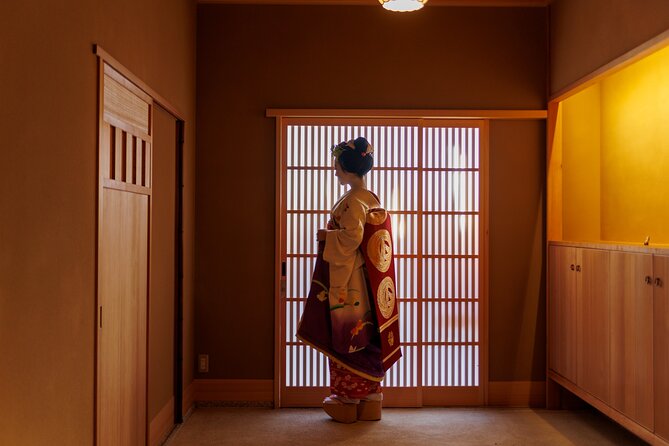
This works best if you want more than photos. You want to understand Gion culture in a way that makes the streets meaningful, then you want the human connection of meeting a maiko and a retired geiko.
It’s also a good match for adults who enjoy traditional arts and respectful cultural settings. The tour is not aimed at kids, and it has a rule of no children under 10.
If you are sensitive to walking time, or you dislike stairs to an indoor second-floor space, you might want to think carefully. And if you mainly want a quick, low-effort street walk where you can wander on your own, this may feel too structured.
Should You Book This Kyoto Geisha Maiko with Gion Walking Tour?
Book it if you want the rare parts, not just the postcards. The combination of a guided walk with context plus a private ochaya performance with meeting time is exactly the kind of experience that makes Gion click.
Skip it if your priority is random street spotting, or if you are looking for something very short. Also consider whether indoor rules like socks, rain handling, and stairs fit your comfort level.
If you go in with curiosity, respect, and patience, you will get the kind of Gion day that feels personal, not like another checklist stop.
FAQ
How long is the Kyoto Gion walking tour with a maiko and geiko performance?
The tour is about 3 hours.
Where does the tour start and end?
The meeting point is Miyagawasuji in Kyoto’s Higashiyama Ward. The tour ends at the special private house (the venue).
What should I wear for the performance?
You must wear socks at the venue of the performance.
Is photography allowed?
Photography and video recording are allowed only during the performance and the photo session. If you want to upload photos on social media, you need permission from the maiko beforehand.
Does the tour run in rain?
The tour takes place rain or shine. On rainy days, wet cloth and wet socks are not allowed at the venue, so you should use an umbrella during the walk.
Is there a recommended age limit?
Yes. The tour does not allow children under 10 years old.
Latest write-ups near Kyoto
- Kyoto: Nishiki Market Tour with a Local Foodie & Tastings★ 4.5 · 67 reviews
- Kyoto Kimono Rental mimosa |Kimono/Yukata Rental Couple Plan★ 4.8 · 67 reviews
- Kyoto: Traditional Kimono Fabric Handicrafts Workshop★ 5.0 · 67 reviews
- Kyoto Tea Ceremony and Samurai Photo Session★ 5.0 · 70 reviews
- Kyoto: Replica food making experience★ 4.8 · 70 reviews
- Kyoto: Kinkakuji, Golden Pavilion Guided Tour★ 4.7 · 71 reviews
- Private departure transfer from Kyoto city to Kansai International airport★ 5.0 · 72 reviews
- Uji: Green Tea Tour with Byodoin and Koshoji Temple Visits★ 4.8 · 72 reviews
Geisha & Gion Tours, compared.
Kyoto Geisha Walking Tour: Gion District & Hidden Gems
Read our review →
Gion Magical Night Walking Tour with Geisha Trivia
Read our review →
Gion Geisha District Walking Tour – Stories of Geisha
Read our review →
Best of Kyoto: Gion, Geisha, Pagodas & Cobblestones
Read our review →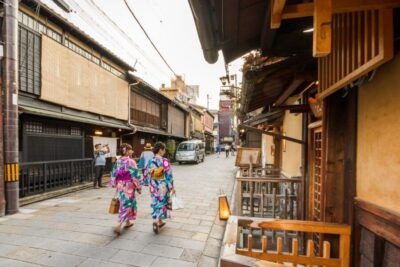

Kyoto Night Foodie Tour in Gion (9+ dishes + 6 Sake tastings)
Read our review →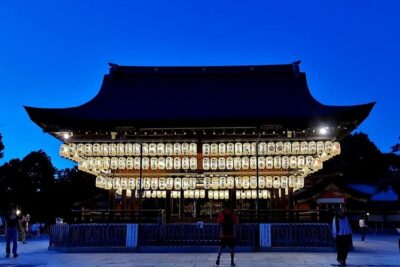
Kyoto Gion Geisha District Walking Tour – The Stories of Geisha
Read our review →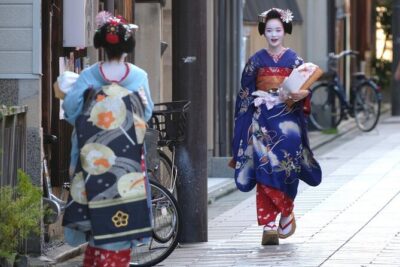
Kyoto Gion: 2-Hour Geisha Culture & History Walking Tour
Read our review →Browse the lists this tour appears in