
Reviewed · CYCLING TOURS
KIYOTO’s Kyoto Private E-Cycling Tour: Highlights & Hidden Gems
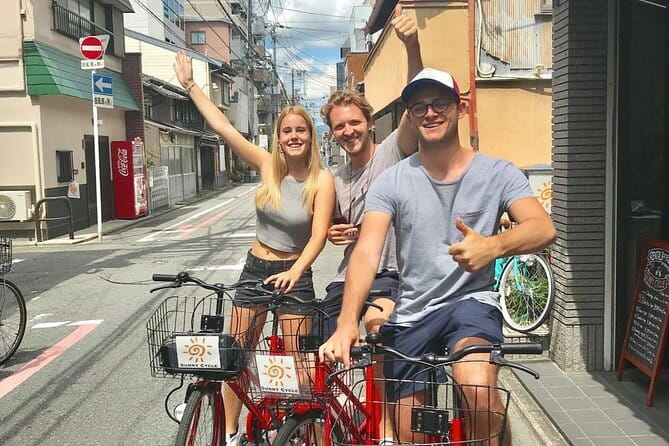
A private e-bike day in Kyoto is a smart way to tick off major sights without turning your legs into noodles. You get time-saving cycling and a private e-bike route that can bend around your group.
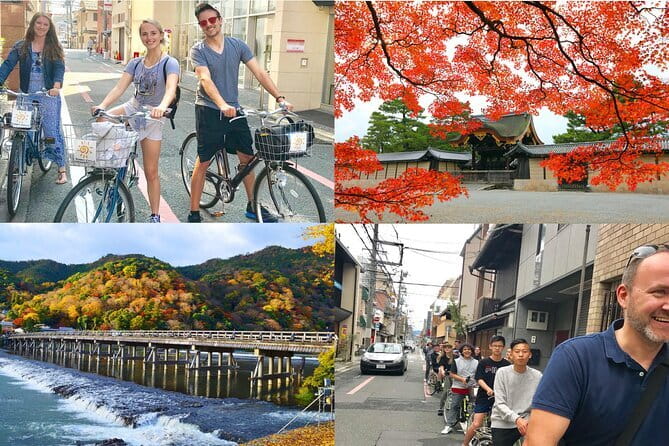
I love that your e-bike rental is included, so you skip the gear hunt and just show up ready to ride. I also love the guide storytelling and photo stops, with names like Yuhey and Mana showing up in the kind of guide experience people keep mentioning.
The main drawback is simple: you must be able to ride, and Kyoto streets can feel tight and busy. If you prefer a slow, mostly car-free day, plan for some moderate physical fitness on this one.
Quick takeaways
- E-bike rental is included, with a normal cycle option if you do not want assist
- Private pacing means you can slow down or speed up based on your group
- A guide who times the day well, with photo-friendly stops and cultural context
- Lots of major Kyoto landmarks, plus riverside walking breaks, without long transfers by foot
- Most stops are free to enter, but paid temple or shrine entry is not covered (Komyo-in is one example on the route)
- Family-friendly setup is possible, including kids bikes and limited kids seats if requested
Why private e-biking is the smartest way to see Kyoto in one day
Kyoto is a city where the distances add up. Even if you plan well, you can lose a lot of time walking between neighborhoods, crossing busy streets, and retracing routes because you missed a turn. With an e-bike, you keep your day moving and still stop often enough to enjoy what you came for.
The private format is the other big win. Instead of being pulled along with a fixed group rhythm, you can ask for pace adjustments and focus on what matters to you, whether that is quick photo time, more explanation at a temple, or extra time near the river.
You also avoid one of the biggest friction points for self-guided biking: getting the right equipment. Here, the ride setup is handled for you, so you can spend your energy on the sights, not on logistics.
More Cycling Tours in Kyoto
- Hidden Kyoto E-Biking tour
★ 5.0 · 1,843 reviews - Bike Tour Exploring North Kyoto plus Lunch
★ 5.0 · 1,087 reviews - Arashiyama Bamboo Forest & Hidden Gems Bike Tour (Early Bird)
★ 5.0 · 613 reviews
Price and value: what $198.15 buys you in Kyoto
At $198.15 per person, this is not a budget stroll. You are paying for three things: the private guide, the e-bike (or standard bike), and the time savings that lets you cover more of Kyoto than a walking route would.
Here is where the value starts to make sense. Many of the stops along this route are free to enter. You are not just buying access, you are buying the ability to get to places like Fushimi Inari-taisha, Nanzen-ji, and the Shirakawa river area in the same day without spending hours on transit.
Food and drink are not included, and paid temple or shrine entrances are not included either. That means you should budget a bit for one or two ticket moments if they apply to your exact stop mix, and you should also plan your own breaks for snacks and water.
Meeting point and how to get ready (no gear hunt required)
You start and end at the same place: Sunny CycleJapan, 600-8419 Kyoto, Shimogyo Ward, Ohorichō, 477 1F. The tour is close to public transportation, and you get a mobile ticket for smoother check-in.
Bring a practical mindset. This is not a sit-in-a-car city tour. You will be riding and stopping, so wear comfortable shoes and dress for the weather. Kyoto can go from warm to chilly fast, especially when you are out near rivers or in temple areas.
Also keep expectations realistic: there are short stops throughout the day, and some are designed to be photo-and-walk moments, not long museum-style visits. That is part of how the day stays efficient.
The route’s big idea: temples, torii, and river calm in one loop
This e-bike route mixes Kyoto’s power sights with quieter views that feel like you found them yourself. The day flows through several distinct zones, and that helps. You are not bouncing across town randomly. You cycle outward, explore, then move to the next neighborhood cluster.
A typical rhythm looks like this:
- Short riding segments between areas
- Short to medium stops at iconic points
- One or more longer walking moments where the river or historic lanes do their thing
Because the tour runs from 4 to 8 hours, your exact stop mix can vary with your selected length. Think of the list below as the core highlights and neighborhood stops that the route is built around.
A change of pace from Kyoto:
- PERFECT KYOTO 1-Day Bus Tour
★ 5.0 · 13,518 reviews - Kyoto: Fushimi Inari, Kinkakuji, Bamboo Grove 1 Day Bus Tour
★ 4.8 · 4,316 reviews - Kyoto: Tea Ceremony in a Traditional Tea House in Kiyomizu
★ 4.9 · 3,519 reviews - Kyoto Geisha Walking Tour: Gion District & Hidden Gems
★ 4.7 · 3,273 reviews
Higashi Hongan-ji to Fushimi Inari: start with scale, end with drama
The day begins at Higashi Hongan-ji, a major Jodo Shinshu Buddhist temple in central Kyoto founded in 1602. This is one of those starts that immediately sets the tone. You get big-garden space and serious architecture before you move into the more famous torii-driven scenery.
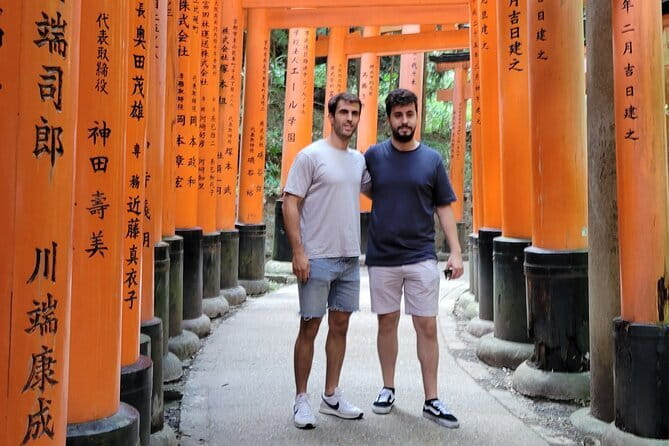
Then you cycle to Fushimi Inari-taisha Shrine, head shrine of the Inari shrines across Japan. The signature experience here is the thousands of bright red torii gates forming tunnels along the mountain trails. Even if you only move a portion of the way, the atmosphere changes as the gates pull you inward.
You typically get about 40 minutes here, and admission is free. That is enough time to get your bearings, take photos, and do a satisfying chunk of the approach without turning it into a half-day hike.
Komyo-in and Tofuku-ji: peaceful garden time in the Tofuku-ji area
After Inari’s big visual impact, you get a calmer shift. Komyo-in Temple is a sub-temple of Tofuku-ji known for its tranquil garden. In autumn especially, it is praised for how the leaves blend with the moss-covered grounds. That contrast, loud-red torii energy followed by muted garden quiet, is a smart pacing choice.
This stop is about 20 minutes, and paid entry is not included for this part. So if Komyo-in entrance applies on your day, plan for the cost yourself.
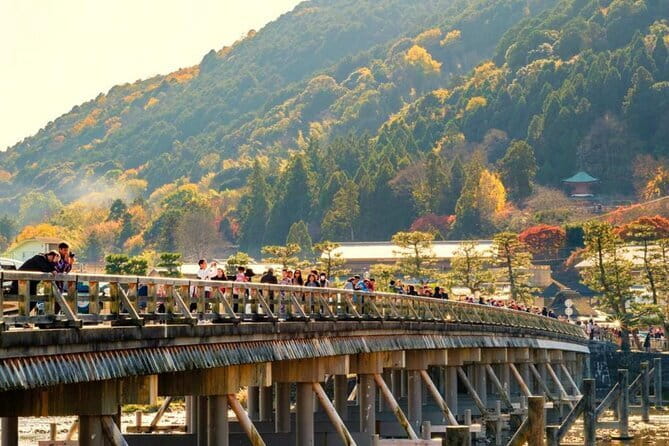
From there, you move to Tofuku-ji Temple. One highlight is Tsutenkyo Bridge, famous for autumn color views over the valley. You usually get a shorter stop here, around 10 minutes, and admission is free. It is a quick hit, but it is the kind of quick hit that still feels like Kyoto.
Hōkan-ji (Yasaka Pagoda): a photo moment that feels like a postcard
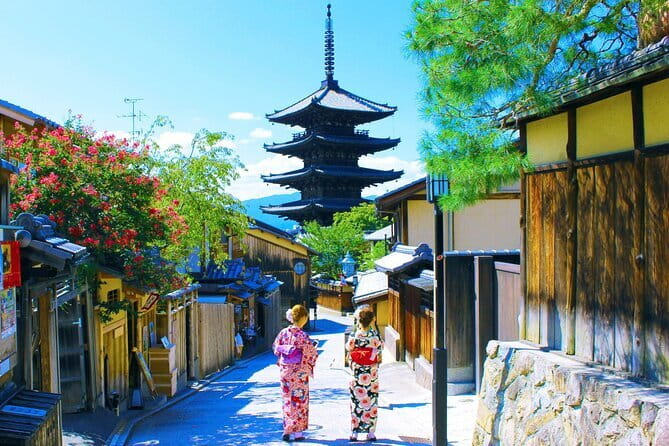
Next is Hōkan-ji, home to the Yasaka Pagoda. This is the kind of stop you see in Kyoto photos, but it lands differently when you arrive in person. The pagoda’s silhouette framed with historic Higashiyama district backdrops is the point.
Expect about 20 minutes and free admission. This is where the guide’s photo skills matter. You get help finding angles and pacing yourself so you do not just snap one shot and rush away.
Yasui-Konpiragu to Hanamikoji: prayers, then old Kyoto street life
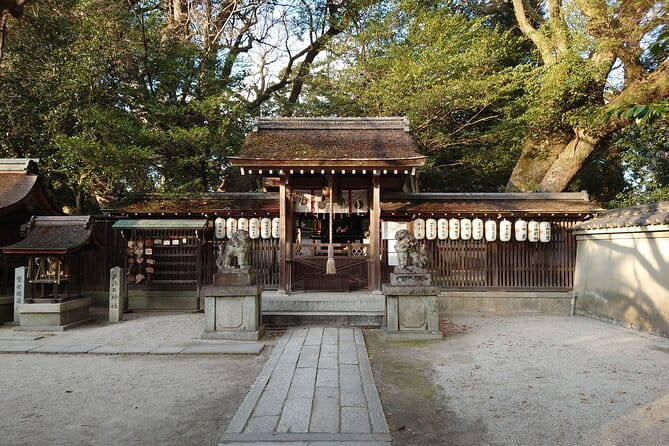
Yasui-Konpiragu Shrine is known for prayers tied to breaking bad relationships and bringing good ones. People come here specifically for cutting ties or strengthening connections, so the vibe is personal, not just sightseeing.
The stop time is short, around 10 minutes, and admission is free. It works well as a quick cultural reset before you move into a classic Kyoto street scene.
Then comes Hanamikoji Street in the Gion area. You get a charming, narrow lane lined with traditional tea houses and restaurants. It is not a museum display, it is everyday Kyoto atmosphere, and the guide can help you read what you are seeing.
You usually have about 10 minutes here, with free entry. If you want to linger, ask. The private pacing is there for exactly this kind of decision.
Shirakawa River classics: Tatsumi Bridge, canal views, and quiet walkways
This part of the ride is about moving from iconic architecture into river calm. You stop at Tatsumi Bridge along the Shirakawa River, described as a small wooden bridge with a scenic pull. Even though the time is brief (around 10 minutes), the river setting does a lot of the work for you.
Next is Shirakawa Canal (Gion Shirakawa). This is a historic district feel with machiya houses and willow-lined canal edges where geisha may occasionally stroll. You typically get around 15 minutes, and admission is free.
Right after, you can enjoy the Shirakawa Shinsui Terrace, another riverside walkway close to the sound and flow of water, about 15 minutes and free.
This sequence is a great example of why e-biking helps. On foot, you can end up sprinting between viewpoints. Here, you cycle efficiently, then slow down for river moments where your brain can actually enjoy the scene.
Heian Jingu’s giant torii and the trip toward Nanzen-ji
Heian Jingu Shrine’s huge vermilion torii gate is next. The gate is massive, about 24.2 meters tall, built in 1929 to commemorate Emperor Showa’s enthronement. It is reinforced concrete, and it creates a big, open feeling that contrasts with the tighter streets you just biked through.
Expect around 15 minutes and free admission. It is a good breather before the heavier temple zones.
From there, you move into Nanzen-ji, a prominent Rinzai sect temple founded in 1291. You get about 15 minutes, free to enter.
Nanzenji Suirokaku and Philosopher’s Walk: aqueduct engineering, then a 2 kilometer mood shift
One of the most memorable parts here is Nanzenji Suirokaku, also known as the aqueduct. It is a brick structure completed in 1888, built to transport water from Lake Biwa. Temple visit plus engineering detail is a combination Kyoto does well.
You spend about 10 minutes here, free admission.
Then you get Philosopher’s Walk. This is a walkway around 2 kilometers along the Biwa Canal. Even with a short stop, the point is the mood: a calm, scenic corridor that turns a sightseeing day into a walking day without the usual stampede feeling.
You typically get about 30 minutes here, and admission is free.
Honen-in and Shimogamo Jinja: forest calm then ancient Shinto
Honen-in is a peaceful Zen temple tucked into a foresty setting. It is often described as calm, and the grounds feel more like a quiet retreat than a stop on a busy checklist. You usually have about 15 minutes, free admission.
Then the route heads to Shimogamo Jinja, also known as Kamomioya Shrine. This is one of Kyoto’s oldest Shinto shrines, with roots traced to around 90 BC. It is a very different energy from the torii tunnels at Inari, more grounded and ancient-feeling.
You get around 30 minutes here, with free admission. It is long enough to slow your pace and stop treating the day like a route on a map.
Kamogawa Delta and Kojin stepping stones: fun, low pressure, and very Kyoto
The Kamogawa Delta is where the Kamo and Takano Rivers meet. You get scenic views and seasonal beauty like cheered color moments, plus stepping stones shaped like turtles and birds.
You have about 15 minutes and free admission. This is also a friendly stop for families because it naturally invites casual movement and photos without a strict viewing agenda.
Then you hit the stepping stones at Kojin (Ebisugawa Tobiishi). This is the kind of playful moment where people hop across stones or snap photos along the water. Time is about 10 minutes, free admission. If you are traveling with kids, this is often the stop that gets the biggest smiles for the least effort.
Kyoto Gyoen, Teramachi-dori, and Sanjo: finishing with breathing room and local streets
You also pass through Kyoto Gyoen, a large park area surrounding the old Imperial Palace. It is popular with locals to relax and you get historic buildings scattered around. It is also known for cherry blossoms, but it works year-round because it breaks up the temple intensity.
After that, you cycle through Teramachi-dori Street, a central north-south shopping street full of traditional Japanese goods, cafes, and fashion shops. It is a great place to pick up small souvenirs, snack, or just reset your brain. Expect about 10 minutes and free entry.
Then you move to Sanjo Street, an east-west hub with restaurants, cafes, and historic buildings close to Kawaramachi and the Kamo River. It is another convenient base for later meals, if you are planning your day beyond the tour. Entry is free, and the stop time is short.
What the guide does for you (and why safety matters in tight streets)
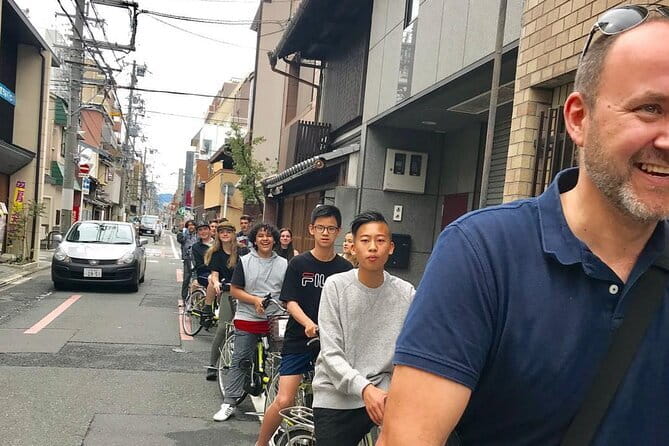
A good Kyoto e-bike guide is not just reciting facts. The real value is pacing and practical guidance. A handful of guides on this route are known for combining clear history and culture with humor and real-life customs. Names you might run into include Yuhey, Yonnie, Yuichi, Mana, Kento, Polina, and Takuma, depending on your date.
Safety is a consistent theme. Kyoto streets can be narrow, and traffic can be unpredictable in small lanes. You get help navigating crowded areas, and the better guides make it feel calm, not stressful.
You will also likely get photo direction. The tour is designed so the guide can help you get the angles without wasting your time circling for the perfect spot.
Tips that make the ride easier for families and mixed groups
If you are traveling with kids or a mixed fitness group, this is one of the strongest reasons to consider an e-bike over walking.
Kids’ bikes are available but limited, and they are non-electric. If your child cannot ride on their own, kids seats are available too, but also limited, so you should request when booking. In practice, having a guide who can manage children with patience matters as much as the bike equipment.
For adults, the best prep is mental. You do not need to be an athlete, but you do need to be comfortable riding and stopping often. Plan for moderate effort, especially if the weather is warm or humid.
Also remember: food and drink are not included. Build in a water bottle habit and be ready to use the streetside cafe options if you want a break.
Who should book this e-bike tour, and who should skip it
This tour is a good fit if you:
- Want to cover major Kyoto landmarks in one day without relying on taxis
- Like a mix of big sights (Inari, pagoda views) and slower river walks
- Prefer a private pace where you can linger or move faster
- Are comfortable riding a bike for several hours, with short breaks
You might want to skip it if:
- You cannot ride a bicycle confidently
- Your group wants a fully step-by-step walking experience with no riding segments
- You strongly dislike navigating through crowded areas, even with a guide managing the route
Should you book this tour?
If your goal is to see a lot of Kyoto, make it feel doable, and keep your energy for sightseeing, this private e-cycling tour is easy to recommend. The included e-bike and private guide pace do most of the heavy lifting, and the route is built for variety, from torii tunnels to riverside quiet.
Book it if you are comfortable riding and want a day that feels efficient without feeling rushed. Skip it if cycling is a hard no for your group, because this experience is fundamentally built around that bike time.
FAQ
How long is KIYOTO’s Kyoto Private E-Cycling Tour?
The tour runs from 4 to 8 hours, depending on the length you book.
Are the bikes included?
Yes. The electric bike is included, and a normal cycle option is also available.
Is food included?
No. Food and drink are not included.
Are temple and shrine entrances included?
No. Paid entrance to temples and shrines is not included. Many stops in the route are free, but at least one stop listed, Komyo-in, is not included.
What is the meeting point?
The tour starts at Sunny CycleJapan, 600-8419 Kyoto, Shimogyo Ward, Ōhorichō, 477 1F, and it ends back at the meeting point.
Can children join?
Yes, kids bikes (non-electric) are available in limited quantity, and kids seats are also available for children who cannot ride on their own. You should request these at booking.
Latest write-ups near Kyoto
- Kyoto Private Tour Full Day with Local Guide&Nara Option(PerGroup★ 5.0 · 20 reviews
- Sacred Pathways: Discover the Philosopher’s Path of Kyoto★ 4.9 · 20 reviews
- Hammer Pattering Experience of Ring★ 5.0 · 20 reviews
- Kyoto UNESCO World Heritage Site Private Tour with a Premium Van★ 5.0 · 20 reviews
- KYOTO: Private Tea Ceremony in Hidden Townhouse (Kid-Friendly)★ 5.0 · 20 reviews
- Sushi or Traditional Japanese Cuisine in a Kyoto Home with Emika★ 5.0 · 20 reviews
- The Kyoto VIP Experience!★ 5.0 · 20 reviews
- Kyoto Customized Private Tour: See Top Attractions in 1 Day★ 4.7 · 20 reviews
Cycling Tours, compared.


3h Tokyo E-Bike Tour: Hidden Gems, and Local Life with guide
Read our review →
Arashiyama Bamboo Forest & Hidden Gems Bike Tour (Early Bird)
Read our review →
Hiroshima in a Nutshell: Morning Bike Adventure
Read our review →Browse the lists this tour appears in