Reviewed · SHOW
Tokyo: KABUKI Show at Kabukiza Theatre Admission Ticket
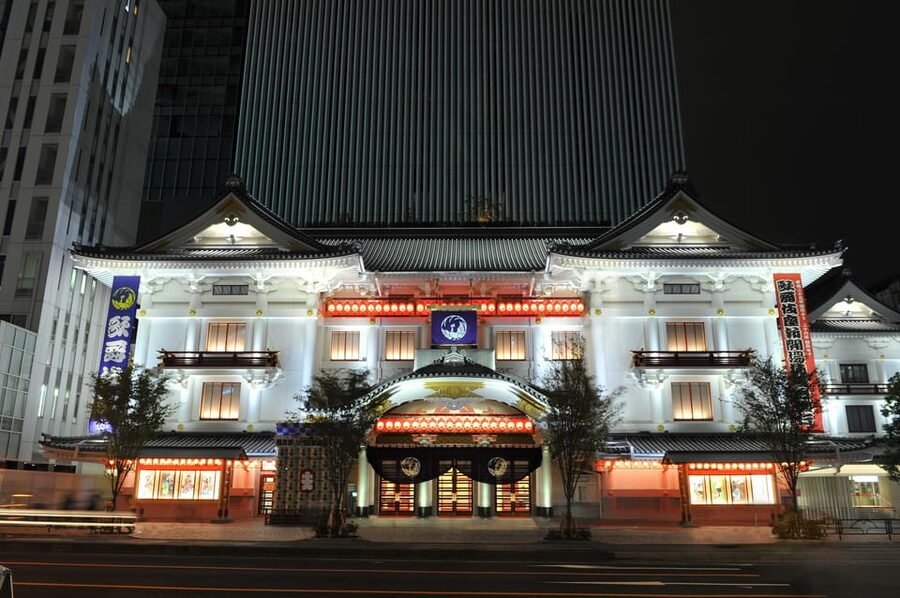
Kabuki is one of those art forms you can read about for years and still feel unprepared for how physical it is. At Kabukiza Theatre in Ginza, you’re watching the real thing in Japan’s dedicated Kabuki home, with live music and stagecraft that feels made for awe. I love that the show changes every month, so you’re not just repeating the same “greatest hits” package. I also really like that the ticket includes an English or 简体中文 caption service, so you can follow along without guessing. The one drawback to plan for is comfort, the seating is traditional and can feel tight during a multi-part performance.
You’ll spend about 4 hours in a historic building, moving between pieces with breaks. It’s not a quick “culture hit,” it’s more like settling in to a full Kabuki program, then standing back up with your brain buzzing.
Before you go, I’d consider one practical point: you need to exchange your voucher for a real ticket at the Basement Level 2 box office, and the theater doors open only 30 minutes before the show starts. If you arrive late, you can lose time and stress the whole evening.
Key things I’d bet on
- Only Kabuki-only theater in the world: you’re not visiting a one-off performance space, it’s built for this art.
- Monthly programs: each schedule mixes different styles and story types, so repeat visits can still feel fresh.
- English or 简体中文 captioning service: you get help following the action without needing Japanese.
- Historic stage + live music: the shamisen and performers are part of the experience, not just background.
- Comfort prep matters: bring a small cushion if you’re sensitive to hard seats.
Why Kabukiza Beats a Generic Tokyo Show
Kabukiza Theatre in Ginza is the place to see Kabuki when you want the full atmosphere, not a watered-down version. This is the only theater in the world dedicated exclusively to Kabuki, which changes the vibe immediately. The building, the stage rhythm, even how the audience settles in all feel tuned to this specific art.
Kabuki itself mixes theater, dance, and music in ways that can feel familiar at first and then completely new once the performers start using the stage like a canvas. You’ll see big gesture acting, dramatic costumes, and movement that’s built for visibility and meaning. One easy way to think about it is like a blend of opera, ballet, and pantomime, but with its own Kabuki logic.
The big reason to book Kabukiza is that you’re watching a living tradition in the right setting. You’re not trying to force a modern theater mindset onto something that follows older rules of storytelling, movement, and timing. If you like performance art that’s precise, theatrical, and visually intense, you’ll be in the right place.
Also on the shortlist for Tokyo:
- Mt Fuji and Hakone 1-Day Bus Tour Return by Bullet Train
★ 5.0 · 26,383 reviews - 1-Day Tokyo Bus Tour
★ 5.0 · 14,250 reviews - Tokyo: TOKYO SKYTREE® Admission ticket
★ 4.5 · 11,192 reviews
Getting There and Timing It Right (Ginza, Box Office, Doors)
This show is in central Ginza, so you’ll likely combine it with dinner plans nearby. I’d treat it like the anchor of your evening, not an “afterthought” event.
Plan for two timing moments:
First, exchange your voucher. The box office is on Basement Level 2, open from 10:00 AM to 6:00 PM. You pick up your ticket at the Venue box office on the day of the performance, using your PDF or mobile GYG voucher. You cannot enter the theater with the voucher itself, you must exchange it for the real ticket.
Second, the doors open 30 minutes before showtime. That matters because you’ll want time to find your seat, get settled, and get comfortable before the first piece starts. If you’re arriving after 6:00 PM on the day of the show, you go straight to the theater entrance.
If you’re the kind of person who runs on “I’ll figure it out when I get there,” this is the moment to slow down. Kabukiza is simple once you know the steps, but it’s still easy to get flustered if you stroll in right at show start.
Inside Kabukiza: Pre-Show Space, Shopping, and the Exhibition
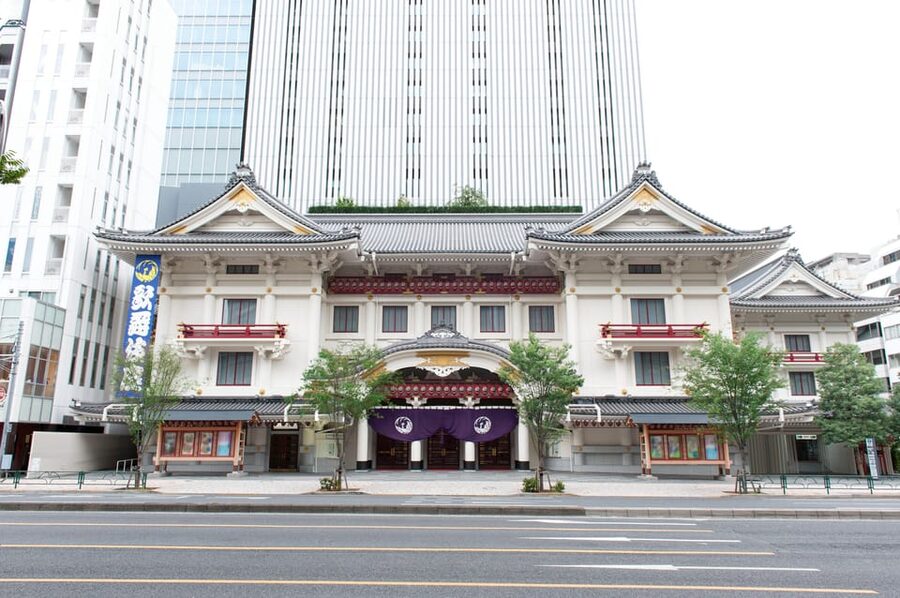
Kabukiza isn’t only the auditorium. There’s a more relaxed part of the visit that helps you get oriented.
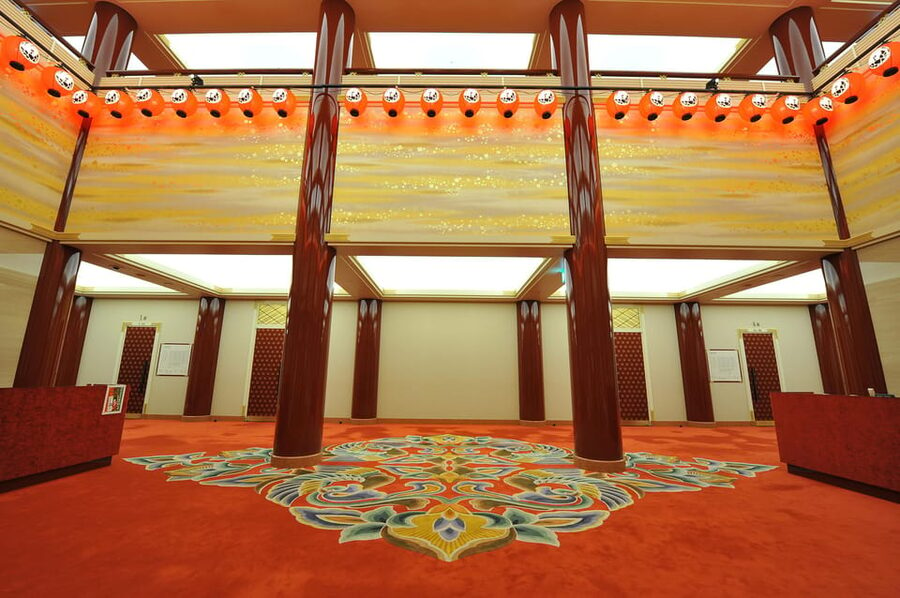
Before the show, you can check out the permanent interactive exhibition. This is useful because Kabuki has a lot of visual shorthand: costume codes, role types, and staging conventions. Even if you only spend a short amount of time there, it helps the performances land faster once you’re seated.
Then there’s the shopping center with Kabuki-related gifts and souvenirs. It’s on the second basement floor, and it’s a good place to pick up small keepsakes without hunting around later. I like browsing before the show because once the performance ends, energy and timing can get weird. If you care about souvenirs, treat it as part of your plan, not something to hope for at the exit.
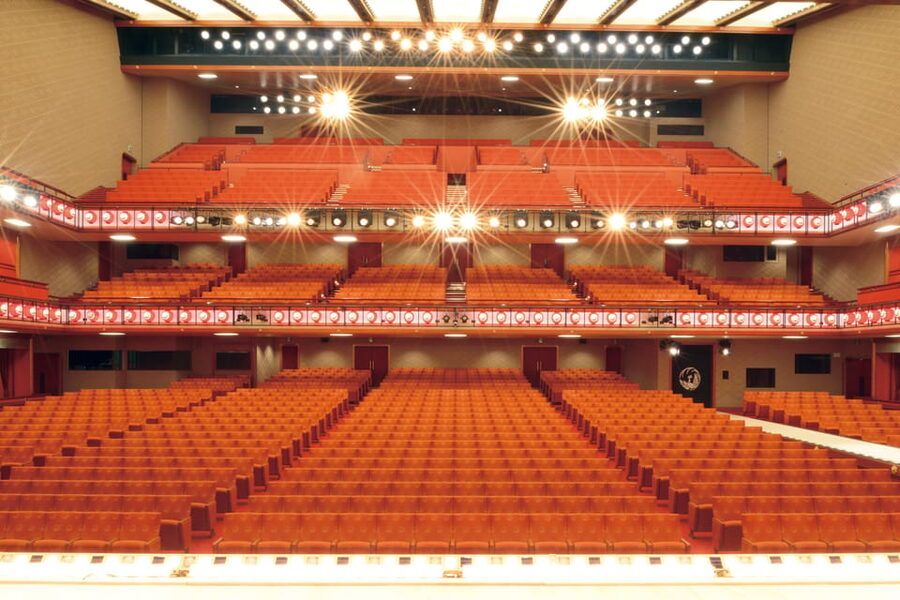
Also, the auditorium itself is in a historic building. You’ll feel that the moment you step inside. The stage space and the audience layout make Kabuki feel like a ceremony, even though the show is highly entertaining.
The Monthly Program: How Kabuki Stories Are Put Together
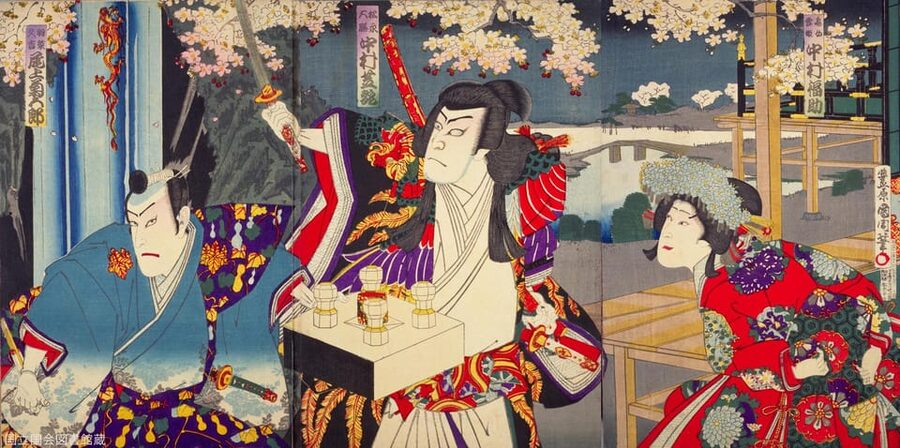
Kabukiza programs change monthly, which is a big part of the value. You’re not just buying “a Kabuki show,” you’re buying a specific month’s lineup.
A typical program can run in the range of about 4 hours in total, and the day-to-day schedule depends on the specific performance slot. The included show is made up of several different pieces rather than one continuous play. That helps if you get bored during long, single-story theater. It also keeps the evening moving through different styles.
If you’re curious what “monthly changes” actually look like, here’s the kind of mix you might see in a February schedule:
- Modern Kabuki and dance pieces: examples include O-EDO MIYAGE (A Souvenir from Edo) and TONBI YAKKO (A Footman and a Kite).
- Domestic and historical storytelling: you might see titles like IYA SAKAE SHIBAI NO NIGIWAI Saruwakaza Shibai Mae (In front of the Saruwakaza Theatre) and historical plays such as TSUMORU KOI YUKI NO SEKI NO TO.
- Evening shows with story from battle chronicles: the evening lineup might include ICHINOTANI FUTABA GUNKI, featuring Jinmon and Kumiuchi, plus dance pieces like AMAGOI GITSUNE (The Fox Praying for Rain).
The point isn’t memorizing titles. The point is understanding that Kabukiza schedules often rotate between story types and performance styles. That helps you find what you like. If you love narrative, focus on the plays. If you’re more drawn to movement and costume, lean into the dance pieces.
A change of pace from Tokyo:
- Tokyo: teamLab Planets TOKYO Digital Art Museum Entry Ticket
★ 4.6 · 9,779 reviews - Mt Fuji & Hakone Cruise, Drum Show Bullet Train 1 Day from Tokyo
★ 4.0 · 7,413 reviews - Tokyo: Sumo Show Experience with Chicken Hot Pot and a Photo
★ 4.8 · 6,678 reviews - Tokyo: Shinjuku Food Tour (13 Dishes at 4 Local Eateries)
★ 5.0 · 6,603 reviews
Following Along: English or 简体中文 Captions That Actually Help
If you don’t read Japanese, the captioning service is the single most practical reason this is worth your money. Your ticket includes English or simplified Chinese (简体中文) captioning, which means you’re not walking into a beautiful performance but losing the plot.
Here’s how to think about it while you’re watching:
- Kabuki dialogue and meaning often land fast, and the action is visual, not subtle.
- Your brain will want to keep eyes on the stage because facial expressions and gestures matter.
- Captions let you connect those visuals to the story happening in real time.
In practice, this means you should avoid a “caption-only” approach. Use the captions to confirm meaning, then return your attention to the performers. If you ever feel like the captions are not updating at the same pace you expect, don’t panic. Keep your eyes on the stage for the next movement cue, because Kabuki uses motion and symbolism constantly.
Also, there is intermission during the performance. That break is helpful even if you’re following captions well, because it gives your eyes a rest and lets you reset before the next piece.
Seats, Comfort, and What to Do During Intermission
Let’s talk comfort, because it can affect how much you enjoy a 4-hour performance.
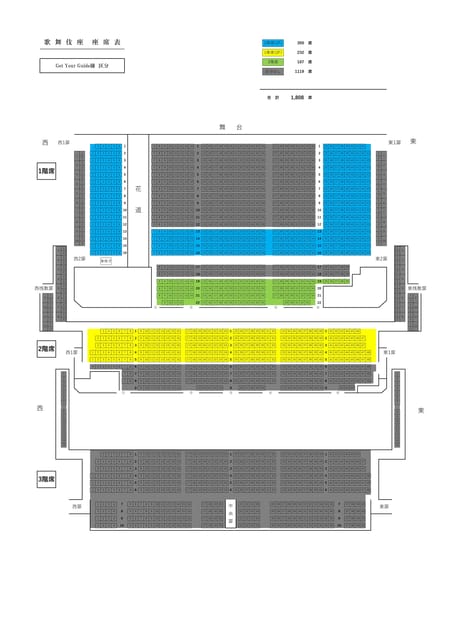
Kabukiza seating is traditional. That’s part of the charm, but it also can be tight or uncomfortable for longer stretches. I’d plan for that reality. If you’re sensitive to hard seats, bring a small cushion or something soft in your bag. It makes a noticeable difference once you settle in and the performance moves through multiple pieces.
You also have practical options during the intermissions. If you bring something to eat or drink, you’ll likely feel more comfortable. Snacks and alcohol are also available for purchase inside the theater, so you don’t have to haul everything from outside.
One more comfort tip: plan your timing so you do not need to rush during breaks. Kabuki programs include several segments, and you want to be calm enough to enjoy the atmosphere rather than thinking about your next step.
Cost and Value: Is $106 Worth It?

At $106 per person for a roughly 4-hour Kabuki experience, this isn’t a “cheap night out.” But when you look at what you get, it starts to make sense.
You’re paying for:
- Tickets to a performance at the Kabukiza Theatre, the dedicated Kabuki venue.
- Live music as part of the show, not a replacement for it.
- English or 简体中文 captioning service built into your ticket.
- A monthly program that can include a mix of historical plays, domestic stories, and dance or modern Kabuki.
For me, the value hinges on one thing: whether you’ll actually follow what’s happening. With captions included, you get much more out of the costumes, staging, and storytelling. Without captions, Kabuki can still be stunning, but it becomes harder to connect the action to meaning.
So if you’re booking because you want “something cultural and iconic,” this can be worth the splurge. If you’re booking mainly for a photo moment, it’s easy to feel annoyed about the price. Kabuki is a sit-and-watch art form. You’ll feel the cost in your budget, but you’ll also feel it in the quality of the experience.
Who This Kabukiza Show Fits Best
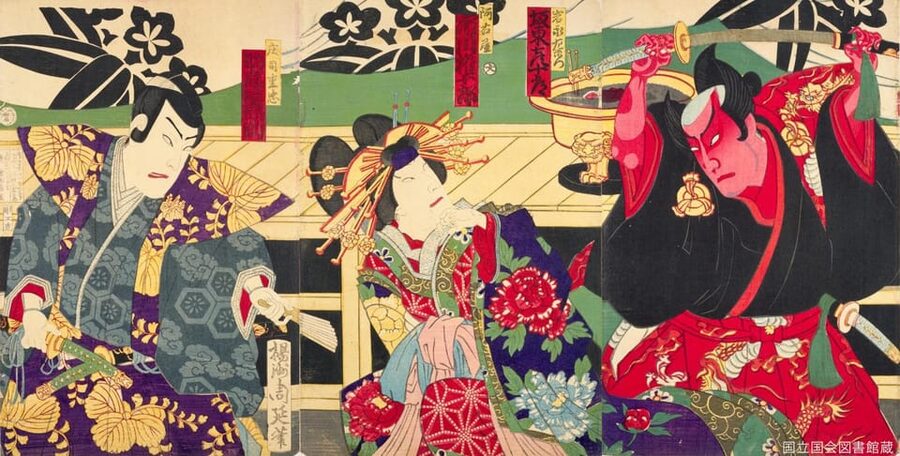
This experience is a strong match if you want a real Kabuki night in Ginza and you appreciate performance art that’s precise, stylized, and theatrical.
You’ll likely enjoy it if you:
- Want a bucket-list Tokyo cultural event that is tied to one specific venue.
- Don’t speak Japanese but still want to understand the story enough to stay engaged.
- Love live music, costumes, and staging craft.
It might be less satisfying if you:
- Prefer casual, short events rather than multi-part theater lasting around 4 hours.
- Struggle with classical performance styles, where the pace and conventions differ from modern theater.
One more small note: some people plan clothing for theater vibes. There’s no requirement stated here, but the fact that people consider it tells you the audience tends to treat the night seriously.
Should You Book Kabukiza in Tokyo?
Book it if you want the most focused Kabuki experience you can find in Tokyo, and you’re happy to spend a solid block of time watching several pieces. The captioning service is a real help, and the monthly program approach means you’re not just buying a generic show.
Skip it only if you know you won’t enjoy sitting through a multi-part performance in traditional seating, or if you’re looking for a quick, flexible activity. Kabuki rewards patience.
If you do book, go in with one mindset: you’re not just watching characters, you’re reading an art form. Give yourself time to settle, use the captions as a guide, and let the live music and stage visuals carry you for the whole program.
FAQ
Where is Kabukiza Theatre located?
Kabukiza Theatre is in the Ginza area of Tokyo. The address is Ginza 4-12-15, Chuo-ku, Tokyo, Japan.
How long is the Kabukiza Kabuki show?
The duration is listed as 4 hours.
Does the ticket include English support?
Yes. Your ticket includes an English or simplified Chinese (简体中文) captioning service.
Where do I pick up my ticket?
Pick up tickets at the venue box office on the day of the performance. The box office is on Basement Level 2.
Can I enter the theater using a voucher?
No. You cannot enter the theater with a GYG voucher. You must exchange the voucher for a ticket at the box office.
What time do the doors open?
The theater doors open 30 minutes before the show starts.
Is there an intermission during the performance?
Yes, there will be an intermission during the performance.
Can I eat or drink during intermission?
If you bring something to eat or drink, you will be more comfortable. Snacks and alcohol are also available for purchase in the theater.
Can I choose my seats for this reservation?
No. You cannot specify your seats for GYG reservation.
Is the show suitable for young children?
It is not suitable for children under 4 years.
Latest write-ups near Tokyo
- Tokyo Customized Private Tour: See Top Attractions in 1 Day★ 4.8 · 67 reviews
- From Tokyo: Top 5 Scenic Spots of Mount Fuji Full-Day Tour★ 4.5 · 67 reviews
- Tokyo: Shinjuku Izakaya and Golden Gai Bar Hopping Tour (2h)★ 4.9 · 67 reviews
- Traditional Japanese Music ZAKURO SHOW in Tokyo★ 5.0 · 67 reviews
- Tsukiji: Unlimited Sake Tasting Experience★ 4.9 · 67 reviews
- Tokyo: Not a show- a professional sumo practice with experts★ 4.9 · 67 reviews
- Samurai Ninja Museum Asakusa: Kid-Friendly Ninja Training★ 4.7 · 67 reviews
- Private Harajuku Omotesando Architecture Walking Tour★ 5.0 · 67 reviews
Show, compared.

Mt Fuji & Hakone Cruise, Drum Show Bullet Train 1 Day from Tokyo
Read our review →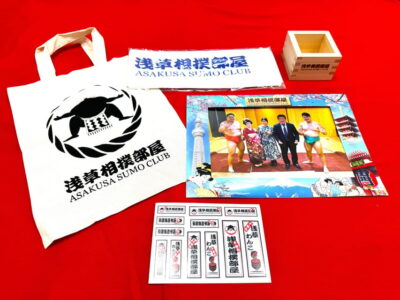
Sumo Show Experience with Chicken Hot Pot and a Photo
Read our review →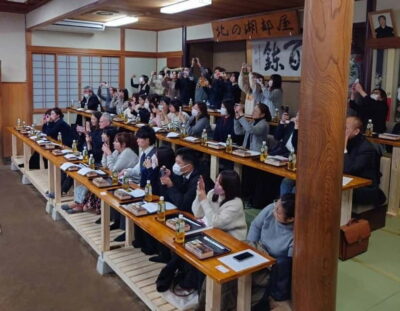
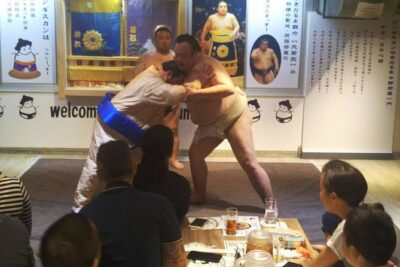
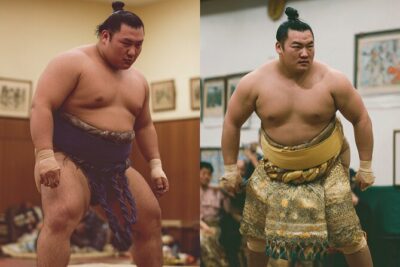
Tokyo Shinjuku Sumo Show & Experience with Photo
Read our review →

Mt Fuji & Hakone Cruise, Drum Show Bus 1 Day from Tokyo
Read our review →