
Reviewed · ARASHIYAMA & BAMBOO TOURS
Kyoto: Arashiyama Bamboo, Togetsukyo bridge, Sanso, and more
Kyoto’s Arashiyama area can look close on a map, then surprise you with twists, slopes, and detours. That’s why I like doing this tight 3-hour loop, starting at Randen Arashiyama Station, with a guide who helps you move efficiently, like Alex did for a group member who needed extra care on rocky uphills and downhills. I also love the combo of Sagano Bamboo Forest magic and Tenryuji Temple’s calm Zen garden focus in one morning style outing. The main drawback is simple: it is a walking tour, so expect uneven paths and plan for a decent amount of on-your-feet time.
If you’re the kind of traveler who wants iconic sights without a full half-day commitment, you’ll appreciate how the stops connect. You’ll pause for panoramic photos at Togetsukyo Bridge, wander temple grounds with modest dress in mind, then slow down again at Okochi Sanso Villa and its peaceful gardens. The final stop, Kimono Forest, adds a modern art contrast that makes for fun photos.
One more consideration: entrance fees for Tenryuji and Okochi Sanso are not included, and you’ll want cash on hand. Dress for temples too, meaning no shorts or tank tops. If that sounds manageable, this is a strong way to see Arashiyama in compact time.
Key things that make this Arashiyama walk worth it
- A small group (up to 9) keeps the pace friendly and the guide easier to ask questions
- Sagano Bamboo Forest is photo-famous, and having a guide helps you actually enjoy the walkway, not just fight for angles
- Togetsukyo Bridge gives you big mountain-framed views with a quick, efficient stop
- Tenryuji Temple adds the UNESCO Zen garden experience, not just another scenic building
- Okochi Sanso Villa shifts from temple stillness to villa gardens and a calm tea-house option
- Kimono Forest ends the tour with modern art color, including its illuminated look in season
Starting in Arashiyama: Tully’s Coffee and a simple meet-up plan
The tour meets at Tully’s Coffee at Randen Arashiyama Station. Your guide will be waiting there wearing a shirt with the local partner name. It’s a clear, easy meeting point, which matters in Arashiyama because streets and walkways can feel confusing quickly.
Show up at least 10 minutes early. The guides only wait a maximum of 10 minutes, so treat that like a hard start time. If you arrive late, you may miss the start and the flow of the route.
I also like that the tour is built for short-time visitors. You are not hopping between far-flung neighborhoods. You are working the Arashiyama pocket, with stops close enough to walk yet spaced in a way that actually feels doable.
More of Arashiyama:
- Kyoto: Fushimi Inari, Kinkakuji, Bamboo Grove 1 Day Bus Tour
★ 4.8 · 4,316 reviews - Osaka/Kyoto:Kinkakuji,Arashiyama,FushimiInariShrine,NaraPark
★ 4.1 · 1,596 reviews - Kyoto/Osaka: Nara, Fushimi Inari Taisha, Arashiyama Bus Tour
★ 4.7 · 1,275 reviews
Sagano Bamboo Forest: how you enjoy it instead of rushing through it
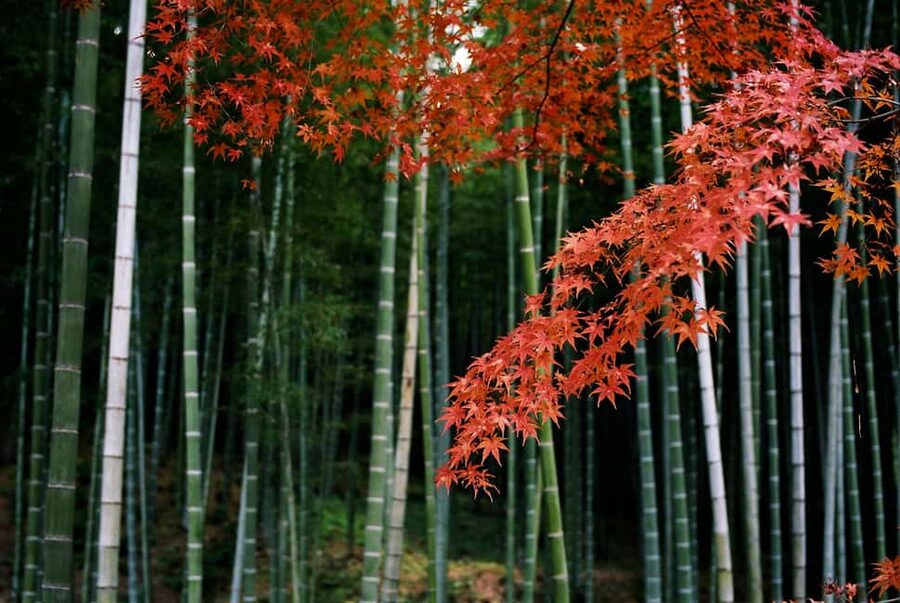
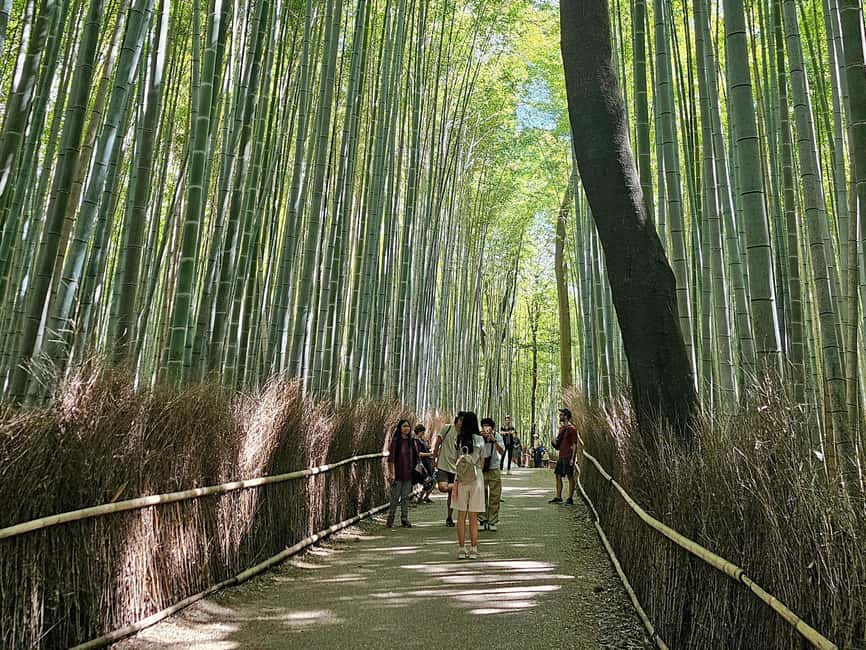
The headline here is the Sagano Bamboo Forest, often called mystical for a reason. The grove has that tall, straight rhythm that makes your brain slow down. Even if you’ve seen bamboo photos before, in person you notice how the light falls between the stalks, and how the sound changes when you walk deeper into the paths.
The guide is a big part of the value. One common mistake in Arashiyama is thinking everything is a short straight walk from A to B to C. It is not. The lanes and slopes twist. Having someone like Alex lead the way helps you take the smarter walking lines so you spend time looking at bamboo, not staring at a map while you backtrack.
What to do with your camera: don’t just shoot from the obvious spots. Move slowly along the guided route, and give yourself a few seconds to check what the bamboo does when it frames your view. The best shots often come from walking a little, then pausing.
Also, plan for crowds at peak hours. This tour is short, so you can get the key atmosphere without needing a full day inside the heaviest traffic windows.
Togetsukyo Bridge: mountain-framed photos in a manageable time slice
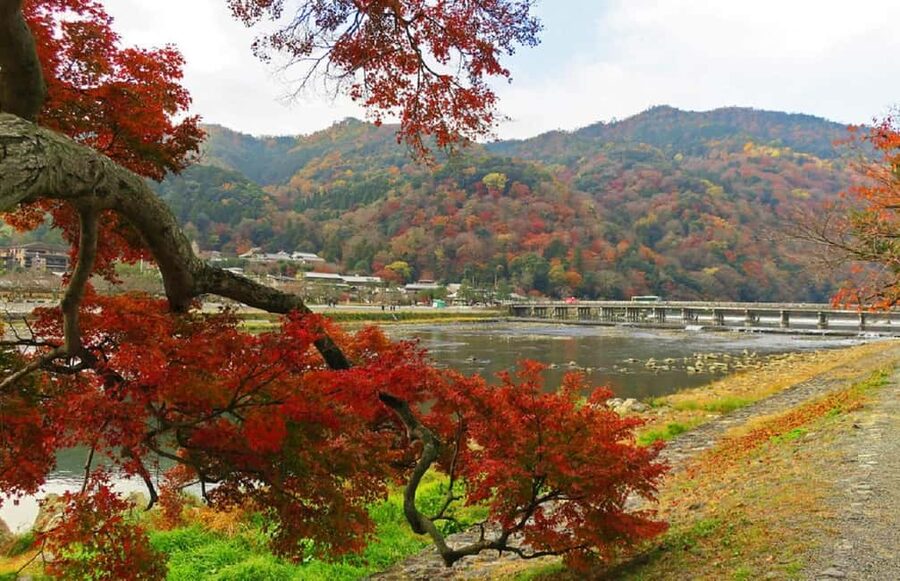
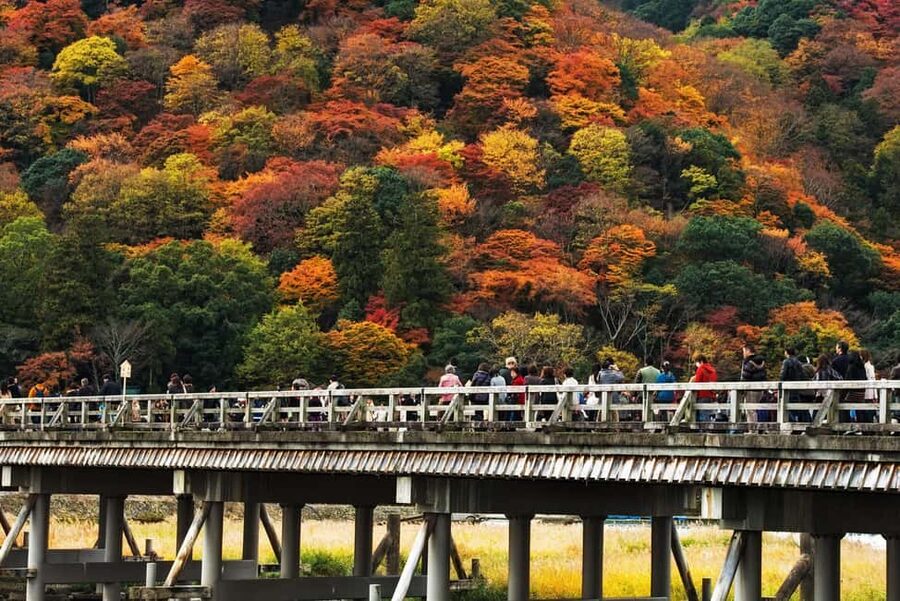
Next you get to Togetsukyo Bridge, one of the most recognizable Arashiyama views. The trick with this stop is the framing. The bridge itself is the anchor, but the real payoff is how it frames the mountains and greenery around it.
Since this is a walking tour, you’re not stuck in a long waiting pattern. You’ll have time to admire the view and take photos, then move on before your legs get cranky.
If you want a practical photo tip: try a couple angles, one closer to the bridge structure and one slightly farther back where you can show more of the mountain background. Small shifts make a big difference here.
Tenryuji Temple and its Zen garden: what to notice in under an hour
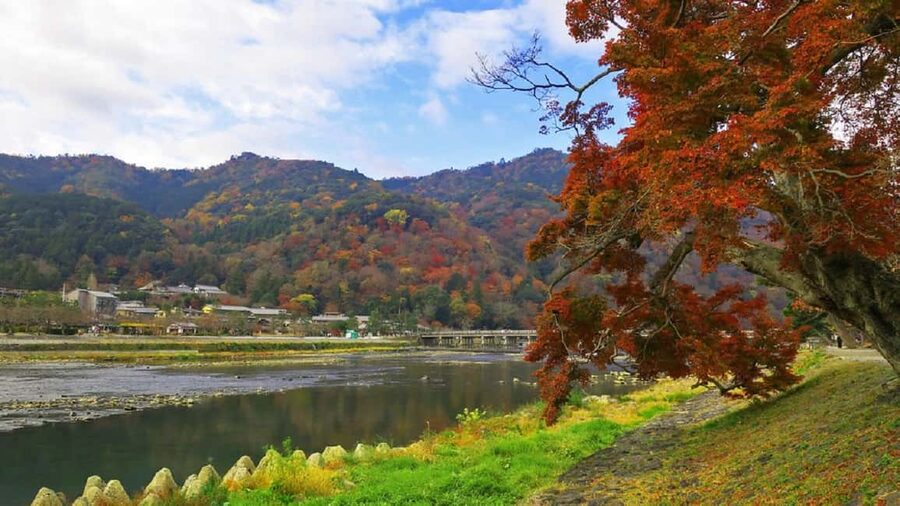
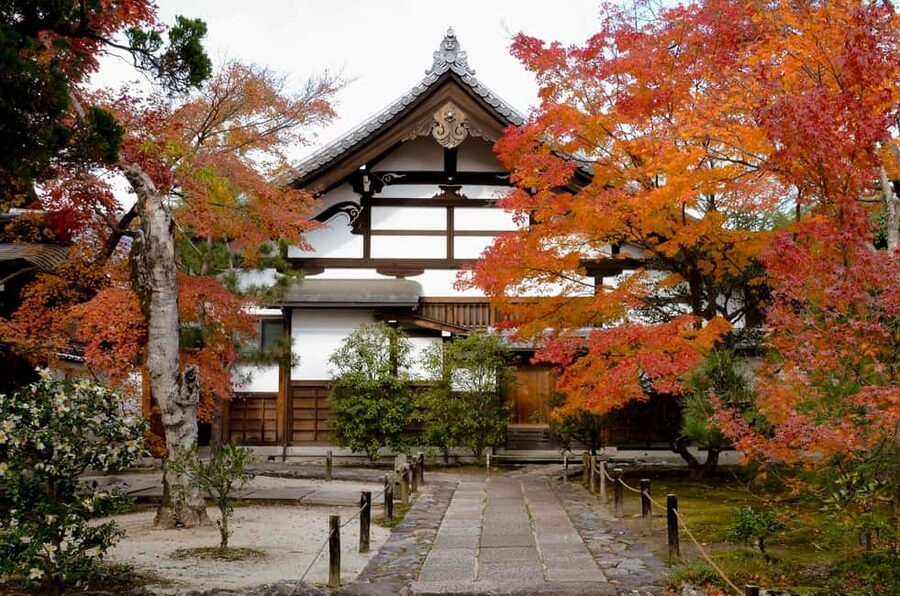
Then you step into the quieter side of Arashiyama at Tenryuji Temple, a UNESCO-listed site. The focus is the Zen garden. This is where the whole day shifts gears from outdoors scenic shots to stillness and careful looking.
A temple visit comes with a practical expectation: dress modestly. That means no shorts or tank tops, even if it feels hot. If you’re traveling in summer, think ahead about light layers that still look respectful.
What you’re really paying for here is context. The guide helps you notice features you might otherwise skip. You’ll be looking at the garden layout, the way paths guide your sightlines, and how the space is designed to feel calm and orderly even when you’re surrounded by visitors.
It’s also a nice change of pace mid-tour. After the bamboo and bridge, Tenryuji gives your body a moment to slow down.
A change of pace from Kyoto:
- PERFECT KYOTO 1-Day Bus Tour
★ 5.0 · 13,518 reviews - Kyoto: Tea Ceremony in a Traditional Tea House in Kiyomizu
★ 4.9 · 3,519 reviews - Kyoto Geisha Walking Tour: Gion District & Hidden Gems
★ 4.7 · 3,273 reviews - Kyoto: Tea Ceremony Ju-An at Jotokuji Temple
★ 4.9 · 3,207 reviews
Okochi Sanso Villa: garden calm plus an optional matcha treat
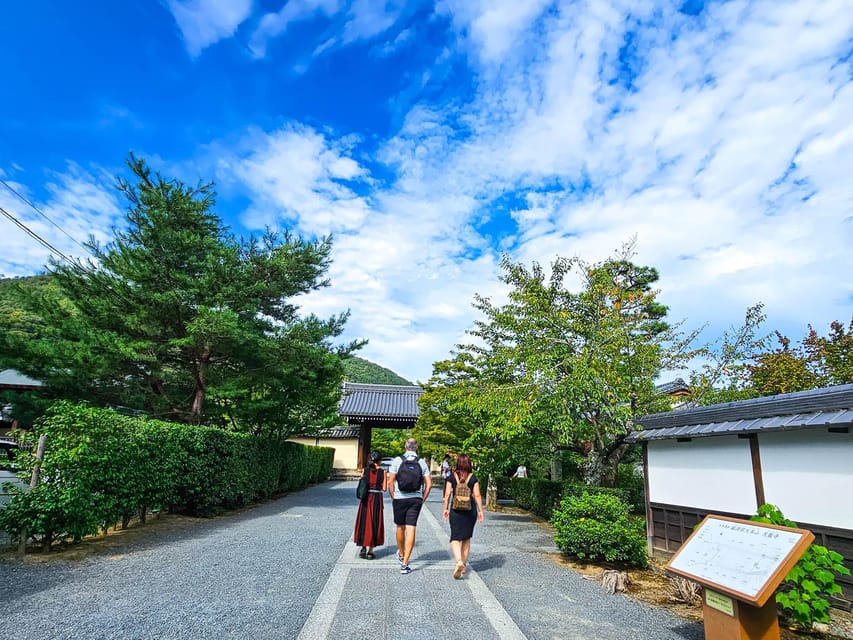
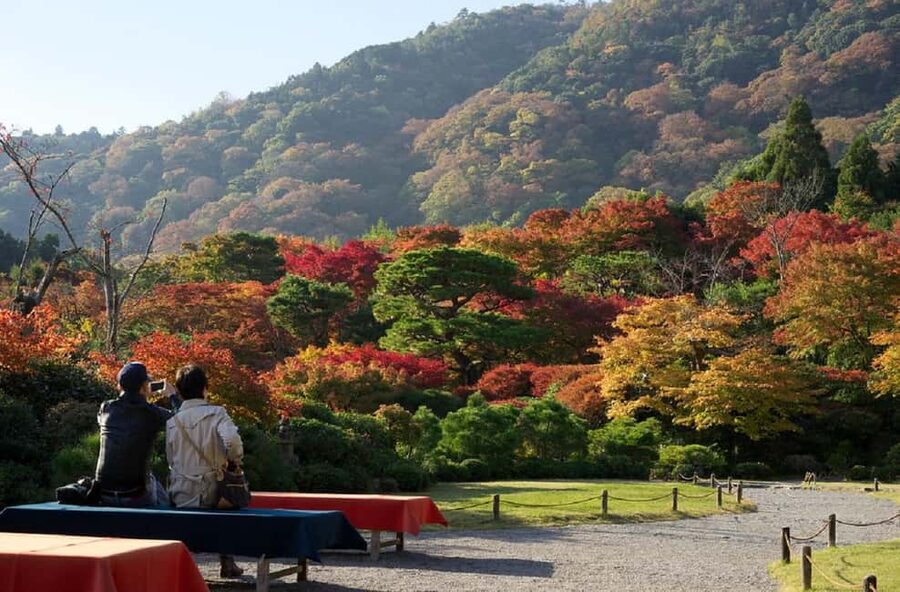
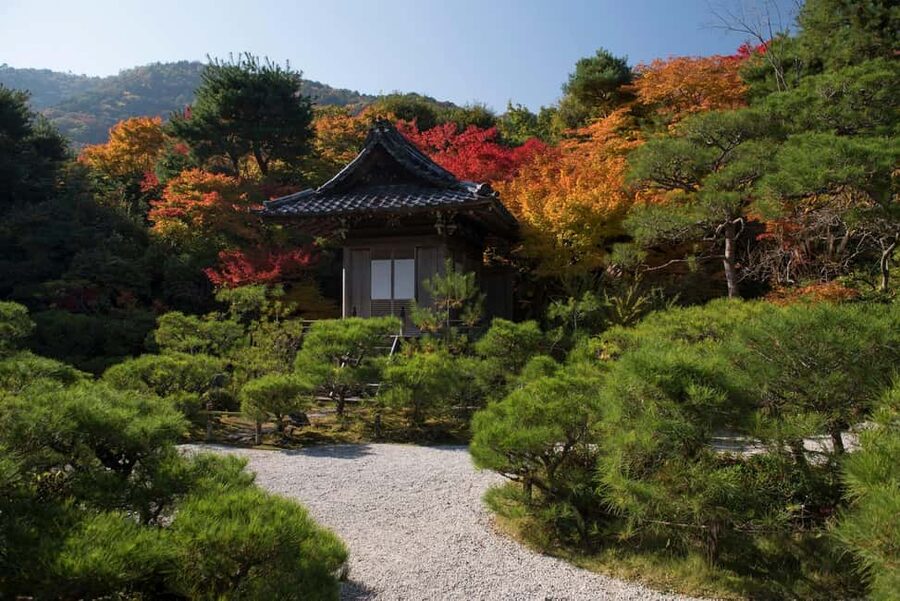
After Tenryuji, you’ll visit Okochi Sanso Villa, known for its serene gardens. This stop works because it feels different from the temple setting. It’s still landscaped and peaceful, but the vibe is more intimate and residential, like stepping into a composed retreat space rather than a formal temple complex.
The guide will help you appreciate what you’re seeing, including the garden walk style of the experience. Gardens in Japan are often about sequencing, not just pretty views. So take your time on the paths. Pause where you can see garden depth and where the greenery layers.
You’ll also have an option to treat yourself at the villa’s tea house. A traditional matcha tea and sweet is available, at your own expense. I like having an optional food moment in a short tour. If you’re the type who gets hungry while walking, this gives you a built-in chance to recharge without breaking the schedule.
Kimono Forest at the end: modern art contrast that makes Arashiyama fun
The tour wraps up at Kimono Forest, a modern art installation. The concept is simple and effective: colorful visual art placed in the Arashiyama atmosphere creates a surprising contrast. The highlight notes an illuminated look, and even when it is not a full-on light show, the area tends to feel photo-friendly.
This final stop is a good way to end because it doesn’t demand temple etiquette or long walking lines. It’s your chance to relax a bit, snap a few playful photos, and remember that not every Kyoto moment needs to be serene and quiet.
If your feet are tired, this is the kind of final activity that still feels satisfying. You can linger, take pictures, and not feel like you have to sprint to the next big landmark.
Price and value: how $26 stacks up in Kyoto reality
The listed price is $26 per person for a 3-hour walking tour. That is a solid value when you consider what you get: an English-speaking guide, a compact route through multiple top Arashiyama sights, and help navigating between them.
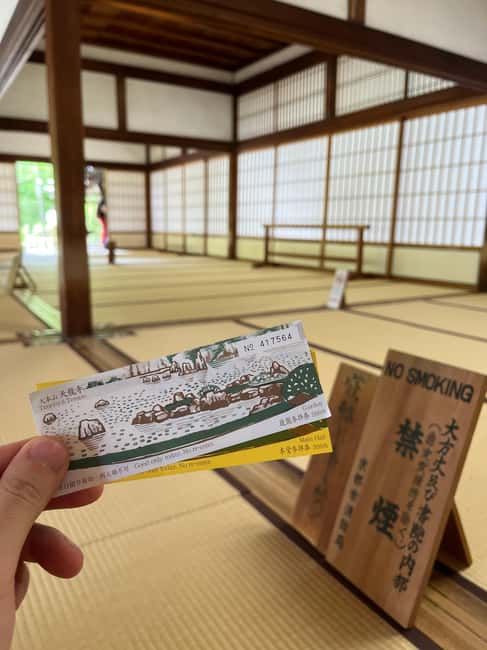
Still, I want you to budget honestly. Entrance fees are not included for Okochi Sanso and Tenryuji Temple. That means the true out-of-pocket total depends on those ticket costs at the time you go.
Even with that caveat, I think the value works well for short-on-time visitors because you’re not paying just for entry tickets. You’re paying for route planning, pacing, and interpretation. Guides who help you avoid wrong turns and inefficient pathways can save real time, and time is often the most expensive currency in Kyoto.
The small group size also matters. With a limit of 9 participants, you’re less likely to feel like you’re being herded or swallowed by a crowd.
What the guide quality really affects on this tour
The best part of this experience is not any one photo stop. It is how the guide manages the flow and keeps you from wasting energy.
In the feedback, the guides get praised for being energetic, friendly, and ready to answer questions. Names that come up include Alex, Yuko, Vincent, Gus, Micah, Mya, Boris, Ai, and Damien. That variety matters because it shows this is not one person. The guiding approach seems consistent: helpful explanations and practical support on the ground.
One detail I truly appreciate for real life: guides adjusting the schedule or making photo help part of the experience. If you want pictures but you travel solo, having someone willing to help with photos is a big plus.
Another recurring theme: route intelligence. A map makes Arashiyama look like a simple stroll. In reality, slopes and turns add time fast. A guide who knows which lanes to take helps the whole tour feel smoother.
Timing, walking comfort, and who should consider another plan
This is not a sit-down tour. It is a walking experience through a real neighborhood with real terrain. The information clearly flags that it is not suitable for people with mobility impairments, and it also notes heart problems and respiratory issues as reasons to reconsider.
If you’re generally mobile but want to be comfortable, bring comfortable shoes. The area can include rocky or uneven ground, and there is likely some uphill and downhill walking.
For most healthy walkers, the pace should be manageable because the tour is only three hours. But I’d still treat it as an active morning or afternoon, not a casual stroll in the park.
Practical tips: what to bring and what to expect on the day
Here are the small things that make the tour feel easy.
Bring:
- Comfortable shoes
- Camera (you’ll use it)
- Cash (especially for entrance fees and the tea house if you choose it)
Wear:
- Modest clothing for temple grounds. Avoid shorts or tank tops.
Arrive:
- Be at the Tully’s Coffee meeting point at least 10 minutes early. Guides only wait 10 minutes.
If the weather is rough, just plan your pace. Bamboo forests can get slippery if it rains, and temples can have stone surfaces. Go slow. Your best photos often come after you slow down.
Should you book this Arashiyama walk?
Book it if you want:
- The core Arashiyama sights in a tight 3-hour window
- A guide to help you avoid wasted walking and make the sights make sense
- A mix of nature, temple stillness, garden calm, and modern art at the end
Skip or reconsider if you:
- Need a low-mobility route, because the tour is not suitable for mobility impairments
- Have heart or respiratory issues and want to avoid added physical strain
- Don’t like walking on uneven paths
If you’re trying to see Kyoto efficiently without turning your day into a puzzle, this is one of the better ways to do it. You get iconic Arashiyama, plus the kind of guidance that turns a famous checklist into a route you can actually enjoy.
FAQ
Where does the tour start?
Meet at Tully’s Coffee at Randen Arashiyama Station. Your guide will be waiting at the meeting point and wearing a shirt with the local partner name.
How long is the walking tour?
The tour lasts 3 hours.
What’s included in the price?
You get an English-speaking tour guide and a 3-hour walking tour.
What costs extra?
You should budget for entrance fees for Okochi Sanso and Tenryuji Temple. Meals, drinks, and other personal expenses are also not included. There is also an optional matcha tea and sweet at the villa tea house.
What should I wear or bring?
Wear comfortable shoes and dress modestly for temple grounds (avoid shorts or tank tops). Bring a camera and cash.
How early should I arrive?
Be at the meeting point at least 10 minutes early. The tour guides will only wait a maximum of 10 minutes.
Latest write-ups near Kyoto
- Kyoto Private Tour Full Day with Local Guide&Nara Option(PerGroup★ 5.0 · 20 reviews
- Sacred Pathways: Discover the Philosopher’s Path of Kyoto★ 4.9 · 20 reviews
- Hammer Pattering Experience of Ring★ 5.0 · 20 reviews
- Kyoto UNESCO World Heritage Site Private Tour with a Premium Van★ 5.0 · 20 reviews
- KYOTO: Private Tea Ceremony in Hidden Townhouse (Kid-Friendly)★ 5.0 · 20 reviews
- Sushi or Traditional Japanese Cuisine in a Kyoto Home with Emika★ 5.0 · 20 reviews
- The Kyoto VIP Experience!★ 5.0 · 20 reviews
- Kyoto Customized Private Tour: See Top Attractions in 1 Day★ 4.7 · 20 reviews
Arashiyama & Bamboo Tours, compared.
Fushimi Inari, Kinkakuji, Bamboo Grove 1 Day Bus Tour
Read our review →
Osaka/Kyoto:Kinkakuji,Arashiyama,FushimiInariShrine,NaraPark
Read our review →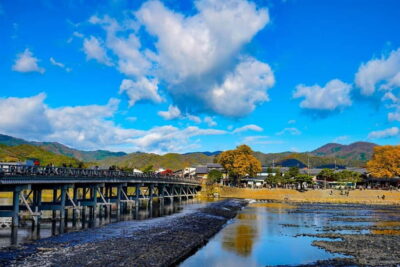
Kyoto/Osaka: Nara, Fushimi Inari Taisha, Arashiyama Bus Tour
Read our review →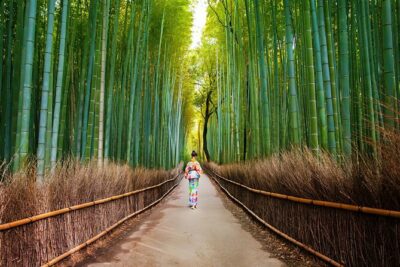
Kyoto Arashiyama Walking Tour: Bamboo, Monkeys, Gardens & Secrets
Read our review →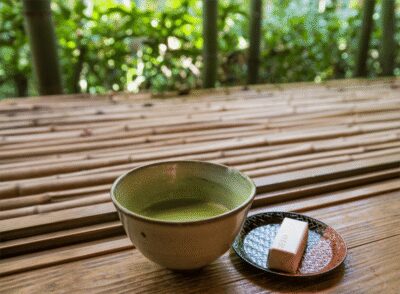
Arashiyama Bamboo, Temple, Monkeys, or Secret Sake Brewery
Read our review →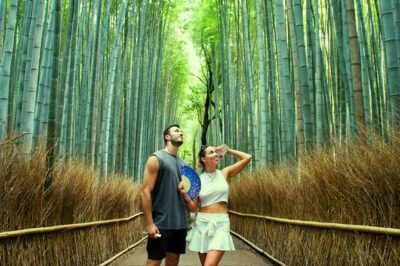
Arashiyama Bamboo Forest, Monkeys, Matcha & Temple Tour
Read our review →
Osaka/Kyoto: Arashiyama, Nara & Fushimi Inari Shrine w/Lunch
Read our review →
Nijo, Kinkaku-ji, Arashiyama, Kiyomizu & Fushimi Inari
Read our review →Browse the lists this tour appears in