
Reviewed · WALKING TOURS
Tokyo After 5: Local Eats, Drinks & Culture Walk
Tokyo After 5 is interesting because it tracks the city after the office, when locals swap emails for street smoke and sweet shops. I especially like the hands-on monja-yaki portion and the way the guide helps you read a depachika like a Tokyoite. One thing to consider: you are walking and riding the subway a bit, so if you have mobility limits, this route may be tougher than you expect.
The vibe is cozy and small, max 8 people, which means you spend less time herding and more time asking questions. I also like that the stops are practical Tokyo districts, not just postcard sights. Still, food is part of the plan, so you should be comfortable with Japanese staples like red bean sweets, and there are no vegetarian, vegan, or gluten-free options on this tour.
If you want an easy, low-stress way to taste Tokyo’s evening culture, this is a strong fit. You get three tastings, two drinks, and real cooking time, plus local etiquette explained in plain English.
Key things you will do on this after-work Tokyo walk
- Depachika browsing with a guide so you know what to buy and how locals snack
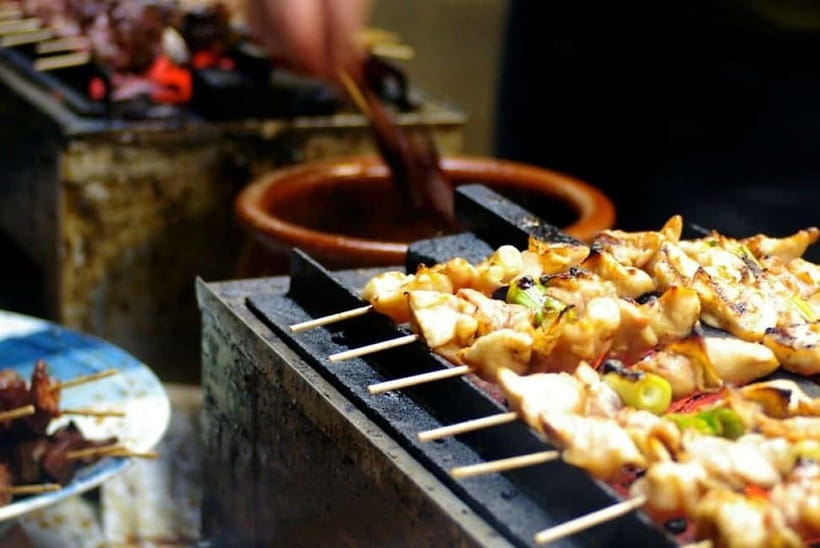
- Yurakucho yakitori in after-hours alleys where office crowds show up hungry
- Cook monja-yaki at Tsukishima Monja Town on the hotplate, not just watch
- Wagashi made seasonal and explained through ingredients and presentation
- Small group of 8 that keeps questions, pacing, and conversation realistic
Tokyo After 5, local eats on the city’s own schedule
Tokyo is not one single mood. Morning Tokyo runs on trains and routines. Evening Tokyo runs on aroma. This tour leans into that second mode, the after-work stretch when people in suits drop by basement food halls, side-street grills, and dessert counters.
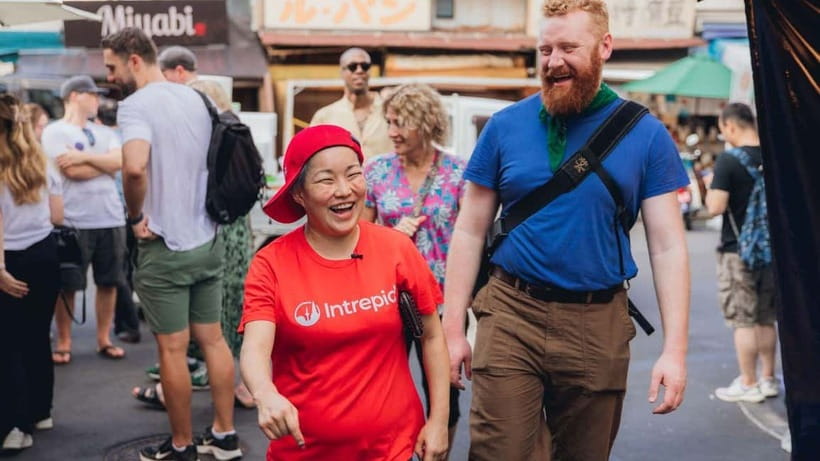
What makes it feel authentic is the logic of the route. You start near Mitsukoshi Ginza, move into Tsukishima for monja-yaki, then head to Yurakucho for yakitori, finishing back in Ginza. That pattern mirrors how many Tokyo residents actually eat, snack, and wander: convenience first, then neighborhood cravings, then dessert.
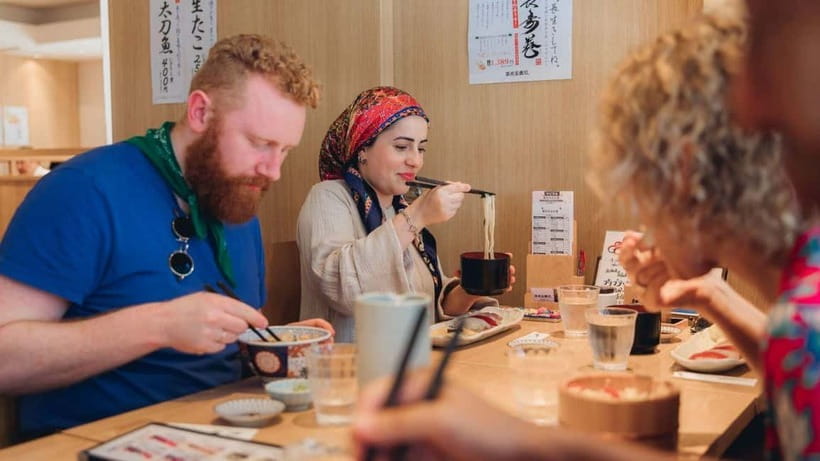
The small group size matters more than you might think. Max 8 means the guide can slow down when you have questions about chopsticks, how to order, or what you are tasting. It also means you are less likely to lose the group in narrow lanes.
More Walking Tours in Tokyo
- Tokyo Tsukiji Fish Market Food and Culture Walking Tour
★ 5.0 · 3,184 reviews - Tokyo: Imperial Palace and Shogun Historical Walking Tour
★ 5.0 · 2,251 reviews - Tokyo: Shinjuku Local Bar and Izakaya Guided Walking Tour
★ 4.9 · 1,794 reviews
Starting at Mitsukoshi Ginza, finding the tour fast
Your meeting point is straightforward, as long as you arrive with a plan. Meet outside Mitsukoshi Ginza, in front of the life-size sitting lion statue. The key detail is the station approach: when you go up to the A7 exit of Ginza Station, you should see it from street level.
I like this start because Ginza gives you an easy anchor. You are not hunting around an obscure back entrance. Still, there can be confusion if you get there late or arrive expecting a different company name. Go 10 to 15 minutes early. Look for the lion statue, then match your guide by the group list or sign if provided.
Once you are together, the tour begins with a guided walk through the Ginza area. This is not sightseeing overload. It is more of a warm-up, getting your bearings before the food-focused stops.
Depachika in the basement, how a food hall becomes a mini lesson
One of the best parts of the tour is the depachika stop. Depachika are basement food halls, and in Tokyo they function like a local food library. You can buy dinner, pick up seasonal sweets, and sample comfort foods without stepping outside the station zone.
Here, you do more than eat. Your guide helps you understand etiquette and flavor cues. That includes how to approach a counter, what kinds of dishes make sense as a first taste, and why certain seasonal items show up in these halls.
You also get a tasting here as part of the overall plan. The exact items shift, but you can expect the focus to be on Japanese comfort foods and sweets. This is a good place to ask questions, because the setting makes it easy to compare choices side-by-side.
A practical tip: if you are sensitive to walking, the depachika portion can actually be a relief. You are indoors and moving at a slower pace. It is a nice mental break before the street grilling later in the evening.
Yurakucho after work, yakitori in lantern-lit alleys
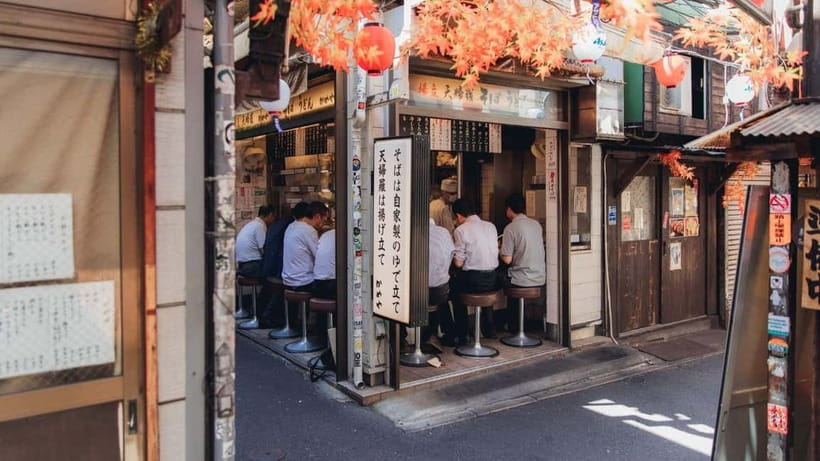
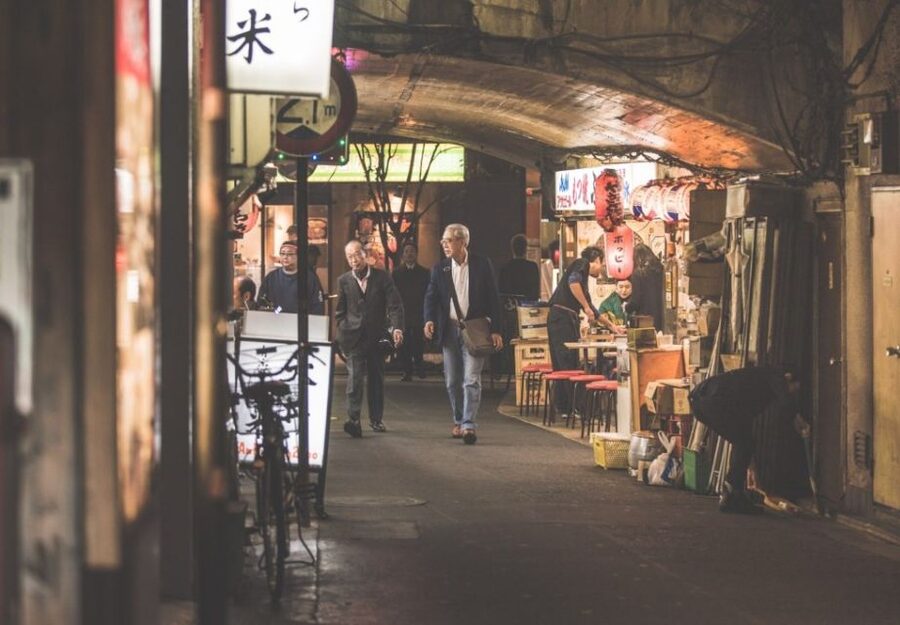
Next comes Yurakucho, where the mood changes fast. Think narrow backstreets, lantern light, and office workers forming lines when the grill is hot. This is where yakitori becomes more than a dish. It becomes a small ritual, the kind of evening rhythm Tokyo does well.
You get freshly grilled yakitori at a local spot where people gather after hours. The tour does not treat it like a tourist show. Instead, your guide talks through how skewers are prepared and why this smoky alley style is an essential part of Tokyo life.
From past guests’ experiences, the yakitori portion is often the highlight, especially when the guide explains what you are seeing. One person specifically praised a guide for guiding them into places locals eat and said they never would have found them alone.
What to expect at the table is simple and social. You will taste, then you will listen. The guide helps you connect flavors to technique, like how the grilling changes texture and how fat, seasoning, and charcoal influence each bite.
If you are not sure about offal, you should know this tour is seafood and meat based, but the plan is not described in detail beyond yakitori. Ask your guide what parts are included in your batch. If your Japanese is limited, this is still an easy conversation in English with a small group.
A change of pace from Tokyo:
- Mt Fuji and Hakone 1-Day Bus Tour Return by Bullet Train
★ 5.0 · 26,383 reviews - 1-Day Tokyo Bus Tour
★ 5.0 · 14,250 reviews - Tokyo: TOKYO SKYTREE® Admission ticket
★ 4.5 · 11,192 reviews - Tokyo: teamLab Planets TOKYO Digital Art Museum Entry Ticket
★ 4.6 · 9,779 reviews
Tsukishima Monja Town, cook your own monja-yaki
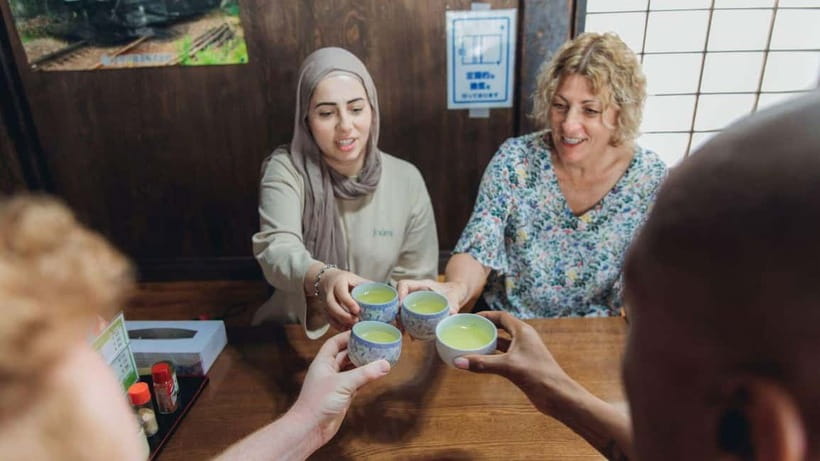
Then you hit Tsukishima Monja Town, where monja-yaki is part of the neighborhood identity. This is one of the tour’s strongest value points because it is hands-on. You sit around the hotplate and your meal is cooked in front of you.
You will also try the technique yourself. Watching monja-yaki is fun. Doing it is better, because you immediately feel how the batter thickness, heat level, and mixing technique change the outcome.
Here is what makes this stop worth your time. Monja-yaki looks similar to okonomiyaki on first glance, but the texture and style are distinct. The tour’s monja-yaki experience is designed so you are not just consuming, you are learning.
Past guests have mentioned a mix that can include monjayaki and okonomiyaki during the cooking stop. Either way, the point is the same. You get to understand why Tokyo cooks do not treat this as fussy fine dining. It is street-food logic, plated with neighborhood pride.
One more detail that matters for expectations: monja-yaki and related savory griddle foods can get messy. You are at a shared table, cooking with your group, and eating while you learn. If you dislike that kind of casual hands-on chaos, you might find it less comfortable than a formal sit-down meal. Most people love it, though, because it turns the tour into a story you can bring home.
Wagashi at the end, sweet seasons and cultural meaning
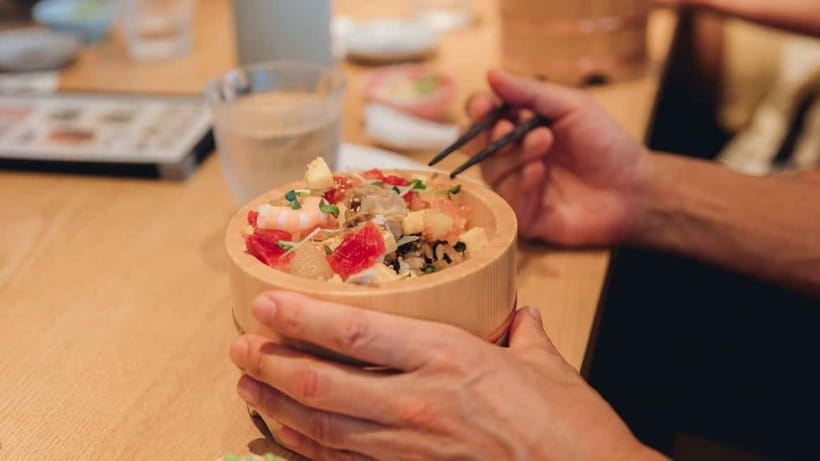
To close, the tour shifts to traditional sweets with a wagashi shop stop. You try seasonal wagashi, and your guide explains the cultural meaning behind them.
This portion is not just sugar. Wagashi are designed around seasons, ingredients, and aesthetics. In other words, they are edible design work that signals time of year. The guide helps you see what you are looking at, so the tasting turns into a mini cultural decoder ring.
One useful note for your palate. Some wagashi commonly include red bean paste and often pair with mochi-like textures. A guest described wagashi served with red bean paste and mochi, and said it was not their favorite. If red bean sweets are not your thing, you may want to treat this stop as a learning experience and lean into the other flavors on your menu.
Also, wagashi servings are typically more delicate than the earlier savory foods. If you arrive very hungry, you might want to pace yourself so you can enjoy the final sweet without feeling stuffed.
Price and what makes $89 feel fair
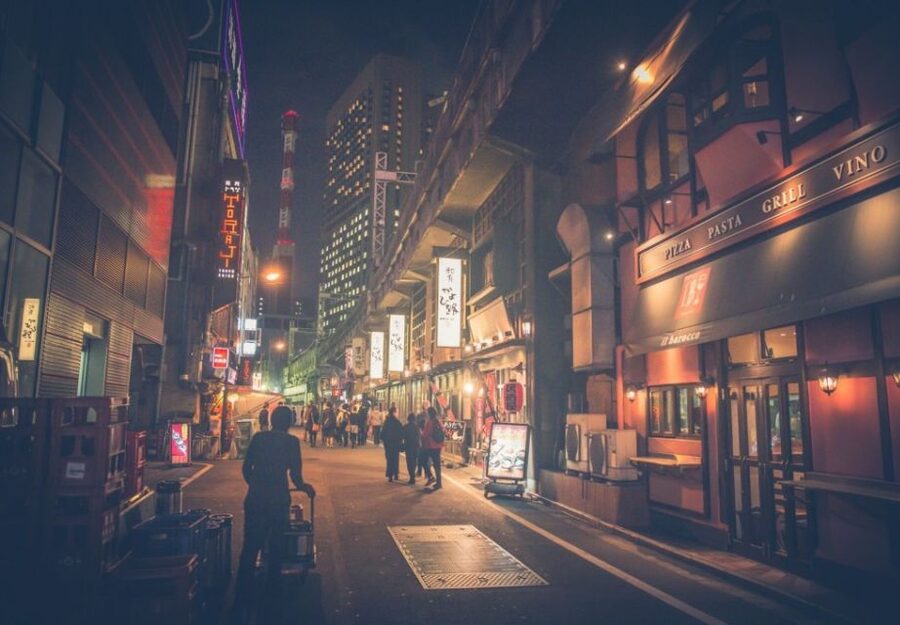
At $89 per person for about 210 minutes (roughly 3.5 hours), the value is strongest when you look at what is included, not just the headline price.
You get:
- Three local tastings: yakitori, monja-yaki, and wagashi
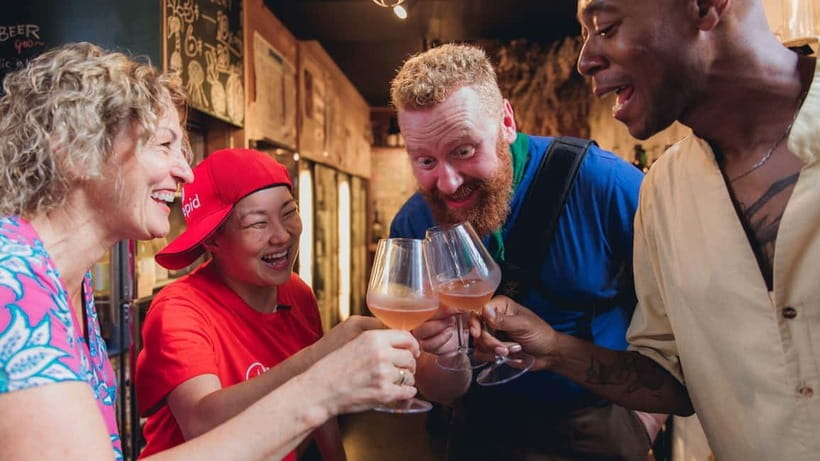
- Two drinks: sake, beer, or soft drink (based on age)
- Hands-on cooking time for monja-yaki and a yakitori component tied to how the skewers are prepared
- A local English-speaking guide plus meeting local chefs
- Public transportation credits: 2 subway tickets
- A small group limit of 8 guests
For food tours, the danger is paying for “standing around and listening.” This one avoids that. You eat multiple times, you cook once, and you ride the subway as part of the authentic neighborhood route.
Is it expensive? In pure ticket terms, it is not the cheapest meal you can buy in Tokyo. But for a guided route that handles language and etiquette while also delivering hands-on cooking, it is a practical way to save time and avoid awkward ordering.
The guides: a big part of the payoff
This tour’s strongest repeated theme is guide quality. Several guide names show up in past guests’ feedback, with people praising different strengths.
You may run into guides such as:
- Tsunematsu Hidenori, praised as the best and known for showing places locals eat
- Yuki, nicknamed snoopy in one account, praised for being knowledgeable and patient
- Kirir, described as enthusiastic and good at answering questions
- Meg, praised for being social and polite
- Yoshi, credited with introducing new foods and districts
I take this seriously because a Tokyo food walk lives or dies on explanations. If your guide can connect what you taste to what you are seeing, you end up with a deeper memory, not just full stomachs.
Walking pace, stairs, and the kind of physical effort to expect
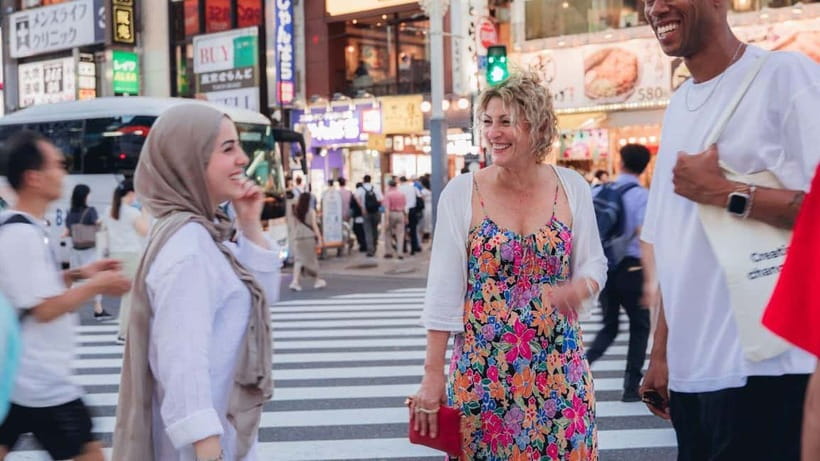
This is where you should plan realistically. One account mentioned about 9,000 steps, and another noted that the walking and stairs were a challenge for an 83-year-old, especially with subway stops that involve stairs.
So, here is the practical way to judge it for yourself:
- You are doing multiple neighborhood changes, not one restaurant crawl
- You will use public transportation with subway tickets
- You should expect walking between stops, including stairs at stations
If you have mobility needs, go in with a clear expectation and consider asking your booking office if there are any route accommodations. The tour does not advertise accessibility support in the provided details.
Also, some stops are small and close-quarters. One guest mentioned noise from a child in a very small restaurant. That is not in your control, so if you prefer quiet dining, you may want to mentally plan for normal Tokyo small-venue energy.
Food limits and who should consider this tour carefully
This tour includes specific food types and says dietary requests cannot be accommodated. That means:
- No vegetarian, vegan, or gluten-free options are available on this tour
- You should be comfortable with Japanese comfort foods, including meat-focused items like yakitori
- Wagashi may include red bean paste and mochi-like textures
Drinks also come with an age rule. The legal drinking age in Japan is 20. The tour is open to ages 12 and older, but if someone is under 20, they will be served non-alcoholic drinks only.
If you are traveling with someone who strictly avoids certain ingredients, this tour can fail the test even if they love food. In that case, I would look for a different Tokyo tour that explicitly supports dietary needs.
Carbon neutral and a B Corp touch
I appreciate the ethical angle here. The tour is described as carbon neutral and operated by a B Corp certified company committed to using travel as a force for good.
That will not change your yakitori flavor, but it can matter to you if you care about travel impact. It is a small plus that fits an itinerary grounded in local neighborhoods and local food culture.
Should you book Tokyo After 5?
Book it if you want:
- A guided Tokyo evening with depachika, yakitori, monja-yaki, and wagashi
- A route that feels like Tokyo after work, not just a checklist of sights
- A small group format where you can ask questions and actually participate
- Hands-on cooking, not just tasting
Skip or reconsider if:
- You need vegetarian, vegan, or gluten-free accommodations
- Stairs and walking around town are a concern
- You strongly dislike red bean sweets or are very cautious about meat-based Japanese snacks
My final take: this is a smart value for people who want real Tokyo flavors with minimal planning. You will leave with full bellies, a better sense of how Tokyo people eat after hours, and a few cultural details you can explain at dinner back home.
FAQ
Where is the meeting point for the tour?
Meet at Mitsukoshi Ginza department store, in front of the life-size sitting Lion statue outside. It is described as visible when you go up to the A7 exit of Ginza Station to ground level.
How long is Tokyo After 5?
The duration is 210 minutes.
How big is the group?
The tour is a small group limited to a maximum of 8 guests.
What foods are included in the tastings?
The tour includes three tastings: yakitori, monja-yaki, and wagashi.
What drinks are included?
Two local drinks are included. Options listed are sake, beer, or soft drink.
Is alcohol served to everyone?
No. Japan’s legal drinking age is 20. Guests under 20 will be served non-alcoholic drinks only.
Does the tour accommodate vegetarian, vegan, or gluten-free diets?
No. The tour features visits to establishments that cannot cater all dietary requirements, and vegetarian, vegan, or gluten-free options are not available.
What is included besides food?
You also get an English-speaking local guide, hands-on monja-yaki and yakitori experience, meeting local chefs, and public transportation with 2 subway tickets.
Where does the tour finish?
The tour finishes back in Ginza.
What is the cancellation policy?
Free cancellation is offered up to 24 hours in advance for a full refund.
Latest write-ups near Tokyo
- Tokyo Nights: Shibuya Photo Adventure★ 5.0 · 20 reviews
- Wagyu & Sake 8 Course Tasting Dinner in Shinjuku★ 4.9 · 20 reviews
- Making Japanese desserts Nerikiri & drinking matcha in Tokyo★ 5.0 · 20 reviews
- Japanese Whisky Hunting《HIGH-QUALITY-ONLY》Rare Tasting Class★ 5.0 · 20 reviews
- Mt. Fuji 5th Station, Owakudani Ropeway, Pirate Ship plus Outlet shopping!★ 4.5 · 20 reviews
- Kintsugi Experience with Arita Ware in Tokyo (English Guide)★ 4.8 · 20 reviews
- This is Asakusa! A Tour Includes the All Must-Sees!★ 5.0 · 20 reviews
- Tokyo: Karate Experience with Former All-Japan Champion★ 5.0 · 20 reviews
Walking Tours, compared.
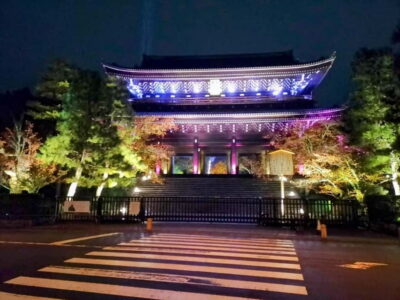
Kyoto Geisha Walking Tour: Gion District & Hidden Gems
Read our review →
Tokyo Tsukiji Fish Market Food and Culture Walking Tour
Read our review →
Gion Magical Night Walking Tour with Geisha Trivia
Read our review →
Imperial Palace and Shogun Historical Walking Tour
Read our review →
Gion Geisha District Walking Tour – Stories of Geisha
Read our review →
Shinjuku Local Bar and Izakaya Guided Walking Tour
Read our review →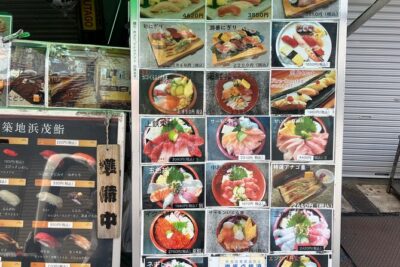
Browse the lists this tour appears in