Reviewed · KYOTO TOURS
KIYOTO’s Kyoto Private Tour: Highlights & Hidden Gems
Kyoto can feel like a choose-your-own-adventure maze. This private day is interesting because you get a guide who can steer the route, answer questions on the spot, and keep moving at a pace that fits your group, not a bus schedule. I especially like the one-on-one attention plus the photo help, with guides like Yuhey who are praised for snapping great pictures and even making a video of the day, so you leave with more than memories.
The second thing I like is the mix of top icons and smaller streets that connect them, like Fushimi Inari plus Gion’s side alleys and the river views in Higashiyama, so your day doesn’t feel like a checklist.
One consideration: a few big-name temples have admission not included (like Kiyomizu-dera, Kinkaku-ji, and Tenryuji). So you’ll want some spending money ready, and you’ll also want comfortable walking shoes since it’s primarily a walking experience.
Key highlights that make this Kyoto private tour worth your time
- Private guide focus so you can ask questions and adjust when something grabs your interest
- Photo-forward guidance, including praise for guides who take amazing pictures and videos
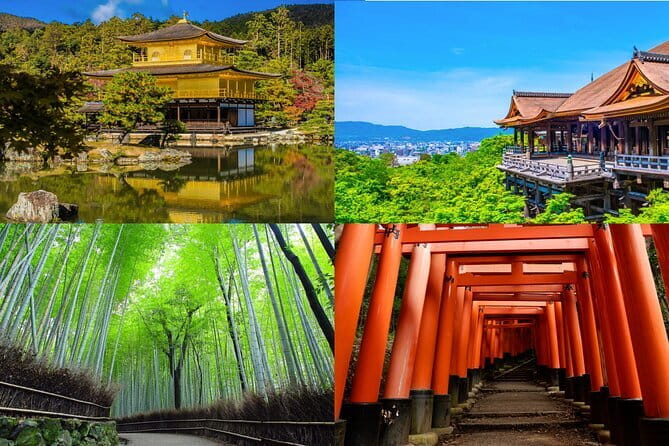
- Big Kyoto hitters in one day, including Fushimi Inari, Kiyomizu-dera, Nishiki Market, Kinkaku-ji, and Arashiyama
- A smooth change of scenery, from Higashiyama alleys to the bamboo and river views in Arashiyama
- Many stops with free admission, which helps you spend on the few paid sites that matter most
A private Kyoto walking day that actually helps you navigate
The best thing about a private Kyoto tour is simple: you don’t spend your energy figuring out where to go next. Kyoto’s sites are close on a map, but in real life they are separated by turns, hills, and crowds at peak hours. With this tour, you get that navigation built in, so you can spend your time looking at the places instead of your phone.
I like the way the route is stitched together. You start in central Kyoto with neighborhood flavor, then move into temple-country, then pivot toward Arashiyama for the bamboo and river views. That order matters because it lets you experience different sides of Kyoto without the feeling that you backtracked three times.
Also, the tour is described as a private experience only for your group. That means fewer pauses for other people, fewer “wait up” moments, and more flexibility to slow down for photos or speed up when your group is ready.
Also on the shortlist for Kyoto:
- PERFECT KYOTO 1-Day Bus Tour
★ 5.0 · 13,518 reviews - Kyoto: Fushimi Inari, Kinkakuji, Bamboo Grove 1 Day Bus Tour
★ 4.8 · 4,316 reviews - Kyoto: Tea Ceremony in a Traditional Tea House in Kiyomizu
★ 4.9 · 3,519 reviews
Price and logistics: what $177.90 buys you in the real world
At about $177.90 per person, you’re paying for time with a guide and for the convenience of doing a lot in one organized stretch. The value is strongest if you care about learning, photos, and not wasting time between sights.
Here’s the practical split:
- Included: the guide, and you get support like pickup being offered, plus a mobile ticket
- Not included: food and drinks, attraction tickets, and transportation (it’s mainly walking, though public transport may be used for an extra cost)
- You should expect some paid admissions: Kiyomizu-dera, Kinkaku-ji, and Tenryuji are listed as admission not included
So budget like this: pay for your walking day, then top up temple fees and anything you eat. If you’re the type who loves to snack through markets and treats, keep in mind meals aren’t covered.
One more logistics note that affects comfort: the duration is listed as 4 to 8 hours. That range usually reflects group pace and how long you linger at popular spots. If you’re booking this with limited energy, plan to wear good shoes and bring a water bottle.
Meeting point and your route flow from Kyoto Station
You meet at the Kyoto Tourist Information Center Kyo-NaviJapan, located inside Kyoto Station Building, 2nd floor. The tour ends back at the same meeting point, which is a big deal at the end of a long day. No last-minute confusion about trains or where your guide walked off to.
Pickup is offered, which can save you time if you’re staying away from Kyoto Station. Still, even with pickup, plan for walking as the core of the experience. This is the kind of tour where your legs will do a lot of the sightseeing, so good footwear and a light day pack are not optional.
Stop 1: Pontocho, the Kamo River alley vibe
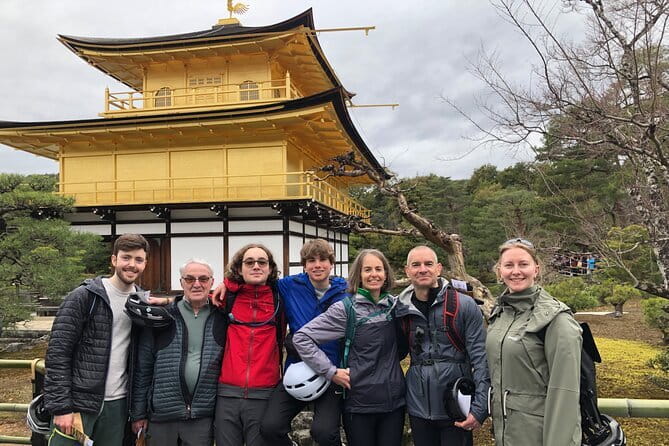
Pontocho is a narrow alley stretching along the Kamo River between Sanjo and Shijo streets. It’s known as one of Kyoto’s geisha districts, with traditional atmosphere plus a variety of restaurants and tea houses.
Why this matters early in the tour: it’s a fast way to get your bearings. You start with a Kyoto street scene instead of immediately rushing into a temple crowd. Even if you’re not dining, you’ll get a feel for the architecture and the rhythm of the area.
Time is short here, about 10 minutes, so I’d treat this as your warm-up stop. Use it to ask your guide what to notice in the next neighborhoods, like which streets feel more residential and which ones get mobbed first.
A change of pace from Kyoto:
- Kyoto Geisha Walking Tour: Gion District & Hidden Gems
★ 4.7 · 3,273 reviews - Kyoto: Tea Ceremony Ju-An at Jotokuji Temple
★ 4.9 · 3,207 reviews - Kyoto: Gion Magical Night Walking Tour with Geisha Trivia
★ 4.9 · 2,393 reviews - Kyoto: 45-Minute Tea Ceremony Lesson Experience
★ 4.3 · 2,378 reviews
Stop 2: Fushimi Inari-taisha and the senbon torii walk
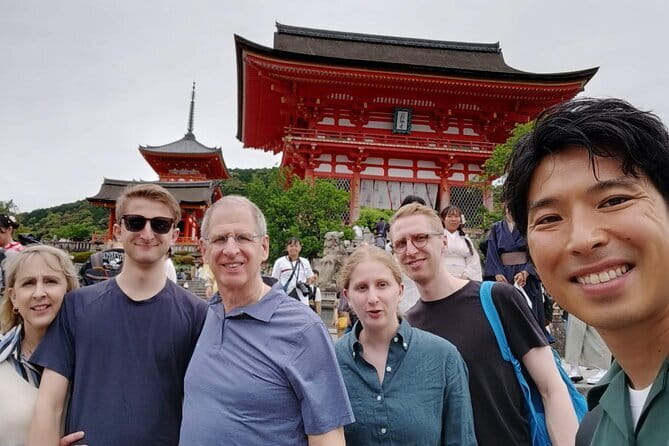
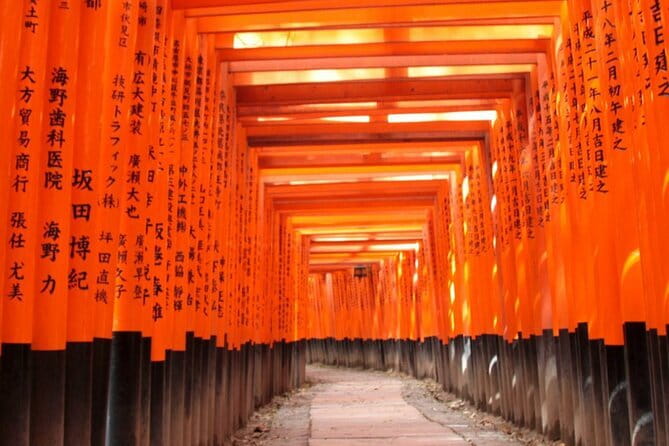
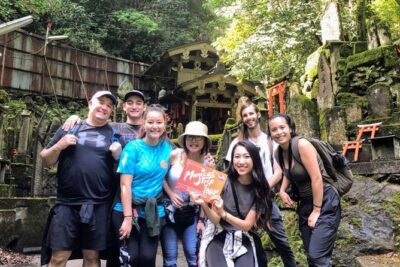
Next is Fushimi Inari-taisha Shrine, one of Kyoto’s most recognizable sights. You’ll walk through the Senbon Torii, the thousand torii gates.
This stop is free for admission, which is great. But free admission also usually means crowds. That’s where having a guide helps. A guide can help you pace your walk, find good angles for photos, and avoid the dead time of repeatedly moving in circles.
Plan for a lot of steps and some uneven ground as you move through the shrine paths. If your group wants fewer crowds, you might adjust how you approach the route depending on timing. The private format is the advantage here, because you can decide together how long you want to spend in the gates before moving on.
Stop 3: Kiyomizu-dera and the view-focused temple moment
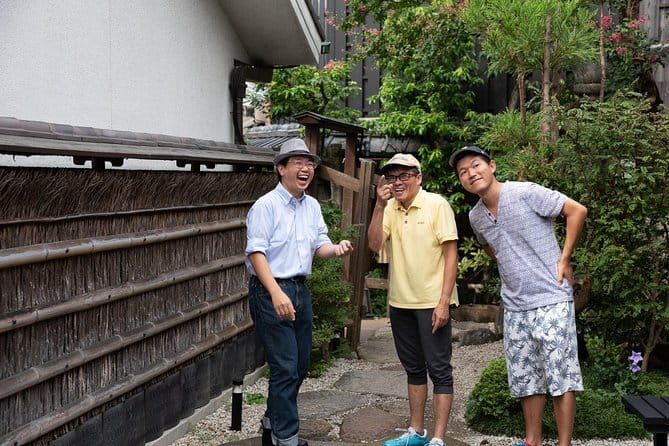
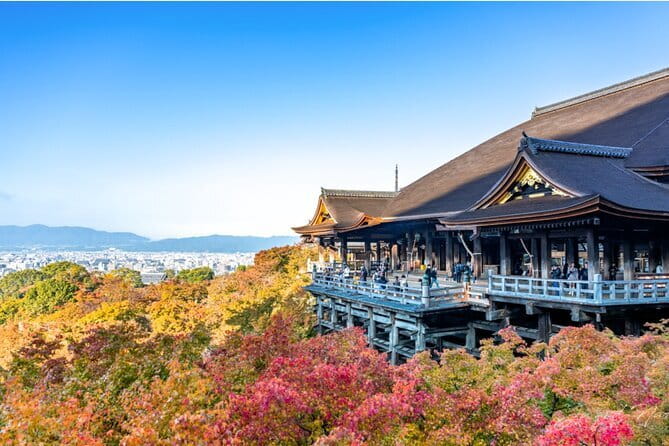
Then comes Kiyomizu-dera Temple, perched on the slopes of Mount Otowa. It’s listed as about 1 hour, and admission for this stop is not included.
Even if you’ve seen photos, I find the value of a guided visit is how you move through the space. You won’t just stand and stare. You’ll get context about why the temple is famous and what you should look for as you navigate the grounds.
Here’s the practical consideration: Kiyomizu-dera involves walking and elevation. If anyone in your group has mobility limits, you’ll want to slow down and plan breaks. Since the tour is primarily walking, this is the stop where comfort matters most.
Stop 4: Sannenzaka and Ninenzaka, old streets in stone
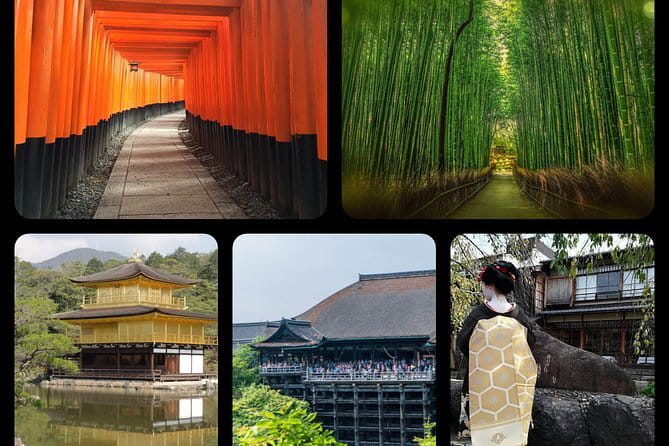
After the temple, you shift to Sannenzaka and Ninenzaka, the stone-paved streets that feel like an older Kyoto version of the city. This stop is listed as about 1 hour and is free for admission.
This is one of those Kyoto moments where you don’t need a ticket, you need time. The streets are ideal for slow photos, small shops, and people-watching. Your guide can also help you avoid dead ends and point out where streets open up into better viewing areas.
If you’re shopping, note that you’ll be tempted to buy because these streets make souvenir browsing feel like part of the scenery. I’d still budget your money, because this stretch can swallow time.
Stop 5: The machiya Starbucks break, optional and short
You’ll also get a quick stop at Starbucks Coffee at Kyoto Nineizaka Yasaka Chaya, described as exploring inside the machiya-style Starbucks. This is only about 5 minutes, admission free.
This is a funny little pivot point. It’s not a must-see temple moment, but it can help break up the heavier sightseeing. The tour also notes you can choose to leave the tour if you really want to stay inside, which matters if your group has someone who loves this kind of pop-culture Kyoto detail.
I’d use this stop as a reset, grab a drink if it fits your budget, and then keep moving. If you hate lines or don’t care about this kind of stop, you can treat it like a quick photo opportunity from the outside before continuing.
Stop 6: Yasaka Pagoda (Gojunoto) and Hokan-ji Temple
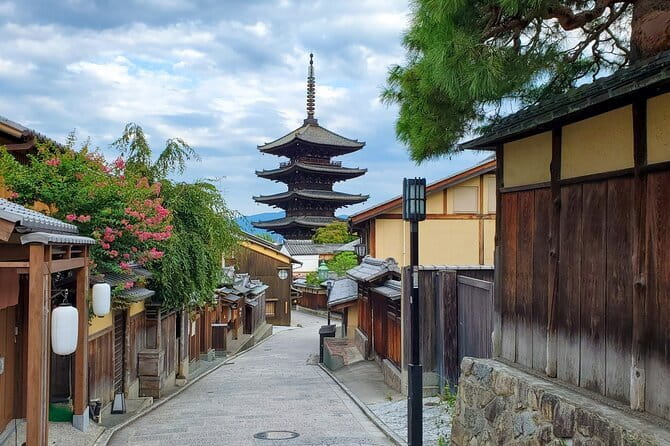
Next is Yasaka Pagoda (Gojunoto) and Hōkan-ji Temple. This stop is short, about 5 minutes, and listed as free admission.
The value here is visual. You’re in the Higashiyama district, with classic Kyoto backdrops, and this pagoda shot is the kind of photo that makes people understand why Kyoto looks the way it does.
Because it’s quick, don’t expect a long explanation at this stop. I’d use it for quick questions, like what the neighborhood landmarks mean and what to watch for on your next street walk.
Stop 7: Hanamikoji Street, Gion’s heart
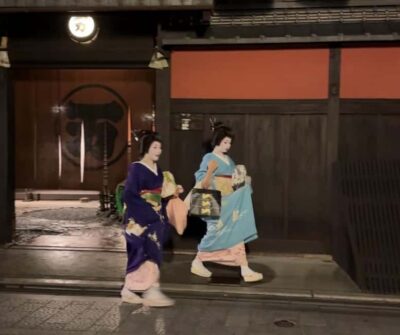
Then you walk Hanamikoji Street, about 5 minutes, free admission. It’s the famous Gion geisha district lane, with stone-paved charm.
This stop works best if you treat it as a visual corridor. Look for the contrast between small lanes and the wider open viewpoints, and notice how the street feels at different times. Since this is private, you can also ask your guide what is respectful to photograph and what to avoid.
Stop 8: Tatsumi Bridge on the Shirakawa River
Next is Tatsumi Bridge along the Shirakawa River, about 10 minutes, free admission.
This is one of the nicest “pause” moments in the route. It’s small, but it gives you a calmer feeling compared with the crowds around major temples. If your group is photo-happy, this is a good spot for it because you can get nice reflections and river views without fighting for position.
Stop 9: Nishiki Market, Kyoto kitchen energy
Then you land at Nishiki Market, often called Kyoto’s kitchen. It’s free admission and listed as about 1 hour.
This is where the tour earns extra points for balance. After temples and streets, the market gives you a sensory break. You’ll likely graze, snack, and browse. Even if you don’t buy much, it’s useful because you get a feel for what Kyoto eats and how food culture shows up in everyday markets.
Practical tip: markets move fast. If you want tastings, decide early what you’re going to do: buy a few bites and sit down, or walk through first then snack later. With a private guide, you can also ask what to try that won’t blow your budget.
Stop 10: Kinkaku-ji, the Golden Pavilion
Next is Kinkakuji Temple, the Golden Pavilion. It’s about 1 hour, and admission is not included.
This is one of those stops where your timing and viewing angle matter. The private format helps because you’re not stuck waiting for a group to catch up or shuffle into place. Your guide can steer you toward good photo spots and help you understand what you’re seeing instead of just reading a sign.
Plan for crowds. Even if you arrive and it feels packed, stay flexible. A guide can help you shift from waiting in the densest area to finding calmer lines of sight.
Stop 11: Tenryuji Temple, Zen calm in Arashiyama
Then you move to Tenryuji Temple in Arashiyama. It’s about 30 minutes and admission is not included.
Tenryuji is a Zen temple founded in 1339 by Ashikaga Takauji, and it was built on the site of a former imperial villa honoring Emperor Go-Daigo. You’ll get at least some of that context from your guide, which helps the stop feel more meaningful than just another temple entrance.
Because it’s a shorter stop here, I’d treat it as a taste of Zen calm rather than an all-day exploration. If your group wants longer temple time, the private nature is what lets you push back against the schedule.
Stop 12: Arashiyama Bamboo Forest, the classic path walk
After Tenryuji, you go to the Arashiyama Bamboo Forest. The stop is about 30 minutes and free admission.
This is the big Arashiyama visual. The path is iconic, and it’s also popular. So expect crowds. What helps is your guide’s pace and your group’s willingness to walk through, pause briefly, then move on.
If you’re sensitive to noise or packed spaces, remember that you are not trapped here. You can spend a few minutes for photos, then shift focus to the surrounding views and the next bridge stop.
Stop 13: Arashiyama Kimono Forest, art installation near the station
Near Randen Arashiyama Station, there’s the Arashiyama Kimono Forest art installation with cylindrical pillars about 2 meters tall (about 600 pieces are mentioned in the description).
This stop is about 10 minutes and is free. I like this kind of stop because it’s light on tickets and heavy on visual fun. It also gives you something different from the bamboo corridor. If your group enjoys modern art side-by-side with classic Kyoto, this is a pleasant change.
Stop 14: Togetsukyo Bridge, river views before the finish
Finally, you visit Togetsukyo Bridge, also known as the Moon-Crossing Bridge. It spans 155 meters across the Oi River, and the stop is about 10 minutes with free admission.
This is where Arashiyama clicks into place. You get the river view, the historic feeling, and a last chance for photos before the tour wraps back at Kyoto Station.
If you’ve spent the day walking up and down slopes, the bridge is a nice way to end, because you can enjoy the view without immediately stepping into a long indoor queue.
How the guide experience shapes your day, from flexibility to photos
The strongest theme in the feedback about this tour is the guide. People talk about guides being kind, easy to work with, and flexible when interests change mid-day. There’s also praise for guides taking great pictures and building a video of the experience, not just snapping a quick tourist photo and moving on.
That said, one caution shows up in a mixed experience: guide experience and language can vary. One guide was described as new and not speaking Japanese well, with limited cultural and historical framing. That doesn’t mean it will happen to you, but it does mean you should go in with the right expectations. If you care a lot about deep historical storytelling in English, it’s worth checking what language the guide will use when you book.
On the positive side, flexibility is a big deal in Kyoto. If your group wants extra time at a street, less time at a temple, or a different photo spot, a private guide can usually respond better than a rigid bus tour.
Who should book this private Kyoto tour, and who should not
This tour is a great fit if:
- you want a one-on-one guide and you like asking questions
- you want to hit major Kyoto sights like Fushimi Inari, Kiyomizu-dera, Kinkaku-ji, and Arashiyama in one day
- you care about photography and want help getting better angles and images
- you want a route that mixes temples, market time, and classic neighborhoods
It might not be ideal if:
- you hate walking and long days, since the experience is described as primarily walking
- you want admissions fully included in the price, because some major sites have tickets not included
- you would rather skip any pop-culture stop like the machiya-style Starbucks, even though it’s brief and optional in spirit
Should you book Kiyoto’s Kyoto Private Tour?
If you want one guide, one route, and fewer decision headaches, I think it’s a strong option for a first or second trip to Kyoto. The mix of free stops and major highlights, plus the attention to photos, gives you good value for a private half-day to full-day.
Book it if your group is comfortable with walking and you’re ready to pay a few temple admissions separately. Skip or adjust expectations if you need totally ticket-inclusive pricing or you want slow, deep temple time without movement.
Latest write-ups near Kyoto
- Kyoto Private Tour Full Day with Local Guide&Nara Option(PerGroup★ 5.0 · 20 reviews
- Sacred Pathways: Discover the Philosopher’s Path of Kyoto★ 4.9 · 20 reviews
- Hammer Pattering Experience of Ring★ 5.0 · 20 reviews
- Kyoto UNESCO World Heritage Site Private Tour with a Premium Van★ 5.0 · 20 reviews
- KYOTO: Private Tea Ceremony in Hidden Townhouse (Kid-Friendly)★ 5.0 · 20 reviews
- Sushi or Traditional Japanese Cuisine in a Kyoto Home with Emika★ 5.0 · 20 reviews
- Kyoto Customized Private Tour: See Top Attractions in 1 Day★ 4.7 · 20 reviews
- The Kyoto VIP Experience!★ 5.0 · 20 reviews
Kyoto Tours, compared.
Fushimi Inari, Kinkakuji, Bamboo Grove 1 Day Bus Tour
Read our review →
Tea Ceremony in a Traditional Tea House in Kiyomizu
Read our review →
Kyoto Geisha Walking Tour: Gion District & Hidden Gems
Read our review →
Gion Magical Night Walking Tour with Geisha Trivia
Read our review →