
Reviewed · HISTORICAL TOURS
Nagasaki Private Historical Tour with Licensed Guide
Nagasaki is one of Japan’s most complicated cities, shaped by long-distance trade, foreign missions, and then the shock of the atomic bombing. This tour takes you on a public-transport walking route that helps the story make sense as you move through real neighborhoods.
I really like the mix of stops, from the before-and-after wall at the Atomic Bomb Museum to the later Western-meets-Japanese atmosphere around Glover Garden and Oura Catholic Church. I also like that the guide is nationally licensed and speaks English and Mandarin, and you can get real context instead of just reading signs. In reviews, guides like Noriko (Norah), Ken, and Nora got praise for blending friendly professionalism with strong, clear storytelling.
One thing to consider is that this is emotional history. The Atomic Bomb Museum can be intense. If you think you might feel overwhelmed, tell the guide ahead of time, because they offer a way to adjust the itinerary to a less shocking option. Also plan for a full 7 hours with walking and steps, plus lunch costs on top of the tour price.
Key things to know before you go
- Licensed guide in English or Mandarin helps you connect the sites into one story.
- Museum-to-church-to-peace-park pacing gives you time to process, not just rush past.
- Public transportation focus means you rely on trams and local transit, no private driver required.
- Mount Inasa option changes the day by swapping out Meganebashi (Spectacles Bridge) and Oura Catholic Church.
- Adjustments for sensitive visitors are possible if war-related images may be too much.
- Admission fees and transit are included, so you control the biggest money surprises.
Why Nagasaki history hits differently on foot
What makes Nagasaki such a compelling place to visit is the way time layers on itself. You can still feel the city’s older role as a trade hub, and you can also see how World War II changed the city forever. Walking and using public transport forces you to slow down just enough to notice details you’d miss from a car window.
This is also not a “check the boxes” tour. The stop sequence is designed to help you understand cause and effect. You start where the city’s transformation is documented, then you move to places of remembrance, and then you shift into the Western-influenced architecture and street-level atmosphere that grew from centuries of outside contact.
If you’re the type of traveler who likes history with geography, you’ll appreciate how the route stitches it together.
More Historical Tours in Nagasaki:
- World Heritage Shirakawa-go and Experience Tours from Kanazawa
★ 5.0 · 4,049 reviews - Tokyo: Imperial Palace and Shogun Historical Walking Tour
★ 5.0 · 2,251 reviews - World Heritage Kyoto & Nara Uji Authentic Matcha Experience
★ 5.0 · 1,573 reviews
Private tour, real guide power (not just a headset)
This is a private tour, meaning it’s only your group. That matters because you can ask questions at the pace you want, and the guide can tailor how much detail you get at each stop. The guide is nationally licensed and can work in English or Mandarin, which is a comfort if you’re trying to catch the smaller points and not just the big headlines.
One review-highlighted theme was how adaptable guides were. If the Atomic Bomb Museum feels like too much on the day, you can request an alternate plan. That kind of flexibility is more than convenience. It’s how you keep the day meaningful, instead of trying to “tough it out” when you’re already stressed.
In a couple of reviews, the guides were praised for friendly professionalism and for combining serious history with human stories that make the places feel more real. That is exactly what you want in a tour that touches nuclear history and postwar memory.
Using trams and walking: a smart way to experience Nagasaki
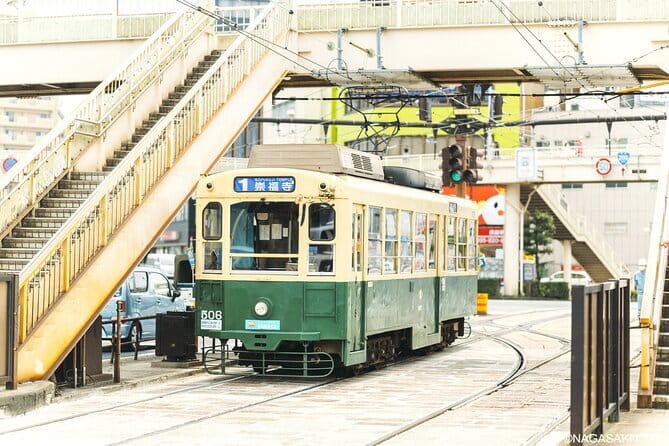
A big practical plus here is the emphasis on public transportation. You’ll use the local transit system and walk between sights. One reviewer specifically noted that the tram service is excellent, and you do not need a private driver to make the route work.
For you, that translates to less logistical hassle and more time actually in the city. It also means you’re moving like a visitor would, not like a tour vehicle. You’ll see the everyday texture of Nagasaki as you travel between the wartime landmarks and the later sightseeing areas.
The tradeoff is physical effort. The tour lists a moderate fitness level, and you should expect a full day with walking and steps. In hot weather, that can feel like a lot. Wear comfortable shoes, bring water, and plan to move at an unhurried pace.
Stop-by-stop: the heart of the wartime story
Stop 1: Nagasaki Atomic Bomb Museum (about 1 hour, admission included)
This is the emotional center of the day. The museum focuses on how the cityscape looked before and after the bombing, and it also displays items left behind. That combination matters, because it doesn’t stay in abstract history. It anchors you in physical evidence and changes you can picture.
Expect this to be the hardest stop for many people. Reviews called it moving, and the museum is designed to make the impact feel immediate. If you’re sensitive to graphic images or heavy war content, tell the guide at reservation or on the day so you can switch to a less intense itinerary.
Stop 2: Urakami Cathedral (about 1 hour, free entry)
After the museum, Urakami Cathedral brings a different tone. This is a brick church with a statue of Mary and the sound of the Angelus bell. The key detail is that the bell and the structure are tied to the atomic blast story, so you’re not leaving the theme behind. You’re shifting from documented evidence to a place where faith, memory, and survival intersect.
Even if churches are not your thing, this stop works because the architecture and the story are connected. It’s not a random detour. The guide’s explanation is what turns it into a meaningful pause.
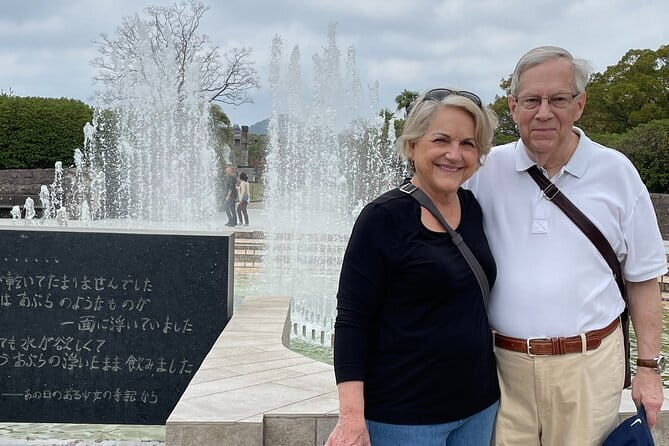
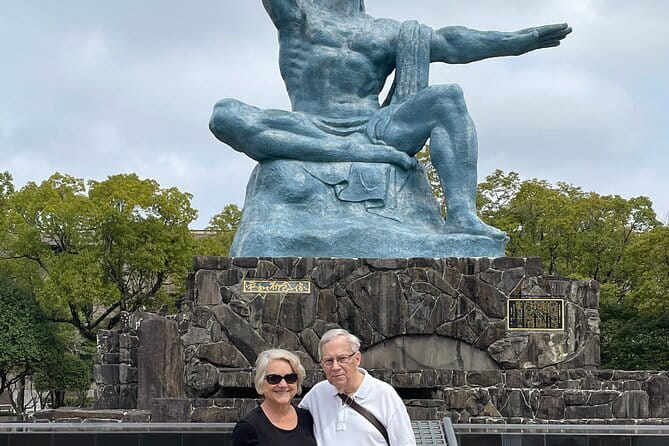
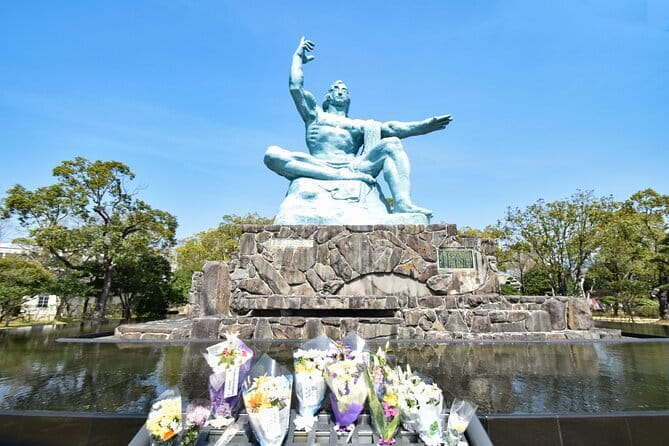
Stop 3: Peace Memorial Statue at Peace Park (about 1 hour, free entry)
From here you move into the language of remembrance. The Peace Memorial Statue sits in Peace Park on a small hill on the north side of the Atomic Bomb Dropping Center Park. The whole area is tied to a pledge never to repeat the tragedy and a hope for lasting world peace.
This stop helps you reset your head after the museum and the cathedral. It’s reflective, and the wording around peace makes more sense after you’ve just seen the consequences described earlier.
Stop 4: Spectacles Bridge, Meganebashi (about 30 minutes, free entry)
This is a short but memorable visual stop, but it comes with a catch. If you choose the Mount Inasa option, Spectacles Bridge is not included. If it is included for your version of the tour, you’ll have time for quick photos and a focused explanation of why this bridge is famous.
If you care about skyline views, you might still want to weigh which option fits you best, because the Mount Inasa choice changes what you see later in the day.
The Western influence day: Glover Garden and Oura Catholic Church
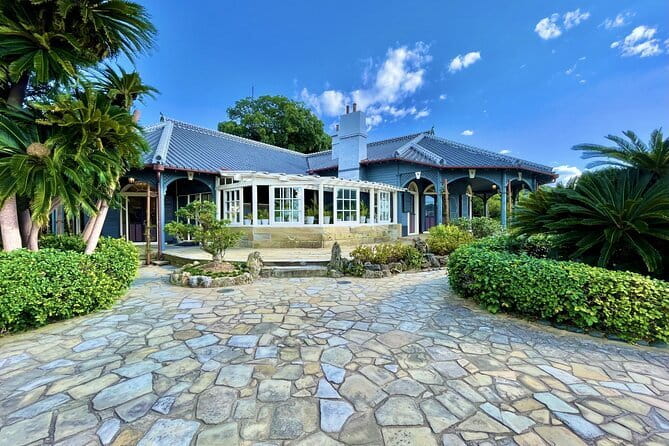
Stop 5: Glover Garden (about 1 hour, admission included)
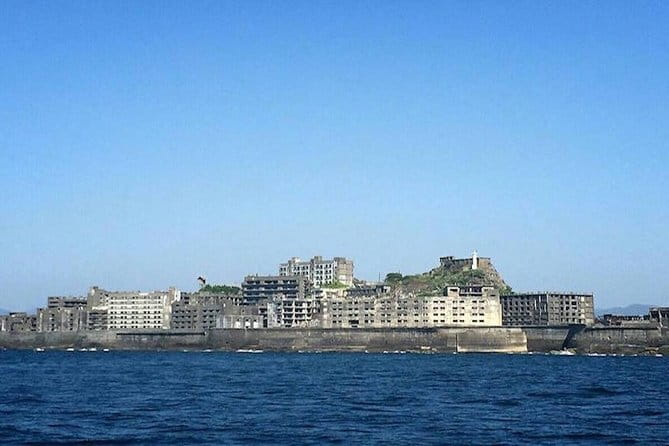
Now you shift into a more “Nagasaki beyond the war” mood. Glover Garden includes six Western-style buildings from the Meiji period that were relocated and restored. The former Glover Residence, former Ringer Residence, and former Alt Residence are specifically part of the set.
This matters historically because Nagasaki’s connection to outside trade and missions is not a modern invention. The city has long been a place where European presence shaped parts of urban life, even during periods when Japan tried to limit foreign influence. On this tour, the guide helps you connect that earlier era to what comes later.
Stop 6: Oura Catholic Church (about 1 hour, admission included, optional depending on your version)
Oura Catholic Church is included on the standard itinerary, but not on the Mount Inasa version. It’s another stop where architecture and story blend. The day has already moved from the wartime core to peace messaging, so Oura gives you a sense of how Nagasaki’s religious landscape and foreign contact shaped the city long before the bomb era.
If you’re planning which route to take, think about what you prefer: scenic city views at Mount Inasa later, or this church stop as part of the Western-meets-Japanese trail.
Mount Inasa option: when you want the view
Inasayama Observation Deck, Mount Inasa (about 1 hour, admission included)
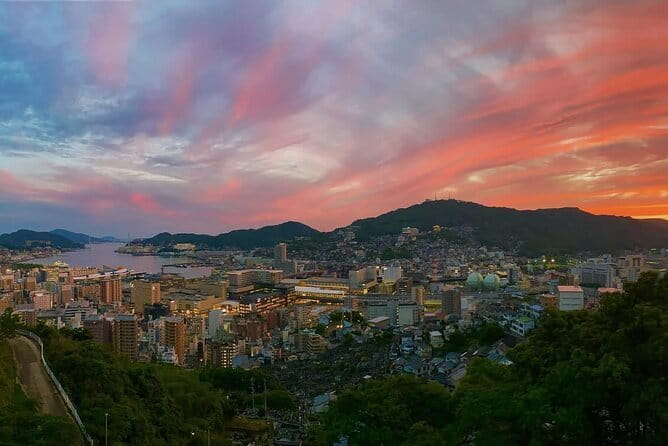
If you choose the Mount Inasa option, this is the main sightseeing swap. Mount Inasa is listed at 333 meters, and the observation deck gives you the viewpoint piece of the puzzle. The exact visuals depend on weather and visibility, but you should expect the tour to end up feeling more like a panorama day when you take this route.
The itinerary note says this version excludes Spectacles Bridge and Oura Catholic Church. So the Mount Inasa option is essentially: views first, fewer church and bridge stops.
If you’ve ever regretted missing a skyline view in a coastal city, this option might be worth considering. If you’re more interested in religious and historic buildings, stick with the standard route.
Timing and logistics: what a 7-hour day actually feels like
This tour is listed at 7 hours (approx.), and the total duration includes travel time. That’s important. You’re not just spending 7 hours at attractions. You’re also commuting by tram and walking between stops.
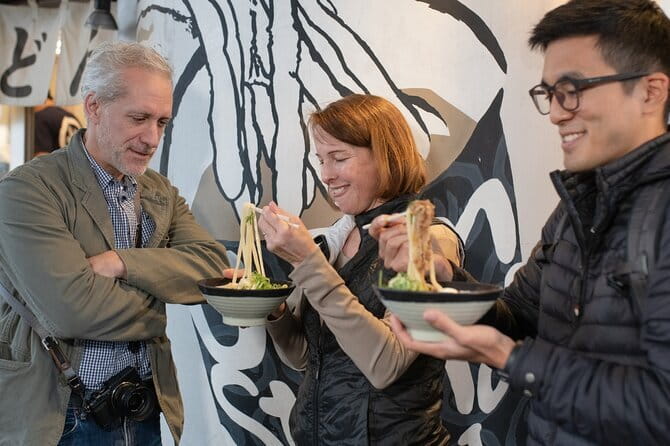
Lunch is not included, and it’s estimated at about 10 to 20 USD per person. I’d treat lunch as a planning checkpoint, not an afterthought. If you tend to get tired after museum hours, schedule lunch so you’re not racing through it.
Because the itinerary can change due to weather or other reasons, build in some flexibility. A clouded day might also affect the Mount Inasa experience, where visibility matters.
Also, admission fees and public transportation fees are included. That helps the tour feel more “fixed price” in practice. You still pay for food and personal shopping, but the biggest cost drivers are already handled.
Price and value: is $350 per person worth it?
At $350 per person, this isn’t a budget day. But it’s not meant to be one. It’s priced for a licensed private guide, admission coverage, and transportation costs, plus the structure of a full route that connects major parts of Nagasaki’s story.
Here’s how I’d judge value for you:
- If you like asking questions and getting context at each stop, the private guide time is where the money goes.
- If you can’t easily stitch together a good route on your own, the guide does the hard planning for you.
- If you’re already paying for multiple admissions and want a transport plan that makes sense, the included admission and transit fees reduce overhead.
The strongest value argument is the guide flexibility. The tour specifically allows adjustments if war-related images may be too much. That’s the kind of benefit you cannot replicate with a self-guided walk without risking a miserable day.
If you’re traveling with a friend or family member and want the ability to set your own pace, this price can feel more reasonable because the day stays focused on your group, not strangers.
What to expect from the guides: from Noriko to Ken to Nora
The reviews you provided emphasize that guides were a highlight. Noriko (Norah) and Nora both received praise for helping visitors experience a lot of interesting and beautiful sites, with a tone that feels both friendly and professional. Ken was singled out for doing a great job, even in hot weather.
There was also mention of a traditional Japanese restaurant choice. That matters because food stops can either derail your schedule or make the day feel like a real Nagasaki day. If the guide recommends a restaurant, you’re more likely to end up somewhere practical and local.
Quiet guides can still be good guides. One comment noted a guide who was a bit quiet but still a good recommendation. For you, that’s a reminder that you should care less about volume and more about clarity and pacing.
Who this tour suits best
This tour is ideal if:
- You want a guided history route through Nagasaki that ties together wartime memory and later Western-influenced architecture.
- You prefer using public transport so you’re moving like a local, with fewer logistics hassles.
- You want someone licensed to explain context, especially at the museum and remembrance sites.
- You might want itinerary flexibility if the atomic bomb content feels like too much.
It may be less ideal if:
- You want a relaxed, low-walking day. This is a full day with steps.
- You strongly prefer purely light-hearted sightseeing, since the emotional weight is real and not hidden.
- You dislike structured itineraries, because the day runs stop by stop for about 7 hours.
If you’re someone who can handle history but appreciates a guide’s judgment about pacing, you’ll probably love this.
Should you book this Nagasaki private historical tour?
Yes, if you want your Nagasaki visit to feel coherent instead of random. The best part is that the route links the city’s atomic bomb impact, the places of remembrance, and then the later architecture that reflects Nagasaki’s longer relationship with outside influence.
Book it if:
- You value a licensed guide who can explain the “why” behind each stop.
- You want admissions and transit handled.
- You want the option to adjust if the museum content feels too intense.
Think twice if:
- You’re sensitive to war-related imagery and you don’t think you can communicate that need in advance.
- You don’t want a walking-heavy 7-hour day.
If you decide to go, do one smart thing before you arrive: wear comfortable shoes, and tell the guide how you handle emotional content. That small step turns a powerful day into a manageable one, and it lets the tour do what it’s meant to do, help you understand Nagasaki with your whole attention.
FAQ
What does the Nagasaki Atomic Bomb Museum visit include?
The tour includes admission to the Nagasaki Atomic Bomb Museum, and it focuses on changes in the cityscape before and after the bombing, along with items left behind.
Is lunch included in the price?
No. Lunch is not included. The tour estimate for lunch is about 10 to 20 USD per person.
Can the itinerary be changed if the atomic bomb content feels too intense?
Yes. If you feel sick from shocking images, it’s possible to change the Atomic Bomb Museum to another itinerary. You should inform the guide at reservation or on the day of the tour.
What sites are included, and can the route change?
The standard stops include the Atomic Bomb Museum, Urakami Cathedral, Peace Memorial Statue, Spectacles Bridge, Glover Garden, and Oura Catholic Church. The itinerary might change due to weather or other reasons.
What changes with the Mount Inasa option?
If you choose the Mount Inasa option, Spectacles Bridge and Oura Catholic Church are not included. Instead, you add the Inasayama Observation Deck at Mount Inasa (admission included).
What language(s) do the guides speak?
The guide is a national licensed professional who can provide English and Mandarin.
Is the tour private and does it use public transportation?
Yes. It is a private tour with only your group, and it is described as a walking tour using public transportation. Hotel or port pickup is offered.
Latest write-ups near Nagasaki
- Nagasaki Half-Day Private Tour with Government-Licensed Guide★ 5.0 · 53 reviews
- Nagasaki Full-Day Private Tour with Government-Licensed Guide★ 5.0 · 66 reviews
- Nagasaki: Private Walking Tour with a Local★ 4.7 · 79 reviews
Historical Tours, compared.
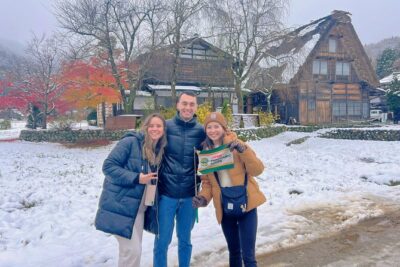
World Heritage Shirakawa-go and Experience Tours from Kanazawa
Read our review →
Imperial Palace and Shogun Historical Walking Tour
Read our review →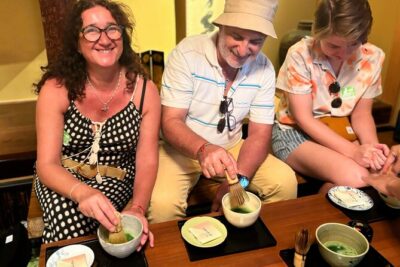
World Heritage Kyoto & Nara Uji Authentic Matcha Experience
Read our review →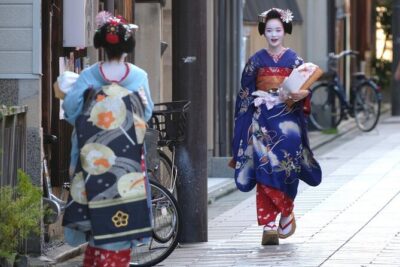
Kyoto Gion: 2-Hour Geisha Culture & History Walking Tour
Read our review →
World Heritage Shirakawa-go Morning Guided Tour
Read our review →
Hiroshima Peace (Heiwa) Walking Tour at World Heritage Sites
Read our review →
Shinjuku Historical Walking Tour & Secret Backstreets
Read our review →Browse the lists this tour appears in