
Reviewed · PEACE MEMORIALS
Hiroshima Peace Memorial Park: A Guided Tour
What makes this tour interesting is that a Hiroshima Peace Memorial Park guide helps you move site to site, so the meaning of August 6, 1945, lands clearly. You are not just looking at landmarks. You are connecting each stop to the human impact of the bombing and its aftermath.
I love how the route gives you two standout anchors: the Atomic Bomb Dome right at the start, and the Peace Memorial Museum later, where the guide explains what happened and what followed. I also like that the day stays focused on remembrance, not quick trivia.
One possible drawback is that this is a walking tour through the park, and it is not suitable for people with heart problems. If you need frequent breaks, bring water and keep your own pace in mind.
Key things to love about this Hiroshima Peace Memorial Park tour
- Start at the Atomic Bomb Dome, then keep going with context that you can actually follow
- Small group up to 10, led in English by Shera Alvi
- Peace Memorial Museum stop, built for understanding August 6 and the aftermath
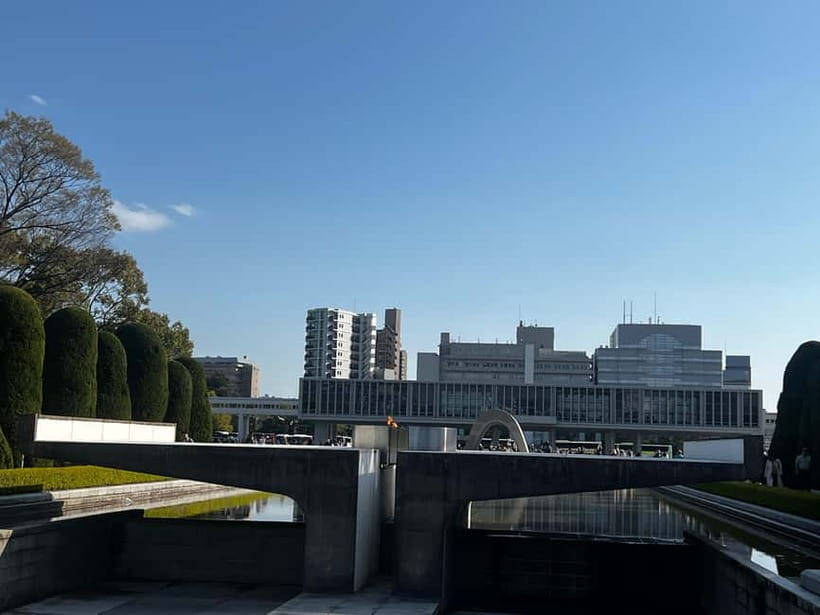
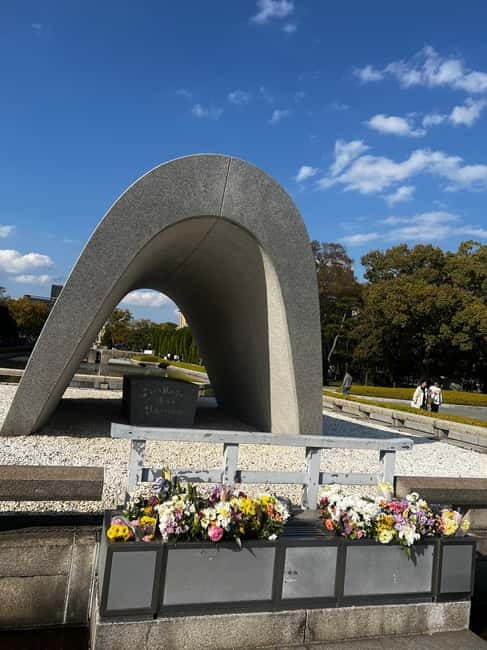
- Cenotaph for the A-bomb Victims + Peace Flame, a quiet mix of grief and hope
- Children’s Peace Monument, a powerful reminder that the victims included the very young
- Photo-friendly experience, with respectful behavior expected at every memorial site
Meet Shera Alvi at the Atomic Bomb Dome, a 2-hour small-group walk
This is one of those tours that feels both structured and human. You meet at the Atomic Bomb Dome (34.395483, 132.453592), and you get a clear plan for seeing the big memorial spots without getting lost in the sheer scale of the park.
The best part for me is the group size. With a small group limited to 10 participants, Shera Alvi can give attention and adjust as you go, instead of talking at you from start to finish. The tour runs about 2 hours, in English, and it is wheelchair accessible, which matters in a park where the surfaces and distances can vary.
There’s also a practical side to what you are doing. You are told up front to wear comfortable shoes, bring a camera, and bring water, and food is not allowed during the tour. That combination keeps the focus where it should be, and it helps you avoid the most common on-site hassle.
Other Peace Memorial visits:
- Hiroshima Historical Walking Tour – Why A-Bomb was Dropped
★ 4.8 · 893 reviews - Hiroshima: Miyajima Peace Memorial Icons of Peace and Beauty
★ 4.9 · 361 reviews - Hiroshima/Guided Virtual Tour of Peace Park/PEACE PARK TOUR VR
★ 5.0 · 157 reviews
Atomic Bomb Dome first: the emotion comes before the explanations
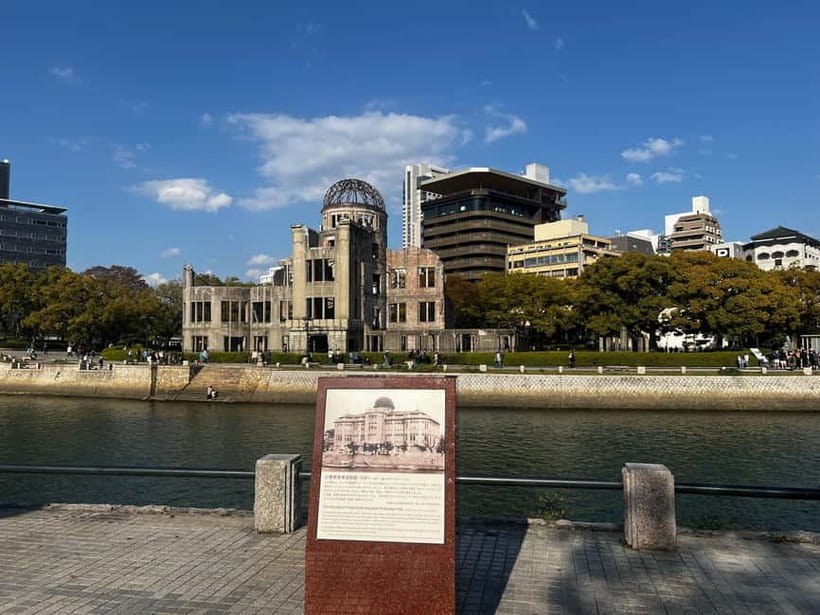
You begin at the Atomic Bomb Dome, and it works as an emotional anchor. Even if you have studied the event before, seeing the Dome in person hits differently because it is a surviving physical reminder of what happened on August 6, 1945.
The guide spends time here, about 20 minutes with the guided portion, and that matters. It is not a rushed photo stop. You get a guided introduction that helps you understand why this specific landmark is so central to how Hiroshima remembers.
Photography is allowed, so you can capture the Dome and the surrounding memorial spaces. Just remember the mood here is serious, so keep your camera use respectful and simple, no marathon photo sessions while people are reflecting.
Clock Tower of Peace and Bell of Peace: learning how the park signals time and warning
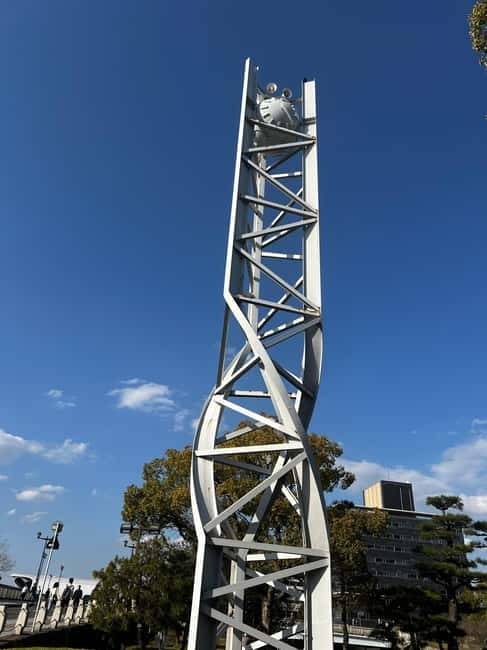
After the Dome, you move into the park’s memorial layout, with stops like the Clock Tower of Peace and the Bell of Peace. The names alone already tell you what the designers wanted you to feel: time, remembrance, and the message that peace has to be protected.
Each of these stops is short, around 10 minutes in the guided flow, which is a smart pacing choice for a memorial park. You get enough explanation to connect the dots, then you are not stuck staring at one thing too long.
If you are the type who likes to understand meaning instead of just collecting photos, this is a good pattern. The guide links each place to the broader story, including how the bombing affected civilians and how Hiroshima chose to respond afterward.
Peace Memorial Museum: the August 6 story and the aftermath you cannot skip
The museum stop is where the tour becomes more than moving around outdoors. You visit the Peace Memorial Museum, and the purpose is explicit: you learn deeper insights about the events of August 6, 1945, and the aftermath.
In about 10 minutes of guided time, you are not trying to read everything cover to cover. Instead, the guide helps you focus on key ideas so you can tell the difference between what you are seeing and what it means.
This is a great moment to slow down mentally. If you arrive already tired or rushed, the museum can feel intense, but the guided approach helps you process it in chunks. Bring your camera if you like, but the bigger win is understanding, not just documenting.
A change of pace from Hiroshima:
- Peaceful Hiroshima & Miyajima UNESCO 1 Day Bus Tour
★ 5.0 · 5,309 reviews - Hiroshima: Hiroshima and Miyajima UNESCO Sites 1-Day Tour
★ 4.9 · 2,330 reviews - Hiroshima / Miyajima Full-day Private Tour with Government Licensed Guide
★ 5.0 · 1,298 reviews - Hiroshima Peace (Heiwa) Walking Tour at World Heritage Sites
★ 5.0 · 872 reviews
Korean Atomic Bomb Victims Cenotaph: remembrance that extends beyond one story
A meaningful part of this tour is that remembrance is not limited to one group. You visit the Korean Atomic Bomb Victims Cenotaph, with guided time around 10 minutes.
What I appreciate here is the message of inclusion. You get to see that the impact of war reached people far from home, and Hiroshima’s memorial spaces acknowledge those wider human consequences.
If you are worried about a tour becoming too general, this stop helps counter that. You do not just learn the main headline. You see how the memorial park holds space for different victims and different losses.
Children’s Peace Monument and the Peace Flame: where hope meets heartbreak
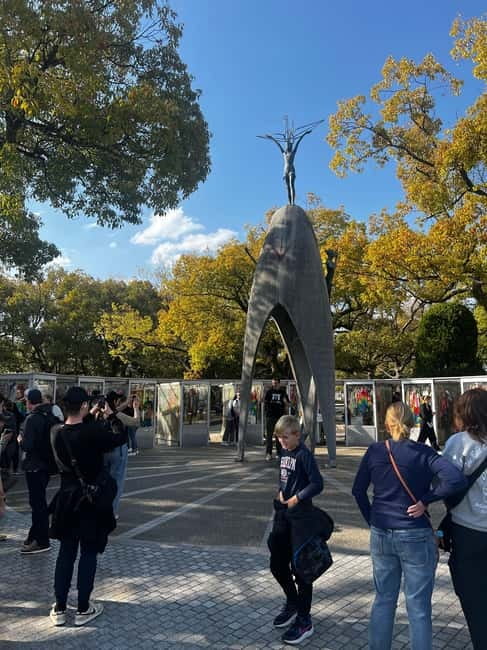
Next you head to the Children’s Peace Monument, and this is one of the hardest stops to watch calmly. You are specifically guided to the stories behind the children’s memorial, so you understand that the victims included the youngest generation, not only adults.
The guided time here is around 10 minutes, which is just enough for the guide’s context. Then you likely want extra seconds for your own reflection, because the whole point of the monument is about memory that refuses to fade.
From there, you reach the Peace Flame, described as a symbol of hope for a nuclear-free world. This is also a guided moment, and it changes the emotional temperature of the tour. You are still dealing with loss, but now you are also looking at what Hiroshima chose to say next.
If you want a tour that holds both grief and a direction forward, this combination is a strong one.
Cenotaph for the A-bomb Victims and Hiroshima’s peace memorial spaces
A major highlight is the Cenotaph for the A-bomb Victims, where you take a pause for a solemn tribute. The guide keeps the tone respectful and helps you reflect on the impact of war, not just memorize dates.
You also visit the Hiroshima National Peace Memorial Hall, and you see additional memorial spots tied to the theme of remembrance and resilience. The tour includes places like the Hiroshima victims cenotaph and the Prayer Fountain, plus the Gates of Peace as your ending point.
The Memorial Tower to the Mobilized Students and the Korean Atomic Bomb Victims Memorial are also part of what the tour aims to cover, with the idea that each structure tells a different piece of the story. That is important because the bombing’s impact was not one single uniform experience.
This is the kind of tour where you feel the park slowly turning from event to legacy. You start with a landmark that survived. Then you move through spaces that explain, honor, and keep the conversation going.
Prayer Fountain and Gates of Peace: closing the tour without rushing your feelings
The ending matters in memorial places. This tour finishes at the Gates of Peace, after a series of reflective stops that include the Prayer Fountain.
The Prayer Fountain gives you another quiet pause in the middle of a walking route. Even when the guided portion is around 10 minutes, you usually feel like you need those extra few moments for yourself afterward.
When you reach the Gates of Peace, you are leaving with a clearer idea of what Hiroshima wants visitors to carry home: remembrance grounded in human impact, and a hope that nuclear weapons never become normal again.
If you are taking photos, this is a good place to do a final, careful round. Once you step away from the guided group flow, you can also take your time finding your bearings for the next part of your day.
Price and pacing: how $19 stacks up for what you get
At $19 per person for a 2-hour guided visit, this tour is good value because it includes a lot of the park’s core sites plus museum time. You are paying for a plan, a trained English guide, and short explanations that connect the stops instead of leaving you to guess.
Doing this on your own is possible, but you would likely spend more time figuring out what matters and how to interpret what you’re seeing. Here, Shera Alvi’s role is to translate the park into a story you can follow, and he keeps the pace easy enough that you still have room to absorb what you’re learning.
The small group format also improves the value. With limited participants, you get the chance to interact with the guide, and the tour is not a one-way lecture.
Who should book this Hiroshima Peace Memorial Park tour?
This tour fits best if you want a structured, English-guided walkthrough of key memorial sites. It is a strong choice for adults and older teens, and it is especially good if you want understanding, not just photo stops.
It is also suitable if you need wheelchair accessibility, since the tour is listed as accessible. You will still be walking through the park, so bring water and wear shoes that handle memorial-path surfaces comfortably.
Two clear groups should skip it: children under 6 years, and anyone with heart problems. If you are in either category, you might still visit the park independently at your own pace.
Should you book this Hiroshima Peace Memorial Park tour?
Yes, book it if you want to see the major memorial sites with an English guide who can connect them into one understandable message. The combination of the Atomic Bomb Dome, the Peace Memorial Museum, the Cenotaph for the A-bomb Victims, the Children’s Peace Monument, and the Peace Flame gives you both context and reflection.
Skip it if you know you cannot handle walking through the park, or if your health needs make this type of pace unsafe. For everyone else, this is an efficient, meaningful way to experience Hiroshima’s memorial spaces without losing the thread.
FAQ
Where do I meet for the Hiroshima Peace Memorial Park guided tour?
You meet at the Atomic Bomb Dome, with coordinates 34.395483, 132.453592.
How long is the tour?
The tour lasts about 2 hours.
What does the tour cost?
The price is $19 per person.
Is the guide available in English?
Yes, the live tour guide provides the tour in English.
How large is the group?
The group is small, limited to 10 participants.
Is the tour wheelchair accessible?
Yes, it is listed as wheelchair accessible.
What should I bring?
Bring comfortable shoes, a camera, and water.
Can I take photos, and is food allowed?
Photography is allowed. Food is not allowed during the tour.
Who is the tour not suitable for?
It is not suitable for children under 6 years old, and it is not suitable for people with heart problems.
Are there flexible booking and cancellation options?
You can cancel up to 24 hours in advance for a full refund, and you can reserve now and pay later to keep plans flexible.
If you tell me your travel month and whether you want a lighter or heavier pace, I can suggest the best way to plan your day around this 2-hour tour.
Latest write-ups near Hiroshima
- An Amazing set of Cultural experience: Kimono, Tea Ceremony and Calligraphy★ 5.0 · 69 reviews
- Hiroshima: Private Walking Tour with a Local★ 4.6 · 70 reviews
- Hiroshima: Miyajima Island Half-Day Tour with Guide★ 4.9 · 71 reviews
- Kimono and Tea Ceremony in Miyajima★ 5.0 · 73 reviews
- Hiroshima and Miyajima Private Guided Tour★ 4.5 · 75 reviews
- HIROSHIMA ORIZURU TOWER Admission Ticket★ 4.6 · 75 reviews
- Hiroshima & Miyajima: UNESCO A-Bomb Dome & Itsukushima★ 5.0 · 76 reviews
- Hiroshima to Miyajima: Private Custom Tour with Ferry Ride★ 4.9 · 77 reviews