
Reviewed · PEACE MEMORIALS
Hiroshima: Miyajima Peace Memorial Icons of Peace and Beauty
Hiroshima and Miyajima in one day is interesting because it swings from heavy history to postcard scenery without feeling rushed. You start with the Hiroshima Peace Memorial Park and its most famous landmark, the Atomic Bomb Dome, then you move to the Seto Inland Sea to see Itsukushima Shrine where the views can literally feel suspended between earth and sky.
I especially like two things about this tour: you get a guide who keeps the day organized while you focus on what you are seeing, not logistics, and you also get real hands-on time in both places, including a free hour on Miyajima for snacks, tea houses, and handmade souvenirs. Also, the group often includes English and Spanish support, so you are not stuck piecing together meaning on your own.
One drawback to plan for is the emotional weight in the morning, plus a fair bit of walking across both areas. If you have mobility concerns, bring a realistic mindset and comfortable shoes, because you will be on your feet more than you might expect.
Key Highlights You Will Actually Care About
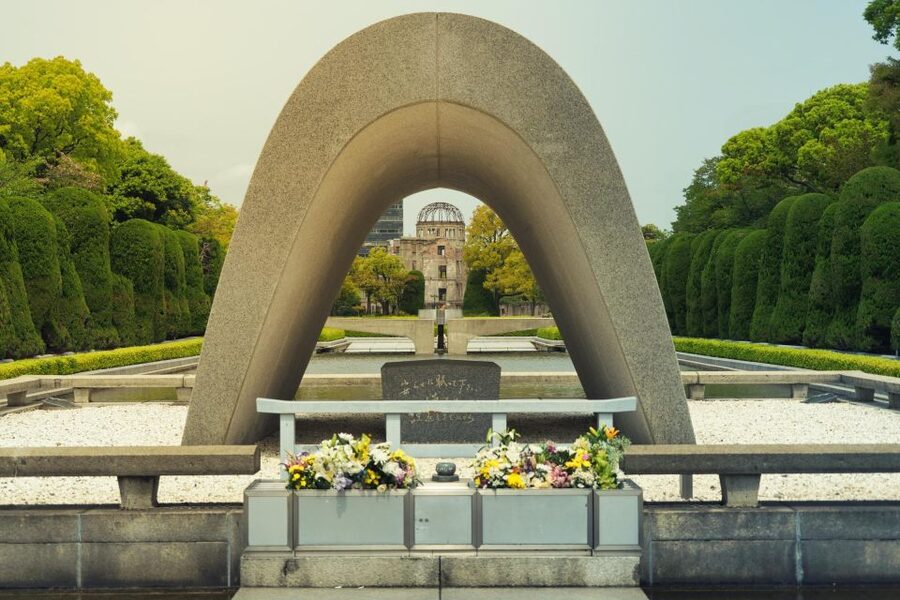
- Peace Memorial Park with guided context, including the Cenotaph for the A-bomb Victims, the Flame of Peace, and the Peace Memorial Museum
- Atomic Bomb Dome timing built into a structured route so you see it without wasting time
- Public transport plus a ferry ride to Miyajima, so the trip feels like part of the day, not just travel
- Itsukushima Shrine timing and atmosphere, including how the shrine looks at high tide
- Senjokaku Pavilion for deeper shrine-side perspective, beyond the main postcard view
- A focused Miyajima free-time block, when you can hunt for Momiji Manju and crafts without feeling behind
Hiroshima Peace Memorial Park First, Then the World Changes Shape
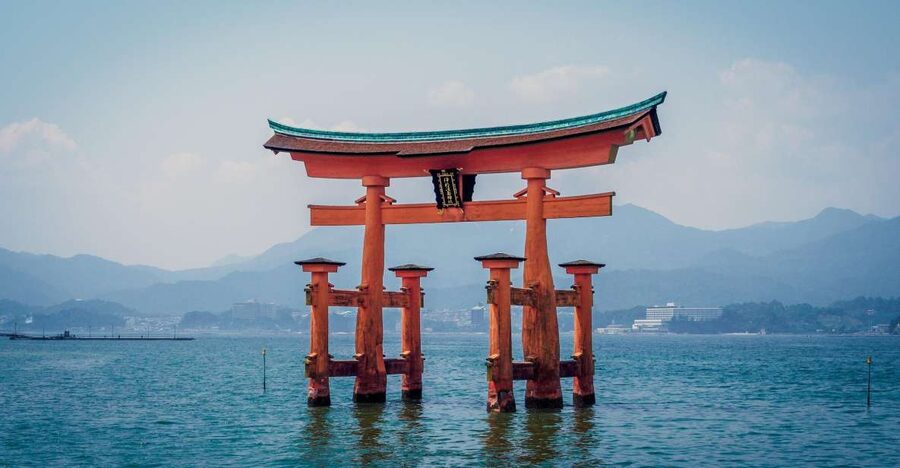
The best part of starting in Hiroshima is that you immediately know what matters. The tour begins right near the Peace Memorial area, so you are not spending your morning figuring out where to go. Instead, you are stepping into a space built for remembrance, with quiet paths, water nearby, and a layout that keeps pulling your attention back to the central message.
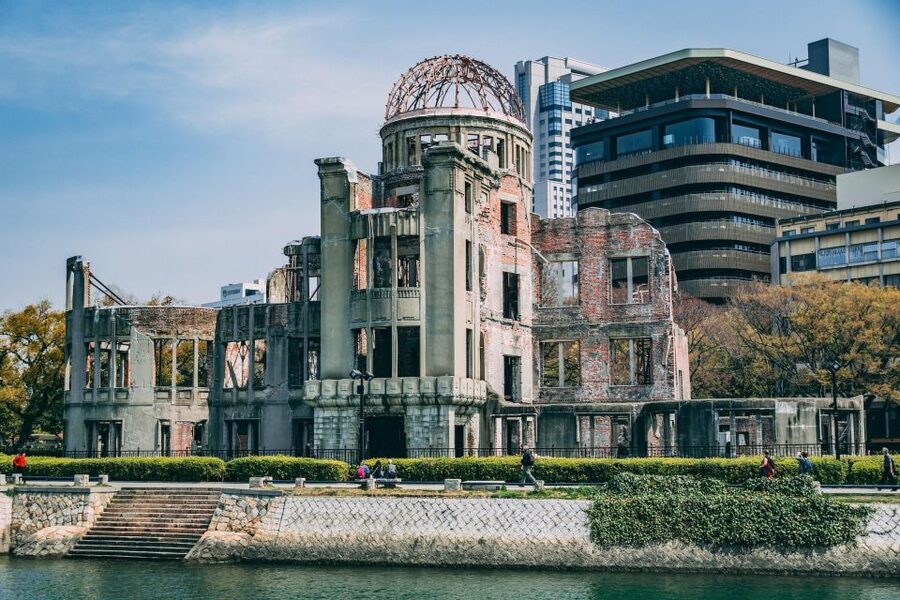
In the Peace Memorial Park, you are not just ticking off landmarks. You are guided through what each site represents, starting with the overall story of August 6, 1945 and the lasting impact on survivors and the world. You will see the Cenotaph for the A-bomb Victims, and you will notice the paper cranes, which are part of the ongoing global wish for peace. Then you will be directed to the Flame of Peace, burning as a living symbol of the commitment to a world without nuclear weapons.
This is also where your guide matters. People consistently rate the guiding because it helps you understand the place in a human scale, not a distant, museum-only way. You will likely hear answers to the questions you did not know you had yet.
Practical note: this part of the day is reflective. If you prefer light sightseeing where you can chat nonstop, this morning will be different. It is still worth it, just go in with your expectations set.
Other Peace Memorial visits:
- Hiroshima Historical Walking Tour – Why A-Bomb was Dropped
★ 4.8 · 893 reviews - Hiroshima/Guided Virtual Tour of Peace Park/PEACE PARK TOUR VR
★ 5.0 · 157 reviews - Hiroshima: Peace Memorial Park and Atomic Bomb Dome Tour
★ 4.9 · 91 reviews
Atomic Bomb Dome and the Peace Memorial Museum, Facts You Can’t Un-See
After the initial park walk, you focus on the Atomic Bomb Dome, a UNESCO World Heritage Site and one of the most recognizable remnants from the blast. This stop is short and guided, which is a good thing. You get a clear visit, and you still have time to process it before the museum deepens the experience.
Then comes the Hiroshima Peace Memorial Museum, which is usually the emotional hinge of the whole morning. Plan for this as the place where you see the story in detail: what happened, how Hiroshima changed, and why the world still remembers. The time on site is about one hour, which is enough to get a strong overview, but it can still feel like a lot. If you like to read every label, you might feel like you are skipping, so focus on the themes your guide highlights.
If you get overwhelmed, it helps to remember why the tour has a guided pace. You are not meant to understand everything at once. You are meant to leave with the core message clear, and with enough context to make Miyajima later feel like a real contrast instead of a jarring shift.
Itsukushima Shrine on the Water, the View Is Only Part of It
By the time you head to Miyajima, the tone changes. This is not ignoring the past, it is adding another layer to Japan that people often forget to schedule: how faith, beauty, and nature coexist in the same frame.
You travel via public transport, including a ferry ride. That ferry is not just transportation. It gives you a breather and a sense of place before you step into shrine territory. When you reach Miyajima, your first major shrine stop is Itsukushima Shrine, built right at the edge of the Seto Inland Sea.
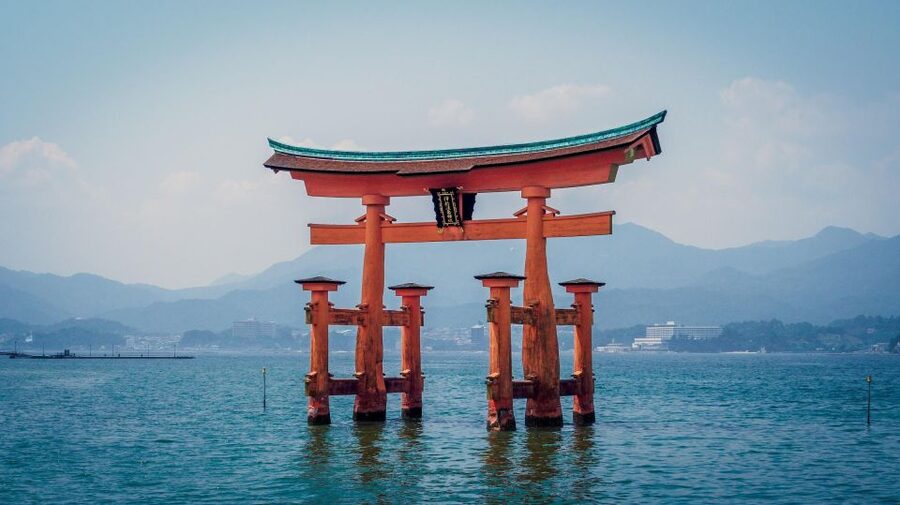
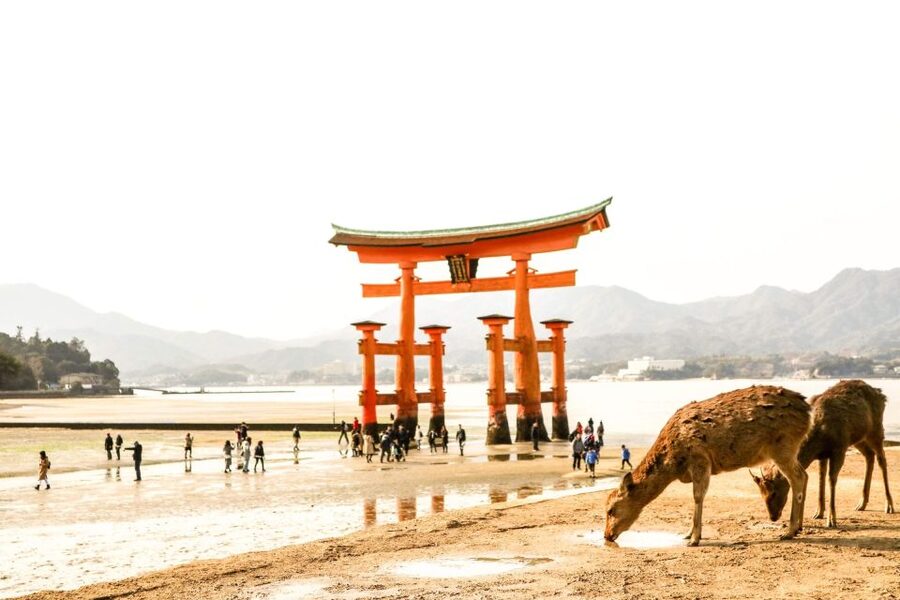
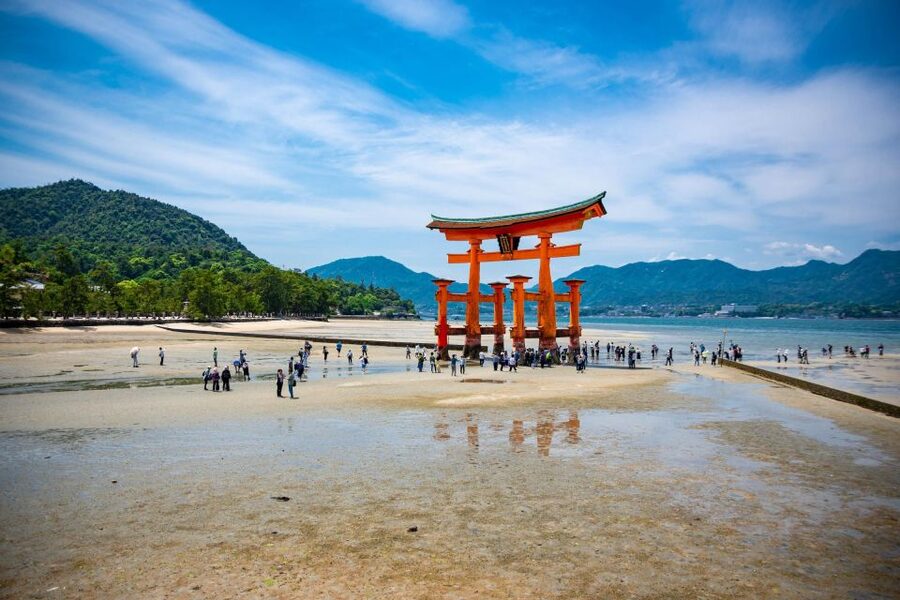
Here is the detail that makes this place special: during high tide, the shrine appears to float on the water. Even if the exact tide timing is not perfect for your day, the location still delivers that illusion. And because you visit with a guide, you are not only watching the photo angle. You understand why the architecture sits so deliberately in relation to water and worship.
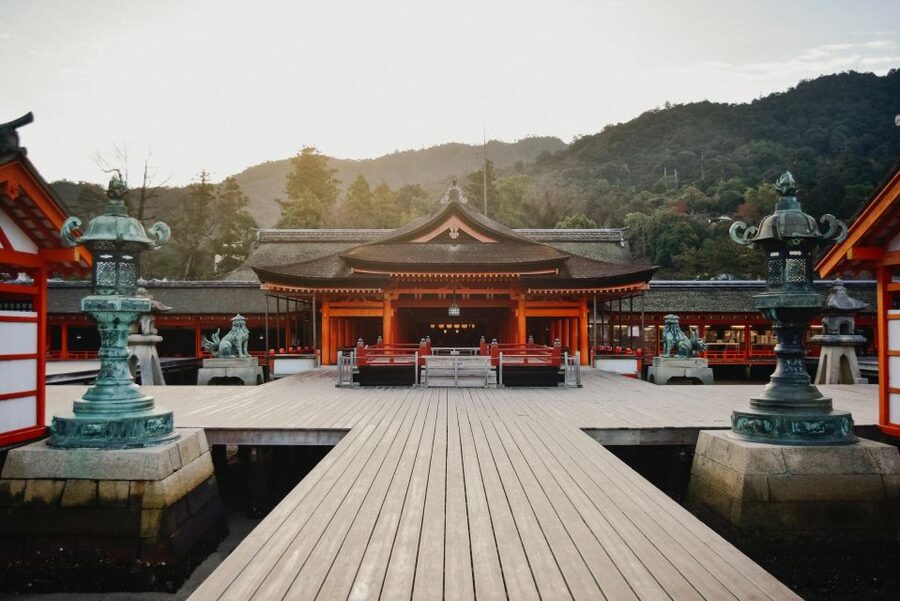
You also visit the pavilion area called Tenshinkaku, known as the Pavilion of Heavenly Spirits. That stop is quieter than the main shrine scenes, which is ideal. It gives your mind a moment to shift from history-heavy focus into calm observation of Japanese craft and design, including traditional interiors like tatami spaces.
If you care about photography, you are in a good position here. The shrine offers strong visual geometry, and the guide also tends to help people time their shots without standing in crowds forever.
Senjokaku Pavilion, Where the Shrine Feeling Gets Bigger
After Itsukushima Shrine, you move to Senjokaku Pavilion. This stop rounds out Miyajima beyond the famous torii-and-water image. The experience is more about atmosphere than about one single view.
Senjokaku is part of why Miyajima works as a destination for multiple kinds of travelers. If you came for aesthetics, you will appreciate the stillness and the way the surroundings set a gentle rhythm. If you came for culture, you will get a better sense of how shrine spaces function as spiritual destinations, not just scenic stops.
You also get guided time and then later a longer stretch that includes walking on Miyajima. That balance matters. One hour of free time can feel like a lot on paper, but because Miyajima rewards strolling, you are better off not overplanning.
More Miyajima crossings:
- Peaceful Hiroshima & Miyajima UNESCO 1 Day Bus Tour
★ 5.0 · 5,309 reviews - Hiroshima: Hiroshima and Miyajima UNESCO Sites 1-Day Tour
★ 4.9 · 2,330 reviews - Hiroshima / Miyajima Full-day Private Tour with Government Licensed Guide
★ 5.0 · 1,298 reviews - From Hiroshima: Hiroshima & Miyajima 1 Day Tour with Lunch
★ 4.7 · 395 reviews
Tram, Ferry, and the Little Things That Keep the Day Smooth
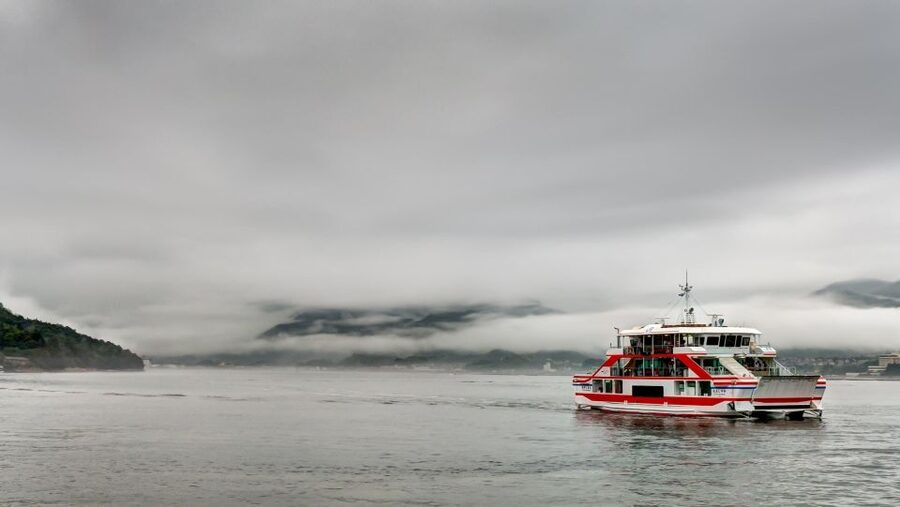
This tour includes public transportation fares, including tram and ferry. That matters because Hiroshima can be easy to navigate, but it is still time-consuming to coordinate transfers while you are carrying luggage, checking timing, and trying to get to the Peace Memorial sites at a good pace.
The day is structured so you are not constantly hunting for tickets. Your guide also helps with entry timing and queue management, which is a common reason people rate this tour highly. In practice, that means you spend more time looking at what you came for.
There is also a clear starting and ending point. You meet at the 7-Eleven Hiroshima Motoyasubashi East Store, directly outside the Peace Memorial Park area. The tour finishes at Hiroshima Station, so you do not end up stranded on the far side of town wondering where to go next.
Also, the tour duration is about eight hours. That is long enough to feel satisfying, but short enough that you are not wiped out by mid-afternoon. Still, you should plan to stay alert. The morning is heavier, and the afternoon has more movement.
Miyajima Free Time, Tea Houses, and the Stuff You Actually Want to Bring Home
Your schedule includes a chunk of lunch time on Miyajima (about 45 minutes) and then a free time window of about one hour. That free time is one of the best value parts of the tour because it lets you do Miyajima the way locals and repeat visitors do, by wandering and snacking.
This is when I recommend you look for Momiji Manju. It is the maple-leaf shaped cake you will see everywhere, with sweet or savory fillings. If you are the kind of traveler who likes one small food mission, this is perfect. Grab one, try it, then use the rest of your hour to decide if you want a second flavor.
You will also find handicrafts and small shops selling souvenirs. The goal is not to buy everything. The goal is to find a couple items that feel specific to the island, then stop at a tea house if you want a breather.
This is also when you can get your own pace. Guides will do the heavy lifting with routing, so in your free hour you can focus on what you enjoy most, whether it is a calm walk, a snack stop, or just watching the water.
Lunch on Miyajima, Plan for Options and Dietary Needs
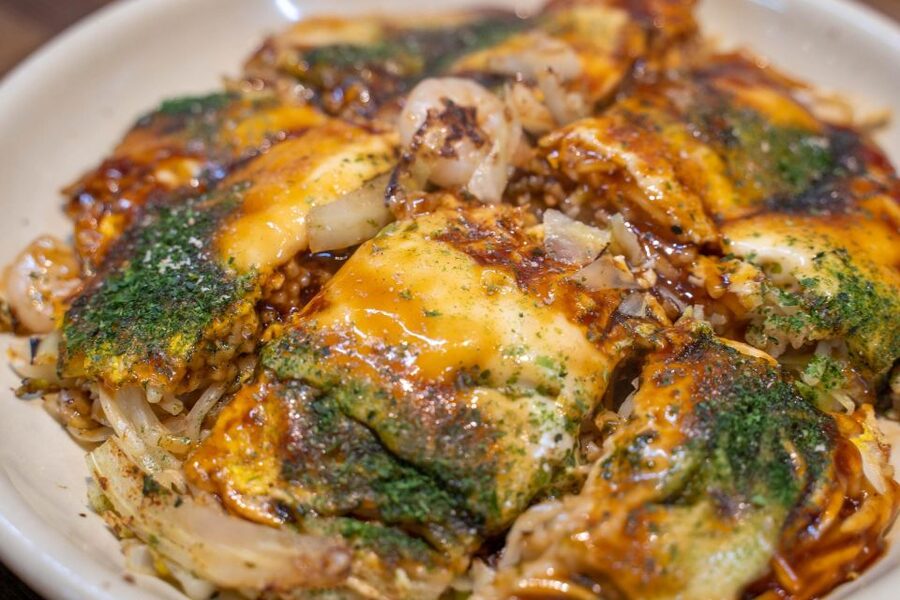
Lunch is not included in the price, so you will pick a spot during the allotted time. The tour gives you a controlled window, about 45 minutes, which means you should avoid places that require long waits.
A helpful detail from real experiences is that some guides try to support different dietary needs, including vegan options for lunch. So if you have dietary restrictions, it is worth asking your guide during the day.
My practical advice: decide in advance what matters to you. If you want the classic island flavors, you can choose a traditional meal. If you just want something quick and comforting, aim for something you can eat without rushing. With Miyajima time, the worst choice is a restaurant that looks great but eats your clock.
Photo Option, When You Want Memories Without the Guesswork
There is a professional photo option offered with the experience. The idea is that guide-photographers help frame moments as you move through Hiroshima Peace Memorial Park and then on Miyajima.
This can be useful if you are traveling with a partner and you want more than basic selfies, or if you are solo and you do not want to keep handing your phone to strangers. It also helps with timing, because shrine and memorial sites often have crowd patterns.
Even if you do not take the photo option, I recommend planning for photos anyway. Bring a charged phone or camera, and be ready for changing light around the water and shrine buildings.
How Much Walking and How to Prepare
You should come ready to walk. The memorial sites and the shrine areas are not designed for slow, car-style sightseeing. The museum has indoor space, but your day still includes outdoor paths and multiple stops.
One review concern that matters for planning is that mobility issues might be challenging because there is a lot of walking, even if the route is efficient. So if you have any limitations, wear supportive shoes, go at a steady pace, and let your guide know early if you need adjustments.
Also, check weather. Hiroshima and Miyajima can surprise you, and at least one guide reportedly gives advance weather heads up. If rain happens, you will still be doing the main stops, so plan to stay comfortable.
Price and Value, Why $163 Often Makes Sense
The price is $163 per person for about eight hours. That sounds like a lot until you map what is included.
You get:
- A live English guide (and Spanish is available)
- Public transportation fares (tram and ferry)
- Entrance fees to Peace Memorial Park and Itsukushima Shrine
- Time to explore on your own at key moments
Lunch is not included, so budget for that. But compared to paying entrance fees on your own, buying transport, and spending your time figuring out the order, this package becomes a value choice if you want to spend your limited time actually experiencing the places.
The most convincing part is the guide role. When a guide knows the route and keeps the schedule smooth, you get less waiting and more time where it counts. In this case, “where it counts” is both a memorial site and a scenic island, which each benefit from being guided, not improvised.
Should You Book This Hiroshima and Miyajima Tour?
Book it if you want one day that covers the essentials of Hiroshima Peace Memorial sites plus Miyajima’s shrine-world beauty, without turning into a logistics project. It is especially a good fit if you appreciate context and you want someone to help you understand what you are seeing at the Peace Memorial Park and museum, then shift to Miyajima with a plan that still leaves you room to wander.
Skip it or adjust expectations if you hate walking, or if you prefer only light sightseeing. This morning is solemn, and the pace includes multiple stops. But for most people, that mix is exactly why Hiroshima and Miyajima feel memorable together.
FAQ
How long is this tour?
The tour duration is 8 hours.
Where do I meet the guide?
Meet at the 7-Eleven Hiroshima Motoyasubashi East Store, directly outside of the Peace Memorial Park.
What are the main stops during the day?
You visit Hiroshima Peace Memorial Park, the Atomic Bomb Dome, the Hiroshima Peace Memorial Museum, then travel to Miyajima, including Itsukushima Shrine and Senjokaku Pavilion, with lunch and free time on Miyajima before returning.
Is lunch included?
No. Lunch is not included.
What’s included in the price besides the guide?
The tour includes public transportation fares (tram and ferry), entrance fees to Peace Memorial Park and Itsukushima Shrine, plus free time for personal exploration.
What language will the guide speak?
The live tour guide is available in English and Spanish.
Do I get free time on Miyajima?
Yes. You have about 1 hour of free time on Miyajima after the guided sightseeing, plus lunch time.
Is there a professional photo option?
There is a professional photo option available, featuring expert guide-photographers who help capture moments during the Hiroshima and Miyajima parts of the trip.
What should I bring?
Wear comfortable shoes, since you will be walking through multiple sites.
If I cancel, will I get a refund?
Free cancellation is available up to 24 hours in advance for a full refund.
What if I am traveling solo?
The provider aims not to charge extra for solo travelers, but if the minimum of 2 guests is not met, they will offer an alternate date, a solo supplement of 16000 yen, or a full refund.
Latest write-ups near Hiroshima
- An Amazing set of Cultural experience: Kimono, Tea Ceremony and Calligraphy★ 5.0 · 69 reviews
- Hiroshima: Private Walking Tour with a Local★ 4.6 · 70 reviews
- Hiroshima: Miyajima Island Half-Day Tour with Guide★ 4.9 · 71 reviews
- Kimono and Tea Ceremony in Miyajima★ 5.0 · 73 reviews
- Hiroshima and Miyajima Private Guided Tour★ 4.5 · 75 reviews
- HIROSHIMA ORIZURU TOWER Admission Ticket★ 4.6 · 75 reviews
- Hiroshima & Miyajima: UNESCO A-Bomb Dome & Itsukushima★ 5.0 · 76 reviews
- Hiroshima to Miyajima: Private Custom Tour with Ferry Ride★ 4.9 · 77 reviews