
Reviewed · HISTORICAL TOURS
Asakusa: 3.5-hour Big-picture History Walk
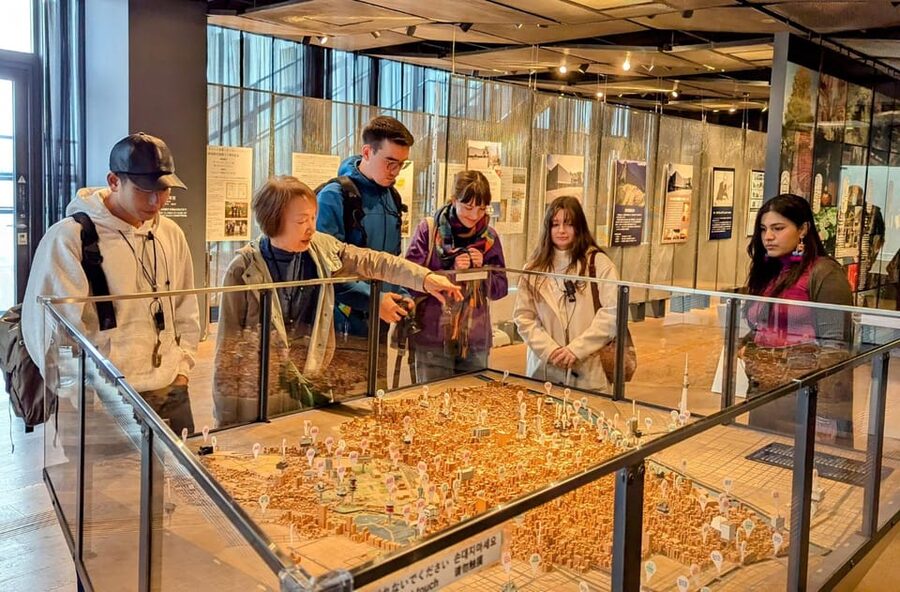
Asakusa is interesting because it compresses a lot of Japan into a walk you can actually finish without feeling rushed. This big-picture history walk turns landmarks into answers, from why Japan closed for centuries to how it reopened and connected with the wider world. I like that you get the story behind what you see, not just a photo stop.
I especially like the balance of two religions in everyday practice and the way the guide links Japan to global culture, including the Netherlands choice during isolation and how 19th-century Japanese art influenced French Impressionists. One drawback to plan for: there is a moderate amount of walking on busy streets, so you’ll want comfortable shoes and a realistic pace.
Key Things You’ll Get Out of This Walk
- A clear timeline, from isolation to reopening, using symbols and specific history points along the route
- Two belief systems explained simply, including how they can coexist with the same worshipers
- East meets West comparisons, like surprising parallels including dragons and cultural mindsets
- Small-group pacing, limited to 8 people, plus headsets for clearer guide audio (especially in groups of 3 or more)
- Snack breaks built in, with freshly made traditional sweets and savory bites sampled during the walk
- Guide-level care, where guides such as Ai, Taka, and Yoko are specifically praised for staying responsive and helpful
Asakusa: Why This Neighborhood Teaches Japan Fast
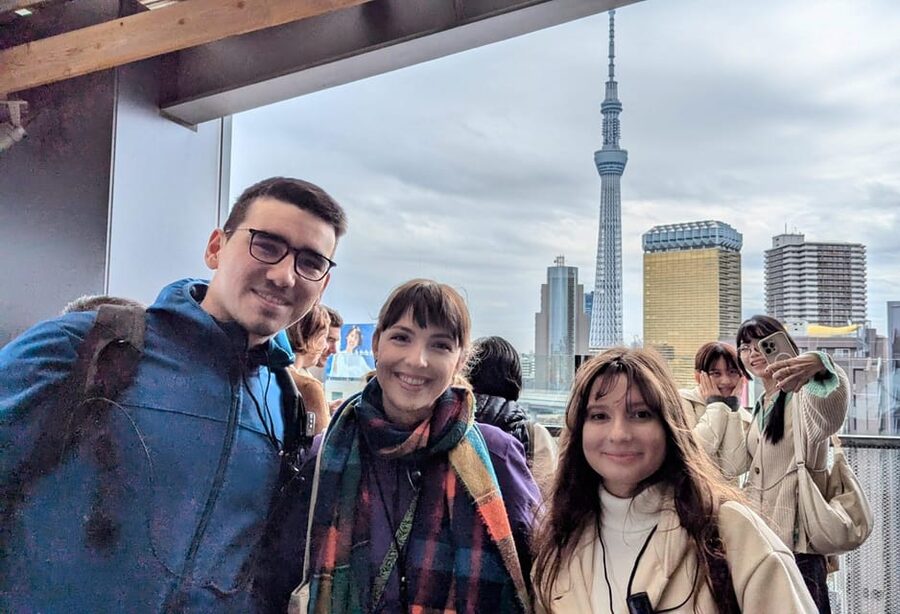
If you only have a half day in Tokyo and you want the big picture, Asakusa is a smart starting point. This tour uses the area around Sensō-ji and nearby shrines and streets as a kind of living timeline. You start with recognizable sights, then the guide keeps stepping back to explain how Japan got from feudal patterns to the modern country you’re standing in.
What I like about this approach is that it stops you from treating temples, gates, and shopping lanes like separate “random cute places.” Instead, each stop becomes a chapter. The guide frames things around three themes: how Japan handled the outside world, how Japanese belief works in daily life, and how culture can be both distinct and strangely familiar.
And the best part is the scope. In about 210 minutes, you cover the kind of history people usually spread across guidebooks and multiple museums. It’s not just facts. It’s the mental map you can carry into the rest of your trip.
More Historical Tours in Tokyo
- Tokyo: Imperial Palace and Shogun Historical Walking Tour
★ 5.0 · 2,251 reviews - Tokyo: Imperial Palace Japanese History Walking Tour
★ 4.9 · 987 reviews - Tokyo: Shinjuku Historical Walking Tour & Secret Backstreets
★ 5.0 · 530 reviews
Meeting Point, Group Size, and Why Headsets Matter
You meet in front of a Burger King next to Exit 4 of Asakusa Station on the Ginza line (G19). Step outside at Exit 4, and you’ll find the group there before you head into the walking portion.
The group is small, capped at 8 participants. That helps the guide manage questions and keep the pacing humane. If you’re in a group of 3 or more, you also get headsets. That detail sounds minor, but it makes a real difference in crowded lanes where voices get swallowed by traffic and chatter.
Logistically, this is a walk-first experience. Hotel pickup and drop-off are not included, so you should plan to reach the meeting point on your own. Also, it operates in all weather, so bring layers when the sky decides to cooperate less than you hoped.
Getting Oriented Near the River and the Modern Info Stops
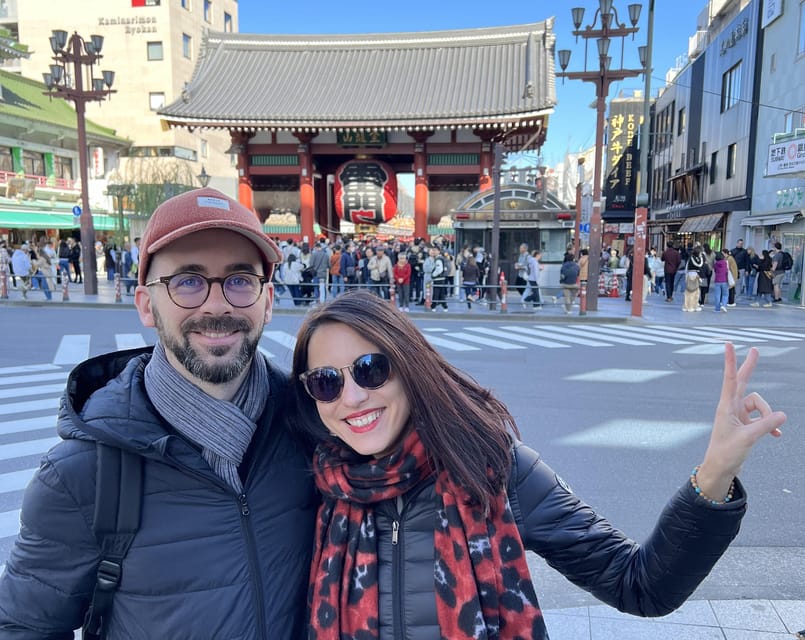
Early on, you spend time around the Asakusa area by the pier and the culture information center. This matters more than you might expect. These are the parts of the day where the guide helps you get your bearings fast, then introduces the themes you’ll keep seeing again and again.
In the reviews, I noticed a pattern: guides sometimes take people up to a higher view from a more modern information building area near the river zone. If that happens on your day, it’s a useful breather because you can look over the neighborhood’s geometry before you start ducking into narrow lanes and temple streets.
This is also where the tour’s style shows. The guide doesn’t just point. They explain the why, including how trade and outside contact shaped what came next. That sets you up to read Japan’s later changes with less confusion.
Kaminarimon to Nakamise: Big Gate Energy and the Why Behind It
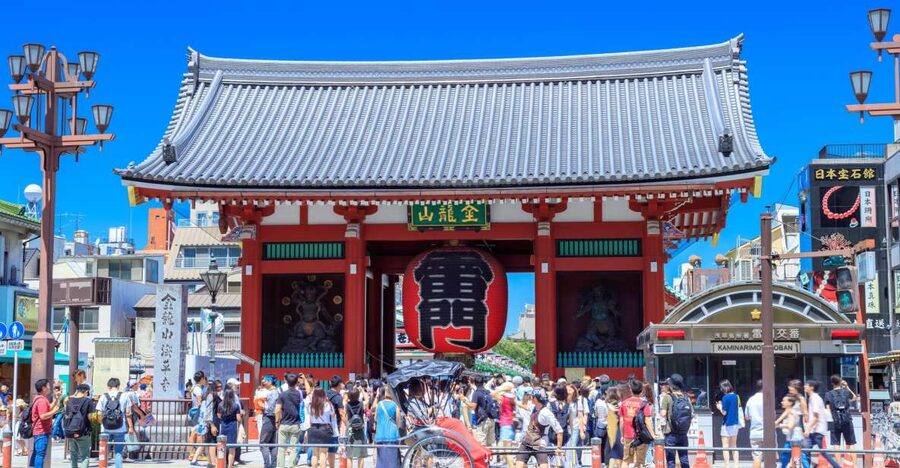
You’ll hit Kaminarimon next. This gate is one of those “you know it when you see it” landmarks, but the guide treatment makes it more than an Instagram backdrop. You’ll get context that ties the area to Japan’s longer story, including the shift from isolation to opening.
After the gate, you walk Nakamise Shopping Street. This is where Asakusa can feel like the neighborhood’s memory in motion, with snack smells and shopfronts pulling you forward.
Here’s the practical angle: shopping streets can be distracting, especially if you want history. The good news is that the tour is structured so the guide keeps the emphasis on meaning. In a review praising Taka, the guide avoided pushing shoppers and instead adjusted attention to architecture, history, and even gardening. That tells you something important: you’re not trapped in a sales parade.
If you’re sensitive to crowds, pick your pace. Nakamise can get busy, but the small group and headsets help you stay with the guide’s line of thought.
More Walking Tours in Tokyo
- Tokyo Tsukiji Fish Market Food and Culture Walking Tour
★ 5.0 · 3,184 reviews - Tokyo: Shinjuku Local Bar and Izakaya Guided Walking Tour
★ 4.9 · 1,794 reviews - Tokyo: Tsukiji Fish Market Food and Walking tour
★ 5.0 · 1,724 reviews - Tokyo: Asakusa Walking Tour with Sensoji Temple Visit
★ 4.8 · 1,583 reviews
Hōzōmon Gate and Sensō-ji: Sacred Space, Street Noise, Same City
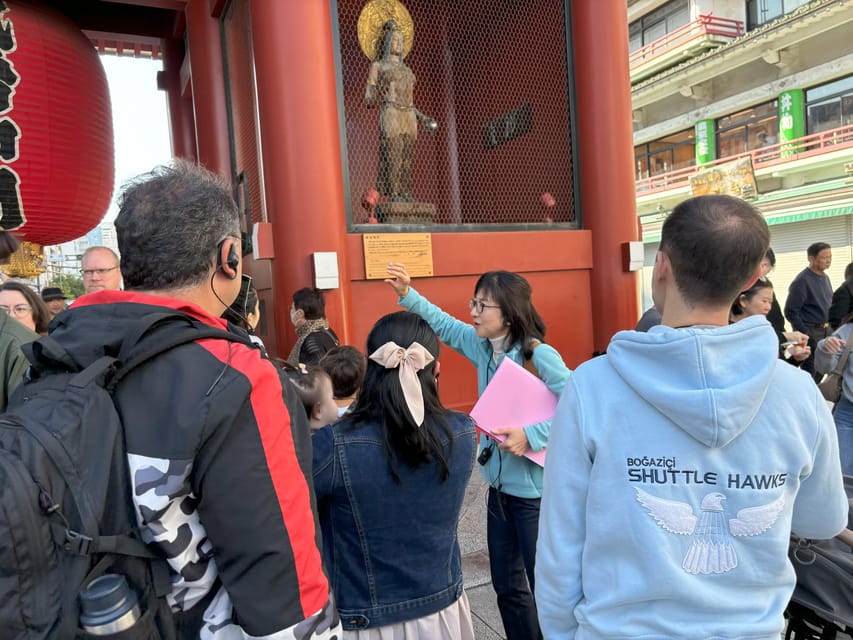
Next comes the Hōzōmon Gate and then Sensō-ji Temple. This is where the tour leans into the theme of “sacred and secular” existing side by side. Japan doesn’t separate religion from everyday city life in the same way some places do.
Sensō-ji is the kind of place where you see devotion, routine, and tourism overlap. That overlap is part of the learning. Your guide uses the setting to explain beliefs that have been around for over a millennium, and how they can fit together rather than fight.
One detail that makes this tour different from a temple-only stroll: you’re not just learning what’s here. You’re learning what it means that it’s here in a modern city. You also get cues about Japan’s mindset and how people have lived with these practices over generations.
If weather turns ugly, this is also a solid stop to time your pace. Temple areas can give you moments to regroup while still feeling like you’re moving forward.
Asakusa Shrine and the Two Religions That Share One Neighborhood
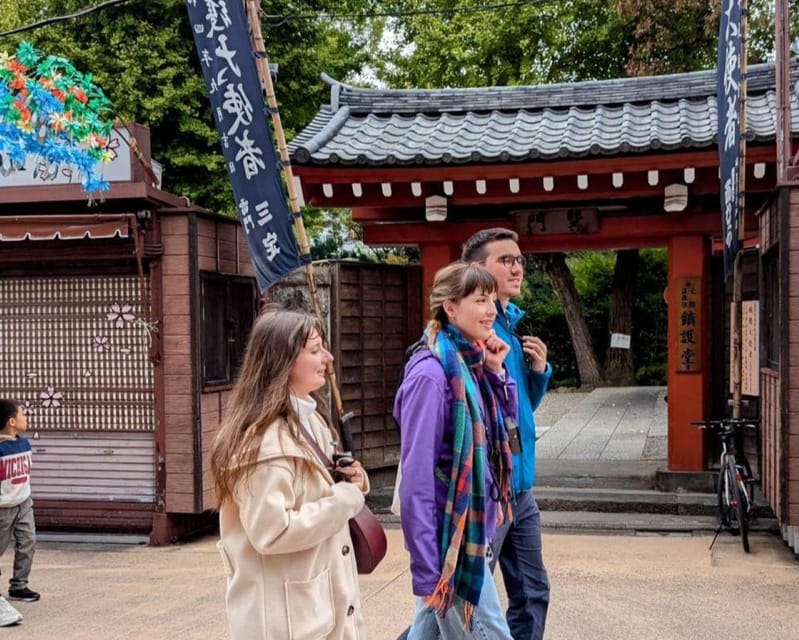
You then visit Asakusa Shrine. This is a key pivot in the tour because it’s where the guide spells out Japan’s two major religions and how they coexist.
What I like about this explanation is the focus on real life. The tour doesn’t treat religions like competing textbooks. Instead, it looks at how the same worshipers can participate in both, and how the beliefs complement each other in daily routines.
You should expect clear, plain explanations of questions like:
- Why Japan closed itself and what that meant
- How reopening happened and what role trade partners played
- How art and cultural contact followed political change
This is also where the guide’s comparisons help. The tour includes East-West cultural parallels, including roles of dragons that connect ideas on both sides of the world, plus a note about long-running similarities in the mindset of people from about a thousand years ago.
You leave with a better sense of why religion in Japan often looks practical, layered, and everyday, not separated into strict categories.
Yōgō-dō Pavilion and Old-Style Lanes That Feel Unscripted
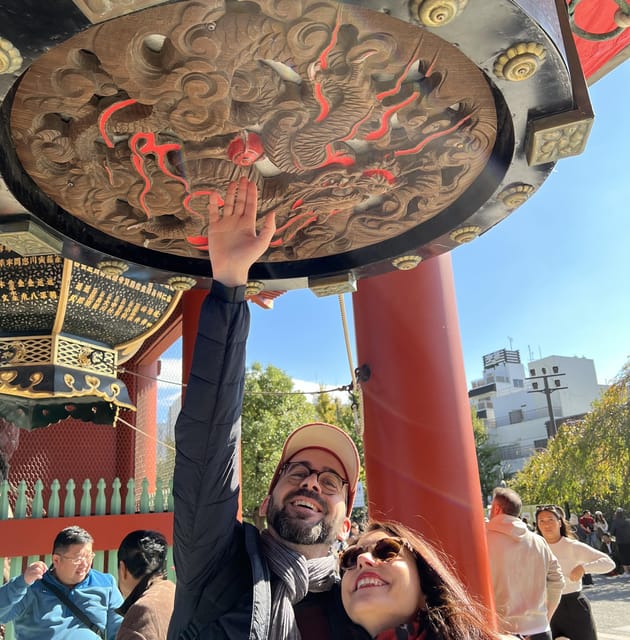
After the shrine area, you continue to Yōgō-dō Pavilion, then head toward Asakusa Nishi-sandō Shopping Street. This stretch is designed to slow you down a bit. It’s not just more shopping. It’s a chance to notice the textures of older Asakusa.
In the tour framing, the sacred and the secular keep swapping places in your attention. One minute you’re in a religious context. The next, you’re in a narrow lane connected to older entertainment patterns and postwar working-class energy.
A review described narrow pub-style lanes with that postwar resilience vibe, and another praised a guide for finding small, less obvious sites. So while this is a guided route, you should expect some detours that feel like they’re for storytelling, not for checkmarks.
If you enjoy street-level Tokyo, this is the part where you start to feel like you’re seeing the neighborhood’s daily skin, not just its most famous organs.
Hoppy Street, Mokubakan, and the Edo-Era Nostalgia Filter
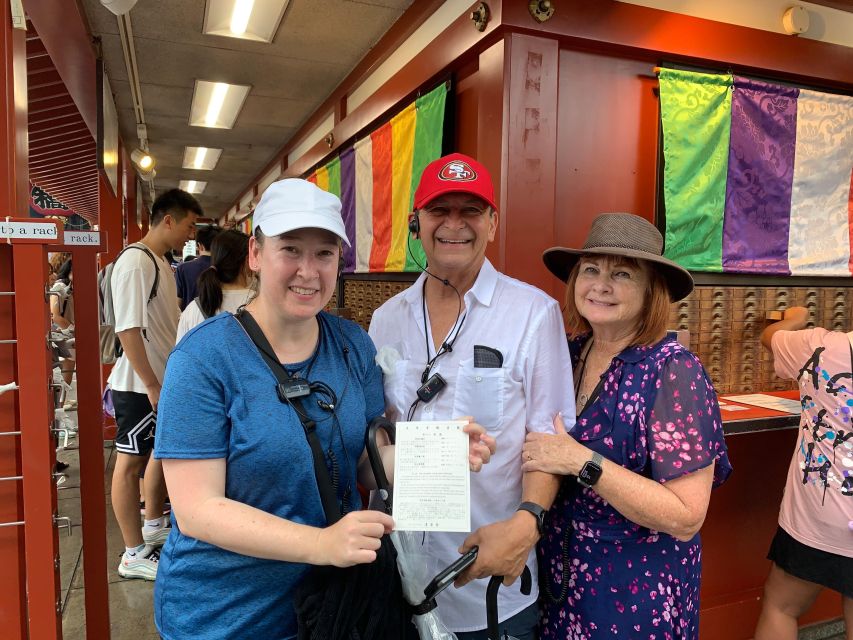
The route includes Asakusa Mokubakan and then Hoppy Street, along with a quiet shopping lane where the atmosphere can feel like nostalgia. These stops connect two different time periods in a clever way.
The tour asks you to do two mental shifts:
1) Rewind to the Edo period to feel like stepping into an old movie set
2) Look beyond that nostalgia, to understand how the city’s identity keeps adapting
That Edo link is where the guide’s “history as a feeling” approach becomes useful. You’re not only memorizing dates. You’re recognizing how design, street rhythm, and consumer culture carry memories forward.
Hoppy Street, in particular, is the sort of place where you can sense the city’s social life. Even if you don’t stop to drink, the atmosphere helps you understand the tour’s point: Japan’s identity is never frozen in time. It’s always mixing old and new.
And yes, you’ll likely have snack sampling along the way. Reviews mention breaks and sweet tasting, and the tour includes a selection of freshly made traditional snacks and sweets.
The Guide Makes the Difference, and You Can Feel It
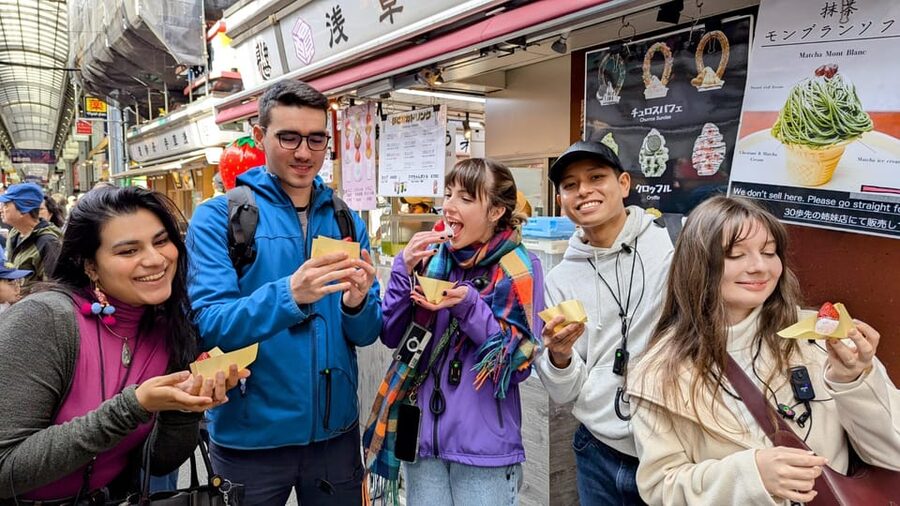
This is a history walk, but it lives or dies by the guide. The reviews are full of the same theme: guides pay attention, manage crowds, and adjust to your pace and interests.
Here are the kinds of guide behaviors that stood out in feedback:
- Ai looked after the group when cold rain started
- Yasu and Jun Chan were praised for giving lots of historical context
- Taka managed crowds, pointed out toilets before anyone needed a rescue, and answered deep questions
- Yoko is singled out for sweet, knowledgeable English that helped people feel oriented quickly
- Some guides also avoided shopping pressure when people said they were not there to buy
That last point is important for value. If you want authentic city reading, you want the guide to act like a teacher, not a salesman. The tour seems built for that kind of respectful attention.
Also, because you get headsets, you don’t lose the narration when you’re stuck behind a crowd. That means you can enjoy the walking without always wondering what you missed.
Price and Value: Why $88 Can Feel Reasonable
$88 for 3.5 hours can sound steep until you break down what you’re actually getting.
You’re paying for:
- An English-speaking certified guide who turns multiple landmarks into one coherent story
- Headsets for clearer audio in larger street settings
- Freshly made traditional snacks and sweets during the walk
- A small group size of up to 8 people
If you’ve tried DIY temple hopping, you know the gap: you see things, but you don’t automatically understand why they exist in relation to political isolation, trade choices, belief systems, and global influence. This tour is designed to fill that gap in a short window.
For me, the best value signal is the way the guide uses each stop as a gateway to bigger themes. That turns Asakusa from a list of sights into a lesson you can use elsewhere in Japan.
Who Should Book This Asakusa Walk, and Who Should Skip
This is a strong fit if you want:
- Big-picture history without spending a whole day in museums
- An explanation of how Japan’s two religions can coexist in everyday life
- A guided route that balances temples, streets, and the city’s entertainment past
- A small-group experience where questions actually get answered
It may be less suitable if you:
- Have mobility impairments, since the tour explicitly says it is not suitable for that category
- Hate walking in busy areas, because there is moderate walking involved
Families are welcome, and children under 6 can join without charge. The historical focus does mean it tends to land best with adults, but it should still work for families who enjoy learning while walking.
Should You Book This Asakusa Big-Picture History Walk?
I’d book it if you like your travel with context. If you want to understand why Japan closed itself for so long, why the Netherlands mattered as a trading partner, and how cultural contact later influenced art abroad, this route gives you those answers in plain language.
I’d also book it if you value guide quality. The repeated praise for care in bad weather, crowd handling, and helpful practical tips like pointing out toilets signals that the day is run thoughtfully.
Skip it if your main goal is only to take photos and snack your way through Asakusa with zero talking. This tour is built for learning, not just roaming.
If you want one half-day that makes the rest of your Tokyo trip feel easier to read, this is a solid choice.
FAQ
How long is the Asakusa Big-Picture History Walk?
The tour lasts 210 minutes, about 3.5 hours.
How many people are in the group?
The group is limited to 8 participants.
Is the tour in English?
Yes, it’s an English live tour with an English audio guide as well.
What’s the meeting point for the tour?
Meet in front of a Burger King restaurant right next to Exit 4 of Asakusa subway station on the Ginza line (G19). Step outside when you reach Exit 4.
What’s included in the price?
Headsets to hear the guide clearly for groups of 3 or more, a selection of freshly made Japanese traditional snacks and sweets, and an English-speaking certified guide.
Is hotel pickup or drop-off included?
No, hotel pickup and drop-off are not included.
Do I need to bring water?
Bottled water is recommended, and vending machines are available.
Does the tour run in bad weather?
Yes, it operates in all weather conditions, so dress appropriately.
Are kids allowed?
Children younger than 6 may join the tour without charge.
Is the tour suitable for mobility impairments?
It is not suitable for people with mobility impairments. If you have mobility issues, contact the supplier and they will do their very best to accommodate you.
Latest write-ups near Tokyo
- Tokyo Nights: Shibuya Photo Adventure★ 5.0 · 20 reviews
- Wagyu & Sake 8 Course Tasting Dinner in Shinjuku★ 4.9 · 20 reviews
- Making Japanese desserts Nerikiri & drinking matcha in Tokyo★ 5.0 · 20 reviews
- Mt. Fuji 5th Station, Owakudani Ropeway, Pirate Ship plus Outlet shopping!★ 4.5 · 20 reviews
- Japanese Whisky Hunting《HIGH-QUALITY-ONLY》Rare Tasting Class★ 5.0 · 20 reviews
- Kintsugi Experience with Arita Ware in Tokyo (English Guide)★ 4.8 · 20 reviews
- This is Asakusa! A Tour Includes the All Must-Sees!★ 5.0 · 20 reviews
- Tokyo: Karate Experience with Former All-Japan Champion★ 5.0 · 20 reviews
Historical Tours, compared.
World Heritage Shirakawa-go and Experience Tours from Kanazawa
Read our review →
Imperial Palace and Shogun Historical Walking Tour
Read our review →
World Heritage Kyoto & Nara Uji Authentic Matcha Experience
Read our review →
Kyoto Gion: 2-Hour Geisha Culture & History Walking Tour
Read our review →
World Heritage Shirakawa-go Morning Guided Tour
Read our review →
Hiroshima Peace (Heiwa) Walking Tour at World Heritage Sites
Read our review →
Yanaka Walking Tour: Historic and Traditional District of Tokyo
Read our review →Browse the lists this tour appears in