
Reviewed · GEISHA & GION TOURS
Asakusa: Geisha Performance and Tea House Experience
What makes this experience interesting is the mix of formal Japanese performing arts and low-stress fun, all in one refined ozashiki tea-house setting in Asakusa. I like that you get to see a live shamisen and dance performance, not a recording or a staged show behind glass. I also like the chance to take part in ozashiki-asobi with the performers, then sip freshly whisked matcha with seasonal sweets.
One thing to consider: you have to plan for extra drinks. Even though matcha is complimentary, the experience requires one drink order per guest (alcoholic or non-alcoholic), so your final total can run a bit higher than the headline price.
Key highlights to look for
- Real performers in an ozashiki tea house in Asakusa, with an English-speaking host or greeter
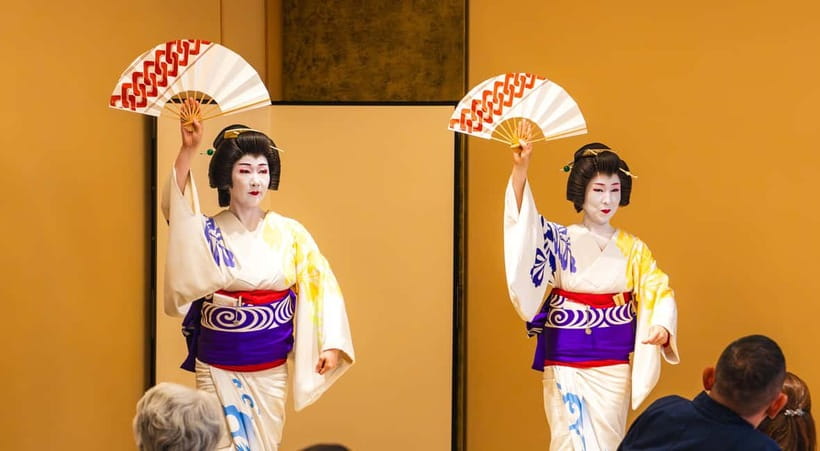
- Live shamisen music matched to a graceful dance performance
- Konpira Fune Fune, an authentic ozashiki-asobi game that turns the room playful
- Fresh matcha and seasonal Japanese sweets, included in the 75 minutes
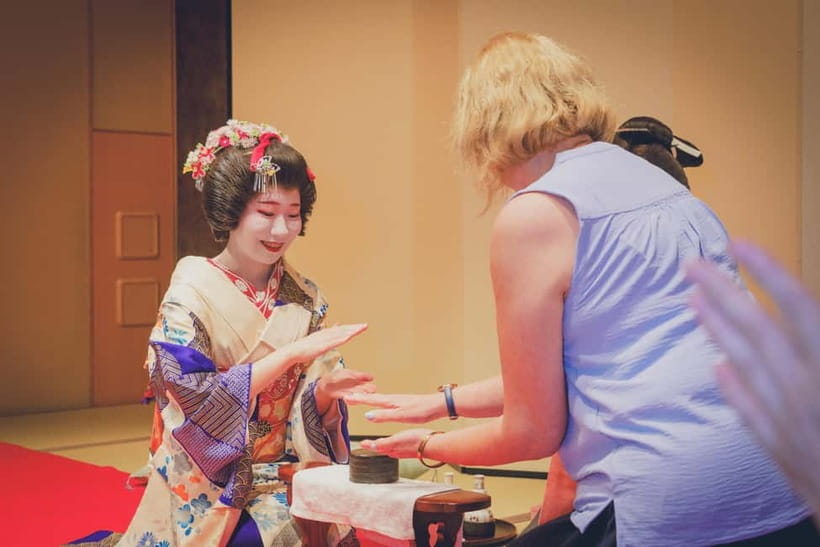
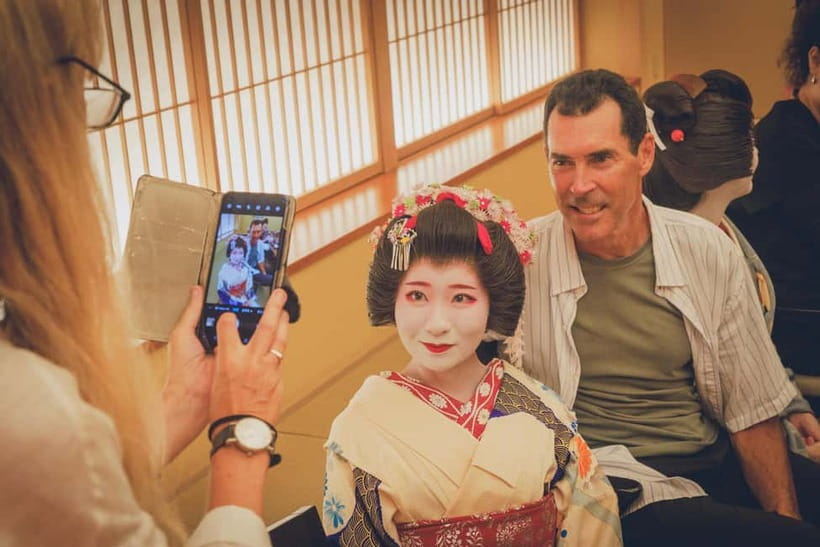
- A commemorative photo with the geisha, plus time for questions through a translator
Where Asakusa fits in your Tokyo plan
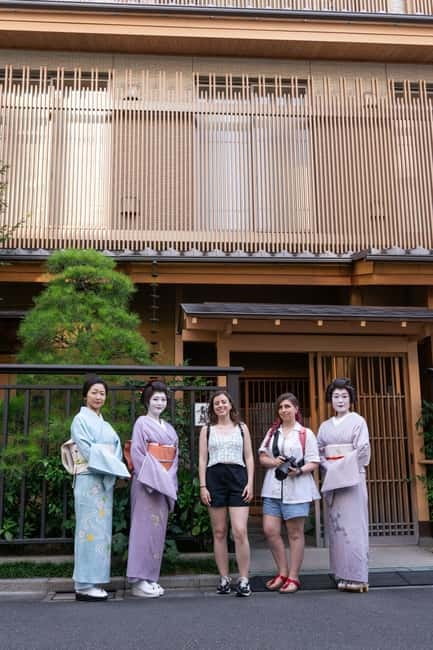
Asakusa is one of Tokyo’s most satisfying “traditional texture” neighborhoods. You’ll see old-school vibes, temple energy, and side streets that feel slow even when the city moves fast. This tea-house experience sits right in that world, in the Asakusa area, so it works well as an evening plan after you’ve had a morning or afternoon roaming around.
The venue is run by 料亭都鳥 (Miyakodori), and the core idea is simple: you’re not just watching from a distance. You’re in a room where the performance and conversation feel close and human.
Because it’s only 75 minutes, it also fits the way Tokyo days usually go. You can book this as a main activity without it swallowing your whole evening.
More Geisha Experiences in Tokyo:
- Authentic Geisha Performance with Dinner in Tokyo
★ 4.5 · 101 reviews - Tokyo: Traditional Geisha Experience Show & Japanese Dinner
★ 4.2 · 59 reviews - Tokyo Traditional Geisha Show and Japanese Fine Dining Experience
★ 4.5 · 35 reviews
The 75 minutes, step by step
The flow is clear, and you’ll know what to expect because the experience is guided in an English-friendly way (English host/greeter). Here’s how the evening typically unfolds.
The welcome, then a dance performance with live shamisen
You begin with a welcome from the staff, then you’ll move into the main entertainment. The performance centers on a beautiful dance, performed with live shamisen accompaniment.
What I like about this format is that it keeps your attention focused. The shamisen music isn’t background sound. It drives the rhythm, so when the dance starts, you’re pulled in right away. Multiple recent experiences also mention the precision of the performers, and how the costuming and movement look especially crisp when you’re seated close enough to see details.
If you’re sensitive to long scripts or heavy cultural lectures, this part is a good match. You don’t have to “get” anything technical to enjoy it. You can just watch and feel the timing.
Ozashiki-asobi game, Konpira Fune Fune, and laughter in the room
Next comes the fun part: ozashiki-asobi. In this case, it’s Konpira Fune Fune, an authentic game tradition associated with the tea-house world.
This is where the tone shifts. The performance is elegant and controlled, then the game asks you to participate. In practice, that usually means you’ll get a guide, plus help through a translator if needed, so you can actually join in rather than sit there confused.
From the accounts tied to this experience, this game is a big reason people remember the night. It turns a quiet, formal setting into something more like a shared evening.
A change of pace from Tokyo:
- Mt Fuji and Hakone 1-Day Bus Tour Return by Bullet Train
★ 5.0 · 26,383 reviews - 1-Day Tokyo Bus Tour
★ 5.0 · 14,250 reviews - Tokyo: TOKYO SKYTREE® Admission ticket
★ 4.5 · 11,192 reviews - Tokyo: teamLab Planets TOKYO Digital Art Museum Entry Ticket
★ 4.6 · 9,779 reviews
Seasonal sweets and matcha, with the drink rule you must plan for
You’ll be served seasonal Japanese sweets and freshly whisked matcha. The matcha is included, and it’s meant to be part of the experience, not an afterthought.
Here’s the practical detail you should not ignore: the experience requires one drink order per guest, on top of the complimentary matcha. The drink can be alcoholic or non-alcoholic, and the staff will ask you for that order.
What this means for value: the $106 price covers the cultural program plus the sweets and matcha, but you’ll likely pay more if you add an extra drink beyond what’s required. If you want to keep your budget tight, pick the one drink that fits you and keep expectations aligned.
Also, meals beyond the sweets are not included. So if you’re hungry, eat earlier or plan a light snack before you go.
Questions, conversation time, and names you may hear
One of the standout elements is the chance to talk. The experience includes time to ask questions, and there is English support so you can actually connect with the performers.
In recent sessions tied to this experience, people have mentioned performers by name, including geiko Chizuru and maiko Tamaaki. People also mention that music and singing were performed by Shisa in the overall entertainment setup. If those are the names you hear when you arrive, it’s worth listening closely, because you’ll often get short background context tied to their roles.
Even if you’re not sure what to ask, you can keep it simple:
- How training works, in broad terms
- What they enjoy about performing
- What ozashiki culture means day to day
The tone tends to be respectful and friendly, and you should feel comfortable asking at least a couple of questions if you’re curious.
The commemorative geisha photo
To close, you get a commemorative photo with the geisha. It’s a tangible keepsake, and it helps you make the experience feel like an event rather than just a show.
Photos work best if you treat them as part of the etiquette. The staff will guide you on what to do next, so just follow instructions and you’ll be fine.
Price and value: what $106 really buys you
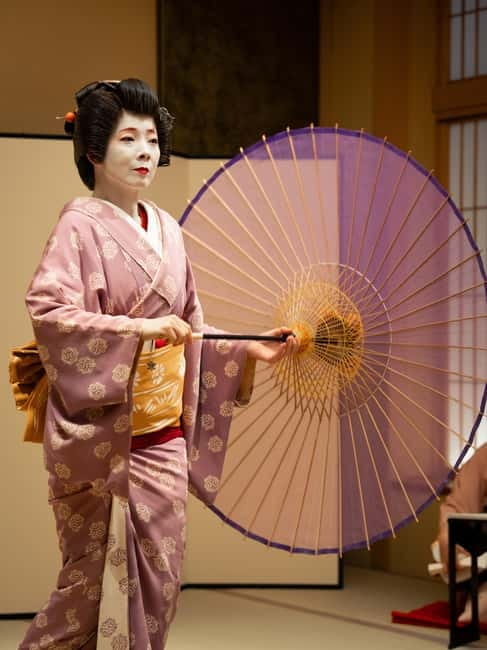
At $106 per person for 75 minutes, this isn’t a cheap activity. The value comes from the combination of things that are hard to replicate on your own: a real tea-house atmosphere, live shamisen music, a dance performance, an interactive traditional game, matcha and seasonal sweets, and a photo with the geisha.
A lot of Tokyo “culture shows” check only one box. This checks several:
- You get live performance elements (not just one act)
- You participate through ozashiki-asobi
- You get face-to-face conversation with language support
- You receive included food-and-drink elements (matcha and sweets)
- You leave with a keepsake photo
What makes it feel like good value is the structure. You’re paying for a full evening sequence, not just a ticket to watch something once.
What keeps you from being surprised later is the drink rule. Since you need to order one drink per guest, your final spend may land higher depending on what you choose to drink.
If you’re comparing options, I’d price it like this: you’re paying for a guided cultural evening that mixes performance, participation, and conversation. If you want only a quick show, you’ll likely find cheaper. If you want a meeting-style cultural evening in Asakusa, this price can make sense.
Who should book this Asakusa geisha tea-house experience
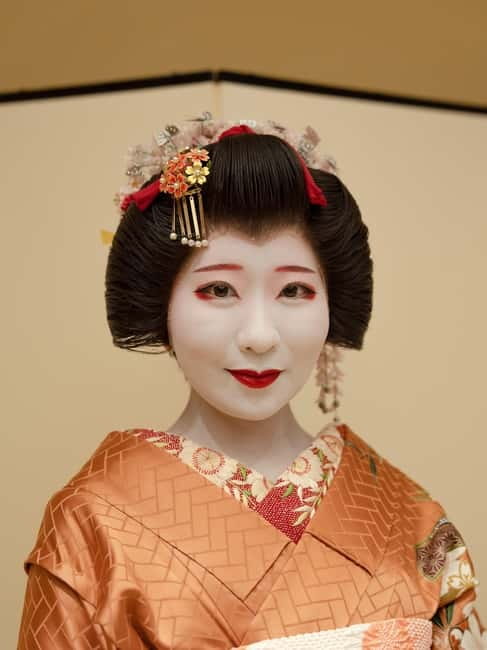
This experience is listed as a good fit for solo visitors, couples, and small groups. That matches the room tone. You’re not stuck in a huge hall where it feels distant.
I think it also fits well if:
- You want a cultural evening that includes participation, not just watching
- You like traditional music and performance arts
- You enjoy asking questions and learning how living culture works today
- You want a Tokyo activity that feels special without being a full-day commitment
It may be less ideal if:
- You hate the idea of paying for an additional drink on arrival
- You want a meal-based dining experience (this includes sweets, not a full dinner)
- You’re expecting a long talk session. The evening is compact, and you’ll have questions, not a lecture marathon
Practical tips so the night stays smooth
Here are the practical points I’d follow to get the most out of your 75 minutes.
Plan your timing so you do not rush
Because the experience is just 75 minutes, be careful about stacking it right next to other long activities. Tokyo transit can be quick, but it still adds stress if you’re running late.
Go in with a clear window. You’ll enjoy the atmosphere more when you’re not thinking about the next stop.
Set expectations about the setting and participation
You’ll be part of the room, not a distant spectator-only audience. People have described low-stool seating in some sessions, which can be very comfortable if you’re ready for it. Just know you might be seated lower than you expect in a traditional style setting.
The game part also requires a bit of willingness to join in, even if you’re not sure about rules. Translation support helps, but your best attitude is simple: participate, laugh, and follow along.
Decide your drink in advance if you have a budget
Since one drink order per guest is required, choose your plan early in the moment so you’re not deciding when you’re already seated. If you’re trying to keep costs predictable, pick one non-alcoholic drink unless you truly want something else.
Bring one good question, and let the rest happen
If you freeze in conversation settings, pick one question before you arrive. Then let the rest flow. The experience is set up for Q&A, and it tends to turn warm and personal quickly when you ask something that shows genuine curiosity.
Cultural context: what ozashiki-asobi and matcha signal
This isn’t just entertainment. Ozashiki-asobi is a social tradition tied to the tea-house world. That matters because it’s meant to be shared, not simply watched. In a practical sense, that’s why the game feels so important. It pulls you into the culture as a participant.
Matcha also carries weight. Freshly whisked matcha is a sensory anchor for the evening, and pairing it with seasonal sweets gives the tasting portion a reason to exist within the ceremony of the night.
You should leave with two things:
- An understanding of how performance and hospitality blend in real settings
- A memory that includes interaction, not only images on your phone
Should you book this geisha tea-house experience in Asakusa?
If you want a concentrated Tokyo evening that includes live shamisen, a real dance performance, an interactive ozashiki game, matcha and sweets, and a commemorative photo, this is a strong pick. The biggest reason is the full package for 75 minutes, where you’re both entertained and invited to participate.
I would book it if:
- You’re excited by traditional performance arts and want to see them live
- You like Q&A and conversation in a guided setting
- You want an Asakusa activity that feels intimate rather than industrial
I would think twice if:
- Your budget cannot handle the required drink order beyond matcha
- You’re expecting a full meal experience
- You prefer large-scale sightseeing over close social interactions
If you fit the first list, it’s the kind of Tokyo cultural stop that turns into a favorite story because you’re not just watching, you’re taking part.
FAQ
Where does the experience take place?
It takes place in Asakusa, a district in Tokyo.
How long is the experience?
The experience lasts 75 minutes.
What is included in the 75-minute cultural experience?
It includes a meeting with real geisha, a dance performance, live shamisen music, an ozashiki-asobi game (Konpira Fune Fune), seasonal Japanese sweets, freshly whisked matcha, and a commemorative photo with the geisha.
Is matcha included?
Yes. Freshly whisked matcha is included, and it is complimentary.
Do I have to order a drink?
Yes. One drink order is required per guest, aside from the complimentary matcha. The drink can be alcoholic or non-alcoholic.
Are meals included besides sweets?
No. Meals other than the seasonal sweets are not included.
Is the host or greeter available in English?
Yes. The experience includes an English host or greeter.
Is the experience suitable for solo travelers and couples?
Yes. It is suitable for solo travelers, couples, and small groups.
Is there free cancellation?
Yes. You can cancel up to 24 hours in advance for a full refund.
Can I pay later?
Yes. The experience offers reserve now & pay later, so you can book and pay nothing today.
Latest write-ups near Tokyo
- Tokyo Nights: Shibuya Photo Adventure★ 5.0 · 20 reviews
- Wagyu & Sake 8 Course Tasting Dinner in Shinjuku★ 4.9 · 20 reviews
- Making Japanese desserts Nerikiri & drinking matcha in Tokyo★ 5.0 · 20 reviews
- Mt. Fuji 5th Station, Owakudani Ropeway, Pirate Ship plus Outlet shopping!★ 4.5 · 20 reviews
- Japanese Whisky Hunting《HIGH-QUALITY-ONLY》Rare Tasting Class★ 5.0 · 20 reviews
- Kintsugi Experience with Arita Ware in Tokyo (English Guide)★ 4.8 · 20 reviews
- This is Asakusa! A Tour Includes the All Must-Sees!★ 5.0 · 20 reviews
- Tokyo: Karate Experience with Former All-Japan Champion★ 5.0 · 20 reviews
Geisha & Gion Tours, compared.
Kyoto Geisha Walking Tour: Gion District & Hidden Gems
Read our review →
Gion Magical Night Walking Tour with Geisha Trivia
Read our review →
Gion Geisha District Walking Tour – Stories of Geisha
Read our review →
Best of Kyoto: Gion, Geisha, Pagodas & Cobblestones
Read our review →

Kyoto Night Foodie Tour in Gion (9+ dishes + 6 Sake tastings)
Read our review →
Kyoto Gion Geisha District Walking Tour – The Stories of Geisha
Read our review →
Kyoto Gion: 2-Hour Geisha Culture & History Walking Tour
Read our review →Browse the lists this tour appears in