
Reviewed · HISTORICAL TOURS
Discover the Art of Ikebana in Tokyo’s Historic Yanaka District
Tokyo’s Yanaka District is one of the few places in this huge city where everyday life still feels slow and human. This Ikebana experience works because it pairs a hands-on lesson with real neighborhood stops, from the old shopping street to quiet, sacred grounds. I especially like that you start by choosing seasonal flowers locally, and I love the calm, focused way the master instructor guides your arrangement. One thing to consider: it’s a practical activity, so you’ll need cash for the flowers and you’ll want to be ready to follow the class pace.
You’ll get a private setup with an English-speaking assistant, and the tone is gentle, not rushed. A possible drawback is timing, since the class is short (about 1 hour 30 minutes) and the itinerary walking adds up quickly, especially on a hot or humid day.
Key highlights in plain terms
- Pick flowers in Yanaka at a nearby shop, so your arrangement starts with local, seasonal choices
- Learn directly from an Ikebana master with step-by-step help while keeping your own creative choices in play
- Private class format so you’re not squeezed between strangers
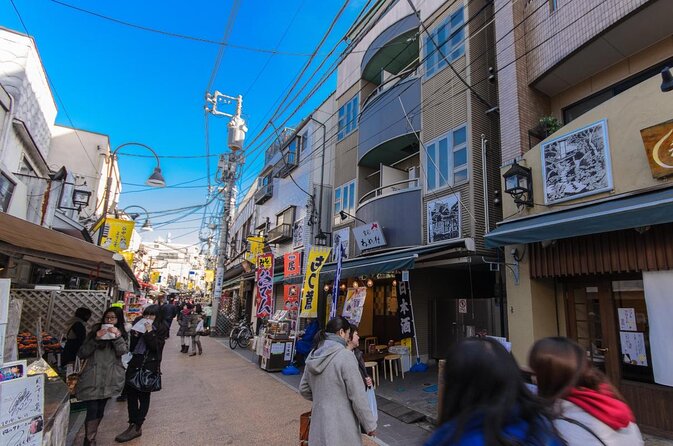
- Yanaka walk included with stops like Yanaka Ginza, Nezu Shrine, and the cemetery area
- Photos are welcome, which makes it easier to remember your finished arrangement
Why Ikebana in Yanaka District feels more like a local day than a class
Ikebana is more than making something pretty with flowers. The core ideas are seasonality, mindful attention, and simple structure, and the workshop keeps those themes front and center. Instead of arriving at a studio and starting from scratch, you meet the flowers and the neighborhood first, which changes the whole mood.
Yanaka itself helps. It has that slightly old-fashioned feel where you can walk and actually look at storefronts, small streets, and everyday habits. The experience leans into that tone, so you’re not just collecting a souvenir. You’re practicing a traditional art with context.
The lesson also feels personal. The format is designed for your group only, with an English-speaking assistant to help things land in plain language. That matters if you’re new to Japanese arts, because you’re not left guessing what the instructor wants.
More Historical Tours in Tokyo
- Tokyo: Imperial Palace and Shogun Historical Walking Tour
★ 5.0 · 2,251 reviews - Tokyo: Imperial Palace Japanese History Walking Tour
★ 4.9 · 987 reviews - Tokyo: Shinjuku Historical Walking Tour & Secret Backstreets
★ 5.0 · 530 reviews
The flower shop start: choosing what your arrangement will say
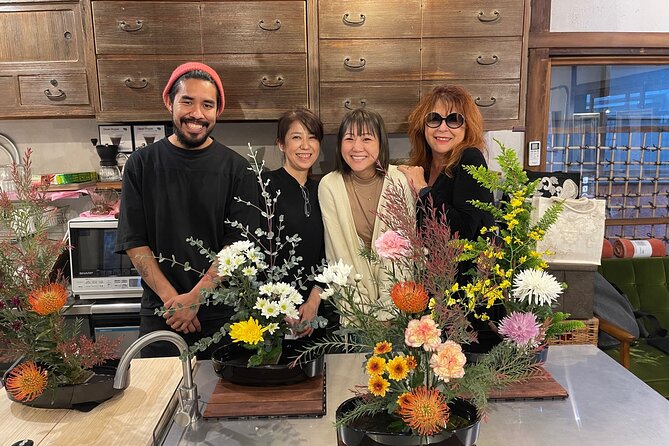
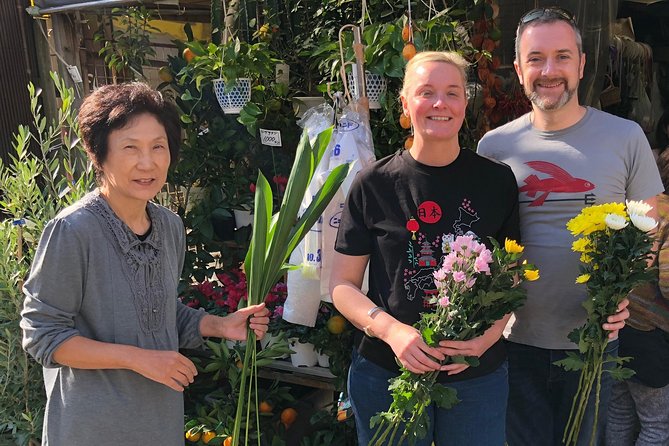
Your workshop begins with a trip to a nearby flower shop in Yanaka. This is where the experience becomes genuinely practical: you choose seasonal flowers of your choice, which also means your final arrangement will reflect what’s currently available in that shop.
I like this approach because it avoids the common problem of classes where everyone ends up with nearly identical materials. Here, you make decisions early. You’re also supporting a local business in the middle of a historic district, which feels more meaningful than just buying a ticket to a demonstration.
You should plan for the flower purchase with cash. The experience asks you to bring ¥1,000 in cash (and the guidance also suggests budgeting about ¥1,000 to ¥2,000 depending on what you select). If you forget cash, you’ll likely be stuck, since the flower shop purchase is part of the flow.
Walking Yanaka before and between the lesson moments
The overall time includes a neighborhood stroll with several stops. Even though the main event is the Ikebana workshop, these walking segments are what make it feel like you stepped into the district, not just passed through it.
Yanaka Ginza shopping street
You start around Yanaka Ginza, a classic shopping street area where the pace feels more neighborhood than tourist lane. I’d use this time to slow down, notice small details, and get your bearings before you sit down to work with delicate materials.
A change of pace from Tokyo:
- Mt Fuji and Hakone 1-Day Bus Tour Return by Bullet Train
★ 5.0 · 26,383 reviews - 1-Day Tokyo Bus Tour
★ 5.0 · 14,250 reviews - Tokyo: TOKYO SKYTREE® Admission ticket
★ 4.5 · 11,192 reviews - Tokyo: teamLab Planets TOKYO Digital Art Museum Entry Ticket
★ 4.6 · 9,779 reviews
Yanaka Cemetery
Next comes a stop at Yanaka Cemetery. This is a reminder that Japanese culture often holds beauty alongside reflection. For many people, this stop adds a calming reset before the workshop, where you’ll be concentrating on structure and balance rather than speed.
Nezu Shrine
Then you visit Nezu Shrine. Shrines are active cultural spaces, not just photo backdrops. Even if you know little about Shinto before you go, you can still appreciate how quiet and orderly the mood feels, and how it contrasts with city noise.
Yuyake Dandan
Finally, you’ll experience Yuyake Dandan, a well-known set of steps or slope area in Yanaka. This is the kind of walk that gives you a break from straight lines and flat sidewalks, and it also helps the whole day feel like an actual route through the district rather than a loop.
Practical note: the walking segments are part of why you should dress for comfort. One past class day described it as hot and humid, with the lesson space staying cooler. That’s a good clue that outdoors can be uncomfortable while indoor work is manageable.
Inside the workshop: what the master teaches you (and what you can copy later)
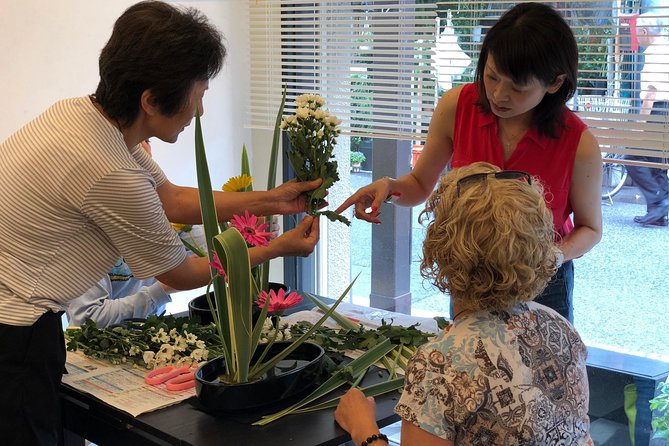
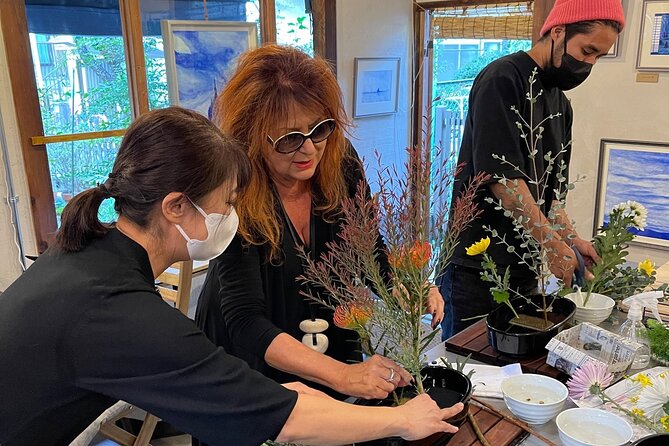
The heart of the experience is the Ikebana lesson with an Ikebana master instructor and an English-speaking assistant. This is where you learn a way of designing arrangements that’s rooted in tradition but still lets you express your own taste.
You’re building more than a bouquet
Ikebana tends to look simple from far away, but the real value is the underlying thinking. You’ll focus on how to place your chosen stems so the arrangement reads clearly, and you’ll work toward a final piece that feels intentional rather than random.
The guidance is structured, but not stiff. One review-style comment described how the instructor taught basic principles without stopping creativity. That’s exactly what you want as a beginner. You learn rules, then you apply them.
Expect quiet concentration, not performance pressure
The workshop environment is described as peaceful and focused, including setups that felt almost private even within the group format. If you like calm activities where you can slow down and do something with your hands, this fits.
Also, the instructors take the process seriously. In at least one case, the teacher took time to dress in a kimono. Even if that isn’t guaranteed every day, it points to the respectful tone you can expect.
You can ask questions through the assistant
The English-speaking assistant helps translate not just words, but intent. That makes a big difference when the instructor is explaining why a placement matters. You’re not just assembling flowers, you’re learning the logic behind the design.
Photos are allowed
You can take photos and share your finished Ikebana. This is genuinely useful, since flowers are fragile and arrangements change as time passes. Having pictures helps you recreate the feel later, at home.
Price and value: is $108.99 really fair?
At $108.99 per person for about 1 hour 30 minutes, this can look pricey until you break down what’s included.
You’re paying for:
- Instruction with an Ikebana master
- Help from an English-speaking assistant
- A structured neighborhood experience in Yanaka
- Local flower selection at the shop as part of the process
Then there’s the flower cost, which you’ll pay separately in cash. The requirement is ¥1,000 (with guidance suggesting around ¥1,000 to ¥2,000). In other words, the base price buys expertise and guidance, while the shop purchase determines your materials.
Is it good value? For the right person, yes. If you want a serious hands-on class with language support and real local context, it’s a strong deal compared to paying for an art activity with no deeper teaching. If you only want a quick photo stop, this may not feel worth it.
Booking pace also matters. The experience is typically booked around 41 days in advance, so if you’re traveling during a busy period, don’t wait for the last minute.
What to bring and how to plan your timing
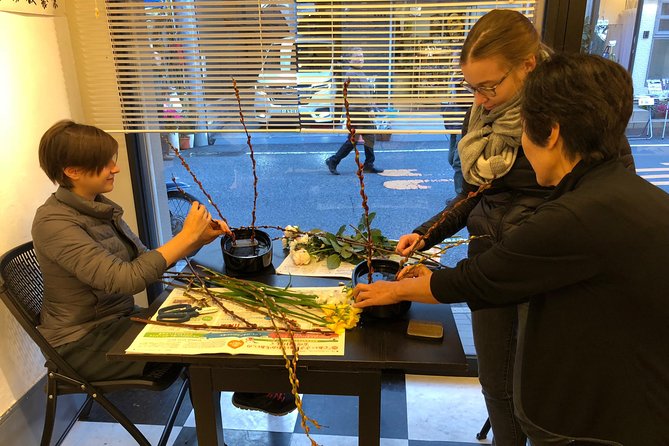
This is a hands-on workshop, so come ready for a few basics.
Bring:
- Cash for flowers: at least plan on ¥1,000, and consider budgeting up to ¥2,000 if you want more options
- Comfortable walking shoes for the Yanaka stops
- A water bottle, since the day can be hot and humid outside
- Your curiosity, because the assistant and instructor will translate and explain the structure while you build
The class also has practical support built in. It uses a mobile ticket, and the meeting spot is near public transportation. It’s also described as suitable for most people, and service animals are allowed.
One timing tip from real-world experience: leave some extra wiggle room between this and your next activity. When a class runs right into your next plan, you can end up rushed, especially if you want a calm walk after.
Who this is perfect for, and who might want to skip it
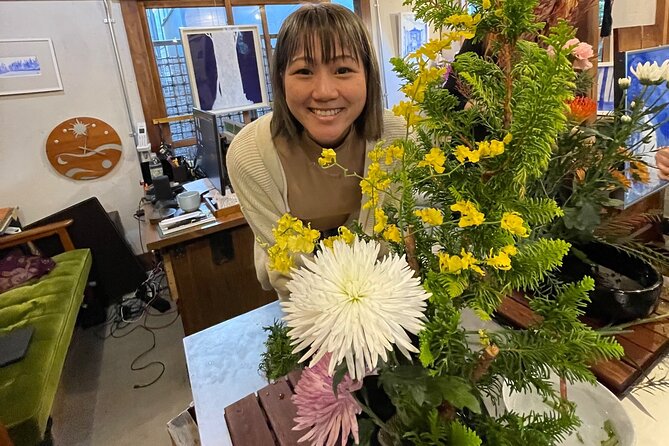
Great match if you…
You want a hands-on cultural activity that doesn’t feel staged. You like calmer experiences where you can focus, learn, and create something you’ll remember. You also care about supporting local shops in a district that still functions like a neighborhood.
It’s also a strong pick for couples and teens who enjoy making things. One class experience was described as excellent for a teen and parent because it felt like a real shared activity with clear instruction.
Maybe not the best fit if you…
You dislike walking, or you want a long, slow day. The workshop is short, and the walking stops are part of the total experience, so plan accordingly. If you’re hoping for a purely museum-style cultural overview with no crafting, this won’t match that goal.
Should you book Ikebana in Yanaka?
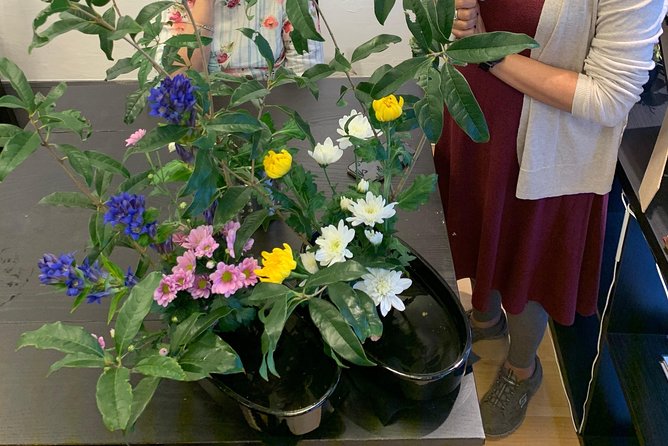
Book it if you want a meaningful, hands-on Japanese art lesson anchored in a real Tokyo neighborhood. The biggest reasons I’d choose this are the flower-shop start (you control materials), the master-led instruction with English support, and the calm tone of learning in Yanaka’s quieter corners.
Skip it if you’re not interested in creating an arrangement, or if you hate the idea of buying fresh flowers as part of the lesson. Also think twice if you’re tight on time, because the walking route plus a short workshop means you’ll want a relaxed schedule.
If you do book, prepare for the one “gotcha” that’s always true for Ikebana workshops: bring cash, choose flowers thoughtfully, and give yourself time to walk before and after.
FAQ
How long is the Ikebana workshop?
The experience lasts about 1 hour 30 minutes.
Where is the meeting point?
Meet at YANESEN Tourist Information & Culture Center, 3-chōme-13-7 Yanaka, Taito City, Tokyo 110-0001, Japan.
Do I need cash to buy flowers?
Yes. You should bring ¥1,000 in cash to purchase flowers at the local shop, and guidance suggests bringing about ¥1,000 to ¥2,000.
What is included in the price?
The price includes a workshop with an Ikebana master and an English-speaking assistant.
Is this a private experience?
Yes. It is private, and only your group will participate.
Can I take photos during the experience?
Yes. You’re welcome to take photos and share your arrangement.
What happens if the weather is poor?
The experience requires good weather. If it’s canceled due to poor weather, you’ll be offered a different date or a full refund.
What is the cancellation policy?
You can cancel for a full refund up to 24 hours in advance. If you cancel less than 24 hours before the start time, the amount paid will not be refunded.
Latest write-ups near Tokyo
- Tokyo Nights: Shibuya Photo Adventure★ 5.0 · 20 reviews
- Wagyu & Sake 8 Course Tasting Dinner in Shinjuku★ 4.9 · 20 reviews
- Making Japanese desserts Nerikiri & drinking matcha in Tokyo★ 5.0 · 20 reviews
- Japanese Whisky Hunting《HIGH-QUALITY-ONLY》Rare Tasting Class★ 5.0 · 20 reviews
- Mt. Fuji 5th Station, Owakudani Ropeway, Pirate Ship plus Outlet shopping!★ 4.5 · 20 reviews
- Kintsugi Experience with Arita Ware in Tokyo (English Guide)★ 4.8 · 20 reviews
- This is Asakusa! A Tour Includes the All Must-Sees!★ 5.0 · 20 reviews
- Tokyo: Karate Experience with Former All-Japan Champion★ 5.0 · 20 reviews
Historical Tours, compared.
World Heritage Shirakawa-go and Experience Tours from Kanazawa
Read our review →
Imperial Palace and Shogun Historical Walking Tour
Read our review →
World Heritage Kyoto & Nara Uji Authentic Matcha Experience
Read our review →
Kyoto Gion: 2-Hour Geisha Culture & History Walking Tour
Read our review →
World Heritage Shirakawa-go Morning Guided Tour
Read our review →
Hiroshima Peace (Heiwa) Walking Tour at World Heritage Sites
Read our review →
Yanaka Walking Tour: Historic and Traditional District of Tokyo
Read our review →Browse the lists this tour appears in