
Reviewed · WALKING TOURS
Explore Kiso Valley : Magome – Tsumago Mountain Trail Walk
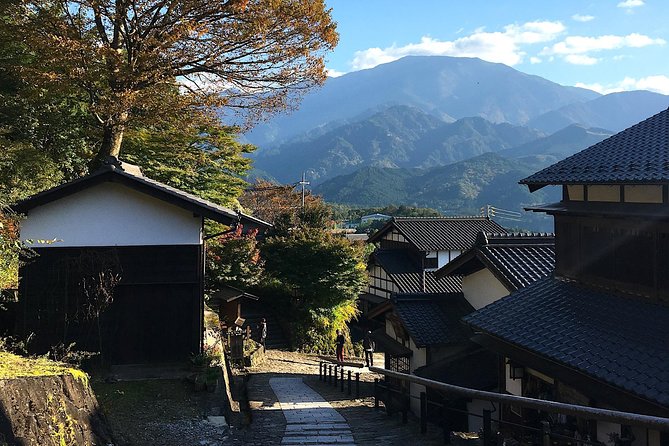
Walking the Nakasendo Trail between Magome-juku and Tsumago-juku is the kind of day that feels both outdoorsy and time-travel-ish, without making you fight maps. You walk about 9 km (5.5 miles), and you get real structure to the day. What I love most is that bus tickets and entry fees are included, so fewer things are left for you to sort out. I also like that it is built for active travelers, yet it can be customized to your group. One possible drawback: if you do not like long days on your feet, the 7-hour plan can feel like a commitment.
I also like the human touch. In the past, guides such as Ryo, Moto, Harumoto, and Kazuo have been cited for local storytelling, friendly energy, and patience with questions. It is not just a march along a trail, it is more like someone showing you their home stretch.
Key highlights worth your attention
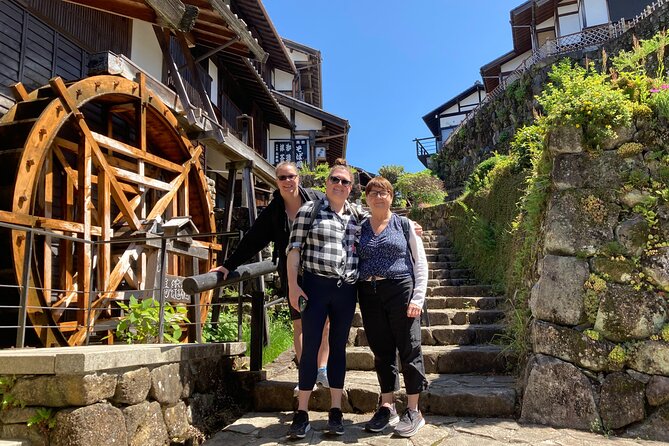
- A guided 9 km walk through the Nakasendo, with the route handled for you
- Bus + entrance fees included, so your day runs on rails
- Stop-by-stop history, from post towns to preserved districts and old inns
- Scenic breaks at the observatory and the Odaki and Medaki waterfalls
- Local guides with strong rapport, including Ryo, Moto, Harumoto, and Kazuo
- Private, customizable group format, so you are not stuck with a one-size pace
Why Kiso Valley on the Nakasendo is a great active-day choice
The Kiso Valley section of the Nakasendo has a very specific charm. You are not just sightseeing buildings, you are moving through the same kind of route long-distance travelers once took. That matters, because your brain tends to connect details when you are walking past them, not when you are staring from a bus window.
This is also an “active but doable” day. The walk is about 9 km total, and it is described as ideal for active travelers. Translation: you should expect a real walk, but it is not an all-day slog with no structure. The timing is built around stops, viewpoints, and a couple of indoor or sheltered moments inside historic residences and a museum.
More Walking Tours in Takayama:
- Takayama Old Town Walking Tour with Local Guide
★ 4.5 · 50 reviews - Takayama: Takayama Jinya & Old Town Private Walking Tour
★ 4.5 · 32 reviews - Takayama: Private Walking Tour with a Local Guide
★ 4.6 · 29 reviews
Price and what you are really buying at about $171 per person
At $171.31 per person, this is not a cheap add-on, so I judge it by what it removes from your workload. You are paying for the English guide, bus ticket(s), and entrance fees. That is the part most people underestimate: getting from place to place and getting into the paid sights takes time and planning when you DIY it.
Also, the tour is private, so the value can get better if you are traveling as a small group. Private means your guide can adjust the flow to your needs, rather than forcing everyone into a fixed tempo.
The pricing can still feel steep if you are the type who wants full freedom and is comfortable building your own day with trains, buses, and ticket lines. But if you want a smooth day with guidance and fewer moving parts, the cost makes more sense fast.
The day starts at Nakatsugawa Station, then you head to Magome-juku
You meet your guide at Nakatsugawa Station at 9:00 am, at the ticket gate area. From there, you take the bus to your first main stop: Magome-juku.
Why I like this start: you do not need to figure out the first leg of the day. You show up near public transportation, meet your guide, and then transition into the walk. That reduces the chance of a half-day headache, especially if this is one of your first days in Japan.
It also sets a nice rhythm. You are not waking up, rushing, and then spending your energy on getting to the trailhead. Instead, you get to settle into the story and pace right away.
Magome-juku and the observatory viewpoint that makes the valley feel big
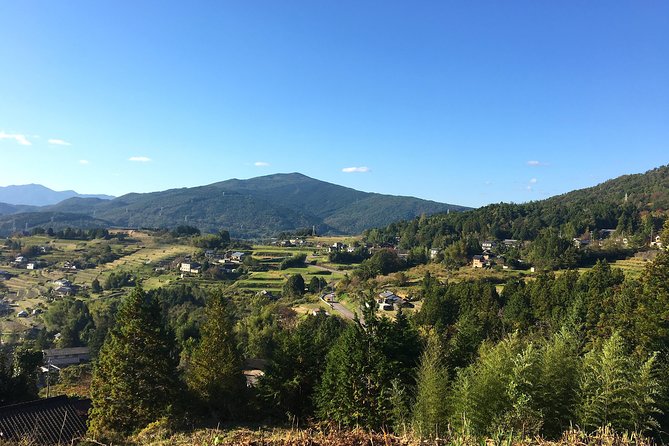
Your first stop is Nakasendo Magome-juku, a classic post town on this historic highway. This is where the Nakasendo Trail stops feeling like a concept and starts feeling like a lived-in route, with the shape of the town and the old travel vibe right in front of you.
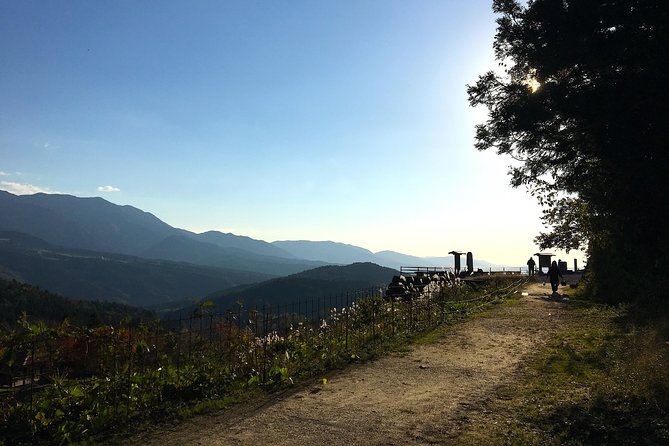
From there, you head to the Magome Observatory, a short uphill stop with a viewpoint at altitude of about 801 meters. The payoff is a wider look over Magome. This kind of “breather viewpoint” matters because the valley can feel more dramatic when you take five minutes to zoom out.
Then you get a quick cultural reset with a stop at the Odaki and Medaki Waterfalls. The naming is easy to remember, because one side is called the man waterfall (Odaki) and the other is the woman waterfall (Medaki). Even if you only spend about 10 minutes here, it is a good reset for your legs and a chance to cool down.
A change of pace from Takayama:
- Kanazawa: World Heritage Shirakawa-go Morning Guided Tour
★ 4.9 · 988 reviews - Kanazawa: World Heritage Shirakawa-go & Two Local Experience
★ 4.9 · 274 reviews - Kanazawa/Takayama: Shirakawago & Takayama Private Day Tour
★ 4.8 · 172 reviews - Departing from Takayama [Regular sightseeing bus] World Heritage Sites Shirakawago and Gokayama Ainokura
★ 4.5 · 137 reviews
Otsumago: preserved old streets, and why you should slow down for them
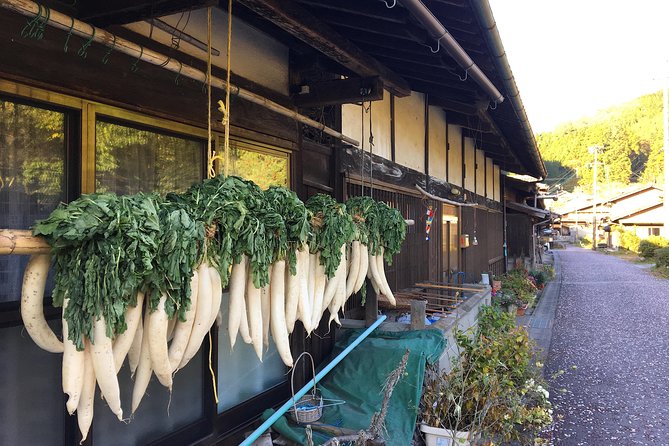
Next up is Otsumago, which is described as part of the Tsumago-juku preservation area. This is one of those stops where the value is in the details.
You will see houses built in Hon-Udatsu and Dashibari Zukuri styles lining the streets. Those are not just random architectural notes. Traditional structures like this are part of why the post towns feel different from modern shopping streets. When you walk near these homes, you get a better sense of how travelers would have experienced the road, not just how the towns look today.
If you tend to rush through scenic places, this is the moment to slow your pace by a few minutes. Even with a guided format, you will enjoy this more if you take time to look at the street layout and the types of buildings rather than treating it like a quick photo stop.
Tsumago-juku: understanding the inn system you see in the streets
After Otsumago, you reach Nakasendo Tsumagojuku for about 1 hour 10 minutes. This is a larger block of time, and it is for a reason. Tsumago is where you really start seeing how the post towns functioned for travelers.
You get the context that Tsumago-juku used to have one Honjin inn, one Waki-Honjin inn, and 31 Hatago inns. The Honjin and Waki-Honjin inns were for higher-status travelers, while Hatago inns were for commoners. That breakdown helps you read what you are looking at, even when you are just walking through the town.
This is also a place where your guide’s style matters. If your guide is someone like Kazuo, Ryo, Harumoto, or Moto, you will likely get practical explanations and a local-feeling narrative that makes the architecture and street patterns click.
Nagisomachi Museum inside a waki-honjin residence
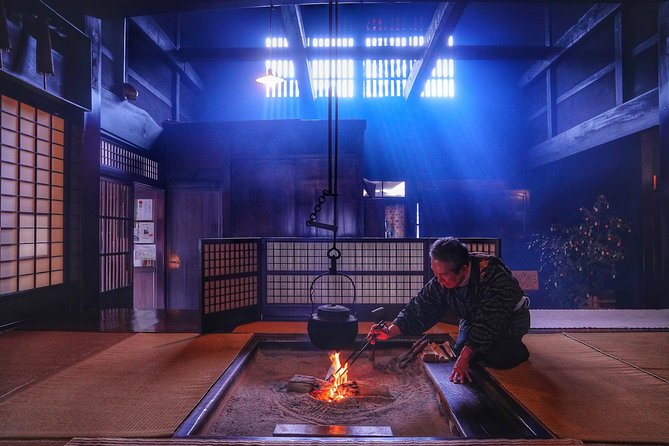
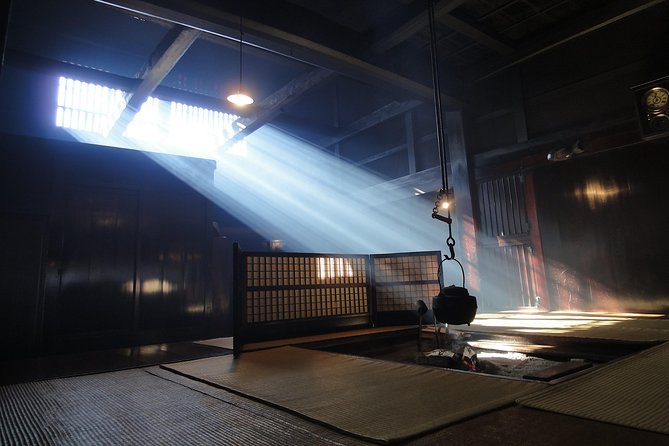
One of the more interesting stops is the Nagisomachi Museum, which sits inside a Waki-honjin Okuya residence, specifically described as Hayashiya House, and noted as a designated Important Cultural Property. You get restored rooms based on late Edo period floor plans.
This is the kind of stop that feels optional if you only like outdoors. But it is also a key ingredient in why the day works. Walking gives you motion and atmosphere. A museum inside a former residence gives you scale and explanation, and it helps you understand how people lived in spaces like these.
The tour includes the admission here, so you do not have to worry about buying a separate ticket.
Wakihonjin Okuya: the old residence built from Japanese cypress
After the museum, you visit Wakihonjin Okuya, described as a residence that served as a waki-honjin and provision store for generations. It is built from fragrant Japanese cypress, noted as a building material that had only recently been legalized when the construction period is referenced as 1877.
I like this stop because it gives you a concrete reason to care about materials. Wood type and building practices are not trivia when the building is the main object. You can also see how the place functioned, not just what it looked like.
Again, admission is included, so this portion stays friction-free.
How the pacing really feels over 7 hours and 9 km
The route is about 9 km, and the tour runs about 7 hours. That sounds straightforward until you factor in walking time plus the stops. Because there are multiple stops, including viewpoint and waterfall breaks, it usually feels more like a guided day hike with story stops than a straight-line trek.
The tour also says it can be customized to suit your needs. That is important for energy management. If you need a slower pace or a little more time at a stop, a private tour format gives you that flexibility more than a large group schedule would.
Bring the kind of shoes you would wear for a long walk. The walking is a key part of the experience, and your feet will notice if you skimp.
What is included, what is not, and how that shapes your day
Here is the practical breakdown:
Included:
- English guide
- Bus ticket(s)
- Entrance fees
Not included:
- Food and drink
- Private transportation such as taxi or private car or bus
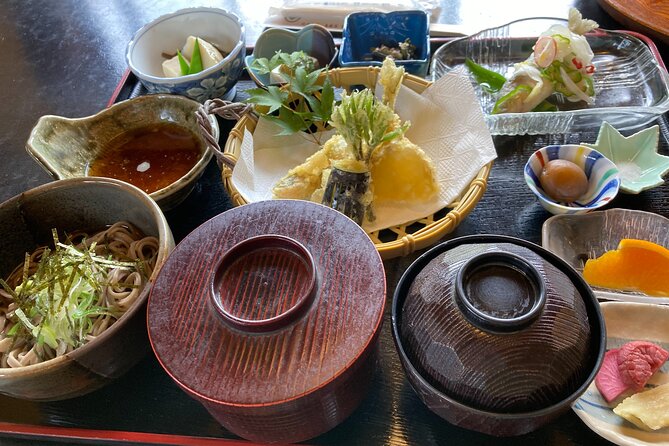
Because food is not included, I recommend planning to buy something near the towns or bringing simple snacks if that helps you. The tour includes a long enough span of time that hunger can become a distraction, not just an inconvenience.
Also, because transportation is partially handled by bus and the guide helps with train ticket purchase at the end, you should still plan on using public transport for your own return to your lodging. The tour ends at Nagiso Station around 15:45.
End point at Nagiso Station, and getting your train ticket handled
The tour finishes at Nagiso Station around 15:45. Your guide assists you with buying the train ticket back to your accommodation.
This is a real quality-of-life detail. End times can be stressful when you have to figure out ticket machines and routes in a hurry. Here, you get help right when you are most likely to feel tired from walking.
Should you pack for pictures, weather, and comfort
You will be walking outdoors for most of the day and stopping at viewpoints and waterfalls. So pack for comfort rather than just for looks. Comfortable layers are smart because mountain and valley weather can shift.
Also, bring a small bag you can handle easily on short uphill sections. You do not want the picture camera bag you love to turn into the thing that slows you down.
If you are picky about photos, you will likely want time at the observatory viewpoint over Magome, and at least a quick moment at the waterfalls. The stops are scheduled, so try to be ready when you arrive.
Who this tour fits best, and who might want another plan
This is a good fit if:
- You want an authentic slice of the Nakasendo Trail without route-finding stress
- You like towns with historic structures and short learning moments at each stop
- You prefer a guided format that includes bus and paid entries
- You can handle about 9 km of walking over roughly 7 hours
You might want to think twice if:
- You dislike long walks and would rather do shorter museum-heavy stops only
- You want to build a fully independent itinerary with zero guidance
- Your group needs frequent rest stops beyond what you can comfortably manage on a half-day schedule
The biggest “you will appreciate this” moments
The most praised aspects in the guiding experience tend to fall into a few clear buckets. The first is that guides are described as friendly, enthusiastic, and local. People in past groups specifically highlighted guides like Ryo and Kazuo for strong attitude and patience with questions, and Moto and Harumoto for making the history feel practical instead of just lectured.
The second is that the day is described as relaxed but structured. You get enough time to see both post towns, not just dash through them, and you do not have to solve transportation and ticket issues on your own.
The third is that the combination of historic towns plus nature breaks hits the right balance. You get observatory views, waterfalls, and then preserved street sections and residences. That mix is why it works as a first Japan hiking day, not just for experienced hikers.
Final call: should you book the Magome to Tsumago walk?
I think you should book this if you want a guided, low-stress way to experience a famous trail section and two medieval post towns in one day, with bus and entrance fees handled. It is also a smart choice for active travelers who like learning as they walk, especially if you would rather spend your energy enjoying the route than figuring out schedules.
Skip it if you are looking for a mostly flat, short walk with minimal effort. This is a real day on foot, roughly 9 km, and the value comes from the full experience, not just one highlight.
If you are ready for that mix of walking, viewpoints, preserved streets, and old residences, this is one of the cleaner ways to do the Kiso Valley route in a single day.
Latest write-ups near Takayama
- Ninja Experience in Takayama – Trial Course★ 5.0 · 20 reviews
- Magome & Tsumago Nakasendo Full-Day Private Trip with Government-Licensed Guide★ 5.0 · 20 reviews
- Ninja experience in Takayama – Special Course★ 5.0 · 20 reviews
- Frozen fall trekking★ 5.0 · 21 reviews
- Takayama: Edo-Period Old Town Walking Tour★ 4.5 · 22 reviews
- 1-Day Tour from Takayama: Hida Folk Village, Caves & Ropeway★ 5.0 · 24 reviews
- Takayama: Private Walking Tour with a Local Guide★ 4.6 · 29 reviews
- Sawanobori River Trekking Tour★ 5.0 · 30 reviews
Walking Tours, compared.
Kyoto Geisha Walking Tour: Gion District & Hidden Gems
Read our review →
Tokyo Tsukiji Fish Market Food and Culture Walking Tour
Read our review →
Gion Magical Night Walking Tour with Geisha Trivia
Read our review →
Imperial Palace and Shogun Historical Walking Tour
Read our review →
Gion Geisha District Walking Tour – Stories of Geisha
Read our review →

Shinjuku Local Bar and Izakaya Guided Walking Tour
Read our review →
Browse the lists this tour appears in