
Reviewed · CITY TOURS
Half Day Private Guided Walking Tour in Hiroshima City
What makes this half-day Hiroshima experience stand out is the guide, Pancho (Tetsuo Hamano), son of an A-bomb survivor. I love how you get landmarks plus a personal family lens, and I love the quiet, specific stops like the Flame of Peace. The only drawback is that the topic is emotionally heavy, so you’ll want to pace yourself and wear comfy shoes for about four hours of walking.
You’ll cover Hiroshima City’s most important memorial sites in a tight route, with a private group so you can ask questions and keep your day flowing. Expect photo breaks, short on-site explanations, and moments of reflection, not a rushed lecture. It’s private, and the tour uses a mobile ticket, which keeps day-of logistics simple.
The route also mixes grief with proof of survival, including a surviving building used for peace info and an origami crane moment. That mix is powerful, but it also means you should set expectations: you’re not just sightseeing. You’re learning how Hiroshima remade itself, street by street, monument by monument.
Key things that make this Hiroshima walking tour worth your time
- A guide tied to the story: Pancho (Tetsuo Hamano) shares firsthand family perspective as the walk moves through key memorial areas
- A focused Peace Park route in about four hours: you hit major sites without needing to plan a route yourself
- Clear, practical meetup options: you can meet at Hiroshima Station (including the bullet train platform) or be received at your hotel
- Free stops built into the walk: many monuments are free to visit, so you are not paying entry fees at every corner
- A lunch plan near Peace Memorial Park: okonomiyaki, ramen, or sushi are arranged based on your request, with vegetarian or vegan options noted
- Small museum and origami time: a surviving structure is used for peace information and a hands-on origami experience
Entering Hiroshima through Pancho’s family perspective
This tour’s biggest strength is the way it connects place to people. Pancho is not just reading facts off a sign. He shares how his family story threads into what you’re seeing around Peace Memorial Park and the surrounding memorial area.
That changes the pace of the experience. Instead of rushing from one landmark to the next, you slow down to understand why each stop matters and what the city wanted people to learn. It also helps you remember the sequence, because the story gives you a mental map.
The tour is private, so you’re not stuck with a group that moves on autopilot. I like that you can ask questions, and the format still stays structured enough that you know what is coming next.
More Walking Tours in Hiroshima:
- Hiroshima Historical Walking Tour – Why A-Bomb was Dropped
★ 4.8 · 893 reviews - Hiroshima Peace (Heiwa) Walking Tour at World Heritage Sites
★ 5.0 · 872 reviews - Hiroshima City 4hr Private Walking Tour with Licensed Guide
★ 5.0 · 437 reviews
The four-hour route, from Hiroshima Station to the Peace Memorial core
The walk is built like a guided storyline. You start in the city’s transit hub, then move toward memorial sites that show different angles on the same day: the targeting, the blast and heat, the ground zero area, and the long aftermath.
Timing is tight but realistic for a half-day. Several stops are brief photo-and-explanation moments, while one or two points are longer so you can actually absorb what you’re seeing.
You will also move through areas where the emotional weight is unavoidable. That’s not a flaw. It’s the point. If you go in prepared for a thoughtful day rather than a casual stroll, the tour hits harder, in a good way.
Hiroshima Station meetup options that save you time
Most people start at Hiroshima Station, and the tour gives you a few ways to meet Pancho. If you are arriving via bullet train from places like Osaka, Kyoto, or Tokyo, you can meet at the bullet train platform in Hiroshima Station. If you are staying in town, you can opt for hotel reception.
This matters because Hiroshima is busy, and finding the right person at the start can waste energy. I like that the meeting plan is flexible, so you can match it to how you arrived that day.
Once you are connected, day-of communication seems designed to be easy. One review mentioned texting to coordinate, plus exchanging photos to make meeting simple. Even if your day is smooth, that small extra support is a confidence boost.
Shirakami Shrine: a quieter start with a specific Hiroshima connection
Your first real stop is Shirakami Shrine, where you spend about an hour. You are not just looking at a typical shrine visit. You learn why Hiroshima became a target, using the shrine’s unique background and story as a starting point.
You also see surviving trees associated with the A-bomb. That detail turns a history lesson into something more grounded. It gives you a sense that recovery was not abstract. Some parts of the natural world endured, even when everything around them changed.
This is one of the best stops for setting context before you get to the most intense memorial sites. The shrine gives you time to slow down and absorb before the walk becomes more direct and immediate.
Other Hiroshima plans readers weigh up
- Hiroshima: Private City Highlights Walking Tour
★ 4.9 · 73 reviews - Hiroshima History Tour : A-Bomb Dome, Peace Memorial & City
★ 5.0 · 43 reviews - Amazing Hiroshima: Private City Tour with a Local Guide
★ 4.3 · 32 reviews - Hiroshima History Tour : A-Bomb Dome, Peace Memorial & City
★ 5.0 · 26 reviews
Hypocenter Monument: the photo moment with real gravity
After the shrine, you move to the Hypocenter monument, which is tied directly to the atomic bomb ground level. The stop is brief, about ten minutes, and it is built for understanding and photos after the facts are explained.
Even if you have seen pictures before, standing near a marker like this is different. You start thinking in terms of distance and scale, not just the event as a headline.
This stop works best if you keep your expectations simple. Listen closely, take a photo if you want one, and then move on with the rest of the story in your head.
Saiko-ji Temple: evidence of blast and heat
Next is Saiko-ji Temple, another short stop, about ten minutes. Here, the focus is on how the heat and blast were huge when the bomb exploded, with some evidence showing what happened.
This is where the tour adds a more physical sense of the event. You are not only hearing about plans or memorial design. You are seeing material evidence and learning how the event affected the built and lived environment.
Because the stop is brief, come ready to absorb quickly. If you try to read everything on your own during those ten minutes, you may miss the key explanation that Pancho provides.
Atomic Bomb Dome: why this building is a global symbol
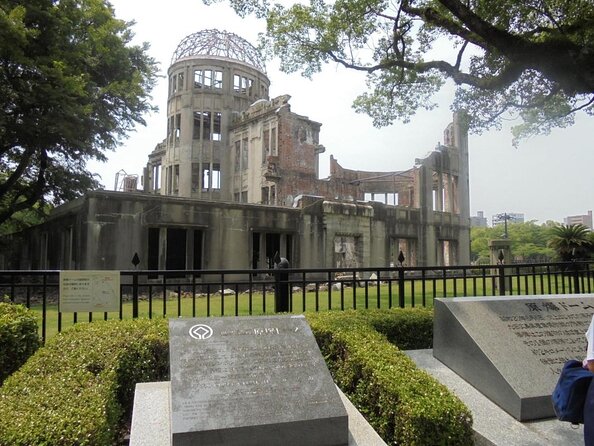
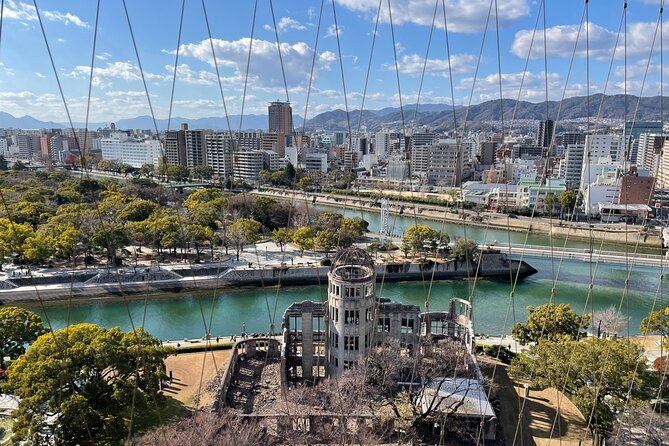
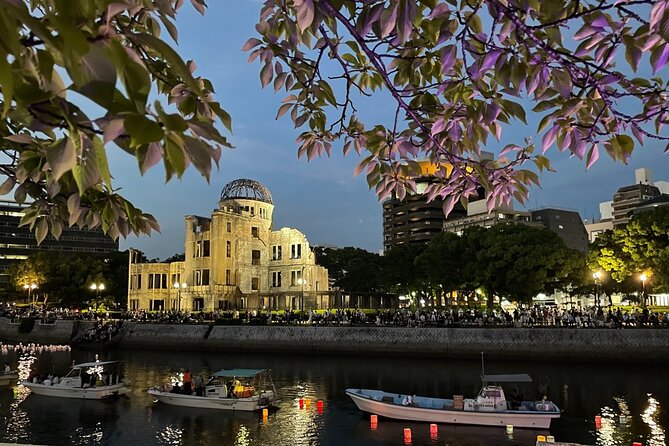
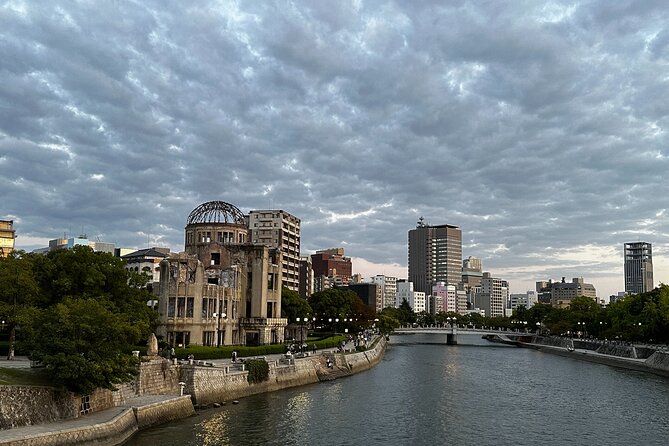
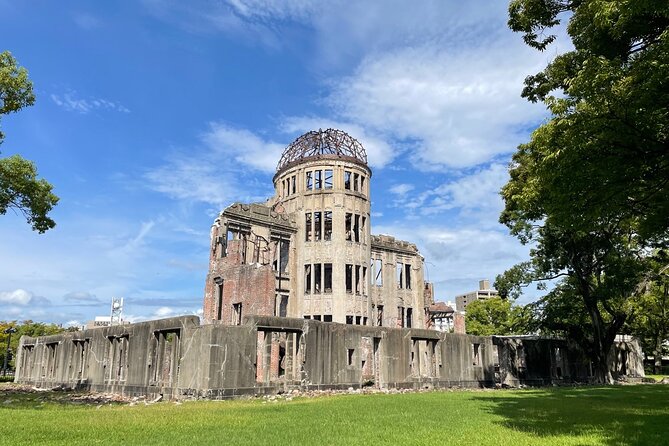
The walk then reaches the Atomic Bomb Dome, with about twenty minutes on site. The Dome is described as being used for the first time in history, and as a reminder of what happened.
This is the iconic stop on the route. But with a guide, it becomes more than a photo backdrop. Pancho’s family perspective and the tour’s pacing help you see it as a specific remnant of a specific day, rather than a generic famous site.
I also like that you get time here, enough for a couple of looks and a few minutes to reflect. It’s one of the places where people often rush, but the structure of the tour discourages that.
Peace Flame: a short stop with a long meaning
At Peace Flame, the stop is short, about five minutes. Still, it is not random. You learn the special meaning behind keeping the flame burning.
This part of the walk is useful because it shifts from describing what happened to asking what people do with remembrance. A flame is small, but it is also repeatable. It turns memory into routine and responsibility.
If you are the type who likes quiet moments in the middle of a day, this stop is for you.
Lunch near Peace Memorial Park: choose your comfort food, Hiroshima style
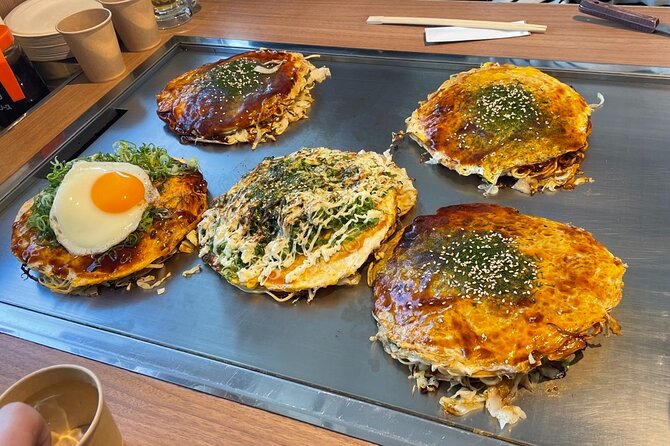
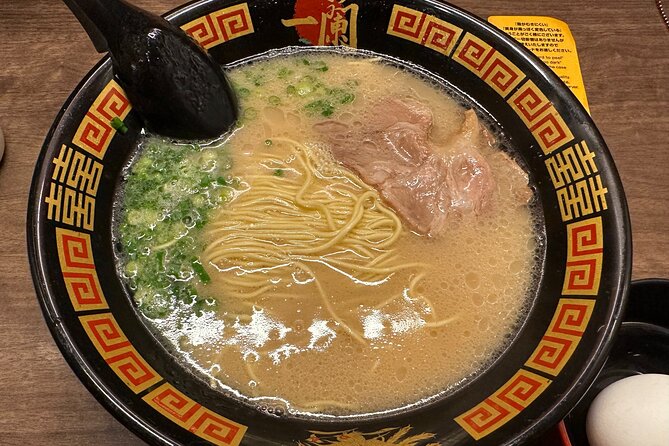
After the core memorial walking, you get lunch near Peace Memorial Park, about fifty minutes. The tour can arrange popular Hiroshima dishes based on your request, including okonomiyaki, ramen, and sushi.
What I appreciate here is that lunch is not treated like an afterthought. The guide introduces local restaurants, and dietary needs are mentioned, including options for vegetarian or vegan guests and for gluten-free needs.
One important consideration: lunch is not included. Any food and drink is excluded, so you’ll pay for your own meal on the day. The upside is that you get choice, and you are less likely to end up eating something off-theme just because you were hungry and tired.
The Rest House at Hiroshima Peace Park: surviving walls and a small museum stop
Next is the Rest House of Hiroshima Peace Park, around fifteen minutes. This building is described as one of the surviving buildings from the A-bomb. Today it is used as tourist information and as a small museum area.
You are also likely to get an origami experience here. A review mentioned Pancho teaching origami crane making as part of the day, and the tour description also points to origami-related programming.
This stop adds texture. After the major monuments, you get a calmer space where people can reset their eyes and still keep learning. It’s a good pause if you start to feel overwhelmed, because it shifts from loud symbolism to small details and hands-on participation.
Children’s Peace Monument: paper cranes, faith, and memory
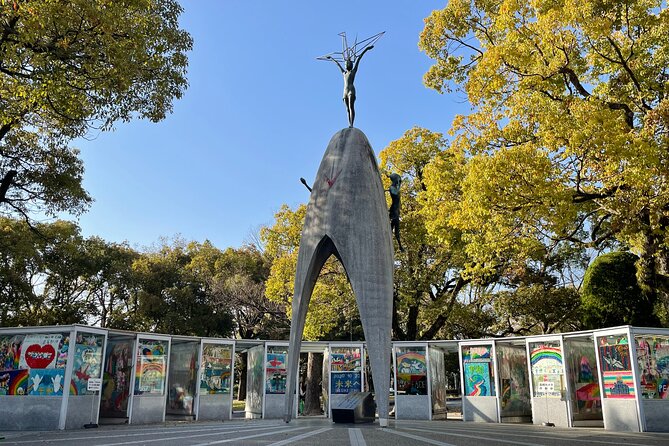
The tour then moves to the Children’s Peace Monument, about ten minutes. The stop focuses on one girl’s story and her attempt to fold a paper crane, tied to a Japanese belief connected with recovering from leukemia.
That kind of story is hard to take in quickly, and the short stop is a reminder to hold your attention steady. This monument personalizes remembrance in a way that feels both specific and universal.
If you like stories that explain meaning through people rather than through abstract statements, this is one of the most affecting parts of the walk.
Peace cenotaph for Atomic Bomb Victims: design, shape, and what it asks of you
Your last memorial stop is the Hiroshima Peace City Monument Cenotaph for the Atomic Bomb Victims, about ten minutes. The guide shares its history, why it has its particular shape, and what it means, including the design concept you will be able to notice yourself when you look.
A cenotaph is designed to hold attention. But the real value is learning the logic behind the design. When you understand why the shape is the way it is, you start noticing details you might otherwise skip.
This stop is a good way to end the walking loop because it ties together the different angles you covered earlier: context, evidence, surviving remnants, and dedicated remembrance.
Price and value: when $200 per person makes sense
The price is $200 per person for a private half-day, about four hours, with Pancho as the certified guide. The guide fee is included, so you are paying for real guiding time plus the family-linked explanations.
What is not included matters for value. Lunch is excluded, and the entrance fee for the Hiroshima Peace Memorial Museum is listed as ¥200 per person. Public transportation is also listed as not included, at $4 per person, and private transportation is optional at an additional cost.
So, when does the math work for you? It works best if you want your day to be structured, emotionally guided, and not something you assemble on your own while managing language, distances, and multiple memorials. It also works if you want context that goes beyond reading panels.
There is also strong social proof behind this tour: it has a 5 out of 5 rating across 30 reviews, and 100% of the reviews recommended it. Another helpful datapoint is that it is booked on average 108 days in advance, which usually signals that people find it valuable and plan ahead to secure the date they want.
Finally, remember you are paying extra for a private format. If you do not mind group logistics, you might find less expensive options. But if you want the “ask questions and get family-tied explanations” style, this price aligns with that level of human guiding.
Practical stuff you’ll be glad you thought about
This tour is a walking route through memorial areas, with multiple short stops and a longer lunch break. Even with short durations at each site, you should plan your day like a walk, not a drive.
Comfort matters. I’d aim for shoes you can stand in for long minutes and clothes that can handle Hiroshima’s weather. Bring a small water plan for the gaps between stops, since the tour is not listing drinks as part of the package.
You should also expect the tour to be emotionally direct. The guide’s family connection and the repeated focus on A-bomb impact means you will spend time thinking, not just viewing.
If you travel with kids, this route can be especially meaningful because of the Children’s Peace Monument and the origami activity. If you travel with older adults, the “short stop, then move” format can help keep the pace manageable, but you will still be walking for the whole half-day.
Service animals are allowed, and the tour is near public transportation.
Should you book this Hiroshima private guided walking tour?
Book it if you want a half-day plan that gives you a coherent storyline through Hiroshima’s most important memorial sites, with a guide who ties the history to his own family’s connection to the A-bomb. Book it if you appreciate learning that is explained with purpose, and you like the idea of an origami moment and Q&A rather than just reading plaques.
Skip or reconsider if you are looking for a casual, purely sightseeing walk, because this route is built around remembrance and its human weight. Also consider budgeting extra for lunch and the Hiroshima Peace Memorial Museum admission fee if you plan to visit that museum.
If you are short on time in Hiroshima and you want to get the core Peace Park area right without doing the planning yourself, this is a strong choice. The value is not the walking. The value is the guided understanding.
Latest write-ups near Hiroshima
- An Amazing set of Cultural experience: Kimono, Tea Ceremony and Calligraphy★ 5.0 · 69 reviews
- Hiroshima: Private Walking Tour with a Local★ 4.6 · 70 reviews
- Hiroshima: Miyajima Island Half-Day Tour with Guide★ 4.9 · 71 reviews
- Kimono and Tea Ceremony in Miyajima★ 5.0 · 73 reviews
- Hiroshima and Miyajima Private Guided Tour★ 4.5 · 75 reviews
- HIROSHIMA ORIZURU TOWER Admission Ticket★ 4.6 · 75 reviews
- Hiroshima & Miyajima: UNESCO A-Bomb Dome & Itsukushima★ 5.0 · 76 reviews
- Hiroshima to Miyajima: Private Custom Tour with Ferry Ride★ 4.9 · 77 reviews
City Tours, compared.
Private City Highlights Tour with Local Guide
Read our review →
Asakusa, Skytree & Akhihabara Go-Kart City Experience
Read our review →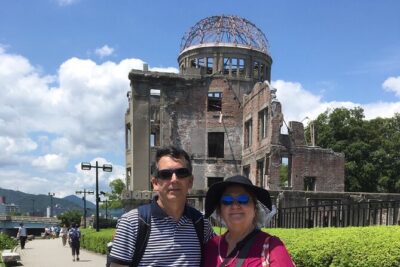
Hiroshima City 4hr Private Walking Tour with Licensed Guide
Read our review →
Private Haneda Airport (HND) to Central Tokyo City Transfer
Read our review →
3-hour Guided E-Bike Tour of the City’s Hidden Gems
Read our review →
Shibuya City: Daikoku PA GT-R R35, R34, R33 or R32 Tour
Read our review →Browse the lists this tour appears in