
Reviewed · PEACE MEMORIALS
Hiroshima History Tour : A-Bomb Dome, Peace Memorial & City
This tour is interesting because you are not just checking boxes at Hiroshima’s most famous sites. You walk through the city with Japanese guides who carry family connections to Hiroshima and, in some cases, second-generation atomic bomb survivor perspectives.
I love the way the stories feel personal instead of rehearsed, and I like how the tour is designed to connect the sites to modern life, not just tragedy on a map. One possible consideration: this is a walking-forward route with emotional stops, so comfy shoes and a calm mindset help, especially if you’re visiting around the Peace Memorial Museum closure from Feb 16 to 21.
Key highlights worth planning around
- Hiroshima-born guides with real family ties (including second-generation survivor descendants)
- A private, just-your-group experience with no blending into a crowd
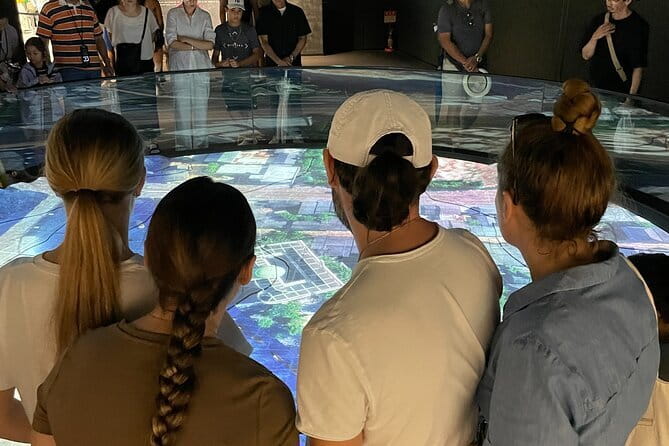
- Peace Memorial Museum time with guided context (and museum tickets handled)
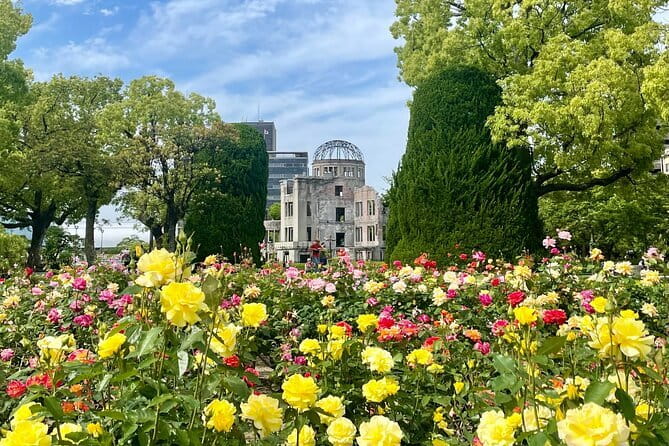
- World Heritage Atomic Bomb Dome photo stop paired with reflection time at the park
- Shukkei-en Garden entry included, so you get beauty after the heavy parts
- Photography data shared after the tour, which is great for people who want fewer phone-takes
Why Hiroshima feels different with a family-tied guide
A lot of tours in big cities run on facts. This one runs on memory. The guide approach is the whole point: you get a local Hiroshima perspective shaped by families, not a script. Some guides were born and raised in Hiroshima, others have family members affected by the atomic bombing, and some are second-generation atomic bomb survivors.
That matters because Hiroshima can feel like a museum of itself. With the right guide, it becomes something else. You notice how everyday routines sit beside memorial spaces, and how local conversation and city life still carry a quiet weight.
In practice, you will hear stories that are passed down carefully, the kind of details that do not fit on a brochure. And because you’re on a private tour, you can ask the questions that linger after you walk away from the headlines.
Other Peace Memorial visits:
- Hiroshima Historical Walking Tour – Why A-Bomb was Dropped
★ 4.8 · 893 reviews - Hiroshima: Miyajima Peace Memorial Icons of Peace and Beauty
★ 4.9 · 361 reviews - Hiroshima/Guided Virtual Tour of Peace Park/PEACE PARK TOUR VR
★ 5.0 · 157 reviews
Pickup, pacing, and how the 3 to 4 hours really works
The tour is private for your group only. That means your guide can adjust the route and timing based on your pace and interests, whether you’re traveling solo, as a couple, or with family.
You also start with pickup from a long list of central Hiroshima options, and if your stay is in central Hiroshima but not on the list, you can indicate your location by email so the team can arrange pickup. The tour includes pickup service on foot, so you are not stuck figuring out the first step while your day is already slipping away.
A quick reality check: the itinerary is designed for walking, photo stops, and guided time at major sites. You should expect a fair amount of outdoor walking. If it’s rainy, the plan is still meant to work, but you’ll want layers and water-resistant shoes.
Also, transportation costs are on you. The tour itself can be done by public transportation or taxi if you prefer, but taxis and trams are not included in the price. You will still get the guidance to make those decisions without stress.
Hiroshima Peace Memorial Museum: the hour that sets the tone
The Peace Memorial Museum is where you get the structure for everything else you will see. In this tour, you get about 1 hour inside with a guided visit, plus museum entry included. Skipping the ticket line helps you spend more time reading what you came for.
If you only had a short time in Hiroshima, the biggest mistake would be rushing through the museum like it’s a photo gallery. This format works better because your guide can steer you to what matters and explain what you’re looking at in a grounded way.
The museum also becomes less overwhelming when you’re not trying to translate everything on your own. You will be guided through the historical impact and what it means now, which helps you connect the artifacts and messages to the places outside.
One planning note you should take seriously: the Peace Memorial Museum is closed for renewal from Feb 16 to Feb 21. If your dates land in that window, you’ll want to confirm how the route adjusts, since the museum is a core stop.
Peace Memorial Park and the walk toward reflection
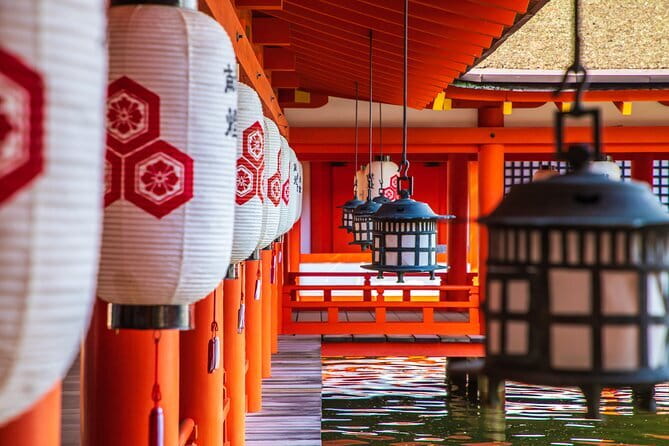
After the museum, you shift from explanation to atmosphere. The itinerary includes a guided stop at Peace Memorial Park, starting with a photo stop of about 15 minutes.
This is not the kind of place where you want your guide to talk nonstop. The value here is the balance: guided context when you need it, and space for you to reflect on what you’re seeing when the words stop.
You’ll also notice how the guide’s personal connection changes your attention. Even if you’ve read about Hiroshima before, the park area can feel oddly physical, like the city is asking you to slow down and take in the scale of what happened.
A practical tip: plan to take a moment before your first photos. The park can get busy, and lighting changes fast. If you rush, you end up with blurry pictures and a scattered memory. If you pause, you’ll get photos that match the feeling.
More Historical Tours in Hiroshima:
- Hiroshima Peace (Heiwa) Walking Tour at World Heritage Sites
★ 5.0 · 872 reviews - Miyajima Half-day Trip Historical Walking Tour
★ 5.0 · 284 reviews - Hiroshima: History of Hiroshima Group Walking Tour
★ 4.8 · 266 reviews - Hiroshima: Peace Walking Tour of World Heritage Sites
★ 4.9 · 190 reviews
The Atomic Bomb Dome: World Heritage, best seen with context
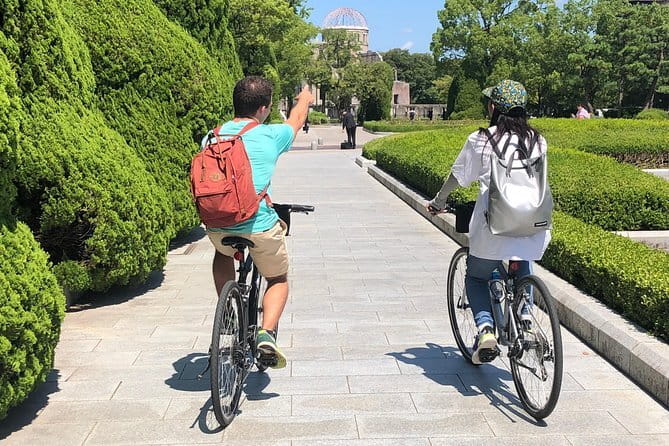
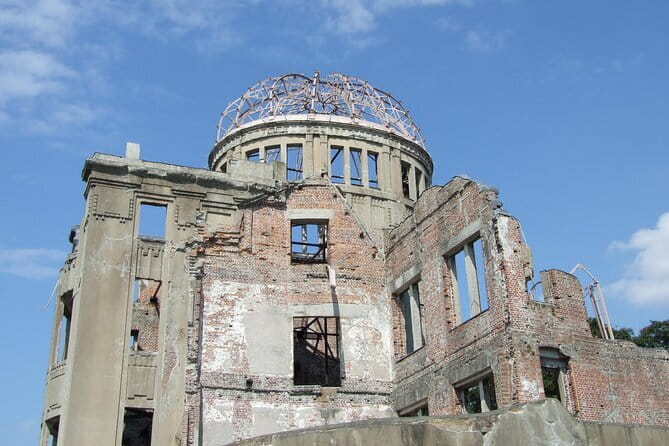
Next is the Atomic Bomb Dome area, with a photo stop and guided time. The Dome is a World Heritage Site, and it holds a specific kind of silence in the middle of a busy city.
This stop is powerful because it is both an icon and a real building that existed through the aftermath. A guide who understands Hiroshima from the inside can help you read what you’re seeing without turning it into a checklist.
You’ll likely spend your time thinking more than photographing. Still, the tour helps you with that: photography is handled as part of the experience, and you receive photo data, which means you can step away from your camera at the moments that actually deserve attention.
If you’re the type who likes to ask questions, this is a good stretch to do it. The Dome and surrounding viewpoints naturally lead to questions about how people rebuilt, how the city remembers, and how Hiroshima looks today.
Hiroshima Castle and city streets: history that isn’t frozen in time
Once you’ve handled the memorial core, the tour shifts to Hiroshima’s present-day identity. You’ll have photo time at Hiroshima Castle, plus guided time during the visit.
This is a smart pairing. Castle stops are often treated like decoration on a history day. Here, it works because your earlier stops gave you context for what resilience means in Hiroshima. Then you see a symbol of continuity, and you get to watch how the city keeps moving.
You’ll also spend time walking through local streets. The goal is not just to see more spots, but to experience the city at street level, where modern life happens while the memorial message stays present.
In the guided conversation, you may get side notes on Japanese culture and daily life. That kind of context is underrated. It makes the places you’re seeing feel less like a staged set and more like a living city that continues after the headlines.
Shukkei-en Garden: the quiet counterpoint you should not skip
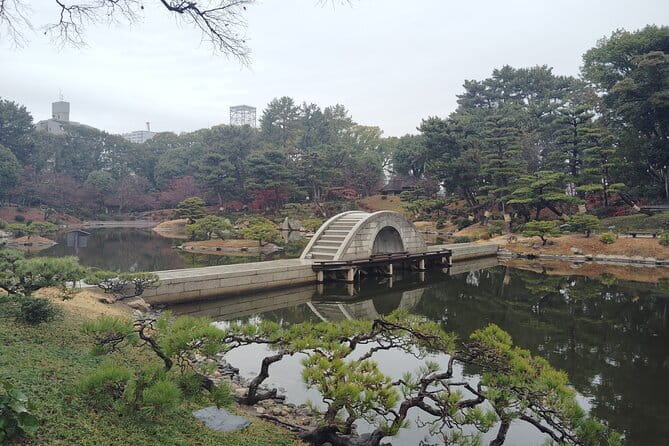
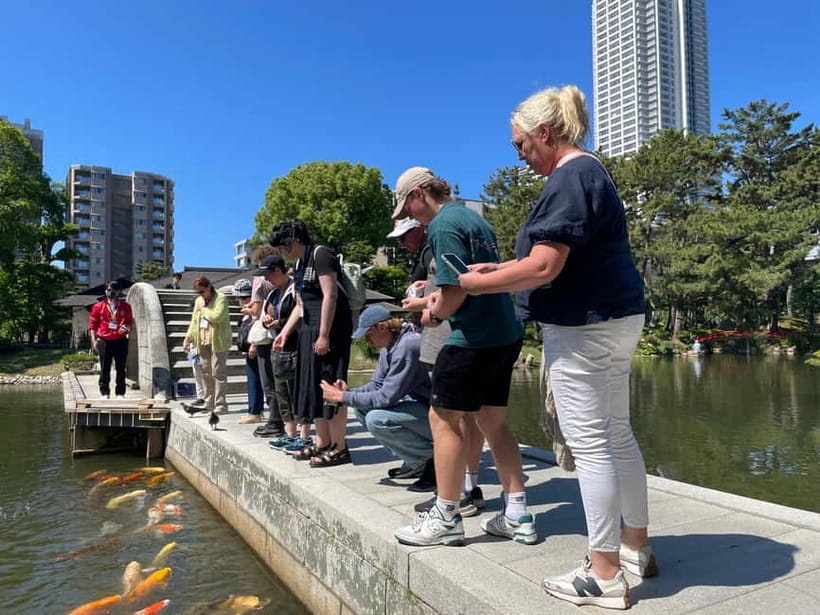
This tour includes entry to Shukkei-en Garden and about 1 hour inside, with a break, photo stop, and guided visit.
Garden time is not filler here. It’s a change in tempo. After museums and memorial spaces, you need a different kind of attention. Gardens give it to you through pacing, symmetry, and stillness.
Multiple people highlight that this garden is a stop you should take seriously. So here’s my advice: don’t speed through it just because you feel emotionally tired. Use the guided time to notice small details you might miss alone, then take your own time after the tour guide points out the main features.
If your group includes family or older travelers, gardens are often a good equalizer. You can rest without feeling like you’re abandoning the experience.
What the $103 price buys you (and why it can be good value)
At around $103 per person for a 3 to 4 hour private tour, the headline cost is easy to compare. The more useful question is what’s included.
You get:
- a Hiroshima-born guide with English or Japanese interpretation
- museum entry and guided time
- Shukkei-en Garden entry and guided time
- photography support with photo data provided
- pickup included (on foot)
- a private group, with no other guests joining
What’s not included is transportation between sites (taxis, trams, buses) and any drinks or food. That’s normal for walking-and-transit city tours, but you should budget a little so you’re not forced into last-minute spending.
Here’s where the value usually comes from: Hiroshima history is emotionally heavy, and you want the right human to guide you. This tour’s selling point is not just landmark access. It’s perspective from guides with real family connections. That’s exactly the kind of thing that a cheaper bus tour often cannot reproduce.
Who this tour suits best, and who should rethink it
This tour is ideal if you want:
- a private experience with room for questions
- a guide who can connect sites to meaning, not just dates
- a walk that mixes memorial spaces with city life and a garden reset
- a pace that can flex to your group, including families
It may not be ideal if:
- you prefer a fully accessible, minimal-walking style day
- you want a long independent wandering day without guidance
- you dislike emotional topics and would rather keep the day light
Good news: the tour is wheelchair accessible, so you can often make it work if your group includes mobility needs. Still, because the route includes walking time and outdoor viewpoints, you’ll want to plan carefully for comfort.
Should you book this Hiroshima History Tour?
If your goal is to understand Hiroshima beyond photos, I’d strongly consider booking. The tour’s biggest strength is the guide model: local Hiroshima-born perspective with family-shaped storytelling, including second-generation survivor connections in some cases. That combination makes the memorial sites feel less like history lessons and more like human memory you can’t unsee.
Book it if you want a guided route that balances heavy stops with real city life and ends with Shukkei-en Garden as a calmer counterpoint. Consider a different option if walking, outdoor photo stops, or emotionally intense content is not your thing.
Either way, plan for comfortable shoes, take your time at the museum and park, and let the garden do its job as your day’s reset button.
FAQ
How long is the Hiroshima History Tour?
The tour runs about 3 to 4 hours.
Is the Peace Memorial Museum included in the tour?
Yes. Peace Memorial Museum entry is included, and the museum is visited with a guided tour for about 1 hour.
What happens if I visit during Feb 16 to Feb 21?
The Peace Memorial Museum is closed for renewal during Feb 16 to Feb 21, so your visit would be affected.
What stops are included in the itinerary?
You visit Hiroshima Peace Memorial Museum and Peace Memorial Park, make photo stops around the park area and the Atomic Bomb Dome, visit Hiroshima Castle, and include Shukkei-en Garden.
Is the Atomic Bomb Dome part of the tour?
Yes. There is a photo stop and guided time at the Atomic Bomb Dome.
Is this a private tour?
Yes. It is private for your group only, with no other guests joining.
Are tickets included for the museum and garden?
Yes. Entry tickets to the Peace Memorial Museum and Shukkeien Garden are included.
What language is the guide?
The live tour guide provides English and Japanese.
Do I need to pay for transportation during the tour?
Transportation fees (taxi, tram, bus, etc.) are not included. The guide can use public transportation or taxi if you want, but you would cover those costs.
Is pickup included?
Yes. Pickup service is included, with multiple pickup locations listed and pickup arranged for central Hiroshima when your location is shared.
Latest write-ups near Hiroshima
- An Amazing set of Cultural experience: Kimono, Tea Ceremony and Calligraphy★ 5.0 · 69 reviews
- Hiroshima: Private Walking Tour with a Local★ 4.6 · 70 reviews
- Hiroshima: Miyajima Island Half-Day Tour with Guide★ 4.9 · 71 reviews
- Kimono and Tea Ceremony in Miyajima★ 5.0 · 73 reviews
- Hiroshima and Miyajima Private Guided Tour★ 4.5 · 75 reviews
- HIROSHIMA ORIZURU TOWER Admission Ticket★ 4.6 · 75 reviews
- Hiroshima & Miyajima: UNESCO A-Bomb Dome & Itsukushima★ 5.0 · 76 reviews
- Hiroshima to Miyajima: Private Custom Tour with Ferry Ride★ 4.9 · 77 reviews