
Reviewed · PEACE MEMORIALS
Hiroshima:Guided Virtual Tour/PEACE PARK TOUR VR
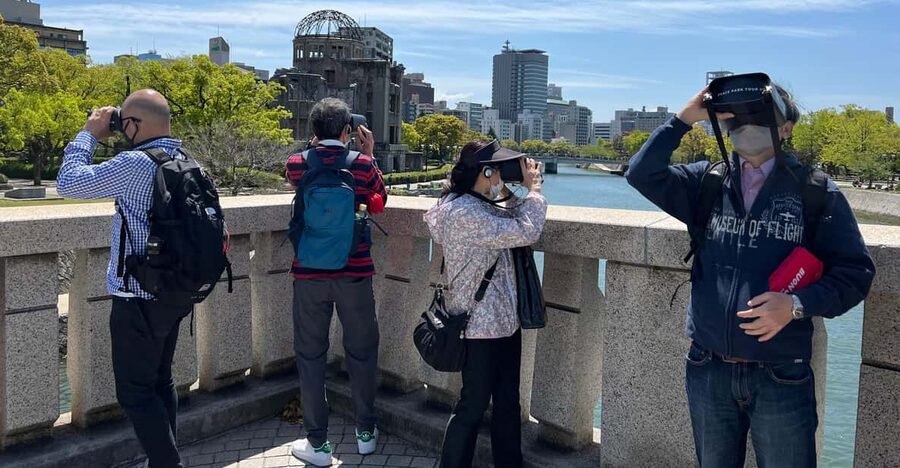
A guided VR tour of Hiroshima Peace Park is interesting because it does not just show you images. You stop at real places, put on the headset, and you are pulled back to how the city looked before the bombing and what the day of August 6th meant for people.
What I like most is the fact you are led by someone living in Hiroshima, not a script reading off a wall. And I also like that the headset moments are paired with guide-led fieldwork style questions, so you are thinking while you watch, not just standing there. One possible drawback: you only get about 80 minutes, and if you are late to the start you may miss the session.
Key points before you go
- A local English-speaking guide in Hiroshima, with room for questions and back-and-forth dialogue
- Hibakusha-inspired VR that uses testimonies and period photos to recreate key moments
- Small group up to 6 people, which makes the conversation feel human and not rushed
- Stops timed to major landmarks: Atomic Bomb Dome, Aioi Bridge, and Motoyasu Bridge
- A rain-or-shine plan, including a very short VR version if the weather turns heavy
- Includes VR goggles and English audio, so you only need to handle your own transport and meals
Why VR at Hiroshima Peace Park feels different from reading alone
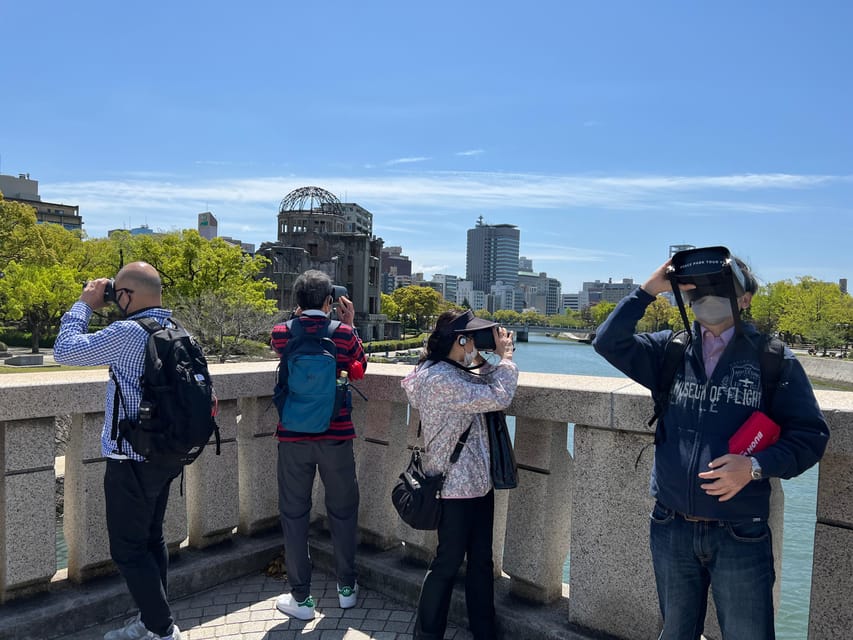
The Hiroshima Peace Park is powerful in a quiet, straightforward way. You walk. You look. You read names and dates. This VR tour adds another layer, because it recreates what you are standing in front of, using survivor accounts and period imagery as the backbone.
I like that it frames the experience around testimony. The number of hibakusha, atomic bomb survivors, has been declining over the decades, so this kind of guided, structured remembrance matters. You are not just seeing the past. You are being guided to understand how the bombing changed ordinary life, and what survival meant for communities.
That emotional weight is reinforced by pacing. You do not get dumped into one long video. You move along the park with stops that make sense. Each time you put on the headset, you return to a real spot and a real view. That back-and-forth is what keeps it from feeling like entertainment.
Meeting at Hiroshima City Peace Memorial Park Rest House, then getting your timing right
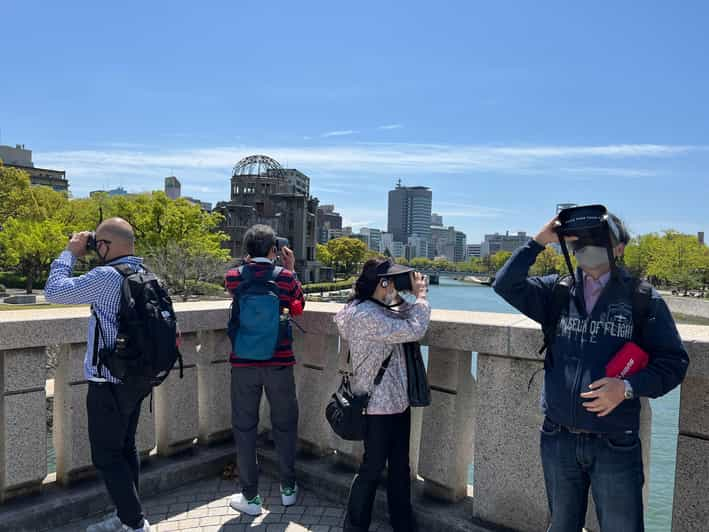
The tour starts at the Hiroshima Peace Park Rest House. A guide waits at the tourist information counter on the 1st floor, so you do not have to guess where to line up. Do yourself a favor and arrive about 5 minutes early. The schedule is tight, and the tour can be shortened if there are delays.
This matters more than it sounds, because the experience includes multiple headset moments. If you miss the start, you miss the flow. And because the group is limited to 6 participants, the organizer has to keep everyone moving together.
One practical note that is easy to forget: you cannot store luggage at the Rest House. If you are carrying bags, plan to manage them yourself.
Other Peace Memorial visits:
- Hiroshima Historical Walking Tour – Why A-Bomb was Dropped
★ 4.8 · 893 reviews - Hiroshima: Miyajima Peace Memorial Icons of Peace and Beauty
★ 4.9 · 361 reviews - Hiroshima/Guided Virtual Tour of Peace Park/PEACE PARK TOUR VR
★ 5.0 · 157 reviews
Hiroshima Peace Park Rest House stop: the calm before the time jumps
The first on-site stop is the Rest House area, with about 20 minutes of guided touring and walking. This is where your guide sets the tone. Instead of jumping straight to the headset, you start with context and orientation.
This is also where the guide-led conversation begins to matter. In sessions led by guides such as Kazuko, the start includes a human story tied to the event, with survivor testimony as the anchor. You are building a mental map before the VR switches on. That makes the later landmarks easier to connect, instead of feeling like unrelated scenes.
If you are the type who wants to understand the why, not just the where, you will probably appreciate this start. It also gives you a moment to settle your expectations, because you are about to experience heavy material through technology.
Atomic Bomb Dome stop: VR makes the space feel close
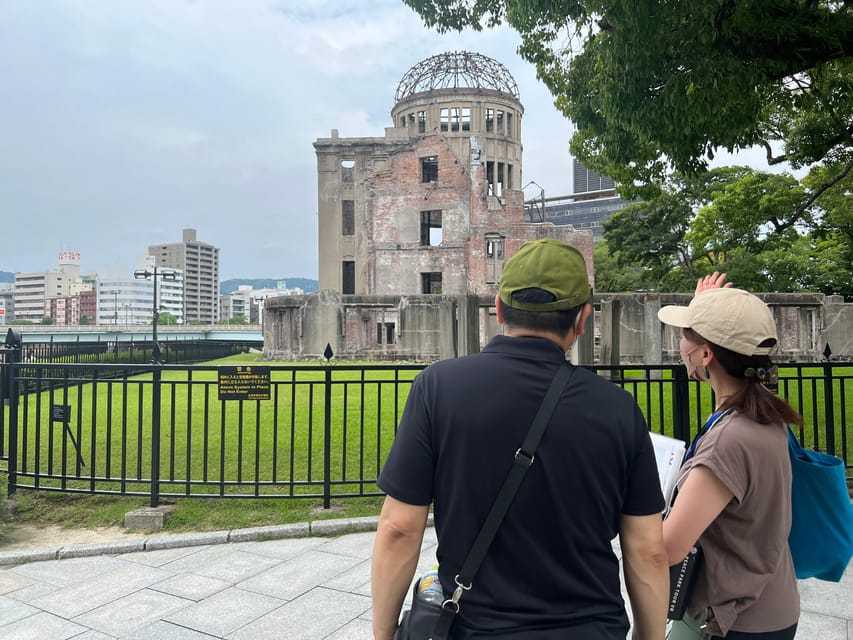
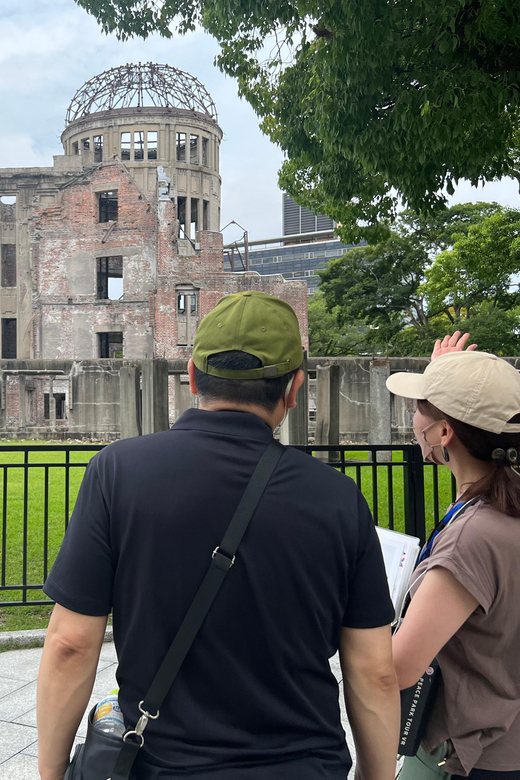
Next comes the Atomic Bomb Dome area, with about 20 minutes for guided sightseeing and walking. This is one of the most recognizable spots in Hiroshima, and it can feel surreal in real life because it is so intact as a ruin.
With the VR component, the goal is not to replace the dome with fantasy. The goal is to help you picture what the cityscape looked like before the bombing, then connect what you are seeing now with what survivors described. That is where survivor testimony and period photos turn into a guided sequence rather than random scenes.
A detail I found especially meaningful from the guide storytelling: one survivor mentioned is Eizo Nomura, who was in a building about 170 meters from the hypocenter. You do not need to memorize numbers. The point is scale, how close it was, and how a single day reorganized an entire area and its people.
The dome stop is also where the guide’s approach can shape the whole experience. Guides like Yoko Shimada are praised for taking questions and keeping the pace thoughtful. That matters because this is not a stop you want to rush through with headphones on. You want time to ask and to absorb.
Aioi Bridge and Motoyasu Bridge: the day after is built into the route
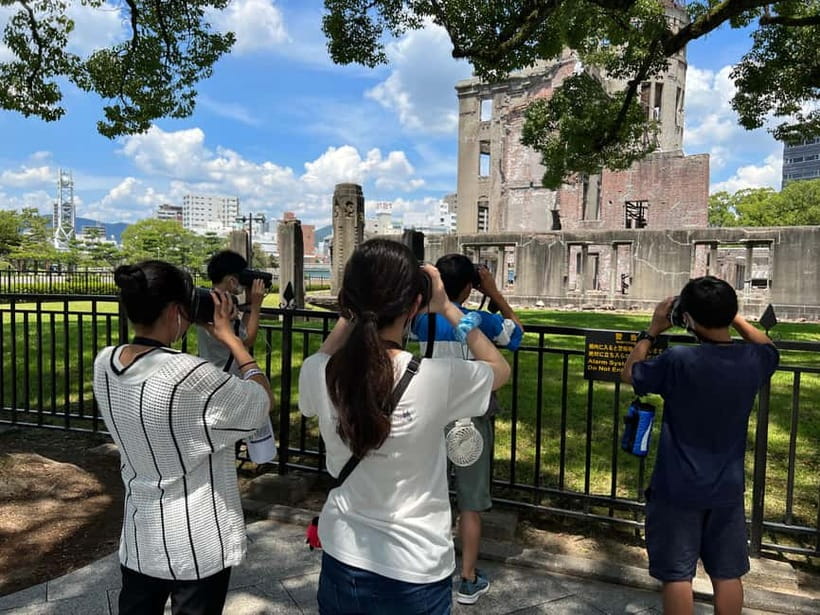
After the dome, you move to the bridges, and the tour uses the walk itself as part of the storytelling. The Aioi Bridge stop is around 15 minutes, and then Motoyasu Bridge is another 15 minutes.
Bridges are not just pretty photo angles here. They are functional spaces, part of how people moved through everyday life. In the VR moments, you are guided to think about what it meant when the city’s normal rhythms were interrupted. The bridges connect the idea of a lived city to the memorial version of that same place.
What I like about this routing is that it helps you avoid the common pattern of only seeing the headline landmark. If your only focus is the Atomic Bomb Dome, it is easy to miss how the surrounding area carries memories too. The Aioi and Motoyasu Bridge stops stretch your understanding across the river crossings, not just the single ruin.
Also, because these stops are shorter, you stay engaged. You are not stuck in one spot long enough to mentally disengage. Instead, you keep moving with your guide and the headset sequences.
A change of pace from Hiroshima:
- Peaceful Hiroshima & Miyajima UNESCO 1 Day Bus Tour
★ 5.0 · 5,309 reviews - Hiroshima: Hiroshima and Miyajima UNESCO Sites 1-Day Tour
★ 4.9 · 2,330 reviews - Hiroshima / Miyajima Full-day Private Tour with Government Licensed Guide
★ 5.0 · 1,298 reviews - Hiroshima Peace (Heiwa) Walking Tour at World Heritage Sites
★ 5.0 · 872 reviews
The guide-led fieldwork questions and the end-of-tour dialogue
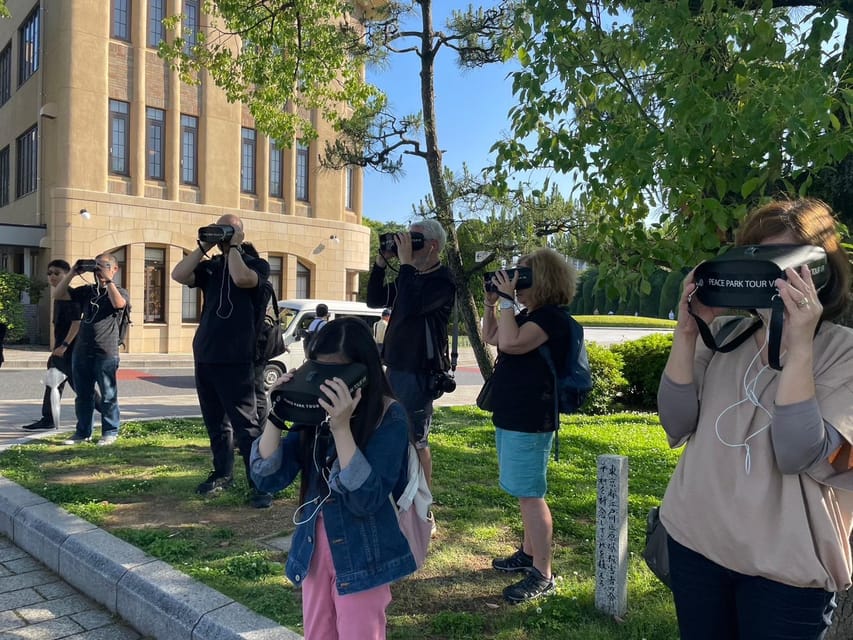
This tour is not designed like a lecture. It is designed like guided work, with prompts and conversation woven into the walk.
During the session, your guide facilitates dialogue along the way. You are encouraged to ask questions, and you get time to react to what you have just seen through VR. That is a big deal for a subject this heavy. It prevents the experience from becoming passive.
At the end, you also talk about what you thought of each other. That sounds unusual, but it fits the emotional goal of the tour. You share reactions with the group, and you hear how other people processed the same testimony-based VR scenes. In a small group of up to 6, that kind of discussion is realistic, not performative.
Guides are consistently praised for being open, friendly, and willing to go beyond facts. For example, Hiroshi is mentioned as having deep historical knowledge while also sharing personal experiences from family and his surrounding community. Even if your guide has a different background, the structure is the same: you get both historical framing and human perspective.
VR and the pace: 80 minutes that do not waste your time
The tour duration is about 80 minutes, which is a practical sweet spot. Long enough to include multiple VR transitions, short enough to avoid fatigue.
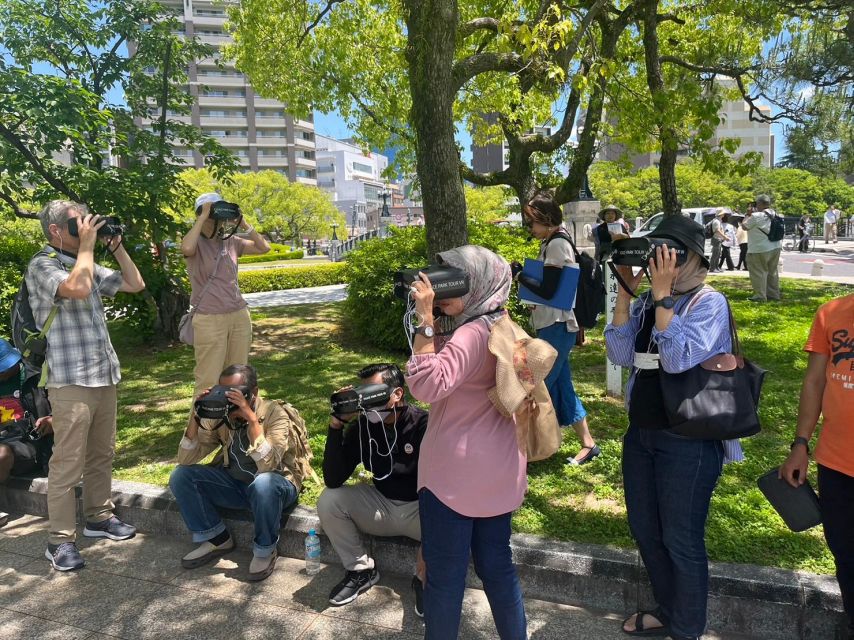
Here is how the timing works in plain terms: you walk between points in the Peace Park while your guide times the VR headset moments. Each stop includes guided sightseeing and walking, then you take in the VR sequence while staying oriented to the physical location around you. That is key. Without the physical anchoring, VR could feel like you are watching something elsewhere.
Because the group is small, you likely will not feel like a herd. You should, however, expect quiet focus, especially during the VR parts. This is not a place for wandering off or chatting loudly while the headset is on.
Weather, rain plans, and how not to get tripped up
The tour runs rain or shine. If it is raining heavily, you still do fieldwork in the Peace Park, then you get only a short VR version, about 5 minutes, at the Rest House afterward. That means your experience may be compressed, but it is not canceled.
So what should you do? Bring a rain layer. Keep your schedule realistic. And if you are traveling with a tight itinerary, give yourself buffer time around the meeting.
Because timing is strict, if your session is delayed, the tour may be shortened. If you want the full set of VR moments, show up early, and keep your connection plans simple.
Price and value: about $32 for VR plus a Hiroshima local guide
The price is $32 per person for an 80-minute guided experience. You get the VR goggles rental fee included, plus an English speaking guide and English audio support.
Is that a bargain? It is not the cheapest way to see Peace Park. But the value is in the combination: a guided walkthrough of major landmarks, plus testimony-based VR, plus a guide who can answer questions while you are standing in the places that make the stories real.
Also, think about opportunity cost. Hiroshima Peace Park is a place where reading alone can feel flat, and where a guided explanation can add meaning without turning it into a performance. In this format, you are paying for interpretation, timing, and the VR equipment rental. For many visitors, that is worth it because it turns one visit into a guided remembrance exercise.
Who should book this VR Peace Park tour, and who might not
This is a strong fit if you want structure. You like tours that move you from one significant spot to the next with a guide asking you questions and giving you context as you go.
You should also consider it if you are curious about how Hiroshima looked before the bombing and how survivors described what happened. The tour is built around testimonies and photos from the time, and the VR scenes are meant to help you picture the transformation.
You might skip it if you prefer fully independent sightseeing, or if you do not want VR headsets involved during sensitive historical material. Also, because it is not private and is shared with other customers, if you need silence or total independence, you may find the group dynamic less comfortable.
Should you book this Hiroshima Peace Park VR tour?
If you care about meaning, not just sightseeing, I think this is a smart booking. The best reason to book is the pairing of physical landmarks with testimony-based VR, guided by someone in Hiroshima who can handle questions and keep the pace human.
Before you decide, check your own tolerance for VR during a difficult subject. If you are okay with headsets and structured stops, you will likely get more out of this than a standard walk through Peace Park. If you want minimal tech and maximum quiet, you might prefer a classic self-guided approach.
Overall, if you can make the start time and you are ready to ask questions as you walk, this is an efficient, thoughtfully guided way to see the park and understand what it holds.
FAQ
Where do I meet the guide for the Hiroshima Peace Park VR tour?
You meet at the Hiroshima City Peace Memorial Park Rest House. A guide waits at the tourist information counter on the 1st floor.
How long is the tour?
The tour lasts about 80 minutes.
How big is the group?
It is a small group limited to 6 participants.
What is included in the price?
The price includes VR goggles rental and an English speaking live guide (with English audio included).
Is transportation or food included?
No. Transportation to the meeting place and food and drinks are not included.
What language is the tour offered in?
The tour is offered in English.
What happens if it rains heavily?
The tour runs rain or shine. If it is raining heavily, you can watch a short version of the VR for about 5 minutes at the Rest House after fieldwork in the Peace Park.
Latest write-ups near Hiroshima
- Hiroshima: Atomic Bomb Dome and Peace Memorial Museum 3 hours★ 5.0 · 20 reviews
- Hiroshima: City and Miyajima Bike and Boat Tour★ 5.0 · 20 reviews
- Hiroshima: Tour of Atomic Bomb Dome & Peace Memorial Museum★ 5.0 · 20 reviews
- Miyajima Guided Tour and Fresh Oyster Farm Tour★ 5.0 · 20 reviews
- Miyajima Highlights: Itsukushima Shrine & Island Nature★ 5.0 · 21 reviews
- Miyajima Highlights: Itsukushima Shrine & Island Nature★ 4.9 · 21 reviews
- Dinner Cruise on HANAIKADA (Raft-Type Boat) with Scenic View of Miyajima★ 5.0 · 21 reviews
- History of Hiroshima Group Walking Tour★ 5.0 · 23 reviews