
Reviewed · PEACE MEMORIALS
Hiroshima: Peace Memorial Park and Atomic Bomb Dome Tour
Hiroshima Peace Memorial Park hits hard because you walk through the places where the world’s most destructive war crime became a daily call for peace. This guided walk starts at the Gates of Peace and then follows the story through landmark after landmark, with a PhD scholar guide like Syed (and other English-speaking guides such as Hussain, Shah, and Khan) keeping the focus on both facts and people.
Two things I really like about this tour: the way it connects big history to specific memorials, including the stories behind the children’s peace symbols, and the practical pacing that lets you actually take it in, ask questions, and process without being rushed. One consideration is that it is a lot of walking on memorial paths, and it is not suitable for wheelchair users or people with mobility impairments.
Key points worth knowing before you go
- A tight 2-hour route that covers major memorial stops plus the Atomic Bomb Dome and the Hypocenter Monument
- Peace-focused storytelling tied to specific sites, including the Cenotaph for A-bomb Victims and the Flame of Peace
- You learn the wider scope, including remembrance for Korean Atomic Bomb Victims at the Korean victims cenotaph
- Children’s Peace Monument context linked to Sadako Sasaki and the thousand paper cranes story
- Iconic landmark viewing with meaning, especially from Aioi Bridge toward the Atomic Bomb Dome UNESCO site
- Guides who stay engaged, with Q and A time and respectful, gentle handling of a heavy topic
A 2-hour loop that turns monuments into a clear story
This is the kind of Hiroshima experience where the difference is not the scenery, it is the order you see things. The tour runs for about 2 hours, so you are not stuck in a half-day schedule. You still get the key outdoors stops at Hiroshima Peace Memorial Park, plus the defining views of the Atomic Bomb Dome.
What makes it work is the guided flow. You start at the Gates of Peace, then move through memorial spaces one by one, each one adding a new layer: tribute, symbolism, children’s memory, international remembrance, and then the landmark you can recognize even if you have never studied Hiroshima before. And because the route is guided, you spend less time guessing what you are looking at and more time understanding why it matters.
I also like that the guides in recent tours have been described as energetic and very willing to answer questions. One guide is noted as currently pursuing a PhD, which fits the feel of the experience: you are not getting a quick talking tour, you are getting a guided explanation with a human voice.
Other Peace Memorial visits:
- Hiroshima Historical Walking Tour – Why A-Bomb was Dropped
★ 4.8 · 893 reviews - Hiroshima: Miyajima Peace Memorial Icons of Peace and Beauty
★ 4.9 · 361 reviews - Hiroshima/Guided Virtual Tour of Peace Park/PEACE PARK TOUR VR
★ 5.0 · 157 reviews
Price and value: $23 for a guided memorial route
At $23 per person for 2 hours, this tour is priced like a smart budget way to get context fast. The value is not just that it includes the Atomic Bomb Dome and multiple memorials. The real value is that a guide helps you connect those places into one coherent understanding, including why Hiroshima mattered as a target and how the city rebuilt itself afterward into a global peace symbol.
Also, it is not a “museum-only” experience. The tour leans on the outdoors memorials you can walk past on your own, but with interpretation you likely would miss alone. If you only have a limited amount of time in Hiroshima, this is a solid way to make those hours count.
Do note the trade-off: there is no food served. So if you are coming straight from another area or you have a long day planned, you will want to plan your snacks and meals around the tour time.
Meeting point at the Italian restaurant side, and how to plan your walk
You meet at the gate of Peace, front side of the Italian restaurant Mario. That matters because the Peace Memorial Park area is easy to navigate once you know where you are starting, and this meeting spot gives you a quick anchor.
Before you go, pack the basics they recommend:
- Comfortable shoes (the biggest must)
- Water
- Sunscreen and a hat
- Camera if you want photos (allowed, but keep it respectful in memorial areas)
One more practical point: the tour operates in all weather conditions, so dress for rain or sun. A few guides have been praised for continuing in rainy weather, which is exactly what you want to hear for an outdoor memorial walk.
Gates of Peace and Prayer Fountain: setting the tone
The tour begins at the Gates of Peace, which is not just a starting point, it is a mood setter. From there, you move to the Prayer Fountain, where the guide helps you understand how this memorial space is meant to be approached. Even before you reach the biggest sights, you are being coached into the “how to look” part.
This early section is useful because it gives you context for what comes next. When you arrive at later monuments, you are not treating them like random statues. You understand them as pieces in a designed space where quiet reflection is part of the experience.
A change of pace from Hiroshima:
- Peaceful Hiroshima & Miyajima UNESCO 1 Day Bus Tour
★ 5.0 · 5,309 reviews - Hiroshima: Hiroshima and Miyajima UNESCO Sites 1-Day Tour
★ 4.9 · 2,330 reviews - Hiroshima / Miyajima Full-day Private Tour with Government Licensed Guide
★ 5.0 · 1,298 reviews - Hiroshima Peace (Heiwa) Walking Tour at World Heritage Sites
★ 5.0 · 872 reviews
Hiroshima Peace Memorial Park: Cenotaph, Flame of Peace, and why it feels different in order
Once you reach Hiroshima Peace Memorial Park, the tour becomes the core of the experience. Here you will spend about 40 minutes in the park area, moving through several key stops.
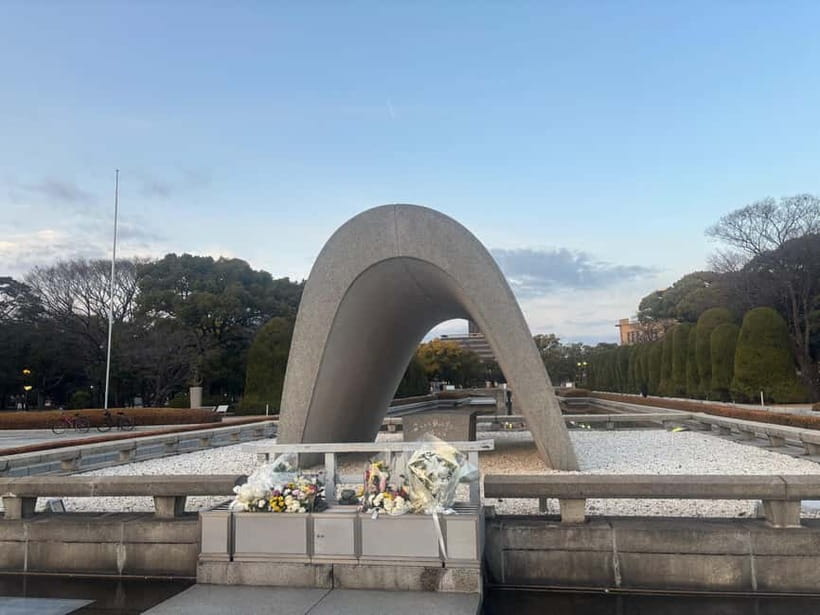
Cenotaph for A-bomb Victims and the Flame of Peace
You will pay tribute at the Cenotaph for A-bomb Victims and then visit the Flame of Peace. These stops are powerful because they translate tragedy into ritual space. The guide’s job is to explain what you are seeing and why these locations are central to how Hiroshima remembers 1945.
A big reason this section is worth paying for a guide is simple: the meaning is not always obvious from a quick glance. The tour helps you connect the memorial design to the message of peace, which is the whole point of the park.
Korean Atomic Bomb Victims Cenotaph: remembrance beyond one story
One stop that I especially appreciate is the Cenotaph for the victims of the atomic bomb in Korea. The tour includes it as a guided stop, which means you are not just focusing on one national narrative.
You also get the sense that this event is remembered in multiple places and in multiple ways, which makes Hiroshima feel less like a single-city history lesson and more like a global human story.
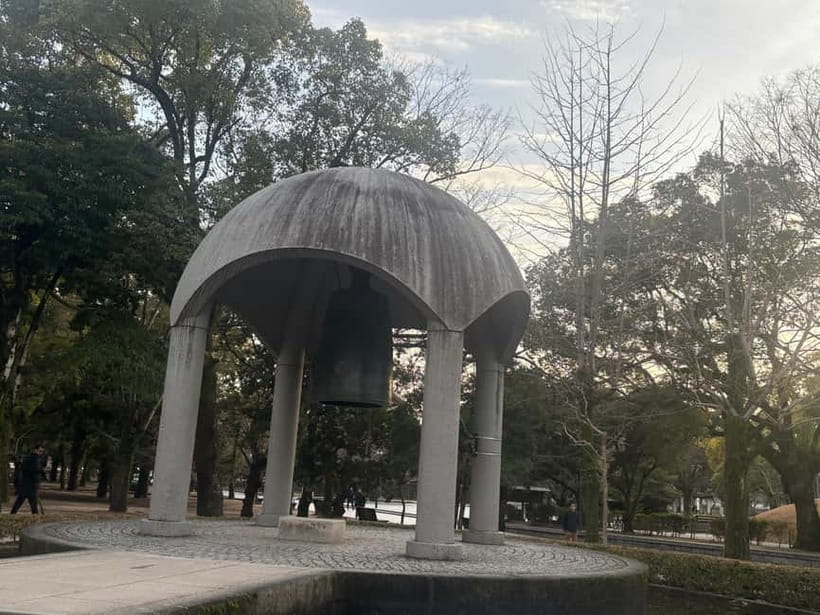
The Peace Bell and the symbol of turning memory into hope
After the main memorial tribute areas, you will visit the Bell of Peace and also the Cenotaph for the Korean victims earlier in the route. You also ring the Peace Bell as a symbol of hope and world peace.
Ringing the bell is the kind of activity that can sound symbolic on paper, but it lands differently when you have already walked through the tribute spaces first. By the time you reach the bell, the sound feels like a practical action, not just a tourist photo moment.
If you prefer quiet experiences, keep your expectations realistic. This is still an interactive cultural moment, but the tour framing is respectful, not performative.
Children’s Peace Monument and Sadako Sasaki’s thousand paper cranes
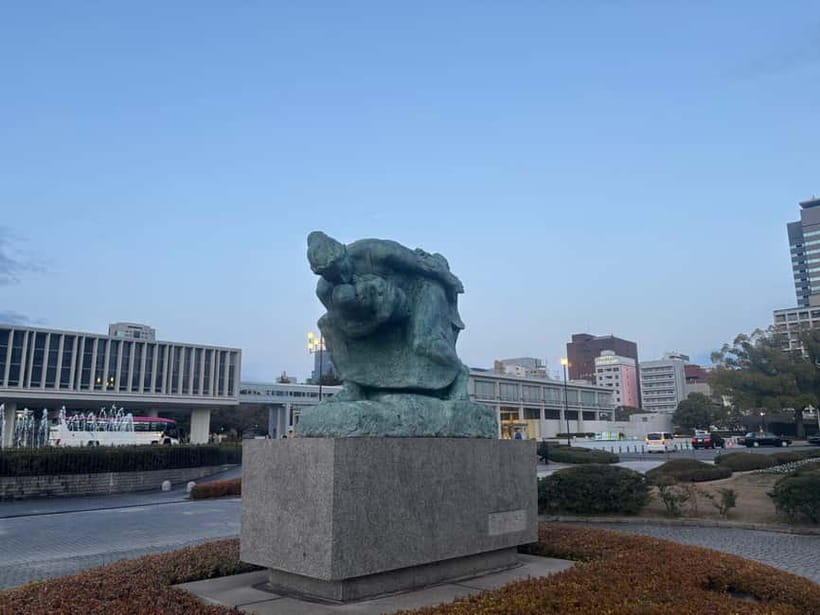
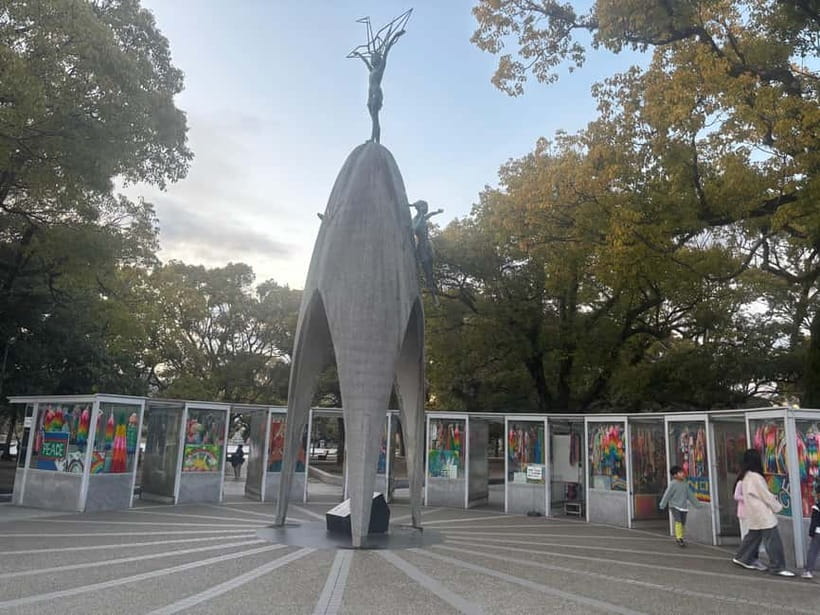
One of the most moving parts of the tour is the Children’s Peace Monument stop. The guide shares the story of Sadako Sasaki and the thousand paper cranes tradition.
This is valuable for two reasons. First, it helps you understand why children’s symbols are central to Hiroshima’s peace message. Second, it gives you a human narrative you can hold onto while you walk between heavier memorial sites.
Even if you already know bits of the Sadako story, I think you will still appreciate the guide’s framing because it connects the children’s symbolism to the broader peace message you are learning across the entire route.
Aioi Bridge and the Atomic Bomb Dome: the view with the explanation attached
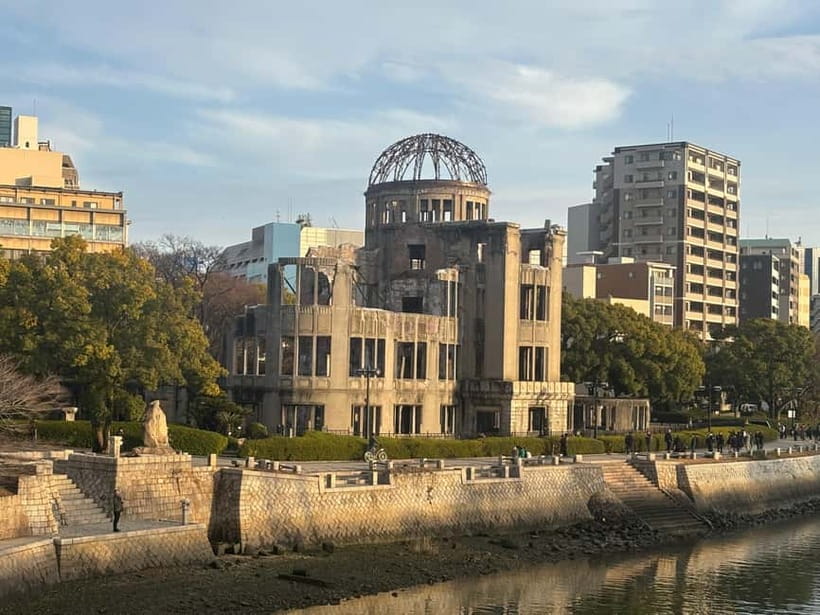
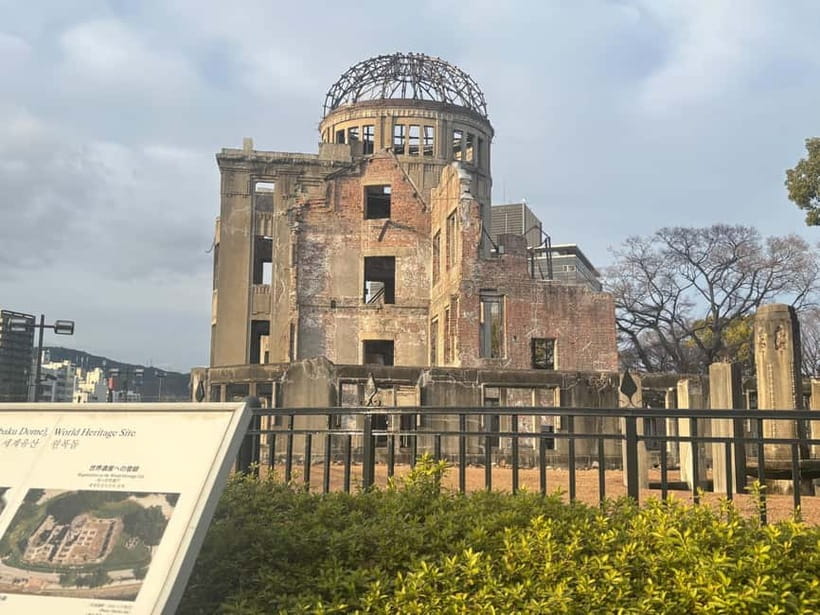
The tour then moves to the Aioi Bridge, followed by the Atomic Bomb Dome, which is listed as a UNESCO World Heritage Site. This is the part where you can easily recognize the landmark from photos, but the value of the tour is what you learn around it.
Right at this stage, the tour includes the explanation of why Hiroshima was chosen as the primary target. Even without you going deep into military history, the guide connects the target choice to the human consequences. It changes the way the dome looks. You stop treating it like an iconic photo and start treating it like a message left in stone.
The guide also shares how Hiroshima rebuilt itself from the ashes into a global peace symbol. That reconstruction thread matters here, because you are not only staring at what was destroyed. You are learning what came next and how a city tried to transform the worst possible event into a commitment to peace.
Hiroshima’s National Peace Memorial Hall, plus Junod and Cousins
In addition to the outdoors memorial stops, the tour includes key memorial hall-related points and memorial names, such as:
- Hiroshima National Peace Memorial Hall
- Dr. Marcel Junod Memorial
- Norman Cousins Memorial
You might wonder what these names add when you are focused on the dome and the big memorials. The answer is perspective. These inclusions help show that Hiroshima’s peace story is also shaped by international witnesses and advocates, not only by local memorial design.
Even if you only catch the essentials at each stop, having the guide point out these memorial links saves you from needing to research them later. It is like getting a map of connections while you still have the sites in front of you.
Finish at the Atomic Bomb Hypocenter Monument: connecting all the pieces
The tour ends at the Hiroshima Atomic Bomb Hypocenter Monument. Ending at the hypocenter is smart because it ties the walk together. You have seen tribute spaces, symbolic elements, and the iconic dome view, and now you finish at the exact point that anchors the story geographically.
This final stage is where the city’s “past to present” message lands. You leave with a clearer sense of how Hiroshima moved forward, and why the peace message is not abstract. It is tied to a specific location and a specific history, then carried into how the city represents remembrance today.
It also helps you avoid the common problem of visiting the Peace Park area and feeling like you saw a bunch of separate monuments. Here, the order and guidance keep it connected.
Guide style that makes the difference, and what you can ask on the spot
A lot of the best feedback highlights the guides themselves, and it shows in the experience you get. Guides like Syed and Hussain are described as:
- engaging, with a pace that does not drag
- open to questions
- gentle and respectful when handling a heavy topic
- helpful with local tips after the tour, including lunch ideas
One tip I would follow: if you have questions about anything you noticed, bring them with you and ask during the walk. Since the tour includes built-in stops for guided time, you have more chances to get answers than you would wandering alone between memorials.
Also, if you are sensitive to heavy subject matter, pay attention to how the guide gives you space. Some guides have been praised for allowing visitors to process in their own time, which matters when the topic is so emotionally demanding.
Who should book this tour, and who should think twice
This tour is a great fit if you want:
- the main Peace Park sights in a tight 2-hour plan
- guided context for the Atomic Bomb Dome, Peace Bell, Cenotaph, and Flame of Peace
- a guided explanation of why Hiroshima was targeted
- help understanding the city’s post-war rebuilding into a peace symbol
- the chance to ask questions and get a clear sense of what you are seeing
It is not a good fit if:
- you have mobility challenges or rely on wheelchair access (the tour is not suitable for wheelchair users)
- you cannot manage significant walking on memorial paths
- you are counting on the tour for meals (there is no food served)
Should you book this Hiroshima Peace Memorial Park and Atomic Bomb Dome tour?
Yes, I would book it if you want your limited time in Hiroshima to turn into understanding, not just photos. For $23 and 2 hours, you get a structured walk through the places that define Hiroshima’s peace message, plus guided stops that cover tribute, symbolism, children’s memory, and the key landmark view from Aioi Bridge to the Atomic Bomb Dome.
If you are ready to do some walking and you want the meaning explained, this is one of the best ways to make your Peace Park visit feel grounded and coherent. Just plan your shoes, bring water, and treat the memorial spaces as they are meant to be treated: quiet, reflective, and respectful.
FAQ
How long is the Hiroshima Peace Memorial Park and Atomic Bomb Dome tour?
The tour lasts about 2 hours.
How much does it cost?
The price is $23 per person.
Where do I meet the guide?
You meet at the gate of Peace, front side of the Italian restaurant Mario.
What is included in the tour?
Included are the live guided tour and guided visits to key sites and memorials such as the Atomic Bomb Dome, Peace Bell, Prayer Fountain, Flame of Peace, Cenotaph for A-bomb Victims, the Children’s Peace Monument, the Korean Atomic Bomb Victims Cenotaph, and additional memorial stops including the Dr. Marcel Junod Memorial and Norman Cousins Memorial, plus the Hiroshima National Peace Memorial Hall. The tour ends at the Hiroshima Atomic Bomb Hypocenter Monument.
Are meals included?
No. No food is served on this tour.
What languages are available for the guide?
The live guide language options include English, Urdu, and Hindi.
Is the tour wheelchair accessible?
No. It is not suitable for people with mobility impairments and not suitable for wheelchair users.
Latest write-ups near Hiroshima
- An Amazing set of Cultural experience: Kimono, Tea Ceremony and Calligraphy★ 5.0 · 69 reviews
- Hiroshima: Private Walking Tour with a Local★ 4.6 · 70 reviews
- Hiroshima: Miyajima Island Half-Day Tour with Guide★ 4.9 · 71 reviews
- Kimono and Tea Ceremony in Miyajima★ 5.0 · 73 reviews
- Hiroshima and Miyajima Private Guided Tour★ 4.5 · 75 reviews
- HIROSHIMA ORIZURU TOWER Admission Ticket★ 4.6 · 75 reviews
- Hiroshima & Miyajima: UNESCO A-Bomb Dome & Itsukushima★ 5.0 · 76 reviews
- Hiroshima to Miyajima: Private Custom Tour with Ferry Ride★ 4.9 · 77 reviews