Reviewed · KYOTO TOURS
Kyoto Afternoon Tour from Kyoto or Osaka
If you want Kyoto’s highlights without spending your afternoon in transit and ticket lines, this guided loop is a smart way to do it. I like how it bundles three of the city’s most recognizable sites, from Fushimi Inari Taisha’s red torii gates to Kiyomizu-dera’s panoramic terrace views. I also like that you get an English-speaking guide who keeps things moving in a clear, friendly way, so you actually understand what you are looking at.
One thing to consider is the pacing. Time at each stop is fixed, and if you reach Kiyomizu-dera near dusk, the famous viewpoints can shift from postcard-light to dark fast. That can matter if you were hoping for late-day color or a wide-open view of Kyoto’s cityscape.
Key things I’d highlight before you go
- A tight trio of must-sees in one afternoon: Fushimi Inari, Sanjusangendo, and Kiyomizu-dera
- Entrance fees included, so you are not juggling tickets and money while you are on the move
- Sanjusangendo’s 1,001 Kannon statues in a temple built in the 13th century
- Kiyomizu-dera photo time plus shopping streets, with the terrace view as the payoff
- Guides praised for humor and clarity, with named examples like Momo, Yoshi, Donna-San, Jessie, and Amy
- Fixed stop times, which can feel rushed if you want to linger
Why this Kyoto afternoon route works (even if you are short on time)
Kyoto is famous, but it can also feel like you are always late to something. This tour is built for people who want the big religious landmarks plus context, without turning the afternoon into a logistics project. You meet up near Kyoto Station in the afternoon, then ride to three sites and get a guide to explain what matters as you go.
What makes it especially good value is that entrance fees are included and you are not paying extra for the guide interpreter and transportation. At $82.58 per person for a half-to-lean-full afternoon, you are basically paying for convenience, timing, and interpretation, not just sightseeing. If you are comfortable navigating on your own, it might feel less essential. If you want someone else to handle the puzzle, it makes sense quickly.
The group size is also capped at a maximum of 40. That is not tiny, but it is small enough that you usually get organization rather than a chaotic stampede.
Also on the shortlist for Kyoto:
- PERFECT KYOTO 1-Day Bus Tour
★ 5.0 · 13,518 reviews - Kyoto: Fushimi Inari, Kinkakuji, Bamboo Grove 1 Day Bus Tour
★ 4.8 · 4,316 reviews - Kyoto: Tea Ceremony in a Traditional Tea House in Kiyomizu
★ 4.9 · 3,519 reviews
Meeting point, timing, and how the schedule feels in real life
You start by meeting your guide at the Avanti Tour Desk near Kyoto Station. That matters because Kyoto Station is huge, and getting turned around there is the easiest way to lose the first minutes. If you are arriving by train, give yourself buffer time and plan to be at the desk early rather than exactly on time.
The tour runs about 4 hours 40 minutes, with the guided portion described around 5 hours. Stop times are set. Fushimi Inari is 30 minutes, Sanjusangendo is 30 minutes, and Kiyomizu-dera is 1 hour 10 minutes. This gives you enough to see the signature moments, but not enough to do everything slowly or shop deeply at each location.
A real-world warning from people who did this tour: sometimes Kiyomizu-dera lines up with dusk. One review mentioned arriving around 4:30 pm and noticing the view shifting as it got dark, so seasonal foliage was less visible than expected. You still see the temple, but if your dream is golden-hour city views or autumn color, plan with the possibility of late-afternoon light in mind.
Stop 1: Fushimi Inari Taisha and the torii-gate photo moment
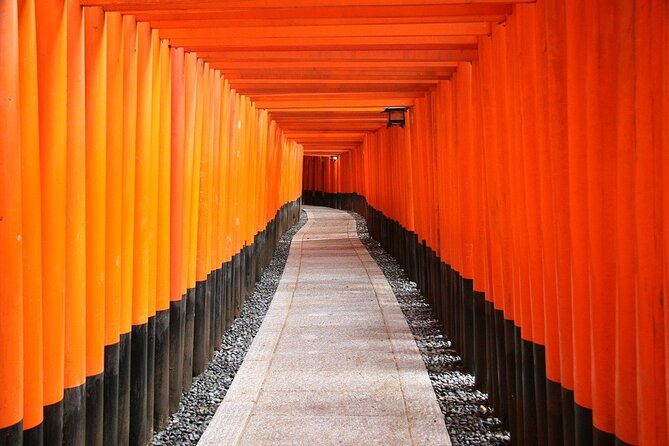
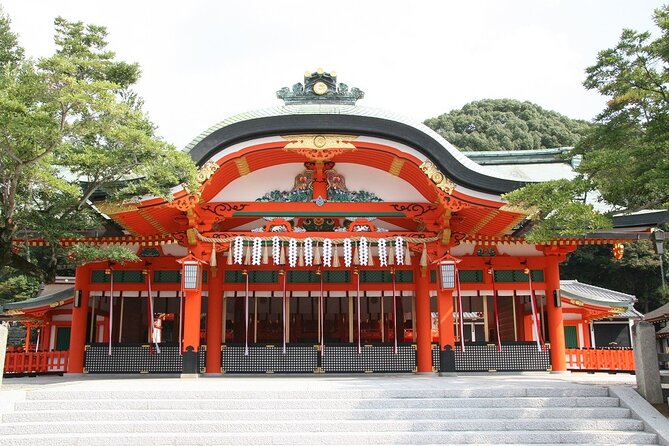
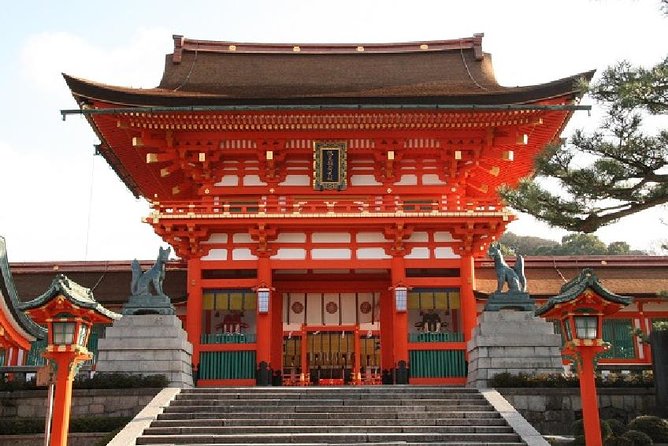
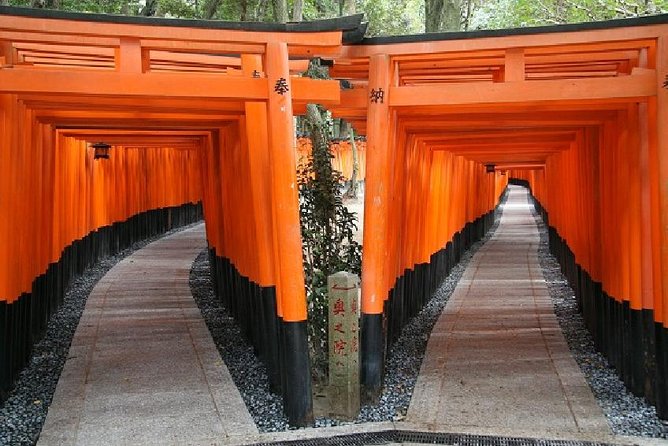
Fushimi Inari Taisha is the head shrine for Inari, the god associated with foxes and rice. The headline here is the red Senbon Torii gates, which snake through the area in a way that looks almost unreal in photos. In 30 minutes, you can at least get the classic views and soak up the energy, even if you do not walk the longest stretches of the path.
Two practical notes. First, there is no entrance fee on this stop. Second, the tour includes walking from the parking lot to the shrine area, about 15 minutes one-way. That means 30 minutes on the clock may feel like less time for exploring if you are slowed by crowds or stairs.
What you should aim for in that time is simple: get your eye line down the torii corridor, then decide how far you want to go. Crowds can make every extra minute feel like a shuffle, so I prefer focusing on the most iconic angles rather than trying to out-walk other people.
Stop 2: Sanjusangendo Temple, 1,001 statues, and why this stop hits
Sanjusangendo Temple is the emotional center of the route for a lot of people. You walk into a hall known for being Japan’s longest wooden building and, more importantly, it houses 1,001 life-size statues of Kannon, the Bodhisattva of compassion. It is a very specific kind of impressive. It is not just old architecture, it is a wall of figures that makes you slow down naturally.
This stop is 30 minutes and includes admission. In that window, you can usually see the hall layout and get a feel for the scale without feeling like you are rushing in circles. And yes, it is a temple where the details are part of the spectacle, so having your guide explain what Kannon represents and how the statues are arranged can make the experience feel more grounded than simply taking photos.
The “long wooden structure” detail is not trivia. It is part of the mood. The building length and the repetition of statues create a rhythm that photographs don’t always capture well, so being there in person is the point.
A change of pace from Kyoto:
- Kyoto Geisha Walking Tour: Gion District & Hidden Gems
★ 4.7 · 3,273 reviews - Kyoto: Tea Ceremony Ju-An at Jotokuji Temple
★ 4.9 · 3,207 reviews - Kyoto: Gion Magical Night Walking Tour with Geisha Trivia
★ 4.9 · 2,393 reviews - Kyoto: 45-Minute Tea Ceremony Lesson Experience
★ 4.3 · 2,378 reviews
Stop 3: Kiyomizu-dera viewpoints, pottery streets, and the climb factor
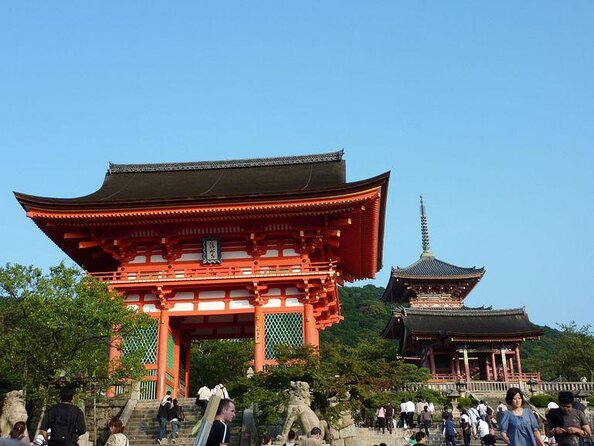
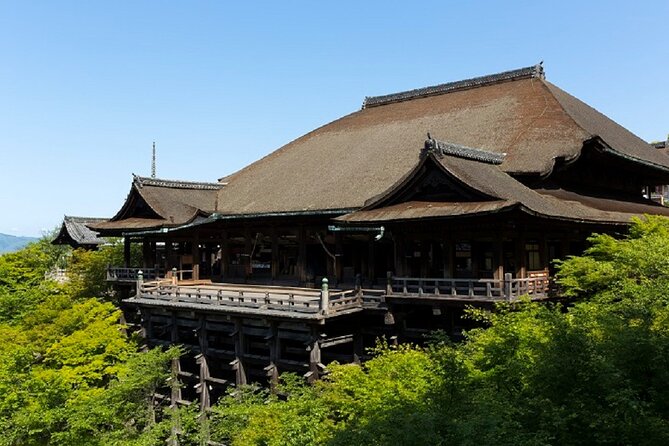
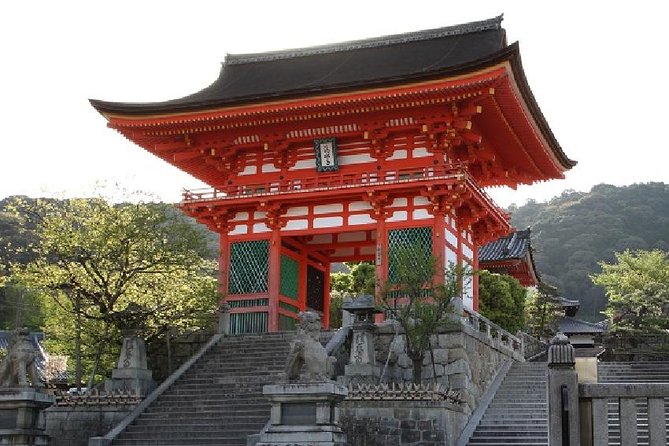
Kiyomizu-dera, or Kiyomizu-dera Temple, is the stop that most people remember. It is a UNESCO World Heritage site with a big terrace and multiple walkways, and it is famous for sweeping views over Kyoto.
Before you even get to the main vantage points, you pass through the approach streets lined with pottery shops. This is one of those Kyoto experiences where browsing is easy to fit in because the shopping lane is part of the way to the temple, not an optional detour. If you want a small ceramic souvenir, this is a practical place to buy, because you will have people watching and street atmosphere right on the route.
Then comes the physical reality check: Kiyomizu-dera is built for temple views, not gentle strolls. One review noted the climb is strenuous, especially on a hot sunny day. Even if you are fit, factor in stairs and uphill paths. Wear supportive shoes. If you have knee issues, consider taking breaks and moving at your own pace rather than matching someone else’s urgency.
How long do you get here? 1 hour 10 minutes. That sounds long enough until you hit crowds, take pictures, and stop to look at the terrace view from more than one angle. Still, it is the best time slot on the itinerary, and it is where the guide’s explanation can help you understand what you are seeing beyond the basics.
Important detail: the experience does not enter the Shin-en garden. If you were specifically hoping to tour that garden section, you should know this tour focuses on the main temple experience and views rather than that particular garden.
The guide: why good narration changes a temple tour
The guides on this tour seem to be a huge part of the satisfaction. Names that came up included Momo, Yoshi, Donna-San, Jessie, and Amy, and the common thread was friendly delivery plus humor. People also praised how guides kept groups organized while explaining what the temples mean and how Japanese traditions connect to what you are walking through.
In practice, this matters most at Sanjusangendo and Kiyomizu-dera, where the experience can be overwhelming if you only look at it as a backdrop for photos. A good guide helps you notice the right details. For example, understanding what Kannon represents makes the sheer number of statues feel intentional rather than random.
Guides also help with flow. When sites are crowded, you cannot control the crowd. But you can control how you get through it, what you prioritize, and when you pause.
Value for money: what you are paying for at $82.58
At $82.58 per person, you are not just buying admission to a couple attractions. You are paying for:
- a licensed English guide interpreter
- transportation between stops
- entrance fees included across the tour
If you plan to visit all three sites in one afternoon on your own, you would likely spend time figuring out routing, dealing with ticket lines, and coordinating transit. And with Kyoto crowds, the minutes you save can be the difference between seeing the famous photo angle and getting stuck staring at shoulders.
That said, if you are the type who wants to wander freely and take as long as you want at each stop, this is still a guided schedule with fixed time windows. It is best as a highlights tour, not a slow temple day.
Crowd reality and photo strategy (so you do not feel cheated)
Kyoto’s most famous sites are busy, especially in late afternoon. This tour is efficient, but it cannot erase crowds, and a couple reviews specifically pointed out that some places were packed.
My photo strategy for a schedule like this is:
- At Fushimi Inari, prioritize one iconic torii-gate angle and one shorter stroll. Do not chase the deepest path unless you are sure you have time.
- At Sanjusangendo, go in with a clear plan. Shoot the hall context first, then move to whatever focal points your guide points out.
- At Kiyomizu-dera, start early in the time block. If you wait until later, you might get caught behind groups moving the same direction.
Also bring a backup mindset for lighting. If you arrive at Kiyomizu-dera near dusk, you might get a beautiful atmospheric look, but the views may not be as crisp. That is not a dealbreaker, but it is worth aligning expectations.
Who this tour suits best
This is a strong fit if:
- you have limited time and want major Kyoto landmarks in one afternoon
- you want an English guide to explain what you are seeing
- you prefer not to figure out transport and admissions yourself
- you value efficiency over lingering
It may be less ideal if:
- you hate fixed time limits and want to stay as long as you want at each site
- you have mobility limits that make climbs hard, since Kiyomizu-dera involves a strenuous approach for some people
- you want every optional garden section, since the Shin-en garden is not included
Small practical tips that make the afternoon smoother
- Wear shoes that handle stairs and uneven temple paths. One review flagged the Kiyomizu-dera climb as strenuous.
- Bring water and a snack plan. Food and drinks are not included.
- Keep your expectations realistic about shopping. You will have time for browsing, but not for a full ceramics shopping spree.
- If you are prone to getting turned around, arrive early at the Avanti desk near Kyoto Station. Kyoto Station is easy to misread.
Should you book this Kyoto afternoon tour?
Book it if you want a simple, high-impact way to see Kyoto’s three headline religious sites with an English guide and included admissions, without turning your afternoon into a navigation challenge. The value is strongest if you like structure, want context as you walk, and would rather spend your energy looking at temples than planning transit.
Skip or consider another style of tour if you want a slow, flexible pace or you are traveling with mobility concerns that make the Kiyomizu-dera approach difficult. If you do book, plan for crowds and possible dusk timing, and you will get the best version of what this tour is designed to deliver: Kyoto highlights, organized, explained, and packed into one memorable afternoon.
FAQ
How long is the Kyoto afternoon tour?
It runs about 4 hours 40 minutes, with the guided experience around 5 hours.
Where do I meet the guide?
You meet your guide at the Avanti Tour Desk near Kyoto Station in the afternoon.
Are entrance fees included?
Yes. The tour includes entrance fees for the stops.
What stops are included, and how much time do you spend at each?
You visit Fushimi Inari Taisha (about 30 minutes), Sanjusangendo Temple (about 30 minutes), and Kiyomizu-dera (about 1 hour 10 minutes). The order can vary based on conditions.
Does the tour include the Shin-en garden?
No. The tour will not enter the Shin-en garden.
Is there hotel pickup or drop-off?
No. Hotel pickup and drop-off are not included.
Can I get a refund if I cancel?
Yes. You can cancel for a full refund up to 24 hours in advance of the experience start time.
Latest write-ups near Kyoto
- Kyoto: Nishiki Market Tour with a Local Foodie & Tastings★ 4.5 · 67 reviews
- Kyoto Kimono Rental mimosa |Kimono/Yukata Rental Couple Plan★ 4.8 · 67 reviews
- Kyoto: Traditional Kimono Fabric Handicrafts Workshop★ 5.0 · 67 reviews
- Kyoto Tea Ceremony and Samurai Photo Session★ 5.0 · 70 reviews
- Kyoto: Replica food making experience★ 4.8 · 70 reviews
- Kyoto: Kinkakuji, Golden Pavilion Guided Tour★ 4.7 · 71 reviews
- Private departure transfer from Kyoto city to Kansai International airport★ 5.0 · 72 reviews
- Uji: Green Tea Tour with Byodoin and Koshoji Temple Visits★ 4.8 · 72 reviews
Kyoto Tours, compared.
Fushimi Inari, Kinkakuji, Bamboo Grove 1 Day Bus Tour
Read our review →
Tea Ceremony in a Traditional Tea House in Kiyomizu
Read our review →
Kyoto Geisha Walking Tour: Gion District & Hidden Gems
Read our review →
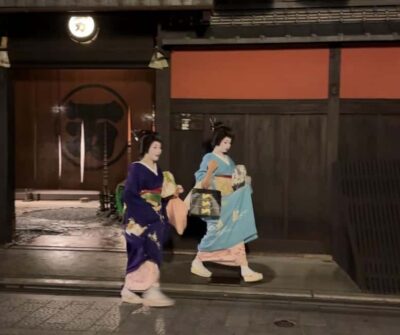
Gion Magical Night Walking Tour with Geisha Trivia
Read our review →