
Reviewed · ARASHIYAMA & BAMBOO TOURS
Kyoto: Descending Arashiyama (Private)
Kyoto’s Arashiyama can be a little chaotic if you wing it. This private-style route keeps you moving in the right order, with a guide to get you oriented fast and to point out sights that are easy to miss when you’re trying to read signs. You get the famous bamboo scenery, plus quieter temple stops that feel more personal than the usual one-and-done photo run.
I especially like how the day mixes big-name icons with special details like the 1,200 stone Buddhas at Otagi Nenbutsu-ji and the memory stones at Adashino Nembetsu-ji. You also get a satisfying break mid-route with tea and sweets at Ayuchaya Hiranoya, an Edo-period style cafe, so the day doesn’t turn into nonstop walking and photos.
One thing to plan for: admission tickets are not included, and you’ll need extra cash (5,000 yen) on hand, plus lunch is on you with a guideline not to exceed 1,500 yen per person. It’s also a moderate walking day, and strollers can be used between sites but not inside them.
Key points before you go
- Small group cap of 7 means you won’t feel lost in a crowd
- Guided route through Arashiyama helps you move smart and see more without map stress
- Otagi Nenbutsu-ji’s 1,200 stone Buddhas turns a temple visit into a memorable walk
- Adashino’s 8,000+ memorial stones adds a moving, offbeat stop to the bamboo day
- Tea and sweets at Ayuchaya Hiranoya gives you an Edo-period pause
- Sagano Bamboo Grove is included, but the tour also slows down for the quieter side of Arashiyama
A private, guided descent through Arashiyama that saves time and energy
Arashiyama is one of those Kyoto areas where the scenery is famous for a reason, but the logistics can get annoying. You’ll find crowds at the bamboo, lines for the usual spots, and a lot of people trying to do the same checklist. The best part of this experience is that you don’t have to figure out the order yourself.
You start at Togetsukyo Bridge, then work your way through temples and gardens down toward the bamboo corridor. Because it’s a small group (and private, meaning only your group participates), you’re not constantly waiting for a giant busload to catch up. The pace works well for a full day that still feels human.
Also, the guide matters here. A good guide does two things at once: you get where you’re going without fuss, and you understand what you’re looking at once you arrive. In reviews, a guide named Andrew is singled out for being strong on garden storytelling, connecting what you see to how it was made and why it matters. Even if you’re not into garden theory, that kind of explanation turns the scenery from background noise into something you actually notice.
More of Arashiyama:
- Kyoto: Fushimi Inari, Kinkakuji, Bamboo Grove 1 Day Bus Tour
★ 4.8 · 4,316 reviews - Osaka/Kyoto:Kinkakuji,Arashiyama,FushimiInariShrine,NaraPark
★ 4.1 · 1,596 reviews - Kyoto/Osaka: Nara, Fushimi Inari Taisha, Arashiyama Bus Tour
★ 4.7 · 1,275 reviews
Where you meet at 9:30, and why the timing feels right
You meet at Randen Arashiyama Station Center, right by 20-2 Tsukurimichi-cho in Sagano-Arashiyama. It’s a convenient public-transport area, and that matters because getting to Arashiyama can be easier than getting back out if you choose the wrong timing.
The start time is 9:30 am, and that’s a big deal. By morning, the light is better for photos, and you’re more likely to hit the less-crowded temple stops before the bamboo peak. The tour runs about 7.5 hours, so you’re not stuck on a two-stop whirlwind, but you also aren’t signing up for an all-day ordeal where your feet start filing complaints.
The tour ends back at the meeting point. That loop is convenient, because you don’t have to plan a separate ride or a second train strategy.
Togetsukyo Bridge: your iconic Kyoto photo, but with a real start
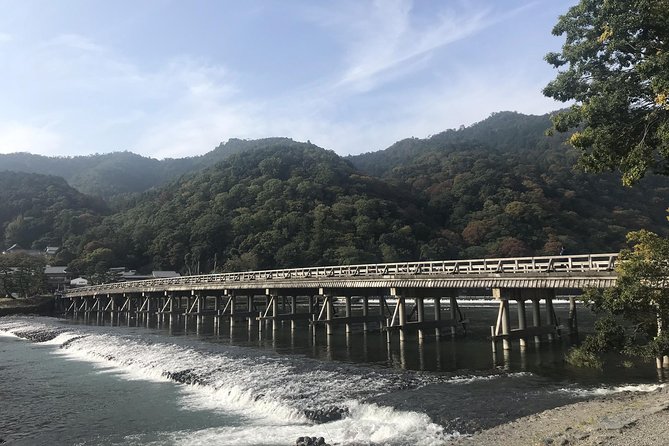
Most people think of Arashiyama as bamboo first. This route opens with Togetsukyo Bridge, one of Kyoto’s most recognizable views. Standing here gives you context. You can see the river setting and the shape of the area before you start climbing and descending through temples and gardens.
You’ll have a short stop (about 20 minutes), which is just enough to get the classic shots without turning this into a long wait. If you’re sensitive to crowds, the morning timing helps. If you’re not, it’s still a great way to begin because it anchors your sense of place.
Practical tip: wear shoes you trust. Arashiyama walking adds up, and the day includes temple grounds and garden paths that are not designed for slick soles.
Tenryu-ji Temple and its Zen garden: calm you can actually see
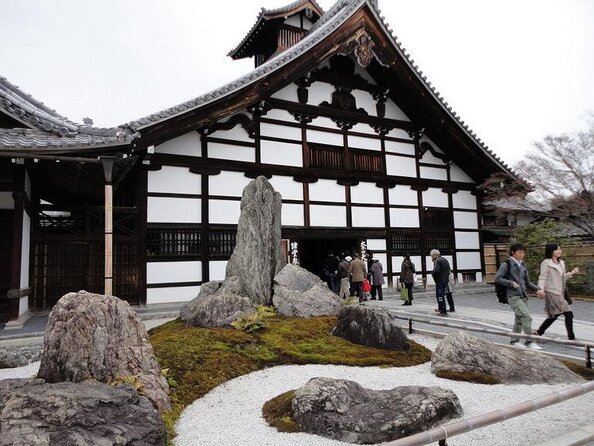
Next comes Tenryu-ji Temple, known as one of the first Zen temples in Japan and famous for its garden. This is where the tour’s guided angle really earns its keep.
A Zen garden can look like “nice rocks and plants” if you don’t have a map for what you’re seeing. With a guide, you’re more likely to notice how the garden is composed to be read from specific vantage points, how the water and stone arrangement frames views, and how seasonal plantings shape the mood. Even if you don’t catch every detail, the atmosphere changes. Tenryu-ji is a reset button.
Plan for about an hour here. Admission is not included in the base price, so you’ll want your 5,000 yen cash ready for temple/garden fees.
A change of pace from Kyoto:
- PERFECT KYOTO 1-Day Bus Tour
★ 5.0 · 13,518 reviews - Kyoto: Tea Ceremony in a Traditional Tea House in Kiyomizu
★ 4.9 · 3,519 reviews - Kyoto Geisha Walking Tour: Gion District & Hidden Gems
★ 4.7 · 3,273 reviews - Kyoto: Tea Ceremony Ju-An at Jotokuji Temple
★ 4.9 · 3,207 reviews
Otagi Nenbutsu-ji: 1,200 stone Buddhas in a walk that sticks with you
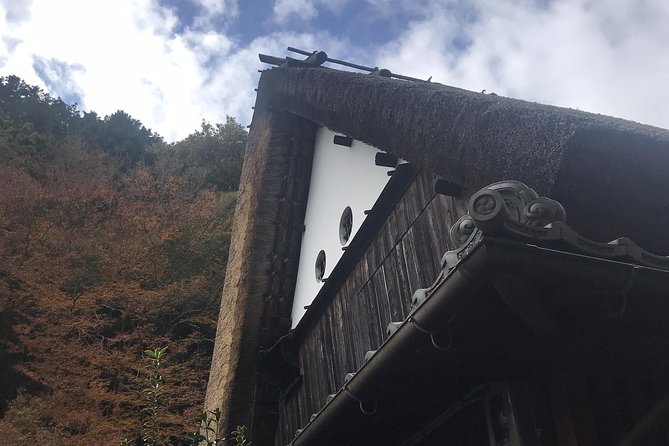
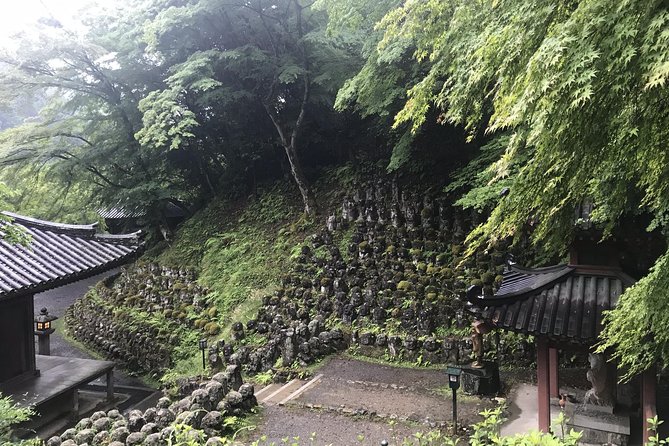
If you remember one thing from this Arashiyama day, make it Otagi Nenbutsu-ji Temple. The tour spends about an hour here, and it’s easy to see why. The grounds are famous for 1,200 stone Buddhas, each statue sitting with its own character.
The guide helps you slow down. Instead of rushing through for photos, you get a sense of what you’re looking at and how the place developed through centuries, tied to history that reaches back to the Heian period. You spend real time with the statues, which is important, because this stop works when you let it. It’s not just a collection. It’s a scene.
Possible drawback: this is a lot of visual information in one spot. If you dislike photo-heavy walks or prefer very “one scene at a time” tourism, you might need a minute to pace yourself. But even then, the guided pacing usually keeps it from feeling overwhelming.
Ayuchaya Hiranoya: a tea and sweets pause with Edo-period flavor
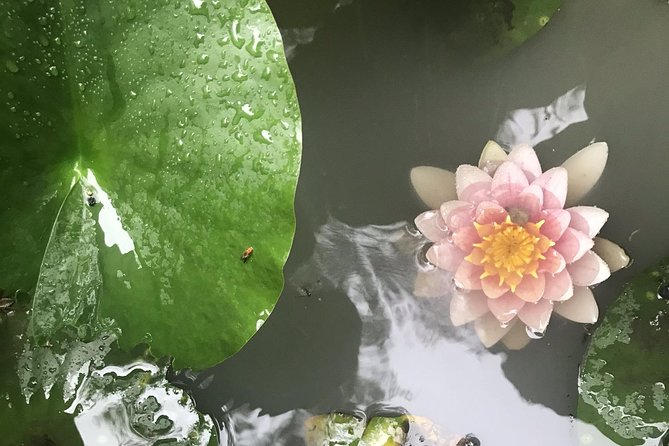
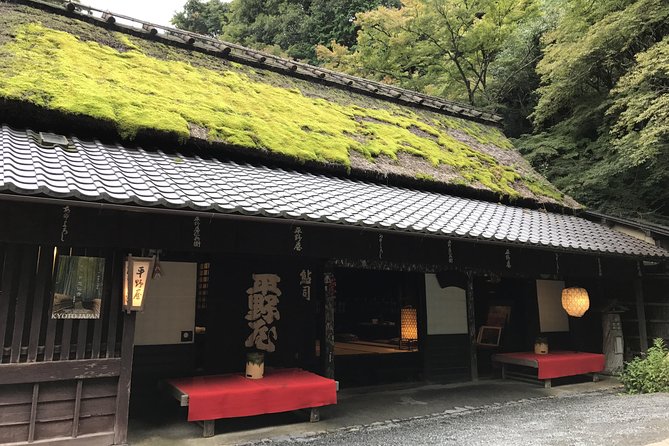
After temple intensity, you’ll appreciate the change of tempo at Ayuchaya Hiranoya, where you enjoy tea and sweets. This is described as having origins in the Edo period, and that shows up in the style and the overall vibe. It’s a good moment to stop, refuel, and let the feet rest.
The stop is about an hour, which is the sweet spot. Long enough to actually eat and sip comfortably, short enough that you’re not losing the momentum of the day. Also, it’s not just a sugary break. The guide’s context makes it feel like a real cultural stop rather than a random cafe detour.
Heads up: food costs related to lunch are not included, but this tea and sweets stop is part of the route.
Adashino Nembutsu-ji: over 8,000 memorial stones and a gentle bamboo pocket
Then comes Adashino Nembetsu-ji Temple, another stop that many people skip because it’s not the first thing that comes to mind when you think of Arashiyama. That’s exactly why it’s so valuable.
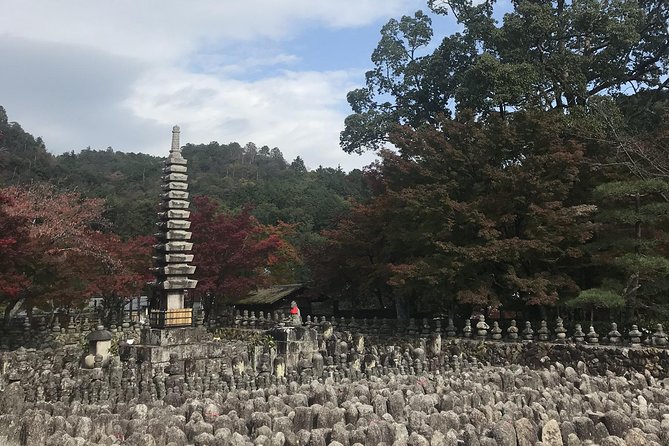
Here you see more than 8,000 memorial stones, gathered from the surrounding mountains and placed on-site. It’s a somber concept, but the atmosphere can feel surprisingly peaceful, partly because the site includes a small bamboo grove that breaks up the stone with living texture.
The tour gives you about an hour. That’s enough time to absorb the scale and let the guide explain what memorial stones mean in this setting, and how the landscape supports the purpose of the place.
If you only want light and funny tourism, this might be emotionally heavier than you expect. If you’re open to more than postcard views, this is one of the most memorable parts of the day.
Gio-ji Temple: moss garden, bamboo, and the story of two ex-geisha
Next is Gio-ji Temple, where you walk through a moss garden surrounded by bamboo. The details here are interesting: it was once a nunnery founded by two former geisha.
That backstory changes how you experience the place. You’re not just strolling through greenery. You’re walking inside a garden shaped by people with a specific purpose and a specific community history. The moss and bamboo combination makes the area feel enclosed in the best way.
Expect about 30 minutes here. It’s a shorter stop, but it works because it’s a visual reset after Adashino. You’ll likely enjoy Gio-ji most if you like quiet, slow viewing rather than nonstop moving.
Okochi Sanso Garden: best views, big rewards for the effort
As you continue, the route includes Okochi Sanso Garden, the estate associated with a well known silent film actor. This is the stop where Arashiyama’s scenery starts to open up. You get sprawling garden grounds, and the views are described as some of the best in all of Arashiyama.
Spending about an hour here makes a difference. A short visit can feel like you rushed past the viewpoint. With time, you can linger, find the best angles, and understand how the garden layout frames the valley and surrounding hills.
The guide will likely help you connect what you’re seeing back to garden design choices. Even if you just take that advice and use it to choose where to stand and when to look, you come away with a far better experience than a quick photo-and-go.
Sagano Bamboo Grove: seeing the main attraction without losing your mind
Finally, you reach the Bamboo Forest Trail in Sagano, often called the bamboo grove. This stop is about 30 minutes, which is a smart time window. You get the famous effect, the “walk through the forest” feeling, and the photo opportunities without spending hours in a crowded bottleneck.
Here’s the key: because the tour has other stops before and after, the day doesn’t revolve around one congested corridor. You’re more rested when you arrive at the bamboo, and you’re more mentally ready to appreciate it as an atmosphere rather than only as a picture.
If you’re traveling in peak bamboo season (you probably are, because that’s when everyone wants to come), this is the stop that tends to attract the most people. Managing that with a guided schedule is one of the main reasons this tour feels smoother than free-form sightseeing.
Price and value: what $690 buys for a group of up to 4
The price is $690 per group, up to four people. That’s not cheap at first glance, but it’s also not the kind of cost you’re paying for “a driver and a checklist.”
You’re paying for:
- a professional guide service
- a small group size (maximum of 7)
- a focused, multi-stop route that hits both famous and less crowded temple and garden sites
- time-saving navigation, so you spend your day seeing instead of figuring out directions
The value gets better if you’re the type of person who hates wasting time. Arashiyama attractions are spread out, and wandering without a plan often means you backtrack or miss a key site because it’s harder to reach than the photos make it look.
One more practical note: admission tickets are not included, and you’ll need 5,000 yen cash per guest for those fees. Lunch isn’t included either, and the guideline is that lunch should not exceed 1,500 yen per guest. In other words, the base price covers the guide and route, but you still have real on-site costs.
What to bring, how much walking, and stroller reality
This experience calls for moderate physical fitness. That’s travel-speak for expect walking over uneven or temple-ground surfaces, plus stairs and garden paths in places. It’s not described as extreme, but it’s definitely not “sit and cruise.”
Strollers are available for you to use during the between-site walking, but they will not be allowed inside the sites themselves. You can store strollers at the reception desk of each site. If you’re bringing a stroller, I’d treat it like an operational detail, not a guaranteed one-site convenience.
Also bring cash, because the tour requires extra cash for admission tickets. And bring a weather-ready mindset. The experience requires good weather, and if it’s canceled due to poor weather, you’ll be offered a different date or a full refund.
Should you book this Kyoto Arashiyama private tour?
I’d book it if you want Arashiyama that feels like a guided day, not a self-directed scavenger hunt. The strongest case is the mix of sights: the iconic start at Togetsukyo Bridge, the Zen garden at Tenryu-ji, the 1,200 stone Buddhas at Otagi Nenbutsu-ji, the tea stop, the memorial-stone site at Adashino, and the moss garden at Gio-ji, then the viewpoints at Okochi Sanso before finishing at Sagano bamboo.
This is also a great choice if you care about context. A guide who tells you what you’re looking at, especially around gardens and design, makes the day feel richer without turning it into a lecture.
I would hesitate if:
- you want a purely casual walk with minimal cultural stops
- you strongly dislike paying extra on-site fees and carrying cash
- you’re hoping for a totally stroller-friendly experience, since sites restrict strollers indoors
If you’re aiming for a smooth, well-paced Arashiyama day that’s not stuck in a one-lane bamboo traffic jam, this is a very solid option.
FAQ
How long is the Kyoto Arashiyama private tour?
It runs for about 7 hours 30 minutes.
Where is the meeting point, and when does it start?
You meet at Randen Arashiyama Station Center, 20-2 Tsukurimichi-cho (right side), and the tour starts at 9:30 am.
Is the tour private, and what is the group size?
It’s a private tour/activity, meaning only your group participates, and it’s small-group sized with a maximum of 7 travelers.
Are admission tickets included in the price?
No. Each guest must bring an additional 5,000 yen in cash for admission tickets.
What about lunch?
Lunch is not included. The note says lunch cost should not exceed 1,500 yen per guest.
Is the walking level manageable for most people?
It’s listed as requiring moderate physical fitness.
Can strollers be used during the tour?
Strollers are available for use as you walk between sites, but they are not allowed inside the sites themselves. You can store strollers at the reception desk of each site.
Latest write-ups near Kyoto
- Kyoto Private Tour Full Day with Local Guide&Nara Option(PerGroup★ 5.0 · 20 reviews
- Sacred Pathways: Discover the Philosopher’s Path of Kyoto★ 4.9 · 20 reviews
- Hammer Pattering Experience of Ring★ 5.0 · 20 reviews
- Kyoto UNESCO World Heritage Site Private Tour with a Premium Van★ 5.0 · 20 reviews
- KYOTO: Private Tea Ceremony in Hidden Townhouse (Kid-Friendly)★ 5.0 · 20 reviews
- Sushi or Traditional Japanese Cuisine in a Kyoto Home with Emika★ 5.0 · 20 reviews
- Kyoto Customized Private Tour: See Top Attractions in 1 Day★ 4.7 · 20 reviews
- The Kyoto VIP Experience!★ 5.0 · 20 reviews
Arashiyama & Bamboo Tours, compared.
Fushimi Inari, Kinkakuji, Bamboo Grove 1 Day Bus Tour
Read our review →
Osaka/Kyoto:Kinkakuji,Arashiyama,FushimiInariShrine,NaraPark
Read our review →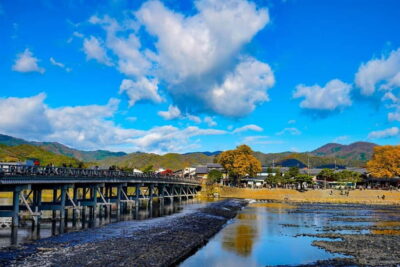
Kyoto/Osaka: Nara, Fushimi Inari Taisha, Arashiyama Bus Tour
Read our review →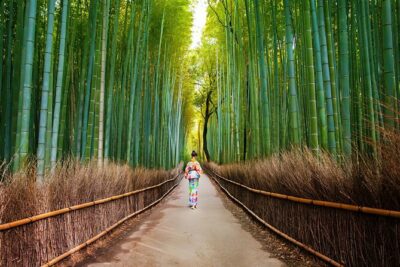
Kyoto Arashiyama Walking Tour: Bamboo, Monkeys, Gardens & Secrets
Read our review →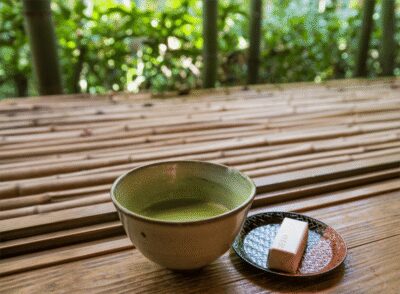
Arashiyama Bamboo, Temple, Monkeys, or Secret Sake Brewery
Read our review →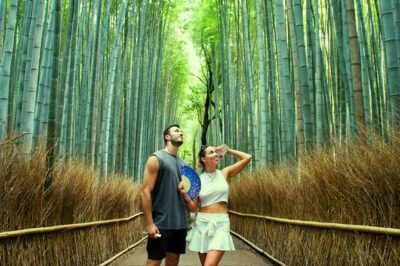
Arashiyama Bamboo Forest, Monkeys, Matcha & Temple Tour
Read our review →
Osaka/Kyoto: Arashiyama, Nara & Fushimi Inari Shrine w/Lunch
Read our review →
Nijo, Kinkaku-ji, Arashiyama, Kiyomizu & Fushimi Inari
Read our review →Browse the lists this tour appears in