
Reviewed · GEISHA & GION TOURS
Kyoto Geisha District Walking Tour in Gion
Kyoto’s Gion is gorgeous, but it can also feel like a maze of lanes and lanterns. I like that this tour keeps it small with a cap of 10 people, so you do not get shuffled or left behind. You walk with a guide instead of trying to piece together the geography on your own.
What I really enjoyed is the way the guide connects what you see to what it means, especially around geisha culture and Shinto shrines. You also get built-in time for photos at places like Yasaka Shrine and the waterways around Gion.
The main drawback to consider is practical: this is a walking tour with stairs and tight spaces around shrines. If you need step-free routes, this is not listed as suitable for mobility limitations, and you will want comfy shoes either way.
Key Things I’d Prioritize Before Booking
- Small-group pace (10 people max), so the walk stays calm and questions are welcome
- Yasaka Shrine plus Gion streets gives you the “why” behind the postcard scenes
- Shirakawa Canal and Tatsumi Bridge are made for slow, respectful wandering and photos
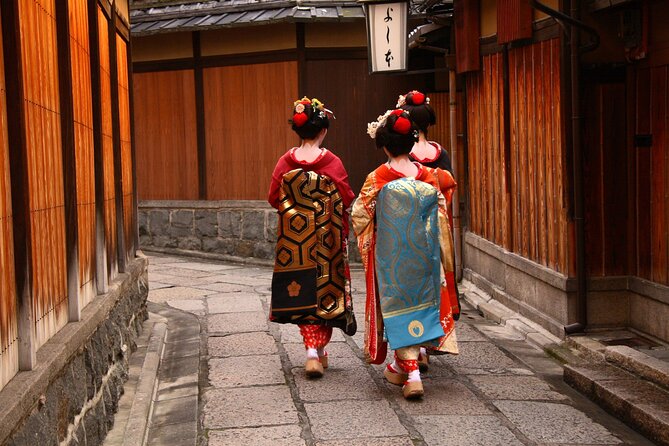
- Geiko and maiko spotting is possible, but it is never guaranteed
- Guides vary by person, and a few past reviews mention differences in English clarity or focus
- About 2 hours rain or shine, so you can plan a real evening in Kyoto
Why a Gion Walking Tour Beats the Map App
Gion looks simple until you try to walk it without getting turned around. Narrow lanes, sudden turns, and gates tucked behind walls can make you feel like you’re always one corner away from the wrong street.
That is where a guide earns their keep. You get commentary that turns locations into context, like why a shrine matters beyond architecture, or how the geiko and maiko world fits into Kyoto life. It is also the difference between “I saw a street” and “I understand the place I’m standing in.”
More Walking Tours in Kyoto
- Kyoto Geisha Walking Tour: Gion District & Hidden Gems
★ 4.7 · 3,273 reviews - Kyoto: Gion Magical Night Walking Tour with Geisha Trivia
★ 4.9 · 2,393 reviews - Kyoto: Gion Geisha District Walking Tour – Stories of Geisha
★ 4.7 · 2,187 reviews
Meeting Point at Gion Kōbu Kaburenjō, Then a Relaxed 2-Hour Loop
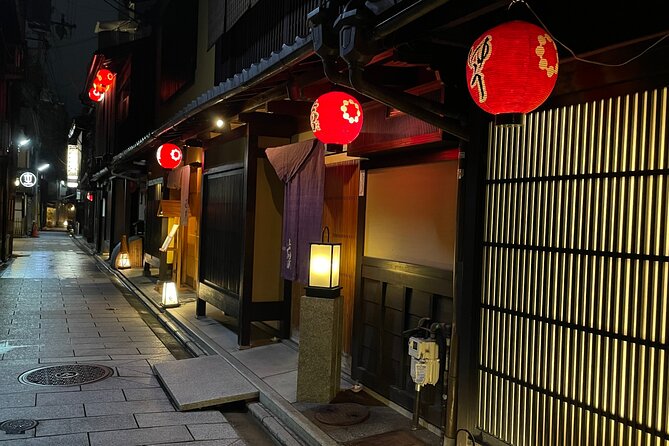
The tour meets at Gion Kōbu Kaburenjō (570-2 Gionmachi Minamigawa, Higashiyama Ward) and finishes back at the same point. A guide will help you figure out how to get back, which matters because Gion evenings can be confusing once you split from the group.
Duration is listed at about 2 hours, so you can pair it with dinner plans without building in a whole afternoon. Also, you get a mobile ticket, which cuts down on paper chaos at check-in.
Because this is capped at 10 travelers, you should feel the difference right away. In a smaller group, you can ask quick questions when something catches your eye, rather than waiting your turn.
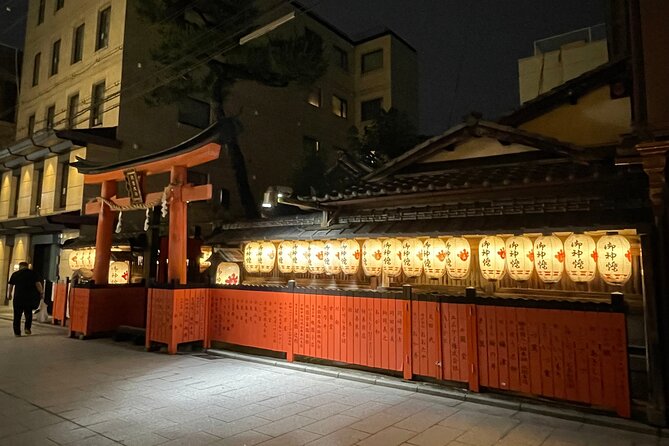
Stop 1: Yasaka Shrine, Lanterns, and Shinto You Can Actually Follow
You start at Yasaka Shrine, one of Kyoto’s best-known Shinto sites in the Gion area. You spend about 40 minutes here, with the time needed to notice more than just the main view.
What I like about this stop is that you are not treated like you’re sightseeing only. You get commentary that frames the shrine as part of Kyoto’s spiritual landscape, not just a pretty backdrop. The lanterns and classic shrine architecture also give you great photo angles without needing to sprint.
A practical note: shrines are often uneven underfoot and can include steps. Even if you are not climbing a lot, you should plan for a real walking rhythm from the first minute.
Stop 2 and Beyond: Gion Streets as a Story, Not Just a Scene
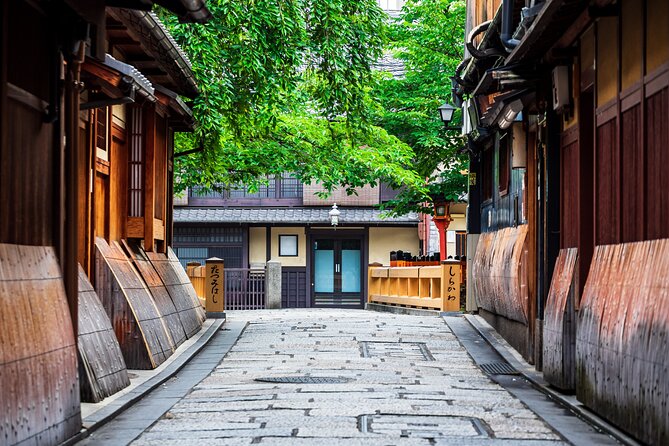
From Yasaka, you head into Gion itself, where the atmosphere shifts fast. This part focuses on the district’s narrow streets and traditional wooden houses, the kind you normally only see in photos.
You get about 20 minutes here at one Gion segment, then another 20 minutes later. That split matters. If you rush Gion as one long sprint, you lose the chance to compare street texture and light as you move.
The tour also leans into photography opportunities. Between the shrine edges and the street layout, you get moments where the lanes feel layered, not flat. It is a better way to photograph Gion than just snapping everything from the main street.
More Geisha Experiences in Kyoto:
- Best of Kyoto: Gion, Geisha, Pagodas & Cobblestones
★ 4.9 · 2,058 reviews - Night Walk in Gion: Kyoto’s Geisha District
★ 4.5 · 2,003 reviews - Kyoto Night Foodie Tour in Gion (9+ dishes + 6 Sake tastings)
★ 5.0 · 1,762 reviews - Kyoto Gion Geisha District Walking Tour – The Stories of Geisha
★ 5.0 · 1,441 reviews
Stop 3: Tatsumi Daimyojin Shrine and the Idea of Protection
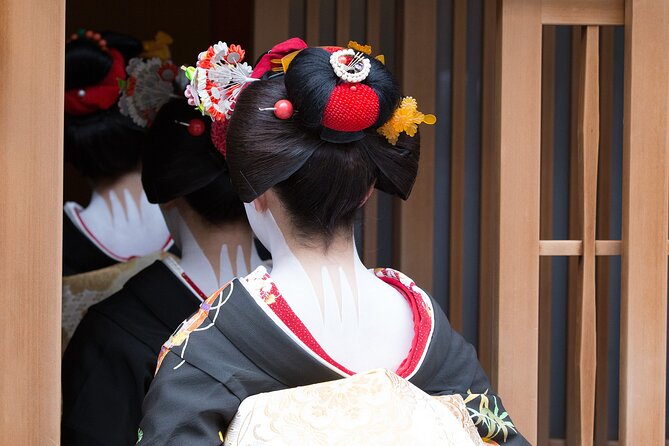
Next is Tatsumi Daimyojin Shrine, with a short stop of about 5 minutes. It is dedicated to a deity tied to protection, good fortune, and safety, especially for travelers and warriors.
This is a quick hit, but it adds meaning to the walk. When you know why this shrine exists, the small stop feels intentional instead of filler. You also get a sense of how old belief systems are woven into everyday movement through the city.
Stop 4: Tatsumi Bridge and the Movie-Set Feeling
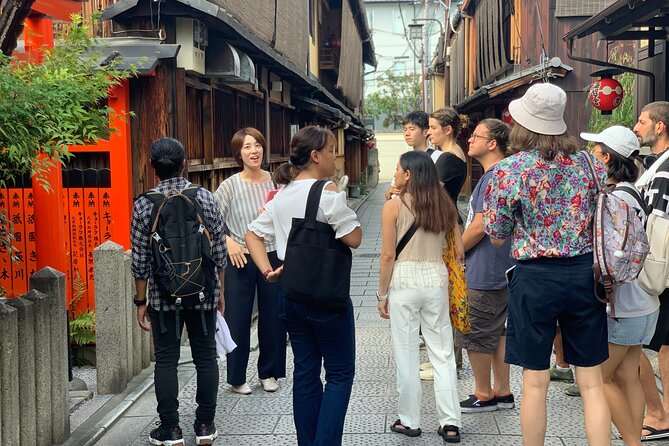
You then reach Tatsumi Bridge for about 10 minutes. It is small, traditional, and tucked into a corner where the surrounding wooden machiya houses help create that almost cinematic Kyoto feeling.
This is one of those spots where you do not need a long explanation. The setting does a lot of work for you. But the guide commentary can help you notice details you’d otherwise walk right past, like how the bridge fits into the lane and canal geometry.
If you want photos, this is a good time to slow down. Do not just stand, shoot, and move on. Take a moment to look from different angles while still being respectful of the area.
Gion Shirakawa Canal: Where You Get Quiet Water, Old Houses, and Time to Breathe
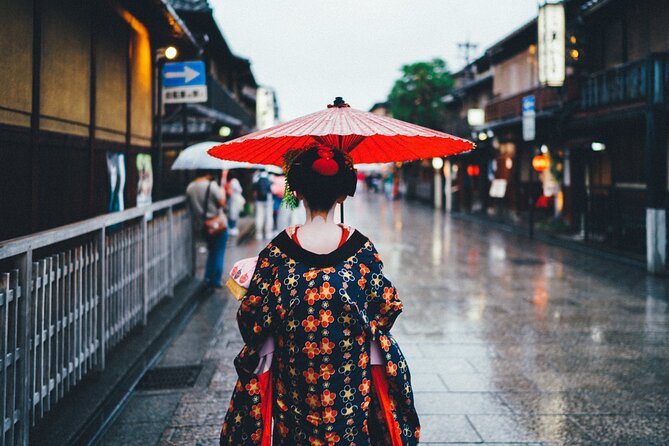
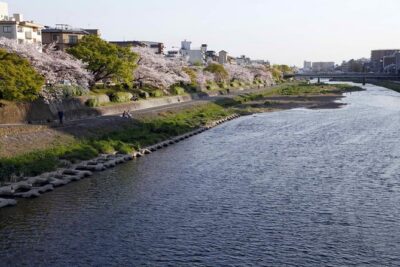
One of the tour’s standout themes is water. After the bridge, you spend time around Gion Shirakawa, also called Shirakawa Canal.
This section is described as tranquil and scenic, lined with well-preserved traditional machiya houses and weeping cherry trees. Even if cherry blossoms are not in season, the layout still has that slow, reflective feel that makes the district easier to understand.
For a practical traveler, this is valuable because it breaks up the crowd energy. You get a slower pace, better air, and usually better photo conditions than the busier main lanes.
Stop 6: Hanamikoji Street for Old-World Kyoto Vibes
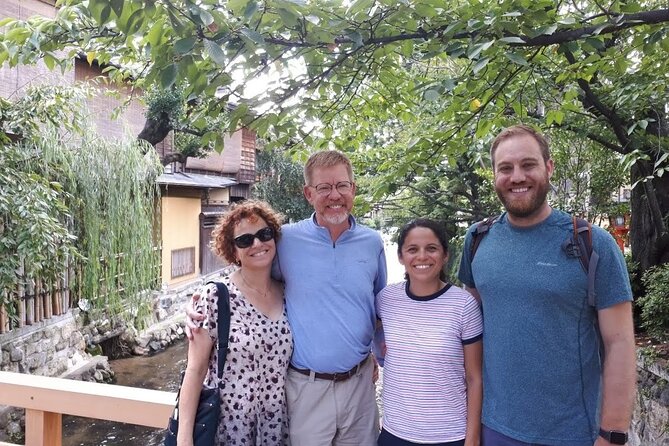
You continue to Hanamikoji Street, the district’s main street, for about 10 minutes. This is where you see the classic row of wooden machiya houses, tea houses, shops, and restaurants that define the Gion postcard.
This segment is shorter on purpose. Hanamikoji can get busy, so the tour uses it to give you a quick, clear orientation. You can see the layout, the shopfront character, and the scale of the street without spending an hour fighting the crowd.
If you like street-level detail, you will also appreciate how the guide points out what to notice here. You end up paying attention to doorway shape, signage style, and how the street bends rather than just trying to locate the “best photo spot.”
Gion Corner: A Cultural Stop That Goes Beyond the Walk
The tour includes Gion Corner, a venue that showcases traditional art performances. The listing describes it as a place that offers an introduction to Kyoto’s traditional arts, which is a useful add-on if your goal is more than just a pretty stroll.
Even if you are not planning to stay longer in a theater afterward, this kind of stop helps connect the dots. You see how traditional culture is staged and presented, not only lived out on the streets.
Geiko and Maiko Spotting, Without the Pressure
One of the big reasons people book a Gion geisha district walk is the chance to spot geiko or maiko. The tour description explicitly says you might see geisha during the walk if you’re lucky.
That said, I like that the tour frames this as a possibility, not a promise. You get the chance to watch what is happening around the lanes, and you still keep the experience respectful. If you catch a glimpse, it feels like a bonus to the storytelling, not the main event.
Also, past experiences shared by different guides highlight how timing can matter. Some guides were described as taking people to the right place at the right moment when performers were moving between engagements. I’d still treat spotting as luck, and focus on the cultural context as the real value.
Guides Like Takuma, Yuko, Tom, and Yuji, and Why Their Style Matters
The reviews highlight that guides make or break the experience. Many names show up, including Takuma, Yuko, Yuji, Hide, Eric, Tom, and Harry.
What stands out in the positive feedback is how guides mix friendly personality with structure. People mention clear explanations about Shinto religion and geisha customs, plus guides who are patient and willing to answer questions. One review also mentions Takuma speaking a little Spanish, which can be a nice comfort if you want to confirm details.
On the flip side, there are a couple of lower-rating stories about disorganization or English that was hard to follow, plus a sense that the focus leaned toward selfies instead of information. That does not mean it will be your experience, but it is a reminder to go in with the right expectations: you are paying for a guided walk with commentary, not a private lecture.
Price and Value: Why Around $30 Can Make Sense in Kyoto
At $29.85 per person, this tour is positioned as a low-commitment way to get structure in a district that is hard to navigate. Two hours is enough time to feel like you saw multiple meaningful locations, without turning it into an all-evening ordeal.
The value comes from the combo:
- a small-group cap that improves the pacing,
- a clear itinerary with major stops like Yasaka Shrine and Hanamikoji Street,
- and commentary that gives context you would not get from doing this alone.
Also, several stops are listed as free admission, which helps you avoid budgeting surprises for the core sights. You still spend money on the guide, but you are not stacking extra ticket costs on top.
What to Wear and How to Keep This Fun
This tour is listed as walking-heavy. Wear comfortable walking shoes. Even in a short tour, Gion’s uneven stone and steps can add up, especially around shrines.
Because it runs rain or shine, bring a compact rain layer. If you are the type who hates slippery conditions, pack accordingly and take your time on steps.
One small detail worth knowing: one response from the provider clarified that a brief stop at a convenience store can happen to support restroom breaks since public facilities are not available in that area. So do not assume you have unlimited bathroom options along the route.
If You Add the Kimono Plan, Know the Timeline
There is a kimono plan option mentioned. After you change into kimono, you are asked to go on your own to the Japan Kanji Museum and Library, about a 5-minute walk from the kimono rental store.
After the tour, you also need to return the kimono by 5:30 pm. This is one of those “sounds easy until it’s not” details. If you build dinner plans too aggressively, you could feel rushed.
Common Pitfalls, Based on Real Feedback
The most common problem pattern in the lower reviews is not the itinerary, it is the delivery. Some people described uneven English clarity or a guide who was less focused on explanations.
If you are the kind of traveler who really wants deep, careful detail, you should still choose this tour for the structure, then set yourself up for success:
- ask questions early,
- be clear you want both history and practical context,
- and give the guide time to settle into the walk.
Also, remember that Gion includes quiet neighborhoods and shrine grounds. If you focus too much on filming or crowding viewpoints, the whole experience can feel less enjoyable for you and for others.
Should You Book This Kyoto Geisha District Walking Tour?
If you want a 2-hour way to get your bearings in Gion, this tour is a strong pick. The small-group size, guided storytelling, and key stops like Yasaka Shrine, Tatsumi Bridge, Shirakawa Canal, and Hanamikoji Street are a good match for travelers who want both beauty and meaning.
Book it if:
- you like walking at a relaxed pace,
- you want a guide to explain Shinto and geisha culture,
- and you want a realistic shot at seeing geiko or maiko.
Skip it if:
- you need step-free access,
- you expect a super detailed, lecture-style history session,
- or you are very sensitive to guide-language clarity issues.
Overall, this is one of those tours that works best when you treat it as a guided introduction, not a guaranteed celebrity sighting.
FAQ
How long is the Kyoto Geisha District walking tour in Gion?
The tour lasts about 2 hours.
What is the maximum group size?
The experience caps at a maximum of 10 travelers.
Where does the tour start and end?
It starts and ends at Gion Kōbu Kaburenjō, 570-2 Gionmachi Minamigawa, Higashiyama Ward, Kyoto, Japan.
Does the tour run rain or shine?
Yes, the tour takes place rain or shine.
Do I get a mobile ticket?
Yes, the tour uses a mobile ticket.
What should I wear for the walk?
Wear comfortable walking shoes since this is a walking tour.
Is there a chance to see geiko or maiko during the tour?
The description says that if you are lucky, you may have a chance to spot a geisha during the walk.
If I choose the kimono plan, what do I do after changing?
After changing into kimono, you go on your own to the Japan Kanji Museum and Library, about a 5-minute walk from the kimono rental store.
Is the tour suitable for people with disabilities?
It is not listed as suitable for people with disability to go up and down stairs.
What is the cancellation policy for a full refund?
You can cancel up to 24 hours in advance for a full refund. If you cancel less than 24 hours before the start time, the amount you paid is not refunded.
Latest write-ups near Kyoto
- Kyoto: Nishiki Market Tour with a Local Foodie & Tastings★ 4.5 · 67 reviews
- Kyoto Kimono Rental mimosa |Kimono/Yukata Rental Couple Plan★ 4.8 · 67 reviews
- Kyoto: Traditional Kimono Fabric Handicrafts Workshop★ 5.0 · 67 reviews
- Kyoto Tea Ceremony and Samurai Photo Session★ 5.0 · 70 reviews
- Kyoto: Replica food making experience★ 4.8 · 70 reviews
- Kyoto: Kinkakuji, Golden Pavilion Guided Tour★ 4.7 · 71 reviews
- Private departure transfer from Kyoto city to Kansai International airport★ 5.0 · 72 reviews
- Uji: Green Tea Tour with Byodoin and Koshoji Temple Visits★ 4.8 · 72 reviews
Geisha & Gion Tours, compared.
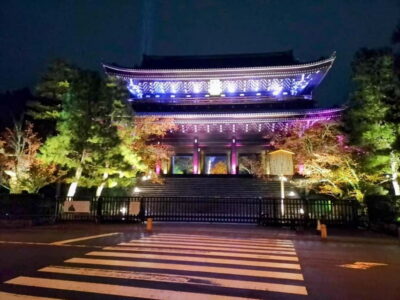
Kyoto Geisha Walking Tour: Gion District & Hidden Gems
Read our review →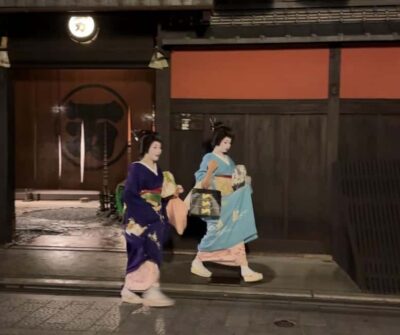
Gion Magical Night Walking Tour with Geisha Trivia
Read our review →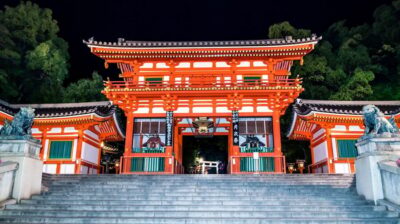
Gion Geisha District Walking Tour – Stories of Geisha
Read our review →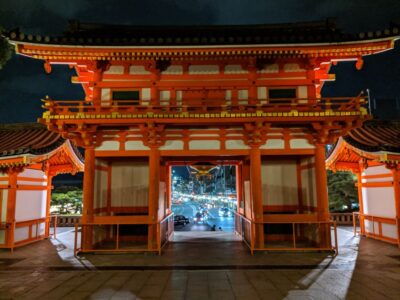
Best of Kyoto: Gion, Geisha, Pagodas & Cobblestones
Read our review →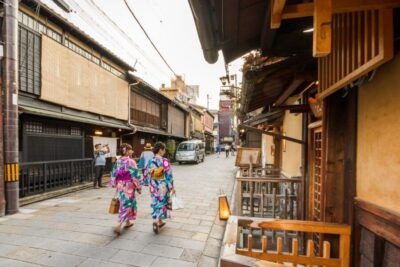
Kyoto Night Foodie Tour in Gion (9+ dishes + 6 Sake tastings)
Read our review →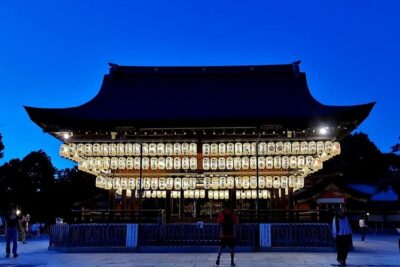
Kyoto Gion Geisha District Walking Tour – The Stories of Geisha
Read our review →
Kyoto Gion: 2-Hour Geisha Culture & History Walking Tour
Read our review →Browse the lists this tour appears in