
Reviewed · GEISHA & GION TOURS
Kyoto Gion Cultural Walk & Geisha Show with Dining Options
Kyoto’s Gion district can feel like a postcard until you learn how it actually works. This 3-hour walk links Gion streets and shrines to a real-life maiko meeting and short geisha-style performance with Q&A. You follow a guide so you don’t end up wandering in circles with a confused face and a phone battery at 2%.
I especially like the way this tour connects arts you already know, like kabuki, to the geiko and maiko traditions you came to understand. I also like that it’s a small group, max 9 travelers, which makes questions in the Q&A feel natural and not rushed.
One thing to think about: the tour isn’t built for slow feet. It involves walking and it’s not recommended if you have leg problems. Also, if you’re choosing the dining option, keep an eye on what you expect for portion size since people have had mixed feelings when meals are part of the package.
Key Things You Should Know Before You Go
- Small-group pacing in Gion: max 9 travelers, so your guide can actually keep track of the group
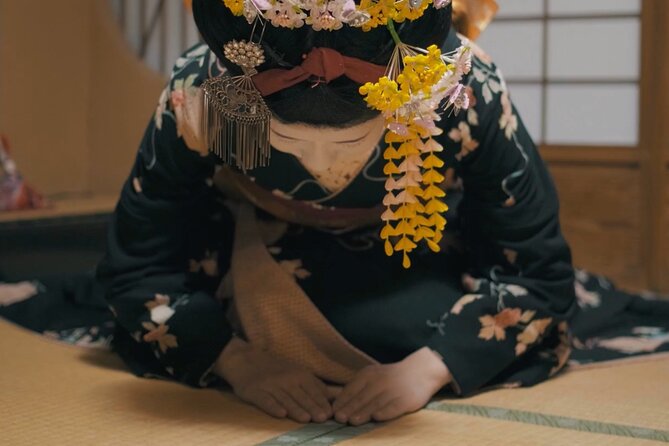
- 45 minutes with an apprentice geisha: includes meeting time plus a dance performance with one or two songs
- Arts context that makes everything click: kabuki origins and theater architecture tie into geiko culture
- A route with real spiritual stops: Shinto and Zen sites along the way, including Kennin-ji (admission not included)
- Weather matters: good weather is required, and the tour may switch dates or refund if conditions are poor
- Optional dining can change value: if dinner is part of your booking, confirm what’s included for you
What You Really Get in This 3-Hour Gion Evening
This experience is built like a good Kyoto evening should be: you start in historic Higashiyama, you walk through atmospheric streets, and you end with a focused cultural moment. You get about 1.5 to 2 hours of guided time in Gion, then roughly 45 minutes for meeting and show time with an apprentice geisha.
The price is $121.37 per person and you’re in a group that tops out at 9. That matters more than you’d think. In a place like Gion, the difference between a crowd shuffle and a guided stroll is the difference between seeing “views” and understanding what you’re seeing.
This tour also uses a mobile ticket, and it runs near public transportation, so it’s not a headache to reach. The main practical catch is that it needs decent walking ability and good weather.
More Dining Experiences in Kyoto
- Kyoto Gion Cultural Walk & Geisha Show with Dining Options
★ 5.0 · 518 reviews - Dinner with Maiko in a Traditional Kyoto Style Restaurant Tour
★ 5.0 · 175 reviews - Kyoto: Geisha Dinner & Gion Cultural Walk
★ 5.0 · 73 reviews
Starting at Izumo-no-Okuni: Kabuki’s Female Beginning Meets Gion
You begin at the Statue of Izumo-no-Okuni in Kawabatacho, Higashiyama. This stop is short, about 15 minutes, but it’s the setup that makes the rest of the night make sense.
Izumo-no-Okuni is tied to the early roots of kabuki, including the surprising fact that the theater began with a feminine element. If your mental picture of kabuki is only male performers, this is one of those “oh, so that’s where it came from” moments that gives you better context for the arts connection later.
You’ll also notice a theme that keeps popping up throughout the itinerary: Kyoto is not just pretty streets. It’s layers. Arts, religion, and neighborhoods overlap in ways that are easier to spot when a guide points them out.
Minamiza Theater: A Real Theater Stop, Not Just a Photo Op
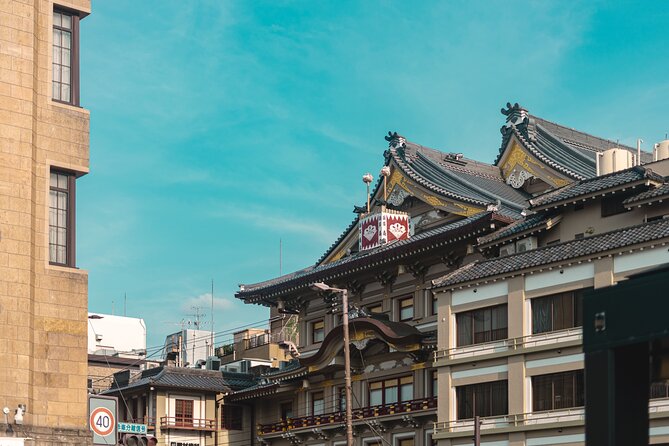
Next you visit Minamiza Theater for about 10 minutes. It’s described as the oldest kabuki theater, and that alone gives the stop weight. Instead of rushing past, you pause long enough to look at architecture and hear a story about the link between VR and kabuki.
That VR detail may sound random until you realize the tour is trying to show continuity. Traditional arts keep surviving by adapting, not by staying frozen in time. Even in a short stop, you get that message.
One small drawback: since the time is brief, don’t expect a full theater lesson here. Treat it as the “why it matters” moment that tees up what you’ll learn in Gion.
Gion Shirakawa and Hanamikoji: Where You Can See the District Breathe
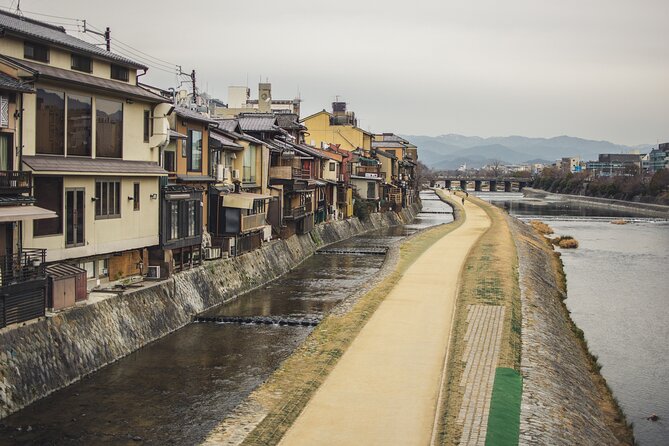
Then you step into the heart of Gion. First comes Gion Shirakawa, about 15 minutes. This is described as the largest geisha district called Gion, and specifically one of the most beautiful parts, with old-fashioned streets, traditional buildings, and riverside atmosphere.
If you’ve ever wondered why Gion looks the way it does, this stop helps you read the design choices. You’re not just seeing buildings. You’re seeing the setting that supports the lifestyle and performances you’re about to watch.
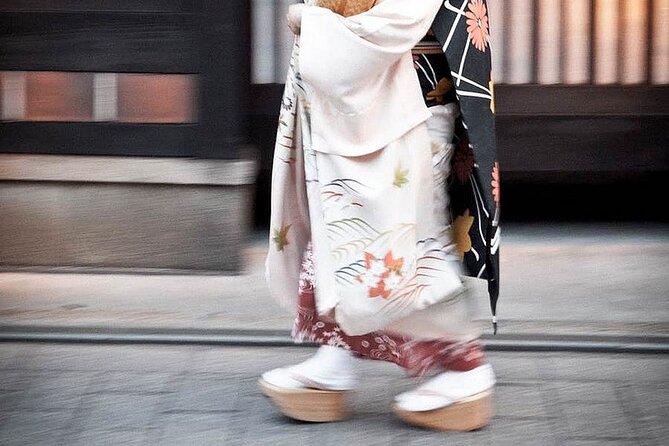
After that, you head to Hanamikoji Street for about 10 minutes. This is the main street of Gion, and the guide will frame it as the place where you might be lucky enough to spot geisha walking around. You’re not guaranteed sightings, but the pacing and explanations make your chances better because you’re watching with context, not just scanning for silhouettes.
A practical note: these streets can be crowded, even on days when it feels calm. Having a guide helps you move through without blocking others and without losing the thread.
More Walking Tours in Kyoto
- Kyoto Geisha Walking Tour: Gion District & Hidden Gems
★ 4.7 · 3,273 reviews - Kyoto: Gion Magical Night Walking Tour with Geisha Trivia
★ 4.9 · 2,393 reviews - Kyoto: Gion Geisha District Walking Tour – Stories of Geisha
★ 4.7 · 2,187 reviews - Night Walk in Gion: Kyoto’s Geisha District
★ 4.5 · 2,003 reviews
Tatsumi-jinja Shrine and Zen at Kennin-ji: Religion That Shapes Everyday Etiquette
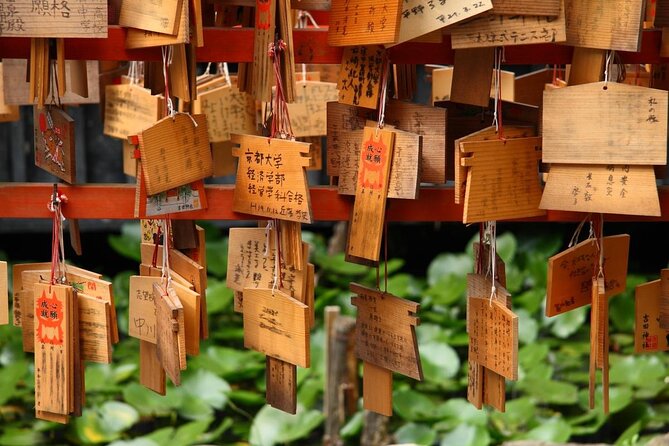
After the Gion streets, the tour shifts gears to Shinto and Zen. You’ll stop at Tatsumi-jinja Shrine (Tatsumi Dai-myojin) for about 15 minutes. The tour focuses on Shinto as Japan’s native religion, including the idea that there are said to be 8 million gods.
This part matters because a lot of geiko and maiko traditions connect to broader cultural values, not just entertainment. Kyoto’s arts culture did not develop in a vacuum. It’s influenced by how people think about spirits, ritual, and community.
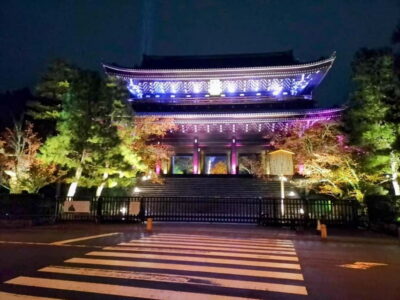
Next is Kennin-ji Temple for about 15 minutes, with admission not included. It’s described as a Zen Buddhist temple built in 1202. Even with limited time, the age helps you understand you’re walking through a long timeline of practice.
If you want to actually go inside or spend extra time at the temple, plan a little flexibility. The included time is 15 minutes, and since admission is not included, you may need to budget for entry if you choose to do more than look from outside.
Zenkyoan and the Boar Guardians: Luck and Safety in Mini-Temple Form
Your final religious stop is Zenkyoan, a subtemple in Kennin-ji, for about 15 minutes. Zenkyoan (Marishitendo) is known for boar guardians and the themes of luck, luck-related symbolism, and safety.
This is one of those stops that feels small, but it’s memorable because it gives you a concrete symbol to carry in your head. “Boar guardians” isn’t abstract. It’s the kind of detail you’ll remember when you later think about why people behave the way they do in ritual spaces.
Like Kennin-ji, admission is not included for this stop, so if you want to go in, confirm what you’ll be paying and what time you’ll have.
The 45-Minute Maiko Meeting and Dance Show: The Main Course
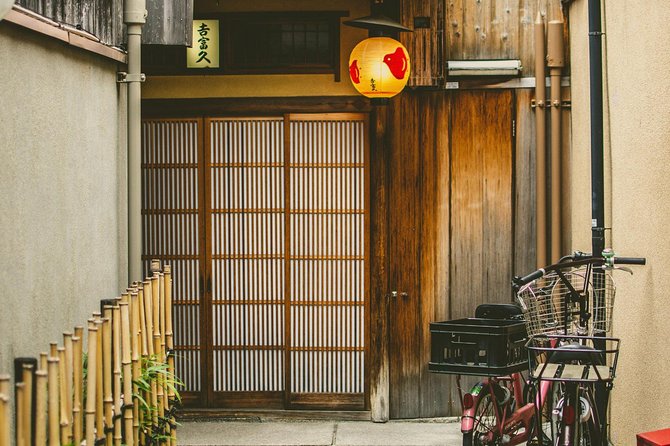
This is the payoff. The tour includes a 45-minute geisha meeting and show, featuring an apprentice geisha dance with one or two songs. You’ll also get Q&A time, which is where the experience becomes more than performance viewing.
The best part is that you’re not just looking. You’re asking. That’s how you replace myths with real explanations. You can ask about daily life, training, and what guests should understand about manners and etiquette. The guide helps translate and keep the conversation respectful.
Guides have been described as careful about traditions and translation support. Names you might hear include Akari and Ken, and both come through in the way the tour is paced, with time for questions and a feeling that the apprentice is treated as a person, not a prop.
One important consideration: photo posting rules can be strict in places like this. Some people report not being allowed to share photos on social media afterward. If photography matters to you, you’ll want to follow instructions on the spot and assume rules may be tighter than what you’re used to at museums.
Also, tip for the Maiko (apprentice geisha) is not included. If you choose to tip, bring cash in small bills so you’re not scrambling.
Dining Options: How to Judge the Value Without Guessing
The title includes dining options, and some versions of this experience include a meal served family-style. People have mentioned that the meal included lots of options and that dietary restrictions were considered.
But here’s the honest balancing point: a negative experience has also shown up around meal value, with one guest feeling the food portion didn’t match what they paid for the dining add-on. That doesn’t mean every meal is disappointing, but it does mean you shouldn’t assume dining is a slam dunk in terms of quantity.
How do you protect yourself? If your booking includes dining, check exactly what’s included for your selection, and don’t book this purely as a dinner plan. Think of dinner as a bonus that happens alongside the cultural core, not the reason to choose the tour.
If you’re hungry, you’ll be safer with a light meal before you go, then treat the dining as icing, not the whole cake.
Price and Logistics: Is $121.37 Worth It?
At $121.37 per person for about 3 hours, the value depends on two things you should compare to other options: what you’re getting at the end, and how much of the night is guided.
First, you’re paying for more than entry to a show. You’re paying for guided context through multiple stops, including kabuki-linked history and Zen and Shinto stops, then ending with a structured meeting and dance performance with Q&A.
Second, you’re in a group that stays small, max 9. In Kyoto, that kind of group size often makes the difference between learning and just moving.
Also remember what’s not included. Admission is not included for Kennin-ji and Zenkyoan. Other listed stops have free admission, which helps keep the day from turning into surprise ticket math.
If you’re the type who wants a well-managed evening with story, pacing, and direct cultural access, the price can make sense. If you only want street wandering and photos, you’ll likely feel the cost more.
Who This Tour Suits Best, and Who Should Think Twice
This tour fits well if you like culture that has a spine. You want explanations that connect theater history, neighborhood identity, and religious symbolism to what you see in Gion.
You’ll also enjoy it if you ask questions. The meeting and Q&A time is the engine of the whole experience, and the guide support is a big part of why that time works.
I would think twice if any of these apply:
- You have leg problems or fatigue issues, because it’s not set up for limited walking
- You expect a lot of free time with lots of unsupervised wandering, because it’s guided throughout
- You care most about photos for social posting, because rules around sharing images may be stricter than you’d like
Practical Tips for a Smoother Gion Walk
A few small habits make a big difference.
First, wear comfortable shoes. Even though it’s only about 3 hours total, it’s an evening of multiple stops and uneven pedestrian flow.
Second, go with good weather in mind. The experience requires good weather. If it gets canceled due to poor weather, you’ll be offered a different date or a full refund.
Third, be ready for the tour to include spiritual sites where entry details matter. Kennin-ji and Zenkyoan admission is not included, so if you plan to go in deeper, plan extra time and keep funds available.
Finally, don’t just listen for facts. Listen for etiquette. The guide role is to help you understand how to behave in these spaces. That’s part of the cultural experience, not extra homework.
Should You Book This Kyoto Gion Cultural Walk and Geisha Show?
Yes, if you want a guided evening that explains Gion beyond postcard ideas, and you’re excited about meeting an apprentice geisha with real Q&A time. The small group size, the structured walk through famous spots like Hanamikoji and Gion Shirakawa, and the focused 45-minute dance and meeting are strong reasons to book.
Maybe skip or adjust expectations if dining value is a big factor for you, or if you need very low walking. And if your priority is photo-heavy tourism, remember that respectful access comes with rules.
If you want to understand Kyoto in the way locals and culture insiders tend to think about it, this is a solid bet. It turns an evening in Gion into a story you can actually tell later.
FAQ
How long is the Kyoto Gion Cultural Walk and Geisha Show?
It runs for about 3 hours.
What is included in the geisha show portion?
The tour includes about 45 minutes for a geisha meeting and show, featuring an apprentice geisha dance with one or two songs, plus time for Q&A.
How big is the group?
The tour has a maximum of 9 travelers.
Where does the tour start and where does it end?
It starts at the Statue of Izumo-no-Okuni in Kawabatacho, Higashiyama Ward, Kyoto. It ends in a different location (you’ll get the specific end details after booking).
Is temple or shrine admission included?
Stops like the Statue of Izumo-no-Okuni, Minamiza Theater, Gion Shirakawa, and Tatsumi-jinja Shrine list free admission. Admission is not included for Kennin-ji and Zenkyoan.
Is the tour suitable for travelers with limited mobility?
It is not recommended for travelers with leg problems.
What if the weather is bad or the tour needs to be canceled?
The experience requires good weather. If it is canceled due to poor weather, you will be offered a different date or a full refund. You can cancel for a full refund if you cancel at least 24 hours in advance.
More Geisha Experiences in Kyoto
- Best of Kyoto: Gion, Geisha, Pagodas & Cobblestones
★ 4.9 · 2,058 reviews - Kyoto Night Foodie Tour in Gion (9+ dishes + 6 Sake tastings)
★ 5.0 · 1,762 reviews - Kyoto Gion Geisha District Walking Tour – The Stories of Geisha
★ 5.0 · 1,441 reviews - Kyoto Gion: 2-Hour Geisha Culture & History Walking Tour
★ 5.0 · 1,186 reviews
Latest write-ups near Kyoto
- Kyoto: Nishiki Market Tour with a Local Foodie & Tastings★ 4.5 · 67 reviews
- Kyoto Kimono Rental mimosa |Kimono/Yukata Rental Couple Plan★ 4.8 · 67 reviews
- Kyoto: Traditional Kimono Fabric Handicrafts Workshop★ 5.0 · 67 reviews
- Kyoto Tea Ceremony and Samurai Photo Session★ 5.0 · 70 reviews
- Kyoto: Replica food making experience★ 4.8 · 70 reviews
- Kyoto: Kinkakuji, Golden Pavilion Guided Tour★ 4.7 · 71 reviews
- Private departure transfer from Kyoto city to Kansai International airport★ 5.0 · 72 reviews
- Uji: Green Tea Tour with Byodoin and Koshoji Temple Visits★ 4.8 · 72 reviews
Geisha & Gion Tours, compared.
Kyoto Geisha Walking Tour: Gion District & Hidden Gems
Read our review →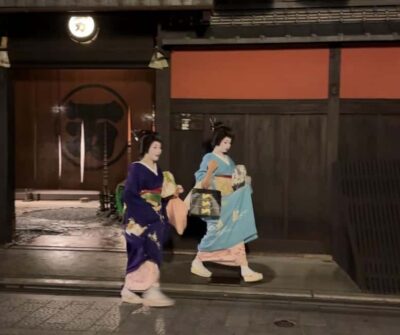
Gion Magical Night Walking Tour with Geisha Trivia
Read our review →
Gion Geisha District Walking Tour – Stories of Geisha
Read our review →
Best of Kyoto: Gion, Geisha, Pagodas & Cobblestones
Read our review →

Kyoto Night Foodie Tour in Gion (9+ dishes + 6 Sake tastings)
Read our review →
Kyoto Gion Geisha District Walking Tour – The Stories of Geisha
Read our review →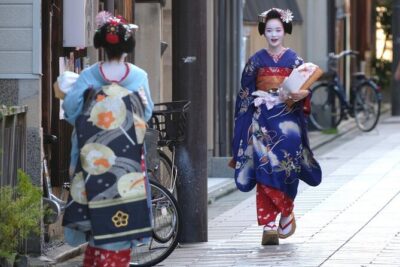
Kyoto Gion: 2-Hour Geisha Culture & History Walking Tour
Read our review →Browse the lists this tour appears in