
Reviewed · GEISHA & GION TOURS
Kyoto: Gion & Pontocho Food Tour with 13 Dishes
Kyoto at night has a special hush, and this small-group food tour is built for exactly that. You start around Yasaka Shrine, then wander through Gion and end in Pontocho, all while eating your way through Kyoto-style favorites and learning the human side of geisha culture.
I especially like the sheer meal value, with up to 13 traditional dishes served across a couple of spots. I also like the pacing, guided by a local expert with a small group limited to 8, so it feels social without being chaotic. One consideration is that this is a true food-focused evening, so if you are not a confident eater or you snack lightly, the amount might feel like a lot.
Key highlights before you go
- Yasaka Shrine after dark sets the tone, with the guide framing why it matters in Kyoto’s culture
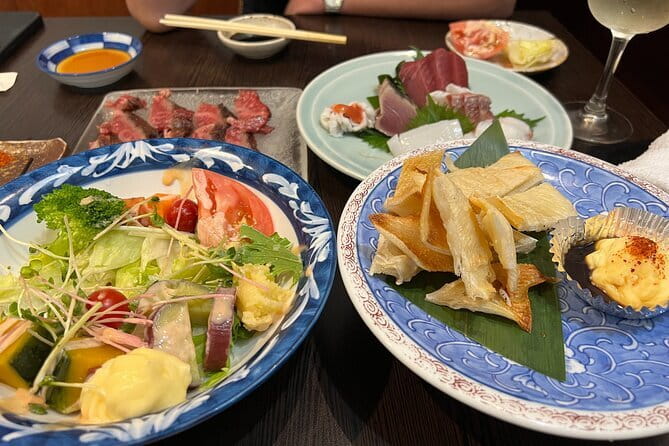
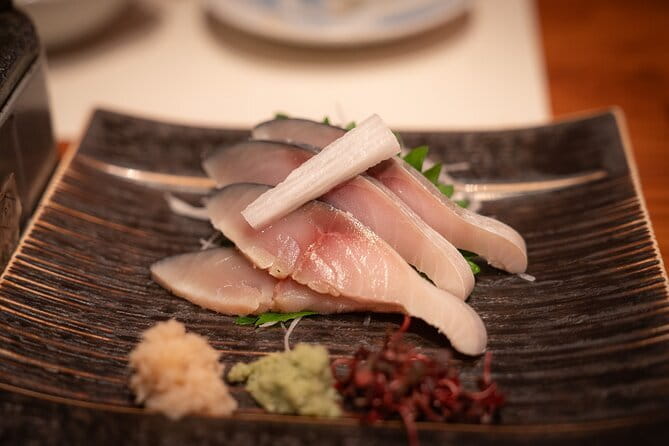
- Up to 13 dishes spanning classics like karaage, tempura, and sashimi
- Gion Shirakawa Lane walk (about 30 minutes) gives you time for stories, not just photos
- Pontocho dinner for about 1 hour in a smaller, moodier setting than the main streets
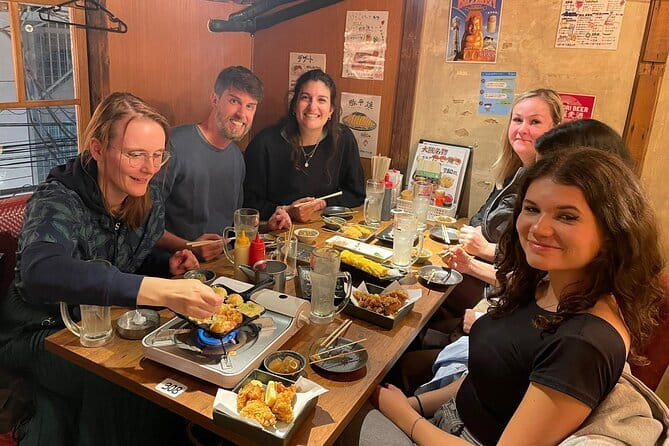
- Small group of max 8 helps you talk with your guide and the other people on the tour
- Geisha culture context is part of the experience, not just background noise
Kyoto’s Gion and Pontocho at night, where food and culture move together
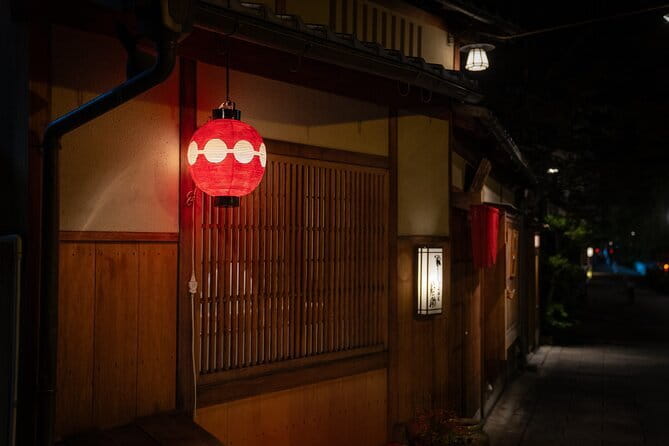
If you only see Kyoto by daylight, you miss how the city changes when lanterns go up. Streets in Gion feel narrower, quieter, and more story-like after dark. This tour uses that atmosphere on purpose, pairing a nighttime walk with a food plan that keeps you fed and curious.
You get a local guide speaking English, and you are never stuck staring at a map. The guide connects what you see to what you eat, so you are not just consuming dishes, you are learning why Kyoto cooks in the way it does. That makes the experience feel more “Kyoto” than a generic restaurant hop.
It is also a social evening, but not the loud kind. With a group capped at 8, you can actually chat with the people next to you, ask questions, and still stay on schedule.
More Food & Drink in Kyoto
- Kyoto Night Foodie Tour in Gion (9+ dishes + 6 Sake tastings)
★ 5.0 · 1,762 reviews - 3-Hour Kyoto Insider Sake Brewery Tour with Tastings & Pairings
★ 5.0 · 917 reviews - Arashiyama Bamboo, Temple, Monkeys, or Secret Sake Brewery
★ 4.8 · 886 reviews
The 3-hour timing: what you do first, what you do last
This is a compact evening, lasting about 3 hours, built around two main eating stops and a few shorter walk segments.
You meet at FamilyMart in Kyoto Gion, in front of the main entrance facing the main street. That choice is practical. FamilyMart locations are easy to spot, and it reduces the stress of matching a meeting point in the dark.
Then the flow goes like this:
- A short early moment in Gion before you move into the walking segments.
- A guided walk through Shirakawa Lane for about 30 minutes.
- A street-food style stop in Gion for around 15 minutes.
- A shorter guide-led segment in Pontocho (about 15 minutes).
- The longer finish in Pontocho, around 1 hour, with the meal and tasting portion.
The benefit of this structure is that you are never wandering for long with no payoff. You get enough movement to experience the neighborhoods, but most of your time is anchored to eating and explanation.
Starting at FamilyMart in Gion: easy to find, easy to relax
Meeting in front of FamilyMart facing the main street is one of the smartest parts of this tour. Kyoto’s back streets can be confusing even for strong navigators, and at night it is worse. Starting at a recognizable landmark means you can focus on settling in rather than sprinting to catch up.
I also like that the tour starts in the Gion area. It helps you build momentum right away. Instead of commuting across the city and arriving hungry, you begin close to the world you came to see.
Practical tip: wear shoes you can walk in for a couple of miles worth of slow strolling. This is not heavy hiking, but the evening is long enough that tired feet can spoil the vibe.
Yasaka Shrine at night: the story layer that makes the food feel personal
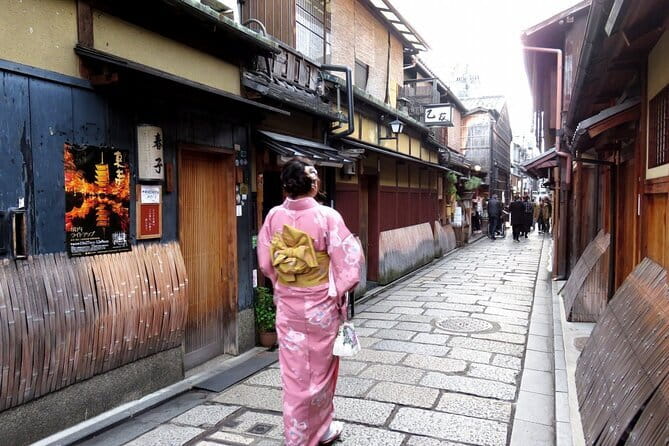
Your first big cultural moment is Yasaka Shrine, illuminated in the evening. The guide shares history and cultural significance as you arrive at the shrine area, so the atmosphere becomes more than pretty lights.
Why this matters for a food tour: Kyoto eating is tied to seasons, rituals, and etiquette. When you hear why shrines, neighborhoods, and traditions developed the way they did, food choices start to make more sense. Even something as simple as how a dish is served or how people behave at meals can feel connected instead of random.
This is also where the guide starts setting boundaries and expectations for the night. Many guides, like Tomoko, are praised for being warm and thorough, so the whole evening feels organized from the start rather than improvised.
More Geisha Experiences in Kyoto:
- Kyoto Geisha Walking Tour: Gion District & Hidden Gems
★ 4.7 · 3,273 reviews - Kyoto: Gion Magical Night Walking Tour with Geisha Trivia
★ 4.9 · 2,393 reviews - Kyoto: Gion Geisha District Walking Tour – Stories of Geisha
★ 4.7 · 2,187 reviews - Best of Kyoto: Gion, Geisha, Pagodas & Cobblestones
★ 4.9 · 2,058 reviews
Shirakawa Lane in Gion: where the walking turns into context
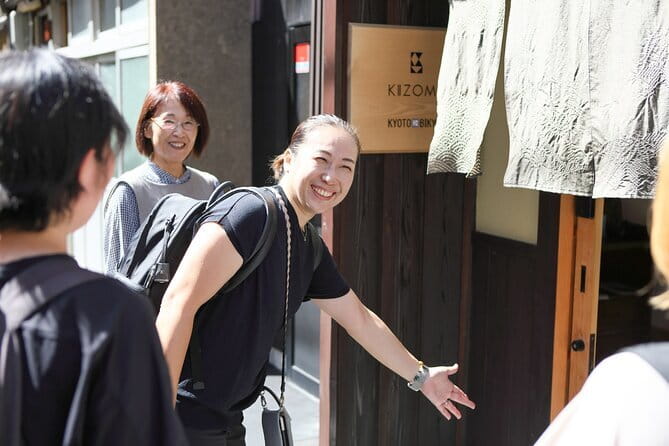
After the shrine stop, you head toward Gion Shirakawa area and Shirakawa Lane, with a guided walk around 30 minutes. This is the “slow down and look” portion.
During this stretch, you also visit a shrine frequented by geishas. That wording is important. You are not hunting for performers on the street. Instead, you are learning about the culture surrounding the neighborhood and the daily world around it.
What I like here is how the walking time is not wasted. You get stories tied to what you are seeing, including how geisha culture intersects with Kyoto’s social life. Guides such as Takuma and Masa often get credit for making these explanations clear and engaging, and that clarity helps you connect the dots while you are still in the streets.
Drawback to consider: if you hate walking in the rain or cold, nighttime Kyoto can be uncomfortable. Bring a light layer you can manage, and consider a compact umbrella. The tour is short enough that you will still enjoy it, but you will feel weather.
Gion street food stop: short, focused, and designed to keep you hungry
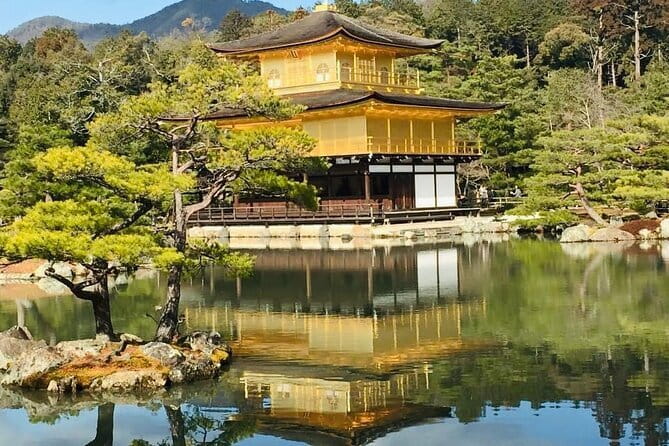
Next comes a Gion street food segment of about 15 minutes. This is a quick hit. You are not stopping for a long sit-down course there. Think of it as flavor sampling and a reset before the heavier meal portion.
This part is the perfect time to ask the guide questions. Since you are already in the mood of tasting, you can get straight answers about what you are eating and how it fits into Kyoto cuisine. Guides are often praised for answering questions patiently and adjusting explanations to the group.
Also, because this is not a huge meal, you can treat it like a warm-up. You will be ready for the longer izakaya and restaurant portion later.
The izakaya dinner in Gion: where the dishes stack up
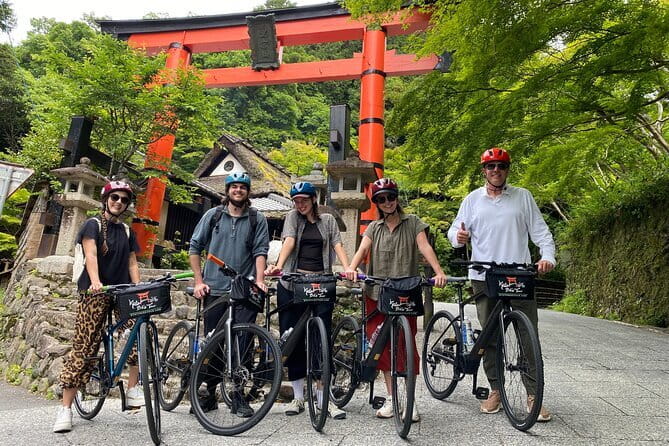
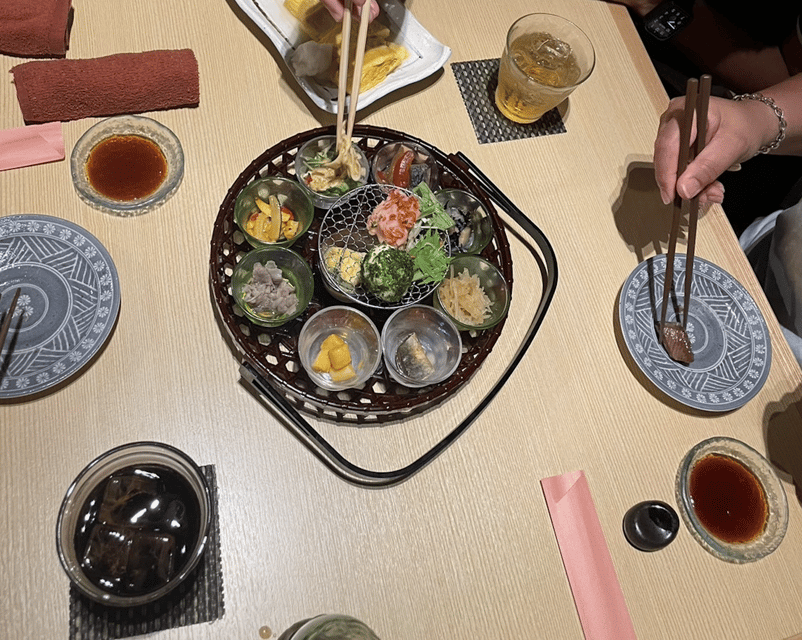
The core eating happens in a cozy izakaya experience in Gion. The tour includes dishes like karaage, tempura, and sashimi, and you also get sake pairing as part of the experience.
The tour is advertised as “up to 13 dishes,” and that matches what you should expect: this is not a light tasting. It is a multi-item meal spread across the night. The best way to enjoy it is to go with an appetite and a flexible attitude. You do not need to memorize every dish name during the tour, but you do need to keep trying what comes next.
From past evenings, the menu variety has included items beyond the basics, like tonkatsu, sting ray, and tofu skin, along with the more familiar seafood and fried bites. That variety matters because Kyoto cuisine is not only about sushi. It is about textures, seasonings, and how chefs build a meal that feels balanced.
Two drink options are included, alcoholic or non-alcoholic. Many people enjoy the sake side of the pairing, and you might find the guide will explain differences among varieties and how they change the taste of food.
If you drink alcohol: pace yourself. With multiple dishes and at least two drinks included, you are better off sipping steadily rather than chasing. You will get more enjoyment out of each course.
Pontocho: the different vibe, and the reason the ending feels special
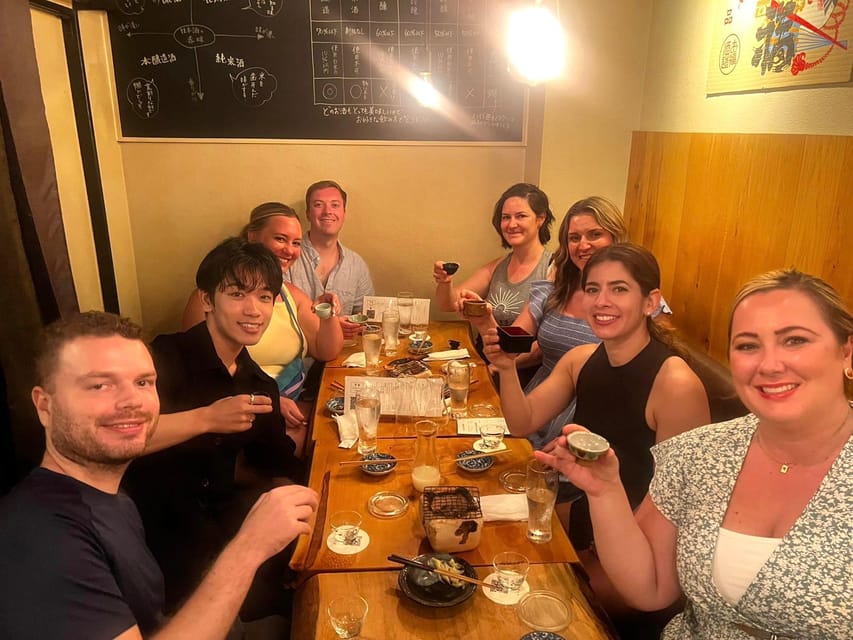
You finish in Pontocho, after a short guided walk of about 15 minutes. Pontocho is narrower, moodier, and often feels more “Kyoto at night” than the wider main streets.
The final meal portion runs around 1 hour, including food tasting plus time for beer or cocktails depending on what you choose. This segment is also the social payoff. After the walk and the earlier tastings, you sit longer, talk with your group, and let the last bites land.
Why this ending works: you leave with flavors that feel concentrated. Instead of a final stop that is rushed, this one is time-friendly. It gives you space to talk to your guide while you are still excited about the dishes, not already halfway back to your hotel.
In some groups, guides are praised for being fun and hospitable, like Mia, Tomoko, and other hosts who keep things comfortable even when the weather is bad. So if you are nervous about nighttime city walking, this ending should help.
What the guides do that turns it from food to a real story
A walking food tour lives or dies by the guide, and this one is repeatedly praised for that human factor. Several guide names show up in positive accounts, including Tomoko, Takuma, Mia, Masa, Minori, and Ruko.
Across those different names, the common strengths are practical:
- They explain food in a way you can remember, not just facts you forget.
- They connect dishes and culture, so you understand the “why,” not only the “what.”
- They keep the pace comfortable, not rushed, which makes it easier to taste and ask questions.
One of my favorite small details, when guides do it, is sharing personal notes at the end. Some guides have been described as taking down questions and handing over notes so you can look up what you liked later. That is the kind of extra that turns a fun night into a useful souvenir.
If you care about etiquette, you are in a good place here too. Some guides have been praised for covering Japanese dining etiquette and how that shows up in real meal behavior, which helps you feel less like a clueless outsider at your first izakaya.
Value check: is $82 a fair price for this kind of night?
At $82 per person for about 3 hours, the value hinges on two things: how much food you get and how smoothly the night is handled.
The “up to 13 dishes” promise is the big value driver. If you do the math, it is a lot of individual tasting-sized portions. Even if not every dish lands exactly as 13 items for every group, the meal still leans heavy compared to typical “light sample” tours.
The second value driver is guidance. You are paying for more than food. You are paying for:
- nighttime orientation in Gion and Pontocho,
- cultural explanations that make the sights matter,
- and efficient restaurant sequencing, so you do not waste time hunting for where to eat.
Two drinks are included, too. If you choose alcoholic options, that can offset part of the cost. If you choose non-alcoholic, you still get included beverages, which helps the meal feel complete.
So who gets the best value? People who want a guided, food-forward Kyoto evening and who are open to trying unfamiliar items. If you want only one or two dishes and long sightseeing breaks, this might feel too food heavy.
Who this tour suits best, and who might want a different plan
This tour is ideal if you want:
- a nighttime introduction to Gion and Pontocho,
- a meal designed for variety, not just one type of food,
- and a guide to explain geisha culture in a grounded, street-level way.
It also works well for solo travelers who want conversation. With a group up to 8, you typically have enough people to meet, but not enough to feel like a herd.
It might not suit you as well if:
- you cannot handle a lot of food in one sitting-style sequence,
- you want more free time to wander without structure,
- or you prefer a pure sightseeing tour with fewer tastings.
If you have dietary needs, the key move is to be upfront before you go. Some guides have been described as careful with allergies, but you should still tell the tour team early so they can plan responsibly.
Should you book this Kyoto Gion and Pontocho Food Tour?
I think you should book it if you want a Kyoto evening that mixes night streets, izakaya comfort, and real context about geisha culture, with enough dishes to make it feel like a full dinner plus extras. The small group size, English live guide, and the “up to 13 dishes” structure are exactly the kind of planning that keeps a short trip from turning into restaurant roulette.
Skip it or consider another option if you are a light eater or you want more unstructured time. This is a food-first tour, ending in a calm Pontocho meal that is meant to leave you satisfied.
If you do book, do yourself a favor: come hungry, pace your drinks, and let the guide set the tempo. That is when the tour feels like Kyoto, not just a list of stops.
FAQ
How much does the Kyoto Gion and Pontocho Food Tour cost?
It costs $82 per person.
How long is the tour?
The duration is about 3 hours.
How many dishes will I eat?
You can enjoy up to 13 traditional Japanese dishes.
Where is the meeting point?
You meet in front of the main entrance of FamilyMart in Kyoto Gion, facing the main street.
What is included in the tour price?
Food at 1 restaurant and 1 izakaya (up to 13 dishes), plus a walking tour with a local guide, and two drinks.
Are drinks included?
Yes. Two drinks are included, alcoholic or non-alcoholic.
Is the tour offered in English?
Yes, the live tour guide is English.
How big is the group?
The group is small, limited to 8 participants.
Is the tour wheelchair accessible?
Yes, it is wheelchair accessible.
Latest write-ups near Kyoto
- Kyoto: Nishiki Market Tour with a Local Foodie & Tastings★ 4.5 · 67 reviews
- Kyoto Kimono Rental mimosa |Kimono/Yukata Rental Couple Plan★ 4.8 · 67 reviews
- Kyoto: Traditional Kimono Fabric Handicrafts Workshop★ 5.0 · 67 reviews
- Kyoto Tea Ceremony and Samurai Photo Session★ 5.0 · 70 reviews
- Kyoto: Replica food making experience★ 4.8 · 70 reviews
- Kyoto: Kinkakuji, Golden Pavilion Guided Tour★ 4.7 · 71 reviews
- Private departure transfer from Kyoto city to Kansai International airport★ 5.0 · 72 reviews
- Uji: Green Tea Tour with Byodoin and Koshoji Temple Visits★ 4.8 · 72 reviews
Geisha & Gion Tours, compared.
Kyoto Geisha Walking Tour: Gion District & Hidden Gems
Read our review →
Gion Magical Night Walking Tour with Geisha Trivia
Read our review →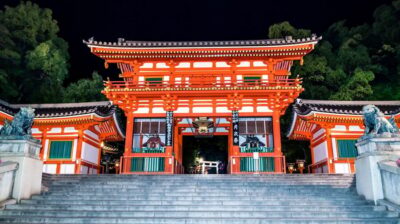
Gion Geisha District Walking Tour – Stories of Geisha
Read our review →
Best of Kyoto: Gion, Geisha, Pagodas & Cobblestones
Read our review →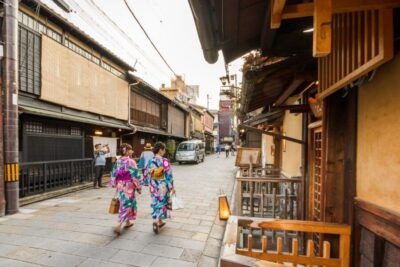
Kyoto Night Foodie Tour in Gion (9+ dishes + 6 Sake tastings)
Read our review →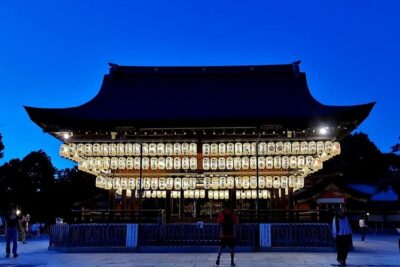
Kyoto Gion Geisha District Walking Tour – The Stories of Geisha
Read our review →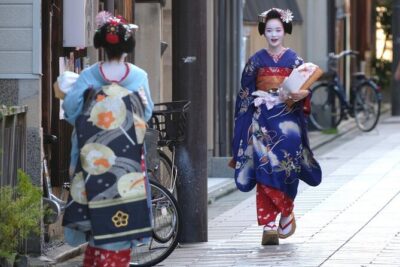
Kyoto Gion: 2-Hour Geisha Culture & History Walking Tour
Read our review →Browse the lists this tour appears in