
Reviewed · TEMPLE & SHRINE TOURS
Kyoto: Hidden Gems E-Bike Tour Through Backstreets & Temples
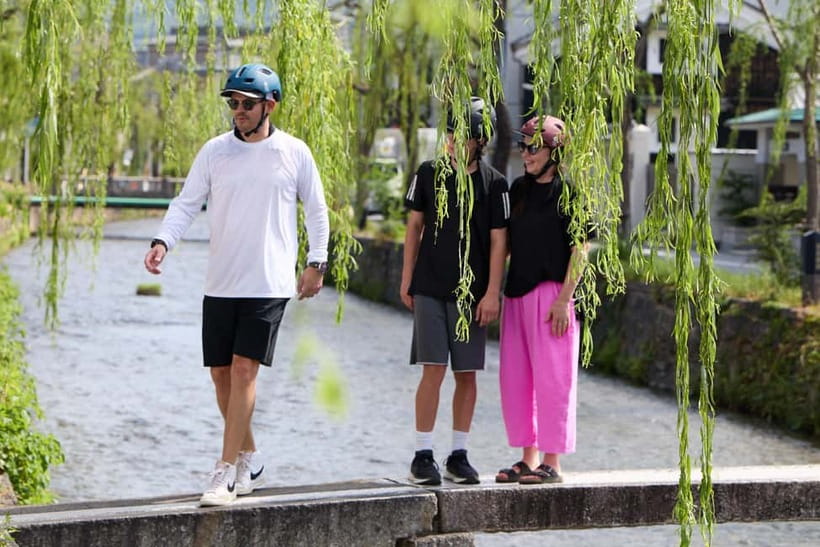
Kyoto is a city that can feel packed fast, so I love the idea of seeing it on an e-bike where you can actually cover ground without fighting traffic. This 4-hour small-group ride turns the usual big-sight checklist into a calmer loop through Gion and multiple historic stops.
What I like most is the focus on quiet side streets and peaceful places, not just the postcard lanes. I also really appreciate that you are not stuck pedaling the whole time, the guides keep the pace friendly and the e-bike makes it practical for different fitness levels.
One drawback to plan around: it is not a couch-to-temple stroll. You need to be comfortable riding a bike for a few hours, and the tour requires a minimum height of 145 cm, so it is not suitable for smaller kids.
Key highlights worth your time
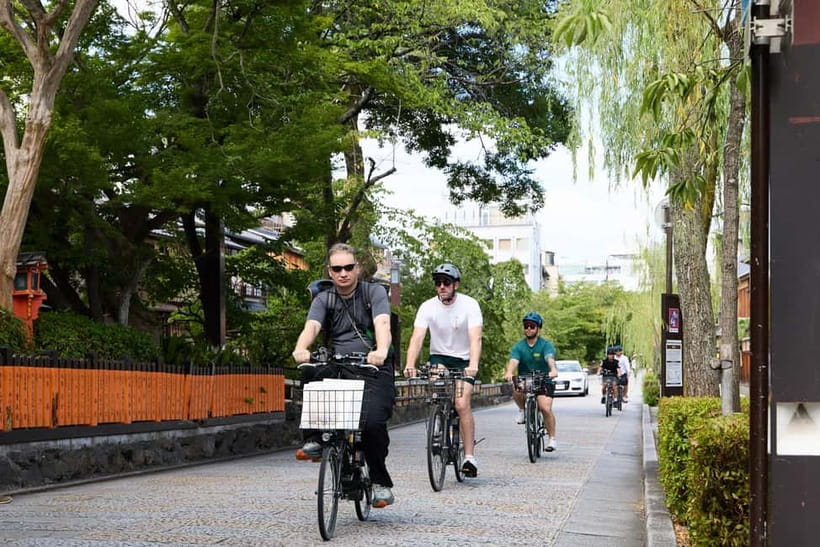
- Small group size (max 8) for easier navigation, safer riding, and more conversation with your guide
- English live guide who explains what you are seeing and how Kyoto’s culture connects
- Comfortable e-bikes that make temple lanes and small climbs less of a chore
- A smart route that mixes Gion, major shrines, and a calmer, out-of-the-way atmosphere
- Plenty of photo stops, with guides stopping so you can actually frame the scene
- Guide-controlled pacing, with an option for relaxed or more adventurous riding
Why Kyoto by e-bike feels like a smart upgrade
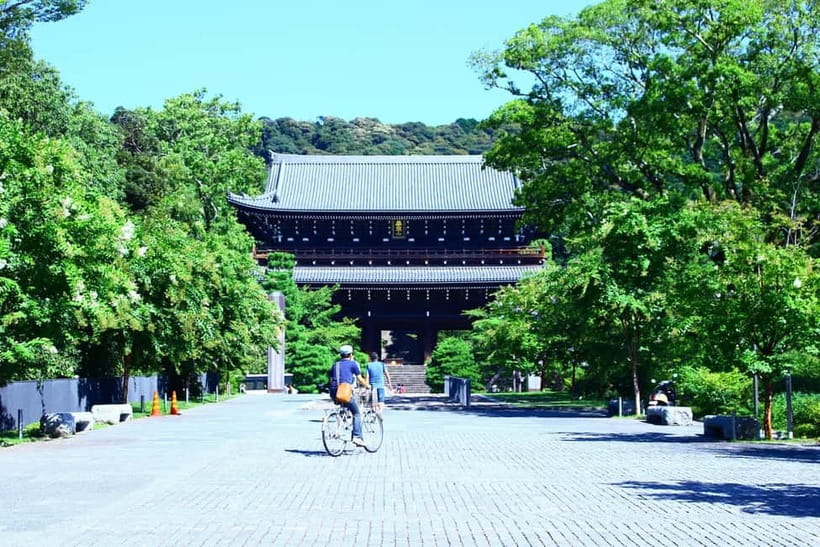
Kyoto has a talent for hiding its best moments a half-block off the main streets. On foot, you can get a great experience, but you also end up crisscrossing the city and spending time waiting in crowd pockets. On an e-bike tour like this, you get motion with control, meaning you can spend your energy on looking closely instead of constantly checking maps and navigation.
The tour’s selling point is not speed. It is flow. Your local guide keeps the group together, you get to hop from one cultural stop to the next, and you still have time at each place to take photos and absorb the atmosphere.
I also like that the group stays small. When a company limits to 8 participants, it tends to make a big difference for safety in narrow streets and for how often your guide can answer questions without rushing.
More Cycling Tours in Kyoto
- Hidden Kyoto E-Biking tour
★ 5.0 · 1,843 reviews - Bike Tour Exploring North Kyoto plus Lunch
★ 5.0 · 1,087 reviews - Arashiyama Bamboo Forest & Hidden Gems Bike Tour (Early Bird)
★ 5.0 · 613 reviews
Meeting in Gion, then easing into the real Kyoto mood
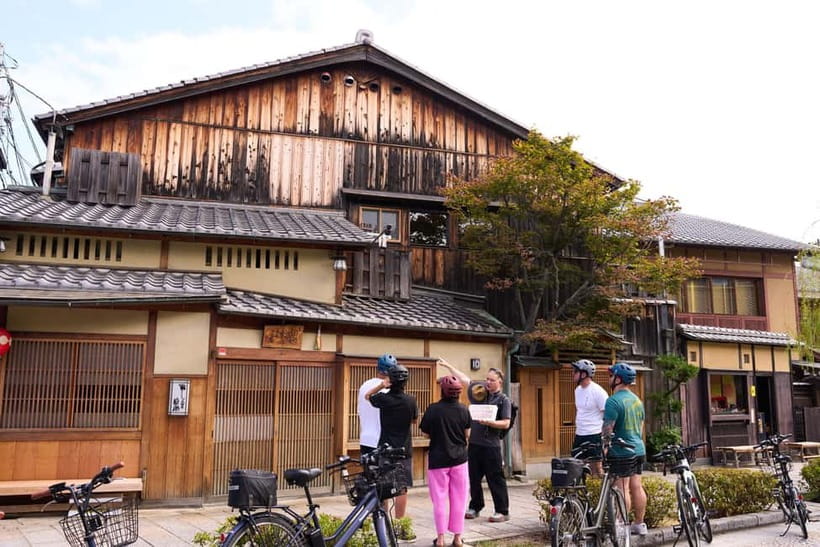
You start at Kyoto Tourist Lounge Gion, with the guide waiting in front. The location is described as facing Yamatoooji-dori Street, so it helps to search the meeting pin in advance on Google Maps and give yourself a few extra minutes.
Gion is the perfect starter zone because it sets the tone right away. You get that Kyoto feeling in the air: wooden facades, traditional streets, and the sense that this city runs on routines older than most modern cities.
You are only there for about 20 minutes, so think of this as orientation. It is enough time to settle in, take a few quick shots, and get a sense of how your ride will work before you hit the bigger temple areas.
Gion stop: quick orientation, good photo timing
At the Gion stop, your guide uses the time to help you read what you are seeing. Even when you are not staying long, you can learn what different street details and cultural spaces usually mean in Kyoto.
In my view, the best part of a short Gion stop is pacing. You avoid losing momentum, and you do not feel like you are just standing around waiting for a photo op.
If you are the type who likes to wander, you will still get value. Your guide can suggest what to look for, then you can decide how much you want to linger when the group breaks for a moment.
Nanzenji Temple: stepping into a big, memorable shrine landscape
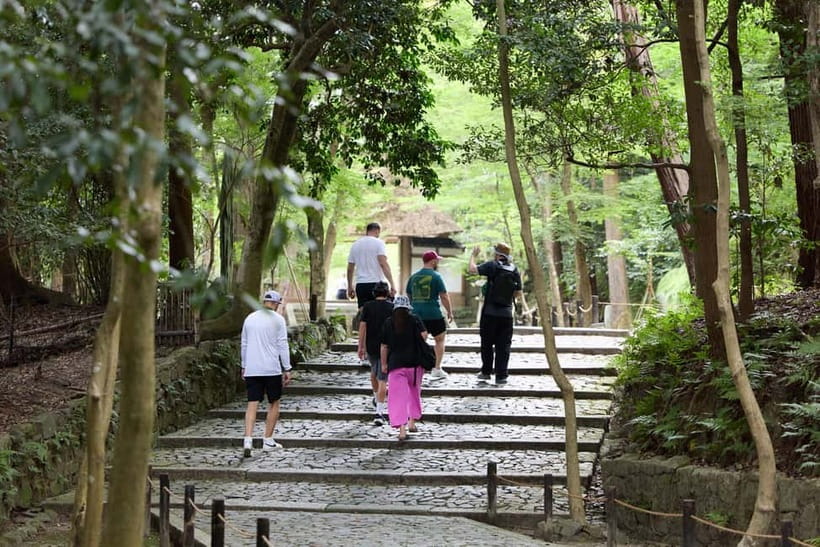
Next up is Nanzenji Temple for about 30 minutes. This is one of those stops where Kyoto feels larger than life. Even if you only spend half an hour, it is enough time to notice architectural details and the way the temple grounds create space for quiet.
The practical advantage of the e-bike here is that you are not losing half your tour time to commuting. You arrive ready to explore, and you can focus on the sensory stuff: stonework, shrine atmosphere, and the feeling that you have left the street noise behind.
A note from the experience pattern: one reviewer mentioned that a couple of places may require extra e-bike assistance power. That matches what you often find in Kyoto, short climbs and uneven routes. The good news is that e-bikes are built for this, and a strong guide will manage the group so nobody feels left behind.
More Temple & Shrine Tours in Kyoto
- Kyoto: Fushimi Inari, Kinkakuji, Bamboo Grove 1 Day Bus Tour
★ 4.8 · 4,316 reviews - Kyoto: Tea Ceremony Ju-An at Jotokuji Temple
★ 4.9 · 3,207 reviews - Osaka/Kyoto:Kinkakuji,Arashiyama,FushimiInariShrine,NaraPark
★ 4.1 · 1,596 reviews - Arashiyama Bamboo, Temple, Monkeys, or Secret Sake Brewery
★ 4.8 · 886 reviews
Heian Shrine: calm grounds and a different Kyoto vibe
After Nanzenji, you go to Heian Shrine for about 30 minutes. This stop adds variety. If earlier you felt the density of older temple precincts, this is more about open space and a more structured, serene mood.
I like this kind of contrast in a tour. It keeps your brain from glazing over after too many similar scenes in a row. Your guide’s commentary is also key here. When you understand what makes this shrine different from the last one, you stop treating each stop as a separate photo location and start seeing how Kyoto’s religious traditions and symbolism connect.
Philosopher’s Path: a classic name, handled at a calmer pace
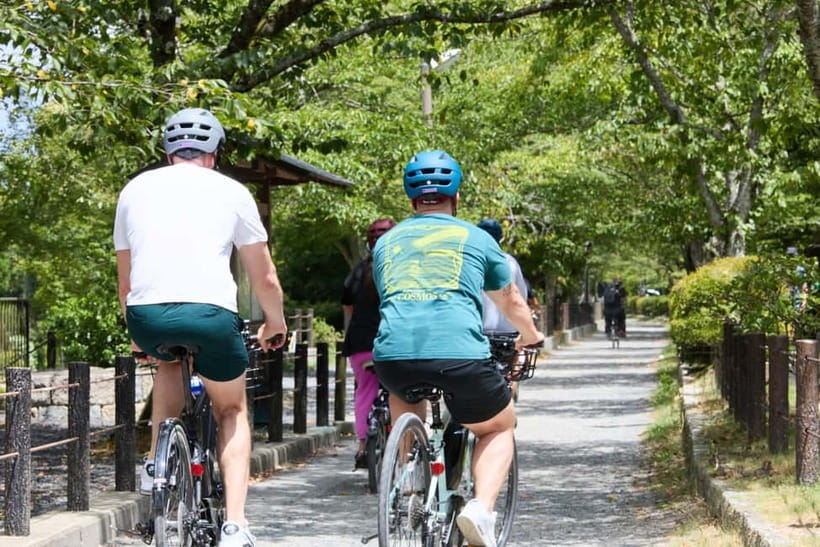
Then comes Philosopher’s Path for about 30 minutes. Even if you have heard of it before, the value here is timing and route logic. A bike tour that intentionally skips the worst crowd patterns can make this kind of famous spot feel human again.
Your time is not long enough to do it like a full self-guided walk, but it is long enough to get the essence. You can slow down, take photos, and notice what makes the path feel like a Kyoto signature.
From a practical point of view, this is also a good stretch to use the e-bike smartly. You can rest where needed, then roll forward and stop again without the fatigue that can hit if you do the same route on foot.
Shimogamo-jinja Shrine: a quieter break in the rhythm
Next is Shimogamo-jinja Shrine for about 20 minutes. This short stop matters because it breaks up the tour rhythm. Instead of pushing from one big landmark to the next, the route includes a quieter, more reflective pause.
Short shrine stops can feel like a tease if the tour is rushed, but the small group format helps here. With a limit of 8 participants, your guide can keep the group moving at a pace that still allows you to look around.
If you are a detail person, this is often where you catch the little things: how people behave in the space, what you notice about ritual areas, and how the setting feels different from more famous lanes.
One reviewer specifically praised the fact that the guide brought them to quieter, lesser-known places. This stop fits that theme well, and it is the kind of location that can feel calmer even on a day when major sites are busy.
Kyoto Imperial Palace: finishing with a grand sense of place
Your final major stop is the Kyoto Imperial Palace for about 30 minutes. This is a great close because it shifts the focus from shrines and temples to the imperial and historical backdrop of Kyoto.
It also gives you a good sense of the city’s layered identity. Kyoto is not only religion and gardens. It is also governance, heritage, and long-standing ceremonial space. Ending here helps you leave with a broader picture, not just a stack of scenic points.
The key is how your guide frames it. Many guides run tours like a slideshow. The best ones connect what you are seeing to how Kyoto’s past shaped daily life and architecture. Several people in the guide feedback singled out the storytelling and how helpful the guide was with questions and culture context.
The ride itself: what it feels like in real life
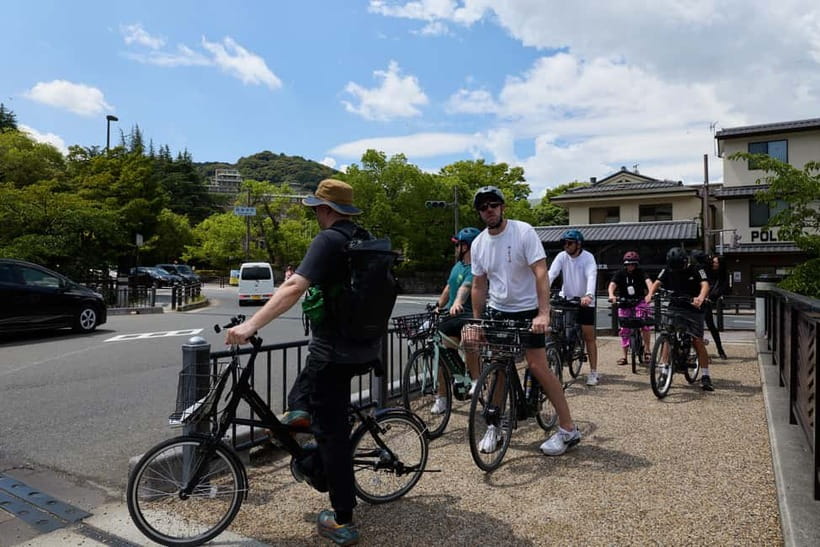
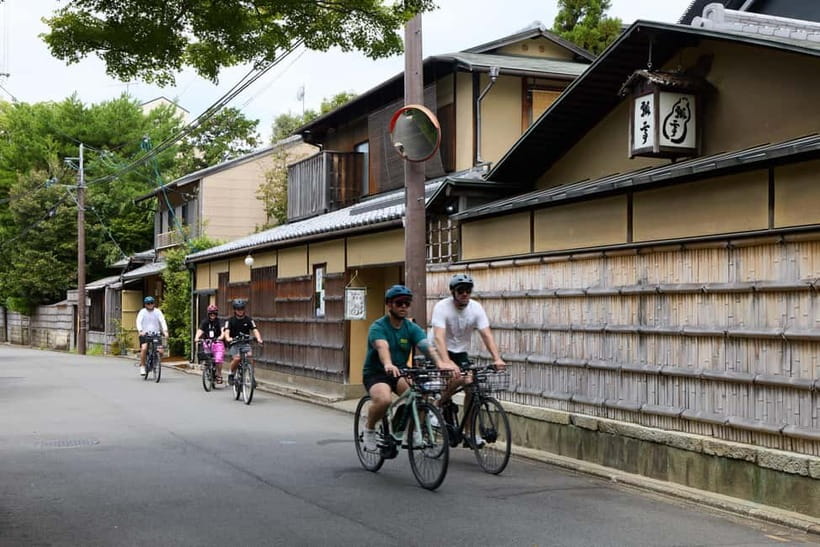
You are on an e-bike the entire time, which changes the emotional experience. Kyoto is full of short routes and turns, and e-bikes help you follow a guide through changing street conditions without the strain of traditional biking.
What I took from the guide feedback is that safety and comfort are treated seriously. People praised how patient guides were, how they checked the group was following, and how the ride stayed comfortable even in narrow areas.
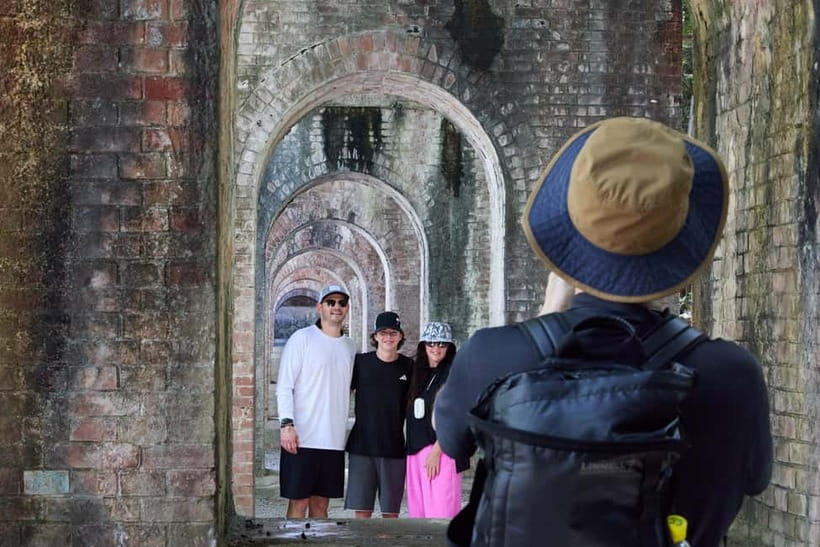
Also, the tour includes photo opportunities. That is not a minor thing. In Kyoto, the best shots often require you to pause at the right moment, not just walk and hope. The guides also offered to take photos for the group in at least some cases, so you get real memories, not just your own arms blocking the frame.
Guides who actually make the city make sense
The experience sounds like it depends heavily on guide quality, and the reviews show it. Names that came up include Ben, Yuki, and Kenji.
Across those mentions, a few themes stand out:
- Guides were described as friendly and approachable, not distant
- The group got culture and history context instead of only route instructions
- Several guides were praised for adapting to ride skill levels and interests
- People liked that the guide gave time for you to explore on your own during stops
If you care about learning while you travel, this matters. You can always take an audio tour. You cannot easily swap questions mid-walk. A live guide changes the experience from sightseeing to understanding.
And yes, you will probably get lots of small facts you can use later, like how people talk about shrines and traditions, and why certain places feel the way they do.
Pace, skills, and what to wear
This is not an all-day hike, but it is also not a gentle cruise with zero effort. Plan on riding a bike and stopping often enough to explore each site.
Because the tour includes temple and shrine areas, expect some uneven surfaces and short segments where you might need a touch more e-bike help. You can manage it, just do not plan to wear brand-new shoes that you hate.
For gear, I would keep it practical:
- Light layers, Kyoto mornings can shift with weather
- Comfortable socks and shoes you can walk in after biking
- Bug spray if you are going in warmer months, one person warned about insects after a visit
If rain happens, the e-bike still makes it workable. One review highlighted that riding in rain was a standout moment, which tells me the route and bikes handle weather better than you might assume. Still, waterproof clothing helps, and you should always follow the guide’s safety guidance.
Price and value: is $87 worth it for 4 hours?
At $87 per person for 4 hours, you are paying for four things at once: a guide, an e-bike rental, small-group handling, and access to a well-timed route across Kyoto’s highlights and quieter areas.
That value is strongest if:
- you want to see several major places without exhausting commuting
- you prefer not to fight crowd patterns on your own
- you like history and culture commentary, not just sightseeing snapshots
- you want your time managed so you are not guessing where to go next
If you are the type who already knows Kyoto well and loves building your own route, you could do it cheaper by booking a bike rental and mapping stops. But you would lose the guided context and the route logic that seems central to why this tour keeps scoring near the top in ratings.
In other words, this is not just transportation. It is a guided way to spend your morning efficiently.
Who this tour suits best
I think this works best for you if you want:
- a relaxed but active introduction to Kyoto
- a route that mixes famous stops with quieter pockets
- a small-group feel where your guide can actually look after you
- English commentary and space to ask questions
It is less ideal if:
- you are traveling with children under 10, or anyone under the 145 cm height minimum
- you want a fully sedentary experience
- you plan to bring alcohol or drugs, since those are not allowed
Also, insurance is not included, so if you rely on coverage for activities, confirm your own policy before you go.
Quick FAQ
FAQ
How long is the Kyoto e-bike tour?
It runs for 4 hours.
How much does the tour cost?
The price is listed as $87 per person.
Where do I meet the guide?
The guide waits in front of Kyoto Tourist Lounge Gion, faced on Yamatoooji-dori Street. Check the meeting point in Google Maps.
Is this a small-group tour?
Yes. The group is limited to 8 participants.
Is the tour suitable for children?
It is not suitable for children under 10, and there is a height minimum of 145 cm.
What language is the tour guide?
The live tour guide provides English.
What is not included in the price?
Insurance is not included.
Should you book this Kyoto e-bike tour?
If you want a Kyoto morning that feels efficient, friendly, and less crowded, I would book it. The strongest reasons are the small group, the e-bike comfort, and the fact that guides like Ben, Yuki, and Kenji are praised for mixing route know-how with actual cultural explanation.
Book it if you like temples and shrines but also want to spend less time stuck in crowd flow. Skip it if you cannot ride comfortably for a few hours, or if height and age limits apply. For most adults who want to see Kyoto without burning the day, this is a very solid way to get oriented fast and still feel like you found your own quieter corners.
Latest write-ups near Kyoto
- Kyoto: Nishiki Market Tour with a Local Foodie & Tastings★ 4.5 · 67 reviews
- Kyoto Kimono Rental mimosa |Kimono/Yukata Rental Couple Plan★ 4.8 · 67 reviews
- Kyoto: Traditional Kimono Fabric Handicrafts Workshop★ 5.0 · 67 reviews
- Kyoto Tea Ceremony and Samurai Photo Session★ 5.0 · 70 reviews
- Kyoto: Replica food making experience★ 4.8 · 70 reviews
- Kyoto: Kinkakuji, Golden Pavilion Guided Tour★ 4.7 · 71 reviews
- Private departure transfer from Kyoto city to Kansai International airport★ 5.0 · 72 reviews
- Uji: Green Tea Tour with Byodoin and Koshoji Temple Visits★ 4.8 · 72 reviews
Temple & Shrine Tours, compared.
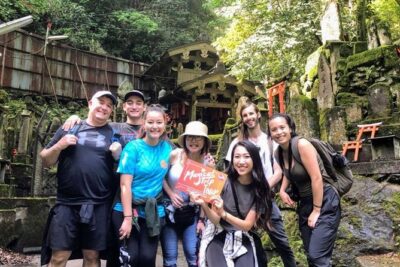
Fushimi Inari, Kinkakuji, Bamboo Grove 1 Day Bus Tour
Read our review →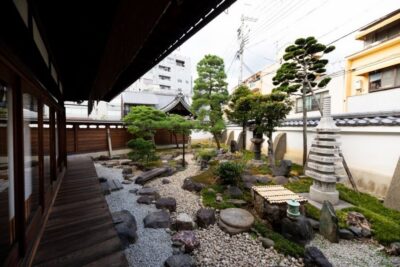

Meiji Shrine, Asakusa, Skytree Bus Tour and Cruise
Read our review →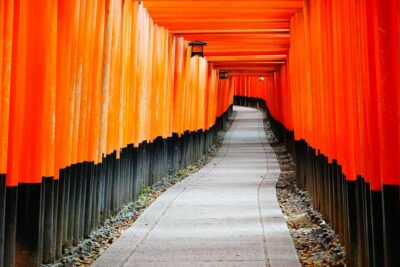
Osaka/Kyoto:Kinkakuji,Arashiyama,FushimiInariShrine,NaraPark
Read our review →
Asakusa Walking Tour with Sensoji Temple Visit
Read our review →
Nikko: Kegon Falls, Lake Chuzenji & Toshogu Temple
Read our review →
Kamakura & Enoshima Day Trip including Temple Tickets
Read our review →
Nikko Toshogu Shrine and Kegon Waterfall Tour
Read our review →Browse the lists this tour appears in