
Reviewed · HISTORICAL TOURS
Kyoto: Private 2.5 Hour Historical Walking Tour
Kyoto can feel like a blur of torii gates and temple stairs, but this private 2 to 2.5 hour walk keeps things in focus. I love the way the route links Shinto, Zen, and Buddhism in real places, not just in theory. I also like that you start at Yasaka Shrine, then move on to quieter stops before you hit the big show at Kiyomizu-dera.
Two things I especially like: the guides often teach with hand-drawn notes and maps, and you get context for what you’re looking at as you walk. Guides such as Hisako, Hiroshita, and Hiroko have been praised for clear English and patient answers. The main drawback is practical: Kiyomizu-dera is massively popular, so expect crowds and lines at key moments like the water ritual.
Key highlights you will notice right away
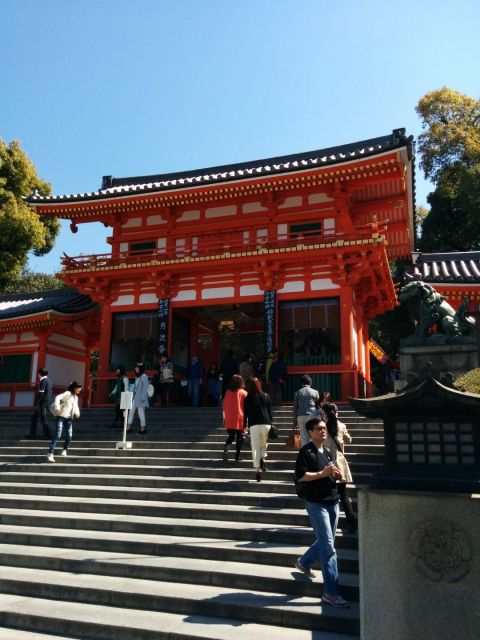
- Red-gate start at Yasaka Shrine that sets the tone for what worship looks like in Kyoto
- Entokuin’s rock-and-sand Zen garden design plus traditional room interiors and sliding-door art
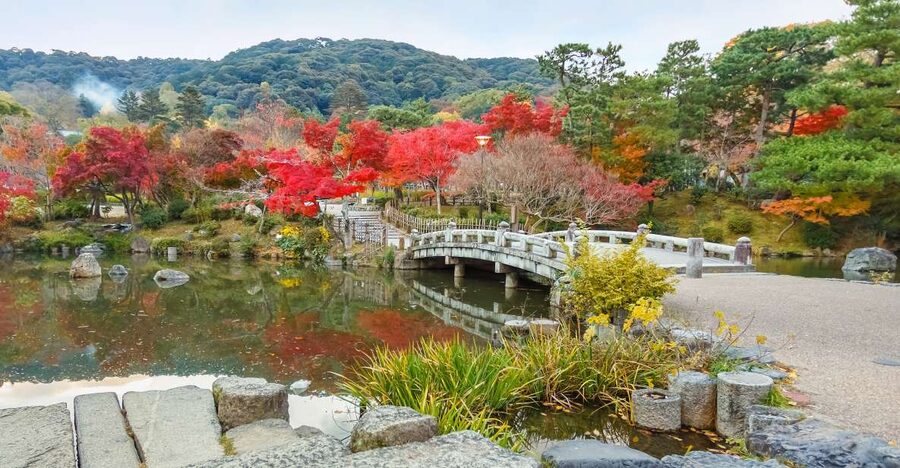
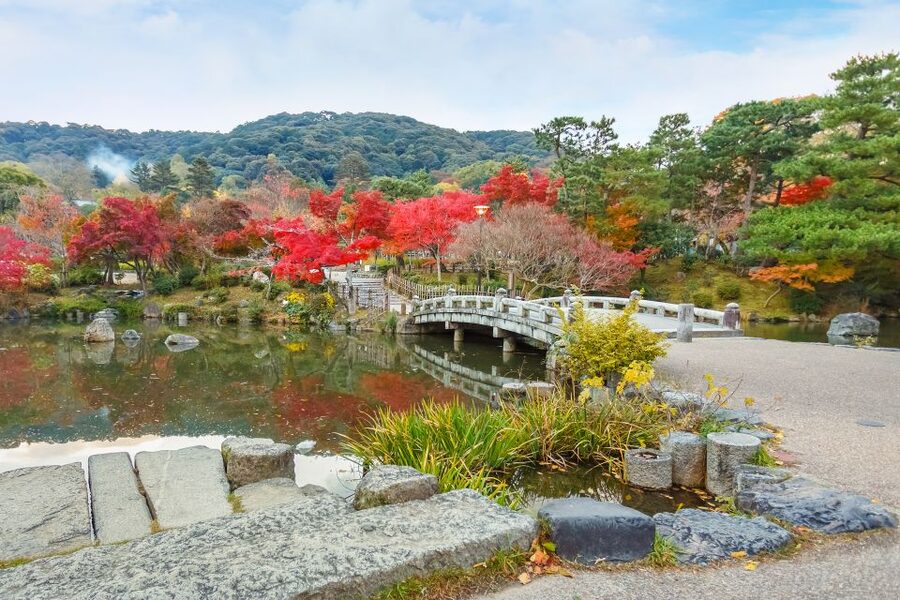
- Maruyama Park to Nene-no-michi through stories tied to Toyotomi Hideyoshi’s era
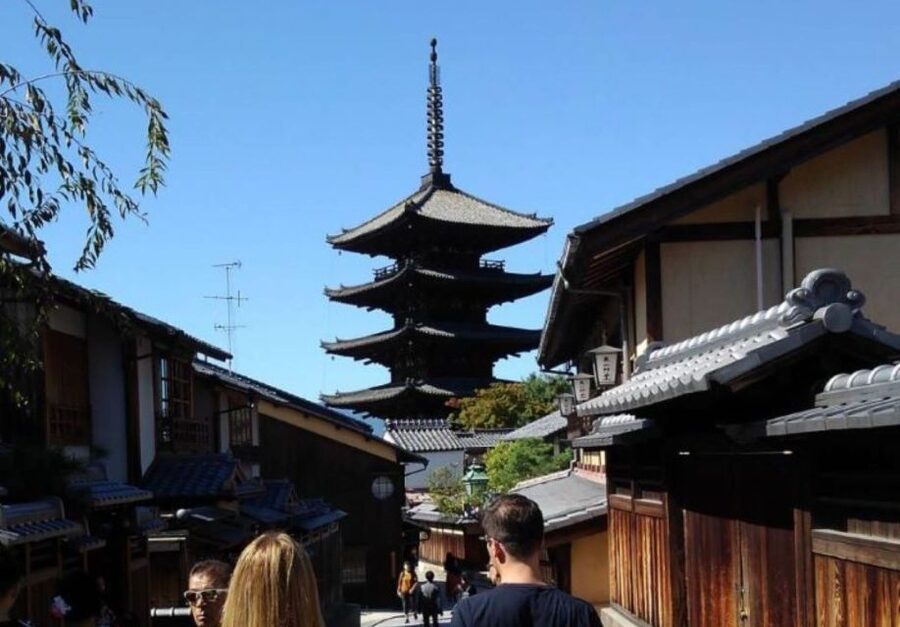
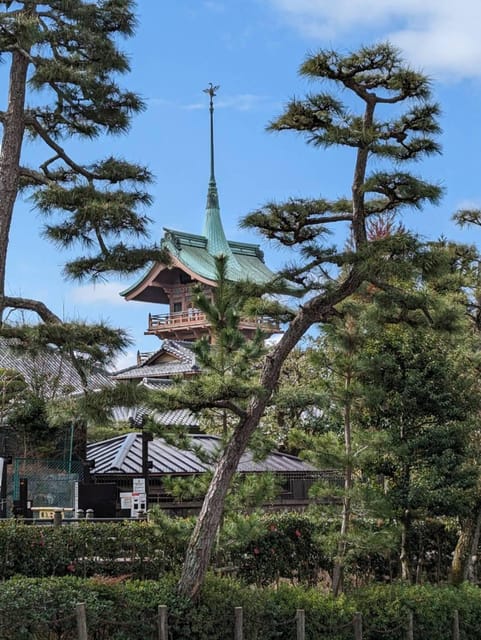
- Five-storied Yasaka-no-to pagoda spotted from the street, with a famous photo angle nearby
- Kiyomizu-dera’s main hall views from a wooden stage attached without nails (yes, nails)
- Pure water tradition at Kiyomizu where you can see people queue to drink from the stream
Yasaka Shrine west gate, the perfect launch pad for shrine etiquette
Meeting happens at the west gate (red gate) of Yasaka Shrine. The exact start matters here because your guide will use the shrine itself as the classroom. You’ll begin with an orientation to Kyoto, often with a map so you can connect today’s streets to older power centers and travel routes.
From there, you’ll get grounded in shrine basics: how to approach, how worship works, and what different parts are doing. This is one of the best uses of a walking tour in Kyoto. Instead of walking past things, you start seeing patterns, like the rhythm of gates, halls, and worship areas.
Logistics are simple, but do plan for steps. The meeting directions include climbing stone steps to reach the top area around the shrine, so comfortable shoes are not optional. If you’re prone to sore calves, pace yourself right from the start.
More Historical Tours in Kyoto
- Kyoto Gion: 2-Hour Geisha Culture & History Walking Tour
★ 5.0 · 1,186 reviews - Kyoto Gion Historical Walking Tour
★ 5.0 · 188 reviews - Historical Kyoto E-Bike Tour
★ 5.0 · 181 reviews
Entokuin Zen temple: quiet rooms, dry garden design, and story behind the calm
Entokuin is where the walk slows down in the most satisfying way. You’ll spend about 40 minutes here, which is long enough to actually notice details. This is a Zen temple visit focused on atmosphere and visual symbols, not just sightseeing checkmarks.
The big visual hit is the Zen garden layout made with rock and sand. It’s designed to be read with the eyes, even if you don’t fully understand all the symbolism yet. Your guide helps you “see” it, especially by connecting what the garden is for, and how people treat quiet spaces like this.
Inside, you’ll also get traditional Japanese room context. The tour description includes sliding doors with pictures, and you’ll be able to understand how the temple’s interior art fits the setting. One practical reason this works so well: it gives you a mental hook for later, when you’re back out in the streets and trying to remember what you saw.
If you like learning through visuals, you’re in good shape. Many guides (Hisako and Hiroko are named in accounts) use folders with drawings and structured explanations. That style tends to make the Zen stop feel less like a lecture and more like a guided way to look.
Maruyama Park to Nene-no-michi: a walk that links Gion street life to power politics
Leaving Entokuin, you move through the area around Maruyama Park, which sits next to Yasaka Shrine. The vibe shifts quickly from calm temple quiet to street energy. You’ll walk along Nene-no-michi, a busy street with a historical story attached.
Here’s the connection you shouldn’t skip: Nene was the wife of Toyotomi Hideyoshi, a late-16th-century political leader. That matters because Kyoto’s religious spaces are often tied to patronage, status, and personal devotion. Your guide brings that idea to life by explaining why a temple like Entokuin is connected to Nene.
This stop is also a reminder that “history” in Kyoto is not a museum wall. It’s embedded in street names, family stories, and the way later generations kept honoring earlier figures.
Yasaka Kōshin-dō and the five-storied pagoda photo stop
Next you’ll visit Yasaka Kōshin-dō Temple for about 15 minutes, then you’ll reach a viewpoint stop. The tour specifically highlights a five-storied pagoda commonly called Yasaka-no-to (the Yasaka pagoda).
Important: the pagoda is seen from outside. That still works, because this is Kyoto, and street-level framing is part of the experience. There’s also a famous photo spot nearby, so you can aim for a composition that feels postcard-ready without needing special access.
If you’re the type who gets annoyed when tours only point and rush, you’ll like the pacing here better. The time split gives you room to take photos, look up, and reset your eyes before the big climax.
More Walking Tours in Kyoto
- Kyoto Geisha Walking Tour: Gion District & Hidden Gems
★ 4.7 · 3,273 reviews - Kyoto: Gion Magical Night Walking Tour with Geisha Trivia
★ 4.9 · 2,393 reviews - Kyoto: Gion Geisha District Walking Tour – Stories of Geisha
★ 4.7 · 2,187 reviews - Night Walk in Gion: Kyoto’s Geisha District
★ 4.5 · 2,003 reviews
Kiyomizu-dera: Kannon worship, a nail-free wooden stage, and pure water you can taste
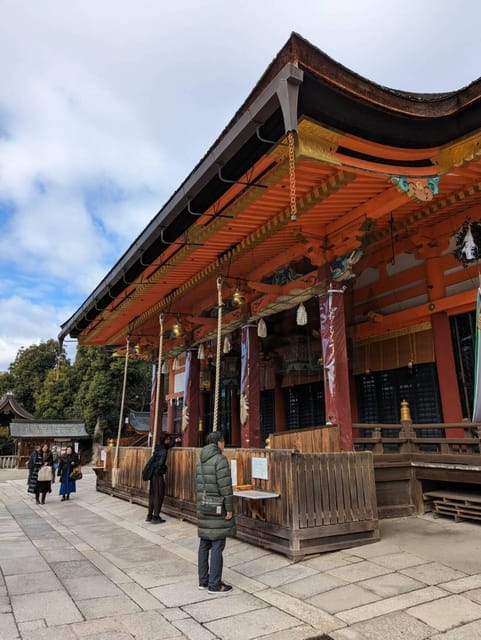
Kiyomizu-dera is the main event, and the numbers alone explain why. The temple draws around five million visitors each year, so it’s one of the easiest places in Kyoto to feel the world crowding in.
Your tour visit lasts about 35 minutes. That’s enough time to understand the site’s main worship focus and still enjoy the key moments instead of sprinting. The central object of worship is Kannon Bodhisattva, and you’ll see Buddhist statues associated with this devotion.
One of the most memorable specifics is the wooden stage attached to the main hall. The tour description notes it is a wooden structure without the use of nails. Whether or not you care about construction trivia, it adds weight to the experience. You’re standing on a piece of architecture meant to let worshippers feel connected to the view and the sacred space.
From that stage, the scenery is described as magnificent, and you can see a three-storied pagoda called Koyasu Pagoda, also interpreted as a pagoda for easy birth. The practice here is personal and practical: women visit and pray for easy birth.
Then comes the ritual that turns sightseeing into participation. Kiyomizu literally means pure water, and a stream of water runs down from the mountain behind the temple and has never dried up. You’ll see visitors in line to drink the water, and the tour also mentions donated items within the precincts, including an iron stick and iron clogs. The iron stick is heavy, so you might try lifting it if you’re curious, but even if you skip that, just watching others can be a fun, grounded way to feel the temple’s living customs.
Before you leave: Jishu Shrine and match-making tradition
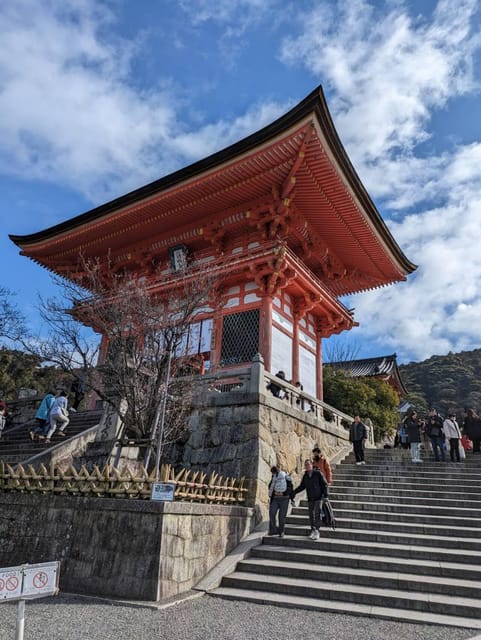
After you get out of the main hall, the tour ends, but not before your guide adds one more cultural thread. You’ll get an explanation about Jishu Shrine, known as a shrine for match making.
This closing stop is useful because it helps you interpret what you often see around Gion and the Kiyomizu area. Kyoto’s romance legends, festivals, and shrine practices tend to be woven into everyday visitor behavior. With this quick context, you’re more likely to notice what people are doing and why.
How the 2 hour walk actually feels on your feet
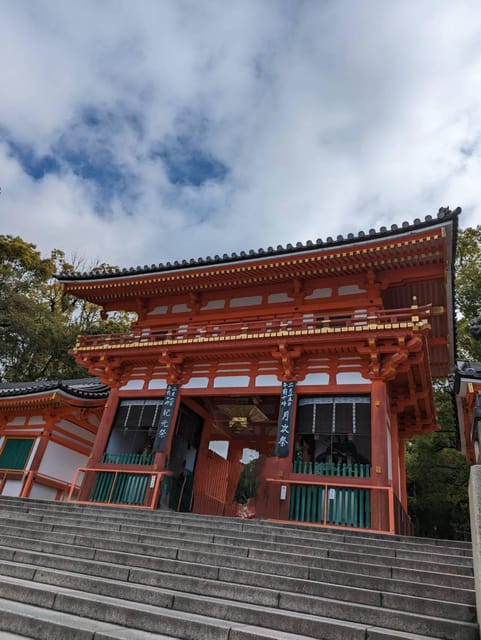
This is a walking tour, so your comfort matters. The route is built around short on-foot segments between stops, with visits that do most of the time-heavy work.
You’ll typically start with a brief walk, then spend the longest chunk of time at Entokuin, followed by shorter visits at Yasaka Kōshin-dō and Kiyomizu-dera. The viewpoint stop is short but helps you reset before Kiyomizu. If you’re trying to manage energy, the best strategy is to treat the Zen garden as your “buffer stop,” because you’ll have plenty of street energy ahead.
Also, plan your photo habits. This tour has built-in time for looking and taking pictures, but you’ll enjoy it more if you don’t turn every doorway into a photoshoot. Aim for fewer, better shots, especially at the pagoda angle and from the Kiyomizu stage viewpoint.
Price and value: what $80 buys a private group up to 5
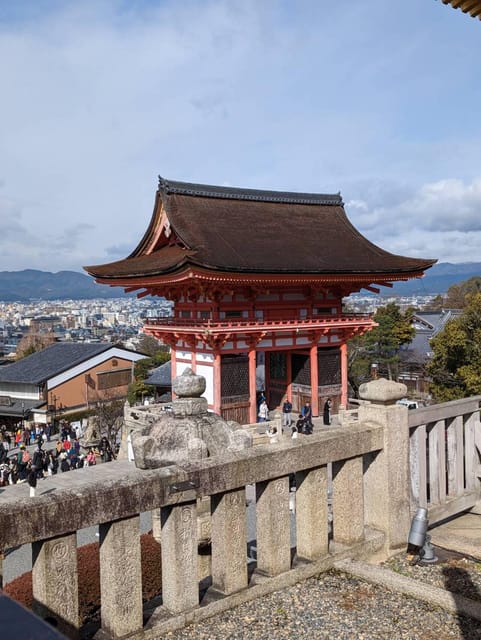
The price is $80 per group up to 5 people, with a private guide. On paper, it’s not the cheapest way to see Kyoto. In practice, it can be one of the better value options because the guide work is the product here.
What you’re paying for is not just entry into temples. You’re paying for:
- real-time explanations as you move through shrine and temple spaces
- help understanding worship customs so you don’t feel lost
- a guided route that connects separate sites into one story
Temple admission fees are not included, so budget separately for entry costs. Also, transportation to and from the meeting point is not included, so get yourself to Yasaka Shrine west gate on your own.
If you’re traveling solo, the price is still reasonable if you want a high-quality introduction to how Kyoto’s religious sites fit together. If you’re traveling with a friend or a small group, it’s easier to justify because the cost spreads across the same private guide time.
Who should book this Kyoto historical walking tour
This is a great fit if you want Kyoto to make sense fast. It’s especially good for:
- first-time visitors who want a guided starting framework for shrines and temples
- people who care about why sites exist, not just what they look like
- couples or small groups who like a calm pace and photo breaks
It’s not ideal if you want zero walking and a sit-down only experience, since this is built as a walking route with stone steps and temple stairs. It also may feel too “slow” if your plan is to see everything in one rush.
A helpful note from guide styles described in accounts: many guides use structured notes and hand-drawn visuals to keep the story clear. That’s a big plus if you learn better by seeing sketches and maps while you’re standing in place.
Should you book it
If you’re in Kyoto for several days, I’d book this early. It gives you the mental map to interpret what you’ll see later, especially shrine etiquette and the way Zen and Buddhist symbols show up in everyday spaces. The Kiyomizu-dera portion alone is worth planning around, but the value comes from connecting it to the calmer stops before it.
Book it if you want a guided walk that turns temples into context. Skip it if your priority is only the biggest crowds and fastest photo stops, because this tour is designed for understanding, not just volume.
FAQ
Where is the meeting point?
You meet at the west gate (red gate) of Yasaka Shrine.
How long is the tour?
The tour duration is listed as 2 hours.
Is this a private group tour?
Yes. It is described as a private group tour.
What language is the guide?
The guide provides the tour in English.
Is the guide included in the price?
Yes. A live tour guide is included.
Are temple admission fees included?
No. Admission fee to the temples is not included.
What should I bring?
Bring comfortable shoes, since this is a walking tour with temple areas.
Which train stop is best for reaching the meeting point?
If you use the Keihan Line, get off at Gion Shijo Station, or if you use the Hankyu Line, get off at Kawaramachi Station, then follow the walking directions to the west gate.
Latest write-ups near Kyoto
- Kyoto: Nishiki Market Tour with a Local Foodie & Tastings★ 4.5 · 67 reviews
- Kyoto Kimono Rental mimosa |Kimono/Yukata Rental Couple Plan★ 4.8 · 67 reviews
- Kyoto: Traditional Kimono Fabric Handicrafts Workshop★ 5.0 · 67 reviews
- Kyoto Tea Ceremony and Samurai Photo Session★ 5.0 · 70 reviews
- Kyoto: Replica food making experience★ 4.8 · 70 reviews
- Kyoto: Kinkakuji, Golden Pavilion Guided Tour★ 4.7 · 71 reviews
- Private departure transfer from Kyoto city to Kansai International airport★ 5.0 · 72 reviews
- Uji: Green Tea Tour with Byodoin and Koshoji Temple Visits★ 4.8 · 72 reviews
Historical Tours, compared.
World Heritage Shirakawa-go and Experience Tours from Kanazawa
Read our review →
Imperial Palace and Shogun Historical Walking Tour
Read our review →
World Heritage Kyoto & Nara Uji Authentic Matcha Experience
Read our review →
Kyoto Gion: 2-Hour Geisha Culture & History Walking Tour
Read our review →
World Heritage Shirakawa-go Morning Guided Tour
Read our review →
Hiroshima Peace (Heiwa) Walking Tour at World Heritage Sites
Read our review →
Shinjuku Historical Walking Tour & Secret Backstreets
Read our review →Browse the lists this tour appears in