Reviewed · KYOTO TOURS
Kyoto Rickshaw Tour
Kyoto’s Higashiyama and Gion feel like a step back in time, and a rickshaw ride is a fun, low-effort way to experience that mood fast. I love how the route turns you into a moving observer, gliding past Higashiyama alleyways without spending your whole day walking. I also like that you get an English-speaking guide plus a driver who can help shape the stops around your timing.
One thing to consider is comfort. The rickshaws are only 29.1 inches (74 cm) wide, and there’s a cap of 2 adults per rickshaw, so larger passengers often feel better booking separate rickshaws.
Key Highlights at a Glance
- A private-group ride on a classic Kyoto rickshaw so your route stays calmer and more flexible.
- English-speaking guidance to turn old streets and shrines into real stories you can follow.
- Photo-friendly pacing, with lots of short stops so you actually see what you came for.
- Higashiyama and Gion focus, including traditional wooden townhouses and a large shrine stop.
- Real-world convenience, starting at Ebisuya Higashiyama Rickshaw, near public transportation.
Why a Kyoto Rickshaw Ride Makes Higashiyama Easy to Enjoy
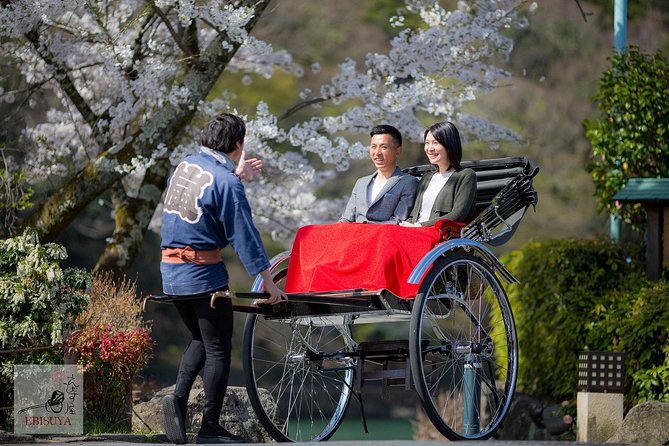
Kyoto can be a lot. The sidewalks, the crowds, the hills, and the sheer number of shrines all compete for your attention. A rickshaw tour is a smart way to take in Higashiyama and Gion without burning your energy before you even get to the really atmospheric streets.
What I like best is how you experience the details at human speed. You are not rushing between photos. You are watching stone alleys, traditional wooden buildings, and those tight lanes where the city looks exactly like postcards, except you’re right there in it. And when you get lucky, you may spot a geisha area moment, like a miko geisha sighting that some groups have reported.
This is also a good choice if you want a first look. Even if you plan a deeper temple day later, this kind of ride helps you get your bearings fast. You learn what’s where and what to prioritize on your next outing.
Also on the shortlist for Kyoto:
- PERFECT KYOTO 1-Day Bus Tour
★ 5.0 · 13,518 reviews - Kyoto: Fushimi Inari, Kinkakuji, Bamboo Grove 1 Day Bus Tour
★ 4.8 · 4,316 reviews - Kyoto: Tea Ceremony in a Traditional Tea House in Kiyomizu
★ 4.9 · 3,519 reviews
Ebisuya, Meeting Point, and the Private-Group Advantage
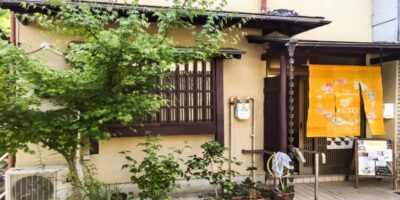
You start at Ebisuya Higashiyama Rickshaw, 483 Shimokawarachō, Higashiyama Ward, Kyoto. The good news is that it’s near public transportation, so you are not stuck hunting for a pickup that may never come.
Another practical win: this is a private tour/activity, meaning only your group participates. That matters more than you might think. In Kyoto, group logistics can get messy. With a private format, you get less crowd noise, fewer awkward waits, and more freedom to ask questions in the moment.
You also end back at the meeting point. That keeps things simple if you are juggling dinner plans or trying to connect to another activity right after. If you want to extend the fun, you can discuss customization with the guide depending on your interests.
Pick Your Time: 30 Minutes to 3 Hours (and How That Changes the Experience)
The tour duration is flexible, from about 30 minutes up to 3 hours. In real life, that range is everything. A half-hour ride is more about quick atmosphere and a few key photo moments. A longer ride gives room for more stops, more stories, and more time to slow down and actually look.
Your route can vary based on the length you book, so think of it like this: longer rides cover more stops and more walking time in the historic areas, while shorter rides concentrate on the highlights.
I suggest booking longer if you want more than scenery. If your goal is to understand the neighborhood, learn customs, and get temple and shrine context, longer usually feels more satisfying. Many guides in this program are known for making stops feel purposeful, not random, and you want enough time for that.
If you only have a tight schedule, the shorter option can still be excellent, but you may want to keep expectations realistic. In a short window, you are selecting what gets priority.
The Route in Real Terms: From Higashiyama Lanes to the Gion Shrine Moment
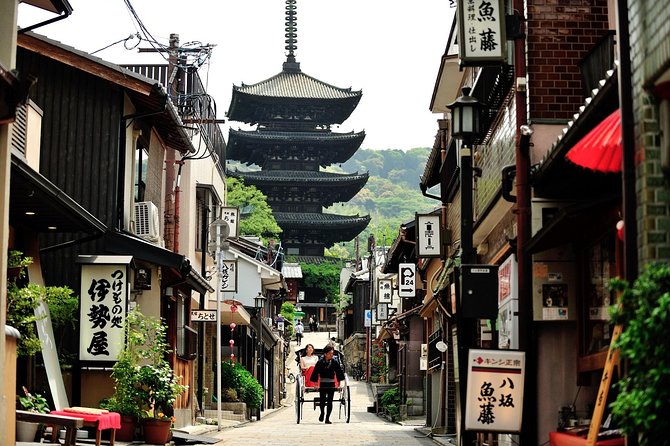
The itinerary is designed like a scenic loop through Kyoto’s classic atmosphere. You begin in the Higashiyama area, then work your way through historic landmarks, geisha districts, and temple and shrine stops. Here’s what those parts tend to feel like.
A change of pace from Kyoto:
- Kyoto Geisha Walking Tour: Gion District & Hidden Gems
★ 4.7 · 3,273 reviews - Kyoto: Tea Ceremony Ju-An at Jotokuji Temple
★ 4.9 · 3,207 reviews - Kyoto: Gion Magical Night Walking Tour with Geisha Trivia
★ 4.9 · 2,393 reviews - Kyoto: 45-Minute Tea Ceremony Lesson Experience
★ 4.3 · 2,378 reviews
Tour operator and a Higashiyama landmark
You start at the operator location in Higashiyama. From there, you move toward a landmark area in Higashiyama. This is the warm-up phase. You are getting set in motion, learning the street feel, and settling into the idea that you are traveling through narrow lanes where cars cannot go.
Geisha district and traditional wooden townhouses
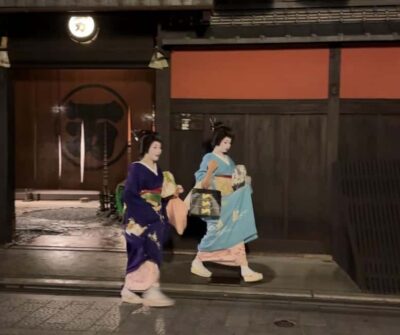
One of the main draws is time in the geisha district area and the streets lined with traditional wooden townhouses. This is where the city texture shows up most. You’ll notice the architectural rhythm, the lane width, and the way Kyoto looks different block to block.
This is also where people often hope to spot a geisha-related moment. Some groups have even reported seeing a miko geisha. Even if you do not, the streets themselves are the point.
A small bridge in a traditional district
A small bridge stop adds a pause that breaks up the long lanes. It gives you a different angle of the neighborhood and a place to slow down for photos. Bridges can also mark transitions in historic districts, so it helps the route feel like a story rather than a straight ride.
A beautiful temple with a garden
Then you reach a temple with a garden. The main value here is contrast. You’ve been in narrow stone and wood streets, then you get space to breathe visually. A garden temple stop also tends to make the guide’s explanations land better, because you are seeing what people built and preserved.
An impressive temple stop
After that, there is another temple stop that’s described as impressive. In practice, this is where you see more scale or a different style, depending on where you’re routed. Either way, temples are a big part of why Higashiyama feels special, so this is a key anchor point of the ride.
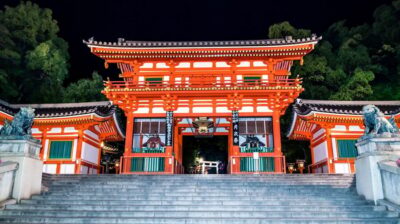
A large shrine in the Gion area
Finally, there is a large shrine in the Gion area. The tour description notes it’s worth a visit during New Year timing, either before or after the ride. If you’re traveling around that season, it’s a great way to experience the shrine area when Kyoto is extra focused on tradition.
Some groups also connect this portion with shrines like Yasaka and temple areas such as Kodaiji, so you get the feeling you’re seeing the major names, even while the route still uses quieter street segments.
Traveling on old cobblestone streets
A big part of the experience is actually the ride itself over older cobblestone streets. It’s not just transportation. You feel the street surface and the slow movement, which makes the city feel more real and less like a checklist.
Guides and Drivers: The Human Part That Makes It Worth $39.79
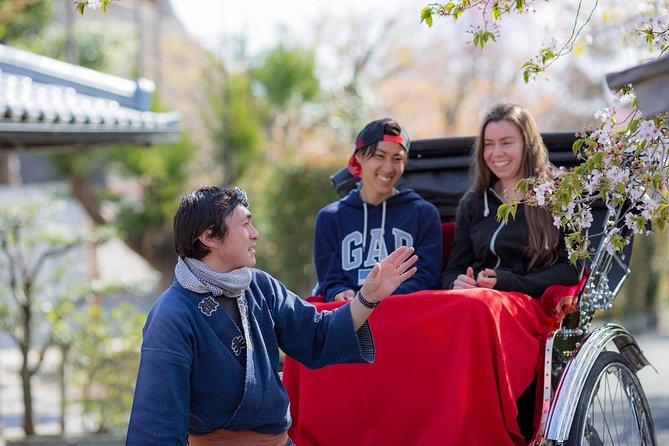
The guide and driver are the whole show here. The ride includes a local English-speaking guide, and that turns random scenery into a guided walk through what the places mean and how the neighborhood works.
In the feedback I used as background for this review, certain names come up again and again. Guides like Fumi, Kai, Kota, Hina, Fuji, Kanta, Shuhei, Yoshi, and Daichi are mentioned for strong English, humor, and energy. Some guides are also described as extremely fit, which matters when you watch someone do the physical work of pulling a rickshaw up Kyoto’s slopes.
A practical plus: many guides also help with photos. Not everyone is comfortable asking a stranger to shoot them while they’re standing in a busy spot. With a rickshaw team, you can get better framed shots without interrupting your own experience.
If you care about customs, stories, and small etiquette points, this tour style fits well. The guide presence helps you understand what you’re looking at, instead of just snapping pictures.
Rider Comfort: Seat Width, Lap Rules, and When You Should Book Two Rickshaws
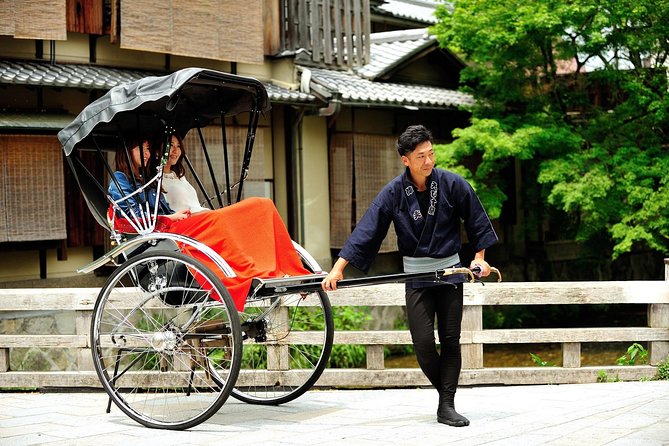
Comfort is the biggest decision factor on this tour. A rickshaw may hold two adults, but the width is only 29.1 inches (74 cm). If you’re bigger in build, or if you want a more relaxed posture, book one rickshaw per participant.
There are also clear limits:
- A maximum of 2 adults per rickshaw.
- Children 5 years and under may ride on an adult’s lap, but only one child per adult.
- If a child will use one of the two seats, the child must book as an adult.
- If your group does not both fit in one rickshaw and you want to ride at the same time, you may need to buy an additional rickshaw. Availability with an English-speaking guide can depend on booking in advance.
This is where you save yourself stress. If you wait to see how it fits on the day, you might end up with less ideal arrangements. If comfort is your priority, book the extra rickshaw early.
Price and Value at About $39.79: What You Really Get
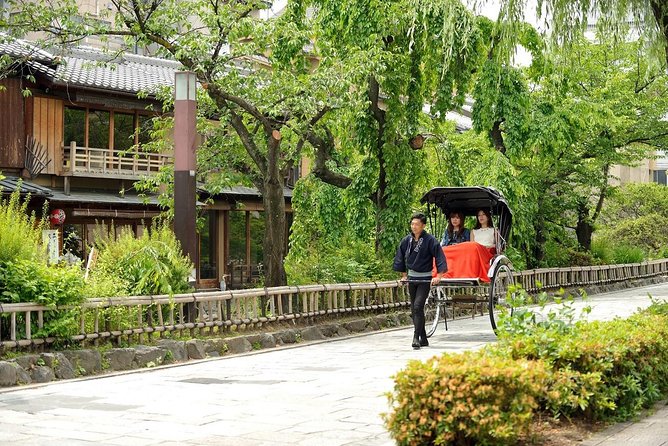
At $39.79 per person, you are paying for a bundle: a rickshaw ride plus a local English-speaking guide. You are also getting a private-group setup, which can reduce the usual friction of group tours.
Value comes from two things:
1) You get guided stops, not just transportation.
2) You save energy for the rest of Kyoto.
Food and drinks are not included, so plan your meal separately. Also, the ride is not designed to replace a full day of temple hopping. It’s designed to give you a high-impact snapshot of key districts with explanations and photo moments.
If you’re the type who enjoys learning as you go, this is a strong buy. If you only want scenery and you’re okay walking on your own, you might prefer a self-guided day. But if hills and crowds slow you down, this ride can make the day work.
Weather, Timing, and How to Avoid the Common Friction Points
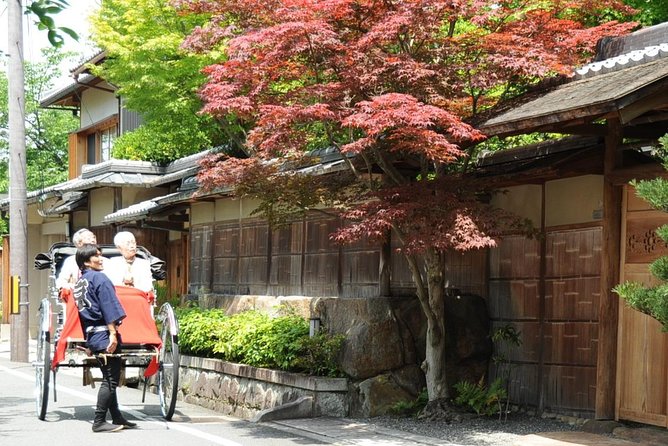
This tour runs rain or shine, which is a big comfort factor in Kyoto when weather can change quickly. However, there is also a note that good weather is required, and the experience could be canceled in poor conditions. If that happens, you would be offered a different date or a full refund.
Timing is crucial. If you are late, the time you are late is deducted from your tour duration. A delay of 10 minutes or more results in automatic cancellation. That means you should build in a buffer to get to Ebisuya Higashiyama Rickshaw before your start.
What I recommend:
- Arrive early enough to use the restroom and settle your group.
- Bring a light layer for cooler evenings or windy weather.
- Keep your next plan flexible, because the tour ends back at the meeting point but your route duration depends on the option you chose and whether you lose time due to lateness.
Also, finishing somewhere other than the rickshaw stand could involve an additional drop-off fee on the day of the tour, so if you have a hard connection, stick to the default end location.
Higashiyama vs. Arashiyama: Bamboo Forest Is Not Included
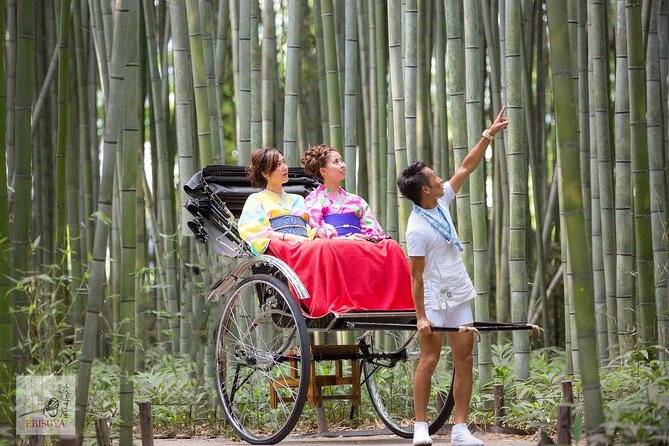
This tour is about Higashiyama and includes key moments in Gion. It explicitly does not include the Arashiyama Bamboo Forest.
So if your big Kyoto bucket list item is bamboo, you’ll need a separate plan for Arashiyama. Also, the ticket is valid only at the Kyoto Higashiyama branch. If you try to use it at the Arashiyama branch, it is invalid.
I like being clear on this up front. It prevents the classic Kyoto mistake: thinking one rickshaw tour covers everything and then realizing you still need to schedule bamboo later. Separate them and your schedule gets cleaner.
Should You Book the Kyoto Rickshaw Tour?
Book it if you want a fun, efficient way to experience Higashiyama and Gion without spending your day fighting hills and crowds. It’s especially worth it if you value English guidance, photo help, and a route that uses short scenic stops rather than long awkward gaps.
Skip it or adjust expectations if your group is extremely sensitive to seating width or if your schedule is so tight that losing a few minutes due to late arrival would ruin your day. Also, if you’re mainly hunting for Arashiyama Bamboo Forest, you’ll need a different activity.
If you want my practical bottom line: this is a strong first-time Kyoto experience, and it’s also a great option for anyone who wants to see old Kyoto details with less walking.
FAQ
How long does the Kyoto rickshaw tour take?
Tours run from about 30 minutes up to 3 hours, depending on the option you select.
Where is the meeting point, and where do we end?
You meet at Ebisuya Higashiyama Rickshaw, 483 Shimokawarachō, Higashiyama Ward, Kyoto, and the tour ends back at the meeting point.
Is hotel pickup and drop-off included?
No, hotel pickup and drop-off are not included.
What is included in the price?
The included items are a local English-speaking guide and the rickshaw ride.
Is this tour private?
Yes, it is private. Only your group participates.
How many people can ride in one rickshaw?
A maximum of 2 adults can ride in one rickshaw. The rickshaw is 29.1 inches wide, and it may be more comfortable to book individual rickshaws for each passenger.
Can children ride, and do they need to sit on laps?
Children 5 years and under may sit on an adult’s lap, one child per adult. If a child will use one of the two seats, the child must book as an adult.
Can the tour be customized?
Yes. The tour can be customized depending on your interests.
Does the tour include Arashiyama Bamboo Forest?
No. The Arashiyama Bamboo Forest is not included.
Can I cancel for free, and what if weather is bad?
You can cancel up to 24 hours in advance for a full refund. The tour runs rain or shine, but if it is canceled due to poor weather, you’ll be offered a different date or a full refund.
Latest write-ups near Kyoto
- Kyoto: Nishiki Market Tour with a Local Foodie & Tastings★ 4.5 · 67 reviews
- Kyoto Kimono Rental mimosa |Kimono/Yukata Rental Couple Plan★ 4.8 · 67 reviews
- Kyoto: Traditional Kimono Fabric Handicrafts Workshop★ 5.0 · 67 reviews
- Kyoto Tea Ceremony and Samurai Photo Session★ 5.0 · 70 reviews
- Kyoto: Replica food making experience★ 4.8 · 70 reviews
- Kyoto: Kinkakuji, Golden Pavilion Guided Tour★ 4.7 · 71 reviews
- Private departure transfer from Kyoto city to Kansai International airport★ 5.0 · 72 reviews
- Uji: Green Tea Tour with Byodoin and Koshoji Temple Visits★ 4.8 · 72 reviews
Kyoto Tours, compared.
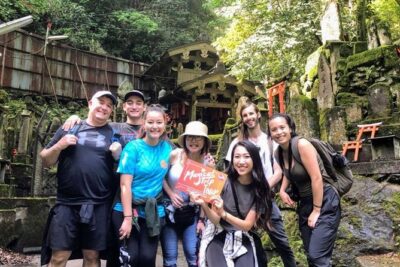
Fushimi Inari, Kinkakuji, Bamboo Grove 1 Day Bus Tour
Read our review →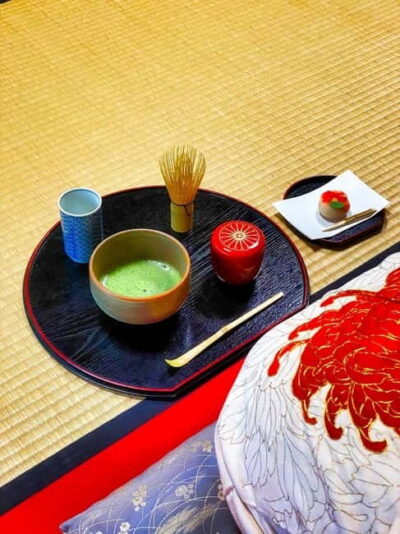
Tea Ceremony in a Traditional Tea House in Kiyomizu
Read our review →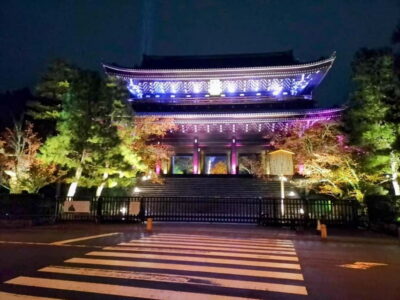
Kyoto Geisha Walking Tour: Gion District & Hidden Gems
Read our review →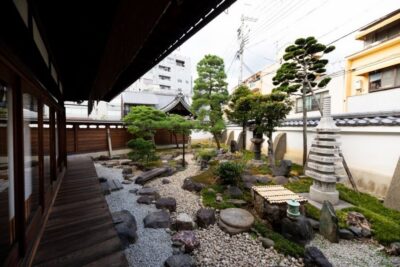
Gion Magical Night Walking Tour with Geisha Trivia
Read our review →