Reviewed · KYOTO TOURS
Kyoto: Traditional Concert at Townhouse or Bathhouse
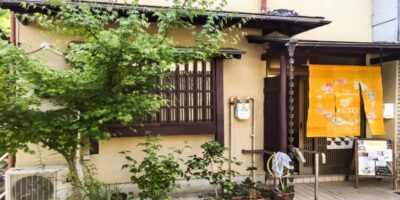
Kyoto in the evening can be loud. This experience goes the other way, putting koto and shamisen front and center in two very different rooms, a traditional home or a historic bathhouse hall. I love the close, small-group feel, and I also love that you get plain-English help along the way, so the music lands even if you start as a total beginner. One thing to plan for: the venue can be a little tricky to find, especially if you rely only on an address.
You’ll sit for the instrument talk, then a short program of 4 to 5 pieces. Afterward comes Q&A and a photo moment with the artists, plus an optional koto workshop at the townhouse option. In past sessions, hosts like Gen and Shima (and instrument guides like Shohei or Samuel) have helped people feel comfortable asking questions, including how the instruments work and why the music sounds the way it does.
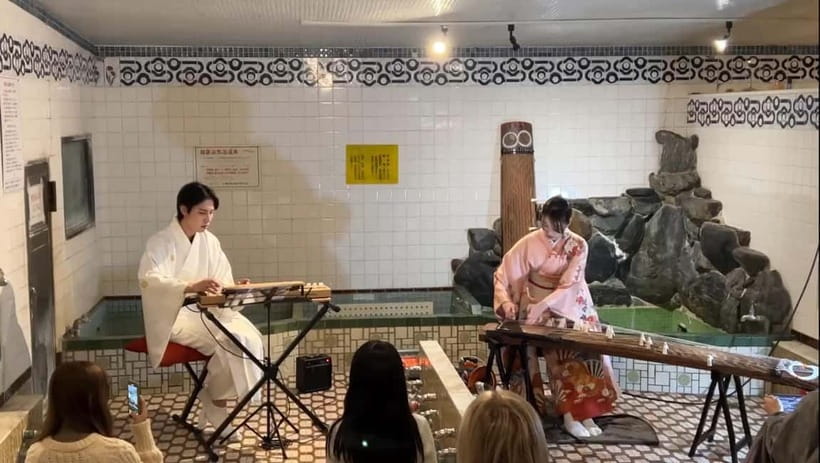
If you only do one concert, pick the venue that matches your mood. The townhouse feels cozy and personal, while the bathhouse hall sends the duets out in a bigger, resonant sound.
Key things I’d circle before you book
- Two venues, two listening vibes: a warm living-room style townhouse versus a reverberant tiled bathhouse hall
- Small groups with real Q&A: you meet the musicians, ask questions, and get answers right there
- Hands-on only at the townhouse: optional koto workshop with sanitized instruments and beginner-friendly guidance
- Instrument talk that actually helps: you learn parts, picks and bridges, and how notation is read
- Programs blend styles: classical pieces, contemporary works, and artist-chosen selections that rotate by season
- Duets can include more than shamisen: in the bathhouse option, koto can pair with shakuhachi, taishogoto, flute, guitar, and others
Kyoto Koto and Shamisen Concerts in Townhouse or Bathhouse Hall: The Real Hook
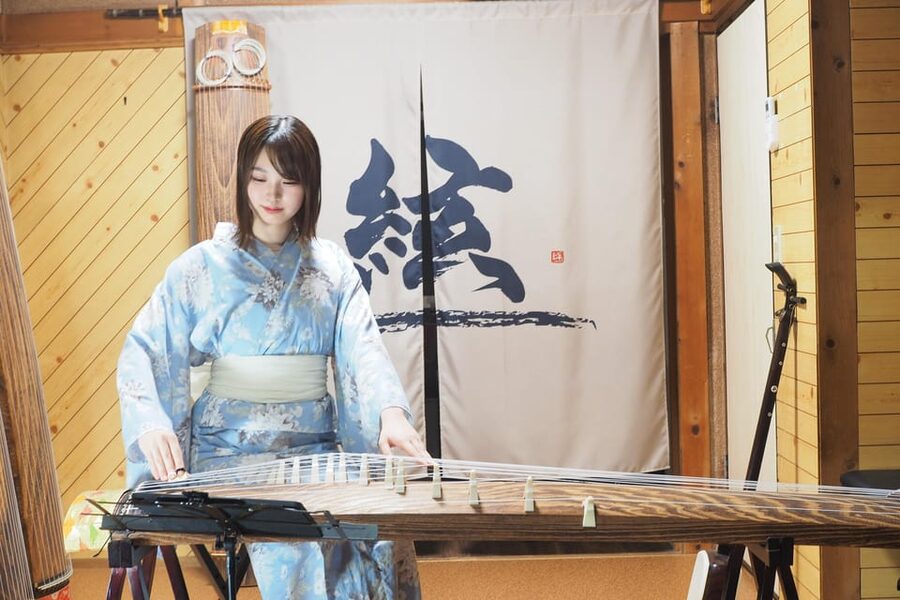
Let’s be honest: Kyoto can feel like a highlight reel. This activity slows you down on purpose. You’re not just watching from the back of a theater. You’re close enough to notice how a performer shapes the sound on the koto and shamisen, and close enough to hear the explanations without straining.
You also get a structure that makes the music easier to follow. The night is built like this: check-in and seating, an instrument introduction, then the concert, then Q&A and photos. If you opt for the townhouse, there’s even a workshop where you try basic koto techniques and play a short phrase. That turns the show into more than background culture.
The other big hook is the room. The traditional townhouse has a cozy, living-room mood with a small capacity of about 11 guests. The bathhouse hall holds around 30 and uses the hall’s natural reverb, so duets can feel bigger and more enveloping. Same instruments, very different experience.
Also on the shortlist for Kyoto:
- PERFECT KYOTO 1-Day Bus Tour
★ 5.0 · 13,518 reviews - Kyoto: Fushimi Inari, Kinkakuji, Bamboo Grove 1 Day Bus Tour
★ 4.8 · 4,316 reviews - Kyoto: Tea Ceremony in a Traditional Tea House in Kiyomizu
★ 4.9 · 3,519 reviews
Townhouse Concert: Cozy Solo Koto and Shamisen Up Close
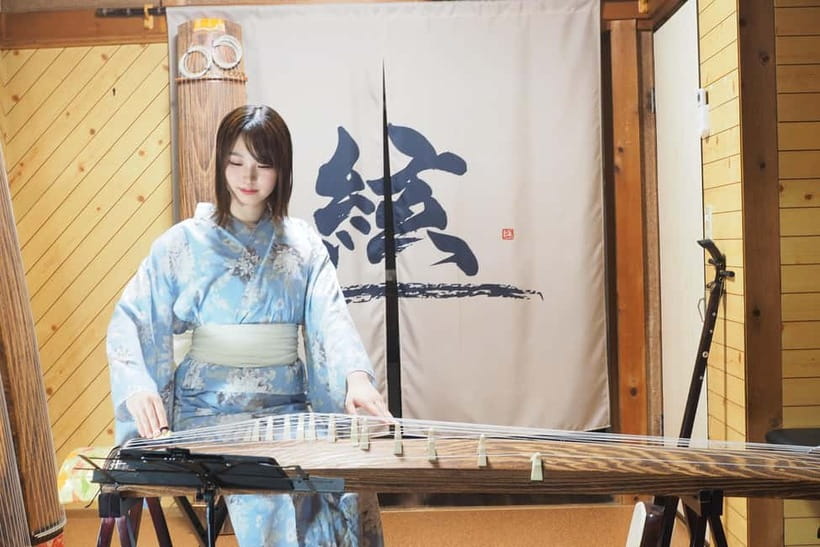
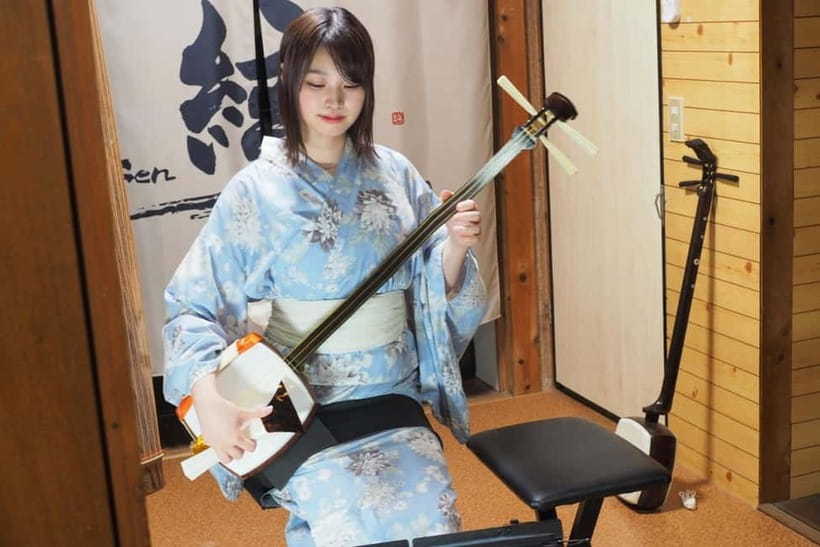
Choose the traditional townhouse if you want a calm evening with maximum attention on one performer. This venue is capped at about 11 guests, so you’re not swallowed by the room. The performance is solo, focused on koto and shamisen sets, usually 4 to 5 pieces.
What the solo program feels like
In this option, the concert runs roughly 25 to 30 minutes, and the performer plays a mix of Japanese classical and contemporary works. The exact repertoire rotates with the season and the musician’s personal style, but you might hear titles like Kajimakura, Chidorino Kyoku, or Kaede no Hana.
Because it’s solo programming, you spend more time with one musical voice. That’s great if you want to hear how phrasing changes from piece to piece, and how the performer uses the instrument differently even within a short set.
Why the townhouse room matters
This is where the “listening close” part really works. You’ll get a warm, home-like atmosphere where you can hear fine details and nuance. It’s the sort of setting where the instrument intro makes sense, because you can see what the host is pointing at when they talk about picks, bridges, and notation.
A change of pace from Kyoto:
- Kyoto Geisha Walking Tour: Gion District & Hidden Gems
★ 4.7 · 3,273 reviews - Kyoto: Tea Ceremony Ju-An at Jotokuji Temple
★ 4.9 · 3,207 reviews - Kyoto: Gion Magical Night Walking Tour with Geisha Trivia
★ 4.9 · 2,393 reviews - Kyoto: 45-Minute Tea Ceremony Lesson Experience
★ 4.3 · 2,378 reviews
Optional koto workshop, and who it’s for
Only the townhouse booking includes the optional hands-on workshop. The goal is not to turn you into a koto player by dinner. It’s to help you understand the basics through gentle guidance, using sanitized instruments. You’ll learn basic technique and play a short phrase, and it’s designed to be beginner-friendly.
That said, you should go in with patience. Coordinating sitting position, plucking, and reading the sheet notation takes a few minutes. The good news is the guidance is there, and the whole point is that it’s okay to start clumsy.
Historic Bathhouse Hall: Duets and Resonance That Makes the Music Larger
Pick the historic bathhouse hall if you want a more dramatic sound. This venue is larger, up to about 30 guests, and the hall’s tiled walls create noticeable natural reverberation. The concert style shifts too.
The bathhouse format is duet-heavy
The bathhouse program includes koto paired with another instrument, across 4 to 5 pieces. The lineup can include koto plus shamisen, shakuhachi, taishogoto, flute, guitar, and other pairings depending on the program.
It also tends to feel more like conversation between instruments. In a duet, you hear how timing, volume, and rhythm interact. That’s a useful contrast to the townhouse solo sets, where the performer’s voice stays centered.
When you can go
The bathhouse option runs on an irregular schedule, with performances offered on Mondays at times listed on the calendar. If you’re traveling with a tight itinerary, you’ll want to check dates first, then build the rest of your Kyoto day around the show.
How the Evening Runs: From Etiquette to Instrument Notation
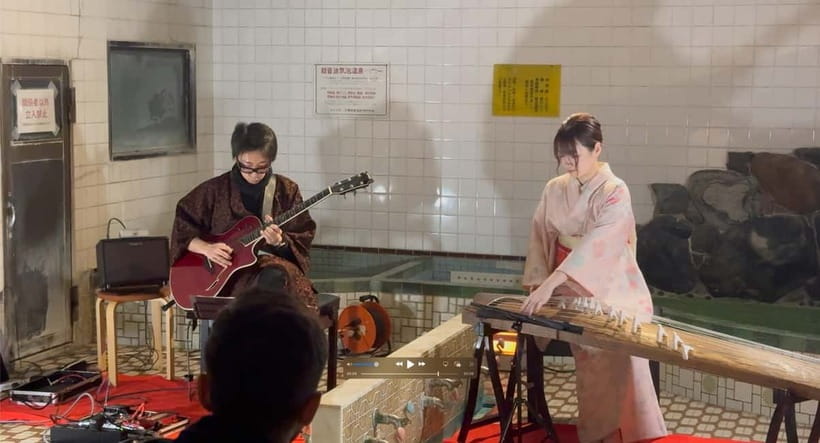
The timing is consistent, even if the exact concert content changes. Here’s what you can expect at a typical session.
Check-in and seating (about 5 to 10 minutes)
You’ll be welcomed and shown how to settle in. Expect basic venue etiquette and seating guidance, especially at the townhouse where space is tighter.
Instrument introduction (about 10 to 15 minutes)
This is where you get real value, even if you’re brand new to koto and shamisen. You’ll learn how the instruments are played, what parts matter most, and what tools make the sound (like picks and bridges). You’ll also get an explanation of unique notation and how to follow along.
From past experiences in this format, hosts and interpreters like Gen, Shima, Samuel, and Shohei have been praised for making the intro feel friendly, not like a lecture. You’ll also see people asking questions, which is exactly what this part is for.
Concert (about 25 to 30 minutes)
Then the music starts. The performance is built from a curated mix of pieces, including both traditional and contemporary elements. The pacing is designed for a short attention window. You’re not sitting for hours waiting for the good part.
Q&A and photos (about 5 to 10 minutes)
After the concert, you meet the artists. This is not just small talk. It’s a focused Q&A where you can ask what you heard, how a piece is structured, or what to listen for next time.
A photo-opportunity is included, which is a nice bonus when the setting is small and intimate.
Optional workshop addition (about 35 to 40 minutes)
If you book the townhouse workshop, it extends the evening. You’ll try basic koto techniques and play a short phrase. The instruments are sanitized and the guidance is geared for beginners.
What You’ll Learn (Even If You Don’t Know the Instruments Yet)
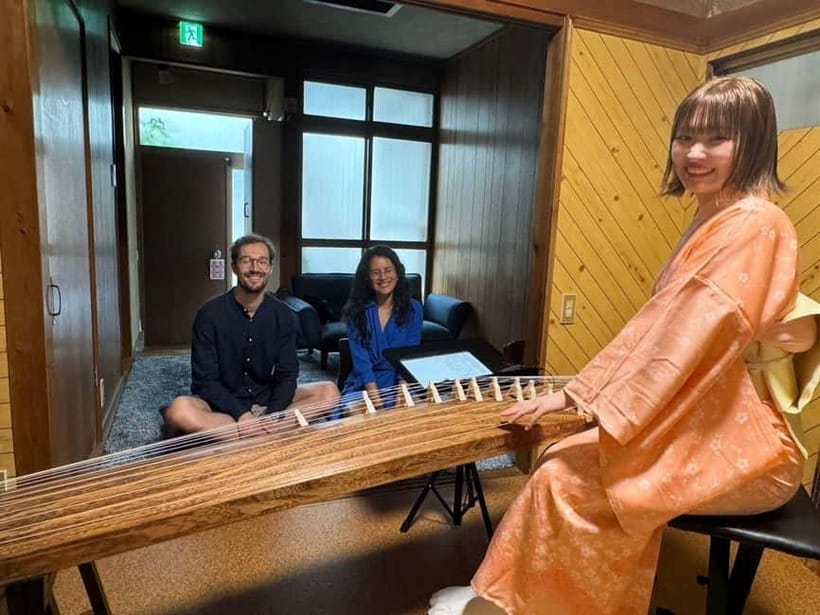
This experience works because it teaches you just enough to make the concert click. You don’t need a music degree. You need a few key ideas.
You’ll learn how the sound is made
You’ll hear the difference between how the koto and shamisen produce notes, and you’ll get explanations for what’s happening physically while a performer plays. That matters because these instruments can sound mystical to first-timers, and you’ll want a few anchor points.
You’ll learn how to read the sheet notation, in simple terms
You won’t become an expert, but you will understand the basics of the notation used in the performance. That turns watching from passive listening into active following, without stress.
You’ll learn the why behind the repertoire
Programs can include classical pieces and contemporary works, and the selection is driven by the musician’s personal style and seasonal rotation. That means you aren’t hearing one fixed “tourist playlist.” You’re hearing a living repertoire chosen for this performer and this moment.
Value and Price: Why $32 Feels Like a Fair Trade
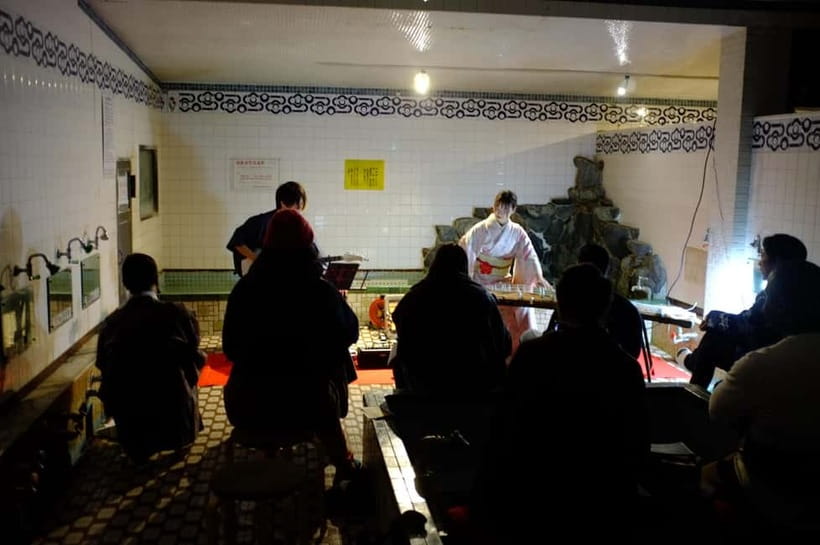
At $32 per person, this is priced like a cultural evening, not a museum ticket plus a tour bus. What you get for the money is the real reason the value is strong.
You receive:
- a live performance of 4 to 5 pieces
- bilingual mini-commentary in Japanese and English
- post-concert Q&A
- a photo moment
- venue seating
If you choose the townhouse option and add the workshop, you also get hands-on practice time. That extra value is hard to find elsewhere in Kyoto for this kind of small-group format.
Duration matters too. Sessions run from about 45 to 105 minutes depending on whether you add the workshop. So you can fit it into a shorter evening if you’re tired from temples all day.
Best Ways to Pair It With Kyoto Sightseeing (Without Rushing)
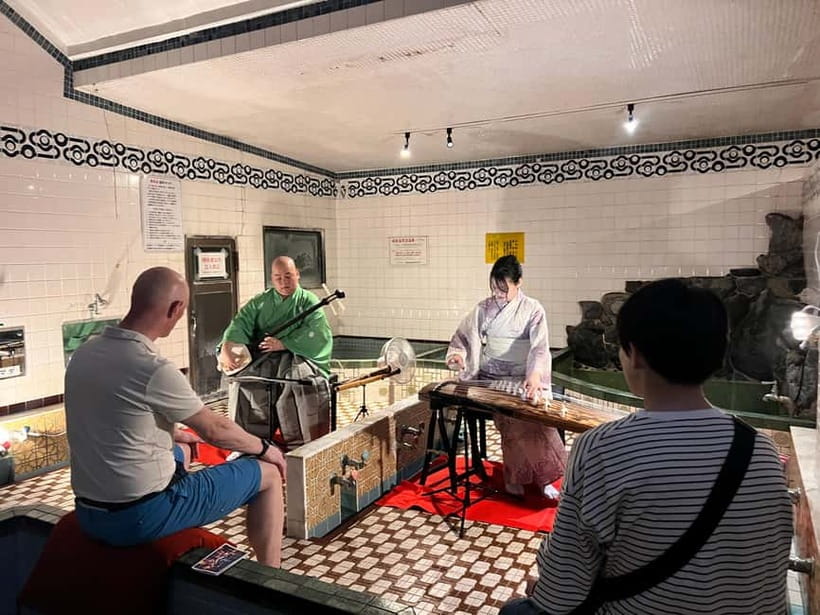
This is the kind of experience you should pair with a low-pressure sightseeing day. You want time to calm down after walking around.
Here are practical connections to nearby sights, using the travel times given for the area:
Arashiyama (about 25 minutes)
You can walk to Saiin Station, take the Hankyu train to Katsura, then transfer to the Randen Line. Arashiyama is a great before-or-after pairing because it’s spread out and you’ll appreciate a quiet sit-down evening afterward.
Nijo Castle (about 20 minutes)
This is one stop from Saiin on the Tozai subway line. If you like history but hate crowds, timing the castle earlier and the concert later can feel like a smart rhythm.
Kinkaku-ji (about 20 minutes)
Take a bus from Nishioji Sanjō (around 16 minutes), then walk a short distance. This is ideal if you want one big visual stop, then a calmer cultural activity to balance the day.
Nishiki Market (about 25 minutes)
Hop on Hankyu direct toward Karasuma or Kawaramachi. This is good for pre-show shopping and snacks, then head to the music before the evening crowds get too intense.
One caution: your exact start time matters. Build buffer time to find the venue, because getting there is sometimes the only real friction point.
Who Should Book the Kyoto Concert, and Who Might Skip It
This show is a strong match if you want:
- a small-group Kyoto cultural experience
- koto and shamisen with explanations that help you listen
- a relaxed evening with real interaction
- the option to try koto yourself at the townhouse workshop
It’s also a good fit if you’re traveling with a child who can sit through a short concert. Just note the basic rule that it’s not suitable for babies under 1 year.
You might consider skipping or switching to another format if:
- you need a fully guided, step-by-step tour with lots of walking time
- you want a long show with many different performers on one stage
- you are expecting the bathhouse to be part of the ticket (it isn’t; you do not get bathing access)
Quick Practical Notes Before You Go
- Don’t count on transfers or transportation being included. Plan how you’ll get there on your own.
- Food and drinks are not included. Also, the bathhouse facilities are not part of the experience, so you won’t be doing a bath.
- The languages are English and Japanese, with bilingual mini-commentary during the evening.
- Expect a relatively short concert. If you’re looking for a marathon performance, this is not that.
Should You Book This Kyoto Koto and Shamisen Concert?
Yes, if you want a real Kyoto evening that doesn’t feel like another checklist item. The townhouse version is for people who love close-up listening, low crowd energy, and the extra value of a beginner-friendly workshop. The bathhouse hall is for people who want more dramatic acoustics and duet interplay.
My decision rule is simple:
- If you want to learn while you listen, and you like the idea of trying koto, book the townhouse.
- If you already have some interest in Japanese instruments or you want to hear instrument-to-instrument chemistry, book the bathhouse hall, and plan your Kyoto schedule around the Monday dates.
If the idea of finding a small venue makes you nervous, build in extra time to reach it, and use your map app location if provided. Then sit down, lower the volume on your day, and let koto and shamisen do what they do best: slow your brain down.
FAQ
How long is the Kyoto koto and shamisen concert?
The experience runs from about 45 to 105 minutes, depending on the option you choose and whether you add the optional hands-on workshop.
Do I have to know anything about koto or shamisen before I go?
No. The format is designed for people with little or no prior knowledge, with mini-commentary in Japanese and English.
What is included in the concert ticket?
You get the live concert (4 to 5 pieces), bilingual mini-commentary, post-concert Q&A, photo time with the performers, and venue seating.
Is there a hands-on koto workshop?
An optional hands-on koto workshop is available with the traditional townhouse option. It uses sanitized instruments and is beginner-friendly.
Is food, drinks, or bathhouse entry included?
No. Food, drinks, and bathing are not included. Even for the bathhouse hall option, there is no entry to bathhouse facilities.
Which option runs on Mondays?
The historic bathhouse hall option is offered irregularly on Mondays, so you should check the calendar for the next dates.
Latest write-ups near Kyoto
- Kyoto: Nishiki Market Tour with a Local Foodie & Tastings★ 4.5 · 67 reviews
- Kyoto Kimono Rental mimosa |Kimono/Yukata Rental Couple Plan★ 4.8 · 67 reviews
- Kyoto: Traditional Kimono Fabric Handicrafts Workshop★ 5.0 · 67 reviews
- Kyoto Tea Ceremony and Samurai Photo Session★ 5.0 · 70 reviews
- Kyoto: Replica food making experience★ 4.8 · 70 reviews
- Kyoto: Kinkakuji, Golden Pavilion Guided Tour★ 4.7 · 71 reviews
- Private departure transfer from Kyoto city to Kansai International airport★ 5.0 · 72 reviews
- Uji: Green Tea Tour with Byodoin and Koshoji Temple Visits★ 4.8 · 72 reviews
Kyoto Tours, compared.
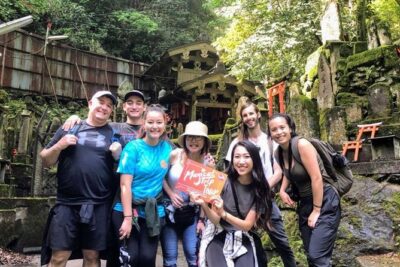
Fushimi Inari, Kinkakuji, Bamboo Grove 1 Day Bus Tour
Read our review →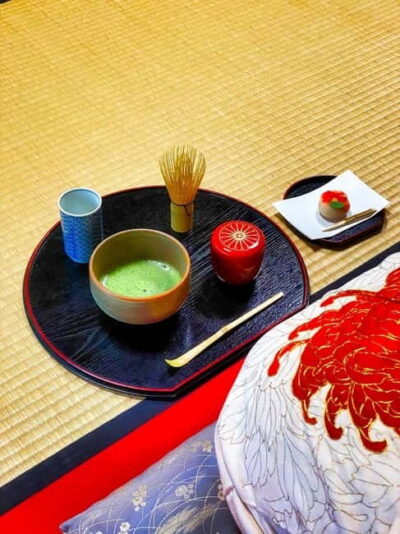
Tea Ceremony in a Traditional Tea House in Kiyomizu
Read our review →
Kyoto Geisha Walking Tour: Gion District & Hidden Gems
Read our review →
Gion Magical Night Walking Tour with Geisha Trivia
Read our review →